


7 Signs of a Great Relationship Between an Agency and Its Client

Starting work with a new client is usually exciting, but building a successful relationship between an agency and its client can be a challenge.
Over time, once you have experienced both sides of this relationship, you will realize that it is not only the quality of the work that matters. The nature of the relationship between client and agency is just as important.
A strong, positive relationship can lead to great achievements. Conversely, if the relationship is poor or purely transactional, the results will fall short of expectations. This insight applies when choosing a digital marketing agency, no matter the industry. When you hand an important part of your business to another organization, you are placing a great deal of trust in them. Their skills are not the only factor to consider.
We need to know that they value the relationship and always strive to deliver the highest value. This matters not only when you choose to work together, but also needs to be reviewed continuously to make sure you are truly getting what you expect and that your partner is truly committed to your success.
Why Does the Agency-Client Relationship Matter?
Picture a symphony orchestra, where instead of competing for attention, each instrument blends in harmony to create a work of art. That is what a successful agency-client relationship looks like. A strong partnership is like a well-rehearsed orchestra, with every member playing their part flawlessly and contributing to the long-term success of the whole team.
An effective partnership between an agency and a client needs harmony, a seamless flow between communication and collaboration. This includes meetings, reports and everyday interactions. The goal is to make sure everyone is on the same page, with requirements translating smoothly into concrete deliverables. Setting clear success metrics is also critical. Both sides need to agree on how performance is measured, which ensures alignment and removes any ambiguity. As a recent survey by AgencyAnalytics shows, 36% of agencies say effective communication and transparency are the key to retaining clients, underscoring the importance of open dialogue and trust in nurturing a successful partnership.
What Makes a Good Relationship Between an Agency and a Client?
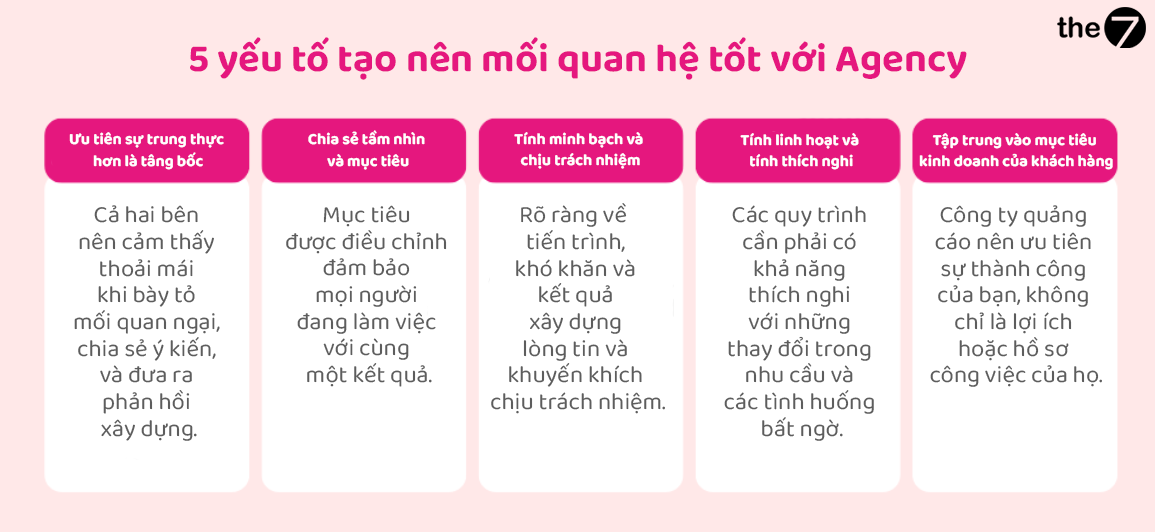
A good client-agency relationship is shaped by mutual trust, open communication and a shared vision. Its success rests on the principle of honesty, where both sides feel comfortable sharing their opinions and concerns. An agency shows its commitment to the project’s success when it proactively listens and gives honest feedback to the client. Adopting tools such as project management and time-tracking software also makes the workflow more efficient, increases transparency and, in turn, strengthens the relationship.
See more: [Top 15+] Reputable and Effective Online Marketing Companies in Ho Chi Minh City
Now, let’s look at the signs that your relationship with your agency is developing in a positive direction:
1. Honesty Is Prioritized Over Flattery
Nobody likes telling a client that their idea won’t work, but a good agency has to do exactly that. When you have an open, meaningful dialogue with your partner, where they are not afraid to share their views respectfully, that is a sign of a good relationship.
We hire external agencies because they have the expertise, skills and knowledge that we don’t.
That is why we need to listen and understand that flattery is the easiest thing any partner can offer. Flattery may make us feel satisfied in the short term, but in the end it leaves us short-changed.
Even worse, it can lead an agency to agree with the client and then not follow through on the agreement once the work begins.
If the client has no idea what is going on, you could say the relationship has completely broken down.
Bottom line: Be wary of agencies that only nod and smile.
2. You Get Access to the Right People
This may be one of the oldest tricks in the book. You meet many outstanding people during negotiations, but they gradually disappear once the contract is signed. In some less reputable corners of the industry, this is almost standard practice. But it is not really good enough. During the sales process, you should ask to meet the people who will manage your account after the deal is done.
Either way, realizing that you are constantly dealing with less experienced staff is a worrying sign.
In the better scenario, if the agency you work with keeps bringing in new team members with fresh skills, you may well have a good working relationship.
3. There Is a Process (But It Can Flex)
If your relationship with your agency consists only of sending over work and waiting for the results to come back, that is not a positive sign.
Instead, every project should have a defined scope, and both the client and the agency need to clearly understand the process used to achieve great results in a predictable way.
Having a process does not mean having no flexibility. If something needs to be handled right away, in an ideal situation it should be. Of course, this only applies when the work is truly urgent!
A good agency should also use a process to organize its work, but it should understand that sometimes that structure needs to be broken.
For example, if a client changes their mind after approving the agency’s proposal, a good agency should try to find a way to solve that challenge rather than refusing on the grounds of “that’s not the process.”
4. Client Needs Come First
While every agency says it wants the best for its clients, the reality is sometimes different. In many cases, an agency tries to earn the highest profit for the least effort (nobody likes to admit it, but it happens often).
If you think your agency isn’t doing much, that may be a good place to start.
On top of that, priorities in the work itself may not line up. Agencies like winning awards and producing work to show off to potential customers. Clients want a product or service that serves their purpose.
These competing interests don’t always go hand in hand.
The sign of a good agency is that it focuses on the client’s business goals and frames conversations about success and failure around those terms.
Does it really matter that your agency puts on black suits and collects awards for the work it does on your behalf, when your KPIs aren’t improving? Probably not.
5. The Lines of Communication Stay Open
Communication is the key to every good relationship, and that applies to the relationship between client and agency too. If you haven’t heard from your agency from one month to the next, something is clearly wrong.
At the very least, you should expect regular communication and updates on how the work is performing.
Even better is continuous, natural interaction.
If an agency is treated as a part of the client’s organization, that is the standard we should strive for: anything less creates too many opportunities for mismatched expectations and misunderstandings.
Remember that communication needs to happen at every level. That includes meetings at key project milestones, emails, phone calls and, of course, informal get-togethers between the different teams and departments of the client and the agency.
The more conversations, the better.
6. The Agency Shows Initiative
As mentioned earlier, one reason to hire an agency is to add skills and experience that your organization lacks and can’t easily build.
On that basis, an agency truly creates value when it proactively suggests new approaches and ideas to its clients.
I have also pointed out that many agencies consider it a success to do nothing and still get paid steadily. Those agencies won’t proactively come up with new ideas, because ideas usually mean work.
A relationship built only on reacting is therefore not a good sign.
Good agencies build on their understanding of the latest trends, technical capabilities and new approaches, as well as the research that gives them that understanding.
Clients should expect their agency to share knowledge and keep pushing to deliver new, creative and effective solutions.
7. You Have to Be Passionate About the Work
Even though this focuses on the less glamorous aspects of working together, it is undeniable that you need to be passionate about the work and keep that passion alive over time.
I don’t truly believe that making agencies take part in periodic pitches is a positive thing, but if you feel unhappy or aren’t getting what you want, always have the courage to step out and look for new opportunities.
As with any other aspect of business, although it can be easy to let everything slide, a frank conversation can deliver great value down the road. Never settle for work you aren’t passionate about!
Why You May Be Struggling With an Agency That Is Struggling
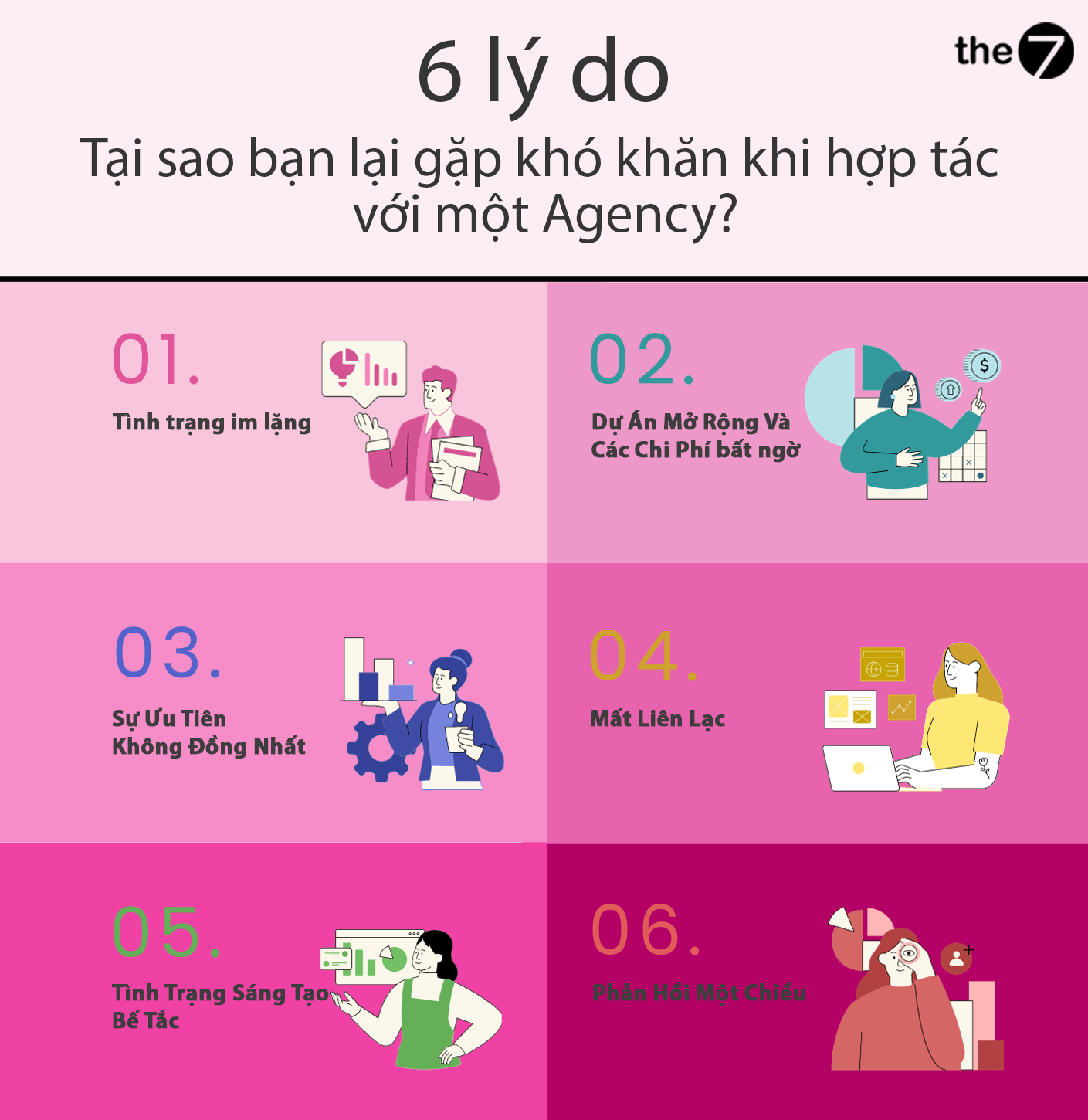
We have looked at the signs that your relationship with your agency may be in trouble, but now let’s dig into some warning signals that can point to a decline in the relationship:
Radio Silence
Infrequent updates, silence or one-way conversations point to a breakdown in trust and transparency.
Misaligned Priorities
If the agency puts its own interests or goals ahead of the metrics that matter to you, it is time to recalibrate.
Scope Creep and Surprise Costs
Unclear project boundaries and unexpected costs point to poor and unreliable project management.
Lost Contact
When your original contacts disappear and you have to work with less experienced team members, that is a bait-and-switch tactic.
Creative Stagnation
Cookie-cutter campaigns or a lack of fresh ideas suggest the agency may be struggling.
One-Way Feedback
If your concerns are brushed aside or your feedback goes unheard, the relationship is becoming one-sided, which gets in the way of collaboration.
Remember, communication is the key! Discussing these issues openly, honestly and promptly with your agency can often lead to adjustments and a renewed spirit of collaboration. But if the warning signals continue, it may be time to reconsider the relationship and look for a better fit.
Conclusion
Keep in mind that these principles apply not only to evaluating existing relationships but also to choosing a new agency. Don’t just look at the projects they have completed; dig deeper and look for reviews from current clients to understand the agency’s work ethic, how it communicates and its commitment to working together.
Building a strong partnership is an ongoing journey, not a destination. By prioritizing trust, communication and shared goals, you can create a partnership that drives success and pushes both sides to reach their full potential.
So, are you ready to reshape your partnership with your agency and create a masterpiece of collaboration? Start by putting this advice into practice and watch your relationship grow!

Nguyễn Đình
Bảo




As CEO of The7, I am committed to sharing practical, useful knowledge with every reader. Every article on The7 is based on my 7 years of hands-on experience in marketing — Facebook advertising, LinkedIn advertising, Google advertising, and marketing strategy. I hope you take away plenty of insight from these posts and apply it successfully in practice.
Related Articles
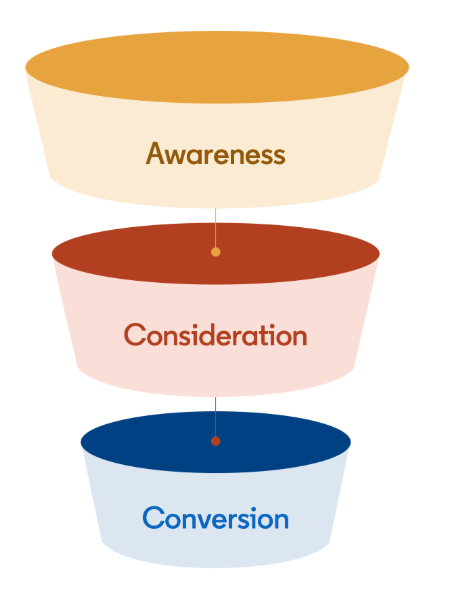
Building a Full-Funnel Content Marketing Strategy on LinkedIn
Table of Contents Toggle Why Build Content Marketing for the Full Marketing Funnel? (Why Full-Funnel Content Marketing?)Creating Your Strategy (Creating Your Strategy)Implementing Your Content Strategy (Rolling out your content strategy)Summary...
Designing Creative Content for LinkedIn
Table of Contents Toggle Why Is Good Creative Content So Important? (Why is Good Creative Important?)Key Components of Creative Design (the core elements of creative design)Summary (summary) Why Is Good...
Building an Organic Business Presence on LinkedIn With a LinkedIn Page
Table of Contents Toggle Why Have a LinkedIn Page?Establishing Your LinkedIn PageKeeping Your LinkedIn Page ActiveThe Measure of SuccessSummary About LinkedIn Page (Summary) Why Have a LinkedIn Page? For a...
6 Best LinkedIn Marketing Strategies for B2B in 2026
Table of Contents Toggle LinkedIn 2026: Where B2B Decisions Get MadeStrategy #1 – Why Is LinkedIn the Best B2B Marketing Channel Today?1. Decision-makers are concentrated here2. Users are in work...

7 Social Media Trends for 2026: The Era of Real Value, Real Conversion, and Real People
Table of Contents Toggle Social media is entering the biggest restructuring of the decadeTrend 1: Why is buying directly in-app becoming the new standard for 2026? (On-Platform Conversion)What should businesses...

What Is TikTok Marketing? Effective TikTok Marketing Strategies
TikTok has been topping the global rankings of the most downloaded and most visited apps. That makes it a gold mine for marketers who love creativity. In this article, The7...