


Pepsi’s Digital Marketing Strategy: How the Brand Holds Its Ground Against Rivals
Pepsi, a world-famous brand, has become an essential part of get-togethers and meals everywhere! But have you ever wondered how the company became so successful? Starting as a small operation in North Carolina in 1893, Pepsi grew into a global phenomenon, distributing its products to more than 200 countries. As one of the largest food and beverage companies in the world, Pepsi has left a deep impression on the marketing industry. Its marketing strategy is a model that every marketer should study for insight, because it has a long history of effective marketing campaigns and creative approaches.
In this article, we will explore the marketing strategy of Pepsi, including its history, target audience, advertising strategy, experiential marketing campaigns, and much more…
The History of Pepsi
Invented by Caleb Bradham in 1893 under the name “Brad’s Drink,” it was first sold at his pharmacy as a remedy for upset stomachs. After being renamed Pepsi-Cola in 1898, Pepsi quickly became a rival to Coca-Cola, and by the 1930s it had become the second most popular soft drink in the world. Over the following decades, Pepsi continued to grow in popularity, and in 1965 the PepsiCo corporation was founded. Over the years, Pepsi has introduced many different flavors and advertising campaigns to stay competitive in the soft drink market to this day. But how did Pepsi achieve dominance in such a highly competitive market?
Pepsi’s Marketing Strategy
Pepsi has held an important position in the food and beverage industry for more than a century. With over a hundred years in the industry, it has certainly grown into a large organization with a diverse brand portfolio that includes Pepsi, Frito-Lay, Quaker Oats, Tropicana, and Gatorade. The brand’s marketing strategy focuses on building a strong emotional connection with consumers through a mix of different marketing techniques, and the company’s marketing campaigns are designed to appeal to a wide range of consumers, from young people to families and from health-conscious individuals to sports enthusiasts.
One of the key elements of Pepsi’s marketing strategy is its strong brand identity. Known for a fun, youthful, goal-oriented image, the company uses that image to connect with consumers around the world. You may find it hard to create a unique brand identity for your own business and wonder how to do it the way Pepsi has; however, marketing companies can help you achieve it.
You may find it hard to create a unique brand identity for your own business and wonder how to go about it; however, marketing companies can help you achieve it.
See more: https://the7digital.com/xu-huong-digital-marketing/8-y-tuong-mang-xa-hoi-20690/
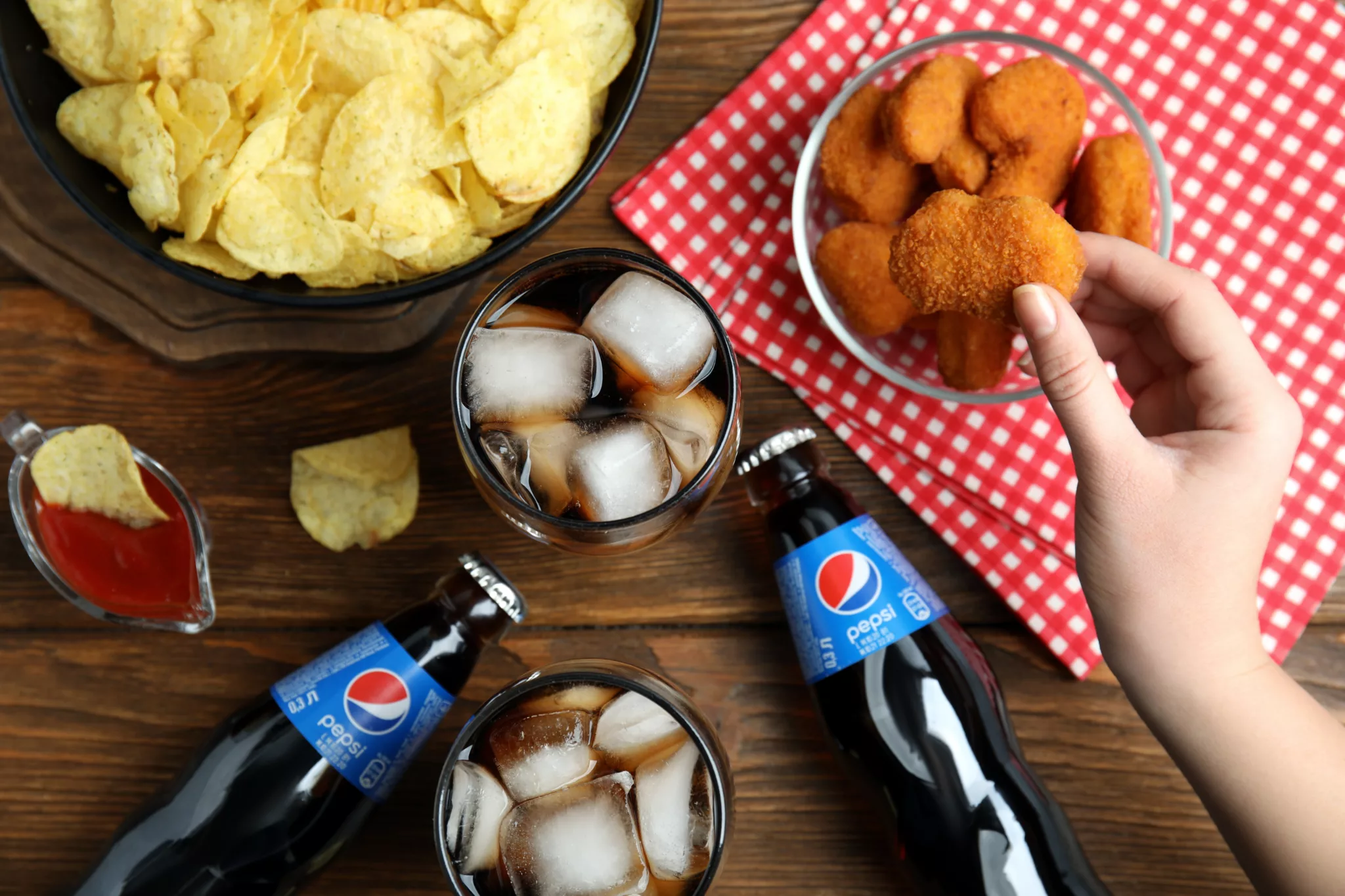
We all know that Pepsi has invested heavily in memorable, creative advertising campaigns; it has partnered with entertainment stars such as Michael Jackson, Britney Spears, and Kendall Jenner. These partnerships not only help expand its audience but also improve the brand’s reputation and image. Here is one of Pepsi’s most effective advertising campaigns:
The “Pepsi Generation” Campaign with Michael Jackson
Targeting young people, Pepsi launched the “Pepsi Generation” campaign in the 1960s, featuring the legendary Michael Jackson.
Pepsi’s Target Audience and Market Segmentation
Pepsi targets a diverse range of audiences, including young people, families, health-conscious consumers, and sports fans. The company builds marketing campaigns to appeal to each market segment and uses segmentation to select specific groups of consumers with tailored marketing messages. This allows Pepsi to operate flexibly across many markets and roll out a wide variety of marketing strategies, which makes its audience strategy especially important.
For example, when advertising the Tropicana brand, Pepsi targets health-conscious consumers, while advertising campaigns for the Gatorade brand are designed specifically to appeal to athletes and sports fans.
A clear example of this approach is Lionel Messi’s participation in the Gatorade campaign called “Inner Voices.”
Partnerships and Sponsorships
Besides using celebrities in its advertising campaigns, Pepsi also sponsors a variety of sporting and cultural events, which helps it connect the brand with positive experiences. Through these partnerships, as a main sponsor of leading sporting events such as the Super Bowl, the NBA, and the UEFA Champions League, Pepsi has created an important link between the brand and sporting events.
Although it is best known as a main partner of these sporting events, Pepsi has also supported many arts programs and events, including Coachella and the Super Bowl Halftime Show. By sponsoring such events, Pepsi can promote its products to a large crowd, both at the event itself and in the surrounding area.
A clear example of this collaboration is the Pepsi Super Bowl Halftime Show 2020, featuring Shakira & Jennifer Lopez, which is proof of the success of Pepsi’s partnership and sponsorship strategy.
Pepsi’s Social Media Presence
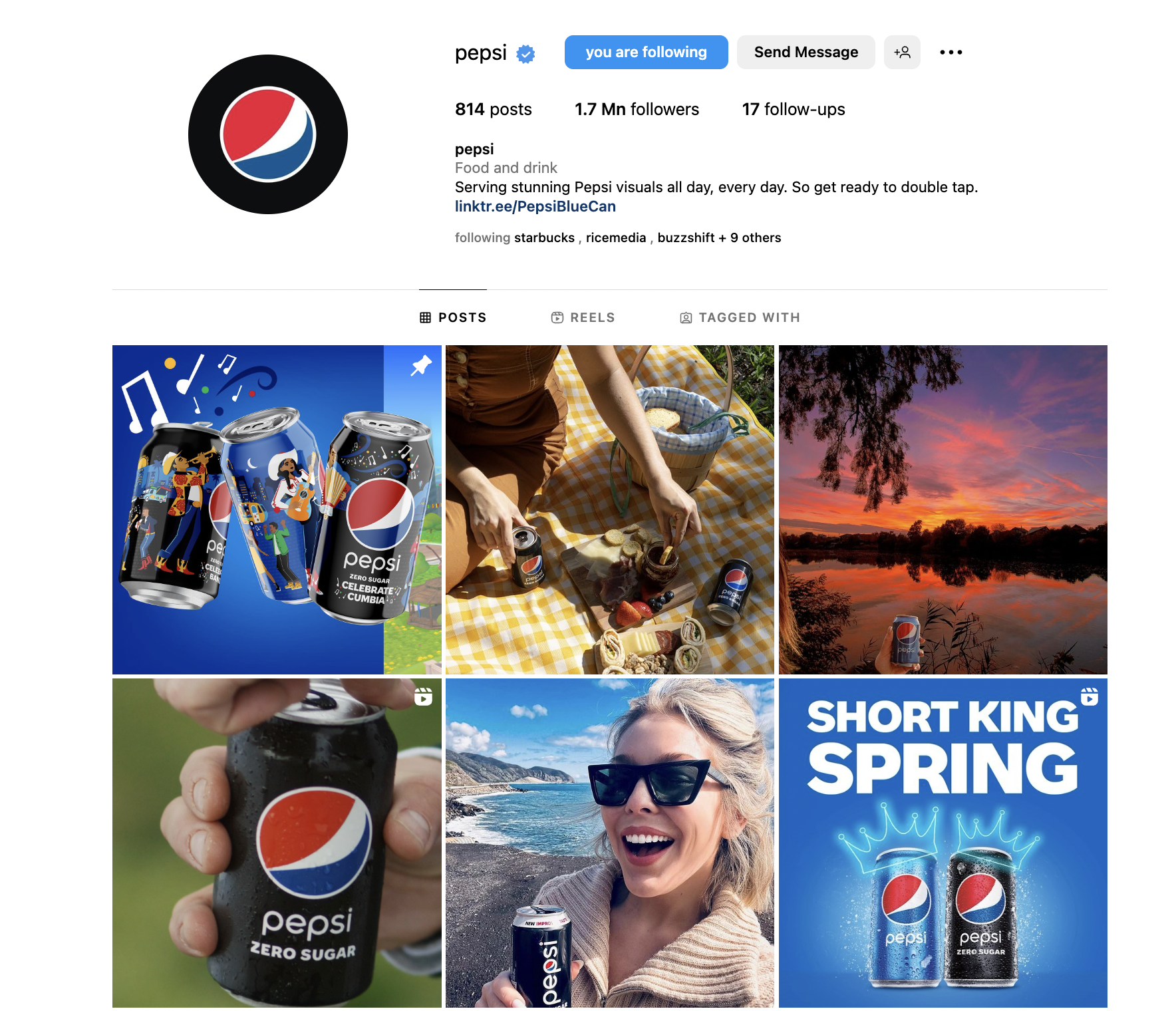
Pepsi is also active on social media to connect with consumers and promote its products. The Pepsi brand has a major presence on platforms such as Facebook, Twitter, and Instagram, using them to share product information, run contests, and engage with customers.
With more than 1.5 million followers, Pepsi’s Instagram account is consistently active and makes a strong impression. The brand shares high-quality images of people enjoying its drinks, along with appearances by familiar faces such as Lindsay Lohan, to succeed in its Instagram marketing strategy. Being active on social media takes dedication and can be time-consuming. If you struggle to maintain a strong social media strategy for your business, we recommend partnering with social media marketing companies in Vietnam to build an engaging social media presence, much like Pepsi’s strategy.
A Quick Look at Pepsi’s All-Time Rival: Coca-Cola
PepsiCo and Coca-Cola are two of the largest fast-moving consumer goods (FMCG) companies in the world, yet they differ in important ways in terms of products, marketing strategy, and business. While both companies make carbonated drinks, Pepsi has a more diverse product portfolio that includes non-carbonated drinks such as Gatorade, Tropicana, and Aquafina. In contrast, Coca-Cola focuses mainly on carbonated drinks and has a smaller non-carbonated portfolio.
Their marketing strategies also differ. Pepsi has traditionally targeted a younger audience with its marketing campaigns, using celebrity endorsements and music and sports sponsorships to attract that audience. In contrast, Coca-Cola’s marketing strategy has aimed for broader appeal with campaigns such as “Share a Coke” and “Taste the Feeling.”
Finally, while both companies have strong brand identities, Pepsi has positioned itself as a younger, more creative brand, while Coca-Cola has emphasized its long history and tradition. Neither brand denies its important role in the FMCG industry, and both keep innovating to stay competitive. If you want to reach and convert high-value consumers, you may want to look for FMCG marketing companies to help you achieve your business goals.
Conclusion
Pepsi has a long history of successful marketing campaigns and creative strategies, which have helped it become one of the largest food and beverage companies in the world. Through a combination of advertising, experiential marketing, and social media engagement, it has created a strong emotional bond with consumers, building brand awareness and loyalty. Most importantly, Pepsi has been able to expand its reach and grow by adapting its marketing strategy to local cultures and preferences. Each of these elements has certainly played an important role in Pepsi’s success as a global brand.

Nguyễn Đình
Bảo




As CEO of The7, I am committed to sharing practical, useful knowledge with every reader. Every article on The7 is based on my 7 years of hands-on experience in marketing — Facebook advertising, LinkedIn advertising, Google advertising, and marketing strategy. I hope you take away plenty of insight from these posts and apply it successfully in practice.
Related Articles
Building a Full-Funnel Content Marketing Strategy on LinkedIn
Table of Contents Toggle Why Build Content Marketing for the Full Marketing Funnel? (Why Full-Funnel Content Marketing?)Creating Your Strategy (Creating Your Strategy)Implementing Your Content Strategy (Rolling out your content strategy)Summary...
Designing Creative Content for LinkedIn
Table of Contents Toggle Why Is Good Creative Content So Important? (Why is Good Creative Important?)Key Components of Creative Design (the core elements of creative design)Summary (summary) Why Is Good...
Building an Organic Business Presence on LinkedIn With a LinkedIn Page
Table of Contents Toggle Why Have a LinkedIn Page?Establishing Your LinkedIn PageKeeping Your LinkedIn Page ActiveThe Measure of SuccessSummary About LinkedIn Page (Summary) Why Have a LinkedIn Page? For a...
6 Best LinkedIn Marketing Strategies for B2B in 2026
Table of Contents Toggle LinkedIn 2026: Where B2B Decisions Get MadeStrategy #1 – Why Is LinkedIn the Best B2B Marketing Channel Today?1. Decision-makers are concentrated here2. Users are in work...

7 Social Media Trends for 2026: The Era of Real Value, Real Conversion, and Real People
Table of Contents Toggle Social media is entering the biggest restructuring of the decadeTrend 1: Why is buying directly in-app becoming the new standard for 2026? (On-Platform Conversion)What should businesses...

What Is TikTok Marketing? Effective TikTok Marketing Strategies
TikTok has been topping the global rankings of the most downloaded and most visited apps. That makes it a gold mine for marketers who love creativity. In this article, The7...