


How to Write Engaging Content Marketing That Attracts Users in 2023

Content is the backbone of every online company or business. How to write content marketing that captivates readers is something every marketer and business owner needs to learn.
Yet many organizations still pour their investment into short-term marketing tactics instead of building engaging content on their websites, even though the content marketing approach is clearly important.
Based on the experience of the marketing services company The7, if you are a marketer who already understands how important content is, or if you want to cut advertising costs, boost marketing performance, and raise brand awareness, then this guide on how to write content marketing that engages readers is for you.
What Makes Content Marketing Good?
To judge whether content is good, you can rely on 4 factors:
– Angle: From which perspective is the content idea explored?
– Timing: Do users genuinely have a need for this topic right now?
– Distribution: Is your content optimized for the channel where it will be published?
– Writing: Are your ideas communicated effectively?
Combined, these 4 factors make up great content marketing. The truth is that few article structures can satisfy all four at once. Still, you don’t need to agonize over creating a perfect piece.
According to the 80/20 rule, 20% of the work is the key factor that brings you 80% of your traffic. That is why you can raise your chances of success once you understand the 4 factors of good content marketing writing.

In the sections below, The7 shares a set of small tips (covering all 4 factors) as a guide to writing content marketing so you can easily picture what you need to practice and prepare in order to build an effective content marketing writing process.
>>> See more: Holistic marketing explained: benefits and how to implement it
8 Highly Effective Content Structures
Before diving into the details of writing engaging content marketing, you need to choose the content structure that fits your goals. Below are the 8 best content structures, proven to deliver strong results when you put them to work:
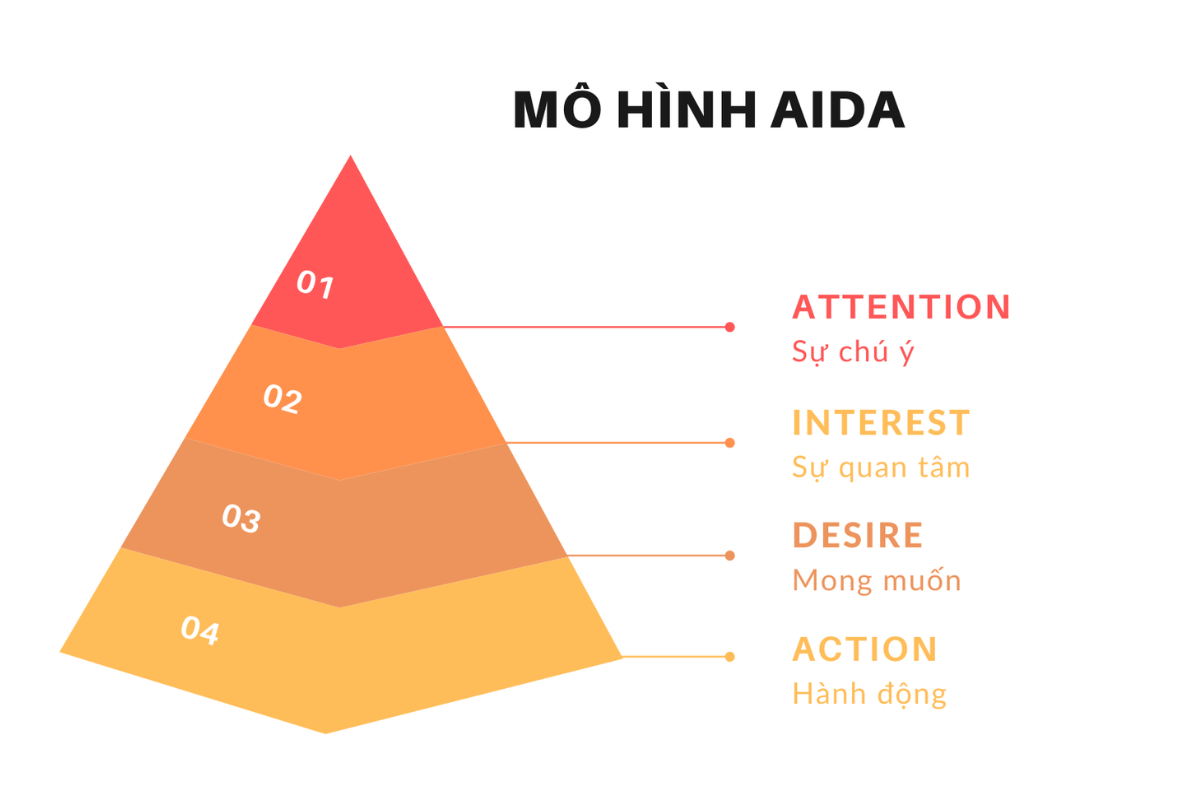
AIDA (Attention – Interest – Desire – Action)
The AIDA formula aims to spark the reader’s curiosity and then guide the customer toward taking action. It is the oldest and most widely used content structure, and it suits most types of marketing.
AIDA has been used for a long time to build content for radio stations, TV channels, direct mail, landing pages, sales pages, and more. This writing method is built on the sequence in which you want to guide your reader:
- Attention: Capture the reader’s attention
- Interest: Build and sustain the reader’s interest
- Desire: Stimulate the reader’s wants and needs
- Action: Push the reader to turn that desire into action
4A (Aware – Attitude – Act – Act Again)
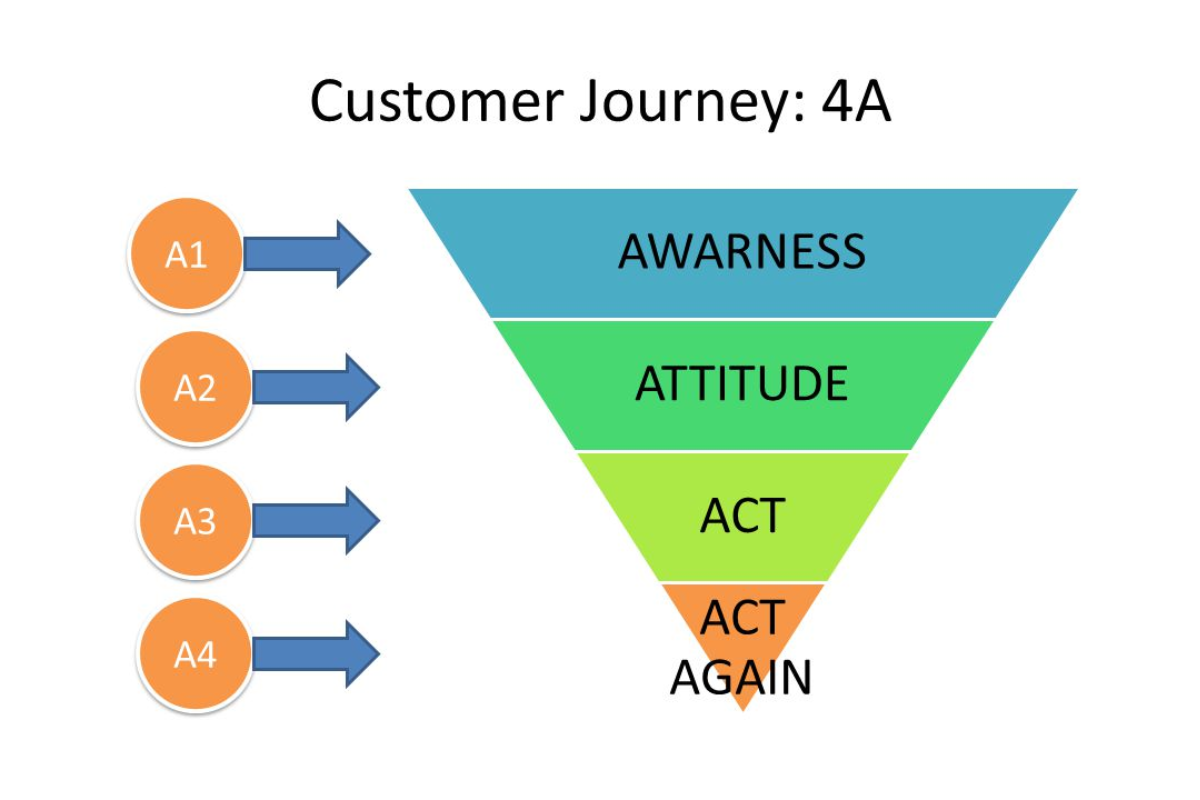
If you have read content marketing guides, you have probably come across the 4A writing model somewhere. Inspired by the AIDA model, 4A revolves around 4 core elements:
- Aware: Becoming aware
- Attitude: Forming an attitude
- Act: Taking action
- Act again: Repeating the action
Today, repetitive content can no longer hold readers’ attention. In the 4A content formula, Act and Act again play an especially important role.
Building on the 4A model, Philip Kotler, the “father” of modern marketing, developed the 5A model to better reflect how marketing is actually carried out in the digital age. The 5A model has the following stages:
- Awareness: Becoming aware
- Appeal: Being attracted and drawn in
- Ask: Researching and learning more
- Action: Taking action
- Advocate: Becoming a supporter
There is one fundamental difference between the 4A or AIDA models and the 5A model: 5A does not require you to follow the steps in strict order. Content writers can even flexibly skip a few steps if needed. What matters is that the article is high quality and delivers real value to the reader.
If you have read content marketing guides, you have probably come across the 4A writing model somewhere
4C (Clear – Concise – Compelling – Credible)
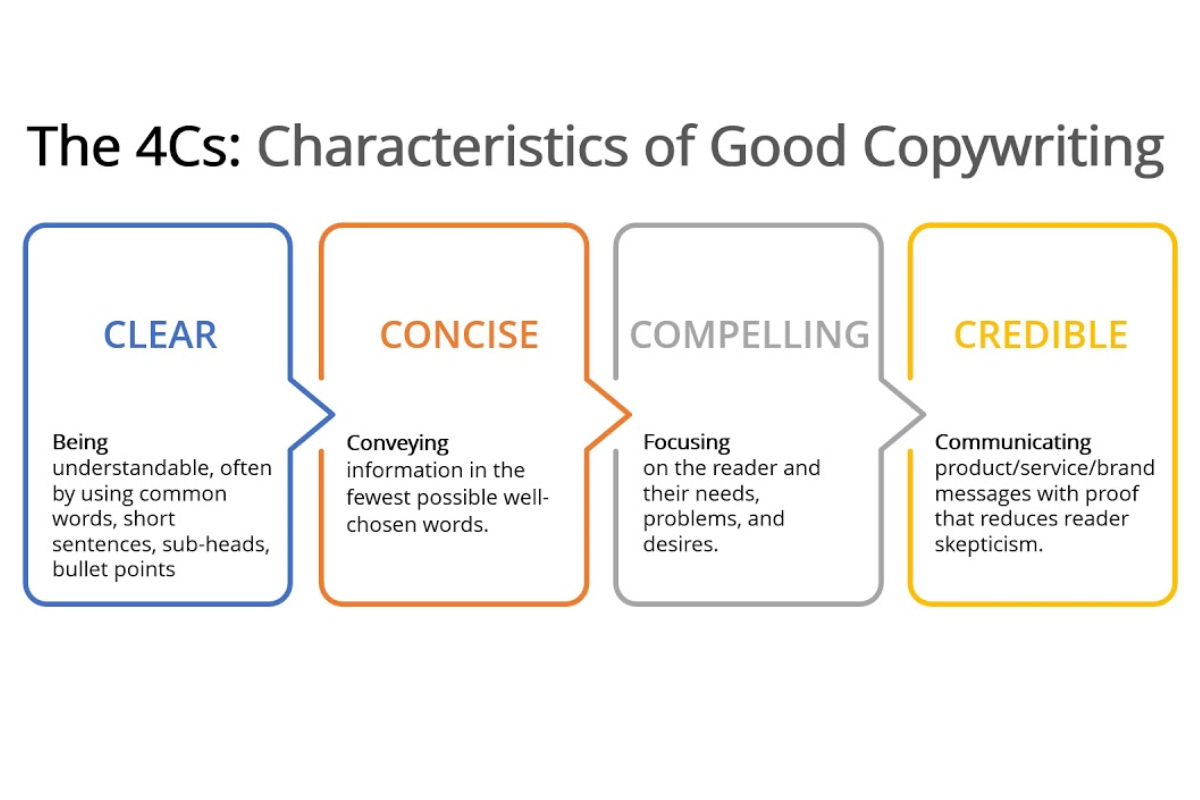
The 4C model sets out all the criteria needed to make a quality piece of content. If you are running out of content ideas, the 4C formula can be a lifesaver that helps you build and deliver an article as effectively as possible. The 4C method revolves around 4 elements:
Clear
According to Ralph Waldo Emerson, clarity in content means writing with clear meaning so that readers can understand the author’s intent and receive the message accurately, without misunderstanding.
Concise
Being concise does not simply mean writing briefly. More precisely, it is the skill of telling a complete story, with a beginning and an end, using the fewest words possible. To be concise, avoid repeating words or ideas, and avoid rambling or redundant phrasing.
Compelling
A piece of content also needs to be highly persuasive. Write in a way that is engaging and interesting, and packed with valuable information, so readers have the patience to read from beginning to end, or at least skim through to catch the main points.
Credible
Today, customers tend to trust the advice of experts rather than advertisers. So create highly credible articles that make customers feel they are reading content from an experienced organization that leads the field your business operates in. You can also market your content through customers who have personally experienced your business’s products or services.
4P (Picture – Promise – Prove – Push)
The 4P content structure is used in many sales ads that appear on Facebook. The 4P content formula has 4 main components:
- Picture: Choose images that can evoke desire, spark the reader’s curiosity, and elevate the value of the product or service you offer.
- Promise: Make a commitment about the benefits and results the product delivers.
- Prove: Provide evidence to reinforce and confirm the promises you have made, which makes your content more persuasive.
- Push: Push readers to act and make a decision by pointing out scarcity, discounts, promotions, deadlines for offers, and so on.
APP (Agree – Promise – Preview)
Another effective way to write content that you shouldn’t overlook is the APP model. Brian Dean applied this model in his copywriting case study. In practice, this approach to content marketing is simple and easy to understand:
- Agree: Identify the reader’s pain point and show that you agree it is a real problem
- Promise: Make a promise or commitment to help the reader solve the problem
- Preview: Give an overview of what the article covers

PAS (Problem – Agitate – Solve)
The PAS model is regarded as dominating social media thanks to its popularity. You can apply the PAS formula to many kinds of content, from short news items and flyers to emails, PR articles, and blog posts.
This is a good content marketing approach that is easy to understand and streamlined. A piece of content is presented in the following order:
- Problem: Raise the problem
- Agitate: Dig deeper into that problem
- Solve: Offer a direction for solving the problem
As you can see, the PAS structure goes straight to the issue the customer cares about while remaining subtle, skillful, and highly authentic. That creates a powerful effect for your content.
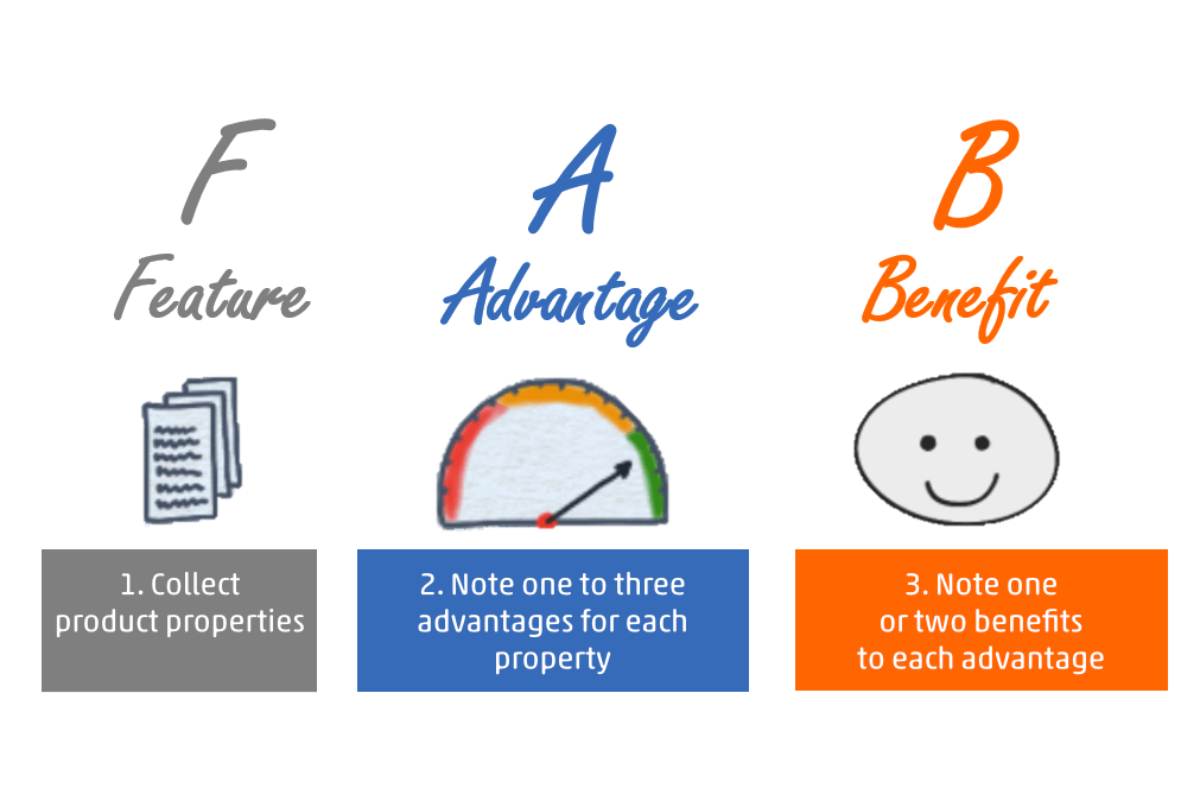
FAB (Features – Advantages – Benefits)
Today, readers are drawn not only by the topic of a piece of content but also by the story behind it. Copyhackers defines FAB as a content structure that lets writers arrange and restructure your message and article into a highly engaging, captivating, and persuasive story.
When you apply the FAB formula to write engaging content marketing, there are 3 key elements to keep in mind:
- Features: Describe the features and functions of the product or service.
- Advantages: Spell out how the product or service you offer outperforms similar products on the market.
- Benefits: State the benefits customers receive when they use your product or service.
This is a strong content marketing approach that highlights a product’s benefits, functions, and advantages in the customer’s eyes. It helps them understand why they should buy your product rather than other items of the same kind on the market.
Applying this model successfully requires deep knowledge of your own product. Content writers must also choose powerful words to push readers toward a purchase decision.
BAB (Before – After – Bridge)
Another effective content writing method to consider is the BAB formula, or Before – After – Bridge. Here is what each element means:
- Before: The problem that currently exists and has not been solved
- After: The situation once the problem has been solved
- Bridge: How to solve the problem
This content structure is used by most marketers and suits the majority of industries. In the opening, you introduce the problem and spell out how it affects people. Next, focus on describing how things will look once the problem is solved. Finally, show the method and the actions needed to solve the problem.
Tips for Writing Great Content Marketing at Every Stage
Here are the stages of writing content marketing that you can use as a reference:
The Practice Stage: What Should You Practice to Write Great Content Marketing? (Angle + Writing)
Most professional copywriters can apply content marketing techniques that are engaging and friendly to both users and search engines. They usually start with the following process:
– Research keywords
– Read the content that ranks at the top of the SERP among your competitors, and study its structure.
– Pull together the ideas from top-ranking articles related to your product, service, or industry.
This inadvertently produces a rather formulaic approach (Angle) whenever you want to write about a topic. Few people have the ability to reflect deeply and choose a fresh perspective, like the example we have compiled below:

A good angle can make any topic, old or new, more appealing than ever. So the question is: how do you come up with a good angle?
Build a Habit of Reading and Reflecting
Creative thinking in angles is not a content marketing technique a writer can learn in a day or two. It takes time to read more, accumulate knowledge, and improve gradually.
A reading habit first gives you more knowledge, and it also brings you closer to the standards, the industry vocabulary, and the sentence structures used in writing. In the long run, once you have built up enough volume, you will develop the ability to connect topics and form approaches of your own.
You can read books on the topic or field you are about to write about. Combine that with videos, case studies, and material from experts or popular writing methods, and even apply ways to write good content marketing.
You can also jot down sentences or words you find striking. Use tools such as Evernote to save content with better article structures, which enriches your vocabulary so you can vary it in your own writing later.

Practice Writing Content Every Day
No one writes well without practicing every day. Sometimes you will laugh at the content you wrote in the past. More importantly, with practice you will improve and work out many engaging ways to write content marketing on your own.
You can try many different forms of writing or simply focus on one style. Then ask friends for feedback, or save your drafts in private mode on Facebook, for example.
Understand Your Target Audience
Hunters always change their bait depending on the species they want to catch. Marketing works the same way: the better you understand your target audience before delivering a message, the more attractive your offer will look in customers’ eyes.
So to truly understand your target audience, you need to research your Buyer Persona (customer profile) and understand questions such as:
– Demographics, including age, gender, job position…
– Goals, challenges, pain points
– Shopping and online preferences…

Content Marketers Should Always Be Themselves and Have a Point of View
At first this may sound very “theoretical,” but it is truly something you can do. In The7’s experience, many copywriters choose a safe, noncommittal writing style and do not clearly express their point of view. Most of us share the fear of being judged, so we don’t dare state our opinions plainly, and we are afraid of failing if we depart from the template.
But the truth is that people are usually more impressed and drawn in by someone’s distinctive character than by generic information. At the level of a company or business, that distinctive character is the brand’s personality.
So what if you don’t have a personality of your own? The advice from The7’s marketing experts is to read patiently, reflect, and build up more life experience. Your viewpoint is shaped by the environment around you and the things you come into contact with every day.
Reflect on what you hear and read, and you will gradually develop thoughts of your own. Writing effective content doesn’t require outstanding, template-perfect writing skills. It requires someone who can express their own personality and distinctive voice.

The Writing Stage: How to Write Effective, SEO-Friendly Content Marketing (Writing)
Decide on the main content format to produce
When you get ready to start writing, first decide which content format you want to produce. There are 8 main types of content in use today:
Social media content marketing
With its huge community of users around the world, social media is fertile ground for businesses to promote their brands and products. Social media content must not only introduce your product or service to customers but also stand out and captivate. That can come through imagery, fonts, formats, colors, and more.
SEO content
SEO (Search Engine Optimization) is a term every marketer knows well. To write SEO-friendly content, you need to choose an appropriate writing style, provide accurate information, understand the specifics of your product or service, and above all meet SEO criteria (keywords, Meta Description, Title, H1 and H2 tags, and so on).

Landing page and sales page content
When writing content for landing pages or sales pages, keep these points in mind: keyword density of 3–4%, a length of around 1,000 words, short headings, added images or video, and mobile compatibility.
Infographic content marketing
An infographic tells a full, complete story through text and imagery. Combining visuals and text lets you convey information in the most concise, easy-to-understand, and lively way.
Email marketing content
When writing email marketing, keep 4 factors in mind: Concise (subject lines under 50 characters), Clear (an easy-to-understand subject line and focused content), Spam-free (avoid overly promotional words), and Personal (address the reader directly as “you”).

Blog content marketing
Blogs are where you can get creative around an existing topic. In particular, you can add like and share buttons, links, or product information to a blog post to guide readers as effectively as possible.
Video
Creating video content demands more of your time and dedication. However, the results are far more impressive than text or image content.
Facebook and Google Ads content
Through Facebook or Google ads, your products, services, and brand can reach a large audience and generate more leads. When producing content marketing for ads, choose keywords with high search volume (for Google Ads) and make the opening caption truly compelling (for Facebook Ads).

Only write about what you know on the topic
If you truly don’t understand what you are about to write, research it thoroughly. Then bring the materials, methods, and analyses you have gathered from trustworthy experts into your article.
Note: avoid producing low-quality articles with patchy, vague ideas. Today’s readers are very smart and will quickly spot poor content.
Start with keyword research
Keyword research is considered essential to writing effective content marketing. It helps determine the approach to building your content, and it guides potential customers to your products, services, and the brand of your company or business.

In addition, when you add keywords to a blog post, search engines can more easily understand what you have written, and readers can find your article more easily. But not every marketer knows how to do keyword research effectively.
Effective keyword research requires:
– Marketers who know how to use keyword research tools (such as Adwords Keyword Planner or another tool) to find the keywords users search for most on Google.
– Knowing how to combine keywords and weave them into the article so they read naturally.
Look into related articles that already exist
Research (or competitor research) is a crucial step for a content writer, because you need to know whether anyone has already covered the trend you are about to write about. If so, how did they do it? For this step, BuzzSumo is the best supporting tool for you.
Here are some things to look for when you review your competitors’ articles:
– What kinds of terminology and industry jargon do your competitors use?
– What is their tone of voice? Serious or humorous? Or highly technical?
– What types of content do they usually start with? Blog posts or some other format?
– For each format, what trends and solutions do they know about? How do they communicate them?
And the final step is to find ways to do better than your competitors.

Write about one specific topic
For a piece of content to be truly great, it should revolve around one important purpose, from definition through to solution. Don’t ramble or weave in many unrelated issues. To achieve this, “borrow” a few terms from journalism, such as:
– Unique angle: You can say a lot about your topic in a way no one else can.
– Focus: Know exactly what to write and what to leave out. If information isn’t directly relevant, don’t include it in the article.
– Connection: Does the combination of the topic you chose and your unique angle attract readers?
Don’t worry about article length – focus on in-depth content
There are plenty of discussions today about the ideal length of blog posts. At first, studies indicated that a blog post of about 1,500 words ranked best. Later, the view shifted to a 3,000-word blog post performing better.
This has unintentionally led some marketers to believe that the more words an article has, the higher it will rank. But that is a mistake! In reality, it is the substance of an article that helps determine its position on search engines.
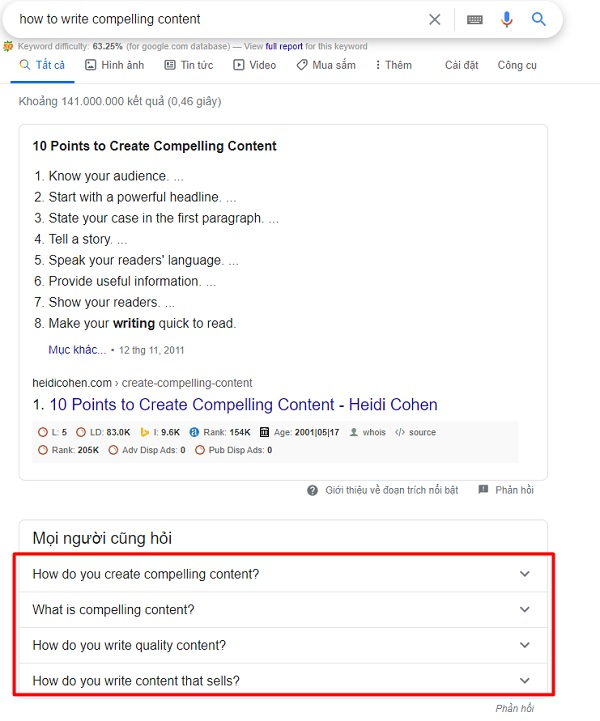
In addition, to understand and answer the questions of people searching, use English to do your research and look at the suggested questions in the “People Also Asked” section in Google’s updates.
Spend more time on detailed outlines
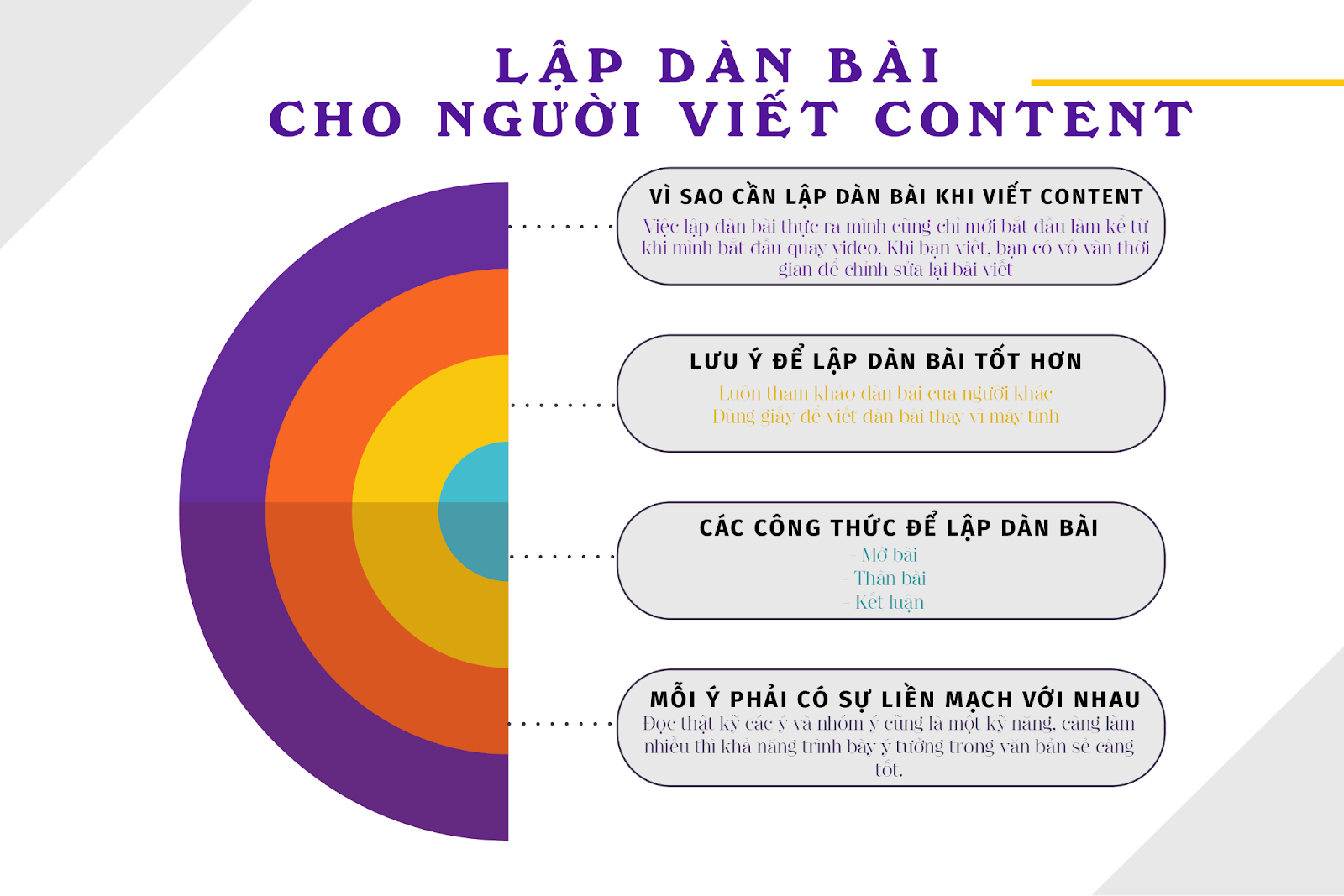
A detailed outline helps you organize your ideas as neatly as possible before you start building your content marketing. These are the essential parts of a basic outline:
– Main keyword
– A description of the article’s topic and how it solves the problem. Note: put yourself in the reader’s shoes and ask yourself, “Why should I read this article?”
– A very brief description of the target audience for the article
– Ideas for elevating and developing the article’s content.
– An analysis of the steps in the article’s structure.
Put readers’ needs first
In many ways, people are inherently selfish. As readers, they only care about the value your article can bring them. That is why your article should focus on the reader rather than on yourself. The simplest way is to use “you” and “your” more often than “I” or “we.” Here is a clear example for each case:
– A “self-centered” way of writing
“The7 – the provider of the best marketing solutions on the market”
– A reader-focused way of writing
“Solve every problem your company or business faces with effective marketing solutions at The7.”
Clear, isn’t it? The first example focuses on features and on The7 as a company. The second example focuses mostly on the customer’s benefits. So if you were a discerning customer, which way of writing would make you buy or use the service?

Provide statistics and data when needed
What The7 wants to remind you is that users usually prefer statistics and real data to empty words. So work them into your article to gain the following benefits:
– Communicate concrete benefits to readers: “This product or service will improve productivity by 50%” sounds better than “this product or service will boost your productivity many times over.”
– Provide examples or evidence for your article: Content backed by data and research shows a high level of credibility and strong quality assurance.
– Capture the reader’s attention: Statistics always attract readers’ interest, especially when they are searching for something. So where can we find statistics and data? You can refer to the following sources:
- Run surveys: You can run paper surveys or surveys on social media to gather users’ opinions.
- Follow industry research: You will often come across these materials through professional organizations or well-known research firms in your industry.
- Look for research from other online companies: Brands often write about their research findings on social media. Use this source material to support your article and make it more persuasive.
- Run your own experiments: If you are testing a new tactic or project, document the process and track performance so you can draw the most accurate conclusions.

Hold your readers’ hands with “How-to” titled articles
As digital technology develops, almost every question is looked up through Google and helpful articles. The writer’s job is to give users answers that match exactly what they need (including products or services). How-to articles in particular become much more detailed, readable, and easy to understand.
In reality, plenty of articles carry a “How-to” title but give users no useful information. In other words, they offer no concrete call to action. A “How-to…” article is truly great when the writer can show readers clearly how to get a job done. Specifically:
– The more detail, the better: Explain in depth and break down each step so readers can understand more clearly.
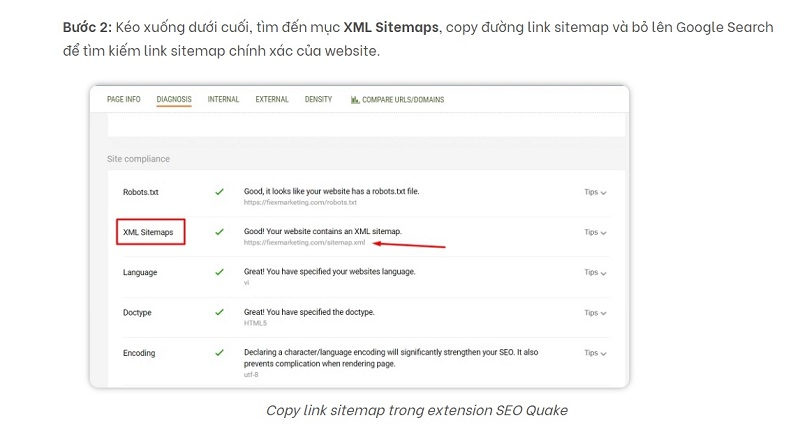
– Use plenty of screenshots: After each step, add screenshots so readers can easily visualize how to do it.
– If possible, add videos to your article: Instead of writing many words to explain something, add a short video so readers can easily follow your instructions.
What makes a great title?
Most studies show that article titles that evoke readers’ emotions get shared more. So if you want your content to spread, make sure you tap into readers’ emotions right from the title.
That doesn’t mean manipulating readers’ emotions with cheap tricks. It simply means writing titles that inspire readers and make them want to click.
Creating a title that users love is not simple at all, and making the headings of each section logically consistent with one another is even harder. The7 offers a few suggestions:
– Add a number to the title: It’s best to choose small numbers (under 20, for example), because numbers that are too large can overwhelm readers.
– Include adjectives or verbs that imply strong action or spark curiosity.
– Flip long-held assumptions on their head.

Make an impression on readers from the introduction
When users run a search and land on your page, you don’t have much time to capture their interest. So if you want them to stay on your website, write impressive openings. Here are 6 quick ways to do it:
– Start with something genuinely interesting that not everyone thinks of.
Example: 94% of internet users have a Facebook account. Missing out on marketing through this channel is a considerable loss for your company or business. You should look for engaging ways to write Facebook content that can bring practical value to your business.
– Start by sharing one of your own experiences (successes and failures) and the lessons you drew from them.
– Ask a question and spark curiosity so readers are drawn in and have to look for the answer in the article.
– Give readers plenty of the latest information (on products or services).
– Write a confrontational intro. Don’t come across as extreme, but don’t hesitate to challenge common practices either.
Optimize your title and meta descriptions
If you search on Google often, you are surely familiar with two basic concepts: the title and the Meta Description tag. The title tag is the blue link that appears on search results pages, while the Description tag is the snippet of text below that link. According to Google, the title tag and Meta Description tag should be 70 characters and 156 characters respectively.

To create a perfect title and Meta tag, follow these 3 basic principles:
– Use the main keyword in the title tag: This on-page SEO factor is extremely important, so pay close attention to it.
– Make the Meta tag appealing to readers by answering: Why should they read this article? What makes this article different from your competitors’?
– Keep the character count within the recommended limit: Otherwise, the title and Meta Description will be cut off and users won’t be able to see them in full.
Use internal links to connect your articles
Instead of repeating information you have already covered in an earlier article, you can link to that article from the one you are writing. This not only saves you time but also ensures readers can find more related content. In turn, it helps increase traffic and rankings for your older articles.
What’s more, when all your content is linked together, search engines understand that your website contains unique, closely related content. Search engines commonly use links between pages to understand how they relate to each other on your website.
Don’t stuff keywords
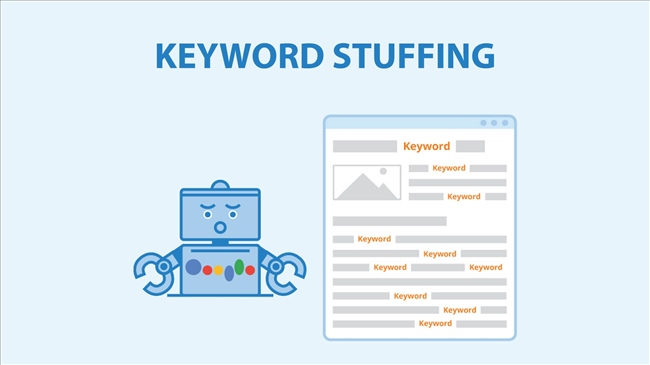
Although this issue is quite old, many people still make this mistake. That is why The7 wants to remind you not to stuff too many keywords into your article. Doing so not only fails to improve your rankings but can also lead Google to de-index your website.
Use strong action words
The purpose of a content marketing article is to persuade readers to take certain actions, such as engaging or leaving some form of feedback. Of course, to do this you need language that motivates and inspires them. The simplest way is to combine verbs with highly emphatic words, such as some of the phrases in the image below:
In practice, content writers very often skip the step of adding references to their articles. This is considered a major shortcoming that should change. In other words, if you borrow a short passage or a piece of information, link to the source of that quotation or information in your article.
Doing this can bring you several benefits:
– Increased article visibility: You can contact the article’s author directly and let them know when your post goes live on your website. This encourages them to share your article on social media, which brings more impressions and traffic.
– Highly credible information: Always make sure the information you provide is clearly verified, showing the research you have done.
– Links to trustworthy sources: This makes your article more useful to a wider range of users.
So don’t forget to add your sources when needed.
Stage 3: Optimize Your Article for Social Media Sharing (Distribution)
To make sure your article reaches readers accurately and delivers maximum results, The7 recommends sharing it on social media.
A blog post, even when thoroughly optimized, usually takes about 30–100 days to reach the top. During this period, only people who love your content and look forward to your posts will regularly visit your website to read new articles.
That is why sharing your article on social media channels helps many more people discover it. Prepare a detailed distribution plan listing the articles you will promote to help your marketing achieve better results.
Based on the engagement and comments you receive, you will gain some understanding of the needs of users in your field. That helps your company or business find ways to increase conversions and influence users’ purchasing behavior more easily.
Check for Plagiarism
Copying (plagiarism) is a common mistake when writing content marketing. It not only makes your content dull but also costs you the chance to rank high on Google, and can even earn you a penalty from Google.
When Google’s bots find 2 pages with identical content, they get confused and don’t know which page to rank. Even worse, the page may be penalized for plagiarism. This is a reminder to check your article for this problem before publishing it on your website.
CopyScape is a tool that lets you enter a URL and check whether your content matches any other website. Give it a try if needed, since it is completely free.

Know the character limits and posting rules on social media platforms
Content marketers often put a lot of effort into writing a blog post, only to summarize it again for social media because of character limits. To help you avoid this, The7 provides information on the length of social media posts and the types of content that perform best on each platform.
Add other supplementary content formats (Content Upgrades)
This is a downloadable supplementary content format that adds value to your content. It also gives users the chance to receive exclusive bonuses by signing up for your email list. Here are some of the most popular Content Upgrades among users today:
– Free Word or Excel files
– Bonus infographics
– Ebooks or highly useful research reports.
Measure performance on social media channels
Every content writer wants their article to touch readers’ hearts and deliver strong results. That is why you need to measure your content. The key metrics to track for content on each channel include:
– Blog (SEO) includes factors such as: organic traffic, number of keywords ranking at the top, CTR, time on site, and bounce rate.
– Posts (Facebook/Twitter/LinkedIn) include factors such as engagement (likes, shares, comments) and reach.
– Video (YouTube) includes views, likes, and comments on the video, and the channel’s subscriber count.
– Email Marketing: open rate and click-through rate.

More importantly, when you measure performance, you need to come up with ways to optimize your content. Practical questions that help you find ways to optimize include:
– Which topics are users searching for most and engaging with most?
– Which social channels are performing best?
– Which content formats are performing best?
If your article performs poorly or underperforms, review your ad writing skills and how you run campaigns on social media. How can you be confident your content is good when it performs poorly on social media channels? Is the message you send to users truly practical? Sometimes the problem lies with the writer.
Choose the Right Time to Share Your Articles
Unlike blogs, social media posts usually have a certain “shelf life,” typically 2–3 days or a week. After that, posts sink into oblivion and no one sees them anymore.
Of course, you can’t change this window, because millions of posts are published on Facebook every day. That is why choosing the time to post or share is extremely important: it determines how viral your posts become. Typically, when you publish a Facebook Marketing post, or a post on a social platform, the platform shows it to a small group of users first to test how well it “fits” user tastes.
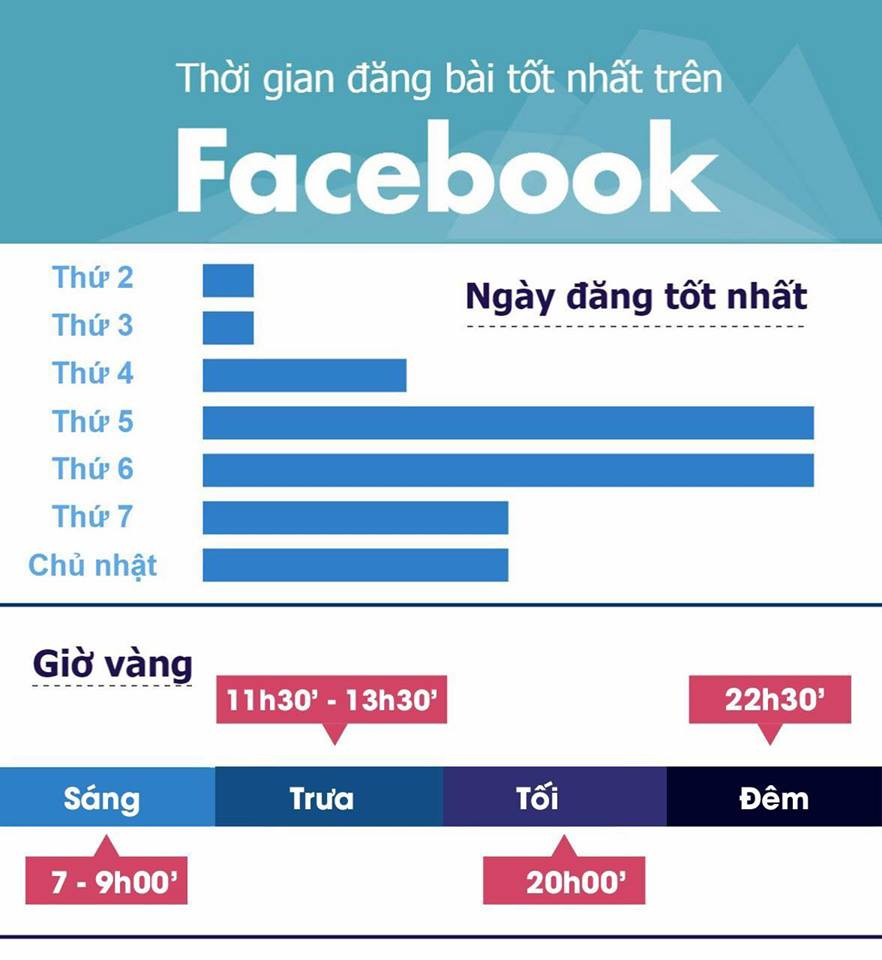
If that group of users likes your posts (shown through engagement such as likes, shares, and comments), social media platforms will expand the reach and let the post appear in more users’ feeds.
So post when your users are online so they can see your content and engage with it right away. The7 suggests the following time slots for reference:
– Facebook: Around 12:00 p.m. and 7:00 p.m. on weekdays. During these hours people are usually taking a break, so they tend to be online more.
– Blog: 11:00 a.m. on Monday and Tuesday, because at the start of the week users want to learn something new.
– Email Marketing: Send emails at 7:00 a.m. and 1:00 p.m. At these times, office workers tend to check their inboxes.
Overall, writing content marketing is fairly simple, but you need to make sure your content is truly valuable and engages readers.
Conclusion
The7 believes the information above will help you see how important it is to know how to write content marketing. It should also help you understand all the work of full-service marketing that a marketer has to do, and build the skills you need.
We hope this article gives you extra motivation to shape and build one or many professional pieces of content that create distinctive value for your services and products.
Now that you have learned the effective ways to write content marketing that The7 has shared, it’s time to show off your own content creativity! Try applying the tips above, together with your own knowledge, to create the best content possible. We wish you success in building many “high-quality” pieces of content soon!
How Can The7 Help You?
At The7, we offer two main online marketing services: dedicated consulting and quality implementation. Both are delivered by a team of specialists and experts with in-depth training. We design a tailored roadmap for your business to roll out online advertising services that are suitable and optimized, while completely eliminating activities that bring no real benefit.
With many years of industry experience, The7 works with your business to chart the direction and execution of an effective online marketing strategy, minimizing the risks of running digital activities on your own.
The7 plans strategy and executes full-service online marketing plans built on advertising solutions across Facebook, Instagram, and Google, plus web design and content marketing services.
For all information about our services, connect with us today via Hotline: 082 246 7979 – 028 3899 7377 or visit https://the7digital.com/ for a consultation!
Content marketing resources:
| What is content marketing | Types of content marketing | Content marketing strategy | Content marketing plan template | Content marketing trends 2023 |

Nguyễn Đình
Bảo




As CEO of The7, I am committed to sharing practical, useful knowledge with every reader. Every article on The7 is based on my 7 years of hands-on experience in marketing — Facebook advertising, LinkedIn advertising, Google advertising, and marketing strategy. I hope you take away plenty of insight from these posts and apply it successfully in practice.
Related Articles

Vu Lan Content Ideas That Win Customers’ Hearts
Vu Lan (Ullambana), a sacred and deeply humanistic festival in Vietnamese culture, is a time when every heart turns toward parents with profound gratitude. For brands, it’s a golden opportunity...

14 Highly Effective Content Marketing Writing Formulas
For content creators, mastering content writing formulas is essential to producing more engaging, high-value posts. Explore the 14 classic content writing formulas below and master the art of content creation....

Content Performance Metrics: 15+ Key KPIs Every Marketer Should Track
Whether you are new to the field or a seasoned content creation expert, the biggest challenge remains the same: “How do I write content that is both creative and effective?”...

The “Fat Cat” Trend: A Costly Lesson for McDonald’s Vietnam
Vietnamese social media has been abuzz in recent days over the tragic story of a Chinese young man nicknamed “Fat Cat” (Mèo Béo). Yet amid this wave of sympathy and...

5 AI-Driven Content Trends Taking Off in 2024
In the ever-changing world of marketing, innovation is the key to success. Staying ahead of trends and understanding customer needs are essential for any business that wants to claim a...

KUN Milk: Can It Break Through in Vietnam’s Dairy Market?
KUN Fresh Milk, the “offspring” of International Dairy Products Joint Stock Company (IDP) – owner of well-known dairy brands such as Love’in Farm, Ba Vi, and others – officially entered...