


 Helping Solve Environmental Problems: Potential and Challenges)
Artificial Intelligence (AI) Helping Solve Environmental Problems: Potential and Challenges
Artificial intelligence (AI) is driving a powerful revolution, reshaping life across many fields. With the strength of breakthrough technologies, AI is expected to be a key to solving global environmental challenges such as climate change. Yet alongside these great expectations, AI also raises no small number of concerns about the negative impact it may have on the environment.
AI – A Powerful Tool for Solving Environmental Problems
Improving Energy Efficiency
Artificial intelligence is steadily proving its role as a “powerful assistant” in controlling and optimizing energy use. One clear example is the AI-equipped “smart grid,” which monitors and manages power generation according to users’ actual demand, not only reducing costs but also optimizing how efficiently energy is used.

What’s more, artificial intelligence is revolutionizing energy management in large commercial and industrial systems. Technology giant Google is a prime example: it has applied artificial intelligence to cut the energy used to cool its data centers by up to 40%
Transforming Urban Infrastructure
Integrating AI into urban infrastructure is opening a new era of sustainable and efficient development. In waste management, artificial intelligence is boosting recycling rates in impressive ways. For example, the UK company Recycleye has applied artificial intelligence to identify and sort materials, reducing contamination and increasing recycling volumes while significantly easing the pressure on landfills.
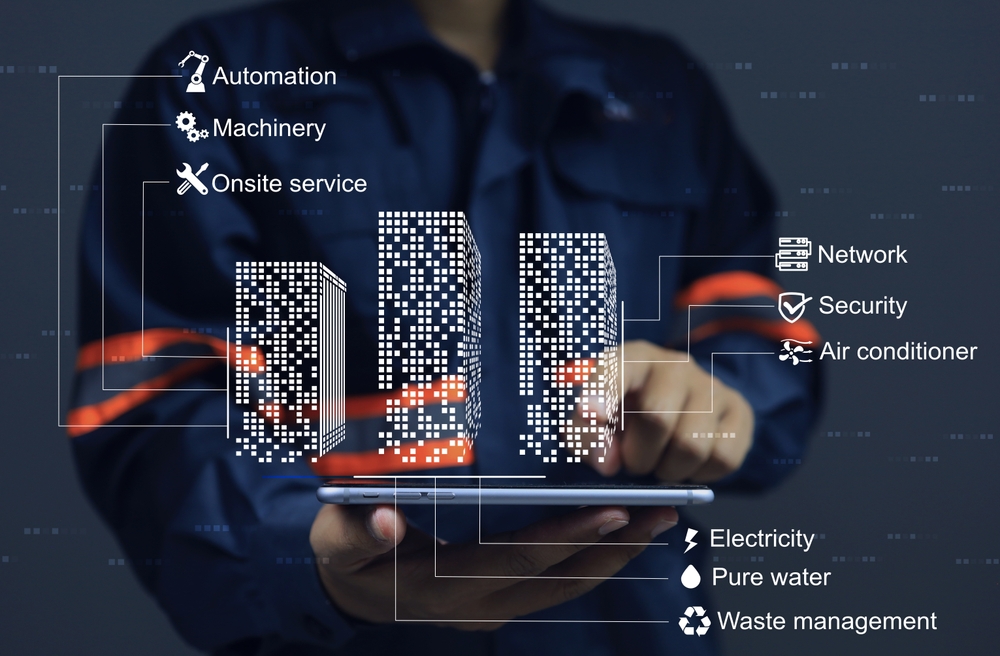
AI-equipped “smart cities” are also changing the face of urban transportation. Artificial intelligence helps reduce congestion and optimize public transit operations, which in turn cuts vehicle emissions.
Moreover, with its ability to analyze huge volumes of data from satellite sensors, artificial intelligence plays an essential role in monitoring and forecasting air quality. It not only identifies the sources of pollution but also provides forecasts of air pollution levels and issues timely health warnings, helping protect public health and the environment.
Building Sustainable Agriculture
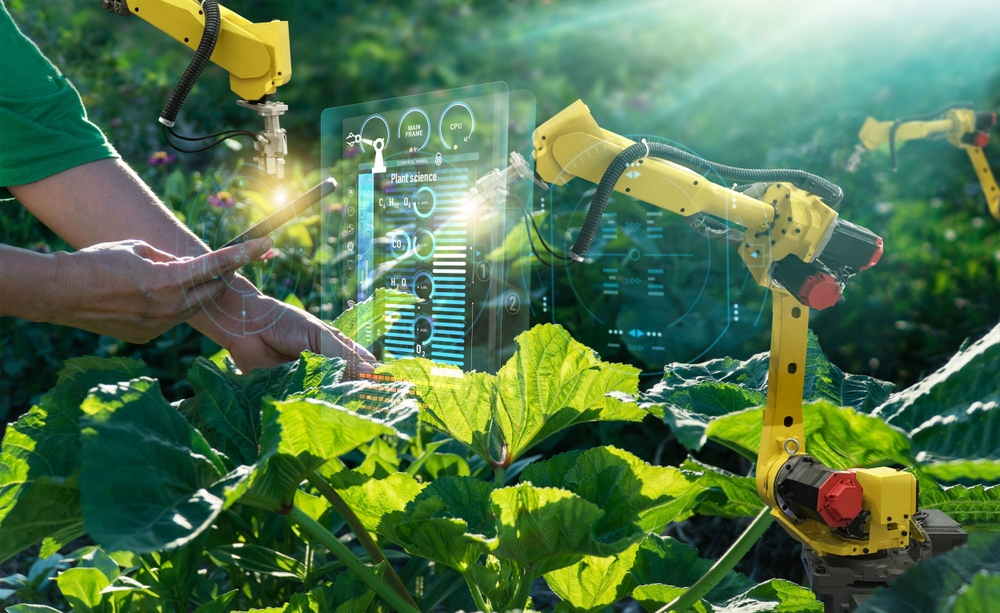
Agriculture is undergoing a revolution thanks to the boom in artificial intelligence. AI technology is present in every aspect, from smart machinery and robots to sophisticated sensors, delivering significant benefits. These tools not only monitor weather, soil conditions and crops’ nutritional needs in real time but also help optimize water use, ensuring that crops grow healthy.

Artificial intelligence also contributes significantly to detecting pests and diseases quickly and accurately, reducing reliance on chemical pesticides. As a result, production costs fall while higher-quality, more nutritious food is supplied. As climate change grows more severe, artificial intelligence gives farmers great hope in the fight against crop failure and famine, opening the prospect of a more sustainable and prosperous agricultural sector in the future.
Advanced Environmental Monitoring
Climate change is becoming increasingly severe, making natural disaster warning a major challenge. However, with the relentless progress of artificial intelligence, we are entering a new era in predicting and responding to natural phenomena. Artificial intelligence can now track environmental changes with impressive accuracy and speed, providing early forecasts of floods, wildfires, storms and earthquakes. As a result, we can prepare in time and reduce the devastating impact of natural disasters.
Artificial intelligence’s ability to measure environmental indicators is also spectacular. For example, it can track changes in icebergs 10,000 times faster than humans. Furthermore, the environmental organization The Nature Conservancy has applied artificial intelligence to reduce the impact of hydropower projects across the Amazon region, protecting one of the most precious ecosystems on the planet.
AI and the Dangers: Is It ‘Draining’ Natural Resources?
Enormous Energy Consumption
When we ask artificial intelligence to solve a problem, we are witnessing an astonishing level of energy consumption. Advanced AI models such as ChatGPT consume ten times more energy than a simple Google search.

In fact, only a small portion of this energy demand is met by renewable sources. The International Energy Agency (IEA) predicts that electricity consumption from data centers, AI and cryptocurrency could double in the next four years, from 460 terawatt-hours in 2022 to more than 1,000 terawatt-hours in 2026. To put this in perspective, Australia’s total electricity consumption in 2022 reached only about 273 terawatt-hours, which shows just how enormous the power consumption of artificial intelligence is.
Today, the world has more than 8,000 data centers, and their energy consumption is expected to double by 2026 compared with 2022.
The enormous energy consumption of artificial intelligence is mainly explained by the process of training computer models. This process, although it can be fast, often lasts from several weeks to several months and requires data processors to run continuously 24/7, contributing to the huge amount of energy consumed.
High Water Consumption
Beyond energy, the water needs of artificial intelligence also deserve attention. Data centers housing massive AI servers generate large amounts of heat, and water is used to cool them and maintain a safe operating temperature. For instance, while training the GPT-3 model, Microsoft consumed as much as 700,000 liters of fresh water, equivalent to the amount needed to produce 370 BMW cars or 320 Tesla electric vehicles.
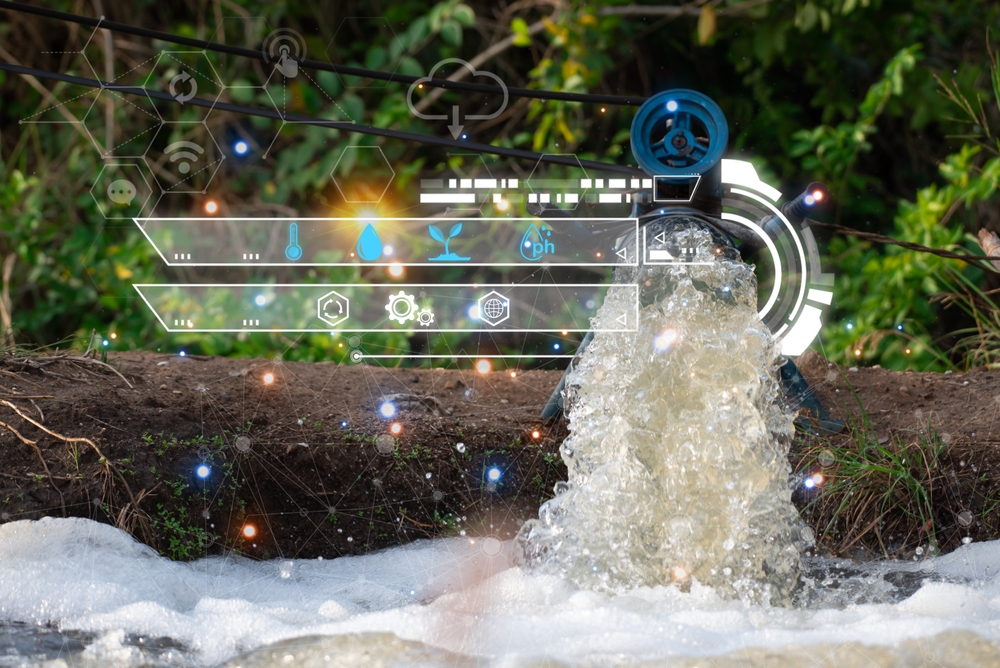
A study titled “Making AI Less Thirsty” from the University of California, Riverside and the University of Texas at Arlington found that each conversation with ChatGPT can consume about 500 ml of fresh water.
Google is also on the list of “water guzzlers.” Sebastian Lehuede of the Department of Ethics, AI and Society at King’s College London revealed that Google’s data centers consume as much as 168 liters of water per second, in regions already facing drought. As a result, the operating permit for Google’s data center in Santiago, Chile was suspended until the company adjusted its cooling plans. Google’s project to build a new data center in Uruguay has also met with opposition because of its excessive water consumption.
Solving the AI Equation: Optimizing Applications and Controlling Environmental Impact
The rapid development of artificial intelligence has opened a promising new era in which advanced technology can become a savior for our planet. Yet AI itself faces a major challenge: it consumes enormous amounts of energy and seriously affects the environment. This is a critical moment for us to take the control of AI’s environmental impact seriously.
In the European Union, the new AI Act has been rolled out, setting strict requirements for “high-risk artificial intelligence systems.” These systems must be designed to record and measure their energy consumption and environmental impact throughout their operating life cycle. This is an important step, but responsibility does not lie with governments alone. Technology companies also need to play a proactive role in reducing the impact of artificial intelligence. Microsoft, for example, has set an ambitious goal: to become carbon negative by 2030. To achieve it, Microsoft has purchased 95,000 tons of carbon removal credits, using biochar made from forest waste and buried deep underground to capture carbon. Although this is a commendable effort, compared with the resources artificial intelligence consumes, the figure is still small. To protect the planet, the world needs far more decisive and creative action.
Conclusion
The role of artificial intelligence in protecting the environment is undeniable, opening up new and promising opportunities. However, the rapid development of AI also brings notable challenges, a “double-edged sword” that we cannot take lightly. For AI to truly become a powerful warrior in the fight to protect the planet, we need not only to make effective use of its benefits but also to control the negative impacts of this technology in a careful and sustainable way. That is the key to letting AI realize its full potential and help build a green and sustainable future.
>> See more: Applying Generative AI to Content Creation
By AI Content Intern
Source: MarketingAI

Nguyễn Đình
Bảo




As CEO of The7, I am committed to sharing practical, useful knowledge with every reader. Every article on The7 is based on my 7 years of hands-on experience in marketing — Facebook advertising, LinkedIn advertising, Google advertising, and marketing strategy. I hope you take away plenty of insight from these posts and apply it successfully in practice.
Related Articles

7 Social Media Trends for 2026: The Era of Real Value, Real Conversion, and Real People
Table of Contents Toggle Social media is entering the biggest restructuring of the decadeTrend 1: Why is buying directly in-app becoming the new standard for 2026? (On-Platform Conversion)What should businesses...

How Coca-Cola Cleverly Uses AI in Flavor Development and Media Strategy
When people think of Coca-Cola, they usually picture explosive ad campaigns and a vibrant brand image. Few realize, however, that this beverage “giant” is quietly driving a marketing revolution with...

GPT-4o Officially Launches: The New Multimodal Super AI
OpenAI’s ChatGPT has just taken a major leap forward with GPT-4o (also known as Omni), a new generation of multimodal super AI. Beyond understanding language, GPT-4o handles images, video and...

5 AI-Driven Content Trends Taking Off in 2024
In the ever-changing world of marketing, innovation is the key to success. Staying ahead of trends and understanding customer needs are essential for any business that wants to claim a...
Applying Generative AI to Content Creation
Content creation has moved to center stage. Whether it’s a blog post, a marketing campaign, or a social media update, businesses and individuals are constantly competing to produce fresh content...

Big Data in Digital Marketing
Relying on guesswork and gut instinct to make business decisions is quickly becoming obsolete. With the rise of artificial intelligence (AI), businesses are shifting toward a data-driven approach. This is...