


The Coffee House: A Former Market Leader Struggling Against New Rivals With a Faded USP
The Coffee House was once a promising icon of Vietnam’s F&B industry, but recent months have seen the brand shrink at an alarming pace, with a wave of branch closures and a retreat from key markets such as Da Nang and Can Tho. From a communications perspective, The Coffee House is facing a number of major challenges, from a brand positioning and product story that have lost their pull, to mounting pressure from fierce competition and shifting consumer trends.
What Is Happening to The Coffee House?
Before its recent serious difficulties, The Coffee House was an impressive name in Vietnam’s coffee industry, one that made international brands take notice and show respect.
The Coffee House launched 10 years ago and, within just 4 years, expanded rapidly to 100 stores nationwide, with a strong presence in major cities such as Hanoi, Ho Chi Minh City, and Da Nang. This success stands out even more when compared with Starbucks, which needed 10 years to reach a similar milestone in the Vietnamese market.
According to Nikkei Asia, The Coffee House was once one of the fastest-growing coffee chains among startups in Vietnam. By 2020, the brand had spread to 18 provinces and cities and at one point operated as many as 180 stores, consistently ranking among consumers’ favorite choices alongside big names such as Starbucks and Highland.
Before 2020, customers loved The Coffee House for its attentive service and comfortable spaces. Although it was not known for many marketing campaigns, the brand still maintained a strong presence on social media channels and attracted users effectively through its own app and delivery platforms.

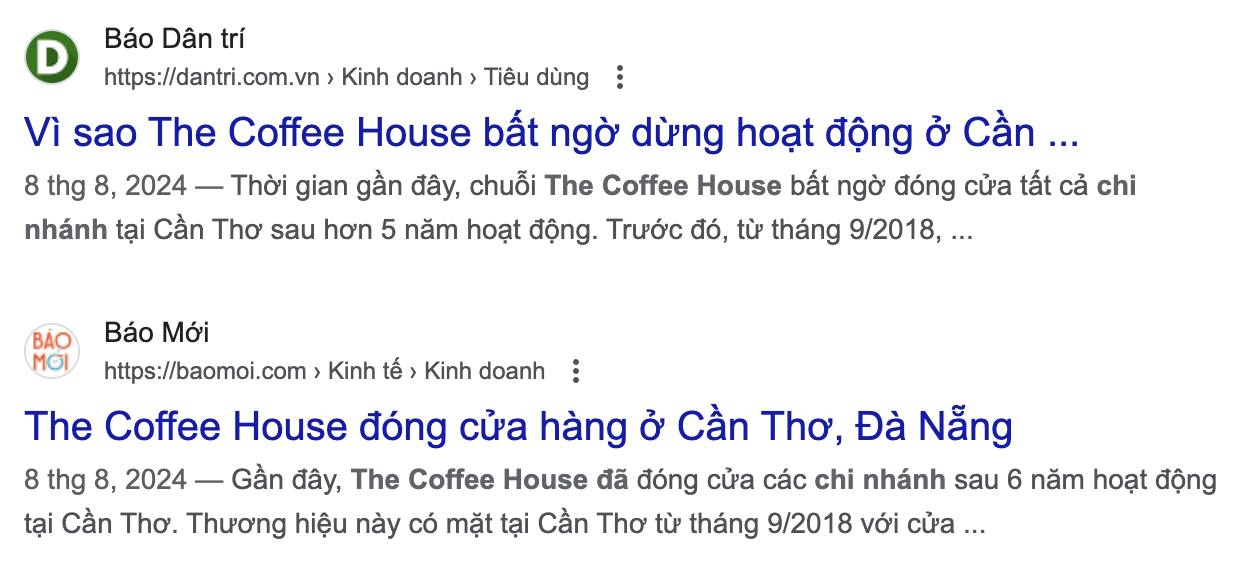
However, the Covid-19 pandemic put The Coffee House to a major test. Since 2019, the brand’s revenue has steadily declined, and in 2023 its accumulated losses reached 800 billion VND. In response, The Coffee House had to scale back its operations significantly. As of August 15, the number of stores nationwide stood at just 115, down nearly a quarter from 150 stores at the end of 2023. Notably, the brand has withdrawn completely from key markets such as Can Tho and Da Nang.
What Is Behind The Coffee House’s Decline?
While it is not yet possible to pinpoint the exact causes of The Coffee House’s decline, it is clear that the brand is struggling with a number of serious problems, from financial distress to a weakening reputation. From a communications standpoint, The Coffee House faces a series of major challenges, including:
The Coffee House’s Brand Story and Positioning Are Fading
The coffee and beverage market today is very different from the early days of The Coffee House. Many new brands such as Phê La and Katinat have emerged and expanded quickly, with compelling brand stories and distinctive designs that easily capture the attention of young customers. This has made it hard for The Coffee House to stay prominent. Its brand story has become less engaging, and its communications lack consistency, so the brand no longer holds the advantage it once had.
Although The Coffee House once had an advantage in its meaningful “Nhà” (Home) positioning, in reality, beyond the name itself, the brand has not truly brought the “Home” idea to life through its activities and strategy.
USP Fails to Stand Out in a Fiercely Competitive Coffee Market
In the past, The Coffee House’s service style and spaces were standout factors that left a deep impression on customers. Today, however, these strengths have become common standards across the coffee industry and no longer create a meaningful difference. At present, The Coffee House seems to lack a standout element to leave its mark on Vietnam’s beverage market. By contrast, its competitors have built clear positions: Starbucks dominates the premium segment, while Katinat, with creative marketing campaigns such as its distinctive cup designs, has quickly drawn attention and created a clear point of difference.
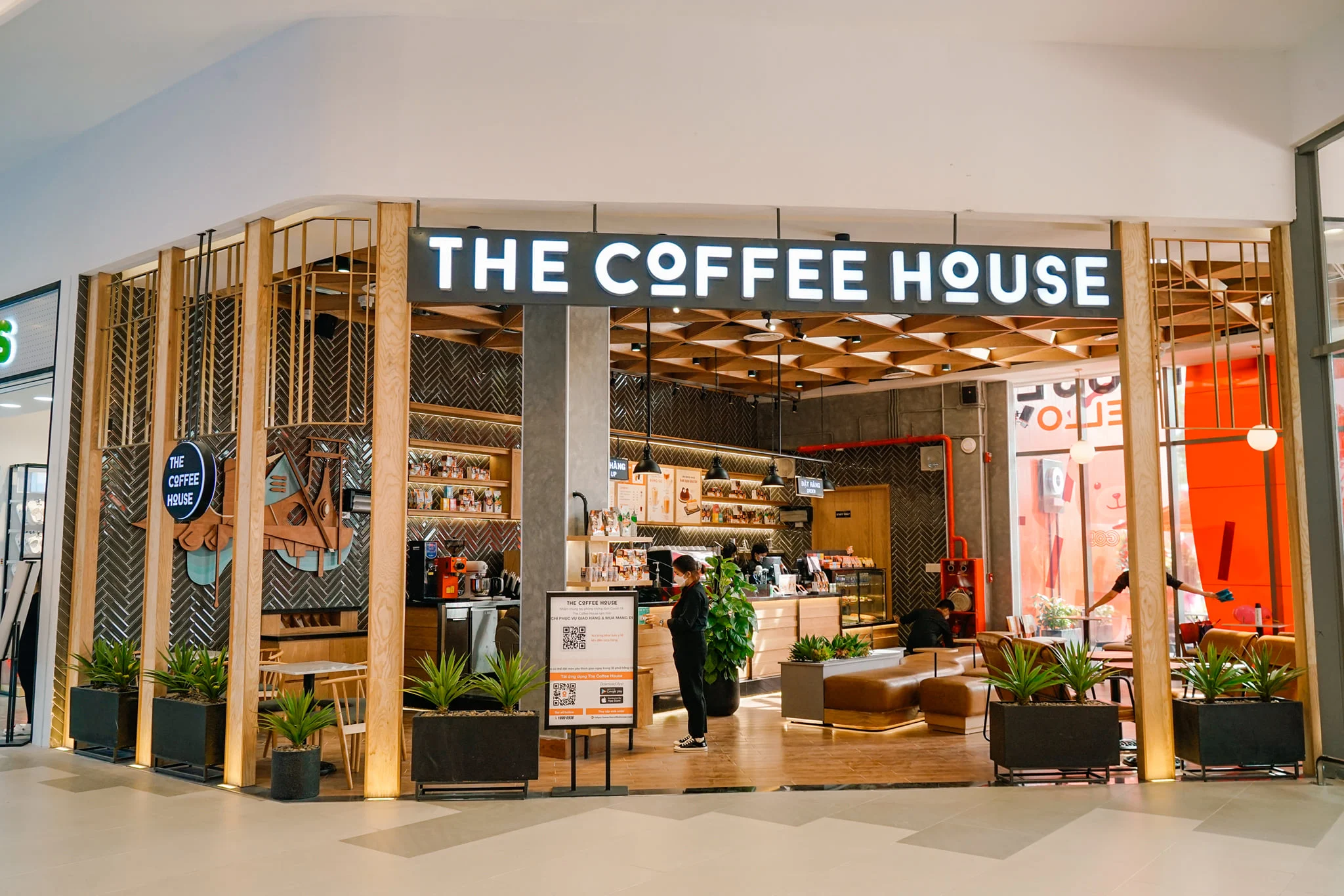
Recently, The Coffee House decided to expand its menu by adding lunch rice dishes, aiming to keep customers in its stores longer to study and work. However, this strategy has not delivered the desired results. Customers come to The Coffee House mainly to find a quiet, comfortable space for work and study, and they usually pay little attention to additional food items. On top of that, the new lunch dishes drew mixed opinions about quality and flavor, so the effort failed to win customers’ attention and satisfaction as expected.
A Major Scandal and the Lack of a Clear Recovery Strategy at The Coffee House
The accident at one of The Coffee House’s locations in May 2024 caused major damage to the brand’s reputation. Although primary responsibility lay with the property owner, The Coffee House was still hit hard, facing a wave of criticism and strong boycott campaigns from the online community.
Although the brand announced compensation and remediation measures after the situation calmed down, negative sentiment and concerns about the quality of its facilities have not eased. Instead of taking decisive action to rebuild customer trust, The Coffee House kept up only routine communications and rather unremarkable promotions. The lack of response and image-rebuilding moves has left a segment of customers disappointed, making the brand even less appealing.
Financial Difficulties at the Parent Company Weigh on the Brand
The Coffee House is currently managed by Seedcom, the parent company of several well-known brands including Juno, Hnoss, Haravan, and Cầu Đất Farm. However, Seedcom’s finances have run into serious difficulties over the past few years. In 2022, the company recorded a net loss of nearly 273 billion VND, exceeding the previous year’s loss of 238 billion VND.
Experts predict that the impact of the pandemic and the economic downturn has significantly reduced the investment capital available to The Coffee House. To cope with the funding shortfall, the brand has been forced to cut costs and optimize profitability while waiting for new financial support.
Market Pressure and Changing Consumer Habits
It is not only The Coffee House: many brands in the F&B industry are facing major challenges amid a weakening economy and shifting consumer habits. Inflation has led consumers to tighten their spending, especially by cutting back on dining out and entertainment. Even though customer traffic is still strong, the average value of each bill at F&B stores is falling.
Meanwhile, the costs of raw materials and rent keep climbing. With prime locations and high rents in particular, The Coffee House is under heavy pressure. Closing stores that are no longer profitable is therefore a reasonable step for the brand to adjust and keep operating efficiently.
How Will the Coffee Chain Market Change After The Coffee House’s Decline?
Even as The Coffee House struggles, Vietnam’s coffee chain market is still seeing Trung Nguyên and Highlands break out with impressive growth. Highlands now operates more than 777 stores across many provinces and cities, 170 more than in 2022, along with 50 stores in the Philippines. Trung Nguyên is just as strong, with about 700 stores in Vietnam and abroad. Both giants have established a solid position in the domestic market and are actively investing in strategies to expand internationally.
Phúc Long, after joining the Masan group, has overcome negative feedback about product quality and is now maintaining steady growth. According to Masan’s figures, the brand leads in profit margin, thanks to support from the Masan ecosystem and its Flagship stores.
Starbucks, by contrast, has been more cautious over the past year, with a limited expansion strategy, and is dealing with a number of internal structural issues worldwide.
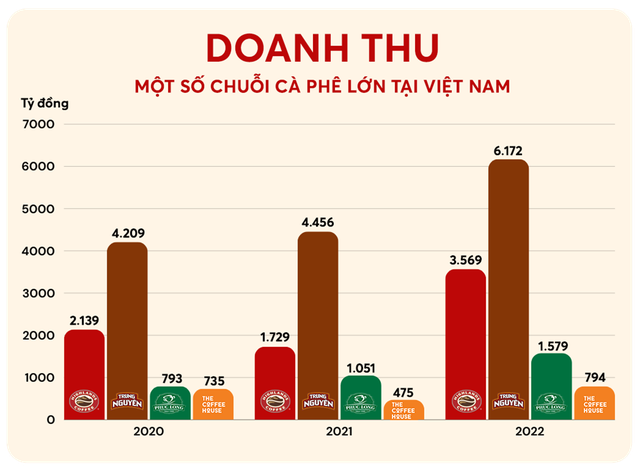
In the heated competition of the coffee market, The Coffee House’s three main rivals have rolled out standout positioning strategies that leave a deep impression.
Highlands continues to assert its strong rise by expanding its network of premium stores in prime locations. At the same time, the brand is investing in roasting plants to improve product quality, with a clear vision of expanding into international markets to strengthen its global standing.
Trung Nguyên, with its “tỉnh thức” (awakened) coffee concept, has created a striking point of difference in the market. The brand focuses on mature audiences, emphasizing the coffee experience and cultural value. At the same time, Trung Nguyên is expanding aggressively into international markets, especially the US and China, to build global influence.
Katinat, a rising newcomer, has made a strong mark with its highly creative marketing strategy. The brand keeps creating new trends to attract young people, from distinctive product designs to eye-catching promotional campaigns.
Starbucks, with its strategy of staying in the premium price segment, still holds firm in the Vietnamese market. Although it does not get much praise for the flavor of its drinks, Starbucks’ high-price strategy has helped the brand stay stable and grow amid fierce competition.
While its major rivals all have strong, clear strategies, The Coffee House faces many challenges. External market pressures, funding difficulties, and internal weaknesses such as a brand story and USP that do not truly stand out are holding the brand back. To overcome these challenges, The Coffee House needs to focus on strengthening its internal resources and refreshing its communications strategy. Doing so will not only help the brand build a clearer image but also create a deeper connection with customers, allowing it to recover and grow sustainably in this highly competitive market.
>> See more: Coca-Cola and Oreo Team Up: A Unique Limited Edition Is Coming Soon
By Khánh Huyền
Source: MarketingAI

Nguyễn Đình
Bảo




As CEO of The7, I am committed to sharing practical, useful knowledge with every reader. Every article on The7 is based on my 7 years of hands-on experience in marketing — Facebook advertising, LinkedIn advertising, Google advertising, and marketing strategy. I hope you take away plenty of insight from these posts and apply it successfully in practice.
Related Articles

Solo but Not Lonely: Vietnam’s Rise of Solo Dining in F&B
The solo-dining trend — “hotpot for one,” “lonely noodles,” or “self-dates” — is becoming a popular movement among young Vietnamese people, opening up major opportunities for the F&B industry. More...
How Katinat’s Charity Marketing Campaign Sparked Public Backlash
Recently, Katinat launched a campaign to support compatriots in Làng Nủ, a community hit hard by storms and floods, promising to donate 1,000 VND from every drink sold between September...

Gojek Decides to Cease Operations in Vietnam
After six years of building its business in Vietnam, the ride-hailing and food delivery platform Gojek has officially announced that it is shutting down. Starting September 16, 2024, users will...

E-Commerce Platform Shein Suspected of Using Toxic Chemicals in Its Clothing
The discovery of harmful chemicals in Shein’s products has raised concerns about the hidden risks in fast fashion, an industry where trends usually come first. The incident has not only...
Coca-Cola and Oreo Team Up: Unique Limited Editions Coming Soon
If you’ve always dreamed of what Cola and cookies would taste like together, now’s your chance! Coca-Cola and Oreo have teamed up to bring you a one-of-a-kind combination – but...

From Rebellious Boy to French Fashion Empire: The Story of Jean-Paul Gaultier
Unbound by traditional conventions, Jean-Paul Gaultier brought a bold, fresh wind into the fashion world. Although he never had any formal training, that did not hold him back. It fueled...