


How Is B2B Marketing Different From B2C?
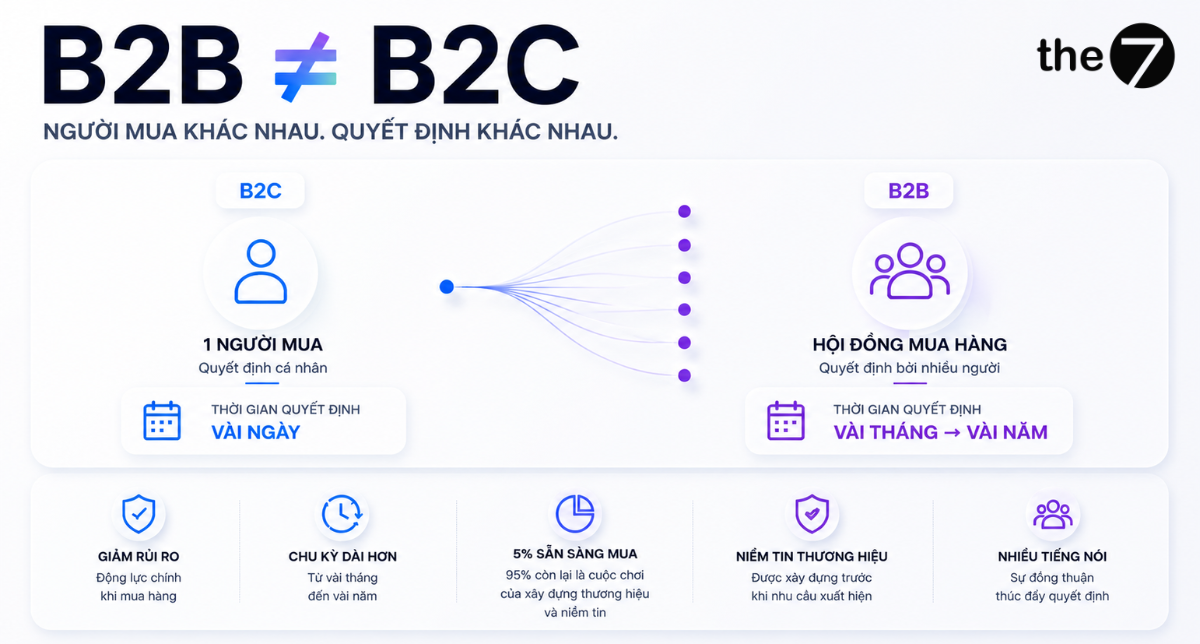
B2B marketing differs from B2C in a great many ways, but most of what you find on the internet only scratches the surface. The single most important thing to understand is this: in B2B, the buyer is often not the user, and the user is often not the one paying. That alone changes almost everything about how marketing operates.
There’s a mistake I keep seeing over and over among B2C marketers who move into B2B. They think all they need to do is swap the audience from consumers to businesses. Same old style of advertising, same old measurement, same old short-term conversion-hunting mindset, just with a different targeting list. And then they can’t figure out why the campaign isn’t generating revenue, why sales keeps complaining about poor-quality leads, or why the market barely remembers their brand.
B2B marketing is an entirely different game. Not because it’s “more sophisticated” or harder than B2C. It’s because the rules are different from the ground up. In B2C, you’re usually persuading one individual. In B2B, you’re persuading an entire system made up of many people, many departments, many fears, and many different interests. If you don’t understand that, it’s very easy to bring the wrong tool to the wrong fight.
In this article, I’ll walk you through 7 core differences between B2B and B2C. But I won’t turn it into a dry list of theory. I want to show you how these differences actually play out in the real world, through examples from manufacturing, technology, logistics, and finance. Then I’ll flip the script a bit: there are places where B2B and B2C are actually far more alike than we tend to assume, yet most B2B marketers overlook them. And finally, I’ll show you the most common mistakes people make when moving from B2C to B2B, as well as the traps B2B people tend to fall into when they move the other way.
Why weren’t B2B and B2C ever seen as two separate fields?
Today, we’re used to splitting marketing into two worlds: B2B and B2C. One sells to businesses. One sells to consumers. It sounds obvious.
But actually, people didn’t always think that way.
Before the 1960s, marketing was simply marketing. A marketing student back then might graduate and go sell soap for Procter & Gamble, or do marketing for a steel mill, with barely any perceived difference in mindset. People used the same textbooks, the same models, the same toolkit.
Philip Kotler, in his famous book Marketing Management, published in 1967, defined marketing as choosing a target market, then attracting and retaining customers through superior value. That definition didn’t distinguish at all between selling soft drinks, cosmetics, or industrial excavators. The 4P model, Product, Price, Place, Promotion, was treated as a shared framework for nearly every industry.
Everything really changed in 1972. That’s when two professors at Wharton School, Frederick Webster Jr. and Yoram Wind, published a book called Organizational Buying Behavior. And they pointed out something very important: organizations don’t buy the way people buy.
A company is not a “scaled-up human being.” When an individual buys a pair of shoes, the decision usually lives in one person’s head. But when a business buys a multi-million-dollar ERP system, the story is completely different. The engineer has his own concerns. The CFO has her own worries. The CEO has his own pressures. Legal, operations, procurement, each department views the deal through a different lens.
They called this the “buying center.” Later on, we came to know it as the buying committee.
From that point on, B2B marketing began to be treated as its own field. Universities opened dedicated programs. New research kept appearing to understand how businesses make decisions. And companies gradually realized that selling to businesses required a very different mindset from selling to consumers.
But then the internet arrived. And ironically, B2B started learning backward from B2C. SEO. Email marketing. Social media. Content marketing. Paid ads. Landing pages. Performance marketing. Most of these tools grew strong in the consumer world before spreading into B2B.
By 2006, HubSpot popularized the concept of “inbound marketing” and almost the entire industry started using the same playbook. A great many B2B companies dove into running Facebook Ads, hunting MQLs, optimizing landing pages, measuring cost-per-lead, exactly the way consumer brands were doing it.
The problem was they forgot something very important: a single click can’t close a multi-million-dollar contract on its own.
Roughly from 2020 onward, the marketing industry started reconsidering everything. People realized B2B and B2C aren’t two entirely separate boxes. Most of B2B actually sits somewhere in the middle. There are B2B companies that operate very close to B2C, like self-service SaaS platforms, where users can sign up, try, and pay within minutes without ever talking to sales.
Conversely, there are also B2C industries that operate a lot like B2B. Take luxury real estate, international education, or high-end wedding services, for example, industries where the buying decision stretches over months, involves the whole family, and the transaction value can reach hundreds of thousands of dollars.
That’s why today, the right question is no longer: “Are you B2B or B2C?” It’s: “How complex is your deal, and how does your buyer actually make decisions?”
Difference one: Why, in B2B, is the buyer often not the user?
This is probably the single most important difference between B2B and B2C. And it’s also where a lot of B2C marketers moving into B2B fail right out of the gate.
In B2C, everything is fairly simple. You buy a pair of shoes and you wear them yourself. You buy a can of soda and you drink it yourself. The buyer, the user, and the payer are usually the same person. If the experience is good, you buy again. If it’s bad, you switch brands. The feedback loop is fast and direct.
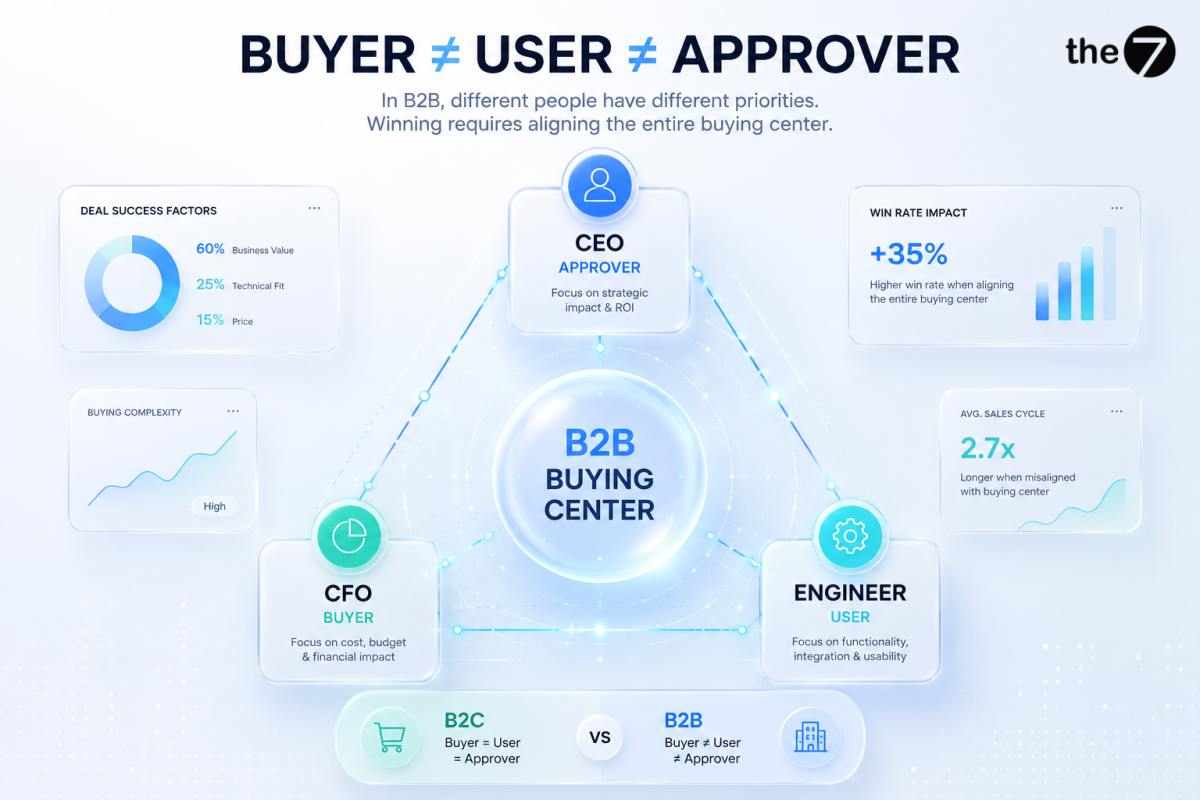
But in B2B, those three roles are usually completely separate. The person using the product may not be the one paying for it. The one paying may not be the one giving final approval. And the final approver sometimes isn’t even someone who has personally used the product, not even once.
Imagine a steel mill weighing whether to buy a new rolling line worth several million dollars. The person who’ll operate the system every day is an engineer on the factory floor. What he cares about is:
- Is the machine easy to operate?
- Is it stable?
- Does it break down often?
- Is it compatible with the existing line?
But the engineer isn’t the one paying. The CFO is. And what she cares about is entirely different:
- How long is the payback period?
- What’s the total cost of ownership over 5 years?
- Where does the financial risk sit?
- Does this investment make sense?
And finally, the person giving final approval might be the CEO. He doesn’t care much about detailed technical specs. What worries him is:
- What if the project fails?
- Is this supplier reputable enough?
- Has any company like ours implemented this successfully before?
- If we choose wrong, what does the company lose?
Three people. Three different viewpoints. Three different kinds of fear.
That’s why B2B marketing can’t operate on the model of:
“One campaign. One message. One landing page for everyone.”
In B2B, you almost always have to build multiple layers of content for multiple different people within the same deal.
For example:
- Engineers need technical documentation
- The CFO needs an ROI spreadsheet
- The CEO needs case studies and market proof
- Legal needs compliance documentation
- Operations needs an implementation roadmap
Each person needs a different kind of reassurance before they’ll dare to nod yes. I once saw an industrial equipment company lose a nearly $2 million contract over one missing thing: an ROI spreadsheet for the CFO.
They had brochures galore. They had a product video. They had very strong technical documentation. They had a beautiful case study for the CEO. But when the CFO asked:
“Show me the 5-year payback math.”
They didn’t have it ready. It took them three days to put together. And in those three days, a competitor sent over a more complete, clearer, easier-to-understand package. The deal was over.
That’s why, in the 7B model, the Buy gear isn’t just “closing the sale.” It’s an entire system of digital resources designed for multiple roles within the same buying committee. Buyers need to be able to find the exact information they need, at the exact moment they need it, without waiting for sales to explain everything one item at a time.
Difference two: Why, in B2B, are you selling not to one person but to an entire committee?
This is where a lot of B2C marketers moving into B2B start to feel like nothing “works” anymore. They’re used to talking to one person. One person sees an ad. One person makes the decision. One person clicks buy.
But in B2B, you’re rarely selling to a single individual. Most of the time, you’re selling to an entire committee made up of many different people, each with their own role, goals, and worries.
Forrester reports that the average B2B buying decision involves about 13 people. Gartner puts the range between 5 and 16 people. And there’s an even more striking data point: roughly 86% of B2B deals stall at least once simply because some stakeholder wasn’t properly engaged.
Put simply: sometimes a deal doesn’t die because the product is weak. It dies because one person never felt reassured. Imagine a logistics company shopping for an international shipping partner.
At first glance, you’d think you’re selling to the Head of Supply Chain. But in reality, plenty of other people show up in the same deal:
- The Operations Manager wants to know whether the operational system is actually stable
- The Finance Manager cares about pricing and payment terms
- The Customs Officer worries about compliance
- The IT Manager checks system integration capability
- The Country GM weighs operational risk
- The CEO is the final approver
And that’s just internally. Many deals also add:
- an outside consultant
- the procurement team
- the legal team
- or other related departments
The trouble is, each of these people views the deal from a completely different angle. For example:
- The IT Manager asks: “Is integration complicated?”
- The CFO asks: “How long is the payback period?”
- The CEO asks: “What if the project fails?”
- Operations asks: “Will this disrupt our operations?”
A single marketing message can almost never convince all of them at once. This is why the “one landing page for everyone” model tends to fail in B2B.
You can’t expect a generic brochure to make the entire buying committee nod in agreement. I once talked to a sales director at an enterprise SaaS company. He told me about a deal that seemed all but won. Their internal champion was the client’s IT director, who was extremely enthusiastic, had already tested the product, and had presented it to leadership with positive feedback.
But then the deal stalled. The reason was simple: the client’s general counsel had a question about data residency, and no one could answer it clearly enough. Not because the company didn’t have an answer. It was because marketing and sales had never considered that legal was also part of the buying committee. He had never been brought into a single meeting. And in the end, he exercised his veto. The deal was over.
This is also why, in B2B, the model of “nurture one lead, then let sales close it” is starting to fall apart. You can’t just find one “champion” and hope they’ll go persuade the other 12 people for you. You have to actively build trust with many people at the same time.
That means:
- each person needs a different type of content
- each person shows up on a different channel
- each person needs to be persuaded in a different way
For example:
- Engineers need technical documentation
- The CFO needs an ROI spreadsheet
- The CEO needs case studies and market proof
- Legal needs compliance documentation
- Operations needs an implementation roadmap
Each person needs their own kind of reassurance before they’ll dare to nod yes. That’s why, in the 7B model, Buy isn’t just “the closing stage.”
It’s an entire system of resources designed for multiple roles within the same buying committee. Not a single landing page. Not a single email. But many different layers of content, helping each person find exactly the information they need, exactly when they need it.
Difference three: Why can a B2B buying cycle stretch across months or years?
In B2C, a transaction can happen very fast, something like: you’re scrolling TikTok -> you spot something interesting -> you hit buy -> it arrives tomorrow. The whole journey can sometimes be shorter than a coffee break.
But B2B is completely different. An enterprise deal can stretch across:
- 3 months
- 6 months
- 12 months
- even several years
Especially in industries like:
- manufacturing
- logistics
- ERP
- infrastructure
- energy
- government
- heavy industry
Some contracts take longer from the first meeting to the money actually landing in the account than an entire small economic cycle. And this is where a lot of B2C marketers start losing patience. They’re used to:
- running ads today
- checking the dashboard tomorrow
- optimizing weekly
- reviewing performance monthly
But in B2B, everything moves far slower. Not because buyers are indecisive, but because the stakes are simply too high. A company can lose millions of dollars by choosing the wrong ERP system. A factory can grind to a halt from a poorly implemented operations solution. A bank can face legal risk from choosing the wrong security platform. When the money and the risk are large enough, people don’t decide in a hurry.
Imagine a government agency about to open an ICT tender. The supplier doesn’t start the game when the tender appears. They start long before that. It could be:
- attending industry conferences
- sponsoring research
- building relationships with professional communities
- partnering with universities
- showing up consistently in industry discussions
By the time the tender is officially announced, the game had, in many cases, already begun one or two years earlier.
I once studied a technology company in Shenzhen that pursued a contract with the Malaysian government for nearly four years. They didn’t run flashy ads. They didn’t spam emails. They didn’t hunt for leads every day.
They did things that were very slow and very patient:
- sponsoring scholarships
- hosting conferences
- publishing joint research
- inviting delegations to tour their factory
- building a presence within the industry community
By the time the tender appeared, they were essentially already sitting on the shortlist. This is what a lot of people don’t understand about B2B: most deals are decided long before the buyer ever actually sends a request for quote. This drives a huge shift in how marketing has to work, namely, you can’t operate on the model of: “Run a campaign for 3 months, then rest.” You have to show up continuously, steadily, reliably.
Think of it more like a heartbeat than fireworks. This is precisely the role of the Broadcast gear in 7B. Not to generate leads immediately. But to maintain mental presence in the market over a very long stretch of time.
Because you don’t know:
- whether the buyer is in month 2 or month 18 of their journey
- whether they’ve started researching yet
- whether they’ve already put you on the shortlist
- or whether they’re only quietly watching you
Most of the B2B buying process happens in silence. Buyers usually don’t tell you they’re evaluating you, they only surface once they’re close to a decision.
That’s also why so many B2B companies make the mistake of measuring marketing with last-click attribution. A customer who signs a contract today may have:
- read your LinkedIn post 8 months ago
- watched a webinar 5 months ago
- met you at a trade fair 3 months ago
- read a case study last week
- and only then clicked the final ad
That last click is just the drop that finally overflows the glass, it’s not the whole story. In B2B, trust accumulates far more slowly than in B2C. But once that trust forms, the value it creates is also far greater.
Difference four: Why does deal value in B2B completely reshape how marketing operates?
In B2C, an order usually runs anywhere from tens to a few hundred dollars. You sell a pair of shoes, a phone, or an online course. One small order rarely moves the needle much on its own. So businesses have to sell at very large volumes to grow. The whole marketing system gets optimized for scale:
- more traffic
- more orders
- optimizing ROAS weekly
- optimizing CPA per campaign
B2B is completely different. A single B2B deal can be worth:
- tens of thousands of dollars
- several million dollars
- even hundreds of millions of dollars
An ERP contract for a large corporation can run 5 years with total value in the tens of millions of dollars. One industrial equipment order for an airport can be worth as much as an entire year’s revenue for an SME. One international logistics contract can affect a customer’s entire supply chain for years to come.
When the money on the table gets large enough, the whole logic of marketing starts to change. In B2C, spending $100,000 to chase one customer would be seen as insane. In B2B, that’s perfectly normal if the deal is worth $5 million.
I once worked with an auto-parts manufacturer pursuing a major American automaker. The estimated contract value was around $200 million over 7 years.
To pursue that deal, they:
- flew back and forth between Vietnam and the US
- hired local consultants
- built a dedicated demo room for the client
- produced free sample prototypes
- spent months fine-tuning the inspection process alone
The total cost of pursuing the deal ran into the millions of dollars. Viewed through a B2C lens, that’s a reckless investment. But viewed through a B2B lens, it’s just a tiny fraction of the contract’s value. This is also why B2B marketing can’t be judged too short-term. A campaign might generate no revenue this quarter. But if it helps you land on the shortlist for a deal worth tens of millions of dollars down the line, it’s still a successful campaign. And this is where a lot of B2C marketers struggle when they move into B2B. They’re used to:
- checking the dashboard every day
- measuring every single click
- optimizing cost-per-conversion
- demanding instant ROI
But in B2B, a single click almost never closes a multi-million-dollar deal on its own. A large deal is usually the result of dozens of different touchpoints:
- an industry trade fair
- a webinar
- a referral
- a LinkedIn post
- a case study
- an in-person meeting
- an industry report
- a demo video
- a presence in AI search
The final click is just the last confirmation step. It’s not the whole journey. That’s why last-click attribution tends to get badly distorted in B2B. You can’t attribute all the revenue to:
- a single ad
- a single sign-up form
- or a single landing page
Because trust in B2B isn’t created in a single moment. It’s accumulated gradually through countless small signals over a long stretch of time. This is also why the Backing gear matters so much in the 7B model. When a company is about to sign a multi-million-dollar contract, they don’t just need a promise. They need proof.
For example:
- case studies from companies in the same industry
- security certifications
- real deployment data
- recognition from industry analysts
- reference customers
- industry press coverage
- market reviews
None of that can be created in a week. It has to accumulate over years. And that’s one of the biggest differences between B2B and B2C: in B2C, marketing is usually optimized to create a transaction. In B2B, marketing usually has to build enough trust for an organization to accept the risk of a very large decision.
Difference five: Why, in B2B, do people buy to reduce risk more than to “like” something?
There’s a very interesting truth in B2B that few people say out loud: most B2B purchase decisions are driven by fear. Not panic-style fear, but the fear of choosing wrong: fear of losing money, fear of a failed rollout, fear of pushback from colleagues, fear of damaging one’s career.
In B2C, people usually buy on positive emotion: a pair of Nike shoes makes you feel more athletic, an iPhone makes you feel more modern, a beautiful car makes you feel more confident. Emotion leads the way, and logic tends to follow afterward.
But B2B is different: logic still matters a great deal. But underneath that layer of logic is usually a very human question: “If this decision fails, what happens to me?”
That’s why there’s a famous saying in the tech world: “Nobody ever got fired for buying IBM.” It sounds like praise for IBM. But it actually says more about the buyer’s psychology. If a CTO chooses IBM and the project fails, he can still explain:
- “I chose the industry standard.”
- “This is the biggest supplier in the market.”
- “Everyone uses them.”
But if he picked a small startup and the project collapses? All eyes turn to him. This is where you start to understand something very important: in B2B, buyers usually aren’t optimizing for the “best” choice. They’re optimizing for the “safest” choice. That changes almost the entire way marketing operates. A company can have:
- better technology
- a lower price
- a nicer product
- stronger features
And still lose to a bigger competitor simply because the market feels that competitor is safer. Imagine a CFO choosing an ERP system for a corporation. There’s an up-and-coming vendor with:
- more modern technology
- a cost 40% lower than SAP
- faster implementation
But the CFO still chooses SAP. Why? Because if the project fails, she can say: “We chose the industry-standard solution.”
That’s not just a technology decision, it’s a career-protection decision. This is also why, in B2B, you have to do two things at once.
First, prove business value.
For example:
- ROI
- TCO
- cost savings
- productivity gains
- reduced operating time
But logic alone isn’t enough. You also have to reduce perceived risk. That’s why the following matter so much in B2B:
- case studies
- testimonials
- reference customers
- security certifications
- analyst reports
- industry awards
- media mentions
- market reviews
A lot of B2C marketers look at all this and think: “Why so many layers of proof?” The answer is simple: “Because the money and the risk in B2B are just too large.” I once saw a software company lose a nearly half-million-dollar deal simply because they had no customers in the banking sector. The client asked: “Which banks have you deployed for?”
The company answered:
- “We have many technology customers.”
- “We have retail customers.”
- “We have logistics customers.”
The bank replied:
“Come back when you have a case study in the financial industry.”
The deal ended, not because the product was bad, of course, but because the buyer didn’t feel safe enough to place the bet. This is also where a lot of B2B companies get storytelling wrong. They think storytelling in B2B means:
- making emotional content
- making cinematic videos
- telling inspiring stories
Not wrong. But storytelling in B2B has a much deeper job: it helps the buyer feel, “Someone like me has walked this road before, and they didn’t die.” A strong case study doesn’t just tell you:
- how the customer succeeded
It also answers:
- what problems they ran into
- what they were afraid of
- how they got past the risk
- how safely it all turned out in the end
That’s why, in the 7B model, Backing isn’t a “decorative” piece. It’s the layer of proof that reduces fear across the whole system. And in a great many B2B deals, what ultimately decides the winner isn’t:
- who has more features
- who’s cheaper
- who runs better ads
It’s: “Who makes the buyer feel safer when they sign their name.”
Difference six: Why aren’t 95% of your customers ready to buy today?
This is one of the biggest mindset shifts in modern B2B marketing, and also where a lot of companies are pouring money in the wrong place. In B2C, advertising can create demand almost instantly. You’re scrolling TikTok, you see something interesting, and you suddenly feel you “need” it. The demand is triggered by the ad itself.
But in B2B, that rarely happens. A CFO doesn’t wake up one morning and decide: “Today I’m going to buy a new ERP.” A production director doesn’t suddenly want to replace an entire production line just because he watched an ad video. In B2B, demand tends to appear when some triggering event occurs.
For example:
- the company is scaling up
- the old system has become too outdated
- a new regulation appears
- competitors are speeding up
- the current supplier runs into trouble
- the old contract is about to expire
- the business enters a digital-transformation phase
Which means: buyers don’t buy when marketers want them to. They buy when their business context forces them to.
In 2021, the LinkedIn B2B Institute and Ehrenberg-Bass published a very famous piece of research: at any given moment, only about 5% of the B2B market is actually ready to buy. The remaining 95% have no need today.
They might buy:
- 6 months from now
- a year from now
- or several years from now
This is where a lot of B2B companies go wrong. They pour almost their entire budget into:
- lead generation
- performance marketing
- demo sign-up forms
- retargeting
- conversion campaigns
In other words, they’re dumping almost all their resources into hunting the 5% of the market that wants to buy right now, while the real long game actually lives in the other 95%. This is something a lot of B2C marketers struggle to adapt to. They’re used to:
- running ads
- seeing conversions
- optimizing right away
- scaling right away
But in B2B, most of the marketing work is actually about building mental availability in the market before demand ever appears. In other words, you can’t force a buyer into their buying cycle sooner. You can only make sure that when that cycle begins, your name is already sitting there in their head. This is why strong B2B brands invest heavily in:
- content
- thought leadership
- podcasts
- industry research
- conferences
- community
- case studies
- long-term presence
At first glance, a lot of that doesn’t generate leads right away. But it creates something far more important: familiarity. And in B2B, familiarity is usually the first step toward trust. Look at Caterpillar. They don’t sell excavators by running weekly discount ads. They spent over 100 years building mental availability across the construction industry:
- publishing an industry magazine
- making videos about their machines
- sponsoring trade fairs
- showing up consistently across the global construction community
The result is that when a construction company thinks about buying an excavator, Caterpillar is almost always among the first names remembered. They don’t need to fight to squeeze onto the shortlist. They are the shortlist. This is also why, in the 7B model, gears like:
- Broadcast
- Buzz
- Backing
matter so much. They don’t exist just to generate leads this month. They exist to build mental availability in the market for years to come. And this is also the biggest trap for B2C marketers moving into B2B. They pour money into ads, and if they don’t see results within the first quarter, they start to panic and cut the budget. In reality, most of the seeds haven’t even had a chance to sprout yet, which makes B2B marketing a lot like growing a forest: you can’t make a tree grow faster by shouting at it. All you can do is:
- show up consistently
- build trust consistently
- plant signals consistently
- and stay more patient than most of your competitors
When the actual moment to buy arrives, the winner is usually not the company that advertised the most. It’s the company that has stayed present in the market’s mind the longest.
Difference seven: Why do B2B buyers actively go looking for information instead of waiting for ads?
In B2C, most buying behavior today is algorithm-driven. TikTok knows what you like before you even go looking for it, Instagram Reels keeps pushing items you never thought you needed. Shopee, Amazon, and Netflix all operate on the same logic:
- predict preferences
- recommend content
- optimize to hold attention
Modern consumers usually don’t go actively looking for a product first. The product finds them first. But B2B is almost the opposite. B2B buyers usually enter the buying journey with a very specific problem.
For example:
- a factory is running into quality defects
- an old security system no longer meets new regulations
- logistics costs are rising too fast
- the production line no longer has enough capacity
- the data center is starting to hit capacity
And when that happens, they start actively looking for answers. Not through one channel but through many channels at once. Imagine a bank’s CTO looking for a new security solution. He might:
- search Google for vendors
- ask ChatGPT to compare solutions
- read LinkedIn posts from other CISOs
- check Reddit for real-world discussion
- watch a demo on YouTube
- download a Gartner report
- ask inside a private industry community
All of this happens almost simultaneously, and this is a huge difference between B2B and B2C: consumers are usually led by an algorithm, but B2B buyers build their own research journey. This completely changes how marketing has to work. You can’t just:
- run ads
- pull in traffic
- then wait for conversions
You have to be present everywhere a buyer might show up, and this is where a lot of B2B companies discover an uncomfortable truth: if you only do Google SEO, you’re invisible in a lot of other places. Today, B2B search behavior typically runs through at least 5 gateways:
- AI chat like ChatGPT or Claude
- professional communities
- YouTube
Each one calls for a different kind of presence. For example:
- Google needs well-structured content
- AI chat needs trustworthy signals worth citing
- LinkedIn needs an expert point of view
- YouTube needs demos and visual explanations
- communities need genuine discussion from industry insiders
One company might have very strong SEO but be almost invisible on AI chat. Another company might have a barebones website yet get mentioned constantly by ChatGPT because they show up a lot in industry reports and professional forums. I once ran a fairly interesting experiment.
I asked ChatGPT:
“I’m the production director of a textile factory in Bangladesh. I need a quality-management system for the dyeing line. Suggest 5 suppliers for me.”
ChatGPT gave me a list. When I checked further, I discovered:
- only a few of them had genuinely strong websites
- some had almost no presence on Google
- yet they were still mentioned by AI repeatedly
Why? Because they showed up exactly where AI was reading:
- industry press articles
- professional forums
- technical research
- conference materials
- engineering communities
- analyst reports
The lesson is very clear: in the AI-search era, you’re not just optimizing to “be found.” You have to optimize to “be mentioned.” This is also why Browse has become such a heavy gear in the 7B model. Browse isn’t just SEO. It’s the ability to be present everywhere a buyer might pass through on their research journey. That means:
- the website has to be clear enough
- the content has to be deep enough
- the videos have to be easy enough to follow
- the data has to be structured enough for AI to read
- the brand has to show up within the industry community
This is no longer the game of: “Write a blog post and wait for Google to index it.”
It has become the game of: “Show up everywhere before the buyer even knows they need you.”
Three ways B2B and B2C are alike that most B2B marketers overlook
By now, you might think B2B and B2C are two entirely different planets. But there are three important similarities that, if you ignore them, you’ll never truly be great at B2B marketing.
First: behind every company stamp is still a human being
This is something a lot of B2B marketers forget, they treat the buying committee as if it’s some logic machine. A group of people who only care about:
- ROI
- performance
- operational optimization
- compliance
- scalability
And then the content they produce starts to sound like a robot talking to a robot. Full of lines like: “Our integrated solution delivers scalable operational efficiency.” Nobody talks like that in real life, the truth is behind every job title is still a flesh-and-blood human being. The woman sitting in the CFO seat doesn’t “decide as a CFO.” She decides as a human being who’s:
- under pressure to hit this quarter’s profit targets
- worried about her kids’ school fees
- wants a promotion
- and also afraid of making the wrong call
A CTO is the same. He’s not only thinking about the system. He’s also thinking:
- what if the rollout fails
- will the engineering team push back
- will the CEO still trust me
- could this decision affect my career
This is something B2C figured out decades ago. Nike doesn’t sell shoes, they sell a feeling: “You can become a stronger version of yourself.” Apple doesn’t just sell phones, they sell a feeling: “You are a creator.” Red Bull doesn’t sell energy drinks: they sell energy, rebellion, and the spirit of pushing past limits.
A lot of B2B companies think that emotional stuff is only for the consumer market. That’s completely wrong. People don’t automatically lose their emotions the moment they walk into an office.
Salesforce understood this very early on.
They don’t just sell CRM. They built an entire professional identity around the Trailblazer community. Their Dreamforce event feels more like a festival than a tech conference. Attendees don’t come just to learn about software. They come to feel like they belong to something bigger.
Stripe does the same thing.
They don’t just sell payment infrastructure. They built an entire worldview for developers through:
- Stripe Press
- beautifully crafted technical documentation
- essays on economics and technology
- a product experience built around craftsmanship
Even Caterpillar gets this.
They don’t just sell excavators. They sell the pride of operating heavy machinery through the Cat Trial Series videos, where excavators play giant Jenga or stack dominoes like an engineering performance.
Those videos don’t just say: “Our machines are powerful.” They make the viewer feel: “This company has soul.” That’s something a lot of B2B brands are missing. They’re so afraid of looking “unprofessional” that everything ends up:
- sterile
- bland
- indistinguishable from everyone else
- and forgettable
B2B doesn’t need to turn into an entertainment company, but you do need to remember one important thing: behind every company stamp is still a human heart. If you only speak with logic, you’re only winning half the fight.
Second: brand matters in B2B just as much as it does in B2C
There’s a mistaken belief that has lingered too long in B2B, born from over-reliance on the “marketing funnel”: “B2B doesn’t need branding. Leads are all that matter.” Plenty of B2B companies have operated on that logic for over 10 years, running:
- ad campaigns
- MQL hunting
- sign-up form optimization
- weekly cost-per-lead tracking
- and treating marketing as nothing more than a lead-generating machine for sales
Everything revolves around the question: “How many leads this month?” The problem is that mindset is too short-term, it leaves a lot of B2B companies invisible outside their own ad campaigns. Turn off the ads, and the market barely remembers who they are, that’s a sign of a weak brand. The actual data shows the opposite: research from Les Binet and Peter Field together with the LinkedIn B2B Institute shows most long-term B2B growth comes from brand, not performance marketing.
In other words: performance helps you harvest demand that already exists. Brand makes you the name people remember when demand appears in the future. Those are two completely different jobs.
In B2C, we understand this very clearly. Coca-Cola doesn’t run ads just to sell a can of soda today. Nike doesn’t build a brand just to sell one more pair of shoes this week. They’re building mental availability in the market for years to come.
B2B is exactly the same, brand in B2B just takes a different shape. It doesn’t necessarily mean an emotional TV commercial or a billboard on the street. In B2B, brand is usually built through:
- expert perspective
- long-term presence
- trust from the industry community
- reference customers
- recognition from industry analysts
- content with genuine depth
When a CEO asks a peer in the industry: “Who’s the strongest player in this space?” And your name comes up immediately. That’s brand. When Gartner places you in the Leaders quadrant of a Magic Quadrant. That’s brand. When your founder posts on LinkedIn and hundreds of CTOs share it. That’s brand. When a customer feels: “I’ve heard of this company from so many places.” That’s also brand.
McKinsey is a really interesting example. They run almost no traditional advertising. But for more than 60 years, they’ve consistently published:
- McKinsey Quarterly
- research papers
- industry reports
- economic analysis
- strategy articles
A lot of that content:
- has no CTA
- has no sign-up form
- makes no attempt to sell services right away
But it’s precisely that accumulated body of knowledge that made McKinsey the first name that comes to mind for a great many CEOs when they think of strategy consulting.
Stripe is the same, they didn’t build their brand by spamming payment-API ads. They built influence through:
- Stripe Press
- beautifully crafted technical documentation
- an outstanding developer experience
- deep content on economics and internet business
The result is that most developers already knew about Stripe before their company ever actually needed it. That’s the power of brand in B2B. It gets you onto the shortlist before the bidding process even starts. This is also something a lot of B2C marketers do better than B2B marketers:
- they understand the power of familiarity
- they understand the power of emotion
- they understand the value of being remembered
Meanwhile, a lot of B2B companies get too obsessed with:
- dashboards
- attribution
- conversion
- cost-per-lead
To the point of forgetting a much bigger question: “If we turned off the ads today, would the market still remember who we are?” That’s the real test of a brand. And in the 7B model, the gears:
- Broadcast
- Buzz
- Backing
are exactly the infrastructure for building that. They don’t exist just to generate leads this month. They exist to build mental positioning in the market for years to come.
Third: creative differentiation is still a massive competitive advantage in B2B
There’s a very common misconception in B2B: “B2B has to be serious.” And from that belief, the whole industry starts producing content that looks the same. Same-looking websites. Same-looking trade-show booths. Same-looking brochures. Same-looking corporate videos.
All of them:
- blue color scheme
- stock photos of handshakes
- a few soulless slogans
- a few growth charts
- and a closing line like: “We are committed to delivering optimal solutions for businesses.”
The problem is nobody remembers any of it. In B2C, brands understand very clearly that whatever stands out gets remembered first.
Old Spice became famous for its bizarre ads. Liquid Death sells water like a heavy-metal brand. Red Bull turned an energy drink into an extreme-sports culture.
B2B often thinks: “We can’t do that. We need to be professional.” But “professional” doesn’t have to mean “bland.” Slack is a really interesting example. When Slack launched, most enterprise software had an interface that was:
- gray
- heavy
- dry
- like accounting software from 2003
Slack did the opposite:
- playful colors
- a friendly tone of voice
- soft illustrations
- humorous ads
- a hashtag like #SlackIsWhereWorkHappens
At first glance, it looks more like a B2C startup than enterprise software. But that very difference is what made them stand out in a sea of identical competitors.
Atlassian is the same. They didn’t market their software as some cold enterprise conglomerate. They used:
- memes
- humorous ads
- very “internet” content
- a tone that feels close to developers
What’s interesting is: that playfulness didn’t make customers doubt their technical competence. On the contrary, it made the brand far more memorable.
Caterpillar is another example I really like. They could easily have made very traditional excavator demo videos:
- close-up shots of the engine
- talking about technical specs
- interviewing engineers
But they chose a different path. They created the Cat Trial Series:
- excavators playing giant Jenga
- bulldozers stacking dominoes
- performances that feel more like an entertainment show than an industrial ad
Millions of people watched those videos. Most weren’t buyers of excavators, but that didn’t matter. What mattered was that when someone in the construction industry saw Caterpillar, they immediately felt: “This is a distinctive brand.” And in a market where every brochure looks the same, being different is an incredibly valuable asset.
John Deere understood this over 100 years ago too. In 1895, they started publishing The Furrow. At first glance, it looks more like an actual farming magazine than a marketing publication. They wrote about:
- harvests
- weather
- farmers’ stories
- farming techniques
- life on the farm
They barely talked about tractors at all, but that’s exactly what made John Deere part of American farming culture. That’s something a lot of B2B companies still don’t understand, B2B buyers don’t just remember:
- features
- specs
- price lists
They also remember:
- the feeling the brand gives them
- the brand’s personality
- the way the brand shows up
- and whether that brand has “soul”
This is also why so many B2B companies fail on social media. They’re too afraid of:
- looking unprofessional
- being judged
- looking “not enterprise enough”
The result is that everything ends up:
- sterile
- safe
- indistinguishable
- and completely unmemorable
In a world where AI can churn out mass content in seconds, creative differentiation is only going to matter more. Because AI can write content. But it’s very hard for AI to create:
- real personality
- a real point of view
- real culture
- real boldness
That’s why, in modern B2B, creativity is no longer a “nice-to-have.” It’s a competitive advantage.
Five traps when jumping from B2C to B2B
If you’re moving from B2C to B2B, one thing is very likely to happen: you bring your old playbook into a completely different game. And then everything starts to feel like it’s “not working” anymore.
The first trap is measuring the wrong thing. In B2C, you’re used to watching:
- ROAS
- cost-per-purchase
- conversion rate
- revenue by campaign
Everything moves fast. Run ads today, get an order tomorrow. But B2B is different. A deal can take a whole year, and most of what builds trust never shows up in a dashboard. A customer might read your founder’s LinkedIn post months earlier, see your company at an industry trade fair, hear your name from a colleague, and only then finally click a Google ad. But the dashboard only records that final click. That’s when marketers start optimizing for whatever’s easiest to measure, instead of whatever actually drives revenue.
The second trap is using one message for everyone. In B2C, one good ad can speak to millions of people at once. But in B2B, you’re not selling to “a customer.” You’re selling to:
- the CFO
- engineers
- the CEO
- procurement
- legal
And each of them has a different worry. The CFO wants to see ROI. Engineers want technical documentation. The CEO wants to know what happens if the project fails. A generic landing page almost never has enough force to convince any of them.
The third trap is being obsessed with volume. In B2C, volume is almost always a good sign. But in B2B, 1,000 wrong leads are worse than 10 right ones. A lot of companies take pride in:
- a webinar with thousands of sign-ups
- an ebook with thousands of downloads
- MQLs that keep climbing
But sales can barely close a single deal. They later discover most of those leads were students, freelancers, or startups far too small. The dashboard looks beautiful. The sales pipeline is empty.
The fourth trap is thinking emotion no longer matters in B2B. This is where a lot of marketers start writing like robots. Content stuffed with buzzwords and sterile phrasing. They think B2B only needs logic. But people don’t automatically lose their emotions the moment they walk into an office. A CTO still has fears. A CFO still faces pressure. The difference is that in B2B, emotion needs to be backed up by logic:
- ROI
- case studies
- business cases
- implementation proof
If everything is nothing but dry logic, you’ll be very hard to remember.
And finally, the most dangerous trap of all: pouring money into ads while neglecting content and long-term assets. A lot of companies think that as long as the ad budget is big enough, growth will follow. In the short term, that can be true. But the moment the ads stop, everything vanishes. Nobody remembers who they are. That’s when you realize they never actually built any real marketing assets:
- case studies
- a podcast
- a newsletter
- community
- industry research
- a position in AI search
Ads can rent you attention temporarily. But in B2B, the long-term advantage almost always belongs to whichever company has accumulated the most trust over time.
Two traps in the opposite direction
If B2C people moving into B2B are usually shocked by how slow and complicated everything is, B2B people moving into B2C often take equally painful falls. The first trap is being too rational, not emotional enough. B2B people are used to:
- ROI
- business cases
- spreadsheets
- logic
- risk reduction
And then they carry that exact same voice into B2C. The result is ad copy stuffed with numbers, features, and dry phrasing. But most B2C buyers don’t make decisions that way.
A mother buying milk for her child doesn’t need an ROI spreadsheet. A young woman buying shoes doesn’t need a cost-per-wear analysis. Someone buying perfume doesn’t need a spec comparison.
In B2C, emotion usually leads. Logic only shows up afterward to rationalize the decision. Nike understands this very well. They barely sell sole technology. They sell a feeling: “You can become a stronger version of yourself.” Apple is the same. They don’t sell the processor chip first. They sell a feeling: “You are a creator.”
That’s something a lot of B2B people forget when they move into the consumer market: people buy with more emotion than they realize. The second trap is bringing a long buying cycle into a market where decisions happen extremely fast.
B2B people are used to:
- multi-month nurture sequences
- webinars
- email sequences
- multiple layers of content
- multiple touchpoints
That makes sense in B2B, where a deal can take a whole year. But in most of B2C, buyers don’t want to be “nurtured” for that long. They either buy or they leave. A lot of B2B marketers who move into B2C end up creating a buying journey that’s far too complicated:
- too many steps
- too many forms
- too many emails
- too much explaining
The result is customers disappear before they ever get to checkout. In B2C, speed is critically important. You need:
- an instantly clear message
- a short journey
- simple checkout
- fast decisions
The only exceptions are high-consideration categories like:
- real estate
- cars
- international education
There, some lessons from B2B still hold up.
7B applies to both B2B and B2C, it’s just the weighting that differs
After all these differences, the most important question is:
is there a marketing framework that works for both B2B and B2C? I believe there is. And that’s exactly why the 7B model exists.
The seven gears:
- Broadcast
- Buzz
- Browse
- Buy
- Believer
- Backing
- Bridge
don’t belong exclusively to B2B or B2C. They’re seven marketing functions almost every business needs:
- signaling value
- creating buzz
- showing up across search gateways
- helping customers decide
- taking care of existing customers
- accumulating proof of trust
- turning customers into a channel for new customers
What changes isn’t the nature of the gears. What changes is the weighting. An enterprise B2B company with:
- an 18-month buying cycle
- a large buying committee
- multi-million-dollar deal value
will put a lot of effort into:
- Broadcast
- Buzz
- Backing
Because they need to build mental availability in the market and accumulate long-term trust. Conversely, a fast-moving consumer-goods brand will put more resources into:
- Buy
- Bridge
Because conversion speed and viral spread matter far more. But both still need all seven gears. That’s the most important point about 7B: it doesn’t force you to choose between B2B and B2C. It forces you to look at your own actual buying behavior and allocate resources accordingly.

Nguyễn Đình
Bảo




As CEO of The7, I am committed to sharing practical, useful knowledge with every reader. Every article on The7 is based on my 7 years of hands-on experience in marketing — Facebook advertising, LinkedIn advertising, Google advertising, and marketing strategy. I hope you take away plenty of insight from these posts and apply it successfully in practice.
Related Articles
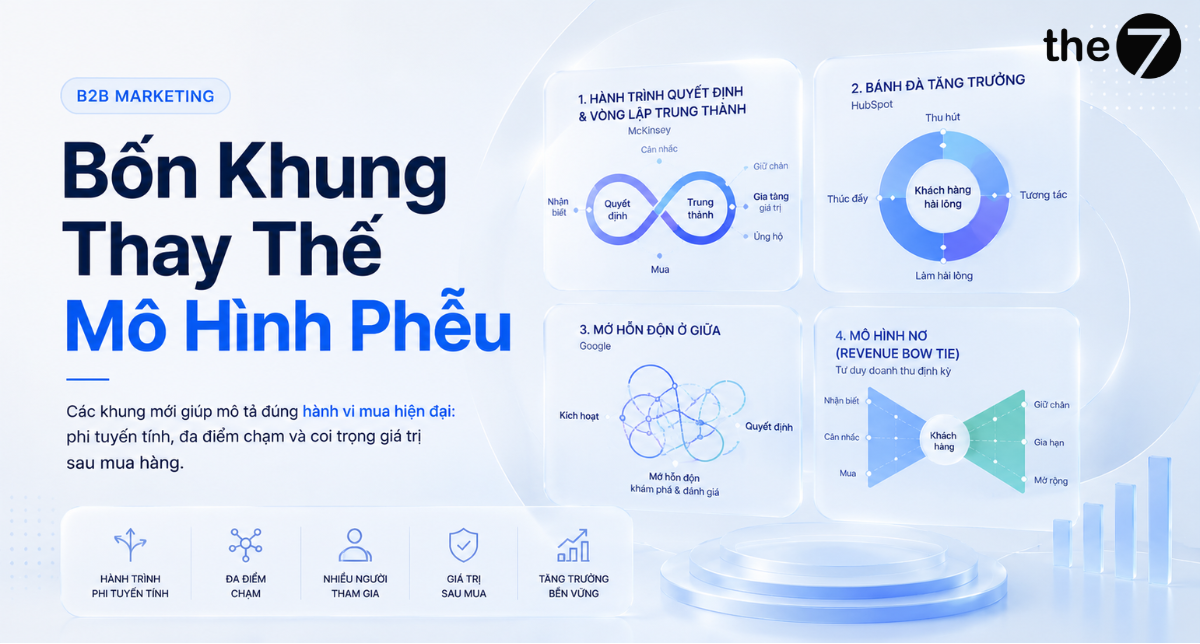
Four Frameworks That Replace the Funnel Model
Summary: As the funnel model increasingly fails to capture how modern buyers actually behave, a number of new frameworks have emerged to replace or repair it: McKinsey’s decision journey and...
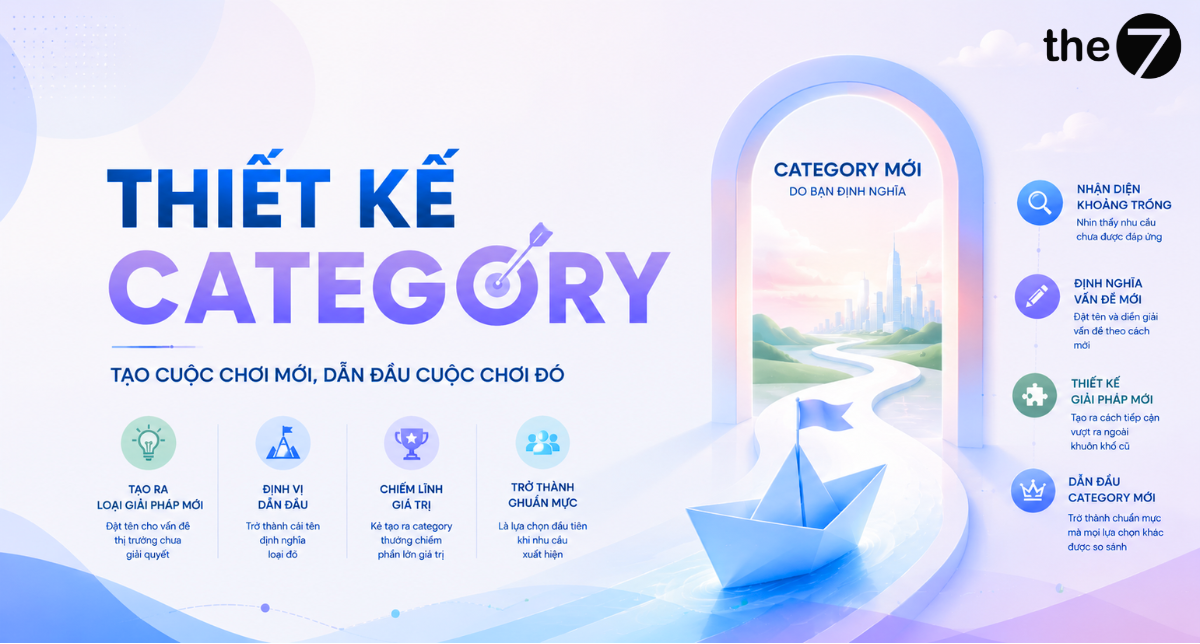
What Is Category Design?
Summary: Category design is the act of creating an entirely new type of solution in the market’s mind, instead of competing within an existing category, and then becoming the name...
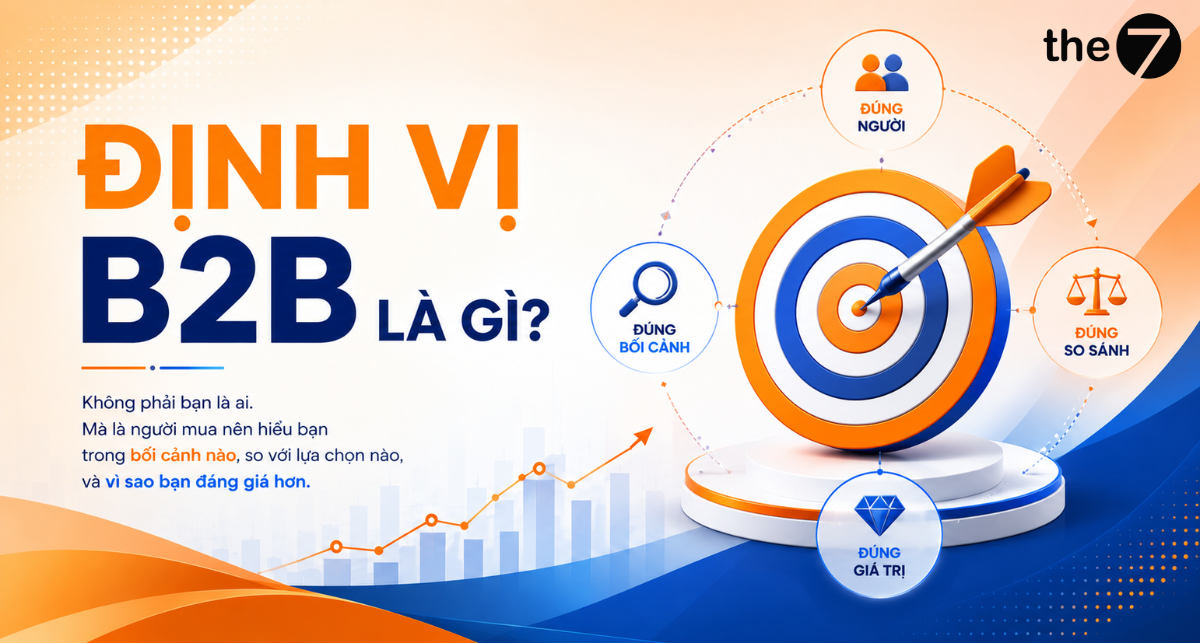
What Is B2B Positioning?
Summary: B2B positioning is the act of choosing the context you place your product into – the frame of reference that makes its value obvious to the buyer. Positioning isn’t...
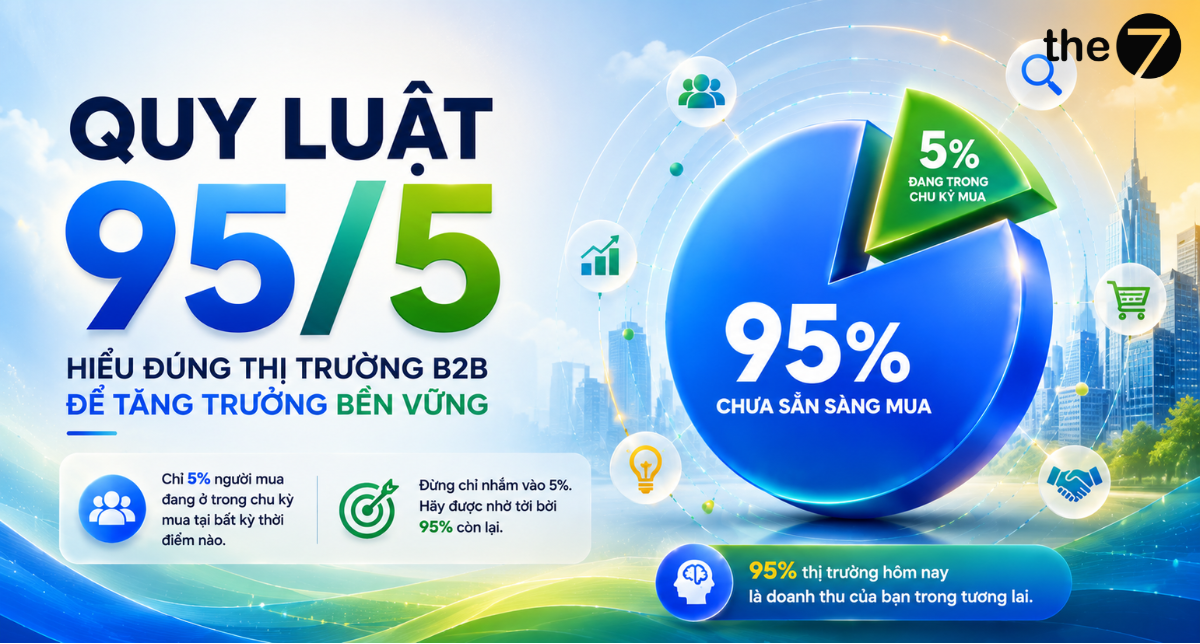
What Is the 95/5 Rule?
Summary: The 95/5 rule states that at any given moment, only about 5% of B2B buyers are actually in-market, actively in a buying cycle, while roughly 95% are not yet...
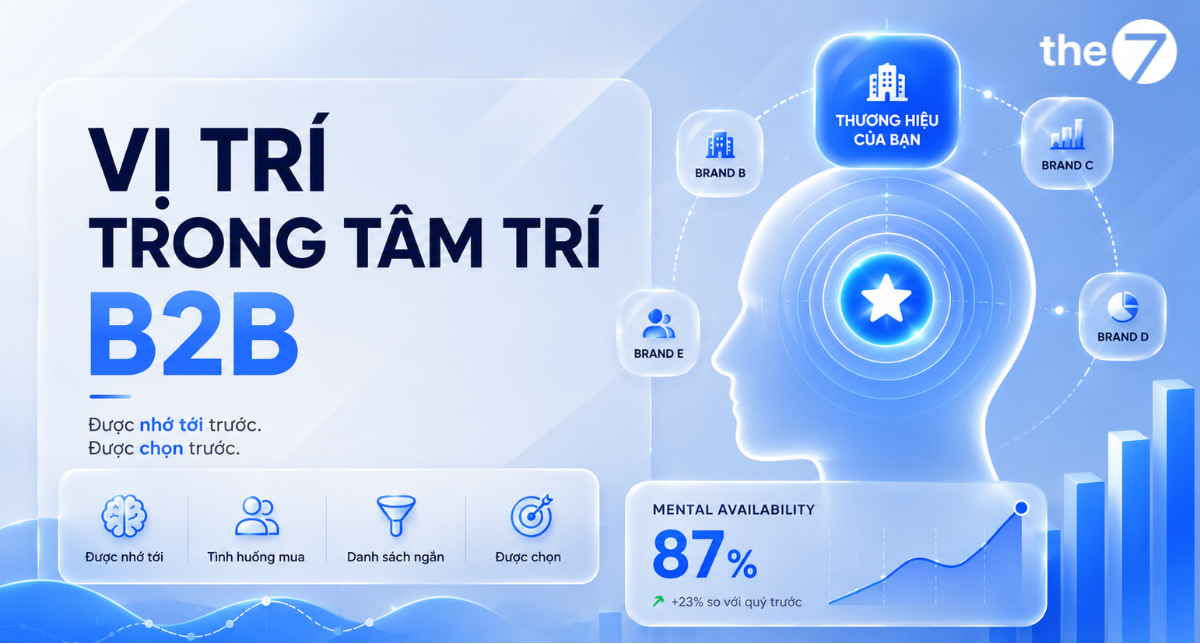
What Is Mental Availability in B2B?
Summary: Mental availability is how easily a brand comes to mind in a buying situation. It isn’t about having the sharpest argument, the slickest pitch, or the most convincing feature...
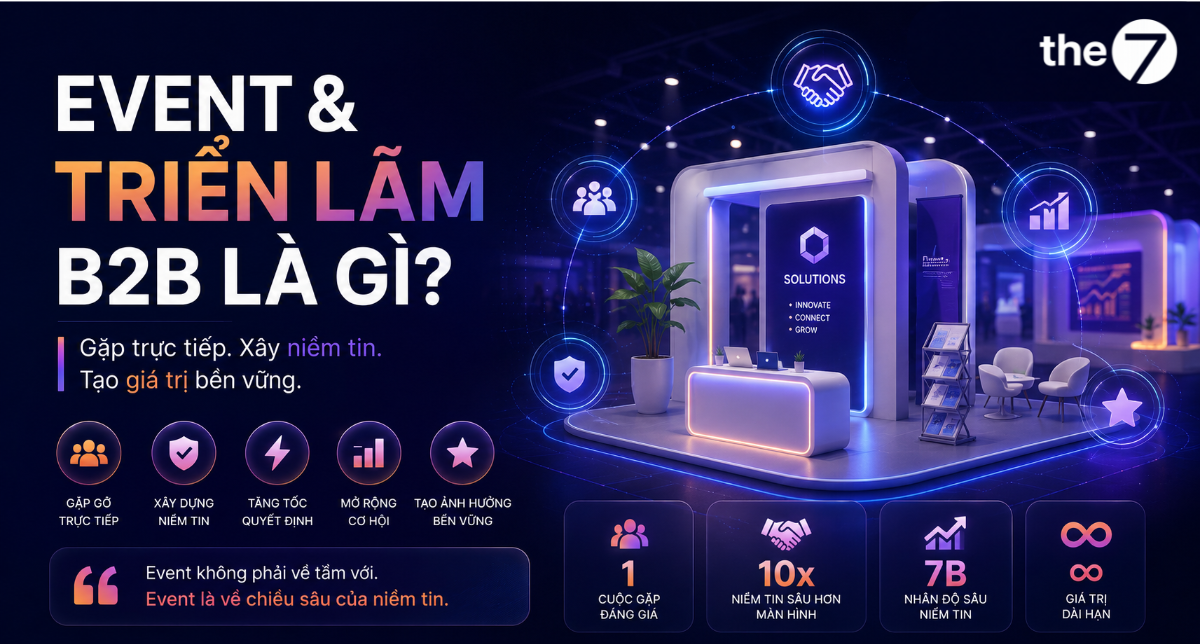
What Are B2B Events and Trade Shows?
Summary: B2B events and trade shows are in-person gatherings such as conferences, industry trade shows, workshops, and private meetings, where a business meets buyers, customers, partners, and the industry community...