


Succeeding in International Markets: Exploring the STP Strategy
When expanding into foreign markets, businesses need to master the Segmentation – Targeting – Positioning (STP) model, an essential marketing method for building a strategy in a systematic and professional way. Every market has its own distinct characteristics and works differently, so businesses must research carefully to apply a strategy that fits their business goals. The STP model is the “backbone” of every marketing plan and plays a key role in helping a business capture its market. A clear, effective STP strategy not only boosts competitiveness but also opens the door to lasting success. So what is STP, and how do you apply it effectively at each stage of your marketing strategy?
The Segmentation – Targeting – Positioning Strategy
Segmentation (Market Segmentation)
To succeed in business, a company cannot pursue the entire market and needs to segment it and choose a group of potential customers. This process starts with market research (Market Research) to understand the characteristics and needs of different groups. The business then segments the market by these criteria: geographics, demographics, psychographics, and behavioral factors (consumer behavior).
Market segmentation in the STP model helps a business optimize its resources, strengthen its competitive advantage, and avoid wasting budget by focusing on specific customer groups whose needs match the product.

For example, in the plant-based food business, a company can group customers by lifestyle (vegetarian, eat clean) or by demographics (age, income).
By combining multiple factors, a business can develop customized marketing strategies, create communication messages that fit each group, and maximize business results.
Targeting (Target Market)
After segmenting the market, a business needs to choose the target segment that fits its product. This process calls for a careful evaluation based on three main criteria: market size (Market Size), relevance (Relevance), and growth potential (Potential Growth).

First, the business must determine the market size and estimate the market share it can achieve, making sure the market is large enough to be profitable. Next, it should consider how relevant the product is to the needs of the target customers. The product must solve the problems of customers in that segment well, which increases the chance of success. Finally, the business needs to assess the market’s long-term growth potential, making sure it can expand and deliver sustainable benefits.
In addition, a business should consider feasibility, meaning its ability to reach and serve the target segment, and evaluate the competition in that segment to make sure it can capture market share. In an STP strategy, this process helps a business make sound decisions about its potential customer segments, optimize its marketing strategies, and grow sustainably.
Positioning (Brand Positioning)
A positioning strategy (Positioning) is the most important stage of the STP model and determines whether a brand lasts in customers’ minds. The main goal of positioning is to make the product clearly different from its competitors, helping the brand capture the market. A business needs to define its USP (Unique Selling Point) – the product’s one-of-a-kind advantage – and develop a strong positioning message that leaves a lasting impression on customers.
Depending on the business environment, a company can choose one of three main positioning approaches:
- Internal resources (Internally-Based Positioning): Focuses on unique factors within the business, such as technology, production processes, or workforce capabilities.
- Customer-driven resources (Consumer-Based Positioning): Emphasizes meeting customers’ needs and wants, creating value that fits their mindset and shopping habits.
- Competitor-driven resources (Competitor-Based Positioning): Positions the product through comparison with competitors, focusing on strengths that competitors lack.

Benefits of the STP Model in Marketing
- A better understanding of customers:
The STP model helps a business accurately understand its customers’ needs, wants, and buying behavior. By segmenting the market and identifying target customers, a business can develop products or services that meet customers’ needs, which strengthens their satisfaction and loyalty.
- Optimized resources and marketing effort:
It lets a business focus on the market segments with the highest growth potential and profitability. This way, the business can allocate resources efficiently and save effort and time on marketing activities, which streamlines how it reaches customers.
- Differentiation and competitiveness:
By defining its brand position in the STP model, a business can build a unique brand identity and make more of an impact than its competitors. This creates a strong competitive advantage and secures a place in customers’ minds, which in turn raises brand awareness.
- Cost savings:
The STP model helps a business avoid wasting budget on ineffective segments. By focusing on promising segments, a business can optimize its marketing costs and improve the performance of its marketing activities, which increases profit.
- More effective marketing:
It helps a business create marketing strategies and messages that fit each customer segment. This not only improves the performance of marketing activities but also reduces waste, ensuring that every marketing effort delivers the best possible results.
- Value creation and profit growth:
The STP model strengthens customer loyalty and creates value for target customers. By focusing on promising segments, a business can achieve better business results, increase profit, and strengthen its relationships with customers.
Ways to Adapt Your Product When Entering a Foreign Market
Improve the existing product: Change factors such as packaging, design, function, ingredients, flavor, color, volume, and how the product is used to meet the needs of the new market.
Offer a high-quality product: A business can sell its product to a foreign company and let it print its own brand label to its specifications, which improves access to the market.
Complementary products: Develop complementary products to go with your existing ones, adding more value for customers.
Export the existing product: Bring the current product to a new market without changing much, making use of what you already have.
Reposition the product: Rethink the product’s positioning strategy entirely so it better fits the tastes and buying habits of local consumers.
Remove some features: Cut certain product features to lower the cost or make the product simpler and easier to use.
Acquire a local business: Look for opportunities to acquire or partner with a business in the target market to build credibility and presence quickly.
Change the product name: Bring an existing product to a new market and rename it so it fits the local culture and language better, making a better impression on customers.
The Product Life Cycle
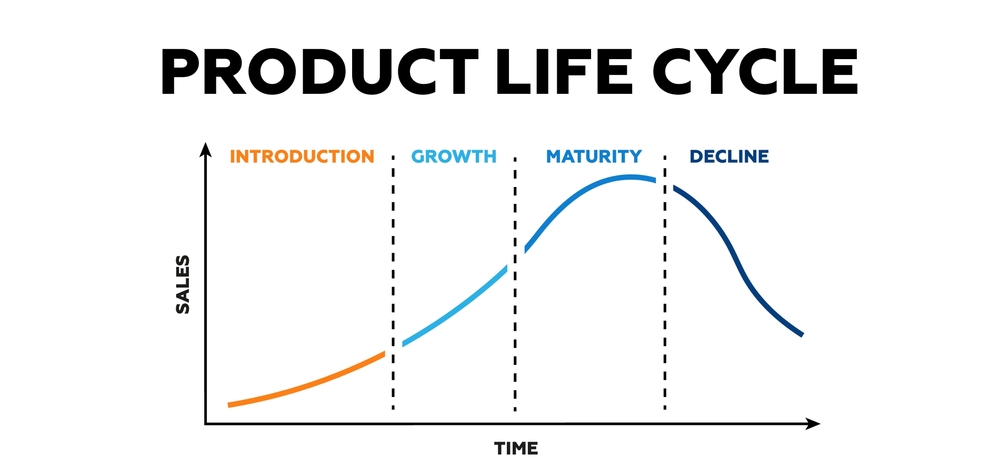
Every product introduced to the market goes through four main stages of development: Introduction, Growth, Maturity, and Decline. Understanding each stage helps a business design a sensible and effective development strategy.
Stage 1: Product Introduction
This stage begins when the product officially launches. At this point, customers are usually unfamiliar with the product, and the business cannot yet gauge how well the market will accept it. Revenue in this stage is typically very low and can lead to losses. It is the most difficult period, because if the product doesn’t get through this stage, it may never get a chance to grow. The key to success here is to use Segmentation in the STP model to segment the market and identify the target customer group, and then build a suitable product positioning message.
Stage 2: Growth
Once the product has passed the introduction stage, it enters the Growth stage. Here, as customers begin to accept and like the product, the business starts to see profit. Demand and scale increase, and if the product is a pioneer in the new market, the business has a chance to hold the leading position. Using the STP model in this stage lets a business optimize its marketing efforts and focus on the segments with the highest potential, which expands its market share.
Stage 3: Maturity
The Maturity stage occurs when the product reaches peak sales and growth begins to level off. This is when a business should consider marketing strategies, including promotions and service improvements, to stay competitive with rivals in its industry. Choosing a strategic approach from the STP model helps the business better understand customers’ needs and wants, so it can adjust its product positioning strategy accordingly.
Stage 4: Decline
Finally, every product can enter the Decline stage. The signs are falling customer demand, a market that keeps shrinking, and customers gradually losing interest in the product. A business needs to take steps to revive or replace the product in order to maintain its competitive position in the market. Digging deep into market segments through the STP model helps a business find new opportunities and develop new products, ensuring that it continues to meet customers’ needs.
Conclusion
In short, applying the Segmentation – Targeting – Positioning (STP) model when expanding into foreign markets is essential to a business’s success. By segmenting the market, identifying target customer groups, and building a suitable positioning strategy, a business can not only strengthen its competitiveness but also create lasting value. An effective marketing strategy helps a business adapt flexibly to market needs, ensuring long-term growth and success.

Nguyễn Đình
Bảo




As CEO of The7, I am committed to sharing practical, useful knowledge with every reader. Every article on The7 is based on my 7 years of hands-on experience in marketing — Facebook advertising, LinkedIn advertising, Google advertising, and marketing strategy. I hope you take away plenty of insight from these posts and apply it successfully in practice.
Related Articles
Building a Full-Funnel Content Marketing Strategy on LinkedIn
Table of Contents Toggle Why Build Content Marketing for the Full Marketing Funnel? (Why Full-Funnel Content Marketing?)Creating Your Strategy (Creating Your Strategy)Implementing Your Content Strategy (Rolling out your content strategy)Summary...
Designing Creative Content for LinkedIn
Table of Contents Toggle Why Is Good Creative Content So Important? (Why is Good Creative Important?)Key Components of Creative Design (the core elements of creative design)Summary (summary) Why Is Good...
Building an Organic Business Presence on LinkedIn With a LinkedIn Page
Table of Contents Toggle Why Have a LinkedIn Page?Establishing Your LinkedIn PageKeeping Your LinkedIn Page ActiveThe Measure of SuccessSummary About LinkedIn Page (Summary) Why Have a LinkedIn Page? For a...
6 Best LinkedIn Marketing Strategies for B2B in 2026
Table of Contents Toggle LinkedIn 2026: Where B2B Decisions Get MadeStrategy #1 – Why Is LinkedIn the Best B2B Marketing Channel Today?1. Decision-makers are concentrated here2. Users are in work...
7 Social Media Trends for 2026: The Era of Real Value, Real Conversion, and Real People
Table of Contents Toggle Social media is entering the biggest restructuring of the decadeTrend 1: Why is buying directly in-app becoming the new standard for 2026? (On-Platform Conversion)What should businesses...

What Is TikTok Marketing? Effective TikTok Marketing Strategies
TikTok has been topping the global rankings of the most downloaded and most visited apps. That makes it a gold mine for marketers who love creativity. In this article, The7...