


6 Best LinkedIn Marketing Strategies for B2B in 2026
LinkedIn 2026: Where B2B Decisions Get Made
If you work in business-to-business, you’ve probably noticed something: your most important customers aren’t on Facebook, they aren’t on TikTok, and they aren’t on the usual entertainment networks. They’re on LinkedIn. This is not an ordinary social network. It works like a giant meeting room where leaders, managers, and experts gather every day with a clear purpose: solving problems, finding solutions, evaluating vendors, and making decisions.
What makes LinkedIn special for B2B:
- Users are in work mode: they open LinkedIn to read, to research, and to prepare for meetings, not to be entertained.
Example: An HR manager opens LinkedIn to look at new recruitment solutions, not to scroll through memes. - High-quality leads: although the cost per potential customer is higher than on other platforms, the value they bring is far greater.
Example: A lead from LinkedIn can turn into a contract worth 50-100 million VND, while a lead from Facebook may be just contact details to nurture over time. - High close rate: LinkedIn users often hold decision-making power or influence decisions, which leads to a higher contract close rate.
- Genuine intent to explore solutions: they are actively researching products and services, not accidentally scrolling past an ad.
In 2026, LinkedIn remains the number-one strategic platform for B2B: when users come to LinkedIn with clear and serious intent, businesses get higher-quality leads, which means higher conversion rates and, ultimately, real return on investment (ROI). To get the most out of it, you first need to change how you see it: LinkedIn is a decision-making platform, not just a place to post “for fun.” Contact us via hotline: 0827386886 , or leave your contact details so the team at The7 Digital can advise you on turning this strategy into real results for your business.
Strategy #1 – Why Is LinkedIn the Best B2B Marketing Channel Today?
Before you think about content or ads, you need to understand what LinkedIn really is. It’s not a place to chase likes or pump up vanity numbers. It’s where decisions are made, and every strategy has to revolve around that.
1. Decision-makers are concentrated here
LinkedIn is where department heads, directors, business owners, founders, and senior experts show up regularly. Example: If you sell project management software, you want to target heads of operations or project directors, not fresh graduates.
2. Users are in work mode
Users open LinkedIn to solve problems, learn, and evaluate options.
-
- They read articles to find solutions for their work.
- They look at ads to evaluate vendors.
- They compare options before presenting them to their superiors.
Example: A chief financial officer looks at an ad for corporate expense management software to decide whether to buy it for the company, rather than just scrolling past.
3. High-intent leads
Leads on LinkedIn usually come with real intent: they’re looking for the right product or service and are ready to try it or explore it further.
Example: A customer who fills out a form to get advice on an HR solution is very likely to schedule a demo within the week.
4. Higher cost, far better results
- Leads from LinkedIn are usually more expensive than on other platforms.
- But in return, booking rates, engagement rates, and contract close rates are much higher.
- The average contract value from LinkedIn leads is clearly larger than from Facebook leads or regular email marketing.
Example: You spend 1 million VND per LinkedIn lead, but each lead could close a 50 million VND contract. If you spend 100,000 VND per lead on Facebook, the lead is worth only 2.3 million VND and the close rate is low.
Strategy #2 – Which Campaign Objective Should You Choose to Avoid Wasting Budget?
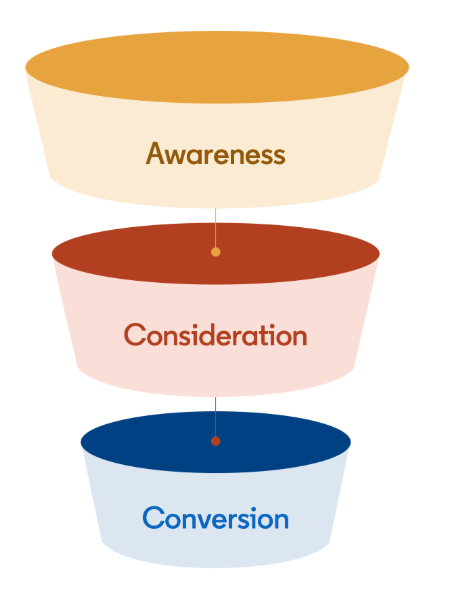
One of the biggest reasons LinkedIn campaigns fail is that businesses pick the wrong objective from the start. You want potential customers but choose a brand awareness objective; you want to book consultations but choose an objective that increases post views. LinkedIn won’t guess for you. It optimizes only for the choice you set. If you choose wrong, the campaign still runs and the numbers still look good, but the results won’t deliver real value. The three main objective groups on LinkedIn:
1. Awareness: optimize for visibility
Use it when you want to:
- Open a new market
- Increase brand awareness
- Introduce a new product or service
Example: A new software company that wants many people in the IT industry to know its brand name should choose this objective.
2. Consideration: optimize for engagement and traffic
Use it when you want to:
- Increase post views
- Drive users to your website
- Warm up the market before selling
Example: A startup that wants HR managers to read an article about a new recruitment solution before booking a demo call should choose this objective.
3. Conversion: optimize for real actions
Use it when you want to:
- Collect quality leads
- Get users to fill out a form or sign up for a consultation
- Increase booking rates and contract close rates
Example: A B2B company that wants customers ready to join a demo of its management software should choose this objective.
Three golden questions before choosing an objective
1. What do I want viewers to do?
Fill out a form? Book an appointment? Read the full article?
2. What does that action contribute to the business?
Create new customers? Nurture the market? Prepare for a sale?
3. Which metric will I use to measure it?
Number of leads? Booking rate? Cost per customer?
Tip: Choosing the right objective from the start = a campaign heading in the right direction = less risk of “burning money for nothing.”
Strategy #3 – How Do You Make Your LinkedIn Content and Visuals Truly Stand Out?
LinkedIn is flooded with corporate-style content: staff in suits, offices, charts, and boring slogans. Professional as it may be, it all looks the same. Users have become almost “image blind” and skip most posts. That very blandness creates a golden opportunity: be just a little different and you stand out right away. Here are the principles for creating LinkedIn content in 2026:
1. Avoid LinkedIn blue
Choose contrasting, eye-catching colors to grab attention.
Example: A red or orange background makes your ad pop in a blue feed.
2. Drop the formal, corporate tone
Users want to see the truth, real examples, clear data, genuine product images, and a sense of approachability.
Example: Instead of a photo of employees in a meeting, use a screenshot of your software with demo figures.
3. Post images in a square format (1:1 ratio)
Taking up more space in the feed increases click-through rate.
Example: A 1080×1080 pixel image will draw more attention than a traditional long, text-heavy image.
4. Short, strong, curiosity-driven headlines (under 70 characters)
Example:
- “Most businesses fail because of this.”
- “The next 8 lines will save you hundreds of millions of VND.”
5. Concise text with plenty of bullets
LinkedIn users read fast and like clear key points, reasons, and actions.
6. Eye-catching video in the first 3 seconds
Open with a powerful question, a surprising statistic, or a familiar situation.
Example: “73% of companies fail because they don’t manage costs effectively. Are you one of them?”
The consequences of weak creative
- Cost per click goes up
- Engagement rate is low
- The algorithm doesn’t get enough signals to distribute your ads
- You collect fewer leads, and they’re lower quality
Strong creative, on the other hand
- Reduces advertising costs
- Increases conversion rate
- Expands your reach
- Makes a strong impression on decision-makers
Strategy #4 – Which Audience Targeting Reaches the Right Decision-Makers?
Targeting ads on LinkedIn is unlike any other platform. Facebook targets based on interests and behaviors, and TikTok relies on its distribution algorithm; LinkedIn, on the other hand, gives you the most precise “professional identity” filters in the world.
This is why LinkedIn is especially powerful in B2B:
You can choose exactly the right person, the right position, the right company, the right job function, the right size, and the right industry.
The most important filters
1. Job title
Use it when you want to reach decision-makers directly.
Example: If you sell HR management software, target “HR Manager” and “HR Director.”
2. Job function
A broader target than job title, used when the market has many different names for the same role.
Example: Many companies say “Sales Manager,” others say “Business Manager,” and others say “Account Executive” → use the job function “Sales.”
3. Seniority
Distinguishes between staff, managers, directors, and senior leaders.
Example: You don’t want to advertise a service worth hundreds of millions of VND to an intern.
4. Industry
Use it when your product applies to certain industries.
Example: Data security software → finance, legal, healthcare.
5. Company size
Important for products that depend on company size.
Example: CRM software for large enterprises → target companies with more than 200 employees.
6. Skills & interests
Very effective when you need to target people with specialized expertise.
Example: AI implementation services → target the skills “Machine Learning” and “Data Analysis.”
- Matched Audiences (custom audiences)
- email lists,
- company lists,
- people who have visited your website.
This is a “gold mine” in B2B because the accuracy is extremely high.
Golden rules to avoid burning money
- Use only 2-3 targeting layers for each audience group. Adding too many shrinks the audience so much that ads can’t be delivered.
- Always exclude groups that can’t buy.
- students
- low-level positions
- irrelevant countries
- unsuitable industries
Example: Advertising business consulting services → exclude new employees, the education industry, or countries outside your target market.*
Right targeting helps you:
- Sharply reduce cost per click
- Reduce cost per potential customer
- Increase booking, demo, and contract close rates
- Deliver the right content to the right person at the right time
In B2B, targeting the right audience is the “gun barrel.” If you aim at the wrong target, no matter how good the post or how beautiful the design, it means nothing.
Strategy #5 – How Do You Optimize Budget and Schedule Without LinkedIn “Burning Your Money”?
Everyone knows LinkedIn is more expensive than Facebook, Google, or TikTok. But “expensive” isn’t the problem. The problem is spending the wrong way, which means burning your budget with your own hands. Optimized properly, LinkedIn delivers outstanding ROI.
The most effective budget optimization practices for 2026
1. Use a daily budget, not a lifetime budget.
It keeps delivery steady and stops the platform from “dumping money” on the last day.
2. Run ads during business hours in your target market.
Example: If you’re targeting the US, run on US time, not Vietnam time.*
3. Monitor at least weekly.
4. Turn off weak ads
5. Pump budget into strong ads
6. Adjust to market fluctuations
7. Turn off weak days.
Example: In many B2B industries, Friday performs very poorly because customers’ “minds have already moved on to the weekend.”*
Below are two things you must turn off right away, or they will burn through your entire budget. These are “must-dos.”
8. Turn off the LinkedIn Audience Network
- Causes fake traffic and bots
- Makes your numbers look good but creates no conversions
- Completely unsuitable for B2B
9. Turn off Audience Expansion
- Shows your ads to people you never targeted
- Breaks your original audience structure
- Generates junk leads and lowers your close rate
If you forget to turn off just these two items, #8 and #9, your entire campaign will “collapse.”
Strategy #6 – Once You Have Leads, What Should You Do to Increase Booking and Contract Close Rates?
On LinkedIn, lead quality is consistently higher than on other platforms. But there’s a harsh truth:
Even when they’re high-quality potential customers, they forget you after just 12 seconds. The reason is simple: they’re working, preparing for a meeting, or opening LinkedIn out of a morning habit. They click your ad because it looks relevant, but then go right back to work. If you don’t have a system to capture and nurture leads quickly and automatically, without letting any slip away, you’re losing 50-70% of your potential contracts.
1. Capture leads: choose the right method for your goal
You have two options:
👉 A form inside LinkedIn (Lead Gen Form)
Advantages:
- Information is pre-filled
- Extremely fast
- Outstanding completion rate (sometimes 3-5 times that of a landing page)
Example: An HR consulting company using Lead Gen Forms can generate 200 to 300 quality leads in just 1-2 weeks because filling out the form takes only 1-2 seconds.
👉 A dedicated landing page
Advantages:
- Customize content for each product
- Add videos, case studies, and illustrations
- Control the user experience
Example: A SaaS company sends users to a demo page with a tutorial video and customer testimonials, leading to a higher booking rate. Depending on the campaign, you can test both to see which fits your market and product better.
2. Nurture leads: the first 5-30 seconds decide everything
Leads from LinkedIn are high quality, but if they aren’t nurtured right away, their interest drops very fast.
The golden window: 5-30 seconds.
This is when you need to trigger automations:
- Send a welcome email immediately
Example: “Thank you for your interest. Here are this week’s open slots to schedule a call.”
- Send an SMS with a scheduling link
Very effective for B2B in Vietnam.
- Notify your sales team instantly (via Zalo or Slack)
Helps the sales team respond quickly while the prospect is still “hot.”
- Automatically move the lead into your workflow
No dependence on manual work from the sales team.
- Tag leads by source
To measure the performance of each campaign.
When you respond fast, you win. Be a little slow, and your competitor will call the customer first.
3. Automate everything: don’t let a single lead fall through
In B2B, losing leads is one of the most expensive costs. Automation ensures you never lose an opportunity.
A basic system should include:
- Lead → straight into your CRM
- Lead → notification to sales
- Lead → automated nurture email sequence
- Lead not yet closed → added to a remarketing ad group (Matched Audiences)
- Lead → segmented by industry, company size, and level of interest
Example:
A company providing business management solutions uses an automated workflow:
Lead fills out form → CRM → welcome email → SMS to schedule a call → sales calls within 5 minutes → remarketing follow-up → close rate doubles.
Automation = no lost leads = higher booking rate = higher revenue.
CONCLUSION
LinkedIn in 2026 is a game for those who understand correctly, execute correctly, and optimize correctly. LinkedIn isn’t a place to compete on noise. It’s where you compete on strategy, quality, and precision. If Facebook is a battle of cost optimization and TikTok is a battle of content, then LinkedIn is a battle of targeting the right people, delivering the right message, and building the right sales system.
To win, you only need to get 6 things right:
- Understand what LinkedIn really is: “the biggest meeting room in the world.”
- Choose the right objective from the start, because the platform optimizes exactly for what you choose.
- Make your creative completely different, and don’t look like the rest of LinkedIn.
- Target precisely, and use the power of today’s number-one B2B segmentation.
- Optimize your budget smartly, and turn off the 2 money-burners right away: Audience Network & Expansion.
- Capture, nurture, and automate, where ROI really grows.
In 2026, any business that does LinkedIn well will have a decisive advantage over the entire market. Not because LinkedIn is cheap, but because LinkedIn delivers the right people, the right needs, and the right timing.
It’s time to turn LinkedIn into a real growth engine for your brand. If you want to move faster, hit harder, and head in the right direction from the start, contact us via hotline: 0827386886 , or leave your contact details so the team at The7 Digital can advise you on turning this strategy into real results for your business.

Nguyễn Đình
Bảo




As CEO of The7, I am committed to sharing practical, useful knowledge with every reader. Every article on The7 is based on my 7 years of hands-on experience in marketing — Facebook advertising, LinkedIn advertising, Google advertising, and marketing strategy. I hope you take away plenty of insight from these posts and apply it successfully in practice.
Related Articles
Building a Full-Funnel Content Marketing Strategy on LinkedIn
Table of Contents Toggle Why Build Content Marketing for the Full Marketing Funnel? (Why Full-Funnel Content Marketing?)Creating Your Strategy (Creating Your Strategy)Implementing Your Content Strategy (Rolling out your content strategy)Summary...
Designing Creative Content for LinkedIn
Table of Contents Toggle Why Is Good Creative Content So Important? (Why is Good Creative Important?)Key Components of Creative Design (the core elements of creative design)Summary (summary) Why Is Good...
Building an Organic Business Presence on LinkedIn With a LinkedIn Page
Table of Contents Toggle Why Have a LinkedIn Page?Establishing Your LinkedIn PageKeeping Your LinkedIn Page ActiveThe Measure of SuccessSummary About LinkedIn Page (Summary) Why Have a LinkedIn Page? For a...
What Is Facebook Ads? Popular Types of Facebook Advertising
What is Facebook Ads? This is surely a question many people wonder about, especially those just starting to learn about Facebook advertising. Let’s explore Facebook Ads from A to Z...

26 Predictions for Social Media Marketing Trends in 2025
It’s that familiar time of year again, when experts and analysts start revealing their predictions for the social media marketing trends worth watching, along with the shifts that promise to...
Strategies to Optimize Your Brand’s Activity on Threads
In April, Zuckerberg revealed that Threads had more than 150 million monthly active users, a significant jump from the 130 million users reported in February. This shows the platform is...