


How Katinat’s Charity Marketing Campaign Sparked Public Backlash
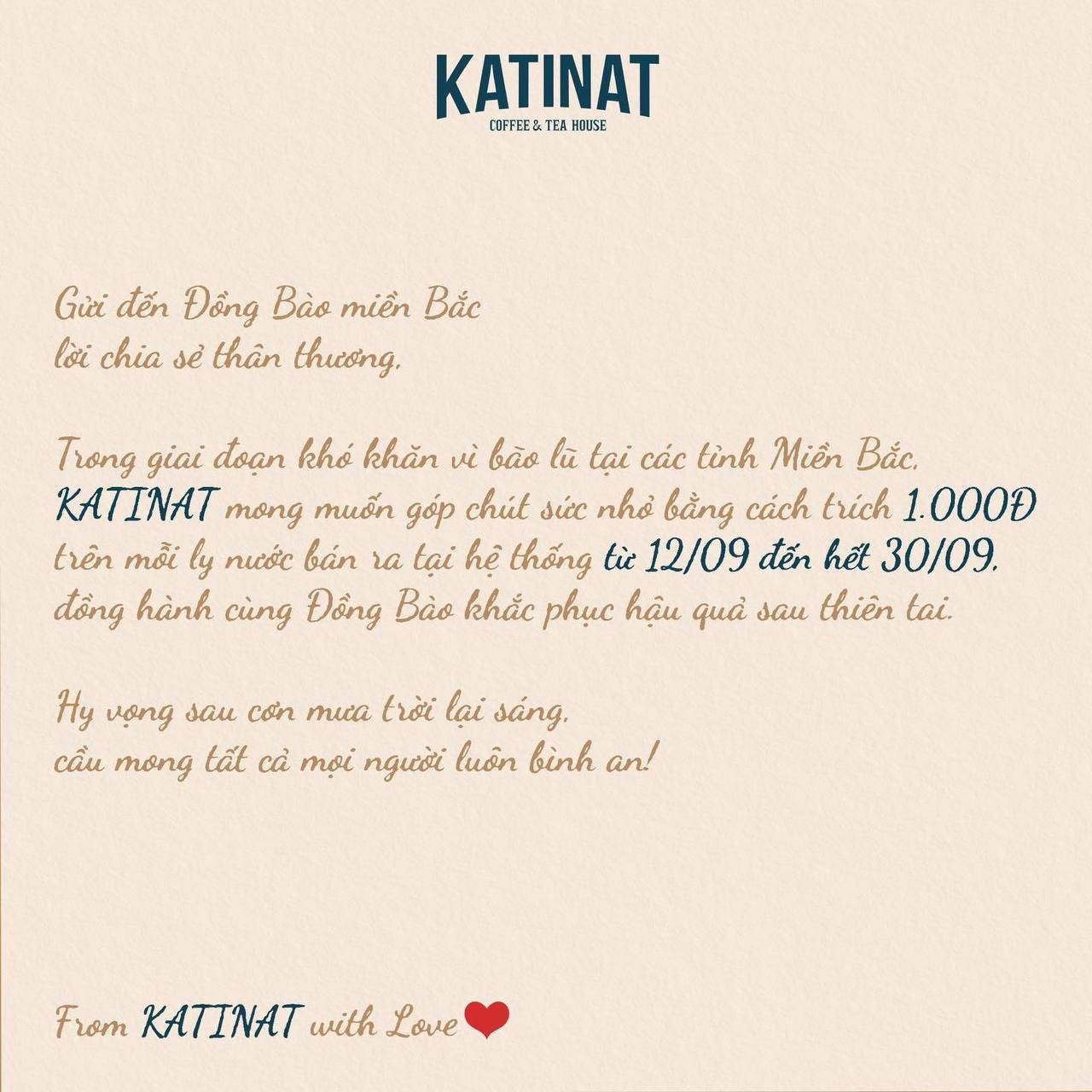
Recently, Katinat launched a campaign to support compatriots in Làng Nủ, a community hit hard by storms and floods, promising to donate 1,000 VND from every drink sold between September 12 and September 30. Instead of earning support, however, Katinat ran into a wave of sharp criticism online. Many people argued that it was a calculated marketing strategy to boost revenue and attract attention rather than a genuine act of charity. That raises a question for marketers: why did a campaign with good intentions backfire?
Katinat’s Campaign Amid the Floods in Northern Vietnam

On the morning of September 12, a flash flood and landslide struck Làng Nủ, leaving devastating consequences for its residents. In response, the Vietnam Fatherland Front launched a fundraising campaign to support those affected. Many brands quickly joined the relief efforts and received warm support from the community. Not every brand was welcomed, though. The well-known coffee brand Katinat is a prime example: its support program drew a wave of strong criticism from social media users the moment it was announced, raising questions about the campaign’s true motives.
Katinat’s Campaign Draws Heavy Criticism
On the evening of September 11, Katinat caught attention on its Facebook Page with a post titled “Katinat Chung Tay Hướng Về Miền Bắc” (Katinat Joins Hands for the North). The brand announced that from September 12 to September 30, it would donate 1,000 VND from every drink sold to help compatriots in the North recover from the natural disaster. As soon as the news broke, the post attracted a great deal of attention, with more than 132,000 engagements and nearly 93,000 comments. Instead of support, though, most of the responses criticized Katinat, suggesting the campaign might be more of a marketing gimmick than a sincere act of charity.
Katinat may have expected its campaign to win enthusiastic support from consumers, but the reaction was the complete opposite. Many people felt the plan was ineffective and not practical enough given the urgency of the situation, and that the brand had misused CSR while people’s lives and safety were under serious threat. Sarcastic comments pointed out that Katinat would have to sell 1,000 drinks to raise just 1 million VND, while simply transferring 1 million VND directly would be far more useful. This set off a wave of criticism, with many people arguing that the campaign was really just a calculated marketing ploy to promote the brand and increase revenue, rather than provide meaningful help to those in need.
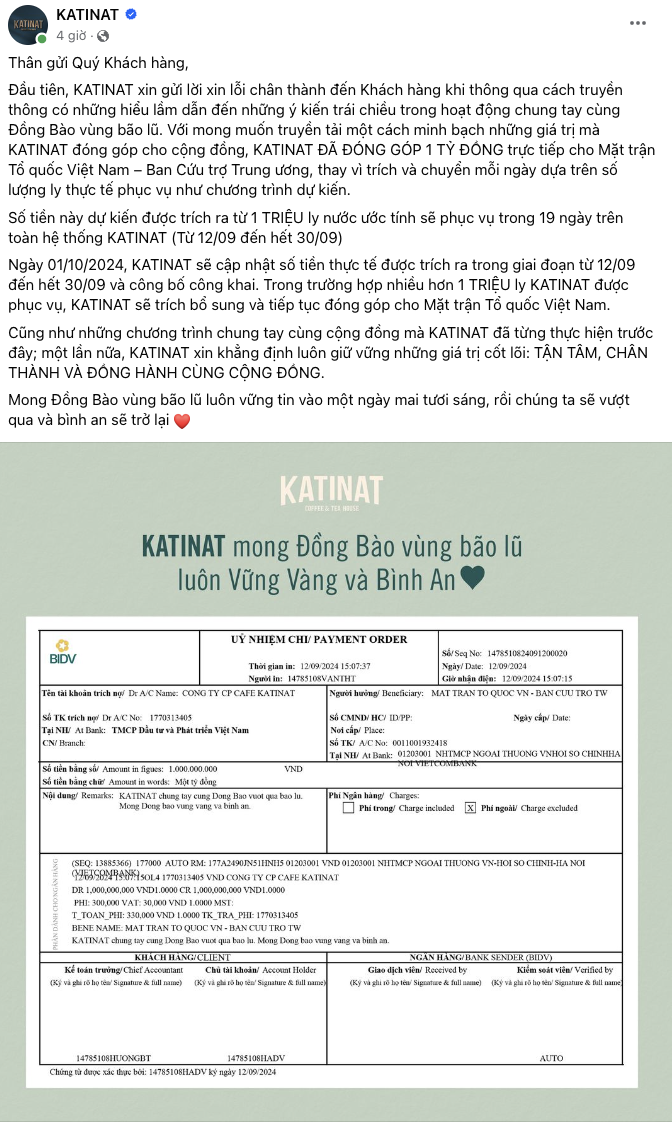
The next day, Katinat published an official apology for the misleading way it had communicated the campaign. To make up for the mistake, it donated 1 billion VND directly to the Vietnam Fatherland Front, equivalent to 1 million drinks sold over 19 days. Instead of donating day by day based on sales, Katinat decided to transfer the money upfront to calm public opinion. It also pledged that if sales exceeded 1 million drinks after September 30, the donation would be topped up. Even so, despite the large sum being sent, the anger online did not subside. Under the apology post, quite a few people kept leaving harsh comments, arguing that Katinat was only trying to “patch up” the original communication blunder rather than acting with real sincerity.
Still, some consumers took a more positive view, arguing that in the current tense climate, any action to support compatriots deserves appreciation, and Katinat is no exception. Notably, some even suggested this might have been a carefully staged campaign designed to stir up controversy and draw attention on social media. That led many to question how a brand once known for its well-planned marketing strategies could make such an illogical mistake. That said, it is undeniable that engagement and discussion around the brand surged to unprecedented levels throughout the campaign.
Comparing Katinat’s Campaign With VietJet and XanhSM
Although Katinat’s campaign aimed to serve the community, the brand’s communication lacked the sensitivity it needed. Rather than highlighting the spirit of sharing and supporting flood victims, Katinat’s message left many people feeling that the brand was indirectly urging them to buy its products. If Katinat had made specific commitments from the start, such as donating 10% of daily revenue or a clear fixed amount not tied to commercial gain, the story might have taken a more positive turn.
Katinat’s campaign was put side by side with those of VietJet and XanhSM, two brands that took a similar approach: VietJet donated 5,000 VND per flight, and XanhSM donated 1,000 VND per ride. Yet instead of facing criticism like Katinat, both brands were well received by the online community thanks to the skill and clarity of their messaging.

VietJet, for example, openly disclosed the amount it planned to donate, up to 5 billion VND, along with a commitment to contribute 2 billion VND right away on September 10, 2024. It also operated free flights to carry relief supplies to the flood zones, showing clear commitment and practical action. Thanks to this transparency and clarity, VietJet and XanhSM avoided negative reactions. Had Katinat learned to communicate with the same care, it might not have faced the fierce backlash it is dealing with now.
Conclusion
Katinat’s charity campaign, despite its good intentions, drew strong criticism for the brand. It not only reflects how sensitive consumers are to relief efforts but also offers an important lesson about communication in marketing. For a charity campaign to make a truly positive impact, brands must ensure transparency, specificity and sincerity in how they deliver their message. Katinat’s experience shows that tying commercial goals to charitable purposes can trigger a negative reaction if it isn’t handled with care. Brands should learn from the successes and failures of past campaigns to build a marketing strategy that is both effective and trustworthy, creating a positive image and earning the community’s trust.
>>> See more: SKIN1004: Expert Crisis Management That Wins Back Consumer Trust

Nguyễn Đình
Bảo




As CEO of The7, I am committed to sharing practical, useful knowledge with every reader. Every article on The7 is based on my 7 years of hands-on experience in marketing — Facebook advertising, LinkedIn advertising, Google advertising, and marketing strategy. I hope you take away plenty of insight from these posts and apply it successfully in practice.
Related Articles
Building a Full-Funnel Content Marketing Strategy on LinkedIn
Table of Contents Toggle Why Build Content Marketing for the Full Marketing Funnel? (Why Full-Funnel Content Marketing?)Creating Your Strategy (Creating Your Strategy)Implementing Your Content Strategy (Rolling out your content strategy)Summary...

Designing Creative Content for LinkedIn
Table of Contents Toggle Why Is Good Creative Content So Important? (Why is Good Creative Important?)Key Components of Creative Design (the core elements of creative design)Summary (summary) Why Is Good...
Building an Organic Business Presence on LinkedIn With a LinkedIn Page
Table of Contents Toggle Why Have a LinkedIn Page?Establishing Your LinkedIn PageKeeping Your LinkedIn Page ActiveThe Measure of SuccessSummary About LinkedIn Page (Summary) Why Have a LinkedIn Page? For a...

6 Best LinkedIn Marketing Strategies for B2B in 2026
Table of Contents Toggle LinkedIn 2026: Where B2B Decisions Get MadeStrategy #1 – Why Is LinkedIn the Best B2B Marketing Channel Today?1. Decision-makers are concentrated here2. Users are in work...

7 Social Media Trends for 2026: The Era of Real Value, Real Conversion, and Real People
Table of Contents Toggle Social media is entering the biggest restructuring of the decadeTrend 1: Why is buying directly in-app becoming the new standard for 2026? (On-Platform Conversion)What should businesses...

What Is TikTok Marketing? Effective TikTok Marketing Strategies
TikTok has been topping the global rankings of the most downloaded and most visited apps. That makes it a gold mine for marketers who love creativity. In this article, The7...