


Nike in Crisis: Revenue Stalls and Products Lack Breakthroughs
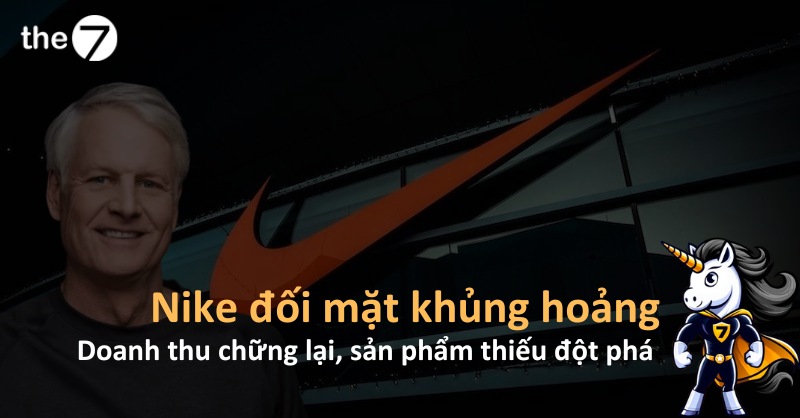
Once an unrivaled giant of the sportswear market, Nike has spent the past six months facing an unprecedented revenue crisis and a sliding share price. EURO and the 2024 Olympics look set to be key strategic cards for Nike and CEO John Donahoe as they try to turn things around and find a path to recovery.
Nike “Evaporates” $28 Billion in 24 Hours – A Historic Plunge and Costly Lessons
Nike, the brand that has dominated athletic apparel for the past two decades, is sinking into crisis after a gloomy revenue report covering Q4 2023 to Q1 2024. The brand’s revenue fell 2% to just $12.6 billion, well below expectations.
The outlook is not encouraging either. Nike expects Q2 2024 revenue to drop by as much as 10%, three times worse than analysts predicted, and full-year 2025 growth is also set to slow significantly, hitting its lowest level in 14 years.
The revenue decline has shaken investor confidence. Nike’s share price plunged 20%, wiping $28 billion off its market capitalization in a single day – a record drop in the brand’s history.
What Is Behind Nike’s Financial Slump
According to Nike, the revenue decline is partly due to the company being in a transition period, shifting its product cycle and restructuring its sales channels. However, the recent gloomy business results show that the brand is facing many challenges, from its business model and product quality to its brand reputation.
Nike Lost Market Share After Switching to a Direct-to-Consumer Model
Alongside its disappointing financial report, Nike is also facing a class-action lawsuit accusing it of misleading investors about its Direct-to-Consumer (DTC) model. The model, which was expected to bring Nike closer to its customers, inadvertently allowed competitors to take over its sales channels.
Since 2020, Nike has limited wholesale and focused on building its DTC channel alongside its own stores. However, this strategy caused Nike’s traditional retail partners to “turn their backs.” They worked more closely with other brands, expanded their own sales channels and shrank Nike’s market share.
Nike’s former competitive advantages are no longer strong enough to protect it from market pressure and the rise of new rivals. As a result, Nike is sitting on a huge $9.7 billion inventory – a figure that could have been shared out considerably had it kept working with traditional retailers.
Nike Is Gradually Losing Ground in Its Core Product Market
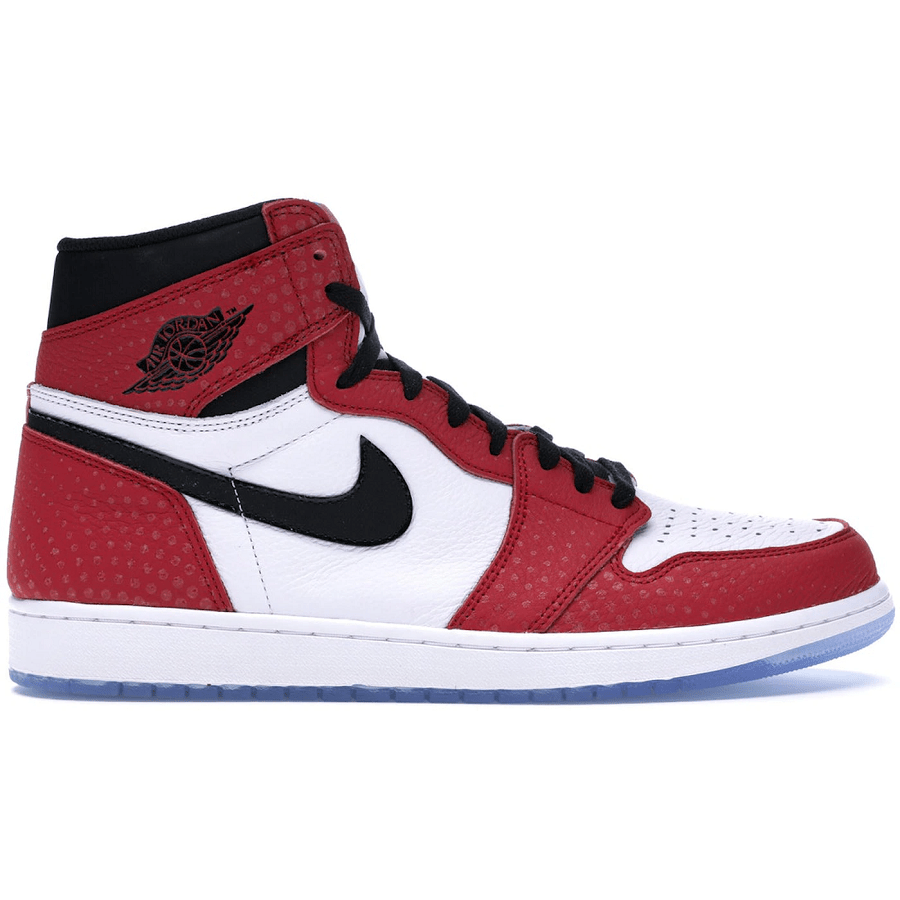
Once the “king” of athletic fashion, Nike is now struggling to withstand the difficulties closing in on it. Strategic mistakes combined with the arrival of new competitors have badly shaken the Nike empire. Its ambition to sell “direct to consumers” (DTC) left Nike with a huge $9.7 billion inventory. Dumping stock at deep discounts to clear it has seriously damaged brand value and put pressure on retailers. At the same time, Nike focused too heavily on pushing out inventory and “living off the past” with legendary models such as the Air Force 1 and Air Jordan 1, instead of investing in creativity and keeping up with new trends. As a result, customers turned away for lack of innovation, and Nike lost market share to new rivals such as On Running and Hoka. Dumping stock has also hurt Nike’s brand image and value.
Can Nike revive its empire, or will it sink deeper into crisis? The answer depends on the brand’s ability to adapt and innovate. To win back customers’ trust, it needs to stop dumping stock so it can protect brand value and respect its customers, invest in creative design and keep pace with market trends, and listen to and understand what customers need and want so it can deliver the right products.
Declining Quality in Nike’s Flagship Products
Nike, once an empire of athletic fashion, is facing a number of serious product quality problems, especially in professional sports. These scandals not only damage the brand’s reputation but also threaten its leading position in the market.
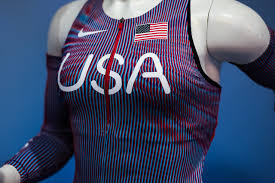
Recent incidents include Nike’s uneven uniforms for players during the Major League Baseball season and the poorly designed bodysuits for the U.S. women’s Olympic track and field team, which left athletes and the public disappointed and sharply critical.
The consequences of these scandals are serious: athletes lose faith in Nike’s products, the brand image is hurt, and there is a risk of losing market share as customers may switch to other brands.
Professional sports have always been an important proving ground for Nike to demonstrate its product quality and brand credibility. But with scandals following one after another, the brand faces a major test in restoring customer trust and rebuilding its image.
The question is whether Nike can win back customer trust and rise above these shocks, or whether this is a sign of the brand’s empire weakening in athletic fashion.
Nike Goes All In on EURO and the 2024 Olympics
2024 promises to be a breakout year for Nike, with major sporting events such as EURO and the Olympics. It is seen as a golden opportunity for the “king” of athletic fashion to reaffirm its position, reputation and product quality with consumers worldwide.
CEO John Donahoe has expressed strong confidence in the potential of these two sporting events: “The Paris Games give us a peak moment to share our vision for sport with the world.” Nike is betting big on a bold marketing strategy centered on Olympic products and a brand story built around sport and athletes. The goal is to give the brand a presence in more than 8,000 stores worldwide.
However, alongside the opportunities, challenges lie ahead. Nike needs to be careful not to repeat past mistakes such as product quality scandals or ineffective marketing strategies.

Nike has decided to withdraw from some major tournaments such as the Premier League and Copa America, possibly to concentrate its resources on the upcoming Olympics. Ahead of the Paris Olympics, it introduced two new versions of the Mercurial boot line, the Vapor 16 and Superfly 10, in a special “Blueprint” collection. It is a chance for the brand to unveil a diverse range of designs for many sports, including a special edition Air Jordan 4 ‘Paris Olympic’.
The brand also held an event at the Palais Brongniart in Paris, showcasing the Games uniforms and 13 pairs of sneakers created by artificial intelligence in collaboration with famous athletes such as Kylian Mbappe. These activities help Nike rebuild its connection with consumers and bring new growth to its classic products, while strengthening its position as one of the major brands at this year’s Olympics.
Still, the Olympics are only one part of Nike’s strategy. The brand continues to face many challenges in distribution and sales channels.
>> See more: Kopiko: Differentiated Positioning to Win the Coffee Candy Market
By Khánh Huyền
Source: Marketing AI

Nguyễn Đình
Bảo




As CEO of The7, I am committed to sharing practical, useful knowledge with every reader. Every article on The7 is based on my 7 years of hands-on experience in marketing — Facebook advertising, LinkedIn advertising, Google advertising, and marketing strategy. I hope you take away plenty of insight from these posts and apply it successfully in practice.
Related Articles
Building a Full-Funnel Content Marketing Strategy on LinkedIn
Table of Contents Toggle Why Build Content Marketing for the Full Marketing Funnel? (Why Full-Funnel Content Marketing?)Creating Your Strategy (Creating Your Strategy)Implementing Your Content Strategy (Rolling out your content strategy)Summary...
Designing Creative Content for LinkedIn
Table of Contents Toggle Why Is Good Creative Content So Important? (Why is Good Creative Important?)Key Components of Creative Design (the core elements of creative design)Summary (summary) Why Is Good...
Building an Organic Business Presence on LinkedIn With a LinkedIn Page
Table of Contents Toggle Why Have a LinkedIn Page?Establishing Your LinkedIn PageKeeping Your LinkedIn Page ActiveThe Measure of SuccessSummary About LinkedIn Page (Summary) Why Have a LinkedIn Page? For a...
6 Best LinkedIn Marketing Strategies for B2B in 2026
Table of Contents Toggle LinkedIn 2026: Where B2B Decisions Get MadeStrategy #1 – Why Is LinkedIn the Best B2B Marketing Channel Today?1. Decision-makers are concentrated here2. Users are in work...

7 Social Media Trends for 2026: The Era of Real Value, Real Conversion, and Real People
Table of Contents Toggle Social media is entering the biggest restructuring of the decadeTrend 1: Why is buying directly in-app becoming the new standard for 2026? (On-Platform Conversion)What should businesses...

What Is TikTok Marketing? Effective TikTok Marketing Strategies
TikTok has been topping the global rankings of the most downloaded and most visited apps. That makes it a gold mine for marketers who love creativity. In this article, The7...