


Kopiko: Distinctive Positioning That Conquered the Coffee Candy Market
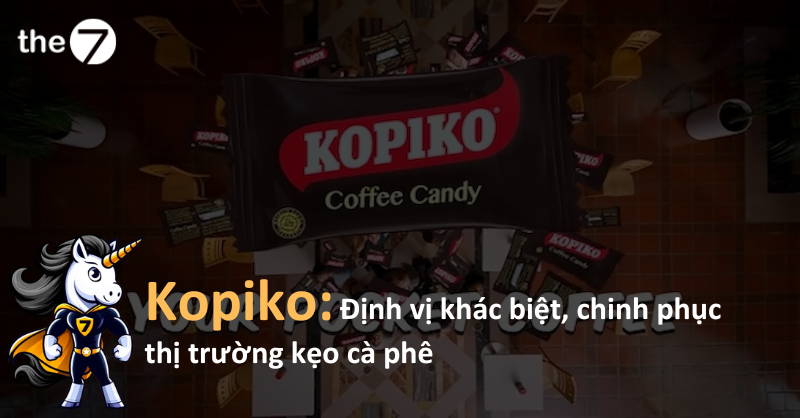
When it comes to coffee candy, most consumers immediately think of Kopiko’s “Cà phê bỏ túi” (Pocket Coffee). From a small Indonesian label, Kopiko has grown into a global player present in more than 100 countries, thanks to thorough market research and a distinctive positioning. It turned every piece of candy into a convenient cup of coffee, meeting the need of consumers around the world to enjoy coffee quickly and easily.
Kopiko: From Indonesian Local Brand to the Global Leader in Coffee Candy
Kopiko, the well-known coffee candy brand from Indonesia, launched in 1980. Delivering a unique coffee experience that blends pure coffee beans, sugar, and vegetable oil, Kopiko has won over consumers’ taste buds. Each piece offers a rich coffee flavor, lightly bitter and gently sweet, that awakens the senses and chases away fatigue.
With the caffeine of one cup of espresso packed into just 4-5 pieces of candy, Kopiko is an ideal choice for anyone who needs intense focus. Kopiko’s target audience is coffee lovers, especially office workers, school and university students, people who regularly need to stay alert to study and work effectively, and long-distance drivers.
Its distinctive coffee flavor helped Kopiko expand across Southeast Asia, Europe, and Australia. Today, Kopiko is available in more than 100 countries and has become one of the most beloved coffee candy brands. Even billionaire Elon Musk fell for the flavor of Kopiko and sent this candy into space to serve astronauts.
Beyond product quality, Kopiko also stands out for its smart marketing strategy. By focusing on the coffee candy niche, Kopiko quickly established itself as the leader. A powerful Product Placement strategy in the Asian market helped Kopiko reach a large number of potential customers effectively, contributing to the brand’s resounding success.
With its rich coffee flavor, its ability to deliver instant alertness, and its smart business strategy, Kopiko has been asserting its position as the world’s leading coffee candy brand.
Pocket Coffee: A Unique “Coffee in Your Pocket” That Won Over Millions of Users
Although it is a candy, Kopiko holds a special place with the identity of “Pocket Coffee” or “Cà phê bỏ túi” (coffee in your pocket).
The brand tapped into a very common need in today’s busy life: feeling sleepy and not alert during work hours, while driving, or in the office. Coffee is often the solution many people turn to in these situations. However, we don’t always have a cup of coffee at hand, and carrying coffee around isn’t always convenient.
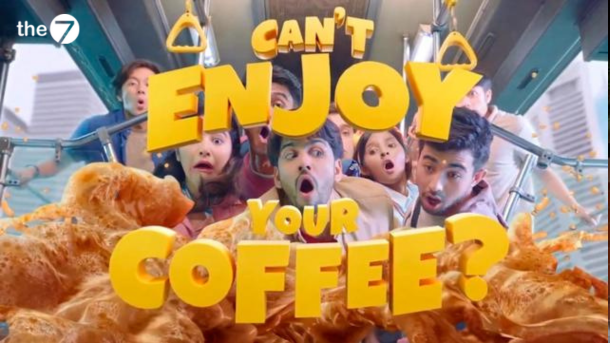
Recognizing this need, Kopiko cleverly combined the product’s distinctive features to turn coffee candy into an alternative to the traditional cup of coffee. With its convenient design, users can easily carry it with them and enjoy it anytime, anywhere. From there, a unique positioning for Kopiko candy was born: “Pocket Coffee.” Rather than being just an ordinary candy, Kopiko is presented as real coffee, backed by the Vietnamese slogan “Hương vị cà phê thật, mọi lúc, mọi nơi”, which means “Real coffee flavor, anytime, anywhere.”
A cup of coffee that keeps you alert is now condensed into a few convenient pieces of Kopiko candy. This unique feature has attracted not only coffee lovers but also people who don’t want to drink too much coffee yet can still use the product to stay focused.
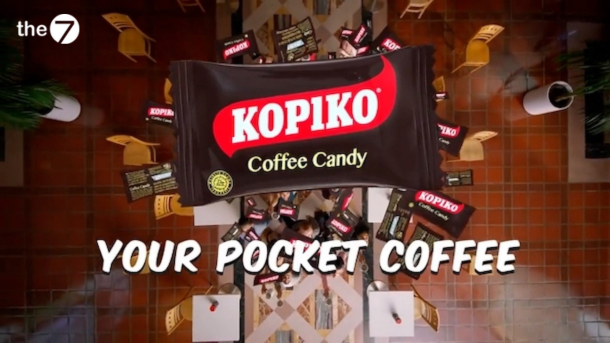
Kopiko’s TVCs in every country consistently follow this positioning. The brand often uses contrasting imagery: a cup of coffee that is fragile and inconvenient to carry, versus a Kopiko piece you can simply drop into your pocket, convenient and ready to use anytime. Kopiko’s ads aren’t elaborate, but they clearly communicate Pocket Coffee and the message of convenience and alertness. In Vietnam, Kopiko is also known for the familiar tagline: “Ly cà phê trong túi bạn” (The cup of coffee in your pocket).
Going beyond the original coffee flavor, Kopiko also offers a wide range of options, including Cappuccino, Café Latte, Java, and Espresso, to suit every user’s taste.
>>> See more: What Is Brand Positioning? 5 Steps to Build an Effective Strategy in 2024
Product Placement: The Marketing Strategy That Helped Kopiko Conquer Southeast Asia
After the pandemic, Kopiko, the famous coffee candy brand, made a “comeback” on screen with a powerful Product Placement strategy to strengthen and expand its influence in the Southeast Asian market. The highlight of this strategy is its focus on Korean dramas, a market with major influence not only in the region but around the world.
Kopiko chose a different path from its earlier campaigns by running advertising activities continuously and using powerful, high-impact advertising channels within the same short period. This strategy helped the brand make a strong impression and capture maximum attention from audiences.
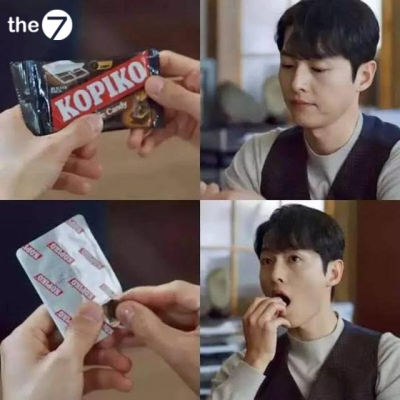
Globally, Kopiko drew major attention by taking over the screen in a string of popular Korean blockbusters such as Vincenzo, Hometown Cha Cha Cha, and Taxi Driver 2 in 2021. This made the brand a hot topic of conversation not only in South Korea but also across Southeast Asia. Building on that success, in 2022 Kopiko continued to sponsor several hit productions such as Today’s Webtoon, Adamas, and Little Women. Most recently, it appeared in “Marry My Husband”, the drama that became a sensation in early 2024.
Kopiko mainly relied on the Product Placement strategy – placing the product directly into scenes where actors use it on screen. This is the most expensive format, but it delivers the most visible and impressive results with audiences, who see the product being used directly by celebrities.
The settings and the characters’ stories in the shows are usually chosen to match the convenience and alertness that Kopiko always wants to convey. For example, in the series Little Women, Kopiko appears in office scenes where employees use the candy to stay alert while working, or as a replacement for coffee in the office canteen, where the product becomes a popular choice for employees’ need for a refreshing boost.
>>> See more: Lessons From BVLGARI in “Queen of Tears”: The Art of Storytelling That Elevates Product Placement
Kopiko’s Product Placement strategy doesn’t only target the popularity of the shows or the actors. It also focuses on making sure the product appears in scenes that fit the brand’s message.
The results of this strategy have been clear in terms of revenue for Kopiko. In Q1 2021, when Vincenzo aired, Kopiko spent about 3.7 billion VND on show sponsorship, a large share of the company’s total advertising and promotion budget of nearly 2.5 trillion VND. Kopiko’s export revenue in the first 6 months of the year reached 8.5 trillion VND, up sharply from 6.6 trillion VND in the same period of 2020, with Kopiko products accounting for as much as 30% of Mayora’s total revenue.
The DNVB research team also found that this Product Placement strategy helped increase Kopiko’s sales by 14.37%, compared with growth of 9.3% the previous year. These figures show that Kopiko’s Product Placement strategy made an important contribution to expanding the brand’s influence not only in Southeast Asia but around the world.
Conclusion
Beyond its focus on product flavor and its market-leading advantage, Kopiko’s distinctive positioning strategy also relies on tapping into special insights, the key factor behind this coffee candy brand’s success. By carrying out a bold, assertive, and savvy Product Placement strategy, Kopiko has stayed prominent in the market over the years. This has helped the brand not only hold its position but also extend its influence to a wide base of consumers.
By Khán Huyền
Source: Marketing AI

Nguyễn Đình
Bảo




As CEO of The7, I am committed to sharing practical, useful knowledge with every reader. Every article on The7 is based on my 7 years of hands-on experience in marketing — Facebook advertising, LinkedIn advertising, Google advertising, and marketing strategy. I hope you take away plenty of insight from these posts and apply it successfully in practice.
Related Articles
Solo but Not Lonely: Vietnam’s Rise of Solo Dining in F&B
The solo-dining trend — “hotpot for one,” “lonely noodles,” or “self-dates” — is becoming a popular movement among young Vietnamese people, opening up major opportunities for the F&B industry. More...
How Katinat’s Charity Marketing Campaign Sparked Public Backlash
Recently, Katinat launched a campaign to support compatriots in Làng Nủ, a community hit hard by storms and floods, promising to donate 1,000 VND from every drink sold between September...
Gojek Decides to Cease Operations in Vietnam
After six years of building its business in Vietnam, the ride-hailing and food delivery platform Gojek has officially announced that it is shutting down. Starting September 16, 2024, users will...
E-Commerce Platform Shein Suspected of Using Toxic Chemicals in Its Clothing
The discovery of harmful chemicals in Shein’s products has raised concerns about the hidden risks in fast fashion, an industry where trends usually come first. The incident has not only...
The Coffee House: A Former Market Leader Struggling Against New Rivals With a Faded USP
The Coffee House was once a promising icon of Vietnam’s F&B industry, but recent months have seen the brand shrink at an alarming pace, with a wave of branch closures...
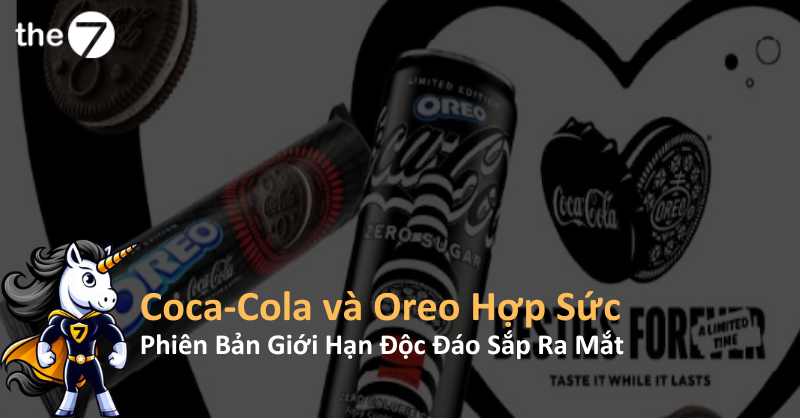
Coca-Cola and Oreo Team Up: Unique Limited Editions Coming Soon
If you’ve always dreamed of what Cola and cookies would taste like together, now’s your chance! Coca-Cola and Oreo have teamed up to bring you a one-of-a-kind combination – but...