


Turning Scandal Into Entertainment: When Tragedy Becomes a Social Media Pastime
Celebrities and their private lives have always drawn the attention of the press, costing no small amount of ink, and now they dominate people’s time on social media platforms too. Taking negative controversies, social media has cleverly “remixed” them into humorous stories that satisfy the public’s appetite for entertainment. Is this creativity in the field of communications, or simply a ploy to chase views? And do celebrity scandals really deserve to be “turned into entertainment” this way?
The Lâm Minh – Decao Marriage Drama: Who Is Right, Who Is Wrong?
On the night of May 24, the online community was shocked by a heartbreaking livestream on a social media platform by Lâm Minh, Decao’s girlfriend. Appearing emotionally unstable and sobbing, Lâm Minh accused Decao and his mother of abusing her.
It all started at the dinner table, when the food was repeatedly pushed out of Lâm Minh’s reach. The conflict escalated when Decao called both his mother and his wife downstairs to talk. In a fit of anger, all three did things that were “out of control,” leading to an outcome nobody wanted.
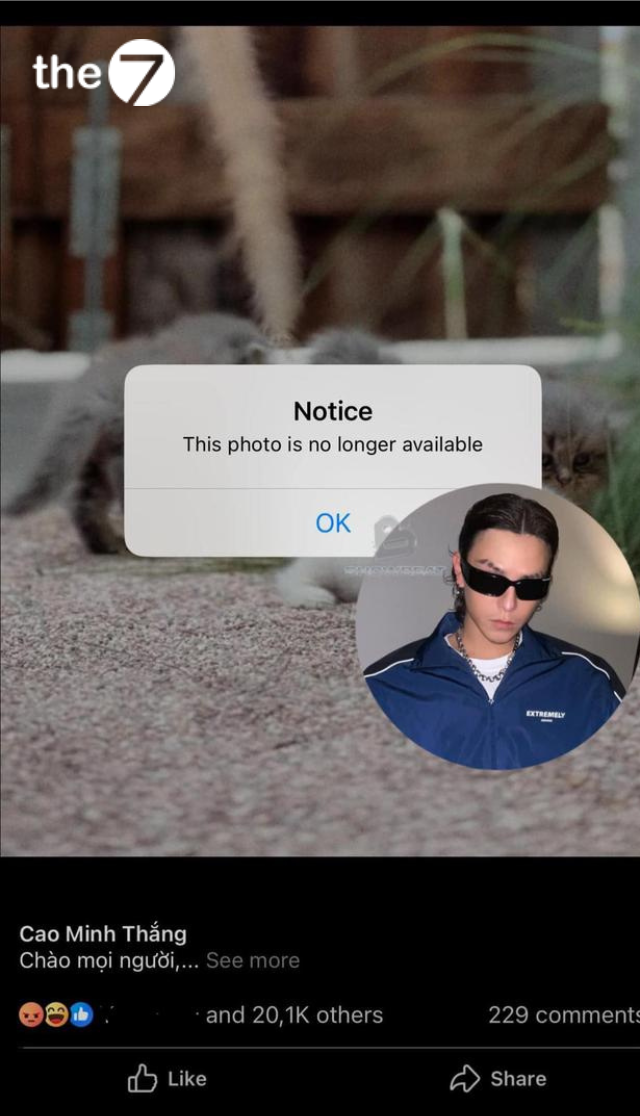
Netizens were outraged by the incident and flooded Decao’s personal page to demand justice for Lâm Minh. However, instead of a sincere apology, Decao offered a strange-sounding explanation. He admitted to the conflict between his mother and his wife, but used the word “interaction” sarcastically, which made the situation even more infuriating.
Decao’s repeated use of his wife’s health as an excuse to apologize made netizens even angrier. Many felt this was nothing more than an “absurd defense” to cover up his own wrongdoing.
How Social Media Turned a Private Story Into an Entertainment Trend
“Tương Tác” (Interaction) – The Slang Term That Took Over Every Social Media Platform
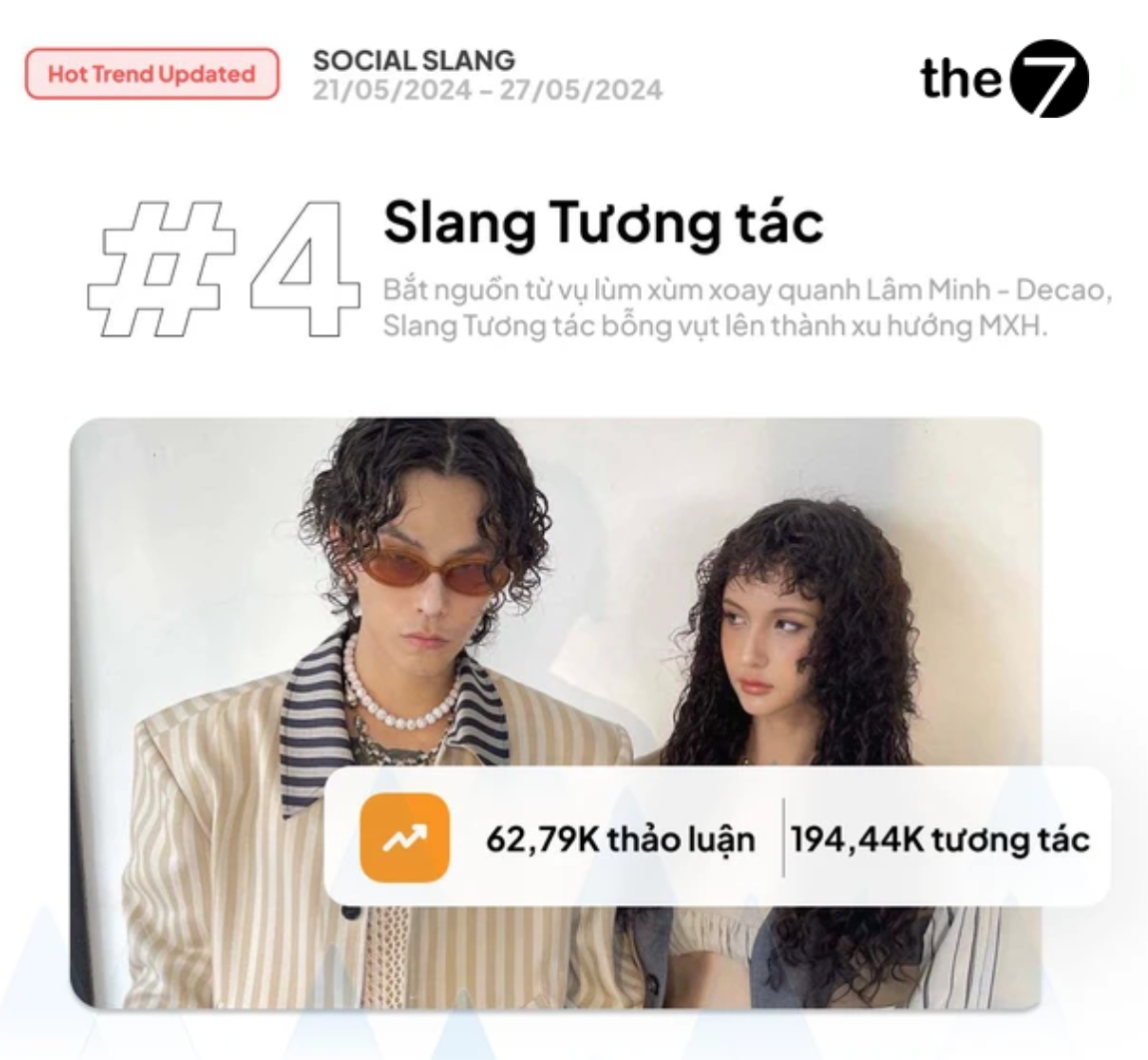
Right after Decao’s strangely worded apology, “tương tác” (interaction/engagement) suddenly became a viral keyword with 62.79K discussions and 194.44K engagements (according to Social Trend). According to the Vietnamese dictionary, “tương tác” has two meanings: as a verb, it describes mutual influence, and as an adjective, it describes an exchange of information. In the digital age, however, “tương tác” is also used to measure how viral something is on social media.
The Decao incident sounded a wake-up call about the dark side of “engagement.” It shows how feverish and careless online communities can be in taking in information and creating “fake” trends. Chasing “engagement” at all costs, regardless of right and wrong, has blurred the line between entertainment and insult.
Decao’s “tương tác” drama not only shook the online community but also “spread” to Vbiz (Vietnam’s entertainment industry). A whole series of “blockbuster” films such as “Sống chung với mẹ chồng” (Living with My Mother-in-Law) and “Sóng ở đáy sông” (Waves at the Bottom of the River) were suddenly “dug up” for scenes said to resemble the incident.
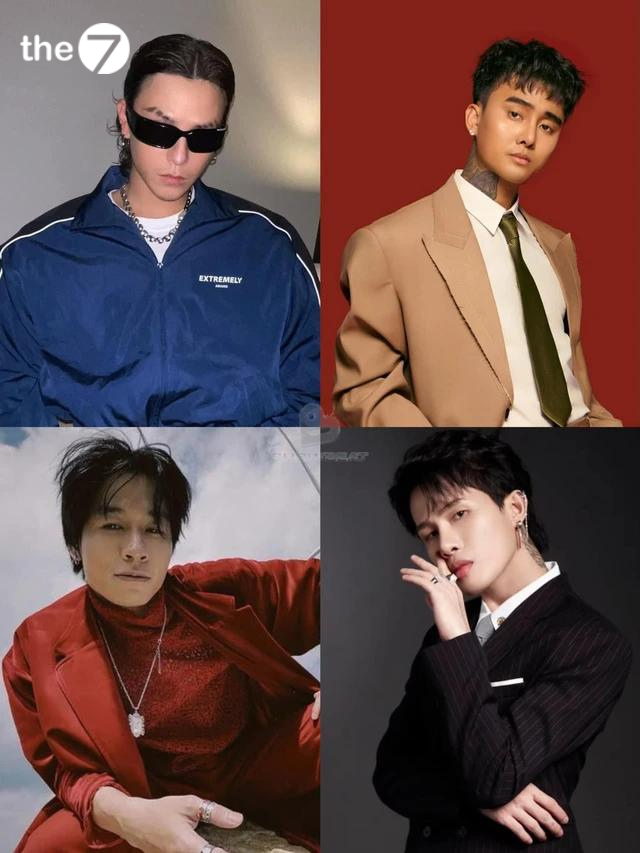
Not only that, artists who were only incidentally connected also “took a hit.” Châu Bùi, with her “Hết Yêu” (Out of Love) love letters and a poor past with her ex-boyfriend, and BinZ, with a lyric in “BigCityBoi,” were also “dragged” into the whirlwind of drama. There was even a meme “Top 4 Men Women Trust,” that spread across social media.
“Hopping on the trend” of drama so excessively turned an incident that deserved condemnation and criticism into “bait” for chasing views and engagement. Many people believe this is an invasion of privacy and hurts the artists involved.
Is Social Media Turning Negative Content Into Entertainment?
A Fast Way to Attract Viewer Engagement
In a competitive media environment like social media, attention and user virality are always the inevitable goals that social platforms pursue. As a result, entertainment content tends to attract viewers easily and generate strong engagement. With this kind of content, users usually have none of the psychological barriers, such as wariness or careful consideration, that they bring to other types of content.
By sharing and engaging with entertainment content, users not only get to relax and have fun but also feel like part of a community, immersed in the latest trends. They can express their emotions, share their opinions, and connect with people who share their interests.
Recognizing this, brands have also been quick to catch the trend, “dressing” their content in a colorful entertainment outfit. They create funny videos, share interesting stories, or run engaging contests and minigames. As a result, brands not only grab attention but also build a friendly, approachable image, effectively building strong relationships with customers.
Social Media Influences Users’ Emotions and Behavior.
Noam Chomsky, the renowned linguist as well as a prominent social critic and political activist, once asserted: “Emotions get in the way of seeing the truth objectively and thinking critically.” In the media field, this is clearly reflected in 3 sophisticated manipulation strategies designed to steer human emotions:
- A “forest of information” hides the truth: Like a skilled magician, the media diverts the public’s attention by burying important information among countless side stories and trivia. This tactic leaves audiences besieged by a flood of disconnected information, without the big picture, making it hard to recognize the core truth.
- Emotion overpowers reason: Instead of providing information objectively, the media often uses images, sounds, and stories that strongly provoke emotion. Joy, anger, fear, and more cloud critical thinking, making viewers easy to lead along according to the intentions of journalists or media organizations.
- A “one-sided picture” distorts reality: Like a puppet controlled by invisible strings, users are only exposed to information that has been selected and distorted to fit the media’s purposes. The hidden corners and dark sides of an issue are concealed, so viewers see events only through a one-sided lens, lacking accuracy and completeness.
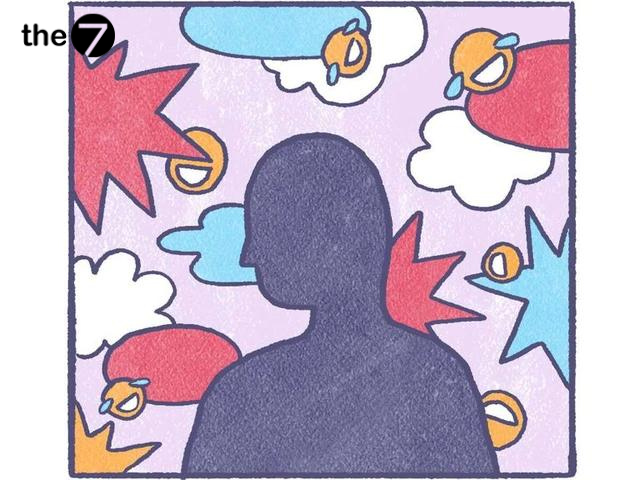
By steering emotions, social media can easily shape people’s thinking and, in turn, control their behavior.
The SKIN1004 brand is a prime example of this. When one of its shared posts was accused of plagiarizing an idea, a wave of outrage from netizens quickly hit, flooding the brand’s social media pages with negative reviews and comments. However, SKIN1004 proved its mettle by handling the PR crisis quickly and effectively. By openly and transparently presenting evidence, it successfully “made a U-turn” in public opinion and earned praise for its professionalism and speed in resolving the issue.
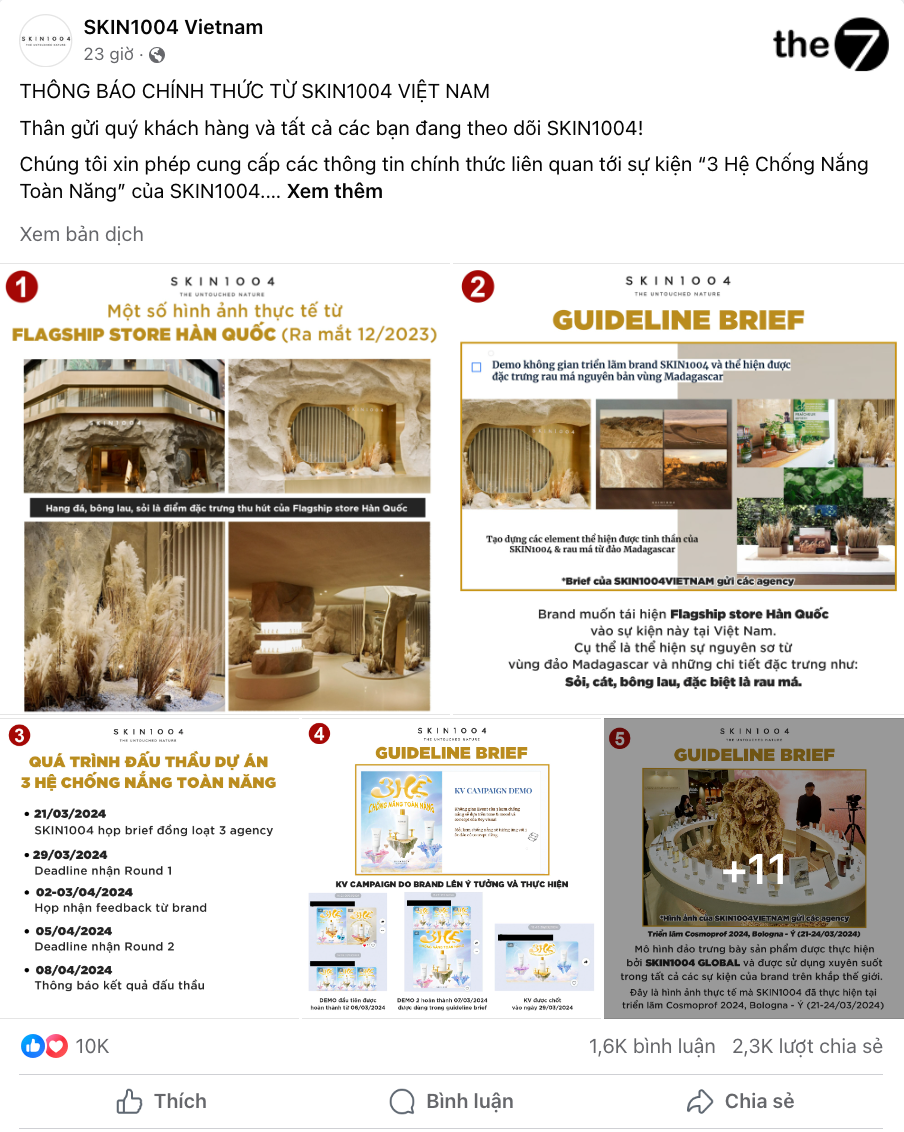
>>> See more: SKIN1004: Professional Crisis Handling to Regain Consumer Trust
Dangerous Issues Being “Ignored” on Social Media
Social media is not just a stage for entertainment content but also hides many painful dark corners, where social problems such as domestic violence, injustice, and social vices are buried under humorous trends and pointless entertainment content.
Instead of condemning and criticizing negative realities, social media focuses on entertainment content, grabbing attention with funny, sensational images and videos. This approach inadvertently distracts users and makes them complacent about the pressing problems unfolding in society.

Scandals like the Lâm Minh – Decao case are becoming an endless source of inspiration for humorous content on social media. However, “mocking” serious issues like domestic violence can lead to unintended consequences, including normalizing the problem and making others lose their sense of compassion and continue their wrongdoing.
How Can Social Media Users Recognize Negative Content That Is Being “Turned Into Entertainment”?
With entertainment content built on negative stories exploding across social media, it is vitally important for every user to “wake up,” recognize what is happening, and act appropriately. Amid a mass of mixed information, we need to equip ourselves with the following skills:
- Tell information apart: What do we need from social media platforms?
Be a smart user who stays alert amid the mixed information on social media. Are you getting information you truly care about, or just what social media wants you to consume?
- Evaluate objectively: Entertainment or a reflection of reality?
When enjoying entertainment content on social media, ask yourself: Does it stem from some negative event, or is it purely for fun? Don’t let emotion overpower reason and lead to distorted judgments.
- Seek out and spread positive content
Make social media a space for good things. Instead of spending time on negative content, actively look for and share positive, inspiring information. Remember, when “the good” is big enough, it will overpower “the bad,” helping build a healthy and civil online environment.
- Use the “power of speech”: For a civil social media
Use “freedom of speech” on social media responsibly. Speak up about pressing problems to help build a civil, healthy online community.
Remember, every individual is an “owner” of social media. Use social media smartly and responsibly to turn it into a tool for connection that spreads positive values and helps build a better society.
Conclusion
Social media, a dazzling, colorful virtual world, holds a vast amount of information, much of it negative stories. “Turning these into entertainment” instead of condemning and reporting on them is distorting the nature of the issues, covering up the truth, and spreading misleading messages.
Beyond satisfying fleeting emotions, social media needs to become a place that spreads positive values, conveys accurate information, and awakens compassion and empathy in the community. Every individual, with the freedom to use social media, should become a “smart user” by embracing the positive and staying alert to the negative.
By Hải Yến
Source: Marketing AI

Nguyễn Đình
Bảo




As CEO of The7, I am committed to sharing practical, useful knowledge with every reader. Every article on The7 is based on my 7 years of hands-on experience in marketing — Facebook advertising, LinkedIn advertising, Google advertising, and marketing strategy. I hope you take away plenty of insight from these posts and apply it successfully in practice.
Related Articles
Solo but Not Lonely: Vietnam’s Rise of Solo Dining in F&B
The solo-dining trend — “hotpot for one,” “lonely noodles,” or “self-dates” — is becoming a popular movement among young Vietnamese people, opening up major opportunities for the F&B industry. More...
How Katinat’s Charity Marketing Campaign Sparked Public Backlash
Recently, Katinat launched a campaign to support compatriots in Làng Nủ, a community hit hard by storms and floods, promising to donate 1,000 VND from every drink sold between September...
Gojek Decides to Cease Operations in Vietnam
After six years of building its business in Vietnam, the ride-hailing and food delivery platform Gojek has officially announced that it is shutting down. Starting September 16, 2024, users will...
E-Commerce Platform Shein Suspected of Using Toxic Chemicals in Its Clothing
The discovery of harmful chemicals in Shein’s products has raised concerns about the hidden risks in fast fashion, an industry where trends usually come first. The incident has not only...
The Coffee House: A Former Market Leader Struggling Against New Rivals With a Faded USP
The Coffee House was once a promising icon of Vietnam’s F&B industry, but recent months have seen the brand shrink at an alarming pace, with a wave of branch closures...
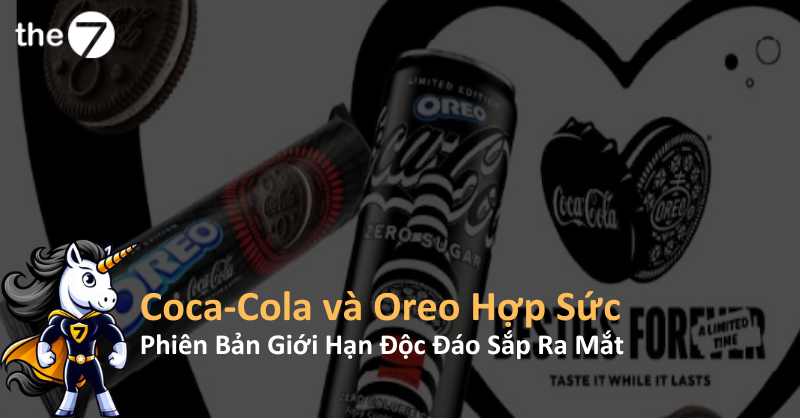
Coca-Cola and Oreo Team Up: Unique Limited Editions Coming Soon
If you’ve always dreamed of what Cola and cookies would taste like together, now’s your chance! Coca-Cola and Oreo have teamed up to bring you a one-of-a-kind combination – but...