


Marketing Secrets Everyone Should Know
Inspired by Feynman‘s claim about the importance of atomic theory, we can say that marketing also holds a core set of foundational knowledge. When it is deeply understood, it opens the door to creative thinking and leads to resounding breakthroughs. So what are the core secrets of marketing that every marketer needs to master?
Naval Ravikant, the well-known investor and entrepreneur, has stressed the importance of reading books and absorbing foundational knowledge: “There are books that, if you read them early, will reprogram your brain in some way. Later, when you read other things, you’ll be able to judge whether they are right or wrong based on what you’ve already read.”
Echoing Ravikant, John T. Reed, an author and motivational speaker, emphasizes: “When you first start learning a field, you may feel overwhelmed by the enormous amount of information you need to remember. What matters, though, is identifying the core principles of that field, usually just 3 to 12 key points. The millions of seemingly complicated details are really just flexible combinations of these core principles.”
After only a few weeks of living together on Baker Street, John Watson was completely captivated by the famous detective Sherlock Holmes. Unlike ordinary people, Holmes had an extraordinarily unusual way of reading and absorbing knowledge.
While Holmes possessed deep expertise in chemistry, anatomy and the history of criminal cases, he was completely ignorant of fields such as literature, philosophy and astronomy. This seemingly absurd “gap” in his knowledge made Watson more curious about, and more admiring of, Holmes than ever.
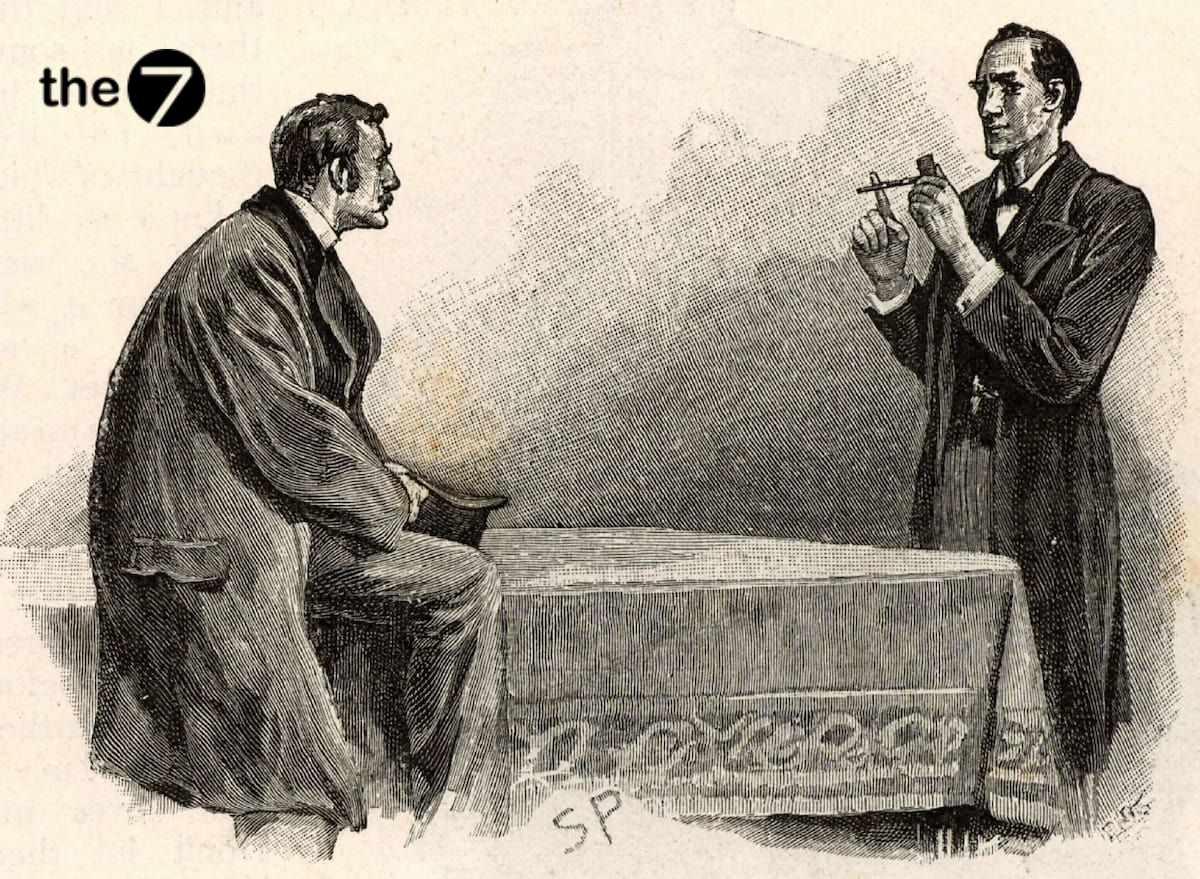
Noticing Watson’s utter astonishment at learning that he knew nothing about the Copernican theory or the structure of the solar system, Sherlock Holmes calmly explained:
“What is so surprising, Watson? Now that I know it, I shall do my best to forget it. I compare the human brain to a small, empty attic, and we need to furnish it with carefully chosen items.

A fool stuffs all kinds of junk into the attic, so that useful knowledge gets buried or mixed up and is hard to find when needed. A skilled workman, by contrast, arranges things with care and keeps only the tools that help his work. He owns a vast collection of tools, organized in a scientific and perfect way.
Do not mistake the brain for something that can hold unlimited information. Cram in too much, and every new piece of knowledge will make you forget something you already knew. What matters is to discard useless information in order to protect the useful knowledge.”
Sherlock Holmes’s view of the human brain, expressed in a work published in 1887, shows a subtlety and sophistication far ahead of its time. The latest scientific discoveries of the past 10 years about how the brain works have proven this view to be accurate.
Human memory is often compared to a network of connections between nerve cells (neurons). However, the number of neurons in the brain is limited, and they have to handle many different functions. The real enemy of memory is not time but new memories. Every new event requires new connections between neurons that are already limited in number, which makes storing and retrieving information harder.
Forgetting also plays an important role in how memory works. The problem is not only the brain’s limited storage capacity. Retrieving information also becomes more difficult as the amount of stored information keeps growing. The more memories you have, the more time and effort it takes to find and use the information you need.
90% of Everything Is Crap
Theodore Sturgeon, an American writer, was dubbed a “master” of science fiction. He was one of the pioneering authors who shaped the genre, giving readers stories full of creativity and rich ideas.
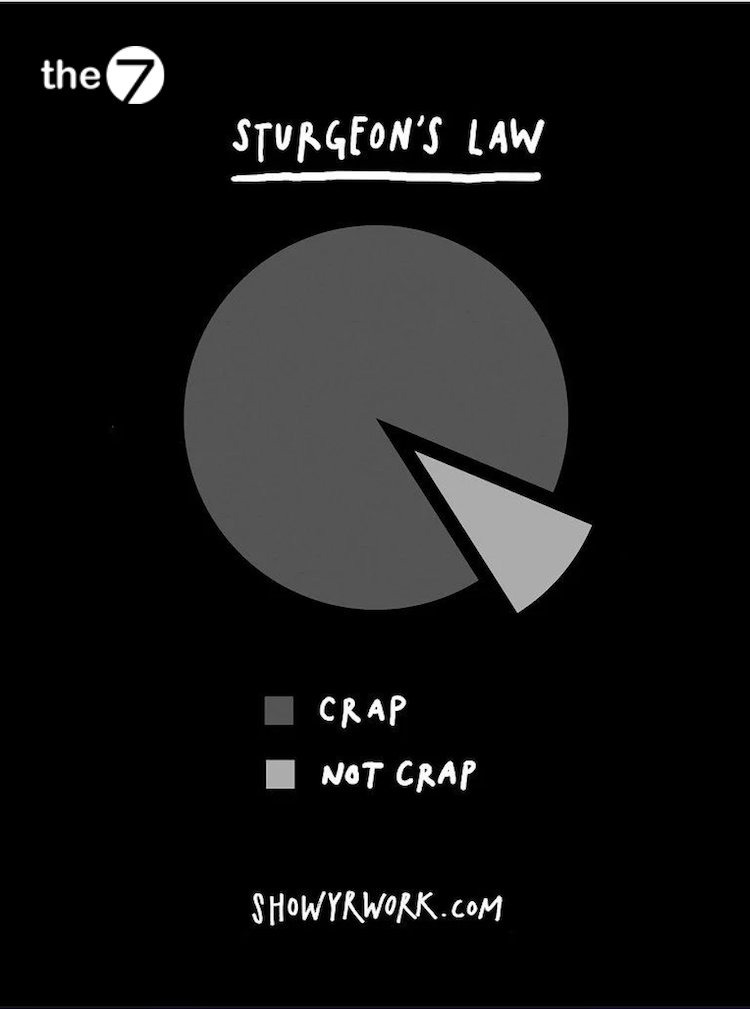
In 1958, facing criticism that science fiction (SF) was low in quality, Theodore Sturgeon spoke up in his defense in the March 1958 issue of Venture magazine.
Sturgeon frankly admitted his own “Sturgeon’s” discovery: “90% of SF is crap.” He had spent 20 years defending the genre against attacks, using the worst examples as evidence.
However, Sturgeon also argued that if the same standard were applied to other fields such as film, literature, consumer goods and so on, the result would be similar: 90% is “crap”.
Sturgeon’s Law is usually summed up briefly as:“90% of everything is crap”. Although somewhat exaggerated, it reflects the reality that in every field, most content is of mediocre quality. And the field of business knowledge is no exception.
Most of the business books, articles and videos that get published are merely average, or even mediocre. When you come across these sources of information, remember: there is a 90% chance you are looking at “crap” information.
This means that most of what we read about business is of very little use. Absorbing misleading or low-value information will make you waste time and effort.
FOMO in Business: The Trap of Shallow Trends
You have probably heard of FOMO (Fear of Missing Out), the anxiety of missing an important opportunity. In business, FOMO often pushes us to rush to adopt the latest trends or tools for fear of being left behind. However, this carries the risk of wasting time and effort on low-value knowledge that is only fashionable for a moment.

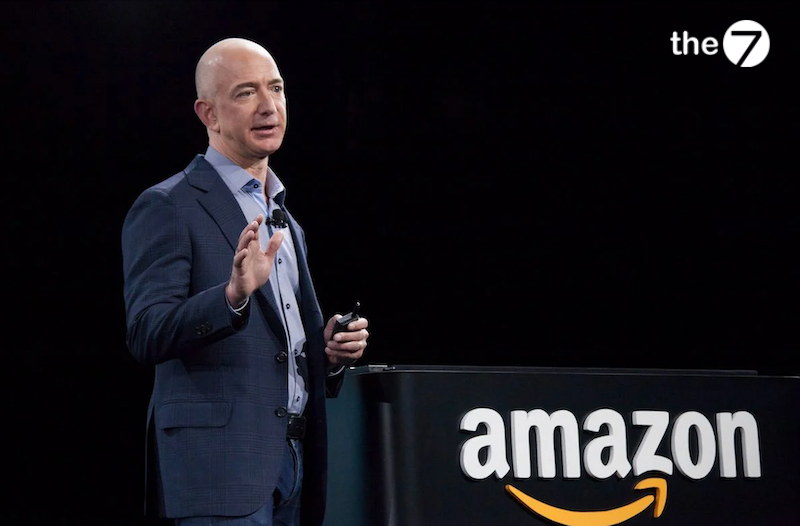
When people talk about innovation, many think of predicting and catching the latest trends. However, Jeff Bezos, CEO of Amazon, one of the most innovative companies in the world over the past 20 years, has a different view.
Asked how he thinks about the future and about investment decisions for new products, Bezos offered a surprising perspective:
“I get asked all the time, ‘What’s going to change in the next 10 years?’ That is an interesting and common question. But a question I almost never get asked is, ‘What’s not going to change in the next 10 years?’ In my opinion, this second question is much more important, because you can build a successful business around things that are stable over time.
In retail, we know that customers always want low prices, fast delivery and a wide selection. And I believe those needs will not change in the next 10 years. You will never see a customer come up and say, ‘Jeff, I love Amazon, but your prices are too high.’ Or, ‘I love Amazon, but I wish you delivered more slowly.’ That is simply not going to happen.”
The Most Important Scientific Knowledge
In marketing, the most important knowledge may be a deep understanding of the principles of human psychology and how people interact with advertising messages. Much like Feynman’s atomic theory, an understanding of customer psychology and behavior holds a wealth of information about how people respond to marketing and advertising strategies. This lets us use imagination and thinking to build effective marketing strategies and draw important conclusions about how to approach the market.
Knowledge that is unlikely to change over the next 10 to 20 years may include the need to build a strong brand and create close relationships with customers. Even as technology and trends change, understanding customers and earning their trust remain indispensable in marketing.
>>> See more: Decoy and Bargain Marketing Strategies: Secrets to Manipulating Consumer Psychology
Foundational Knowledge

Bill Bernbach, a legend of the advertising industry, declared: “Nothing is more powerful than understanding the natural instincts of human beings,” and that belief sits at the center of an effective creative philosophy. Understanding what drives people and what makes them act, even when they don’t show it openly, is the secret to creating messages that resonate and connect deeply with customers.
Have you ever wondered why we buy things we don’t really need? The secret lies in our brains, shaped by thousands of years of evolution to solve problems of survival and reproduction.
Even after more than 10,000 years, our brains still carry many marks of our prehistoric ancestors. Scientists have demonstrated this through numerous studies and data sets. When we observe consumer behavior, we can clearly see the similarities between modern humans and our ancestors from 10,000 years ago.
The reason behind these seemingly irrational behaviors is evolutionary psychology. Unconsciously, we are driven to display traits such as health, intelligence and social status through the products and brands we own.
For our ancestors, these traits played a key role in survival and success. Today, we express ourselves through our careers, education, wealth and premium brands.
The need to be recognized and to affirm our place in society is deeply rooted in human instinct. Successful brands have grasped this and skillfully use it to convey their messages, tapping into our desire for social advancement.
That is why:
Just as atomic theory holds the secrets of the universe, understanding human nature opens the door to effective marketing. It reveals the mysteries of human behavior, social dynamics, decision-making processes and emotional triggers. Once we grasp these patterns, we can predict and guide consumer behavior, benefiting both businesses and customers.
However, understanding psychology is only the starting point. To succeed in modern marketing, we need to keep up with the latest discoveries from marketing science, also known as Evidence-based Marketing.
At Marketing Festival 2019 in the Czech Republic, marketing expert Mark Ritson was asked: “How do you find effective marketing data?”. Ritson stated: “Many marketing theories today lack a scientific basis. They rest on flawed data or lack empirical validation, and their purpose is to sell products to marketers. As someone with a PhD in marketing, I always insist on using empirical evidence to support every claim. And the most reliable sources of information are the research of Byron Sharp, the Ehrenberg-Bass Institute, Les Binet and Peter Field, and the book “How Brands Grow”.
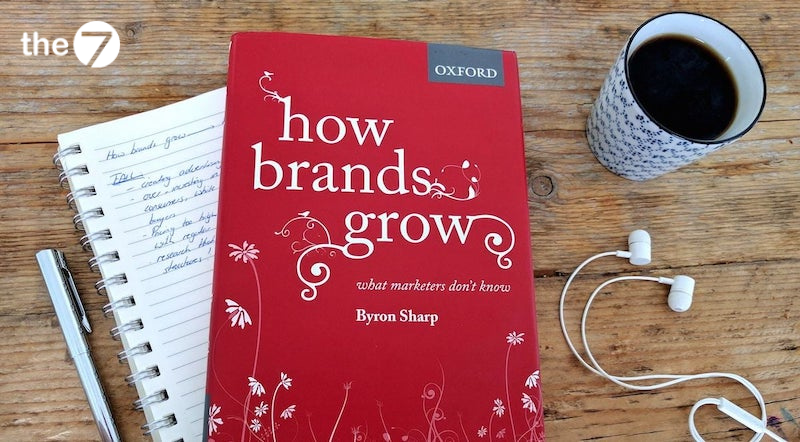
“How Brands Grow”: The Book That Shook Up Marketing and Its Valuable Lessons
In a marketing world full of advice and strategies, Byron Sharp’s “How Brands Grow” has emerged as a groundbreaking book, dubbed the “marketing bible”. The book challenged traditional views and offered fresh insights grounded in scientific evidence, completely changing how marketers build and grow brands.
Together with the research of Les Binet and Peter Field, published in the IPA Effectiveness Awards reports, “How Brands Grow” provides invaluable guidance on the long-term impact of advertising and the importance of balancing short-term activation with long-term brand building.
These groundbreaking findings have revolutionized the marketing industry, dispelling harmful misconceptions and opening a new path to effective brand growth. Unfortunately, this valuable knowledge is still not widely applied in practice.
A prime example is Mark Ritson’s controversial article in Marketing Week in late 2023, titled “Indifference to effectiveness has left US marketing behind the rest of the world”. The article sounded a wake-up call for the industry, stressing the importance of putting scientific knowledge into practice to achieve the best results in brand growth strategies.

Mark Ritson, the well-known marketing expert, has sounded the alarm about a “lack of understanding of effectiveness” in the US marketing industry. He criticizes American marketers for overlooking simple but effective concepts of effective marketing developed by Ehrenberg-Bass, Field, Binet and many other thinkers. The reason for this indifference, according to Ritson, is the mistaken “center of the world” mindset among US marketers, which leads them to believe they have nothing to learn from others.
In Vietnam, the field of effective marketing is still quite young. Byron Sharp’s “bible” “How Brands Grow” was only published in late 2023. This shows the huge potential for Vietnam to absorb and apply the most advanced marketing knowledge from around the world.
By mastering the fundamentals of human psychology, consumer behavior and effective marketing, Vietnamese marketers can build a solid foundation for success. This knowledge will help them evaluate emerging theories, trends and techniques wisely in a volatile marketing environment.
More importantly, this knowledge will be the key for Vietnamese marketers to create effective, sustainable marketing strategies that suit the Vietnamese market and benefit both businesses and consumers.
>> See more: S.A.V.E Marketing – An Upgrade to the 4P and 7P Models
By Trần Vũ Hiệp
Source: Brands Vietnam

Nguyễn Đình
Bảo




As CEO of The7, I am committed to sharing practical, useful knowledge with every reader. Every article on The7 is based on my 7 years of hands-on experience in marketing — Facebook advertising, LinkedIn advertising, Google advertising, and marketing strategy. I hope you take away plenty of insight from these posts and apply it successfully in practice.
Related Articles
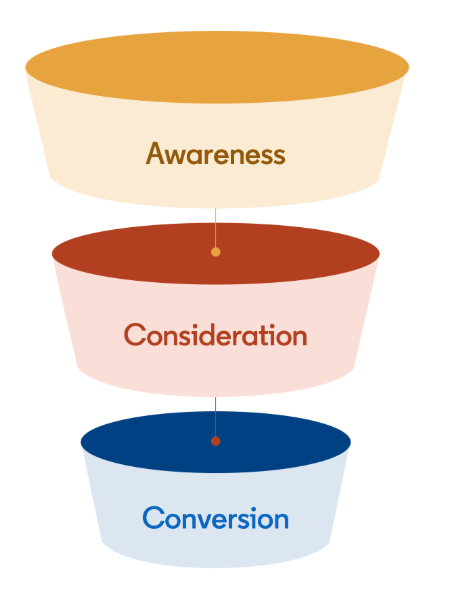
Building a Full-Funnel Content Marketing Strategy on LinkedIn
Table of Contents Toggle Why Build Content Marketing for the Full Marketing Funnel? (Why Full-Funnel Content Marketing?)Creating Your Strategy (Creating Your Strategy)Implementing Your Content Strategy (Rolling out your content strategy)Summary...
Designing Creative Content for LinkedIn
Table of Contents Toggle Why Is Good Creative Content So Important? (Why is Good Creative Important?)Key Components of Creative Design (the core elements of creative design)Summary (summary) Why Is Good...
Building an Organic Business Presence on LinkedIn With a LinkedIn Page
Table of Contents Toggle Why Have a LinkedIn Page?Establishing Your LinkedIn PageKeeping Your LinkedIn Page ActiveThe Measure of SuccessSummary About LinkedIn Page (Summary) Why Have a LinkedIn Page? For a...
6 Best LinkedIn Marketing Strategies for B2B in 2026
Table of Contents Toggle LinkedIn 2026: Where B2B Decisions Get MadeStrategy #1 – Why Is LinkedIn the Best B2B Marketing Channel Today?1. Decision-makers are concentrated here2. Users are in work...

7 Social Media Trends for 2026: The Era of Real Value, Real Conversion, and Real People
Table of Contents Toggle Social media is entering the biggest restructuring of the decadeTrend 1: Why is buying directly in-app becoming the new standard for 2026? (On-Platform Conversion)What should businesses...

What Is TikTok Marketing? Effective TikTok Marketing Strategies
TikTok has been topping the global rankings of the most downloaded and most visited apps. That makes it a gold mine for marketers who love creativity. In this article, The7...