


SKIN1004: Professional Crisis Management That Won Back Consumer Trust
The accusation that SKIN1004 copied the design idea of a designer known as Đ.H seemed to have pushed the brand into a serious crisis. Yet within just 24 hours, SKIN1004 pulled off a surprising turnaround thanks to a fast and transparent crisis response. Although there is still no final conclusion on the case, the positive reaction from the public shows how skillfully SKIN1004 won back consumer trust.
The SKIN1004 Controversy in Detail: Accused of Stealing a Designer’s Idea
SKIN1004, the Korean cosmetics brand best known for its popular Centella product line, is loved by many Vietnamese customers. Recently, however, SKIN1004 faced a fierce wave of criticism from online communities after a designer accused it of “stealing intellectual work”.
Specifically, on May 18-19, 2024, SKIN1004 held a large offline event called “3 Hệ Chống Nắng Toàn Năng” (The 3 All-Round Sun Protection Systems) to promote three new sunscreen products and open its flagship store in Ho Chi Minh City. Before that, the brand had held pitches with several agencies to choose a design and production partner for the event.
Right after the first day of the event (May 18), the account Đ.H posted an accusation that SKIN1004 had used the designer’s idea without permission or payment. Đ.H said this design had been rejected by SKIN1004 in the earlier pitch for being “not suitable for the brand’s image”. When the event took place, however, Đ.H was shocked to notice many significant similarities between their own design and the actual event design.
The side-by-side images that Đ.H posted quickly drew public attention, especially from the design community. Most opinions held that SKIN1004 had stolen creative work and seriously violated the designer’s intellectual property rights.
The scandal seriously damaged the reputation of the SKIN1004 brand. A flood of negative comments and calls for a boycott filled the brand’s social media pages.
How SKIN1004 Handled the Communications Crisis
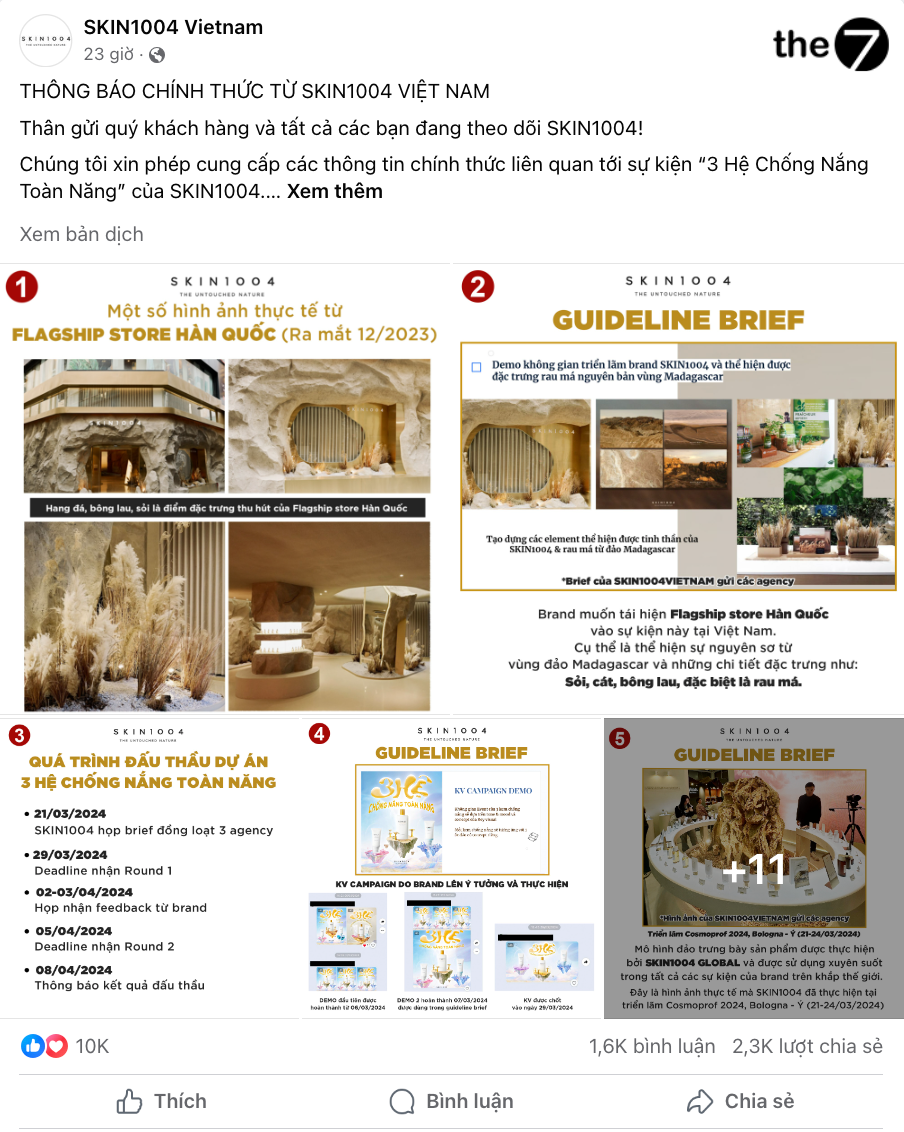
In less than a day after the designer’s post, SKIN1004 responded forcefully on its Facebook Page. With a single post, SKIN1004 turned the situation around and changed the public’s view through tight arguments and clear evidence. According to SKIN1004’s explanation:
- All the agencies that took part in the pitching received the same brief and materials, based on ideas from SKIN1004’s flagship store in Korea.
- SKIN1004 committed not to disclose one agency’s ideas to another.
- After two rounds of pitching, SKIN1004 chose the agency whose proposal best met the brand’s criteria. The contract for designing and producing the event was then signed.
- All design ideas were developed from the shared SKIN1004 Global concept, which had been used at many of the brand’s previous events around the world.
- Designer Đ.H.’s idea matches the actual design because both were based on the same brief and core concept that the brand had provided in advance.
After SKIN1004 gave its explanation and evidence, Đ.H raised further questions about the transparency of the brand’s work process, even touching on an issue related to email.
SKIN1004 did not shy away either, answering Đ.H’s questions one by one directly in the comments of the post on its Facebook Page. The debate between the two sides was fairly tense and has gone on for the past 2 days, drawing the attention of a large online audience.
Although it is still unclear who is right and who is wrong, it is undeniable that SKIN1004 handled the communications crisis in an extremely impressive way, gradually swinging public opinion toward the brand:
- Calming public opinion: As soon as it noticed the negative reactions, SKIN1004 quickly showed a willingness to listen and promised a clear explanation. In less than 24 hours, a clarification post went up with a sincere apology, which calmed public opinion and kept the case from spreading further.
- Transparent information: SKIN1004 retold the whole story, from Đ.H’s post to the pitching process with the agencies, giving the public a clear overview of the case.
- Sharp arguments, clear evidence: The brand presented forceful arguments backed by concrete evidence (images, documents) on its work process, pitching schedule, contracts, and more, to prove its innocence.
- Calm and professional: Despite responding quickly, SKIN1004 stayed calm, professional, and consistent in its wording, showing respect for both its customers and the designer.
- Accountability to the public: Even though it did not admit the accusation, SKIN1004 still apologized to customers and partners for the negative impact the case caused. The brand also affirmed that it always values and supports creativity.
SKIN1004’s remarkable comeback, from the center of criticism to a brand receiving praise, proves the power of a well-structured crisis-handling process. Not only did SKIN1004 put out the media “fire”, it also skillfully turned the incident into an opportunity to elevate the brand.
Transparency, a quick response, and sharp reasoning helped SKIN1004 win back public trust. Instead of sinking under a wave of boycotts, the “3 Hệ Chống Nắng Toàn Năng” event and the SKIN1004 name were mentioned even more, creating valuable free media exposure.
The SKIN1004 lesson is clear proof that crisis management is not just about fixing the consequences, but can also turn a challenge into an opportunity for growth. It is a textbook example that brands should learn from to handle similar situations in the future.
Idea and Pitching: The Battle of Wits Between Agencies and Clients
The accusation that SKIN1004 “copied” a design idea has exposed a painful reality in the communications industry: “borrowing” ideas between clients and agencies. This is not a new story, but it is always a sensitive and controversial issue that seriously affects the rights of everyone involved. It often happens when some brands reject the ideas and designs an agency brings to a pitch, but later use them without a direct contract with the agency.
The strong reaction of online communities, especially creatives, shows frustration at how common the “theft of intellectual work” has become. Even though SKIN1004 handled the crisis very well, damage to its image and reputation was unavoidable.
The lesson for brands is to be transparent and respect the intellectual property rights of others. Setting up a clear work process and signing tight contracts with agencies is the best way to protect both sides.
Agencies and freelancers, for their part, need to protect their ideas proactively by keeping detailed records of their discussions and pitches with clients. This provides concrete evidence to protect their rights in the event of a dispute.
The SKIN1004 case is a wake-up call for everyone working in the creative industry. Only mutual respect and compliance with intellectual property law can help the industry grow in a sustainable and healthy way.
>>See more: Lessons from BVLGARI in “Queen of Tears”: The Art of Storytelling That Elevates Product Placement
By Khánh Huyền
Source: Marketing AI
Nguyễn Đình
Bảo




As CEO of The7, I am committed to sharing practical, useful knowledge with every reader. Every article on The7 is based on my 7 years of hands-on experience in marketing — Facebook advertising, LinkedIn advertising, Google advertising, and marketing strategy. I hope you take away plenty of insight from these posts and apply it successfully in practice.
Related Articles

Solo but Not Lonely: Vietnam’s Rise of Solo Dining in F&B
The solo-dining trend — “hotpot for one,” “lonely noodles,” or “self-dates” — is becoming a popular movement among young Vietnamese people, opening up major opportunities for the F&B industry. More...
How Katinat’s Charity Marketing Campaign Sparked Public Backlash
Recently, Katinat launched a campaign to support compatriots in Làng Nủ, a community hit hard by storms and floods, promising to donate 1,000 VND from every drink sold between September...

Gojek Decides to Cease Operations in Vietnam
After six years of building its business in Vietnam, the ride-hailing and food delivery platform Gojek has officially announced that it is shutting down. Starting September 16, 2024, users will...
E-Commerce Platform Shein Suspected of Using Toxic Chemicals in Its Clothing
The discovery of harmful chemicals in Shein’s products has raised concerns about the hidden risks in fast fashion, an industry where trends usually come first. The incident has not only...
The Coffee House: A Former Market Leader Struggling Against New Rivals With a Faded USP
The Coffee House was once a promising icon of Vietnam’s F&B industry, but recent months have seen the brand shrink at an alarming pace, with a wave of branch closures...
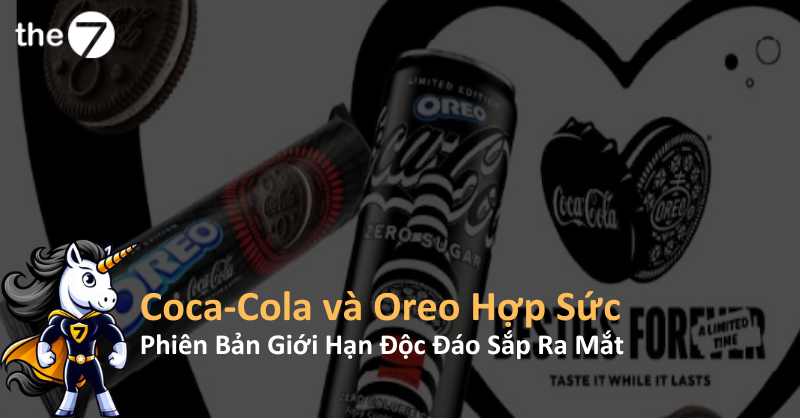
Coca-Cola and Oreo Team Up: Unique Limited Editions Coming Soon
If you’ve always dreamed of what Cola and cookies would taste like together, now’s your chance! Coca-Cola and Oreo have teamed up to bring you a one-of-a-kind combination – but...