


 and Responsive Search Ads (RSA))
Differences Between Dynamic Search Ads (DSA) and Responsive Search Ads (RSA)

Building a successful Google Search Ads campaign involves some important strategic decisions, and one of them is choosing between two powerful tools: Dynamic Search Ads (DSA) and Responsive Search Ads (RSA).
Both tools play an essential role in creating effective headlines, descriptions, and calls to action on Search Engine Results Pages (SERPs), helping you optimize the performance of your ad campaigns.
To understand DSA and RSA better, we need to look at the distinctive features of each tool, weigh their pros and cons, and see how the two can help businesses reach their target customers accurately and efficiently.
What Are Dynamic Search Ads (DSA)?
Dynamic Search Ads (DSA) are an automated ad format within Google Search advertising. Unlike traditional text ads, where you have to write the headlines and descriptions yourself, DSA automatically generates ad content based on the content of your website, which simplifies the advertising process.
How a DSA Campaign Works
When users search on Google with keywords that closely match the headlines and common phrases on your website, Google Ads uses that information to choose a landing page from your site. It then creates a clear, relevant ad headline based on the content it finds on the selected landing page.
For example, if someone searches for “bánh chocolate Singapore” (Singapore chocolate cake), they might see your ad with a headline like “Bánh Chocolate số 1 – Cửa hàng bánh tại Singapore” (#1 Chocolate Cake – Bakery in Singapore). When they click the ad, they are taken straight to the specific page on your website about cakes.
Keep in mind that the final text that appears in the ad is your responsibility, which underscores how carefully you need to choose which landing pages to advertise.
DSA is a good choice for businesses with a large or frequently updated inventory, offering an effective way to advertise without requiring much hands-on campaign management. It uses automation to keep your ads relevant, targets a diverse range of customers, and adapts quickly to changes in your online content. As a result, your advertising strategy becomes more efficient and flexible, reflecting the dynamic nature of the digital environment.
What Are Responsive Search Ads (RSA)?
Unlike traditional static ads, Responsive Search Ads (RSA) let advertisers create multiple headlines and descriptions, so Google can test different combinations to find the most effective ones. When someone searches, Google Ads automatically selects the most suitable headlines and descriptions from the information you have provided. This flexibility helps ensure your ad is tailored to the specific search keyword, increasing its ability to catch users’ attention.
How an RSA Campaign Works
Optimizing the number of headlines and descriptions in an RSA (Responsive Search Ads) campaign is important because it gives Google Ads more room to personalize your ad to customers’ specific search queries. By providing multiple headlines and descriptions, the campaign can arrange your text into many different ad combinations, creating varied, non-repetitive impressions and improving ad performance.
Each ad requires a minimum of 3 headlines and 2 descriptions so it can appear in many different combinations and orders. Parts of the ad text are automatically bolded to make them stand out when they closely match the user’s search query.
Over time, Google Ads automatically tests different ad combinations and adjusts to identify the most effective combination for a wide range of search queries.
Responsive Search Ads (RSA) are a process of continuous refinement, making sure your ad message stays closely connected to, and compelling for, your target audience.
Dynamic Search Ads (DSA) vs. Responsive Search Ads (RSA)
In Google Search advertising, the choice between DSA and RSA can have a significant impact on how effective your advertising strategy is. Below is a comparison table of the key differences between the two approaches:
| Dynamic Search Ads (DSA) vs. Responsive Search Ads (RSA) | ||
| Category | DSA | RSA |
| Description | This online advertising approach on the Google Ads platform automates the ad creation process. Instead of writing headlines and descriptions manually, DSA automatically generates ad content based on the information available on the advertiser’s website. | This online advertising approach on Google Ads offers flexibility and a high degree of control over the advertiser’s ad content. By entering multiple headlines and descriptions, advertisers let Google test different combinations to identify the most effective ones. |
| Automation | Fully automated ad creation based on website content. | You enter multiple headlines and descriptions manually, then automated testing takes over. |
| Use cases | A good choice for businesses with large websites or fast-changing inventory, helping them adapt efficiently to shifting content. | For advertisers looking for a flexible, adaptive way to create compelling ad content that responds to a wide range of audiences and interests. |
| Coverage strategy | Broad coverage that automatically targets a variety of search queries. | Offers more granular control over messaging and customization for different audience segments. |
| Keyword management | Minimal keyword management required. | More control over using specific keywords in headlines and descriptions. |
| Adaptability to change | Adapts effectively to frequent changes in website content. | Flexible enough for continuous testing and optimization, and allows adjustments as audience preferences change. |
| Relevance | Improves relevance by automatically adjusting the generated headline to match users’ search queries. | Allows control over the ad text, so advertisers can refine the message to ensure relevance. |
| Ad text control | Limited control, since headlines and landing pages are generated automatically. | Advertisers can manage the final ad content, enabling a more hands-on approach. |
| Customization | Limited customization, because automation prioritizes dynamic content. | Offers greater flexibility and customization by letting you enter multiple ad elements. |
| Testing | A/B testing is done manually, while automation is the main focus. | Automated A/B testing for continuous refinement and optimization. |
Pros and Cons of Dynamic Search Ads (DSA)
Pros:
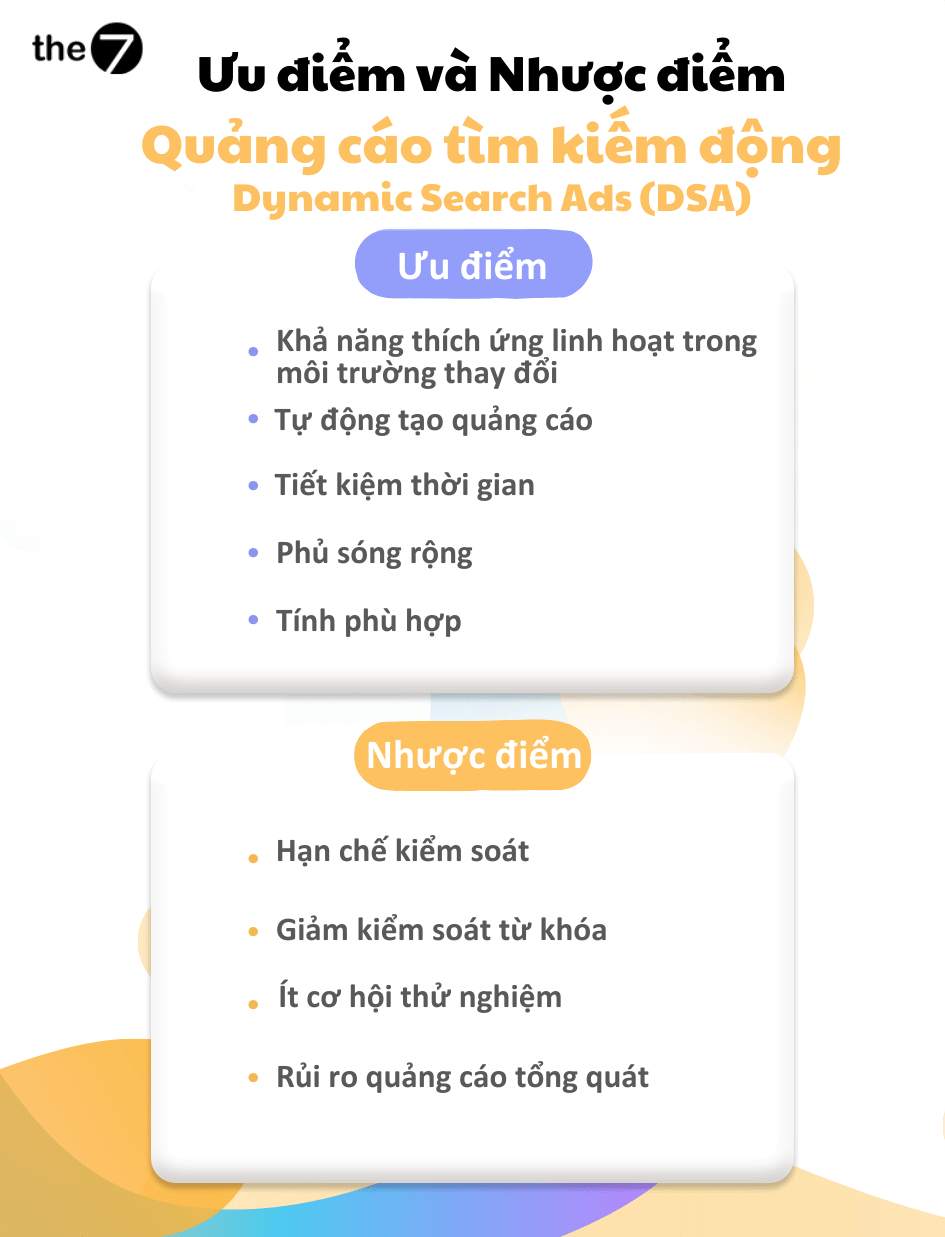
- Automatic ad creation: DSA creates ads by generating headlines and choosing landing pages based on your website content. This cuts down on manual ad-creation work.
- Time savings: Well suited to businesses with large websites or frequently changing inventory, because DSA saves time by automatically adapting to changes in website content without constant manual adjustments. It also ensures the ads it generates stay complete and reflect the latest information.
- Broad coverage: DSA delivers wide coverage, automatically targeting many search queries related to the content on the advertiser’s website. This helps your ads attract visitors with a variety of needs.
- Relevance: DSA improves relevance by automatically adjusting headlines to match users’ search queries, increasing the chance of catching the attention of potential customers.
Cons:
- Limited control: Advertisers don’t have much control over the specific content of the ad because it is generated automatically from website content, which can sometimes cause a mismatch between the ad and their specific promotional goals. This can be a challenge for those who want more control over their ad text.
- Less keyword control: Compared with traditional keyword-based campaigns, DSA campaigns give you less control over choosing specific keywords, which can be limiting for advertisers with a precise keyword strategy.
- Fewer testing opportunities: Because DSA focuses primarily on automation, it can limit A/B testing opportunities compared with other campaign types, affecting your ability to improve and optimize ad performance.
- Risk of generic ads: Because DSA relies on website content, it can produce generic, unremarkable ads that may lack the distinct messaging needed for specific marketing campaigns.
Understanding these pros and cons will help you decide whether DSA fits the goals and preferences of your ad campaign. While DSA offers automation and time savings, you need to weigh it carefully to make sure it fully supports your overall advertising strategy.
Pros and Cons of Responsive Search Ads (RSA)
Pros:
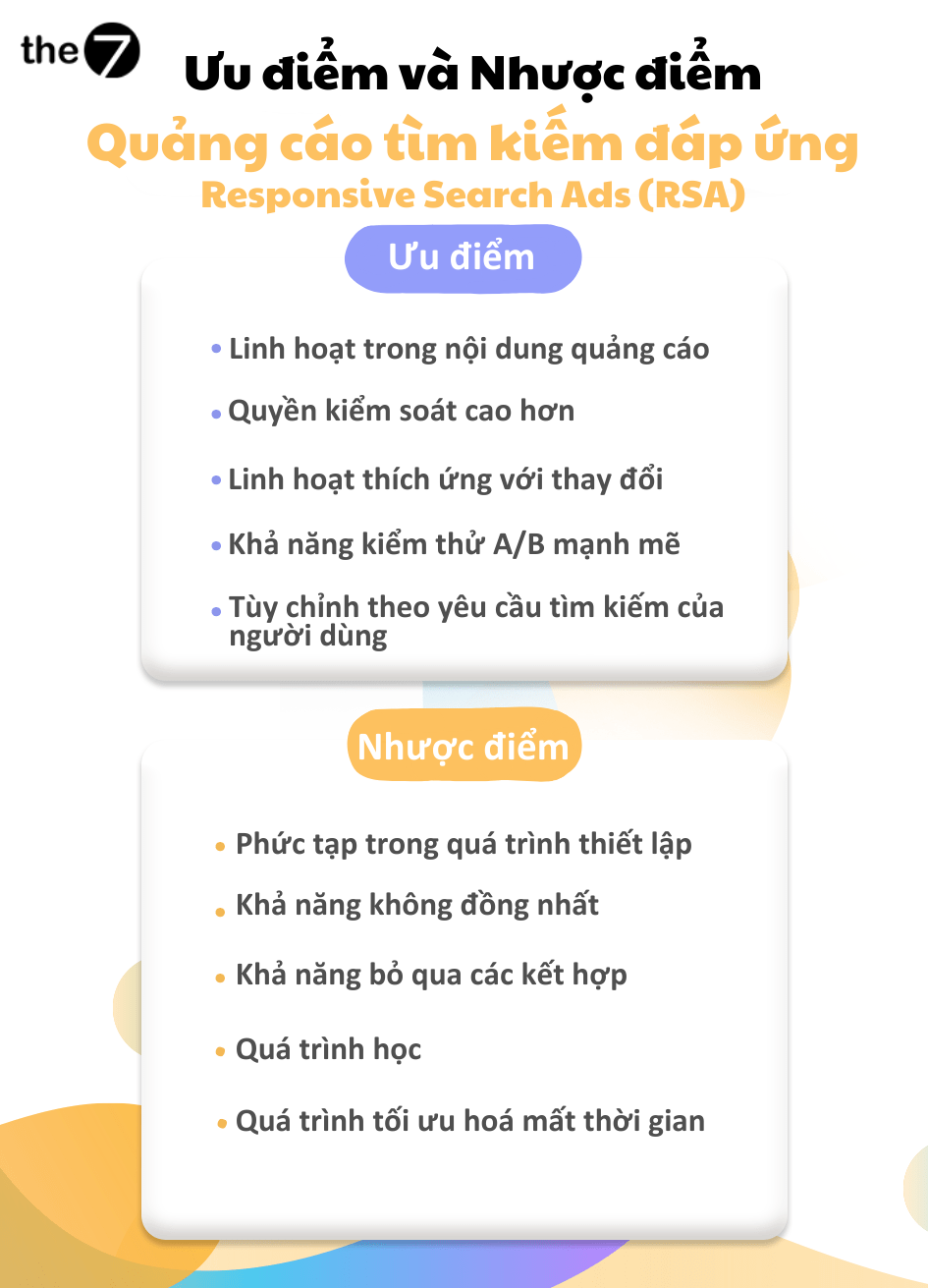
- Flexible ad content: RSA lets advertisers enter multiple headlines and descriptions, giving you flexibility in creating ad content. This is especially useful for tailoring your message to different audience segments and interests.
- Greater control: Advertisers have more control over the final ad text than with DSA. This means you can get more involved in creating the ad and make sure the message is accurate and aligned with your campaign goals.
- Powerful A/B testing: RSA automatically tests a large number of headline and description combinations. This helps advertisers identify which combinations work best and continuously improve their ad content.
- Customized to users’ search queries: RSA automatically selects the headlines and descriptions that match users’ search queries, so your content is displayed quickly and accurately.
- Flexible adaptation to change: The evolving nature of RSA helps it adapt to changes in audience preferences or shifts in the competitive market. This adaptability is essential for staying relevant over time.
Cons:
- More complex setup: Setting up RSA can be more complicated than traditional ad types, since advertisers need to provide multiple headlines and descriptions. This can make ad creation harder, especially for those who want a simpler process.
- Risk of inconsistency: While RSA gives you control, it requires careful management to make sure headlines and descriptions are entered consistently and don’t produce inaccurate or conflicting messages.
- Learning curve: Advertisers new to RSA may face a learning period as they figure out how to enter and manage multiple ad elements for optimal performance.
- Possibility of overlooking combinations: With so many possible headline and description combinations, specific combinations that could be effective may be overlooked, which calls for regular monitoring and adjustment.
- Time-consuming optimization: Although A/B testing is an advantage, continuous optimization can take time, requiring regular review and adjustment of headline and description combinations.
To make effective use of RSA’s flexibility and customization, it’s important to understand their pros and cons. While RSA offers control and testing capabilities, careful management is the key to making the most of what RSA can do and achieving success in your ad campaigns.
When Should You Use Dynamic Search Ads (DSA) or Responsive Search Ads (RSA)?
When deciding whether to use DSA or RSA, you need to align your choice with your campaign goals. Take advantage of DSA’s flexibility for constantly changing content, and use RSA’s control to deliver targeted messages. If you want a comprehensive strategy, consider combining both approaches. Balancing DSA and RSA can raise the quality of your Google Search ads while ensuring efficiency and a complete online presence.
By understanding the strengths of each approach and deploying them strategically based on your campaign goals, you can navigate the digital space with ease, capture your audience’s attention, and optimize your search ads to achieve success.
The7’s deep expertise in search engine marketing goes beyond conventional methods. We specialize in using search engines to boost brand visibility, attract targeted traffic, and deliver measurable results for our clients.
Contact us to learn more about DSA and RSA.

Nguyễn Đình
Bảo




As CEO of The7, I am committed to sharing practical, useful knowledge with every reader. Every article on The7 is based on my 7 years of hands-on experience in marketing — Facebook advertising, LinkedIn advertising, Google advertising, and marketing strategy. I hope you take away plenty of insight from these posts and apply it successfully in practice.
Related Articles
Building a Full-Funnel Content Marketing Strategy on LinkedIn
Table of Contents Toggle Why Build Content Marketing for the Full Marketing Funnel? (Why Full-Funnel Content Marketing?)Creating Your Strategy (Creating Your Strategy)Implementing Your Content Strategy (Rolling out your content strategy)Summary...

Designing Creative Content for LinkedIn
Table of Contents Toggle Why Is Good Creative Content So Important? (Why is Good Creative Important?)Key Components of Creative Design (the core elements of creative design)Summary (summary) Why Is Good...

Building an Organic Business Presence on LinkedIn With a LinkedIn Page
Table of Contents Toggle Why Have a LinkedIn Page?Establishing Your LinkedIn PageKeeping Your LinkedIn Page ActiveThe Measure of SuccessSummary About LinkedIn Page (Summary) Why Have a LinkedIn Page? For a...

6 Best LinkedIn Marketing Strategies for B2B in 2026
Table of Contents Toggle LinkedIn 2026: Where B2B Decisions Get MadeStrategy #1 – Why Is LinkedIn the Best B2B Marketing Channel Today?1. Decision-makers are concentrated here2. Users are in work...

7 Social Media Trends for 2026: The Era of Real Value, Real Conversion, and Real People
Table of Contents Toggle Social media is entering the biggest restructuring of the decadeTrend 1: Why is buying directly in-app becoming the new standard for 2026? (On-Platform Conversion)What should businesses...

What Is TikTok Marketing? Effective TikTok Marketing Strategies
TikTok has been topping the global rankings of the most downloaded and most visited apps. That makes it a gold mine for marketers who love creativity. In this article, The7...