


Digital Marketing Audit: The Secret Behind Every Successful Strategy
A digital marketing audit involves reviewing every aspect of your brand’s digital footprint. Once it’s complete, you’ll have a multidimensional view of your brand, packed with data-driven insights you can put to work in your marketing strategy.
When done properly, an audit helps you measure the effectiveness of your marketing efforts, fine-tune your campaigns, and spot gaps or opportunities for your team to act on.
Let’s walk through the steps of a comprehensive digital marketing audit.
How to Conduct a Digital Marketing Audit
- Review Your Website
- Audit Your SEO
- Run a Digital Marketing Content Audit
- Conduct a Digital Marketing Social Media Audit
- Evaluate Your Paid Advertising Performance
- Check Your Brand’s Online Reputation
- Run a Digital Marketing Email Audit
A digital marketing audit digs deep into each of these digital channels. Auditing each one helps you understand how your customers prefer to engage and gives you a complete picture of your brand’s digital reach. Every channel has its own characteristics. But without a digital marketing audit, you’re just throwing darts at a board while blindfolded.

Review Your Website
The first step in your digital marketing audit is to review your website.
Put simply, your website is the hub of all your digital marketing efforts. It’s one of the few online assets you have complete control over. Here are the steps you should follow to audit your website.
Evaluate Your Website Design
In the real world, your traditional storefront window is designed to catch the attention of passing shoppers. In the digital world, your website should do the same.
Your website design is a key part of telling your brand story, and it has a significant impact on your brand’s credibility.
In fact, 75% of your website’s credibility comes from its design.
Here are some of the best website design signals you should check on your own site:
- Clear calls to action (CTAs) – Your CTAs should stand out from the other elements on your website. They need to be easy-to-find buttons with bold colors that inspire people to take action. Find the right balance, and make sure you don’t use too many CTA buttons.
- Modern design – Your website should look fresh, use enough white space to draw attention, and use images and videos that fit the user experience.
- Clear structure – Use consistent typography across your website. Use headings and subheadings with different weights, colors, and text sizes to guide users to the most important information.
- Easy-to-use navigation – Use navigation bars, footers, and other links on your website to help customers find what they’re looking for in three clicks or fewer.
- Website accessibility – Look for four things when auditing website accessibility: color contrast, alt text, image focus indicators, and accessible labels.

See more: https://the7digital.com/
Check Your Website Speed
Page load speed matters for both user experience and search engine rankings.
70% of consumers say page speed affects their willingness to buy from online retailers. When it comes to load time, every second counts. According to research, a website’s conversion rate drops by an average of 4.42% for each additional second of load time.
Audit your best-performing pages to find ways to shave off every millisecond you can. Look for site-wide improvements such as:
- Compressing file sizes
- Trimming unused JavaScript
- Implementing lazy loading
A good tool for finding page speed improvements and checking your website’s Core Web Vitals is Google’s PageSpeed Insights.
Make Sure Your Website Is Mobile-Friendly
Next, make sure your mobile website experience is excellent. 58% of global website traffic comes from mobile devices (excluding tablets).
Today’s customers expect a mobile website that’s easy to use. Mobile compatibility is also a ranking factor for search engines.
Be sure to use tools like Google’s Mobile-Friendly Test and manually check your website on a smartphone. Here are some mistakes to avoid so your website stays mobile-friendly:
- Content wider than the screen
- No viewport set
- Text too small to read
- Clickable elements placed too close together
Audit Your SEO
Next, you need to run an SEO audit. Put simply, SEO helps your website rank higher on search engine results pages (SERPs), driving useful traffic to your site.
We all search on Google every day, and auditing your website for SEO increases the chances of your site ranking in the top three positions of the first page, where most clicks happen.
Search algorithms change constantly, which is why we recommend running an SEO audit regularly, at least twice a year. When it comes to SEO, you can’t “set it and forget it” if you want to outpace your competitors.
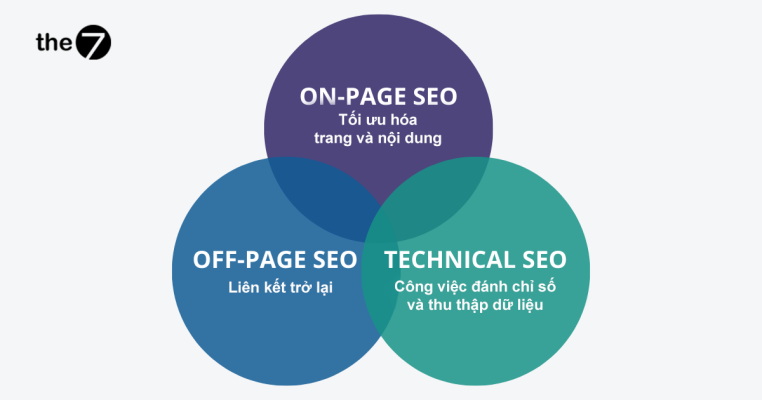
Your SEO audit should be divided into three parts: on-page SEO, off-page SEO, and technical SEO. Let’s look at all three.
Audit On-Page SEO
On-page SEO is the process of optimizing the content and user experience on your website to improve your pages’ rankings on SERPs. There are many on-page SEO ranking factors that send signals to search engines to help them understand what your content is about.
This helps search engines determine which keywords and search phrases your content should appear for in SERPs, and where it should rank.
If your website is well optimized for on-page SEO, you have a better chance of ranking higher in SERPs. Here are some of the most important on-page SEO factors to review when auditing your website:
- Titles and descriptions
- Headings and formatting
- Content quality
- Internal links
- Images with alt text
- Broken links

Audit Off-Page SEO
Off-page SEO refers to optimization strategies you can use beyond the boundaries of your own website.
Here’s one way to remember the difference between on-page and off-page SEO. On-page SEO is completely within your control, because you own your website. Off-page SEO is harder to control because you have to rely on other websites for help.
One of the most important off-page SEO strategies is earning backlinks, or building links from other reputable websites. Since the birth of search engines, backlinks have been an important ranking factor. When other websites link to yours, it implies that they trust your brand and consider your content valuable. When you audit your website’s off-page SEO, you’ll want to look at:
- The number and quality of incoming links
- Your website’s domain authority
- Your link profile compared with your competitors’

Audit Technical SEO
Technical SEO is the process of optimizing your website for search engine crawling and indexing. The main goal of technical SEO is to optimize your website’s structure and make it easy for Google and other search engines to find your content.
Here’s what you should look for in your technical SEO audit:
- Check your Robots.txt file to make sure you aren’t blocking any important content from being crawled
- Review your website’s URL structure to make sure it’s simple and easy to understand
- Look for “breadcrumbs” on your website to add another layer of navigation
- Use structured data, where possible, to highlight key information for search engines
- Check your XML sitemap to make sure it includes all of your pages and has been submitted to Google Search Console
- Make sure your website is secure with an SSL certificate and switch to HTTPS instead of HTTP
- Check your website speed to make sure it loads quickly, which is becoming an important ranking factor
- Make sure your website is mobile-friendly, which, again, is becoming an important ranking factor
Run a Digital Marketing Content Audit
After evaluating your website’s design and SEO performance, it’s time to audit your content.
Content marketing is the practice of creating useful content for your website that attracts and engages potential customers and helps build brand loyalty.
Find Your Best-Performing Content
When conducting a digital marketing content audit, start by gathering data for all of your web pages and identifying your best-performing content. Here are the metrics you can use to audit the performance and engagement of your content.
Content Performance Metrics:
- Number of visits – The number of people who have interacted with your website.
- Conversion rate – What percentage of website visitors become customers?
- Subscription rate – Do visitors sign up for your email marketing?
- Traffic sources – Which sources bring visitors to your website?
- Returning visitor rate – How many people come back after visiting your website?
- Visit duration – How long do they spend on each page of your website? Look for common trends among your best-performing pages. Once you identify what’s working and what isn’t, you can better optimize your content marketing strategy going forward.
See more: https://the7digital.com/category/xu-huong-digital-marketing/content-marketing/
Map Content to the Customer Journey
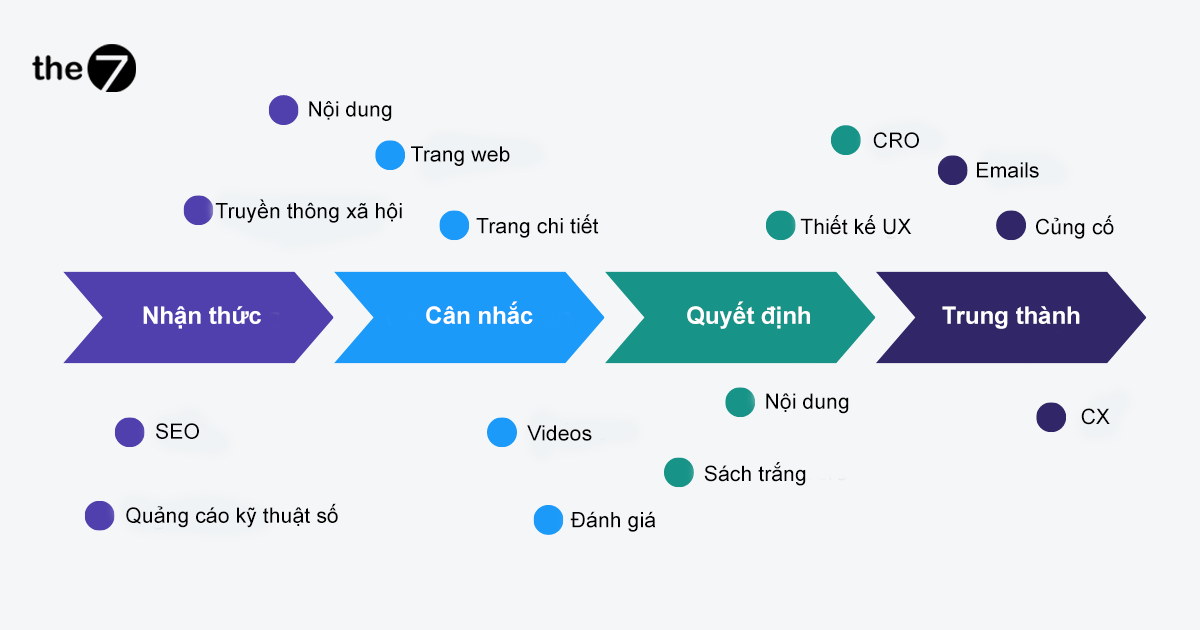
When reviewing your content marketing strategy, it also helps to organize your content by the customer journey stage it supports.
Customer Journey Stages:
- Awareness – The buyer is experiencing a problem or the symptom of a pain point, and their goal is to relieve it. They may be looking for sources of information to better understand, define, and name their problem.
- Consideration – The buyer has clearly defined and named their problem, and they commit to researching and understanding all the available approaches and/or methods for solving the defined problem or opportunity.
- Decision – The buyer has chosen their solution, method, or approach. Their goal now is to compile a list of available vendors, build a shortlist, and ultimately make the final purchase decision.
- Loyalty – Once customers have bought your product, your goal is to keep them engaged and turn them into brand advocates.
Remove, Merge, or Update Pages
Once you’ve identified your best-performing pages, it’s time to clean up and optimize your website. Consider removing underperforming content from your site. You can also combine similar content to help increase its potential SEO value. In general, users and search engines tend to prefer one well-developed page over two pages with thin content. When you merge or remove pages, make sure to set up the appropriate 301 redirects.
Create a Content Publishing Calendar
Use the insights you’ve gathered from your digital marketing content and SEO audits to create a content calendar for future content creation. Identify keyword gaps and create content based on what you learn from your best-performing pages.
Run a Digital Marketing Social Media Audit
Now it’s time to run your digital marketing social media audit. As part of this, you’ll want to review all of your social media profiles. Here are the areas you should focus on in your digital marketing social media audit:
- Profile accuracy and brand consistency – Make sure all of your social media pages have accurate information about your company, use consistent branding in profile pictures and cover photos, and have up-to-date bios and links.
- Follower and audience growth – Chart your follower growth over time to make sure you’re seeing healthy month-over-month growth.
- Engagement rate – Calculate the engagement rate for your posts, identify trends in the content with the highest engagement rates, and plan to create more content that matches your most popular posts.
- Identify your best post types – As you calculate engagement rates, look at which types of posts perform well, such as videos, carousels, status updates, and others.
- Activity compared with competitors – Review how often you post on social media compared with your competitors. If you notice that posting more or less often drives more engagement, adjust accordingly.

Based on the results of your social media audit, you can create an action plan for next steps. For example, if you find that one social media platform is performing better than another, you may want to devote more time to the better-performing channels.
Explore new social media platforms
During your social media audit, it’s important to explore new and emerging platforms. Conduct a competitor audit to find out whether any competitors are using lesser-known or rising platforms. Consider testing content on those platforms.
If you want to target a specific audience, make sure to do your research to understand which platforms are likely to work best.
See more: https://the7digital.com/category/xu-huong-digital-marketing/social-media/
Evaluate Advertising Performance
Now it’s time to review your paid advertising campaigns with a digital advertising audit. You may be distributing your budget across different platforms such as Google Search or Instagram. Whichever platforms you use, here are the areas you should review in your audit.
Review Campaign Budgets and Goals
You’ll want to review your ad budget at least once a quarter to make sure it’s being used effectively. Look for campaigns with higher spending but few conversions.
A conversion happens when your ad campaign achieves its goal. Examples of ad campaign goals include:
- Awareness – Build brand awareness with new and existing customers
- Traffic – Drive potential customers to your website
- Engagement – Boost engagement with your content or social media posts
- Leads – Collect contact information for your business through lead forms
- App promotion – Promote your app and drive downloads
- Sales – Increase sales on your website or e-commerce store
Analyze Performance Data
To audit the performance of your ad campaigns, check the following metrics. Identify trends and update your campaigns accordingly.
- Reach / Impressions – How many people saw your ad?
- Cost – How much money have you spent on your ad campaigns?
- Clicks – How many people clicked on your ad?
- Average cost per click (CPC) – How much did you pay for each click?
- Click-through rate (CTR) – What percentage of people who saw your ad clicked on it?
- Actions / Conversions – How many people completed the action or goal you wanted them to take?
- Average cost per action (CPA) – How much did you pay for each action taken?
- Conversion rate (%) – What percentage of people who engaged with your ad took the desired action you wanted them to take?
Audit Your Ads
The final step of your ad audit is to review your actual ads. There are several areas you’ll want to focus on. Remember to use the insights you gathered from your budget, goal, and performance analysis. Here are the key elements to review for your ads.
- Headlines and messaging
- Target audience
- Keywords
- Creative assets
- Display URL
- Call to action (CTA)
Audit Your Brand’s Online Reputation
An online reputation audit helps you better understand what customers are saying about your brand online.
According to research from BrightLocal, 79% of consumers say they trust online reviews as much as a personal recommendation. That makes it essential to understand your brand’s online reputation.
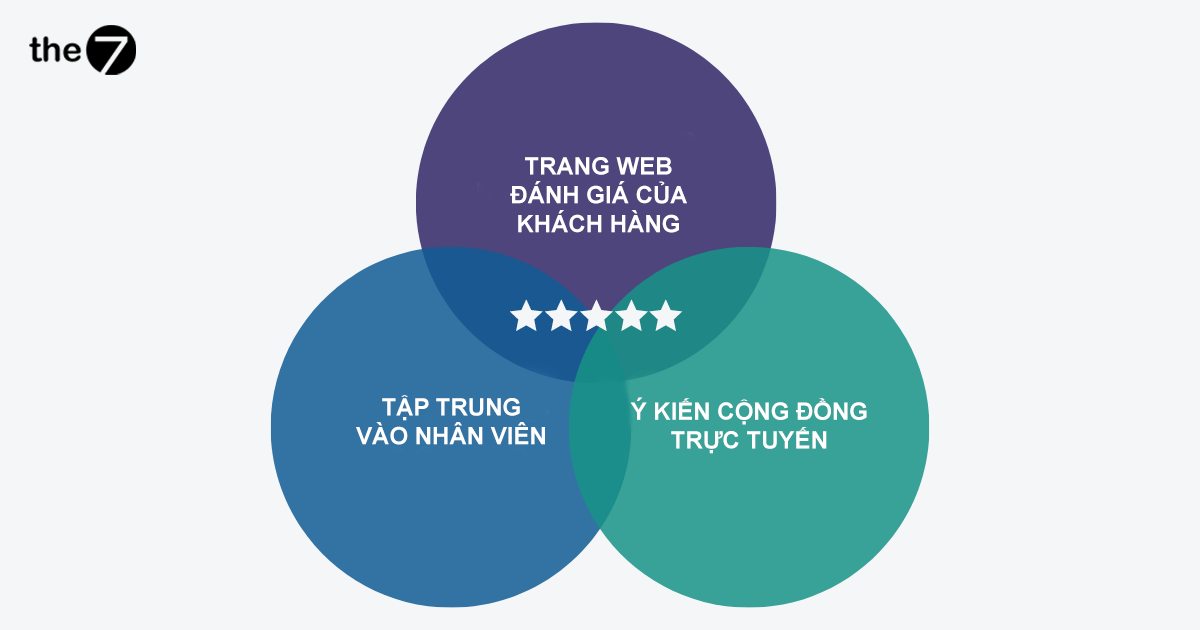
When conducting a reputation audit, be sure to do a comprehensive review of any platform that may carry reviews of your business, including:
- Customer review sites – Google, Yelp, the Better Business Bureau (BBB), and Trustpilot
- Employee-focused platforms – Glassdoor, LinkedIn, and Indeed
- Public online platforms – Google Search, Facebook, and Twitter
Respond to Negative Reviews
Even when your company receives a negative review, it’s important to respond authentically and try to resolve the issue. This sends a signal to both consumers and search algorithms that your brand is engaged and puts customers first.
Run a Digital Marketing Email Audit
We’ve reached the final step of your digital marketing audit! It’s time to audit your email marketing.
Email is one of the most classic digital marketing channels and has stood the test of time, and it’s still relevant today. Here are the most important metrics to check in your email marketing review.
Email Performance Metrics
- Delivery rate – How many emails were successfully delivered?
- Open rate – How many people opened your email?
- Click-through rate (CTR) – How many people clicked a link in your email?
- Conversion rate – How many people took the desired action from your email campaign?
Audience
Another important area to audit is your subscriber list, or audience.
- Audience size – How many people are in your audience?
- Subscription rate – How many people signed up for your email list?
- List growth rate – At what rate is your audience growing or shrinking?
- Unsubscribe rate – What percentage of people unsubscribe from your list?
- Audience engagement – How many people opened and clicked your email campaigns?
Keep in mind that losing subscribers or cleaning up your list isn’t always a bad thing. You want to make sure your audience is made up of high-quality subscribers.
Review Your Email Design
The final part of your digital marketing email audit is to review your actual email designs.
- Are they mobile-friendly?
- Do they include an unsubscribe button?
- Is the formatting clean and easy to understand?
- Is the value proposition clear?
- Do they have a clear call to action?
- Is the subject line compelling?
- Does the design fit your brand and industry?

Do You Need a Digital Marketing Audit?
Whether you’re a seasoned marketing executive or a growing company just starting to think about your digital footprint, the following questions will help you decide whether a digital marketing audit is right for you:
- Do you have a comprehensive digital marketing strategy for growing your brand?
- Are you experiencing continuous growth, with double-digit increases in online engagement with your brand?
- Do you have a strategy that works, with the right People, Platforms, Partners, and Processes needed to set your brand up for success?
- Are you ranking higher than your competitors in Google search results for queries related to your products and services?
- Do you measure the right Key Performance Indicators and track the right data to generate the most engagement with your target audience?
This isn’t an exhaustive list, but if you answered “no” to even two or three of these questions, it’s time to run a digital marketing audit.
Marketing Shouldn’t Be a Game of Chance
When you can answer the questions above, you’ll be able to focus on the things that will have the biggest impact on your company’s bottom line. Instead of chasing your competitors in a game of “follow the leader,” you can identify the most important metrics and opportunities to grow your digital footprint.
Why Does a Digital Marketing Audit Matter?
Numbers tell a story. When you come to the table with competitive insights, emerging trends, and engagement statistics, you’ll be ready to tackle almost any obstacle in front of you.
This data is a real win for marketers trying to justify their marketing budgets. You can win over stakeholders with strong strategic changes backed by your performance, and business owners can better define their next steps. In the areas where you’re weak, you can convey a sense of urgency more effectively and identify opportunities to grow.
And of course, in the areas where you’re strong, the data will justify what you’re doing. When enough of these numbers fall into the right place, you’ll be able to point to growth in revenue, user engagement, and brand awareness.

Nguyễn Đình
Bảo




As CEO of The7, I am committed to sharing practical, useful knowledge with every reader. Every article on The7 is based on my 7 years of hands-on experience in marketing — Facebook advertising, LinkedIn advertising, Google advertising, and marketing strategy. I hope you take away plenty of insight from these posts and apply it successfully in practice.
Related Articles
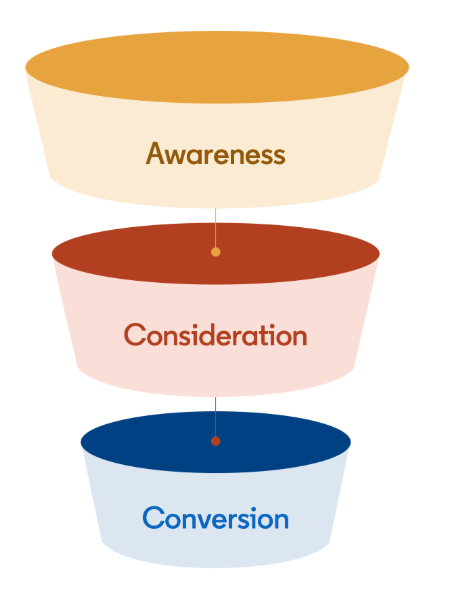
Building a Full-Funnel Content Marketing Strategy on LinkedIn
Table of Contents Toggle Why Build Content Marketing for the Full Marketing Funnel? (Why Full-Funnel Content Marketing?)Creating Your Strategy (Creating Your Strategy)Implementing Your Content Strategy (Rolling out your content strategy)Summary...

Designing Creative Content for LinkedIn
Table of Contents Toggle Why Is Good Creative Content So Important? (Why is Good Creative Important?)Key Components of Creative Design (the core elements of creative design)Summary (summary) Why Is Good...

Building an Organic Business Presence on LinkedIn With a LinkedIn Page
Table of Contents Toggle Why Have a LinkedIn Page?Establishing Your LinkedIn PageKeeping Your LinkedIn Page ActiveThe Measure of SuccessSummary About LinkedIn Page (Summary) Why Have a LinkedIn Page? For a...

6 Best LinkedIn Marketing Strategies for B2B in 2026
Table of Contents Toggle LinkedIn 2026: Where B2B Decisions Get MadeStrategy #1 – Why Is LinkedIn the Best B2B Marketing Channel Today?1. Decision-makers are concentrated here2. Users are in work...

7 Social Media Trends for 2026: The Era of Real Value, Real Conversion, and Real People
Table of Contents Toggle Social media is entering the biggest restructuring of the decadeTrend 1: Why is buying directly in-app becoming the new standard for 2026? (On-Platform Conversion)What should businesses...

What Is TikTok Marketing? Effective TikTok Marketing Strategies
TikTok has been topping the global rankings of the most downloaded and most visited apps. That makes it a gold mine for marketers who love creativity. In this article, The7...