


Google’s New Step Forward: Enhancing Search With Generative AI
In an ever-changing digital world, Google keeps pushing innovation to keep up with the trends. One of its most notable breakthroughs is the integration of Artificial Intelligence (AI) into its search engine, changing how users interact with the vast amount of information online.
Recently, Google introduced Generative AI in the United States, opening the door to a fundamental shift in how search results are delivered, with an impact on the user experience and on the strategies of SEO professionals and website owners.
So what does this mean for users? A more conversational search experience is on the way: imagine interacting with a search engine the way you would talk to a knowledgeable friend.
Likewise, Google Search’s Generative AI has far-reaching implications for businesses and website owners trying to increase their visibility in a fiercely competitive digital world. As Generative AI takes center stage, the importance of quality content reaches a new high. Websites that offer valuable, informative and engaging content will stand out in a bustling virtual space, while those that focus only on keyword optimization may find themselves overshadowed.
In this article, we take a deeper look at Generative AI and explore how it works in Google’s search engine.
What Is Generative AI?
At its core, Generative AI enables computers to create original, creative content such as text, images and even audio. Unlike traditional artificial intelligence, which follows rules and processes predefined structured data, Generative AI uses advanced algorithms and neural networks to learn patterns from existing data and then applies that knowledge to produce new content that has never been seen before.
In the context of Google Search, Generative AI improves the search engine’s ability to understand and respond to user queries more effectively. By analyzing huge amounts of data, including web pages, articles and other digital content, Generative AI can understand the intent behind user queries more accurately, making search results more relevant to the context.
How Generative AI Works in Google Search
By harnessing the power of Generative AI, Google Search now helps users understand topics faster, broaden their perspectives, and make better-informed decisions with ease.
Let’s look at how this technology works and how it enhances the search experience:
Support for complex queries

When faced with complex, multi-faceted queries, Generative AI in Google Search streamlines the process of retrieving information. Consider a question like “What are good vacation destinations for a family with young children, with a focus on family activities and water play?” Previously, users might have had to break this question into smaller sub-questions, search through a wealth of information and piece together an answer on their own. With Generative AI, Google Search now provides a summary of the key information to consider, along with links to dive deeper into the details.
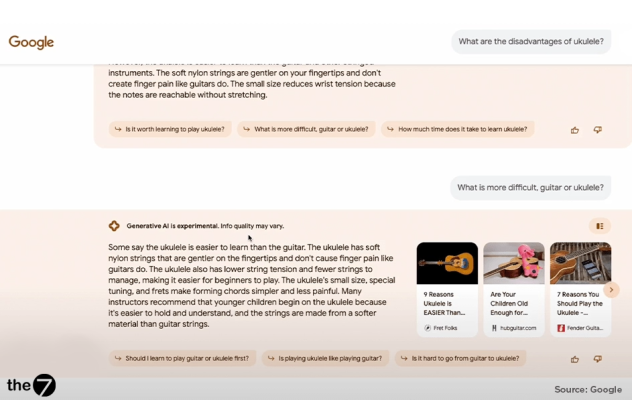
Users will get suggestions for next steps, including the ability to ask follow-up questions naturally as the conversation unfolds. For example, a user could ask, “Do these vacation destinations offer surfing lessons for beginners?” This seamless conversational mode helps users explore topics more naturally, with context carried over from one question to the next.
When a user submits a query, Generative AI automatically analyzes a range of web pages, articles and digitized content to find the most accurate and valuable information. It identifies patterns and correlations between different data points, which lets it understand the user’s intent and the context behind the query.
With this extensive pool of information, Generative AI then organizes it to produce the search results. Rather than relying only on matching keywords or phrases, it creates more comprehensive answers that give a broader overview of the topic being searched.
Better shopping decisions
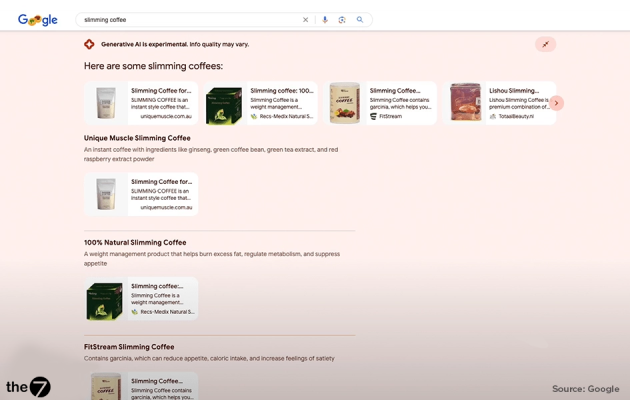
Generative AI is also making shopping decisions more convenient and efficient for users. When searching for a product, Google Search displays a summary of the key factors to consider, including product descriptions with reviews, ratings, prices, and relevant, up-to-date product images. This advanced shopping experience is powered by Google’s comprehensive Shopping Graph, which contains more than 35 billion product listings, making it a rich, constantly changing source of data on products, sellers, brands, reviews and inventory around the world.
Thanks to Generative AI, users can make shopping decisions, even the toughest ones, with more confidence, backed by the rich information provided in the search results.
Created from diverse perspectives
With Generative AI in Google Search, the focus is on highlighting valuable content on the web and drawing attention to it. This approach lets users dig deeper into the topics they are exploring and gather information from many different perspectives. Google is committed to continuing to send valuable traffic to websites across the web so that users have access to comprehensive, reliable information.
In addition, search ads will continue to appear in the ad placements already reserved on the search page. Google maintains its commitment to transparency, making sure ads can be clearly distinguished from organic search results.
A responsible approach
Although Generative AI in Google Search represents a significant step forward, it is important to recognize that even with this technology, it cannot always provide a perfect answer.
To maintain high quality standards, Google has carefully trained these models and keeps improving them over time. As a result, the rollout of Generative AI has been deliberate and cautious, with Google holding off on a global launch until the technology meets its strict standards. Right now, rigorous testing and continuous improvements are under way to make sure the search results delivered to users are consistently of excellent quality and relevance.
With the integration of Google’s Generative AI, the E-E-A-T framework (Experience, Expertise, Authoritativeness, Trustworthiness) will play an increasingly important role in shaping search results. Websites that apply the E-E-A-T principles and focus on delivering an excellent user experience will sit at the top of the search rankings.
The Impact of Generative AI on SEO Campaigns
As Google Search integrates Generative AI to deliver a more conversational, content-focused search experience, building a successful SEO strategy will look different than it did before. Strategists are facing a major paradigm shift in how they optimize websites to improve visibility and user engagement.
See more: 7 Benefits of Using Google Business Profile
Below are the key areas where Generative AI is affecting SEO campaigns, and how to prepare for this disruptive change:
Content quality and relevance
With Generative AI focused on understanding user intent, content quality and relevance have become the deciding factor for SEO campaigns. The days of simply focusing on keyword optimization are over. Instead, SEO campaigns need to prioritize creating high-quality, informative content that matches user intent. Quality articles, guides and blog posts that provide useful information and answers to users’ questions will become important in search results.
The goal is to give users content that addresses their needs and interests, while positioning your website as an authoritative source of information in their specific field.
Using keywords in context
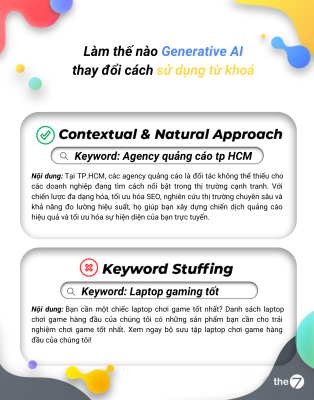
While keywords still matter, using them now calls for a more natural, contextual approach. Sophisticated Artificial Intelligence algorithms can tell whether a keyword fits within the overall context of the content, making deliberate keyword stuffing obsolete. Instead, SEO campaigns should focus on weaving keywords naturally into content in a way that improves its readability and value.
This approach not only improves search rankings but also creates a positive user experience, because the content feels more natural and more user-friendly.
A user-centered approach

Search engines now prioritize creating an excellent experience for users, including intuitive navigation, fast-loading pages and mobile compatibility. Websites that excel at providing a smooth, user-friendly experience will be favored in search rankings.
SEO campaigns need to optimize websites to improve user engagement and satisfaction. This can be achieved by focusing on site speed, ensuring easy navigation and creating a mobile-friendly design. User experience should be at the forefront of SEO strategies, because Google’s Generative AI is trying to respond more effectively to searchers’ preferences and needs.
With a stronger focus on user experience, Google’s Core Web Vitals have become key metrics that directly affect a website’s search rankings and user satisfaction. These metrics collectively assess page loading speed, interactivity and visual stability. They provide important insights into how users perceive a website’s performance, affecting their overall satisfaction and engagement.
Conversational optimization
With the shift toward more conversational search, long-tail keywords and longer phrases are becoming more significant. SEO professionals need to optimize content to match natural-language queries, helping websites rank higher in search results.
Integrating conversational language and long-tail keywords into content gives SEO strategies the chance to align with how users interact with search engines today. This approach helps ensure websites are likely to appear in relevant search results, where users can engage with the content in a meaningful, personalized way.
Conclusion
Ultimately, Generative AI has created an exciting future for SEO. Smart SEO strategists will see opportunities in improving content quality and relevance, leveraging natural language and long-tail keywords, and putting user experience first. This will help them adapt to the changes and make the most of Generative AI’s creativity to deliver the best value to users.
Generative AI in Google Search is not just a technological advance, but also an important step toward making online information more accessible and understandable than ever. We look forward to seeing new ways of interacting, and to how searching for information becomes smarter and more useful in the future.

Nguyễn Đình
Bảo




As CEO of The7, I am committed to sharing practical, useful knowledge with every reader. Every article on The7 is based on my 7 years of hands-on experience in marketing — Facebook advertising, LinkedIn advertising, Google advertising, and marketing strategy. I hope you take away plenty of insight from these posts and apply it successfully in practice.
Related Articles
Building a Full-Funnel Content Marketing Strategy on LinkedIn
Table of Contents Toggle Why Build Content Marketing for the Full Marketing Funnel? (Why Full-Funnel Content Marketing?)Creating Your Strategy (Creating Your Strategy)Implementing Your Content Strategy (Rolling out your content strategy)Summary...
Designing Creative Content for LinkedIn
Table of Contents Toggle Why Is Good Creative Content So Important? (Why is Good Creative Important?)Key Components of Creative Design (the core elements of creative design)Summary (summary) Why Is Good...

Building an Organic Business Presence on LinkedIn With a LinkedIn Page
Table of Contents Toggle Why Have a LinkedIn Page?Establishing Your LinkedIn PageKeeping Your LinkedIn Page ActiveThe Measure of SuccessSummary About LinkedIn Page (Summary) Why Have a LinkedIn Page? For a...

6 Best LinkedIn Marketing Strategies for B2B in 2026
Table of Contents Toggle LinkedIn 2026: Where B2B Decisions Get MadeStrategy #1 – Why Is LinkedIn the Best B2B Marketing Channel Today?1. Decision-makers are concentrated here2. Users are in work...

7 Social Media Trends for 2026: The Era of Real Value, Real Conversion, and Real People
Table of Contents Toggle Social media is entering the biggest restructuring of the decadeTrend 1: Why is buying directly in-app becoming the new standard for 2026? (On-Platform Conversion)What should businesses...

What Is TikTok Marketing? Effective TikTok Marketing Strategies
TikTok has been topping the global rankings of the most downloaded and most visited apps. That makes it a gold mine for marketers who love creativity. In this article, The7...