


The Evolution of AI: How Generative AI Is Breaking the Limits of Marketing
The term “Generative AI” has become popular recently, but what is it really, and what can we expect from it?
Generative AI, a branch of artificial intelligence, is designed to create content in many forms, such as text, images, and music. What sets it apart from traditional AI is its ability to produce fresh, original content rather than simply respond or react. Generative AI draws on large datasets to create unique content that goes beyond the limits of what existed before.
This technology is not only reshaping the creative industry but also having a major economic impact. The global market for media created with Generative AI is expected to reach nearly $398 million by 2025, reflecting its strong growth potential.
So how does Generative AI work? Its mechanism is built on the principles of production and creation. Using neural networks and vast amounts of data, this AI is fine-tuned to recognize and reproduce patterns. When faced with a question, it doesn’t just give a pre-programmed answer; it synthesizes a response based on its extensive knowledge base.
At the heart of this process are neural networks, especially in the field of deep learning. They are like tireless learners, absorbing information, adapting, and improving their ability to generate content. With every task or question it receives, the AI keeps refining its results, showing a creativity similar to that of humans.
The Debate Over Human Creativity vs. AI
The canvas of human creativity is colored by experience, emotion, and personal perspective. However, the rise of AI has raised an important question: can machines take part in the creative realm?
There are many views and debates around AI’s creative ability. Some people question whether AI is truly creative and, if so, whether calling it “creativity” is accurate.
One example is the research by Shiva Mayahi and Marko Vidrih on Generative AI and creativity, in which they present a range of perspectives. They cite opinions from artists such as Leonel Moura, who believes AI can have creative qualities, and Harold Cohen, who expresses skepticism about this.
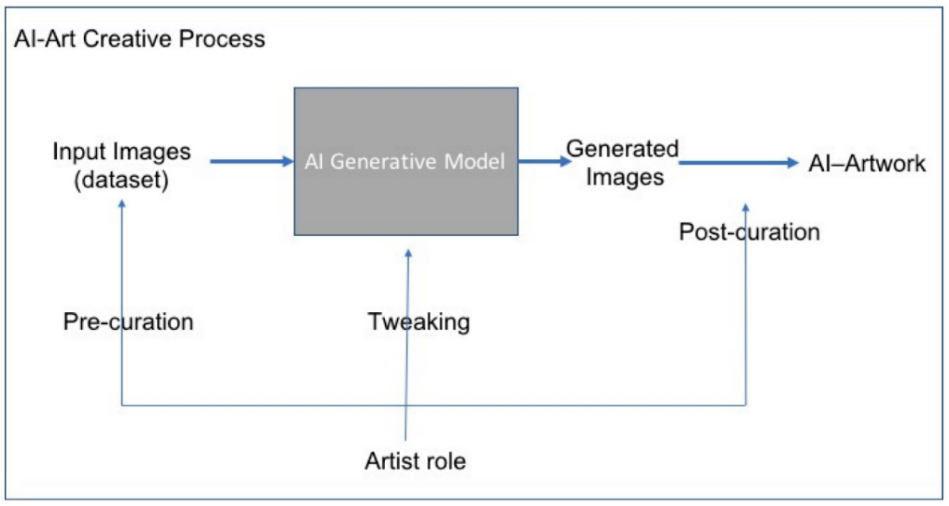
More and more research is being conducted to explore the true creative potential of Generative AI and the possibility that it could become an independent creative entity. There is a growing trend of research into how AI solves problems and how it can collaborate with human innovation. In a world increasingly shaped by technology, understanding this relationship is important for both artists and technologists.
As a result, producing fast results without sacrificing quality has become an urgent need.
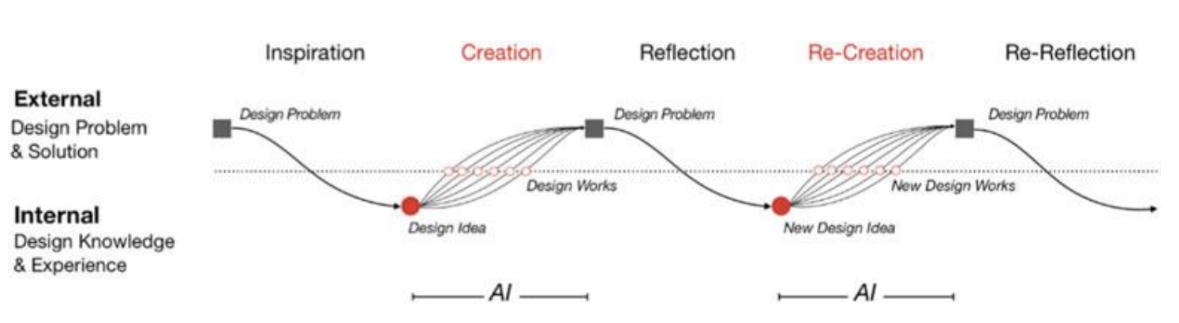
AI tools can speed up human creative processes, such as in design or content production. You provide the ideas and direction for the AI, and then the AI carries out the work of producing the output. The process still requires your own thinking and planning to solve problems and outline solutions, and you also play a key role in adding the final refinements and important finishing touches.
Generative AI in Marketing
In digital marketing, an industry that constantly sees change and evolution, Generative AI has become a key part of the transformation. But how did Generative AI become indispensable to marketers?
Boosting Content Creativity
The impact of Generative AI on content creation is similar to the dramatic shift away from the era of mass production. On one side, we have traditional artists, designers, writers, and so on, who devote many hours and their skills to the work.
However, alongside the appreciation for human-made content, the current trend is toward getting work done efficiently and consistently.
So what role does Generative AI play here? Let’s look at some real-world examples:
Major companies such as Unilever and Nestlé have started using Generative AI in advertising, looking for smarter advertising solutions. Recognizing its enormous potential, their digital partners such as WPP have also been quick to adopt it.
Using advanced tools such as OpenAI’s DALL-E 2, these brands have refreshed their advertising campaigns. This has not only delivered strong results but also significantly improved profits. WPP’s CEO has revealed that cost savings from Generative AI can reach “10 to 20 times.”
However, as AI takes on a bigger role, a conversation about using AI responsibly is also developing. One key issue is how the public can tell when content was created by AI. To address concerns about transparency, the idea of watermarking AI-generated content has emerged.
Overall, the influence of Generative AI is undeniable. It is not just an ordinary tool – it is leading a new era in content creation. Thanks to its ability to analyze vast amounts of data, Generative AI not only generates fresh topics but also compiles engaging content tailored to specific audiences. Work that once took days can now be done in a few hours, without sacrificing quality. This helps brands stay agile and always ready to engage with customers.
Elevating Personalized Experiences
The phrase “one size fits all” is no longer relevant, especially in the modern world where precise data and deep insight are key.
Imagine an AI system that doesn’t simply send emails but creates unique stories for each subscriber, based on their browsing behavior, purchase history, and even their sentiment in previous interactions.
Or think about AI-driven ads, fine-tuned so precisely that they serve even the smallest segments within a large audience.
With this powerful combination of precise analysis and breakthrough creativity, each message feels less like a generic announcement and more like a personal note, boosting engagement and driving up conversion rates. This is truly a big step forward.
Let’s look at a concrete example to better understand AI-based personalization:
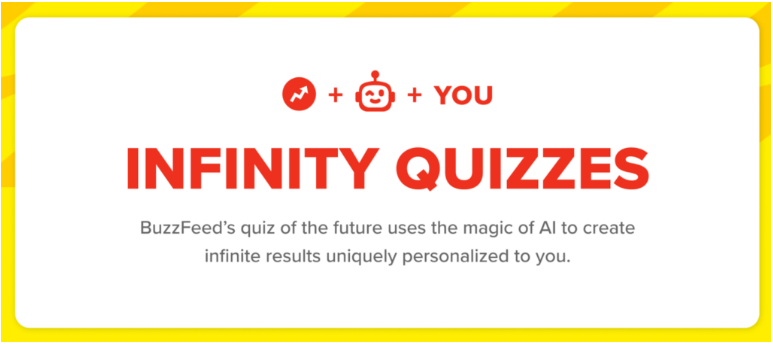
BuzzFeed, one of the leading companies on the entertainment side of the Internet, is leveraging Generative AI to make its product – quizzes – more relatable and personalized for each visitor to its website.
AI-Generated Imagery
While text has its own appeal, images offer a different experience – they make an immediate and lasting impression. Generative AI is changing how we take in visual content, offering fresh perspectives. Imagine logos that precisely reflect the essence of a brand, or advertising visuals that make you stop scrolling to take them in; that is what Generative AI can create. It helps brands combine their distinctive visual style with creative ideas, creating something new within the familiar.
This is not just theory. Advertising companies have already begun applying AI-based solutions to their visual campaigns. For example, Brave Bison created imagery for WWF, painting a dark, post-apocalyptic (but entirely plausible) world without nature.
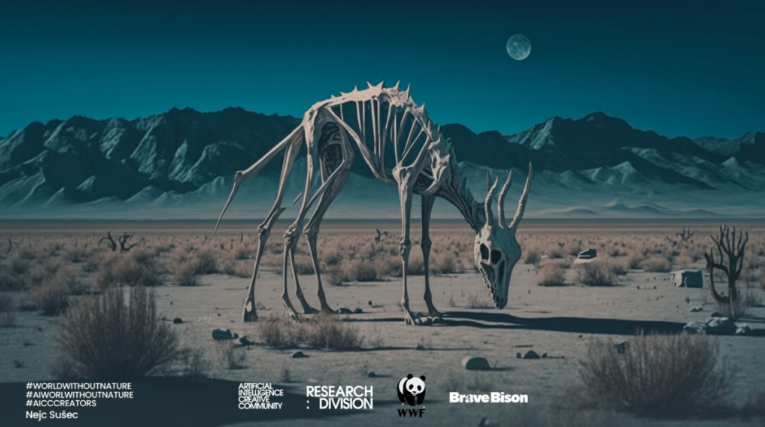
Brave Bison produced a striking work of art for WWF, creatively combining AI with marketing imagery. They are not the only ones standing out in this field. For more, check out our blog post on the 5 best AI marketing campaigns by leading agencies.
The Impact of Generative AI on SEO
In an ever-evolving digital landscape, Generative AI is seen as a potential game changer, especially in SEO. Neil Patel, a well-known industry expert, has predicted that users may shift from traditional search results to prioritizing direct answers from AI. If this trend becomes widespread, it could mark the end of the traditional SEO strategies we have grown familiar with.
Patel backs up his view by pointing to HubSpot’s “surround sound SEO” strategy, an uncommon but highly effective approach.
Developed by HubSpot in 2020, “surround sound SEO” emphasizes strengthening a brand’s presence not only on its own website but also on other reputable websites. The strategy advises that instead of focusing only on getting your own site to the top of search results, you should make sure your brand is mentioned and linked on high-ranking pages.
This way, even if Generative AI changes how users search for information, your brand is still mentioned frequently on top websites. This helps the brand show up everywhere and strengthens its online presence. The tactic not only expands search reach but also helps the brand stand out from the crowd, with links and mentions that also support rankings for non-branded queries.
However, applying this strategy is not always easy. This is where platforms that list digital agencies can help. For example, partnering with a platform like DAN, well known for holding a high position on Google, can be critical for digital agencies that want to maintain their presence in an SEO landscape shifting toward AI.
Concerns About AI: Embracing the Future Carefully
Although Generative AI brings many benefits, it also raises issues worth considering. As AI moves to center stage, how will this affect the role of human marketers?
It is important to remember that AI, despite its great potential, is still just a tool. It is true that it is a remarkable tool, perhaps the most revolutionary one, even opening up a new trend in the marketing industry with the emergence of AI marketing agencies. Still, it is only a tool.
The insight, emotional intelligence, and understanding of human behavior that marketers bring cannot be replicated by AI. So instead of viewing Generative AI as a replacement, we should see it as a powerful extension that supports and strengthens our natural skills.
Therefore, I believe the future of marketing is not a showdown between AI and Humans, but a harmonious collaboration between AI and Humans.
Conclusion
The fusion of Generative AI and digital marketing is not just a technology trend, but a major step forward in how we approach and understand marketing. Standing on the threshold of an evolution toward AI, marketers need to adapt, embrace, and make the most of the possibilities this combination brings. Opportunities we once considered out of reach are now within our grasp.
As this transformation spreads, where will you position yourself, and how will you navigate these challenges? Isn’t it time you explored the potential of AI for Digital Marketing?

Nguyễn Đình
Bảo




As CEO of The7, I am committed to sharing practical, useful knowledge with every reader. Every article on The7 is based on my 7 years of hands-on experience in marketing — Facebook advertising, LinkedIn advertising, Google advertising, and marketing strategy. I hope you take away plenty of insight from these posts and apply it successfully in practice.
Related Articles

7 Social Media Trends for 2026: The Era of Real Value, Real Conversion, and Real People
Table of Contents Toggle Social media is entering the biggest restructuring of the decadeTrend 1: Why is buying directly in-app becoming the new standard for 2026? (On-Platform Conversion)What should businesses...
Artificial Intelligence (AI) Helping Solve Environmental Problems: Potential and Challenges
Artificial intelligence (AI) is driving a powerful revolution, reshaping life across many fields. With the strength of breakthrough technologies, AI is expected to be a key to solving global environmental...
How Coca-Cola Cleverly Uses AI in Flavor Development and Media Strategy
When people think of Coca-Cola, they usually picture explosive ad campaigns and a vibrant brand image. Few realize, however, that this beverage “giant” is quietly driving a marketing revolution with...
GPT-4o Officially Launches: The New Multimodal Super AI
OpenAI’s ChatGPT has just taken a major leap forward with GPT-4o (also known as Omni), a new generation of multimodal super AI. Beyond understanding language, GPT-4o handles images, video and...
5 AI-Driven Content Trends Taking Off in 2024
In the ever-changing world of marketing, innovation is the key to success. Staying ahead of trends and understanding customer needs are essential for any business that wants to claim a...
Applying Generative AI to Content Creation
Content creation has moved to center stage. Whether it’s a blog post, a marketing campaign, or a social media update, businesses and individuals are constantly competing to produce fresh content...