


 Options)
Discover the Best Consent Management Platform (CMP) Options

Companies use consent management platforms (CMPs) to lawfully obtain permission from website or app users before tracking, collecting, sharing, selling, and processing their data. But with data privacy regulations such as GDPR and CCPA on the rise, navigating the complex legal issues around user consent has become a top priority. That’s where consent management platforms (CMPs) come in, acting as guardians of user privacy and keeping your digital marketing efforts compliant.
What Is a Consent Management Platform (CMP)?
A CMP is a consent management software solution that helps businesses collect, manage, and record user consent for data collection activities. Users are informed, and their consent choices are collected, through a pop-up banner on a website or inside an app. They get a clear choice to allow, decline, or withdraw consent for one, some, or all parties to collect, use, or sell their online activity. CMPs simplify compliance with data privacy laws by providing the following tools:
- Clear, user-friendly consent banners: CMPs let you create customizable consent banners that tell users what type of data you collect (personal information) and how it is used. Users can easily grant or withdraw their consent.
- Consent preference management: CMPs go beyond simple on/off consent. They can capture users’ granular preferences for different types of data collection, enabling more targeted marketing strategies while respecting users’ privacy choices.
- Integration with marketing tools: Leading CMPs integrate seamlessly with popular digital marketing analytics tools and marketing automation platforms, ensuring consistent consent management across your entire marketing stack.
Why Do You Need a Consent Management Platform (CMP)?
The consequences of failing to comply with data privacy regulations can be severe, including heavy fines and reputational damage. CMPs offer a robust way to reduce these risks by:
- Ensuring compliance: With built-in features and functionality, a CMP helps you stay up to date with evolving data privacy regulations.
- Building trust with users: Transparency and user control are core principles of data privacy. A user-friendly CMP builds trust with your audience by giving them the power to manage their data preferences.
- Maximizing marketing ROI (return on investment): By collecting and managing consent (CMP) effectively, you can make sure your marketing efforts reach the right users with the right message, ultimately improving campaign performance.
The main benefit of using a CMP is meeting the legal requirements of data privacy and data protection regulations by processing user data lawfully. In addition, using a CMP with a well-designed pop-up banner can improve the rate at which users consent to processing. This matters for companies that want to sell online advertising.
For Agencies:
Using a CMP is about more than compliance. A well-managed CMP can be a valuable asset that helps agencies build stronger client relationships by demonstrating their commitment to data privacy. This fosters the trust and confidence that every successful agency-client partnership depends on. In addition, a CMP can improve campaign performance by making sure agencies target the right users with the right message. That precise focus delivers better results and happier clients.
Choosing the Best Consent Management Platform (CMP)
With the growing number of CMPs on the market, choosing the right platform for your business’s specific needs is vitally important. Here are some key factors to consider:
- Features and functionality: Carefully evaluate the specific features each CMP offers, such as customization, integrations, and reporting. This helps you pick the platform that best fits your business’s specific needs.
- Ease of use: A user-friendly interface is a deciding factor for both administrators and end users. Choose a CMP that is not only easy to set up but also easy to use, which streamlines rollout and minimizes training time.
- Scalability: To stay flexible and ready for future expansion plans, choose a CMP that can scale with your business’s growing needs.
- Compliance: Making sure the CMP complies with all data protection regulations is essential. Choose a CMP that meets all data privacy regulations, including GDPR and CCPA, to protect your business’s credibility and keep it legally compliant.
Top 8 Consent Management Platforms (CMPs) to Consider:
While a complete list will vary based on your specific needs, here are 8 popular CMPs to get you started:
OneTrust
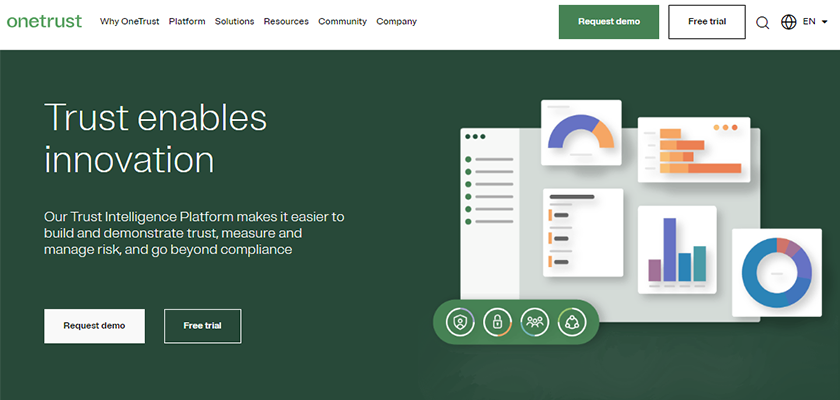
OneTrust is a cloud-based platform designed to help organizations manage privacy, security, and data governance risks. It offers a comprehensive set of tools for complying with data privacy regulations around the world, including GDPR, CCPA, and LGPD (Brazil’s general data protection law).
OneTrust pros:
- Comprehensive platform: OneTrust offers a wide range of features, including data discovery, consent management (CMP), data subject access request (DSAR) management, risk assessment, and breach response tools.
- Scalability: OneTrust can scale to meet the needs of organizations of every size, from small businesses to large corporations.
- Ease of use: The platform is designed to be user-friendly, even for people without a technical background.
- Automation: OneTrust automates many privacy compliance tasks, such as CMP and fulfilling data subject access requests (DSARs), saving organizations time and money.
- Expertise: OneTrust has a team of experts who help organizations understand and comply with complex privacy regulations.
OneTrust cons:
- Cost: OneTrust can be expensive, especially for small businesses. Pricing is usually based on modular subscriptions and can vary depending on the specific features needed.
- Complexity: Although user-friendly, the platform’s extensive functionality may require some users to complete initial training before they can navigate it effectively.
- Integration challenges: Integrating OneTrust with other systems can be complicated and may require additional resources and expertise.
OneTrust pricing:
OneTrust offers several pricing plans, depending on the specific features and functionality required. Pricing starts at around $30 per month for basic features such as consent management (CMP) and goes up from there. A 14-day free trial is available, and annual commitment plans are usually discounted. We recommend contacting OneTrust directly for a quote tailored to your organization’s needs.
Overview
OneTrust is a powerful platform that can help organizations manage privacy and compliance risks effectively. However, its cost and complexity can be a barrier for some businesses. It’s important to weigh the pros and cons and consider your specific needs before making a decision.
TrustArc
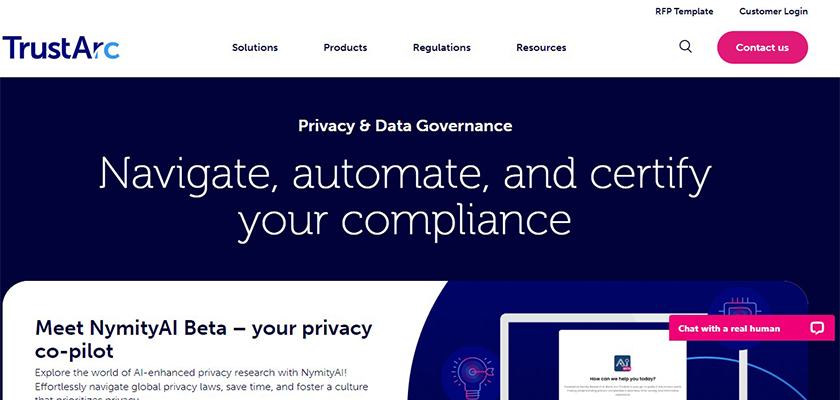
TrustArc is another prominent name in privacy management software. This cloud-based platform helps businesses streamline their privacy programs and comply with various data privacy regulations such as GDPR, CCPA, and more.
TrustArc pros
- Customizability: TrustArc offers a modular solution, letting you choose the functions that best fit your organization’s specific needs. This can save money for businesses that don’t need a full feature set.
- Focus on automation: TrustArc automates many privacy workflows, including data subject access request (DSAR) management, consent collection, and privacy impact assessments. This streamlines compliance processes and saves teams time.
- Improved user experience: The platform is designed to be user-friendly, with an intuitive interface and clear navigation.
- Integrations: TrustArc integrates seamlessly with various digital marketing agency tools, CRMs (customer relationship management systems), and other business systems, simplifying data management.
- Global expertise: TrustArc has a global presence, with regional teams who understand local privacy regulations and provide valuable guidance for international businesses.
TrustArc cons
- Limited free resources: TrustArc offers fewer free resources than some competitors, which somewhat limits the initial learning process.
- Scalability concerns: Although it can scale to a degree, some users report challenges managing very large datasets or complex compliance requirements within the platform.
- Pricing transparency: Like OneTrust, TrustArc’s pricing structure may not be very clear. Quotes may not always reflect the true cost of all the functions you need.
TrustArc pricing
TrustArc uses a quote-based pricing model. This means the cost depends on the specific features you require, the size of your organization, and the level of support needed. Exact prices are not available, but it is generally considered comparable to OneTrust. Here are some estimated costs for reference:
Overview
TrustArc offers a powerful, highly customizable solution for managing privacy and achieving compliance. However, its pricing structure and potential scalability limits for very large datasets call for careful consideration before you commit. We recommend requesting a demo and a personalized quote to make sure the platform fits your organization’s needs.
Cookiebot
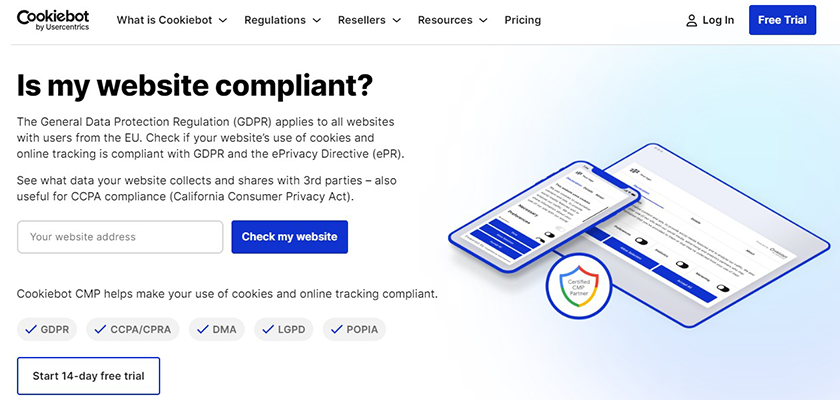
Cookiebot is a popular cookie consent management platform (CMP) designed to help website owners comply with various cookie consent regulations, especially GDPR and the ePrivacy Directive (the regulation on the protection of personal information in electronic communications). The platform offers a user-friendly interface and focuses on simplifying consent collection and management.
Cookiebot pros
- Ease of use: Cookiebot is highly rated for its simple setup process and intuitive interface. No coding knowledge is needed for a basic implementation.
- Focus on CMP: Unlike the comprehensive privacy software suites offered by OneTrust and TrustArc, Cookiebot stands out for its core function: managing cookie consent (CMP) and displaying cookie banners to website visitors.
- Free plan: The free plan provides basic functionality, making it a cost-effective option for small websites with limited needs.
- Customization options: Paid plans offer customization options for cookie banners, including design, language, and consent options.
- Integrations: Cookiebot integrates with popular website analytics and marketing tools, simplifying data management.
Cookiebot cons
- Limited functionality: Although it excels at cookie consent management (CMP), Cookiebot lacks the broader privacy management features offered by OneTrust and TrustArc, such as data discovery or DSAR (data subject access request) management.
- Scalability limits: Larger websites with complex cookie ecosystems or stricter compliance requirements may find Cookiebot’s functionality limiting.
- Limited features on the free plan: The free plan provides basic functionality and may not be enough for most websites that need detailed CMP.
Cookiebot pricing
Cookiebot offers a tiered pricing structure based on the number of active domains and the features you want. You can try Cookiebot CMP with its 14-day free trial, then continue on its Free plan for websites of up to 50 pages. Here is a breakdown of its pricing plans:
- Free plan: Limited to one domain, a basic cookie consent banner, and manual cookie scanning.
- Premium Small plan ($13/month): Up to 350 subpages, automatic cookie scanning, and basic customization options.
- Premium Medium plan ($30/month): Up to 3,500 subpages, advanced customization options, and priority support.
- Premium Large plan ($53/month): More than 3,500 subpages, for high-traffic websites with advanced compliance needs.
Overview
Cookiebot is an excellent choice for website owners who prioritize user-friendly cookie consent management (CMP) and want a cost-effective solution. However, its limited functionality may not suit larger businesses with complex compliance requirements.
Usercentrics
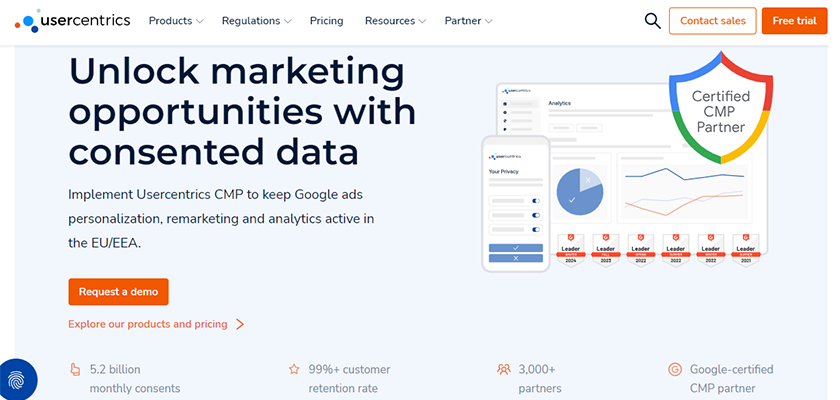
Usercentrics is a cloud-based consent management platform (CMP) that helps businesses collect and manage consent for cookies, tracking tools, and other data collection activities.
Usercentrics pros
- Granular Consent Management: Usercentrics offers a high level of granularity in consent collection, letting users choose the specific cookies or purposes they agree to. This meets the growing demand for user control over privacy.
- Flexible and Customizable: The platform allows flexible customization of cookie banners, including design, language, and consent options.
- Integrations: Usercentrics integrates with many marketing, analytics, and tag management tools, streamlining data collection processes.
- Data Visualization and Reporting: Usercentrics provides data visualization tools that help businesses understand users’ consent preferences and optimize their cookie strategy.
- Focus on Transparency: The platform emphasizes clear communication with users about data collection practices, which encourages and builds user trust.
Usercentrics cons
- Learning Curve: Although generally fairly user-friendly, Usercentrics can be challenging for users who are new to CMPs.
- Scalability Considerations: Although Usercentrics serves businesses of many sizes, those with very complex compliance needs or large data volumes may need additional features or customization beyond the basic service.
Usercentrics pricing
Usercentrics offers a tiered pricing structure based on the number of active domains, the number of page views per month, and the features you want. Here is an overview:
- Starter plan ($54/month): For growing businesses that want to ensure compliance, with a 30-day free trial.
- Advanced plan ($160 – $1,100/month): For businesses looking for a scalable, comprehensive solution.
- Premium plan (custom pricing): For businesses with premium-level custom requirements and support services.
Overview
Usercentrics is a strong contender for businesses looking for a user-focused, GDPR-compliant CMP solution. The platform offers granular control, flexibility, and valuable data insights. However, the limited free plan and potential scalability limits for very large enterprises are also factors to consider.
iubenda
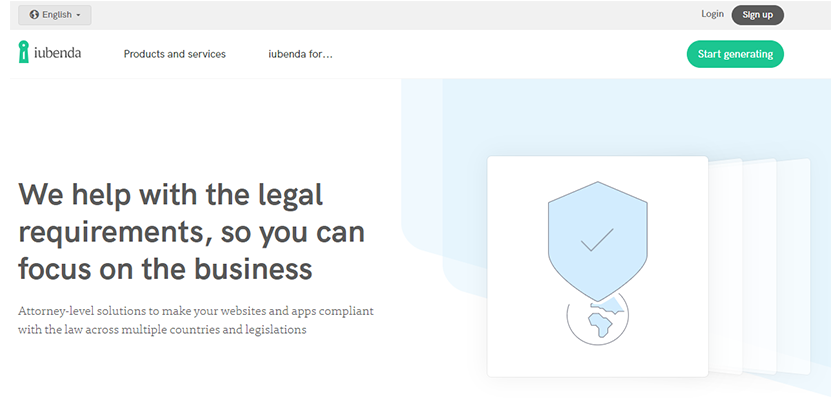
iubenda is a cloud-based platform that helps businesses create cookie consent banners (CMP), privacy policies, and other legal documents needed to keep a website compliant, especially with GDPR and ePrivacy regulations.
iubenda pros
- Ease of use: iubenda is known for its user-friendly interface and simple setup process. Even users without a legal background can navigate the platform and create basic documents.
- Multilingual support: iubenda can generate documents in many different languages, serving a global audience.
- Integrations: The platform integrates with popular website builders and content management systems (CMS) for seamless deployment.
- Cost-effectiveness: Compared with some competitors, iubenda’s pricing can be attractive for basic cookie consent and privacy policy needs.
iubenda cons
- Focus on basic needs: Although iubenda excels at its core functions, it lacks the advanced features of comprehensive privacy management platforms such as OneTrust or TrustArc, including data discovery or data subject access request (DSAR) management.
- Potential to outgrow the free plan: The free plan has limitations that can feel restrictive for growing businesses, making an upgrade to paid plans necessary.
iubenda pricing
iubenda offers a tiered pricing structure based on the number of protected websites and the features you want. Here is a simplified overview:
- Essentials ($6.99/month): You can add up to 20 third-party services and terms to your Privacy and Cookie Policy.
- Advanced ($27.99/month): You can add up to 30 third-party services and terms to your Privacy and Cookie Policy.
- Ultimate ($119.99/month): Unlimited third-party services and terms can be listed in your Privacy and Cookie Policy.
Overview
iubenda is a good choice for businesses looking for a user-friendly, cost-effective solution to their basic cookie consent (CMP) and privacy policy needs. However, its limited customization options and lack of advanced privacy management features may make iubenda a poor fit for complex websites with stricter compliance requirements.
Osano
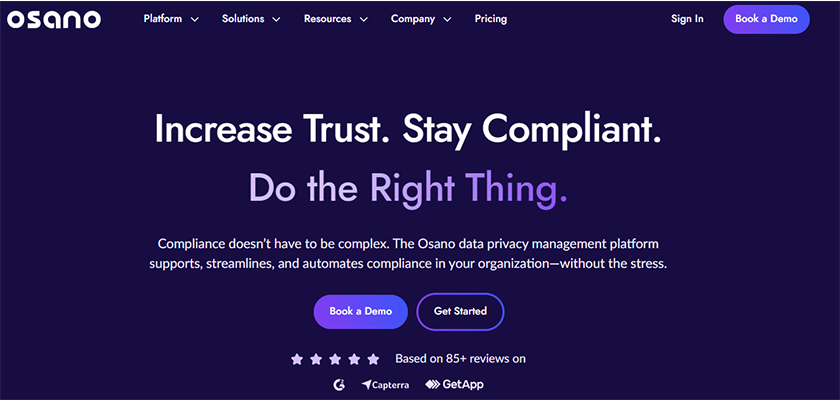
Osano is a cloud-based platform designed to streamline security and compliance operations for modern businesses. It offers a centralized hub for managing various security and compliance tasks, automating workflows, and providing insights into your overall security posture.
Osano pros
- Centralized Management: Osano consolidates security and compliance tasks from different tools and platforms into a single interface. This simplifies workflows and improves visibility for security teams.
- Automation Capabilities: The platform automates repetitive tasks, such as provisioning user access, changing access controls, and enforcing security policies, giving security staff more time for strategic initiatives.
- Compliance Management: Osano helps businesses manage compliance with various regulations such as SOC 2, HIPAA, and GDPR. The platform provides tools for managing documentation, collecting evidence, and automating compliance workflows.
- Enhanced Collaboration: The platform facilitates collaboration among security teams, developers, and other stakeholders, promoting better communication and more coordinated incident response.
- Scalability and Integrations: Osano can scale to meet the needs of businesses of every size and integrates seamlessly with popular security and compliance tools.
Osano cons
- Learning Curve: Osano offers comprehensive functionality, which may require some initial training before users can get the most out of the platform’s capabilities.
- Limited Free Resources: Although Osano offers a free trial, the platform has no permanent free plan with ongoing functionality, as some competitors do.
- Pricing Transparency: Like other enterprise-focused security platforms, Osano’s pricing structure may not be publicly available. You may need to contact Osano directly for a quote.
Osano pricing
Osano uses a quote-based pricing model. The cost depends on the specific features you require, the size of your organization, and the number of users.
Pricing may start at a mid-range level compared with other security and compliance solutions. Osano emphasizes the return on investment (ROI) the platform delivers by streamlining workflows and improving your security posture.
Overview
Osano is a powerful platform that can significantly improve security and compliance operations for businesses. Its centralized management, automation capabilities, and focus on collaboration make Osano an attractive solution. However, the potential learning curve and the lack of a free tier mean businesses should weigh their needs and budget carefully before committing.
Didomi
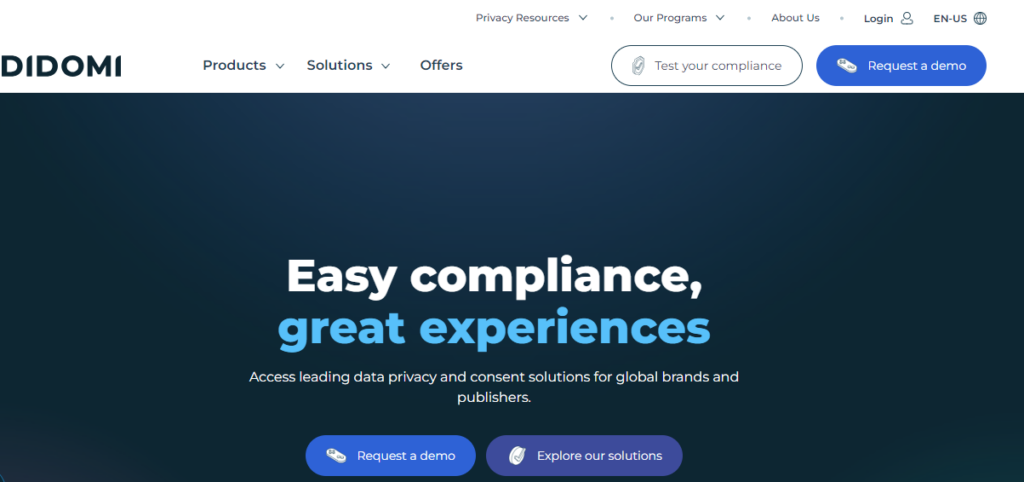
Didomi is a world-leading consent management (CMP) and privacy company, offering a cloud-based platform that helps businesses comply with data privacy regulations such as GDPR and CCPA. Going beyond CMP, Didomi also provides a comprehensive toolkit for managing users’ privacy preferences.
Didomi pros
- Consent Management Platform (CMP): Didomi offers a powerful CMP that lets businesses collect and manage user consent for cookies, tracking tools, and other data collection activities.
- Preference Management Platform (PMP): In addition to the CMP, Didomi offers a PMP, which lets users express their preferences for communication channels, marketing, and advertising. This gives users more granular control over their data.
- Automated Privacy Request Management: Didomi helps automate workflows for handling data subject access requests (DSARs) and other privacy requests, streamlining interactions with users and reducing administrative burden.
- Scalability and Customization: The platform can scale to serve businesses of every size and offers customization options to tailor the solution to specific needs.
- Focus on Transparency and Trust: Didomi emphasizes clear communication with users about data practices, fostering user trust and confidence.
Didomi cons
- Potential Complexity: Although it offers a user-friendly interface, Didomi’s comprehensive features may require some initial training before users can make the most of the platform’s potential.
- Limited Free Resources: Didomi does not offer a permanent free plan with ongoing functionality. A free trial is available for exploring the platform.
- Pricing Transparency: Like other enterprise-focused privacy management solutions, Didomi’s pricing may not be widely published. You may need to contact them directly for a quote.
Didomi pricing
Didomi uses a quote-based pricing model. The cost depends on the specific features you require, the size of your organization, and the number of users. They emphasize the value Didomi delivers by streamlining compliance processes, improving user trust, and reducing privacy risk.
Overview
Didomi is a comprehensive solution for businesses seeking a robust offering in CMP, user privacy preferences, and compliance with data privacy regulations. Its focus on transparency, automation, and user control makes it a strong contender. However, the potential complexity for some users and the lack of free tiers call for careful consideration before rollout.
CookieYes
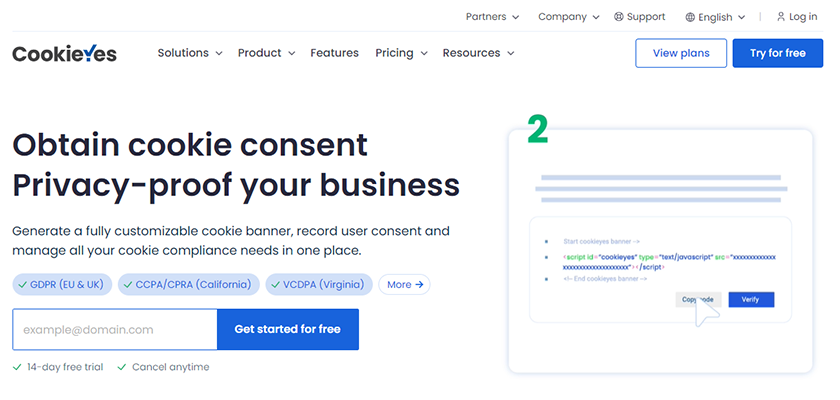
CookieYes is a popular cookie consent management platform (CMP) designed to help website owners comply with data privacy regulations, especially GDPR and CCPA. The platform offers a user-friendly interface and focuses on simplifying consent collection and management.
CookieYes pros
- Ease of Use: CookieYes is highly rated for its simple setup process and intuitive interface. No coding knowledge is needed for a basic implementation.
- Focus on CMP Like Cookiebot, CookieYes stands out for its core function: managing cookie consent (CMP) and displaying cookie banners to website visitors.
- Free Plan: A generous free plan comes with the essential features, making CookieYes a good choice for small websites with limited needs.
- Customization Options: Paid plans offer customization options for cookie banners, including design, layout, language, and consent options. This allows finer adjustments to match your brand positioning and user experience.
- Third-Party Script Blocking: CookieYes automatically blocks third-party scripts until it receives user consent, protecting users’ privacy and respecting their consent choices.
- Integration Options: CookieYes integrates with popular website analytics and marketing tools, simplifying data management.
CookieYes cons
- Limited Functionality Compared with Software Suites: Although it excels at cookie consent management (CMP), CookieYes lacks the broader privacy management features offered by OneTrust or TrustArc, such as data discovery or DSAR (data subject access request) management.
- Potential Scalability Limits: Larger websites with complex cookie ecosystems or stricter compliance requirements may find CookieYes’s features limiting as their needs grow.
- Limited Features on the Free Plan: The free plan provides basic functionality and may not be enough for websites with specific needs or custom requirements.
CookieYes pricing
CookieYes offers a tiered pricing structure based on the number of active domains and the features you want.
- Free plan: For blogs and personal websites
- Basic plan ($10/month): For small businesses and startups
- Pro plan ($20/month): For mid-sized businesses with growing traffic
- Ultimate plan ($40/month): For large businesses with high traffic
Overview
CookieYes is an excellent choice for website owners who prioritize a user-friendly, cost-effective cookie CMP. The free plan offers a solid starting point, and the paid plans provide customization options for a professional look. However, businesses with complex compliance requirements or large-scale operations may need the extra features offered by other platforms.
Beyond Compliance: The Future of Consent Management
The role of CMPs will most likely expand well beyond mere compliance. Here are some trends to watch:
- Focus on User Experience: CMPs will keep evolving to give users a more positive and more informative consent experience.
- Advanced Personalization: Integration with marketing automation platforms will enable more granular consent management (CMP), supporting highly personalized marketing experiences.
- Data Analytics: CMPs can leverage consent data to provide valuable insights into user behavior and preferences, helping marketers optimize their campaigns even further.
Conclusion
Consent management platforms (CMPs) are no longer optional; they are a necessity. By implementing a user-friendly CMP, you can make sure your marketing efforts respect users’ privacy and build trust with your audience.
Remember, a CMP is more than a compliance tool; it is a strategic asset that can help you build trust with your audience and achieve your marketing goals. If you need a teammate, trust us and get in touch.

Nguyễn Đình
Bảo




As CEO of The7, I am committed to sharing practical, useful knowledge with every reader. Every article on The7 is based on my 7 years of hands-on experience in marketing — Facebook advertising, LinkedIn advertising, Google advertising, and marketing strategy. I hope you take away plenty of insight from these posts and apply it successfully in practice.
Related Articles
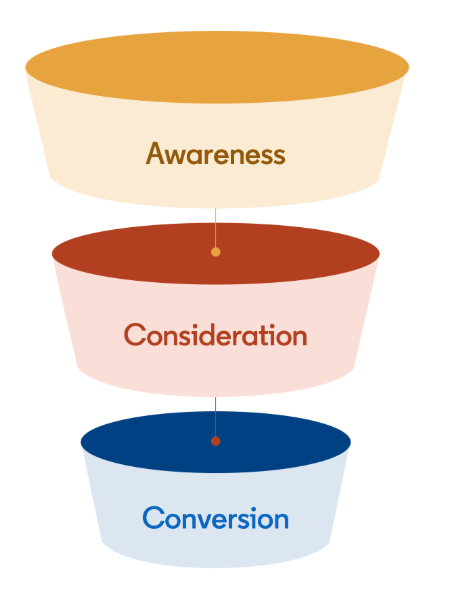
Building a Full-Funnel Content Marketing Strategy on LinkedIn
Table of Contents Toggle Why Build Content Marketing for the Full Marketing Funnel? (Why Full-Funnel Content Marketing?)Creating Your Strategy (Creating Your Strategy)Implementing Your Content Strategy (Rolling out your content strategy)Summary...

Designing Creative Content for LinkedIn
Table of Contents Toggle Why Is Good Creative Content So Important? (Why is Good Creative Important?)Key Components of Creative Design (the core elements of creative design)Summary (summary) Why Is Good...

Building an Organic Business Presence on LinkedIn With a LinkedIn Page
Table of Contents Toggle Why Have a LinkedIn Page?Establishing Your LinkedIn PageKeeping Your LinkedIn Page ActiveThe Measure of SuccessSummary About LinkedIn Page (Summary) Why Have a LinkedIn Page? For a...

6 Best LinkedIn Marketing Strategies for B2B in 2026
Table of Contents Toggle LinkedIn 2026: Where B2B Decisions Get MadeStrategy #1 – Why Is LinkedIn the Best B2B Marketing Channel Today?1. Decision-makers are concentrated here2. Users are in work...

7 Social Media Trends for 2026: The Era of Real Value, Real Conversion, and Real People
Table of Contents Toggle Social media is entering the biggest restructuring of the decadeTrend 1: Why is buying directly in-app becoming the new standard for 2026? (On-Platform Conversion)What should businesses...

What Is TikTok Marketing? Effective TikTok Marketing Strategies
TikTok has been topping the global rankings of the most downloaded and most visited apps. That makes it a gold mine for marketers who love creativity. In this article, The7...