


Boost Your Email Marketing Open Rate With Effective Font Choices

Fonts may seem like a minor detail in email marketing, but they play a more important role than most of us realize. The success of an email marketing campaign depends on many factors, and font choice is one of the deciding ones, helping make your emails both effective and memorable.
Email Fonts: A Key Factor in Campaign Performance?
Fonts in email marketing come in a wide range of styles and sizes, each with its own personality and message. When you choose a font that doesn’t fit your brand image or the content you want to convey, your message will struggle to reach the recipient’s mind. On the other hand, using fonts consistently and appropriately helps communicate your brand image and message accurately and completely. This not only holds your readers’ attention but also helps increase the click-through rate of your marketing emails, so your campaign delivers maximum results.
Key Things to Consider When Choosing Fonts for Email Marketing
Before you start looking for the “perfect” font for your email marketing, ask yourself the following important questions to make sure your choice is not only suitable but also refined.
What message are you conveying?
Every email carries its own message and purpose. The font you choose should reflect the nature of your content:
- For cheerful, energetic messages, choose a font that feels fresh and free-spirited.
- For messages that need to be formal and professional, a clean, elegant font such as Helvetica Neue will convey a serious yet refined look.
Are you keeping your fonts consistent?
Although there is no hard rule on how many fonts an email can use, consistency is very important:
- Use no more than two fonts in a single email to create harmony.
- Choose an email-safe font such as Lucida Sans for the body text.
- Use a standout Sans Serif font for headlines to create emphasis.
Should you use effects like bold or italics?
Effects like bold and italics can change how your text appears and emphasize your message. Consider them carefully:
- Only use effects when you truly need to highlight the important parts of the text.
What text color are you choosing?
Text color affects not only readability but also brand impression:
- Make sure the text color contrasts well with the background so it is easy to read.
- Consider your brand colors, especially for your email signature.
- Choose safe fonts such as Arial or Verdana to ensure consistency across email platforms.
Is the text easy to read?
Finally, readability is critical:
- Choose a font with clear character shapes and avoid fonts that are easy to confuse.
- Consider the spacing between characters and how the text displays on different devices, especially mobile.
- Make sure the font you choose stays readable on all devices and email apps.
Answering these questions will help you choose a font that not only fits your brand’s message but also gives recipients a positive, memorable reading experience.
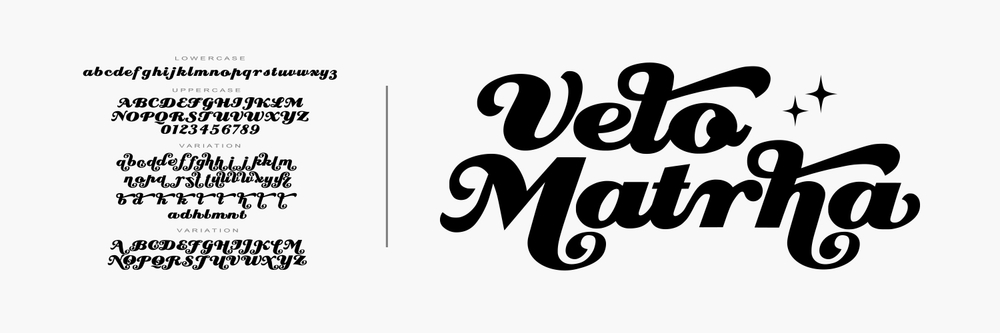
Choose Distinctive Fonts to Boost Your Email Marketing Open Rate
In email marketing, choosing a font is not just a matter of personal taste. It also has a major impact on your brand image and how well your message comes across. An ideal font must be clear, easy to read, and never irritating to the recipient.
Recommended Fonts
Some fonts have proven to be safe and effective, performing well across many different platforms.
-
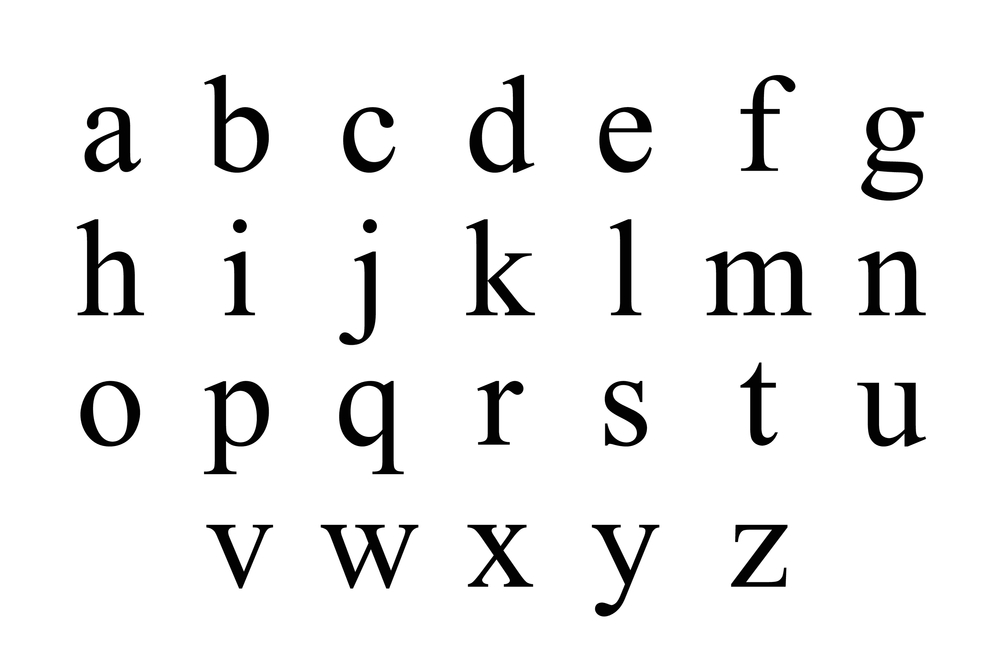
- Serif Fonts: With distinctive small strokes at the edges of each character, Serif fonts create a seamless flow that guides the reader’s eye naturally from one letter to the next. They are an ideal choice for printed materials because they are easy and comfortable to read.
- Example: Times, Georgia, Rockwell
-
- Sans Serif Fonts: Loved for their simplicity and readability at every screen size. Arial, with its even, clean lines, is a popular choice that keeps your content accessible and eye-catching on all devices.
- Example: Arial, Calibri, Verdana

Choosing the right font not only makes your email look more professional but also improves how well it communicates your message and connects with readers.
Font Options Worth Careful Consideration
Depending on the goal and nature of each part of your marketing email, choosing the right font is vitally important. Here are the types of fonts you should consider to get your message across as effectively as possible:
- Script Fonts: With a handwriting-like design, Script fonts bring elegance and a personal touch. Although they look beautiful, they can make long passages hard to read. That is why Script works better for special elements such as signatures or standout headlines, rather than for the entire body text.
- Decorative Fonts: Decorative fonts stand out with distinctive designs that create strong emphasis and draw attention. However, because they are so eye-catching and complex, they should be used sparingly, mainly for logos, slogans, or headlines. Overusing decorative fonts can pull attention away from your main content and distract readers.
Choosing the right font not only makes your message stand out but also ensures your email is both engaging and accessible, creating a professional and fitting impression.
In addition, a few fonts have been “blacklisted” for good reason, including Comic Sans, Curlz, Trajan, and Papyrus. Papyrus in particular was once slammed by WebDesignerDepot as the “king of bad fonts,” described as “childish, cheap, and annoying.” In fact, Google doesn’t even support Papyrus, Curlz, or Trajan in Google Docs, which underscores how unpopular they are.
In short, each type of font carries its own meaning and emotion. Serif and Sans-Serif fonts are usually the safe choice and suit most email marketing content. Still, it is perfectly feasible to be flexible with your font choices to create emphasis, convey emotion, or leave a lasting brand impression, as long as you keep things consistent and readable in every situation.
Essential Elements Every Marketing Email Needs Before You Hit Send
- A Refined, Well-Directed Email Marketing Strategy
An email marketing strategy needs to be designed methodically and clearly. This helps you define your target audience, your reason for sending, and how to connect the email content with your business goals and customer care campaigns. A clear, purposeful roadmap ensures that every email you send delivers the best possible value and results. - A Subject Line That Makes a Strong Impression
The subject line is what decides whether recipients open your email. An unappealing or uninspiring subject line will quickly be ignored or end up in the spam folder. Instead of wordy subject lines like “We have a new offer for you,” choose personalized, engaging ones like “[Customer Name] – A Special Offer Just for You!” Personalization and the feeling of being treated specially will encourage recipients to open the email and learn more. - High-Quality Email Content
Even when your subject line and strategy are optimized, the email content is still the key piece. Your content needs not only to impress and keep readers interested, but also to convey fully and truthfully the information, ideas, and value you want to share. Quality content is the key to building strong relationships and earning customers’ trust. - A Sharp Call to Action
The call to action (CTA) is a crucial highlight of any marketing email. An effective CTA must be clear about the action you want readers to take, such as clicking a product link or taking advantage of an offer. Carefully chosen, compelling wording will make your purpose obvious, whether you are providing information, offering a solution, or promising an opportunity, or drawing attention. A well-crafted CTA will increase engagement and conversions from your emails.
Conclusion
Fonts in email are not just a minor detail. They genuinely shape how readers receive your message. To get the best results from your email marketing, it is essential to choose fonts that suit your content and the nature of your email. However, this is only one part of the bigger picture. A compelling subject line, insightful content, and a smart call to action (CTA) are also key factors in deciding whether readers keep exploring your email all the way to the end. When all of these elements come together in harmony, they create an email marketing experience that is engaging and effective.
>> See more: Complete Email Marketing Services
By Hải Yến
Source: Marketing AI

Nguyễn Đình
Bảo




As CEO of The7, I am committed to sharing practical, useful knowledge with every reader. Every article on The7 is based on my 7 years of hands-on experience in marketing — Facebook advertising, LinkedIn advertising, Google advertising, and marketing strategy. I hope you take away plenty of insight from these posts and apply it successfully in practice.
Related Articles
Building a Full-Funnel Content Marketing Strategy on LinkedIn
Table of Contents Toggle Why Build Content Marketing for the Full Marketing Funnel? (Why Full-Funnel Content Marketing?)Creating Your Strategy (Creating Your Strategy)Implementing Your Content Strategy (Rolling out your content strategy)Summary...

Designing Creative Content for LinkedIn
Table of Contents Toggle Why Is Good Creative Content So Important? (Why is Good Creative Important?)Key Components of Creative Design (the core elements of creative design)Summary (summary) Why Is Good...
Building an Organic Business Presence on LinkedIn With a LinkedIn Page
Table of Contents Toggle Why Have a LinkedIn Page?Establishing Your LinkedIn PageKeeping Your LinkedIn Page ActiveThe Measure of SuccessSummary About LinkedIn Page (Summary) Why Have a LinkedIn Page? For a...

6 Best LinkedIn Marketing Strategies for B2B in 2026
Table of Contents Toggle LinkedIn 2026: Where B2B Decisions Get MadeStrategy #1 – Why Is LinkedIn the Best B2B Marketing Channel Today?1. Decision-makers are concentrated here2. Users are in work...

7 Social Media Trends for 2026: The Era of Real Value, Real Conversion, and Real People
Table of Contents Toggle Social media is entering the biggest restructuring of the decadeTrend 1: Why is buying directly in-app becoming the new standard for 2026? (On-Platform Conversion)What should businesses...

What Is TikTok Marketing? Effective TikTok Marketing Strategies
TikTok has been topping the global rankings of the most downloaded and most visited apps. That makes it a gold mine for marketers who love creativity. In this article, The7...