


Samsung’s Successful Marketing Strategy

Samsung’s journey began in 1938 as a small trading company in South Korea. Through ups and downs and bold innovation, it grew into a global giant and a brand known around the world.
Samsung’s success doesn’t come from cutting-edge technology alone. It is also an inspiring story of creative marketing strategy and far-sighted vision.
The story you are about to read isn’t just about tech devices and gadgets. It is about how Samsung used digital marketing to turn those products into an indispensable part of our lives, creating meaningful, deep connections in a remarkable way.
The brand’s success is not only an astonishing story but also clear proof of how sophisticated and effective Samsung’s digital marketing campaigns and strategies are. It isn’t just about selling products. It is about how the company built a community, a sense of belonging and consumer trust through talented, creative digital efforts.
Samsung’s Marketing Strategy
Before we dive into Samsung’s marketing strategy, it’s important to look at the brand’s journey and how it has positioned itself in the global market.
Historical Background: The Evolution of Samsung
Samsung has come a long way from its humble beginnings as a small business in South Korea in 1938 to become an undeniable global “giant.” Through distinctive diversification, from electronics manufacturing to shipbuilding and many other sectors, Samsung has built a strong, multidimensional business ecosystem. It even remains one of the largest shipbuilding companies in the world today.
Through tireless effort, Samsung has established itself as a global brand and left a deep impression on consumers. Samsung’s journey is a source of inspiration for businesses on the path to success.
A Focus on Advanced Technology and Innovation
Samsung is more than a brand. It is a symbol of innovation and advanced technology. The secret behind the resounding success of Samsung’s marketing strategy is its unwavering commitment to these core values.
Heavy investment in research and development (R&D) is the key that keeps Samsung at the forefront of technology. As a result, the brand makes sure its products consistently lead the trend, giving customers the most groundbreaking and advanced experiences.
What’s more, Samsung focuses on applying advanced technology to every product, even the smallest. This seamless combination of innovation and cutting-edge technology has helped Samsung build a solid position in the global market. It is always consumers’ first choice when they look for high-quality products that integrate the latest technologies.
In its latest marketing campaign, “Samsung Galaxy: The Next Big Thing is You,” Samsung takes viewers on a journey to redefine the very nature of innovation in technology. The campaign focuses on Galaxy AI and invites viewers to explore a world full of endless possibilities for creating, collaborating and dreaming in ways never seen before.
Samsung emphasizes that true innovation lies not in devices or complex technology but in the users themselves. The campaign positions Galaxy users as the central figures of technological progress. The inspiring, forward-looking commercial shows how Galaxy AI will empower users, turning them into artists, pioneers and trailblazers who break the mold in the digital era.
Through this compelling story, Samsung makes it clear that the next big thing is not only what the company is doing, but also everything great that you can do with Galaxy AI.
Market Segmentation and Targeting Strategy
Samsung understands that every customer is a unique individual with distinct needs. No single solution fits everyone. That’s why Samsung applies an effective market segmentation and targeting strategy to best meet the diverse needs of its customers.
Samsung never stops striving to bring customers the best products. An effective segmentation and targeting strategy is the key that helps Samsung meet every need and lead the market.
Competitive Pricing and Brand Value
While innovation is key, Samsung also recognizes the importance of competitive pricing. In an industry where price can be the deciding factor for consumers, Samsung uses a smart pricing strategy to strengthen its “good and affordable” advantage. The distinctive combination of pioneering technology and reasonable prices has created core value that draws consumers to the brand.
Building a High-Quality, Trusted Brand Image
Brand reputation is a decisive factor, especially when we talk about tech “giants” like Samsung. Samsung has worked tirelessly to build a high-quality brand image with a good reputation. Its commitment to quality assurance and its focus on customer satisfaction have helped create lasting consumer trust. Over time, that trust turns into brand loyalty, so customers keep coming back to Samsung for their next purchases.
Samsung’s Marketing Mix Strategy
Now that we understand the core principles of Samsung’s marketing strategy, let’s look more closely at how the company adjusts the elements of the marketing mix (product, price, place and promotion) to maintain its competitive edge.
Product: A Diverse Portfolio of Electronics
Samsung takes pride in its remarkable collection of consumer electronics and home appliances. From smartphones and advanced tablets to stunning TVs and much more, the diversity of the brand’s product portfolio is truly admirable. This wide range lets Samsung meet every customer need and preference, and ensures there is a Samsung product to fit every lifestyle.
A prime example of the diversity in Samsung’s portfolio is the latest Galaxy Z Flip5. In the official advertising campaign for this product line, Samsung introduced a breakthrough design that is both practical and unique. The Galaxy Z Flip5 is not just an ordinary smartphone. It is a bold statement in the world of mobile technology, with a compact, lightweight design and an expanded cover screen that elevates the user experience.
This phone is all about flexibility, in both design and function, reflecting the dynamic lives of the people who use it. With its distinctive folding feature, the Galaxy Z Flip5 stands out as a fun, highly adaptable companion that can keep up with the fast-moving, varied demands of modern life. It is a great demonstration of Samsung’s innovation and its emphasis on individuality.
Price: A Competitive Pricing Strategy
In a fiercely competitive market, Samsung has mastered the art of pricing. The company uses a smart pricing strategy to stay competitive while preserving the distinct value of its products. Samsung also regularly offers promotions and discounts to attract budget-conscious audiences and boost sales.
Place: An Extensive Distribution Network and Global Market Presence
Samsung’s global presence is proof of its effective distribution strategy. The brand has built an extensive distribution network that keeps its products available to consumers around the world. This marketing strategy doesn’t focus only on retail stores. It also extends to shipping partners, e-commerce platforms and even exclusive Samsung experience stores.
Samsung’s Promotion “Engine”: Elevating Success
Samsung’s success doesn’t come only from outstanding product quality. It also depends heavily on a diverse, effective promotional marketing strategy that includes advertising, public relations (PR) and promotions. Let’s look at the key elements:
- Advertising: Samsung invests heavily in advertising campaigns across many media, from television to digital platforms. These campaigns often showcase the products’ innovative features and emphasize how they can improve consumers’ lives.
- Public relations (PR): Maintaining a positive public image is critically important in the digital age. Samsung actively takes part in PR activities to keep its brand reputation strong, so customers see it as a trustworthy, socially responsible brand.
- Promotions: Regular promotions, including discounts, cashback and trade-in programs, encourage consumers to choose Samsung products over those of its competitors.
Samsung vs. Apple: Comparing Marketing Strategies
In a volatile market where Apple’s iOS operating system dominates, Samsung has stuck with Android and reaped plenty of success. What’s the secret? To better understand this marketing strategy, we need to compare it with Samsung’s heaviest-hitting rival, Apple. These two giants have competed fiercely for years, shaping the landscape of the consumer electronics industry.
Exploring the Differences
Product Portfolio vs. Specialization: Samsung boasts an extremely diverse product portfolio, from smartphones, tablets and TVs to home appliances and more. Apple, by contrast, specializes in a handful of core product lines such as the iPhone, MacBook and iPad. Samsung’s diversified marketing strategy serves a large customer base, while Apple focuses on a more premium niche market.
Market Share vs. Brand Image: While Apple often leads in brand awareness and customer loyalty, Samsung has the advantage in market share. Samsung’s marketing strategy emphasizes market share and sales, making it an influential name across many segments. Apple, by contrast, emphasizes brand image, positioning itself as a premium, aspirational brand.
Samsung’s Digital Marketing Strategy
Samsung’s digital marketing strategy is a brilliant blend of innovation and customer engagement. The brand has harnessed the power of the digital world to tell compelling product stories, turning them from mere tech devices into indispensable companions in everyday life.
One of the most notable parts of Samsung’s marketing strategy is the art of storytelling. The company doesn’t stop at product features and technical specifications. It also emphasizes how its devices enhance our experiences and simplify our lives. It creates content that resonates emotionally, whether that means connecting families, preserving precious moments or empowering individuals to pursue their passions. This emotional bond builds attachment with the audience, making Samsung more than a brand; it becomes a character in our personal stories.
Samsung is known not only for its advanced technology products but also for a marketing strategy built on sustainable development and community engagement. This effort not only improves the brand’s image in the public eye but also strengthens Samsung’s leading position in the market.
Today, social responsibility has become an important factor for brands, which aim to create a positive impact on society and the environment. Samsung is no exception.
PizzAut is a special project by Samsung Italia, focused on developing a dedicated tablet app for people with autism. The goal of the project is to create a working environment where everyone can be included and express themselves. Samsung Italia developed the app to help simplify restaurant management, opening up opportunities for inclusion and contribution to the community.
Created by FCB Milan, the project was carried out in collaboration with engineers, user experience designers, psychotherapists and language specialists. PizzAut aims to address the specific difficulties this group commonly faces.
Samsung’s Social Media Strategy
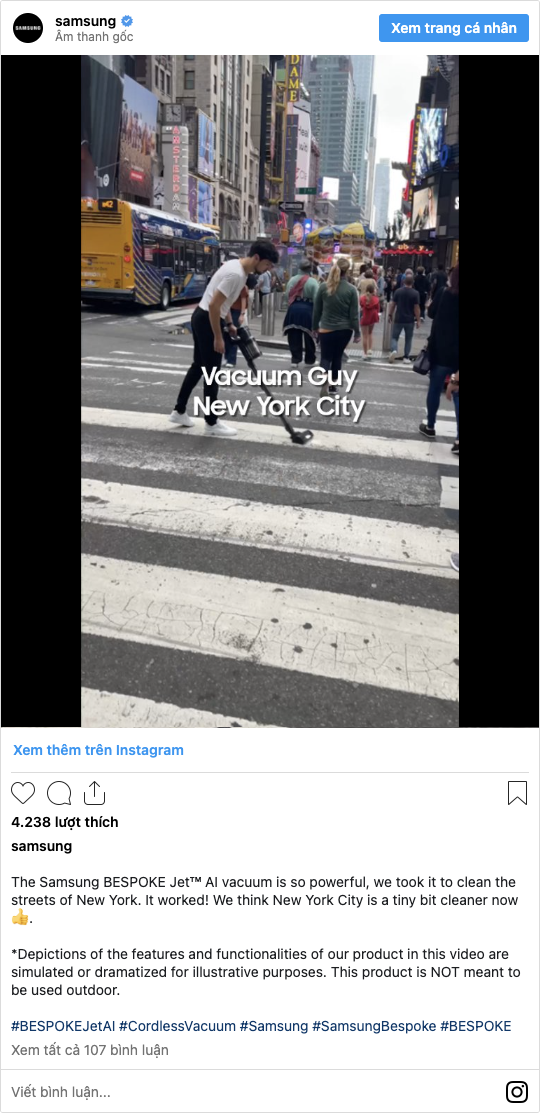
Samsung maintains a strong presence on the major social media platforms, using them as strategic marketing channels to achieve specific goals. One clear example is its use of Instagram, a platform that lets Samsung visually showcase the beauty and features of its products. High-quality images and short videos are often used to highlight the user experience and design of its products.
Here is an example of a recent Samsung post on Instagram. To promote its latest vacuum cleaner, the Samsung BESPOKE Jet AI, and show off its power, the brand created a post that “cleans” the streets of New York.
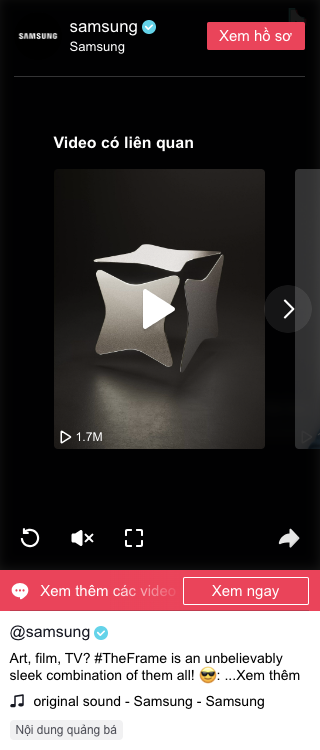
Samsung also uses other platforms such as YouTube and, of course, TikTok to promote its products. On the brand’s TikTok account, you can find a wide range of content about Samsung products, from TVs to smartphones. What’s more, Samsung doesn’t pass up chances to collaborate with actors and other influencers to create fun, engaging content on its account.
Samsung’s Advertising Strategy
Samsung’s advertising strategy is not just about capturing the attention of a global audience. It is also a bold move in building brand awareness. Through creative storytelling and meaningful messages, Samsung keeps producing memorable ad campaigns. These compelling stories aren’t limited to product features. They focus on how Samsung devices bring meaning and convenience to people’s everyday lives.
This creative commitment helps Samsung’s ads stand out in a highly competitive market.
A prime example of a great Samsung ad campaign is “The Strange Tailor Shop Campaign,” created in collaboration with BTS:
As mentioned, Samsung’s ads stand out for their visuals and creativity. The company takes a multichannel approach to make sure its message reaches consumers on different platforms. Understanding the importance of localization, Samsung adapts its campaigns to connect with audiences in each region while keeping a consistent brand image worldwide. This marketing strategy doesn’t just promote products. It also reinforces brand identity and makes Samsung part of consumers’ personal stories, a notable example for tech brands aiming for effective marketing.
That said, partnering with experienced marketing agencies in the technology field can be a helpful way for you to reach similar goals more easily.
Apple and Samsung
The rivalry between Apple and Samsung seems never-ending. Even with an ad campaign called “Growing Up,” it doesn’t mean these two brands will grow up and walk away from the race in the marketing world for good.
Before the iPhone X launched, Samsung released a new video ad focused entirely on mocking Apple. It isn’t the first time Samsung has done this (honestly, we’ve lost count!), but this time, it made it… more fun. Produced by Wieden + Kennedy Portland, “Growing Up” pokes fun at everything from the iPhone’s storage capacity to its water resistance, and of course it doesn’t miss the endless lines of people waiting to buy the “legend”! After watching this clip, even Apple fans are sure to burst out laughing.
The ad begins in 2007, when the first iPhone launched. Erik, our main character, of course snaps one up right away, while his future girlfriend Lauren chooses a Samsung in 2013. Erik starts running into storage problems as early as the older iOS versions. Then, in 2013, when they compare screen size and water resistance, the result leaves the iPhone red-faced.
Samsung’s Video Marketing Strategy
One of the key elements of Samsung’s digital marketing strategy is its large-scale, professional approach to video marketing. From brand films that convey core messages to the company’s values and vision, Samsung consistently succeeds in using imagery, sound and the art of storytelling to connect with audiences on a deeper level. This approach goes beyond ordinary advertising; it is about building brand identity and a bond with consumers.
The purpose of a brand video is to introduce audiences to the brand’s values, vision and core.
Samsung and the image of adventure are a “perfect pair” in the public’s eyes. Since its early outdoor advertising campaigns, Samsung has always reflected an adventurous, daring brand image. In the 2013 brand film, we see the majestic scenery of 18 rugged locations across Scandinavia, shot at -31 degrees with angles from helicopters, snowmobiles and even husky dogs. Samsung used this video to promote the N-Series Heat Pump made specifically for the region, but it also “did the rounds” at quite a few exhibitions and trade fairs around the world.
Conclusion
Samsung’s rise to become the “king” of technology offers extremely valuable lessons for businesses seeking success in the digital era. From its relentless dedication to innovation and product diversity to its use of digital tools and the art of captivating storytelling, Samsung’s marketing strategy is proof of the importance of staying ahead in technology, building compelling stories and harnessing the power of digital platforms.
Whether we are marketers or simply startup entrepreneurs, we can learn from Samsung’s digital marketing talent and apply these valuable insights to elevate our digital presence and make a lasting impact in every industry.

Nguyễn Đình
Bảo




As CEO of The7, I am committed to sharing practical, useful knowledge with every reader. Every article on The7 is based on my 7 years of hands-on experience in marketing — Facebook advertising, LinkedIn advertising, Google advertising, and marketing strategy. I hope you take away plenty of insight from these posts and apply it successfully in practice.
Related Articles
Building a Full-Funnel Content Marketing Strategy on LinkedIn
Table of Contents Toggle Why Build Content Marketing for the Full Marketing Funnel? (Why Full-Funnel Content Marketing?)Creating Your Strategy (Creating Your Strategy)Implementing Your Content Strategy (Rolling out your content strategy)Summary...
Designing Creative Content for LinkedIn
Table of Contents Toggle Why Is Good Creative Content So Important? (Why is Good Creative Important?)Key Components of Creative Design (the core elements of creative design)Summary (summary) Why Is Good...
Building an Organic Business Presence on LinkedIn With a LinkedIn Page
Table of Contents Toggle Why Have a LinkedIn Page?Establishing Your LinkedIn PageKeeping Your LinkedIn Page ActiveThe Measure of SuccessSummary About LinkedIn Page (Summary) Why Have a LinkedIn Page? For a...
6 Best LinkedIn Marketing Strategies for B2B in 2026
Table of Contents Toggle LinkedIn 2026: Where B2B Decisions Get MadeStrategy #1 – Why Is LinkedIn the Best B2B Marketing Channel Today?1. Decision-makers are concentrated here2. Users are in work...

7 Social Media Trends for 2026: The Era of Real Value, Real Conversion, and Real People
Table of Contents Toggle Social media is entering the biggest restructuring of the decadeTrend 1: Why is buying directly in-app becoming the new standard for 2026? (On-Platform Conversion)What should businesses...
What Is TikTok Marketing? Effective TikTok Marketing Strategies
TikTok has been topping the global rankings of the most downloaded and most visited apps. That makes it a gold mine for marketers who love creativity. In this article, The7...