


26 Predictions for Social Media Marketing Trends in 2025
It’s that familiar time of year again, when experts and analysts start revealing their predictions for the social media marketing trends worth watching, along with the shifts that promise to make waves over the next 12 months.
This year, we’ll probably see plenty of misguided predictions about AI.
Generative AI is certainly a standout technology trend, with the potential to affect many industries. However, treating today’s AI tools as systems that can think like humans is wildly overhyped.
In reality, we are still a very long way from reaching Artificial General Intelligence (AGI). Just because ChatGPT can pass an IQ test doesn’t mean it truly “thinks” like a human.
But that’s just a side issue. What we’re focused on here are predictions for social media and the notable changes that could happen in the year ahead. While AI will certainly grab attention, I believe its real impact will be somewhat slower and more specific than the hype-fueled expectations we’re seeing today.
Even though it no longer has the “cool factor” it once did, Facebook is still the largest social media platform in the world. Meta’s flagship app continues to hold the top spot, with an active user base that far outstrips its rivals, serving as an indispensable bridge for countless communities across the planet. However, Facebook’s focus has clearly shifted, especially within Meta’s marketing strategy.
Instead of focusing on connecting you with your own social network, Facebook is now flooded with entertainment content. Meta is also using AI to spark curiosity with random prompts like “Imagine a toga party for cartoon characters,” or with somewhat “quirky” content that appears in your feed, a marketing strategy that works well for attracting users and creating new trends.
Is this the future of social media engagement? I’m not sure. But you have to admit that Meta has always been excellent at getting ahead of new technology trends and capitalizing on them.
And here’s what I predict is coming for Zuckerberg’s “giant” in the near future.
More AI (for Some Reason)
As mentioned, Meta has made a strong commitment to artificial intelligence (AI), investing billions of dollars in infrastructure to support its AI development strategy. The metaverse used to be Meta’s main focus for its next phase, but the rapid rise of new AI tools seems to have pushed the metaverse somewhat into the background, as Mark Zuckerberg and his team pivot to the AI trend with the ambition of leading the AI race.
In fairness, they have been researching AI for more than a decade. Meta is actively riding the current AI wave because it laid the groundwork for this technology long ago. Now that names like OpenAI are getting the spotlight, Meta sees an opportunity to stake its claim.
The only problem, at least for now, is that most of Meta’s AI tools don’t seem to serve any purpose in social media apps, which are built on genuine connection between people.
After all, social media is about people and the connections between us. But Meta seems to want to change that by encouraging users to interact with AI bots right inside its apps.
Meta has already begun helping creators build personalized AI versions. Not only that, as mentioned earlier, it is also pushing users to generate random AI images to share with friends.
However, these experiences are not real person-to-person interactions. Instead, they are computer-generated content that Meta wants you to share. This has led to a number of problems across Meta’s platforms, where AI-generated images that look real keep attracting huge amounts of engagement from people who don’t recognize what they really are.
Will this direction erode the core spirit of social media? Time will tell. But clearly, this shift is raising quite a few questions about the future of digital connection, as well as the change in Meta’s marketing strategy as it heads toward new technology trends.

It’s deception, it’s spam. And even so, Meta seems to want to push it even further.
In a recent interview, Zuckerberg said he hopes more and more content on Facebook and Instagram will be created by AI. Meta is also encouraging this by pushing users to integrate AI into their posts and attachments.
Meta has even hired Michael Sayman, who built a social app that relies entirely on AI bots, a clear sign that Meta is going down this path.
So you can probably expect to see more AI suggestions in your Facebook feed as Meta continues to encourage users to try its AI tools. After all, it is spending a lot of money developing these tools, and it needs to push users toward them to justify that spending. Meta seems to expect that users will gradually get used to, and even love, the “fake” content generated by AI.
But will that actually happen?
I have my doubts, and I don’t think it fits the nature of Meta’s core apps. Still, Meta probably won’t stop and will keep encouraging you to use its AI tools as it dives deeper into the new generation of AI.
New AR Experiences
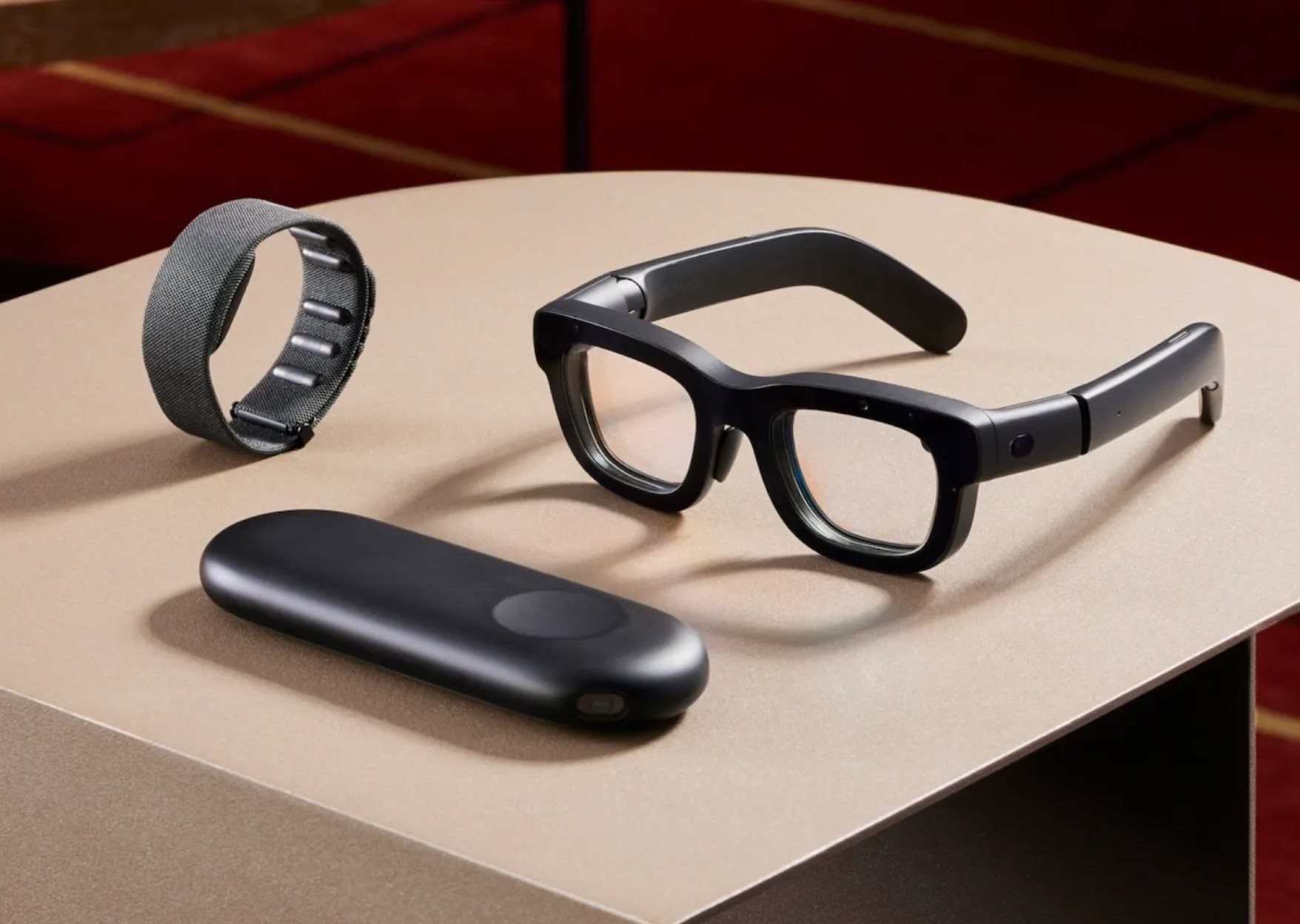
We all know Meta’s AR glasses are on the way, and the company recently showed off a working prototype of the device. Although AR glasses aren’t yet available to consumers, in 2025 you can expect Meta to get ready for their launch, with new features and activities built into the company’s apps.
How will this play out?
You’ll probably see more AR experiences appear in Meta posts, such as Try On experiences for products or even tools that help you arrange furniture in your home. Meta will try to build excitement for AR technology by any means necessary, in order to encourage users to adopt AR glasses. I also guess that Meta will add a new icon in the app to distinguish the profiles of users who own Meta Ray-Bans.
Why would Meta do that? Because we know users often like to show off their status and importance through symbols like the blue checkmark. Meta hopes that owning AR glasses or Meta Ray-Bans will become a new status symbol. A small sunglasses icon on your profile photo could make a difference, and together with the rise of AR experiences, this will drive the growth of AR and pave the way for a new consumer device launch.
VR Integration
Meta is still heading toward the metaverse as a long-term goal, and the company will look for ways to put its VR experiences in the spotlight even more.
Right now, Meta is developing ways for users who don’t use VR to take part in VR experiences within its apps, such as games that blend VR with regular games. You can expect to see more integrations like this, where virtual worlds are presented right on non-VR platforms.

Meta’s digital avatars will also play an important role in this trend.
Meta is improving its avatars, making them more realistic and easier to customize so they reflect your true image. The ultimate goal is for these avatars to represent you in digital spaces, including the metaverse. So you can expect Meta to introduce more avatar-based experiences that help you connect more strongly with your own digital self.
You’ll certainly see more games where you can join in with your Meta avatar, virtual social spaces like Horizon that let you communicate through your own image, and more expanded VR experiences where both VR and non-VR users can connect with each other.
In addition, Meta will keep adding customization options for your avatar, including branded outfits, to strengthen digital connection and deliver enhanced experiences across its apps.
More Video Content
The recent increase in engagement on Facebook has come mainly from video posts, especially Reels, and Meta’s AI constantly recommends these videos to you. Even if you only want to see updates from the people and Pages you follow, Meta still regularly pulls you in with clips that revisit TV shows or movies.
So you can expect that in 2025, Meta will keep focusing on video content, especially on Facebook.
Facebook recently added a video tab for exactly this purpose.
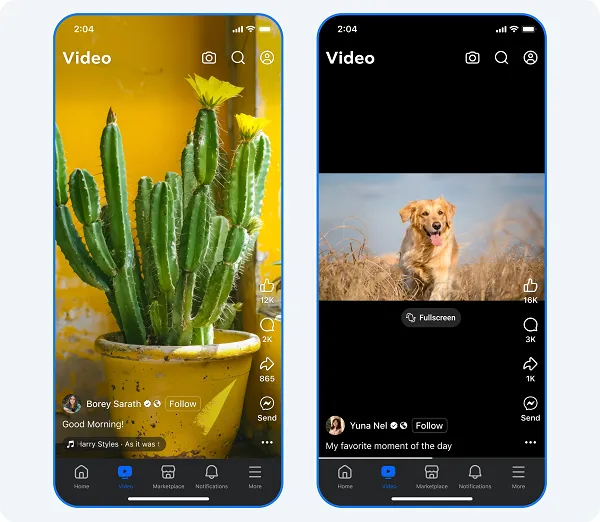
TikTok is clearly the inspiration, and I wouldn’t be surprised if Facebook gave some users extra access to videos or made video the default to boost engagement.
To support this, Meta will need more people posting videos, and the company will look for ways to encourage users to post more video whenever it can. In short, video is now the main driver of Meta’s growth. Not the exclusive long-form shows of the past, but short videos, much like TikTok.
And if TikTok gets banned in the U.S., Meta is also ready to take over that market.
Better Ad Performance with AI
When it comes to advertising, Meta is focusing on automated options like Advantage+, and right now they are delivering better results than manually targeted ads.
Meta will certainly keep improving its system in the future, using in-app performance data to identify users who are more likely to engage, which in turn delivers better results.
Although you may feel uncomfortable using automated tools to build ad campaigns – from content creation (through Generative AI) and targeting to budget management – if they deliver outstanding results, then testing them is essential.
Generative AI will be most effective when it processes and optimizes data, adjusting the strategic elements you’ve already set up to improve campaign performance.
Instagram has now become the middleman of social media platforms, doing quite a lot of things without a clear goal. It used to be just a photo-sharing app, but since the arrival of video, then Stories, and now Reels, Instagram has pivoted hard to boost engagement and keep up with new marketing trends. As a result, Instagram now feels like a mix of TikTok and Facebook, while still playing an important role in your social network. Yet it isn’t quite like any other platform.
Here is what I predict Instagram will focus on in the coming year, tied to marketing trends and strategies:
Advanced AI Photo Filters
Meta is encouraging users to try its AI tools by putting prompts in the feed that ask you to create custom images, such as random scenes or scenarios, to spark creativity and increase engagement. It’s a marketing strategy designed to connect users with fresh experiences while helping Meta lead the way in bringing AI technology trends into social media.
However, not everyone finds this exciting. While some people are experimenting with Meta’s AI image generation tools because they’re new, they don’t really fit personal sharing or Instagram’s main purpose. I think the next evolution will be advanced photo filters powered by Generative AI, letting you edit your real photos and videos instead of generating entirely new images. Meta is developing a “Movie Gen” tool that can edit your videos with AI elements. I expect this to become a bigger feature on Instagram, with more interactive and engaging filters for both photos and videos, helping you transform your content in a completely personal way. This is a more sensible use of Generative AI, tied to personal sharing rather than creating images unrelated to your experience.
Ray-Ban Glasses Integration
Meta is moving toward developing AR wearables, and Instagram will gradually add features that help users connect with these devices. Trends in tech marketing are driving the combination of social media and wearables, and Instagram could be the bridge for these experiences.
In the future, you may see Instagram add ways to share content from Ray-Ban glasses, such as livestreaming. This feature already exists, but it will be improved and expanded. Instagram may also create a dedicated section to display content shot with Meta Ray-Bans or make it easy to search for what the glasses can do. As a photo-sharing platform, Instagram can easily promote these features, and I think it will find many ways to showcase Meta’s new AR glasses.
Creating AR/VR Content and New Interactive Experiences
Related to the above, I predict Meta will help users create 3D objects in their posts and build AR experiences, much like VR, that can interact with the real world around them. This is a new engagement trend that marketers will use to capture users’ attention.
Snapchat has been doing this since 2017 with its World Lenses feature, which lets users create digital overlays and build interactive scenes in the app. Instagram will likely integrate a similar feature, aiming to create AR experiences that can later be combined with Meta’s AR glasses. Interactive ads and AR experiences will draw users into these digital worlds, opening up new opportunities in marketing strategy.
Threads May Loosen Its Rules on Political Content
Snapchat
Snapchat is struggling right now: it’s still hugely popular with younger users but hasn’t yet captured the attention of adults. Although it leads in AR technology development, Snapchat faces fierce competition from larger, more powerful rivals.
Snap has tried to broaden its audience to increase advertising opportunities while continuing to develop its own AR glasses, even as the big players squeeze it. Although it has had some success improving its ads, Snapchat still seems to be having trouble overcoming these challenges, and that could become a major problem next year.
Scaling Back AR Glasses Plans to Focus on AR Development
Snap will have a hard time competing with Meta and Apple in AR glasses development, since both have far greater resources. Although Apple may take longer to launch a product, Meta’s AR glasses are already very advanced and have steady sales with the Ray-Ban line. With limited resources, Snap can hardly develop its Spectacles AR glasses to compete effectively.

I predict Snap will scale back its AR glasses development and may partner with another company, such as Apple, to create a more viable AR product. Without this change, it will be hard for Snap to keep investing in AR glasses that can’t compete with Meta.
Still, Snap remains a leader in creative AR development, and that may be its best path. The company tried rolling out the ARES AR project for businesses but shut it down after six months. Even so, AR development remains a promising area for Snap.
If Snap partnered with Meta to integrate AR into Meta’s devices, that would be a more sensible strategy than building its own AR glasses.
New Features Through Snapchat+
Snapchat+ is Snap’s paid subscription service and it has been a huge success, with 12 million subscribers. Compared with X’s “X Premium” service (which has only around 1.3 million paying users), Snap has clearly done a better job of turning loyal users into paying customers.
That’s because Snapchat+ delivers genuinely useful features that Snap users need. Even without a verification badge, Snapchat+’s extra features match users’ needs well and have been warmly received.
So you can expect Snap to keep developing Snapchat+ in 2025, with new features launching for paying users first and only later expanding to free users. These features will convince many of Snap’s daily users (443 million of them) to subscribe to Snapchat+ to try its unique extras.
Snap has always understood what its users want, and you can trust the platform to keep delivering new features that suit its audience.
More Real-Life Connection Features
Snap is working to improve how it connects users in real life, for example through Snap Map, where you can see where your friends have been and what they’ve experienced. It’s a powerful feature that helps young users discover more real-world activities, and you can expect Snap to develop more features that bring people together in 2025.
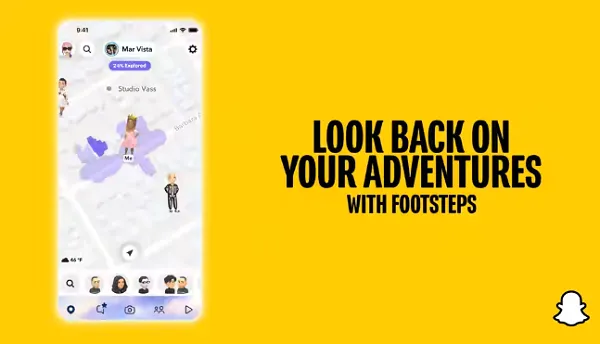
While Meta is focusing on virtual worlds through AI and VR, Snap can offer a more real-world way to connect, which has always been part of its vision. Snap could also use this feature to win over parents by showing that the app helps people truly connect, rather than just interact through a screen.
Snap could add “meet-up” messages, suggest friends you could meet nearby, and even add advertising opportunities, such as movie promotion campaigns and group reservation functions. It could also extend this strategy to event organizers to attract more attendees.
This could be a big opportunity for Snap, and although it started building this feature long ago, I expect it to push much harder on connecting the online and real worlds next year.
Ads in Snaps May Trigger Backlash
I don’t think Snap’s plan to put ads in users’ inboxes will succeed.
In September, Snap announced it would launch “Sponsored Snaps,” similar to LinkedIn’s InMail ads but in Snap form. However, Snap’s inbox is where users feel safest having private conversations, thanks to disappearing messages, which create the sense that what you share through DMs won’t be stored forever.
As a result, users have a closer relationship with the platform as a messaging tool, and ads in this space could feel intrusive and irritate many people.
Meta struggled when it tried to put ads in Messenger and WhatsApp, and I think Snap will run into the same problem. It’s possible that after a while, Snap will have to pull this feature back.
With a stable user base in the U.S. and Europe, Snap’s main markets, the company needs more advertising to grow its business. If this strategy doesn’t work, it could be a major challenge for Snap’s future growth.
LinkedIn remains firmly established as the professional social network, set apart from other popular social platforms by its focus on business communication. However, I predict that in 2025 LinkedIn will continue to develop in its own direction, focusing more on professional content and being less influenced by the engagement trends of other social networks.
Fewer AI Tools in Communication
LinkedIn has built in many AI tools, such as suggestions for posts, cover letters, and ways to improve your profile. While these tools are quite useful for personal marketing and improving your professional image, they reduce the personal touch and authenticity of what users share on the platform. LinkedIn has always been where users showcase their personal skills and abilities, and when too many AI elements are introduced, what users share may reflect their real capabilities less accurately. That’s why I predict LinkedIn will scale back the use of AI in content creation and shift toward a more supportive role, rather than fully replacing users’ own contributions, especially in the context of marketing and personal branding.
Career Path Development with AI
With the huge trove of professional data LinkedIn holds, the platform can use AI to create career paths tailored to each user. Based on the experience, skills, and career information users provide, AI can help them find the best career path. LinkedIn could analyze information from industry professionals to suggest career development steps, helping users choose the right path and increasing their chances of advancement. This is a promising move that LinkedIn could push hard next year, meeting the trend of job searching and career development through AI tools.
Focus on Live Events
Although LinkedIn has experimented with many new features such as Stories and TikTok-style short videos, they haven’t really worked. That’s no surprise, because LinkedIn can’t compete with entertainment platforms like TikTok. However, the platform has noticed growing interest in video and live events. Events such as conferences, professional discussions, and online training sessions are drawing significant attention from the professional community. LinkedIn has stepped up its live events, and in 2025 I expect the platform to partner with major organizations to broadcast important events, creating opportunities for industry professionals to learn and connect. This will help LinkedIn attract more users and create real value for its professional community within a new trend in online marketing.
TikTok
One of the biggest concerns about TikTok right now is whether the app will still operate in the U.S. in 2025. A bill requiring TikTok to be sold, approved by the U.S. government, is expected to take effect in February. TikTok is appealing the decision, and legal experts say the company could delay the deadline through legal measures. President-elect Donald Trump has also said he will save TikTok, but that may not be as easy as predicted.
Still, even if TikTok is banned in the U.S., the app will remain one of the largest social networks in the world, with more than 800 million users in other countries. If TikTok is banned in the U.S., other regions may follow suit, but either way, TikTok will remain an important tool for many marketers next year, especially for capturing consumer trends and creating innovative marketing strategies.
TikTok and the In-App Shopping Trend
TikTok is determined to push shopping right inside the app.
TikTok’s Chinese version (Douyin) has been very successful at selling through livestreams, and TikTok is trying to apply this model in Western markets, even though users there aren’t fully on board yet. Still, TikTok is persisting, hoping to make in-app shopping a major trend that generates billions of dollars in revenue and opens up many opportunities for content creators in marketing.
There is a clear reason for this goal: in 2023, TikTok earned about $3.8 billion from in-app shopping, while Douyin brought in more than $500 billion. Clearly, TikTok is aiming for something big, and although Western users aren’t very enthusiastic right now, it will keep working to find a winning formula for shopping right in the app, based on consumer trends and the growth of online marketing.
TikTok’s shopping revenue is gradually improving. Although it hasn’t reached huge numbers overnight, as the younger, tech-savvy generation of users starts earning more, they will tend to spend more money right inside the app.
So you can expect TikTok to keep developing this feature in 2025, including using AI characters to livestream and sell products, much like what is already very popular in China. These characters will help companies sell effectively and at low cost, creating constant engagement with consumers within an online sales marketing strategy.

TikTok has begun testing these features with a few partners and plans to expand them more aggressively in the near future. It will also extend into other areas to encourage in-app shopping behavior.
Mini Programs
Similar to Douyin, TikTok may roll out a “Mini Programs” feature in 2025. On Douyin, third-party developers have integrated “Mini Programs,” lightweight versions of external apps, into Douyin’s ecosystem, such as services for ordering food, hailing rides, buying tickets, and more. This lets users handle many everyday transactions on a single platform, creating great convenience.
This feature has expanded in-app transaction capabilities and attracted Chinese users. Given the success of this model, TikTok could apply a similar one in 2025, letting mini apps run inside TikTok. The goal is to encourage users to complete transactions right in the app, from shopping to many other services.
If TikTok rolls out this feature with low fees, it will attract many business partners because of TikTok’s vast reach. Creating a platform where users can carry out everyday transactions could boost revenue and increase engagement across the TikTok ecosystem. This would be an important step toward expanding user habits and driving the platform’s growth.
In-Video Search and AI
One feature that Douyin (the Chinese version of TikTok) has rolled out, but TikTok doesn’t yet have, is search within videos. This feature lets users select a part of a video and use it to search for other related videos. It’s similar to Google’s or Pinterest’s image search tools, where you can select part of a photo and get results related to that object.

Although TikTok still hasn’t rolled this feature out to Western users, possibly due to concerns about tracking and finding videos of the same person, I think it could be very useful, especially for product search. It would encourage users to shop directly within videos, while giving brands the chance to upload products that match users’ queries.
TikTok has tested this feature and may expand it in 2025, offering users a fresh and exciting search experience.
AI Search
TikTok is developing a new AI-powered search feature within its chatbot. This feature will help users discover content more easily, both in the app and on the web. It’s a step toward improving TikTok’s search engine, making the platform a more comprehensive tool and delivering a smoother, smarter search experience for users.
Pinterest maintains its position as a product discovery tool, even though it is no longer a social network the way it used to be. Rather than focusing on connecting users, the app now mainly focuses on displaying products. Still, it remains social through features like sharing and searching for ideas, and Pinterest will keep developing these features next year.
Advanced AI Tools
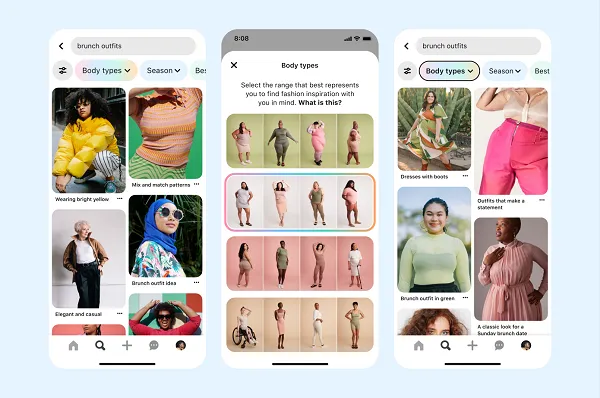
Pinterest has integrated AI technology to improve the shopping experience. Recently, the app added a “Body Type” filter that lets users search for products that suit their figure. Pinterest also has filters for skin tone and hair type, making the search process more accurate.
Improved Product Catalog Upload Process
To display more products, Pinterest is working to improve how retailers can upload their products. This will make adding products to the platform faster and easier.
AR Integration
Pinterest is getting closer to integrating augmented reality (AR) technology. Although it doesn’t make its own AR glasses, Pinterest could pair its AR tools with devices like Meta’s AR glasses. This would let users see products such as clothing in a mirror through AR glasses.
X (Twitter)
Since Elon Musk acquired Twitter, the platform has changed quite a lot and is now called X. Although Elon planned to turn X into an “everything app” covering many kinds of transactions, so far that plan hasn’t fully succeeded.
Payments
One of the key parts of Elon’s plan is adding payment features to X, including peer-to-peer and banking transactions. Although Elon promised payments by the end of 2024, approval for payment processing has stalled, putting the plan on hold for now.
Focus on Video
X’s CEO, Linda Yaccarino, announced that X would become a “video first” platform, but the app hasn’t changed significantly so far. Even so, X is still trying to prioritize video, especially original content.
AI Search
X is also experimenting with AI features, like other tech companies. However, X’s Grok AI chatbot is still not widely used.

Nguyễn Đình
Bảo




As CEO of The7, I am committed to sharing practical, useful knowledge with every reader. Every article on The7 is based on my 7 years of hands-on experience in marketing — Facebook advertising, LinkedIn advertising, Google advertising, and marketing strategy. I hope you take away plenty of insight from these posts and apply it successfully in practice.
Related Articles
Building a Full-Funnel Content Marketing Strategy on LinkedIn
Table of Contents Toggle Why Build Content Marketing for the Full Marketing Funnel? (Why Full-Funnel Content Marketing?)Creating Your Strategy (Creating Your Strategy)Implementing Your Content Strategy (Rolling out your content strategy)Summary...
Designing Creative Content for LinkedIn
Table of Contents Toggle Why Is Good Creative Content So Important? (Why is Good Creative Important?)Key Components of Creative Design (the core elements of creative design)Summary (summary) Why Is Good...
Building an Organic Business Presence on LinkedIn With a LinkedIn Page
Table of Contents Toggle Why Have a LinkedIn Page?Establishing Your LinkedIn PageKeeping Your LinkedIn Page ActiveThe Measure of SuccessSummary About LinkedIn Page (Summary) Why Have a LinkedIn Page? For a...
6 Best LinkedIn Marketing Strategies for B2B in 2026
Table of Contents Toggle LinkedIn 2026: Where B2B Decisions Get MadeStrategy #1 – Why Is LinkedIn the Best B2B Marketing Channel Today?1. Decision-makers are concentrated here2. Users are in work...

7 Social Media Trends for 2026: The Era of Real Value, Real Conversion, and Real People
Table of Contents Toggle Social media is entering the biggest restructuring of the decadeTrend 1: Why is buying directly in-app becoming the new standard for 2026? (On-Platform Conversion)What should businesses...
What Is TikTok Marketing? Effective TikTok Marketing Strategies
TikTok has been topping the global rankings of the most downloaded and most visited apps. That makes it a gold mine for marketers who love creativity. In this article, The7...