


“The Meal”: McDonald’s Secret to Children’s Happiness
To mark Global Mental Health Awareness Month, McDonald’s launched a meaningful communications campaign inspired by stories about children’s mental health. The campaign quickly won support and spread widely around the world. Through meaningful messages and relatable imagery, McDonald’s helped raise public awareness of the importance of caring for children’s mental wellbeing, while stirring positive emotions and deep empathy.
McDonald’s and the journey to discover children’s pure joy
The global mental health crisis, affecting nearly 1 billion people and causing hundreds of thousands of deaths each year, has pushed brands to seek meaningful touchpoints in their communications. McDonald’s tapped into a unique perspective on this issue, particularly as it relates to children.
McDonald’s research in the UK found that nearly half of children feel pressure to always appear happy, even when they don’t truly feel that way. This reveals a gap between parents’ perceptions and their children’s real happiness.
From there, the “The Meal” campaign was born, aiming to encourage families to have more open conversations about children’s emotions and mental health. By changing the design of the Happy Meal® box, McDonald’s hoped to create a catalyst for these important conversations.
Louise Page, McDonald’s Director of Partnerships and Consumer Communications, shared: “We understand the importance of encouraging open conversations about mental health within every family. We hope that through this change, we will inspire even more families to engage in positive conversations about children’s emotions and wellbeing.”
Exploring the exciting activities within “The Meal” with McDonald’s
The “The Meal” campaign is not just an ordinary communications campaign, but a multi-platform IMC (Integrated Marketing Communication) campaign, combining the power of CSR, social media, OOH, short film, influencers, SFVOD, and more, with McDonald’s, Ready10, and the BBC all taking part.
Some of the campaign’s standout highlights include:
The “The Meal” short film
The campaign opens with a deeply emotional short film directed by Jake Mavity and produced by Rogue Films. In just two short minutes, the film conveys a profound message about the importance of allowing children to express a full range of emotions, not just happiness.
The film opens with a scene of children receiving the familiar Happy Meal® box, but this time it’s missing its iconic smile. Instead, the children are free to choose and stick on stickers showing a variety of different expressions. From there, sincere conversations about friends’ emotions and what they mean are sparked.
Rio Ferdinand lends his support to McDonald’s in the meaningful “The Meal” campaign
Football legend Rio Ferdinand not only voiced the film but also actively took part in the campaign through photo shoots, media interviews, and social media promotion. Drawing on his own experience as a father, Ferdinand conveyed the campaign’s message in an authentic and relatable way, helping spread the meaning of “The Meal” widely to the community.
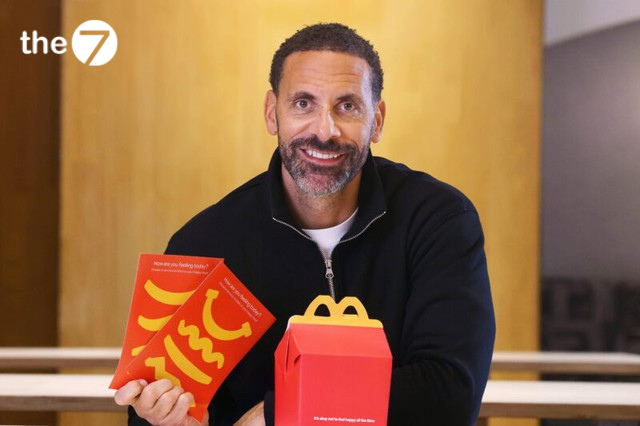
Why did McDonald’s remove the smile from the Happy Meal?
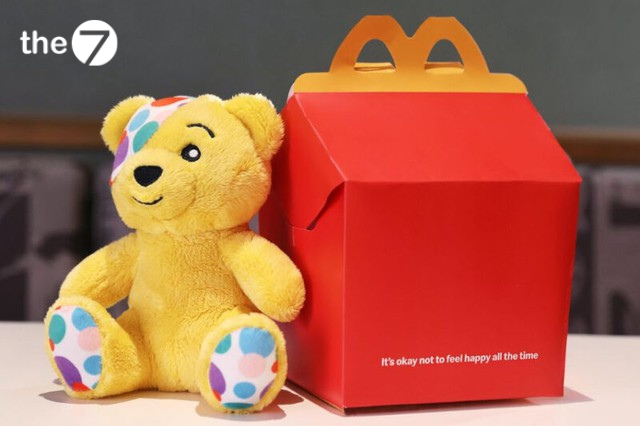
In a bold move, McDonald’s decided to remove the iconic smile from the Happy Meal® box, replacing it with the message “It’s OK not to be happy all the time.” In addition, stickers with a variety of expressions were provided so children could freely express their true feelings.
2.5 million of these limited-edition Happy Meal® boxes were distributed to more than 1,400 McDonald’s restaurants across the UK, along with a diverse set of stickers depicting children’s emotions. This change not only gave the Happy Meal® a fresh new look but also conveyed a meaningful message about accepting and respecting every emotion a child feels.
Building a space to support the community
McDonald’s didn’t stop at redesigning the Happy Meal® box — it also partnered with BBC Children in Need to build a dedicated support hub. This hub provides families with resources and guidance, and encourages them to have open conversations about their children’s emotions and wellbeing.
Users can easily access this hub via a QR code on the limited-edition Happy Meal® box, as well as through McDonald’s website and social media channels.
The campaign was further amplified across other channels such as OOH, social media, and SFVOD. Notably, McDonald’s partnered with several respected parenting influencers to share their views and experiences on talking about and sharing emotions within the family.
“The Meal” received a great deal of positive feedback from the media as soon as it launched. Although the activations themselves weren’t particularly novel, what set the campaign apart was how McDonald’s uncovered its insight and chose its message.
Within the broad topic of mental health, McDonald’s skillfully focused on the aspect of “happiness” and on children as its subject. This message not only captured the attention of parents but also created broad empathy within the community. Because children are always a group that receives care and protection, issues related to their mental health always draw special attention.
>> See more: KUN Milk: Can It Break Through in Vietnam’s Milk Market?
By Khánh Huyền
Source: Marketing AI

Nguyễn Đình
Bảo




As CEO of The7, I am committed to sharing practical, useful knowledge with every reader. Every article on The7 is based on my 7 years of hands-on experience in marketing — Facebook advertising, LinkedIn advertising, Google advertising, and marketing strategy. I hope you take away plenty of insight from these posts and apply it successfully in practice.
Related Articles
Solo but Not Lonely: Vietnam’s Rise of Solo Dining in F&B
The solo-dining trend — “hotpot for one,” “lonely noodles,” or “self-dates” — is becoming a popular movement among young Vietnamese people, opening up major opportunities for the F&B industry. More...
How Katinat’s Charity Marketing Campaign Sparked Public Backlash
Recently, Katinat launched a campaign to support compatriots in Làng Nủ, a community hit hard by storms and floods, promising to donate 1,000 VND from every drink sold between September...
Gojek Decides to Cease Operations in Vietnam
After six years of building its business in Vietnam, the ride-hailing and food delivery platform Gojek has officially announced that it is shutting down. Starting September 16, 2024, users will...
E-Commerce Platform Shein Suspected of Using Toxic Chemicals in Its Clothing
The discovery of harmful chemicals in Shein’s products has raised concerns about the hidden risks in fast fashion, an industry where trends usually come first. The incident has not only...
The Coffee House: A Former Market Leader Struggling Against New Rivals With a Faded USP
The Coffee House was once a promising icon of Vietnam’s F&B industry, but recent months have seen the brand shrink at an alarming pace, with a wave of branch closures...
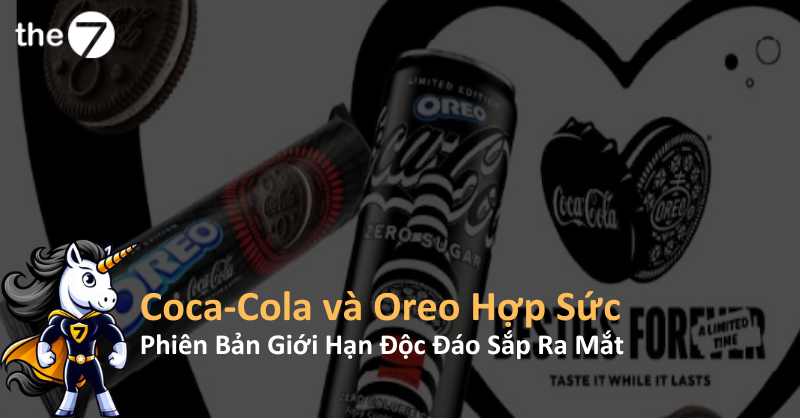
Coca-Cola and Oreo Team Up: Unique Limited Editions Coming Soon
If you’ve always dreamed of what Cola and cookies would taste like together, now’s your chance! Coca-Cola and Oreo have teamed up to bring you a one-of-a-kind combination – but...