


The Complete Guide to Monitoring Business Website Performance

It will take you about two seconds to load this article completely. That is also the longest average wait time internet users will tolerate. In this article, The7 shares how to monitor your business website’s performance.
Two seconds may not sound like long. However, when users are browsing a website, even one second of waiting can be frustrating. That is why businesses need to invest time and resources in tuning their website performance for the best results.
Why? Because page speed affects everything: user experience, brand perception, conversions and revenue. Whether you run an e-commerce site, a business website or a simple blog, every one of your pages needs optimized load times.
To achieve ideal performance, a business must keep page load speed in mind throughout the design process, and then monitor it regularly. However, website performance is a complex matter, and improving it takes specialized knowledge of the factors a website needs in order to run well.
In this guide, The7 covers everything you need to know about website performance. First, we will discuss what optimal web performance looks like. Then we will look at what affects website performance. Finally, we will show you how to make sure your website runs at its best.
What Is Website Performance? How Important Is Business Website Performance?
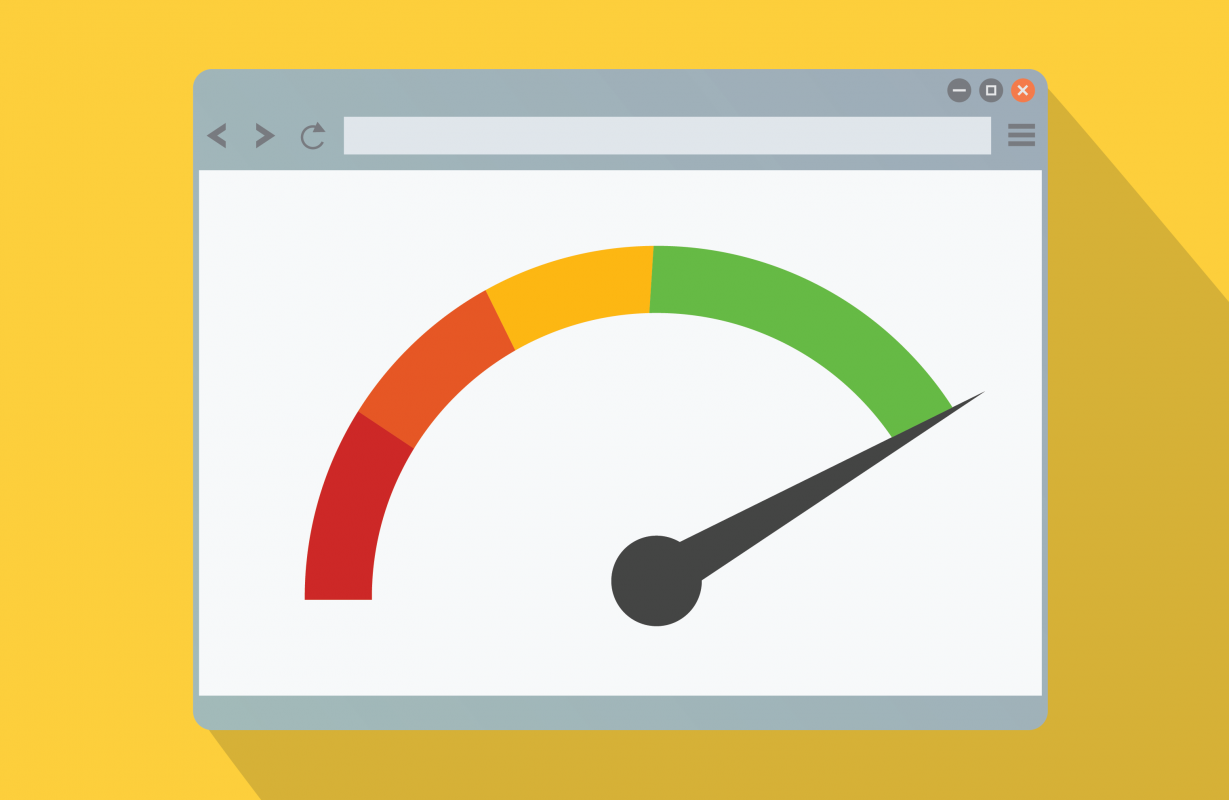
Website performance is a metric that measures how fast pages load and display in a browser. Website performance optimization means improving a site’s performance through a variety of methods. The faster a website’s pages load, the higher its page load performance.
Good website performance is something every website owner should aim for. It is the first experience every visitor has, and that first impression shapes how users feel about a website. It plays a major role in conversion rates, in whether people use a business’s services, and in bounce rates.
Why Does Business Website Performance Matter?
As an internet user, you have probably run into slow-loading websites many times. It may seem like a minor annoyance, but the impact of poor website performance can reach your entire business, from user satisfaction to company revenue. In the next sections, let’s look at the standards that affect page load speed and how to optimize them.
User Experience
Any online business can boost its website performance with a number of tricks, but the end goal is always to improve user experience (UX). Every website theme should promote UX, and page load speed is no exception.
UX touches every aspect of your website. Put simply, if your site is slow, your visitors will have a poor experience. And if your visitors have a bad impression, your business will not perform well either. Conversely, a high-performing website improves UX, leaves a positive impression on visitors and makes them want to come back.
So, how fast is fast enough?
There is no benchmark for website speed. Figures have ranged from five seconds down to half a second. But the most influential opinion probably comes from Google. In 2010, Google stated that a website should load fully within two seconds. That standard has stuck ever since. Note that two seconds is the maximum – fast websites can load their content in under a second on average.
Visitor Retention Rate
The main goal of website design is to capture visitors’ interest as soon as the page finishes loading. But what matters even earlier is page load time. Users leave easily when they feel impatient. According to research, 53% of mobile users will abandon a website that takes more than 3 seconds to load.
So, to retain visitors, especially first-time visitors, your website needs to meet performance expectations.
Conversion Rate
There is a close link between website performance and conversion rate. It does not matter how you define a conversion – performance affects visitor satisfaction. The happier they are with your page load speed, the more likely they are to use your services.
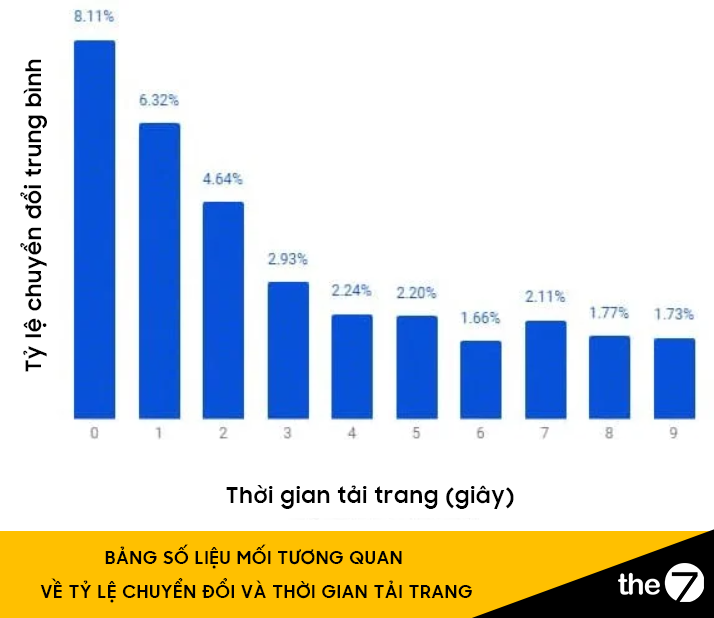
Understanding this relationship is key, because it ties your website’s performance to your business goals. A small difference in speed can mean the difference between converting and not converting. For every second of load time, your conversion rate may drop by an average of 4.42% for each second after three seconds.
Brand Awareness
Imagine you find a new restaurant and decide to stop there for lunch. When you arrive, you notice it is closed. “No problem,” you think, they will probably open soon. But when you come back the following week, the restaurant still has not opened.
Sure, you are annoyed by the inconvenience. Worse, though, you may start making assumptions about the restaurant – if they close without notice, what does that say about the quality of their food?
The same is true of websites, only to a much greater degree. A slow-loading website triggers assumptions that damage your credibility and brand image. Visitors will question your competence, your security and your ability to serve customers. Some may even think your website is unsafe or illegitimate. Every other website they use is fast, so why isn’t your business’s?
Mobile Experience
Smartphones are steadily becoming the primary tool for browsing the web. The number of smartphone users worldwide recently passed three billion, with no sign of slowing down.
The rise of the smartphone is arguably the biggest change in web design in the past decade. It has forced companies to reinvent how they build websites. Many now choose a responsive design approach to optimize the mobile user experience.
Users tend to trust a business less if its website is not mobile-friendly, even if they like the business. To serve this growing user base, your mobile website must be built lightweight for mobile devices so that load speed can be optimized.
SEO
Finally, website performance affects where you appear in search results. Since 2010, Google has factored page speed into its ranking algorithm. In 2018, it announced mobile page speed as a ranking factor. This is one way search engines rank websites that deliver the best user experience.
Page speed is not currently the most decisive ranking factor (Google has stated that relevant content plays a much bigger role). But it can still influence your website’s position in search results and affect traffic and conversion rates. For example, if Google sees that your website and a competitor’s have equivalent content, the faster-performing website may rank higher.
What Affects Business Website Performance?
For most people, a website looks like a single entity inside a browser. But website owners should think more broadly than that.
Many factors come together to create a cohesive website, and most of them affect your business website’s performance. Below are the main components that determine whether a website is fast or slow, and how each one can be optimized:
Website Size
Website size refers to the total size of a web page, including all the resources (code files, images, embedded files and so on) the site needs to load. Load time depends largely on size. The more files you include, and the larger those files are, the longer the browser needs to load the page.
Depending on how a website is built, many factors can slow down page load speed.
The solution seems simple – cut all the excess resources so there is less to load. While that works, the problem is that front-end technology is advancing beyond what is good for it.
For every new element you place on your page, you add load time for that element’s resources. Don’t get carried away with gimmicks – simple is best for both performance and user experience. Always prioritize a clear layout over design complexity. But that is not the only way to reduce page weight.
Even after simplifying your pages, you may still see unstable performance caused by large files. Optimize file sizes when uploading them to your website, and delete outdated files or posts, or any that no longer have value.
Images
Most of the content you see on websites is text or images. Image files are much larger than plain HTML text files, so they take longer to download and render in the browser. As a result, high-fidelity images can slow load times significantly. Optimizing your images is the most effective fix.
Most importantly, don’t overuse images on your website. Each image requires a large amount of resources, so choose your images carefully.
Next, resize your images to the most efficient dimensions when you upload them, and make sure they are not blurry or fuzzy while keeping the file size as small as possible.
Finally, keep files compact by limiting image formats to JPG, PNG, GIF and SVG whenever possible. Compressing images can also improve load times, but it is a more subjective process – you want your image files small enough to improve performance, yet large enough to keep sufficient quality. This will take a few tries. In our experience, compressing to about 75% of the original image gives the best balance.
HTTP Request Optimization
Nearly every website follows the HTTP transfer protocol. An HTTP request is the command asking for a web page to be loaded in a web browser. The browser must first send an HTTP request to the hosting server of the target website. The web server then sends back a response containing the requested resources.
In practice, most websites are complex and need many HTTP requests to display fully. As a rule of thumb, the more complex a website is, the more HTTP requests it needs. And the more requests, the slower the page.
Reducing HTTP requests can take time, but it may be worth the investment to cut your load time. Simplifying a page reduces the number of requested resources, so start there if you can.
Also, be careful when using external resources – resources pulled from third-party servers. External resources can be embedded as images, videos and other media, and so on. All of them require HTTP requests to separate servers and can affect page load performance.
File Compression
File compression helps deliver files quickly over the web. A web server with compression enabled shrinks the requested files (without losing information) before sending them. When a browser receives the compressed files, it decompresses them and displays them as usual.
Smaller files are sent and downloaded faster, so compression is almost always beneficial. Today, 80% of websites use compression, specifically a type called GZIP. Learn how to enable GZIP compression on your server .
Web Hosting
Although most business website performance optimizations are handled on the front end, the right web hosting is also the foundation of a successful website. A poor server can cause errors and performance problems, so investing in a server that can handle growing traffic is essential.
Low-cost hosting can be tempting. But sometimes you will have to share server resources with many other websites, and a surge in activity on any one of them will affect the performance of your own. Do thorough research when choosing a host for your website.
Key Terms and Tools for Evaluating Business Website Performance
Tools for Evaluating Business Website Performance
The first step in website performance optimization is measuring your website’s speed. Here are some websites you can use.
These tools let you paste in the URL of any web page and return a performance summary for that page, along with an analysis of which factors are affecting its performance. That way you can identify problems on your website and improve it effectively. Here are some popular performance testing websites:
However, keep the following in mind when choosing:
- Each of the tools above measures your performance differently, so stick to a single source. Comparing results across different tools will not help you optimize your website’s performance
- Your website does not need a perfect score to be considered high-performing – focus on the key items that the tools above recommend.
Key Terms to Know
After running your website through one of the tools above, you may not be familiar with some of the terms used to measure performance. Although speed is an intuitive concept, website performance cannot be summed up in a single value. Web designers use many metrics to quantify how “fast” a page is. Once you understand these terms, you will be better equipped to approach and optimize performance.
Page load time
Page load time is the time it takes to load an entire web page. It is measured from when a user arrives at the page (for example, by typing a URL into the browser or clicking a link on a search results page) until the last resource on the page is displayed. At the beginning of this article, The7 mentioned that the ideal page load time is 2 seconds, and that is the figure we use as our reference.
Time to interactive
This is another important benchmark for measuring website performance. Time to interactive measures the time from when a user requests your website until they can start interacting with elements on the page, such as scrolling through the page or clicking interactive buttons.
This does not mean the page is fully loaded – some page elements may still be loading after others become interactive. But if users can interact with the content, this metric counts from the moment the visitor can interact.
Bounce rate
A page’s bounce rate is the percentage of people who visit the page and then leave without clicking anything. If a page loads slowly, a number of visitors will lose patience and bounce. Keep in mind, though, that a high bounce rate can have many causes. For example, your website may load well but fail to hold visitors’ interest because of weak content.
Conversion rate
Conversion rate is the percentage of all visitors to your website who complete a conversion. As discussed, conversions are closely tied to business website performance. Customers who are happy with your website’s performance are more likely to stay on your site and complete the conversion action. Like bounce rate, many factors affect your conversion rate, but you should check whether performance is one of them.
Error rate
Error rate is the share of HTTP requests that return an error code out of all HTTP requests over a short period of time. A high error rate indicates something is wrong with your web infrastructure, so it is not delivering content properly. At times it will slow down or freeze pages and frustrate visitors.
Improve Your Business Website Performance
Every website takes a different design approach based on the business’s goals, industry and audience. However, good website performance is a universal requirement for all websites, regardless of market, service or content.
Slow load times do more than annoy your users. They shape how customers perceive your brand, and they sharply increase the chance that customers will buy and recommend you to friends. A slow website also hurts SEO and mobile traffic. And if your pages perform poorly, every visitor is affected.
In short, website performance optimization is not just about making things faster. It is about strengthening your entire online presence and creating a website visitors trust. Performance gains may not happen overnight; they take patience and in-depth learning.
CONTACT
If you are still undecided, or you want to build a beautiful business website that MEETS ALL THE CRITERIA ABOVE but do not know where to start, let the professional web design team at Digital7 give you a hand.

We are a pioneer in designing websites that fit our clients’ needs:
- Website design styles that match user trends.
- Optimization guaranteed on every device, from desktop to tablet to mobile phone.
- Support with design consulting, planning and measuring website performance for clients.
- A web design team that understands customer needs and designs a website style suited to your industry or service.
- Support for the best domain names, plus warranty support when your website runs into technical problems.
- Help filling your website with content from a versatile content team.
- A range of website pricing options to fit the budget of every type of client.
Contact us now for further consultation:
? Address: 3rd Floor, HUD Building, 159 Điện Biên Phủ, Ward 15, Bình Thạnh District, Ho Chi Minh City
? Phone: 028 38997377 (open 8:00 – 17:30)
☎ Hotline: 0879.17.7979
✉ Email: contact@digital7.vn
Browse our website templates at: https://digital7.vn/

Nguyễn Đình
Bảo




As CEO of The7, I am committed to sharing practical, useful knowledge with every reader. Every article on The7 is based on my 7 years of hands-on experience in marketing — Facebook advertising, LinkedIn advertising, Google advertising, and marketing strategy. I hope you take away plenty of insight from these posts and apply it successfully in practice.
Related Articles

Website Accessibility Standards: How to Collaborate and Make Sure Everyone Can Use Your Website
With more than 1 billion people worldwide living with a disability (according to the World Health Organization), implementing website accessibility standards helps you reach this huge audience and create an...

Ecommerce SEO Website Checklist to Get More Traffic
Table of Contents Toggle How Do You Know It’s Time to Update Your Ecommerce SEO Website Checklist?Discover the Most Searched Keywords and QuestionsChoose the Right KeywordsEnhance the Website Experience for...

Website Design Trends 2023
Your website design plays a key role in telling your brand story and shaping how much people trust your brand. In fact, 75% of your website’s credibility depends on how...

What Is a Website? The Most Common Types of Websites Today
Types of websites today need more than an impressive design. They also have to adapt to mobile screen sizes. Mobile website designs are classified by four factors: ownership, website structure,...

What Does an E-Commerce Website Need? 11 Steps to Build One
What is an e-commerce website? This versatile tool has become hugely popular lately, with wide reach and extremely high traffic. So how can a new business register and set up...