


7 Social Media Trends for 2026: The Era of Real Value, Real Conversion, and Real People

Social media is entering the biggest restructuring of the decade
The 2020–2025 period was the golden age of short-form video, of algorithms favoring dopamine-triggering content, and of the race to jump on trends faster than everyone else. But heading into 2026 and stretching into 2027, social media is entering a completely new era. An era where everything changes, from how content gets distributed, to how users engage, to how businesses drive conversions — everything is changing from the ground up.
In this era, algorithms no longer hold absolute power. Users are more proactive than ever in deciding what they want to see, what they want to filter out, and who they want to engage with. Junk content, view-baiting tactics, and clips that only deliver momentary stimulation are all getting weeded out fast. Brands are now forced to create real value, show up authentically, and hold to a higher quality bar to hold on to an increasingly scarce resource: attention.
2026 marks a comprehensive shift: a shift in how content gets made, a shift in how brands build trust, a shift in how users search for information, and a shift in the very standard the community expects from a business. Brands that don’t understand these shifts will get left behind by competitors who are quicker, more flexible, and closer to their users. Reach out to us on our hotline: 0827386886, or leave your contact details so the The7 Digital team can advise you on turning this strategy into real results for your business.
Below are seven key trends, seven pieces redefining the entire global social media ecosystem.
Trend 1: Why is buying directly in-app becoming the new standard for 2026? (On-Platform Conversion)

As social platforms increasingly perfect their built-in commerce ecosystems, user buying behavior has shifted in a way that’s hard to reverse. In the past, customers would watch content on social media and then get redirected to a website to complete the purchase. But by 2026–2027, that model is losing its effectiveness, because users no longer want to leave the app — they want to watch, research, and buy right where they are.
TikTok, Instagram, Facebook, and YouTube have all thrown themselves into a fierce race to turn their platforms into closed-loop commerce systems. When TikTok Shop and Instagram Shopping launched, Shopify quickly recorded conversion growth of 20% to 40% for brands with proper integration. Facebook Lead Ads still keeps costs low and effectiveness high by cutting friction. Every platform wants to keep users within its walls, and consumer behavior has quickly settled into new habits.
This makes pulling customers out to a website an outdated choice. Users want to:
- See reviews right where they’re already scrolling.
- Buy the moment the urge to purchase hits.
- Check out fast, with no hassle, without ever leaving the app.
If a business doesn’t optimize the in-app buying experience, it will lose customers to competitors who roll it out faster.
What should businesses do right now?
- Fully activate native commerce features such as TikTok Shop, Instagram Shopping, Facebook Lead Form, and YouTube Shopping.
- Change the call to action (CTA) from “visit our website” to “buy now here,” “message us for advice,” or “check out directly.”
- Design your content flow around the nearest conversion point, instead of forcing customers through a long, rigid journey.
On-platform conversion isn’t just a convenience — it’s the new “operating standard” for brands in 2026. Businesses that optimize it well will gain a long-term edge, much like owning a store right where customers are already gathering in the greatest numbers.
Trend 2: As users take control of their feed, User-Controlled Feeds will reshape content strategy entirely

If algorithms used to decide what content landed in front of users, then from 2026 onward, most of that power has shifted to the users themselves. Instagram, TikTok, and YouTube are all rolling out “feed-tuning” features, letting users hide a topic, dial down a category, or boost the visibility of content they actually care about.
This completely changes how businesses reach customers. Shallow content can get hidden permanently after just a few skips. Annoying content can get a viewer to mute the entire topic category a brand relies on for production. And a brand with too narrow a niche can effectively “vanish” just because a user turns off the exact category that brand depends on.
User-controlled feeds create a new environment:
- Users are no longer passive.
- Content can’t get shown if it doesn’t carry real value.
- View-baiting, shock tactics, and spam get weeded out fast.
Brands can no longer rely on luck or algorithmic favor. To appear in front of customers, content has to be worth keeping around, not just worth watching once.
How should businesses adapt?
- Focus on producing content users actively want to watch, rather than content the business simply likes posting.
- Keep engagement steady, since platforms prioritize showing accounts that users interact with consistently.
- Diversify content within the same core focus, to avoid getting “muted” entirely when users filter out one specific topic.
- Cut back on shallow content and increase content that explains, applies, or inspires.
User-controlled feeds are a reminder that social media is no longer the algorithm’s playground. This is a game of choice — users choose who gets to stay on their feed, and brands have to earn that spot.
Trend 3: Why is long-form video making a strong comeback that businesses can’t ignore?

After years of the short-video boom, users are starting to feel worn out by content that’s too fast, too short, and too thin on value. The truth is, dopamine can’t sustain viewers forever. As the market gets flooded with 15-to-30-second videos, user psychology is swinging the other way: they want depth, they want a story, they want real emotion, and they want content that helps them understand something rather than just entertaining them for a moment.
Recent research shows long-form video isn’t just “coming back” — it’s coming back strong: Upskill reports that long-form video generates 10 times the views and 5 times the meaningful comments compared to short video. YouTube, the largest long-form platform, still accounts for more than 50% of total global social video watch time. Even TikTok raised its upload length to 10 minutes, proof of viewers’ real demand.
The rise of long-form video reflects a simple truth: audiences want value, not speed.
They want to be led through a story.
They want to feel “understood” and like they’re “learning something.”
They want content that helps them make decisions, shift their thinking, or solve a problem.
That’s why many brands are producing micro-series — short, plot-driven series — to hold viewers with emotion and curiosity. Sometimes, one well-told story outperforms dozens of quick clips.
What should businesses do to capture this trend?
- Start testing 3-to-5-minute long-form videos, focused on storytelling, analysis, or sharing experience.
- Build series around specific topics, giving viewers a reason to come back for the “next episode.”
- Optimize for retention instead of chasing short-term virality.
- Produce how-to or story-driven content, since these formats hold viewers the longest.
- Use long-form video to build trust, because the longer viewers watch you, the more they trust you.
Long-form video is where a brand builds depth. Short-form video gets you noticed, but long-form video gets you remembered, trusted, and seen as an expert.
Trend 4: Why are TikTok, Instagram, and YouTube becoming the new search engines for younger generations?
For years, Google was the starting point for all search behavior. But that behavior is changing fast, especially among Gen Z and younger generations. When they need to find a place to eat, they search TikTok. When they want to check cosmetics reviews, they ask Instagram. When they need to fix something, they watch YouTube. Users are starting to search with video instead of text, because video lets them see real experiences, real results, and easier-to-follow instructions.
According to WARC and Adobe, 64% of Gen Z use TikTok as their primary search tool. 81.2% of Vietnamese consumers use social media to search for product and brand information (per We Are Social). Sensible reports that 40% of Gen Z prefer searching on TikTok or Instagram over Google when looking for products, beauty tips, or repair guides. This means social media is no longer just for entertainment — it has become the world’s most visually rich search platform.
In particular, social platforms are now comprehensively indexing video content: titles, captions, in-video dialogue, and even comments. TikTok even shows search keywords right inside the creator dashboard, revealing exactly which queries are pulling viewers into a piece of content.
This creates a mandatory requirement for brands: they now have to do SEO on social media, the same way they do SEO on Google.
Failing to optimize keywords means not showing up in front of searchers, and losing the chance to reach customers with real, present need.
How do you optimize for search on social media?
- Optimize captions, titles, and descriptions with clear keywords that match how users actually search.
- Research keywords directly within TikTok Search Insights, Instagram Search Suggestions, and the YouTube search bar.
- Build content around the questions users are actively searching for, not just performative content.
- Focus on long-term discoverability: a well-ranked video can keep performing for months or even years.
- Combine long-form and short-form video, so you show up in search while still spreading quickly.
As social media becomes the place customers “type their first keyword,” the brands doing video SEO well will be the ones found first — and chosen first.
Trend 5: Why is the expert personal brand replacing the traditional influencer? (Expert Personal Brand)
The influencer market used to be led by well-known faces valued for their entertainment skills, fun content, or sheer follower count. But as user behavior shifts, businesses change, and content expectations evolve, that model has started declining sharply. 2026 marks a clear shift: brands are no longer looking for people who are “well-liked” — they’re looking for people who are trusted.
Reports from LinkedIn and Thinkers360 both show strong growth among “content-leading experts” — people with deep knowledge in a field, capable of real analysis and sharing practical insight. Businesses want accuracy, credibility, and persuasive power, and they’re no longer excited by faces that only know how to chase short-lived trends. While traditional influencers tend to spread attention, experts deliver trust.
In practice, a creator with only 50,000 followers but strong expertise, recognized as a “category leader,” carries far more value than an influencer with 1 million followers who lacks depth. Today’s customers want to learn something, understand something, or solve a problem, and it’s experts who actually meet that need.
That’s why 2026 has become the breakout moment for the “expert personal brand”: people who create content built on knowledge, experience, and real-world perspective.
What should businesses do to capture this trend?
- Partner with people who have real expertise, not just a high follower count. Credibility > fame.
- Build knowledge-driven content, instead of just spreading momentary emotion.
- Create co-branded products or campaigns with experts, instead of just hiring them for a review.
- Prioritize people with a real voice in the industry, since they deliver longer-lasting value than a single viral video.
What should creators do to become the group businesses are chasing?
- Pick a niche and go deep enough to become the “most authoritative voice” on that topic.
- Publish expert content consistently, so your community comes to see you as trustworthy.
- Build a consistent style, avoiding a scattershot mix of topics that makes it hard for both the algorithm and viewers to recognize you.
- Turn knowledge into engaging content — not dry, but still true to expert substance.
Entertainment influencers make customers laugh. Expert influencers help customers make decisions.
In an era where customers are more demanding than ever, whoever helps them make decisions wins.
Trend 6: Why is the virtual influencer losing its appeal, and could it become a “double-edged sword” for brands?
There was a time when virtual influencers — also known as virtual creators — were expected to be the future of marketing: no scandals, no mood swings, no performance-based fees, able to post 24/7, and designed to fit whatever image a brand wanted. But that very artificial perfection has become the reason audiences are turning away.
Users are getting more sensitive to anything fake on social media. They want to watch real people, hear real stories, and feel real emotion. A flawless AI avatar can’t deliver that. It’s like calling a hotline and talking to an automated voice system — it’s useful, but it doesn’t make you feel connected. Virtual influencers create that exact same feeling: a form of communication with no soul in it.
A World Federation of Advertisers survey found 60% of brands have no plans to deploy virtual influencers in 2026–2027, citing a lack of authenticity and weak engagement as the main reasons. As viewers place more weight on authenticity, brands need to be more careful using digital characters, since even a small misstep is enough to make audiences suspicious or annoyed.
This doesn’t mean virtual influencers will disappear, but their place in marketing strategy will keep shrinking — they still suit creative, fashion-forward, or futuristic projects, but no longer fit content meant to build trust or educate customers.
What should brands do as virtual influencers lose effectiveness?
- Prioritize real creators, with real lives, real emotions, and real experiences.
- Invest in authenticity, from how you tell a story to how you show up on camera.
- Focus on emotional connection, because users want to “feel,” not just “watch.”
- Use virtual influencers sparingly, only for artistic or experimental campaigns, not for trust-building content.
The 2026 content trend underscores one core truth:
Audiences want real people, not a simulated version.
Businesses that grasp this need will have a major advantage in building community and long-term trust.
Trend 7: Why are users growing weary of social media, and how will a “new quality bar” decide which brands survive?

For years, social media content was built with a single goal: keep viewers watching for as long as possible. This spawned a wave of clickbait, sensationalist videos, constant scene jumps, and endless commands like “Don’t scroll away!” or “Watch to the end for a surprise!” These tactics used to work, even racking up tens of millions of views. But by 2026–2027, users — especially Gen Z — are starting to feel exhausted.
A 2025 CrowPink report shows nearly half of Gen Z are cutting back on social media time due to content fatigue. Information overload, an overwhelming volume of short videos, and a lack of depth are pushing them toward content that carries more value, moves slower, and feels more authentic. Today’s content market is like a “fast-food buffet”: easy to consume, quick to fill you up, but lacking in nutrition. Users are heading back toward “real nutrition”: useful insights, emotionally resonant stories, real-world analysis, and content that helps them grow.
This opens up a “new quality bar,” where quantity is no longer an advantage and speed is no longer the goal. One in-depth post, one long-form video with a clear message, or one authentic share from a real person can outperform dozens of short but empty pieces of content. More and more brands are realizing that winning on social media doesn’t come from posting more — it comes from posting right: the right people, the right timing, the right value.
What should brands do to adapt to the new quality bar?
- Audit all existing content, cut anything empty, and focus on content that carries real value.
- Post less often but go deeper, since two high-quality posts a week carry more power than seven shallow ones.
- Build content through storytelling, because stories always have a natural ability to touch emotions and hold viewers.
- Focus on user insight, not chasing fleeting trends. Users don’t need more content, they need content that means something.
- Roll out content tied to real behavior, meaning content that solves real needs, pain points, and questions viewers are actually facing.
In this era, authenticity has become the “new currency” on social media. Whoever creates real value will endure. Whoever tries to game the algorithm will get weeded out.
Conclusion: 2026 social media trends mark the year of real value, real people, and non-linear systems
Looking at all seven trends together, it’s clear social media no longer runs on the old logic. Brands can’t rely on algorithmic luck, can’t force users down one fixed path, and can’t use empty content to hold anyone’s attention. Social media in 2026 has shifted to a model where businesses have to operate like a non-linear gear system, in the true spirit of 7B.
Customers can encounter you at any gear: a long educational video, an expert share, a review from a specialist, an in-app purchase, or a piece of keyword-optimized content. There’s no longer a “standard starting point” — only a “touchpoint strong enough” to set the whole machine in motion.
2026 is the year businesses must prioritize three core values:
- Authenticity: using real people to create real connection.
- Depth: using real knowledge to build real trust.
- Seamlessness: using a non-linear operating system to drive real conversion.
Brands that grasp these seven trends will lead the market. Brands that stand still will fade away quietly. Social media keeps changing, but the door stays wide open for those bold enough to change with it. Tools change, algorithms change, but real value is often only now starting to get the recognition it deserves.
It’s time to turn social media into a real growth engine for your brand. If you want to move faster, stronger, and in the right direction from day one, reach out to us on our hotline: 0827386886, or leave your contact details so the The7 Digital team can advise you on turning this strategy into real results for your business.

Nguyễn Đình
Bảo




As CEO of The7, I am committed to sharing practical, useful knowledge with every reader. Every article on The7 is based on my 7 years of hands-on experience in marketing — Facebook advertising, LinkedIn advertising, Google advertising, and marketing strategy. I hope you take away plenty of insight from these posts and apply it successfully in practice.
Related Articles
Artificial Intelligence (AI) Helping Solve Environmental Problems: Potential and Challenges
Artificial intelligence (AI) is driving a powerful revolution, reshaping life across many fields. With the strength of breakthrough technologies, AI is expected to be a key to solving global environmental...
How Coca-Cola Cleverly Uses AI in Flavor Development and Media Strategy
When people think of Coca-Cola, they usually picture explosive ad campaigns and a vibrant brand image. Few realize, however, that this beverage “giant” is quietly driving a marketing revolution with...

GPT-4o Officially Launches: The New Multimodal Super AI
OpenAI’s ChatGPT has just taken a major leap forward with GPT-4o (also known as Omni), a new generation of multimodal super AI. Beyond understanding language, GPT-4o handles images, video and...
5 AI-Driven Content Trends Taking Off in 2024
In the ever-changing world of marketing, innovation is the key to success. Staying ahead of trends and understanding customer needs are essential for any business that wants to claim a...
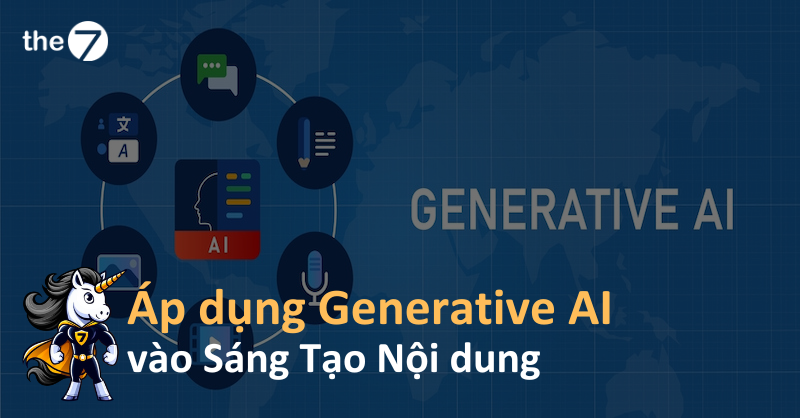
Applying Generative AI to Content Creation
Content creation has moved to center stage. Whether it’s a blog post, a marketing campaign, or a social media update, businesses and individuals are constantly competing to produce fresh content...
Big Data in Digital Marketing
Relying on guesswork and gut instinct to make business decisions is quickly becoming obsolete. With the rise of artificial intelligence (AI), businesses are shifting toward a data-driven approach. This is...