


How to Create Demand in B2B Marketing
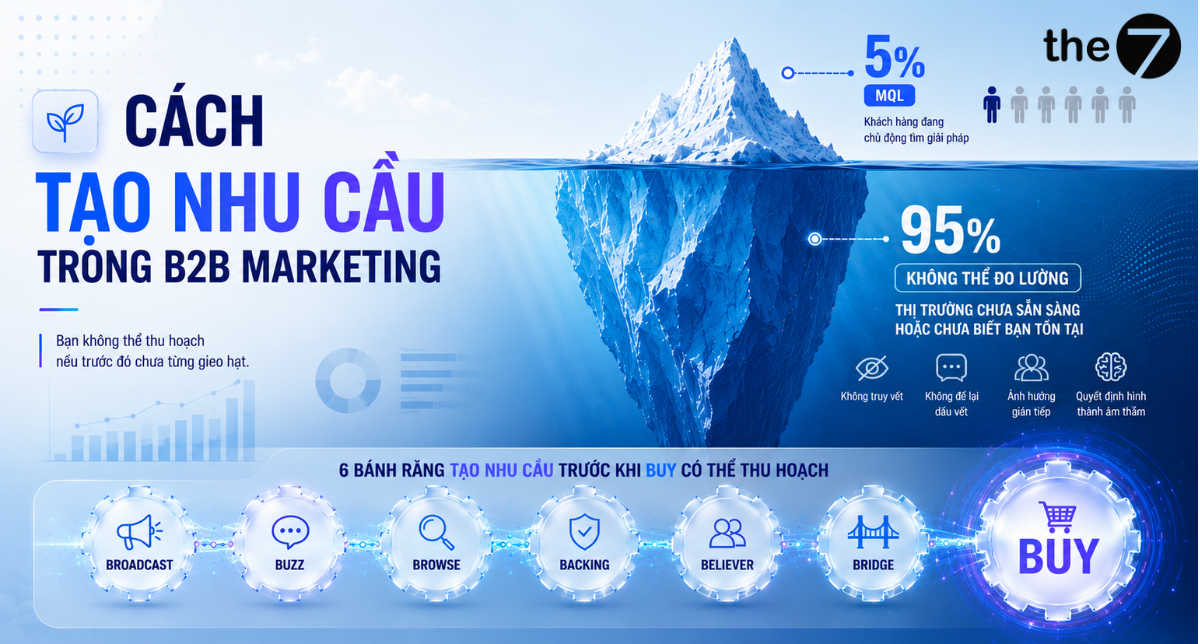
Demand generation is the sum of marketing activities that build a position in the mind of the entire market, including both people who have never heard of you and people who are already searching for a solution. It isn’t a single tactic. It’s the old name for six of the seven gears in the 7B framework running together. And its foundational principle fits in one sentence: You cannot harvest through sales if you never planted a seed in the customer’s mind beforehand.
I’ll say outright what most B2B marketers in Vietnam still haven’t dared to say: the MQL is dead, and the funnel you’ve been drawing on every report since 2010 stopped working long ago. I’m not saying this for attention. I’m saying it after sitting in enough marketing rooms, staring at enough dashboards full of MQLs while sales opportunities remained nonexistent, to know for certain that the problem isn’t execution. The problem is the model itself.
And here’s the irony I keep seeing repeat itself. Company after company renames its department from Lead Gen to Demand Gen. They hang a new sign, change their job titles on LinkedIn. But every Monday morning, they still meet to review MQL counts. They still optimize conversion forms. They still measure success by the number of leads captured. They change the shell without changing the engine.
I’m not writing this to explain demand generation as a technique. I’m writing to show you what demand generation actually is when viewed through the 7B framework: it’s the old name for a system that most marketers only ever see one piece of. Before we go further, let’s get the definition straight.
Demand generation is the sum of marketing activities that create awareness, interest, and purchase intent across the entire target market. It includes both people who don’t yet know you exist and people who are actively evaluating solutions. It isn’t just about capturing people who are already ready to buy. It’s planting seeds for a harvest three years from now. That’s why it’s fundamentally different from lead capture, and why misunderstanding it is so costly.
Why Are Most Businesses Optimizing for the Wrong Thing?
Before the internet, B2B marketing was mostly direct mail, trade shows, and ads in industry magazines. You mailed catalogues, built a booth at an exhibition, placed an article in a trade publication, then waited for the phone to ring.
In the late 1990s, Eloqua, Pardot, and Marketo emerged. They carried an appealing promise: you could track every lead, automate nurturing through email, and precisely measure conversion at every step. For the first time, B2B marketing could be measured like a machine. And that’s how the MQL was born.
MQL, short for Marketing Qualified Lead, became the currency of B2B marketing. Everything got reduced to MQLs. You wrote blog posts to collect MQLs. You built whitepapers to trade for MQLs. You ran ads to buy MQLs. Success was measured by how many MQLs got handed to sales each month. By around 2010, HubSpot turned this model into a neat machine. Content plus SEO plus Email plus Marketing Automation equals Inbound Marketing. The formula was simple: you create content, Google indexes it, people find it, they fill out a form to download it, they become an MQL. The math was equally neat: MQLs times conversion rate times deal value equals forecasted revenue. An entire generation of B2B CMOs was taught this was gospel.
But there was a problem. Most people who filled out the form weren’t buyers. They were students writing a thesis. They were competitors researching the market. They were new hires teaching themselves the field. And even when they were real buyers, most were just starting to look. They weren’t ready to buy. They wouldn’t buy for the next six months, twelve months, sometimes eighteen months.
And yet the entire machine was optimized to capture them and hand them straight to sales. Sales called, they didn’t pick up. Sales emailed, they didn’t reply. Sales marked the lead as unresponsive and blamed marketing for handing over junk leads. This is what I call the MQL factory. A machine that manufactures volume without producing quality, measuring what’s easy to measure instead of what matters. And when I say the MQL is dead, this is what I mean: the MQL number itself doesn’t tell you whether real demand exists.
When I dug into the data behind real deals, I found something more important than the MQL count. Most of a B2B buyer’s touchpoints are invisible to any tracking system. Buyers read blog posts without leaving a trace. They listen to podcasts while driving. They ask colleagues in private Slack groups. They watch YouTube videos without clicking any link. They browse discussions on Reddit. They ask ChatGPT. These are untrackable interactions that the industry calls dark social, and they account for most of a B2B buyer’s research behavior.
Once you realize most buyer behavior is invisible, the entire MQL model starts to wobble. You’re optimizing for the small visible slice while ignoring the large portion where the actual purchase decision forms. This is the root of why most businesses are optimizing for the wrong thing. They pour money into capture, when capture only reaches the 5% of the market that’s ready to buy at any given moment, according to 2021 research from the Ehrenberg-Bass Institute and the LinkedIn B2B Institute. For the remaining 95%, they do nothing at all. And you cannot capture what you never created.
How Is Demand Generation Different From Lead Capture?
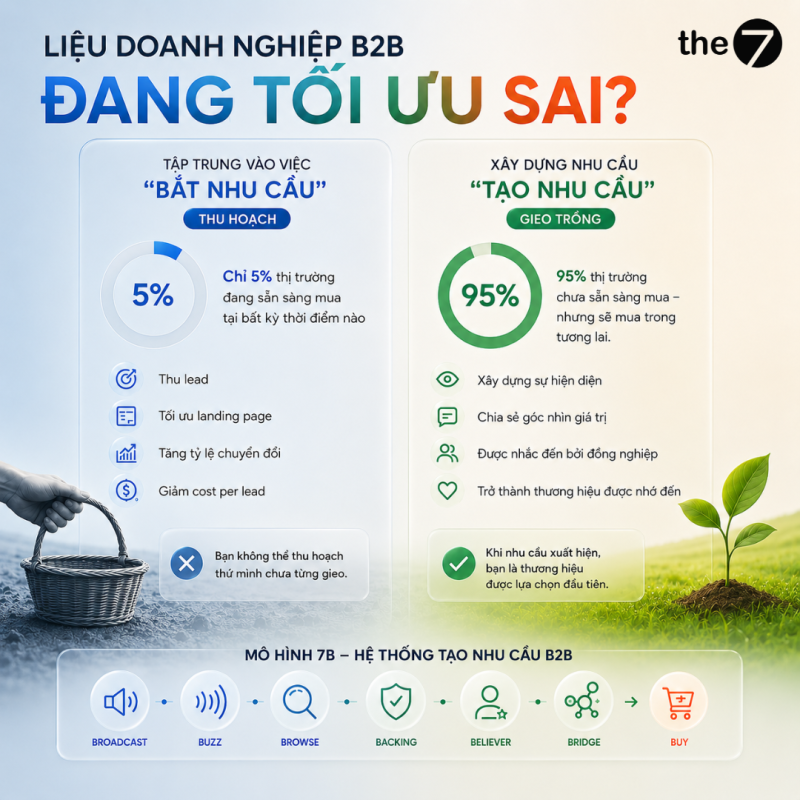
Picture yourself as a farmer with two jobs. One is planting. The other is harvesting.
Lead capture is harvesting. You go out to the field, pick the ripe fruit, and bring it home. You measure success by how much fruit you pick each day. You optimize your picking tools, calculate the best time to harvest. Demand generation is planting. You choose the seed, till the soil, sow, water, fertilize, then wait. You can’t pick fruit right after sowing. But if you don’t sow today, you’ll have nothing to harvest next year.
Most B2B companies spend 80% of their time harvesting and 20% planting. They pour money into Google Ads to capture people already searching for a solution. They optimize landing pages to raise conversion rates. They run email automation to nurture people who filled out a form. But they do nothing for the 95% of the market that isn’t ready to buy. They don’t build a position in anyone’s mind. They don’t create content people want to read even when they have no need yet. They don’t show up on the channels where buyers spend time when they’re not in a buying cycle.
The result is that when that 95% shifts into buying mode, they don’t think of you. They think of the competitor who has been in their line of sight for the past eighteen months, through podcasts, LinkedIn, research reports, industry conferences. You’re not on the shortlist, not because your product is worse, but because you never existed in their memory. Once again, you cannot capture what you never created.
Demand generation doesn’t mean you stop harvesting. Both are necessary. But the weighting has to shift. Instead of 80% harvesting and 20% planting, you need 70 to 80% planting and 20 to 30% harvesting. This isn’t an arbitrary ratio. It reflects the reality that 95% of your market is out-of-market at any given moment.
The next question is what planting actually consists of. And this is where most articles on demand generation stop, at a to-do list. I want to go one step further. Because the six activities below aren’t a disconnected checklist. They’re the first six gears of a machine that has a name.
Six Ways to Actually Create Demand, and Their Real Names
The first way is publishing content consistently. This is the system’s heartbeat. Not blogging whenever you have spare time, but publishing on a clockwork schedule, week after week. A LinkedIn post from the CEO every week. A podcast episode every two weeks. A newsletter every Wednesday morning. A YouTube video every month. The key principle is that consistency matters more than intensity. Three years of steady publishing outperforms three months of a big splash followed by silence. It’s not about what you say in any single post. It’s that after a hundred posts, the market starts to think these people understand our problem. John Deere has done this since 1895 with The Furrow magazine. They don’t sell tractors, they tell stories about farming. 130 years later, The Furrow is still being published, and John Deere remains the first name that comes to a farmer’s mind when it’s time to buy equipment.
This activity has a name in the 7B framework. It’s Broadcast.
The second way is generating third-party buzz. This is when you get the CEO and founders onto industry podcasts, contribute articles to trade publications, and speak on conference stages. Why does this matter. Because people trust peers and experts more than they trust you. An endorsement from a credible industry voice carries far more weight than an ad from you. Sany Heavy Industry understands this. When they wanted to convince construction contractors in Brazil that Chinese equipment wasn’t cheap junk, they didn’t run ads. They partnered with Bauma, the world’s largest construction equipment trade show, starting in 2007. They sponsored it, their CEO spoke, they invited major contractors to tour their factory. They let others talk about them instead of talking about themselves.
This activity also has a name. It’s Buzz.
The third way is building search infrastructure. When a buyer shifts from out-of-market to in-market, the first thing they do is search. They go to Google, ask ChatGPT, check YouTube. You need to be present everywhere they look. This is more than traditional SEO. It’s building topic clusters so Google recognizes you as an expert in a field, optimizing content to get cited by AI chat when users ask about solutions in your industry, and having how-to videos on YouTube so that when an engineer searches for how to maintain a CNC machine, your video shows up. Caterpillar dominates YouTube for heavy equipment maintenance queries, not because they run ads, but because they’ve produced hundreds of instructional videos over the years. When an engineer needs to learn how to repair an excavator, Caterpillar is the one teaching them.
This activity is Browse.
The fourth way is showing up in communities and turning existing customers into advocates. B2B buyers don’t just sit on Google. They’re in Slack groups, on Reddit, in LinkedIn communities, at industry meetups. You need to be there, not to pitch, but to listen, answer, and share. Every helpful answer is a seed. It might sprout two years later when the reader enters a buying cycle and remembers a company that helped them solve this exact problem. Going deeper, satisfied existing customers are the most trustworthy source of buzz there is. Salesforce built an entire Trailblazer community with millions of members. They don’t sell inside it. They created a space for users to help each other. That community became Salesforce’s strongest growth engine.
This activity touches two gears: Believer, when you nurture existing customers, and Bridge, when you turn them into a network that brings in new customers.
The fifth way is accumulating proof. When a company is about to sign a multimillion-dollar deal, they need more than promises. They need evidence: case studies from companies in the same industry, certifications, real deployment data, analyst recognition, reference customers, industry press coverage. None of this is built in a week. It accumulates over years. DHL has turned this into an art form. Since 2013, they’ve published the Logistics Trend Radar, a 50-to-100-page report analyzing more than 30 supply chain trends, free, no gate. The report is read and cited by McKinsey, Bain, Gartner, and IDC, and taught in MBA classrooms. When a corporation opens an RFP for 3PL services, DHL is on the shortlist by default, without a single sales call.
This activity is Backing, the fuel layer that powers every other gear.
Now stop and look back at the five ways just covered. Publishing content is Broadcast. Generating buzz is Buzz. Search infrastructure is Browse. Community and existing customers are Believer and Bridge. Proof is Backing. Six names. Six interlocking gears. What the whole industry calls demand generation, when you look closely, is six of the seven gears in the 7B framework turning together. (See more on the 7B gear model.)
What about the seventh gear. It’s the sixth way, and it doesn’t belong to demand generation.
The sixth way is building conversion infrastructure for people who are already ready. A demo request page, a trial sign-up page, a contact form. All still necessary. But this is the final destination of a long journey, not something you shove in a buyer’s face on the first encounter. Think of it like a storefront. You don’t stand at the door shouting at passersby to come buy. You arrange the store beautifully, put your best products in the window, have staff ready to serve when customers walk in. But you don’t force them inside.
This activity is Buy. And this is the crux of the whole piece: Buy is the harvesting gear. The other five gears are planting. You cannot capture what you never created, which means Buy cannot turn unless the other six gears have been turning long enough.
Where Does the Demand Gen / Demand Capture Split Get It Right, and What Does It Miss?
Splitting marketing into two buckets, demand generation and demand capture, is a genuine step forward from MQL-factory thinking. It forces marketers to admit that most buying behavior happens in an unmeasurable zone, and it pulls investment weight away from harvesting toward planting. I agree with most of that spirit. That’s why I say the MQL is dead.
But that split stops at two buckets. Demand generation and demand capture. Two bags. Enough to fix the thinking for a self-serve SaaS company with a short sales cycle and a single decision-maker. Not enough for a heavy equipment manufacturer selling to a thirteen-person buying committee over an eighteen-month cycle. I work with the second type of business far more than the first, and I see clearly where these two bags fall short.
That split misses three things. It doesn’t separate Believer into its own function, so it doesn’t tell you what to do with customers after they sign. It folds Backing into general content, so it doesn’t emphasize that proof is a system that has to be built separately. And it has no Bridge, so it overlooks that existing customers can become a channel for generating new ones. Two bags give you a picture that’s correct but crude. B2B reality needs seven gears.
This isn’t a criticism. It’s an extension. The demand generation / demand capture split is a correct but incomplete version. The 7B framework is a more complete version of the same idea, and it’s what I built to use on exactly the complex deals that two bags can’t describe.
Why Is 7B a More Complete Version of Demand Generation?
When you call everything demand generation, you have one big bag holding five or six different activities with no way to tell which one is weak. Your marketing misses its target this quarter, and you don’t know whether it’s because Broadcast has gone silent, Backing is thin, or Bridge never existed at all. The demand generation bag is too big to diagnose.
The 7B framework breaks that bag into seven named gears, each with its own function, its own metric, and its own trap. When sales opportunities dry up, you don’t just say marketing is weak. You ask which gear is jammed. Is Broadcast running consistently. Is Buzz getting mentioned. Does Backing have enough case studies for the industry the deal is in. This is the difference between a concept and a diagnostic system.
And the 7B framework answers a question the demand generation / demand capture split can’t: if demand capture is only 20 to 30% of the effort, what exactly makes up the remaining 70 to 80%, and how do you know which part is broken. The answer is the first six gears. Demand generation is the name that describes the outcome. 7B is the blueprint of the machine that produces that outcome.
Four Mistakes That Keep the Machine From Ever Turning
The first mistake is renaming without changing the system. You call yourselves the Demand Gen Team, but Monday morning you’re still reviewing MQL counts, still measuring cost-per-lead, still optimizing forms. You changed the label without changing the machine inside. Real demand generation requires changing how you measure, how you allocate budget, and how you define success.
The second mistake is expecting short-term results. You won’t see results in the first quarter. You might not see them clearly in the first year. But if you stick with it, the curve steepens in year two and three. A CEO sees the marketing budget not generating revenue in quarter one, panics, and cuts it. This is the number one reason demand generation efforts fail. Not because the strategy was wrong, but because there wasn’t enough patience. You can’t make a tree grow faster by shouting at it.
The third mistake is focusing on a single channel. Many people think demand generation equals organic LinkedIn. It doesn’t. Real demand generation is the resonance of multiple channels reinforcing one message. LinkedIn plus podcast plus YouTube plus community plus content-distribution ads plus speaking engagements. A single channel never creates that surround-sound effect. In 7B terms, you can’t turn just one gear and expect the whole system to move.
The fourth mistake is outsourcing everything, leaving the founder’s voice absent. You can hire someone to write content. You can hire an agency to run ads. But you can’t outsource your own voice. The strongest B2B brands all have a CEO who personally publishes, personally appears on podcasts, personally stands on stage. B2B buyers buy from people, not from logos.
Three Machines Viewed Through the Seven-Gear Lens
I’ve cited Sany, DHL, and Salesforce throughout this piece. Now let’s go back and dissect each one through the 7B lens, and notice this: no company turned all seven gears evenly from the start. Each company started strong on one or two gears, then expanded from there.
Sany Heavy Industry is strongest at Broadcast and Bridge. They’re the world’s third-largest construction equipment manufacturer, but 35 years ago they were just a small machining workshop in Hunan. They don’t compete with Caterpillar on price. They compete on presence. Sany Heavy Industry News magazine, published since 2003, is sent free to more than 50,000 contractors and distributors worldwide, sharing industry knowledge rather than pitching products. That’s Broadcast. A network of more than 400 distributors worldwide, each one a satellite generating demand in its local market. That’s Bridge. The result is exports now account for 30% of revenue, up from 5% in 2008, with a top-3 market share in Brazil, Indonesia, and Russia. They won through two decades of patient presence, not advertising.
DHL is strongest at Broadcast and Backing. Logistics is a commodity industry, where pricing and transport capacity are nearly identical across providers. DHL chose to become a research institute instead. The Logistics Trend Radar, published since 2013, runs 50 to 100 pages, analyzing more than 30 supply chain trends, free, no email required. Publishing consistently with no sales pitch attached is Broadcast. Having the report cited by McKinsey, Bain, Gartner, and IDC, and taught in MBA classrooms, is Backing, a layer of proof that creates a halo of authority no one can copy in the short term. When a corporation opens an RFP for 3PL services, DHL is on the shortlist before the RFP is even written. This is demand generation at its highest level: you don’t chase demand, you create the context that makes demand come find you.
Salesforce is strongest at Believer and Bridge. They were the first SaaS company to truly scale globally, competing against Oracle, SAP, and Microsoft. They didn’t try to beat these rivals with advertising. They built a community. Dreamforce, their annual conference, feels more like a festival than a tech conference, drawing hundreds of thousands of attendees each year who come to feel part of a community. That’s Believer. Trailhead, their free learning platform, has issued more than 5 million certifications, teaching people to use the CRM without requiring payment or a trial sign-up. When a company needs to buy a CRM, its employees already know how to use Salesforce, already hold Salesforce certifications, are already part of the Salesforce community. That’s Bridge. Choosing Salesforce is no longer a purchase decision. It’s the natural choice. This is demand generation at its peak: you don’t need to convince people to buy, you make not buying feel like the strange thing to do.
Three companies, three industries, three different starting points. But the same underlying principle. They created demand first, through different gears, before harvesting. None of them started by optimizing a demo form.
How Do You Measure Success Without MQLs?
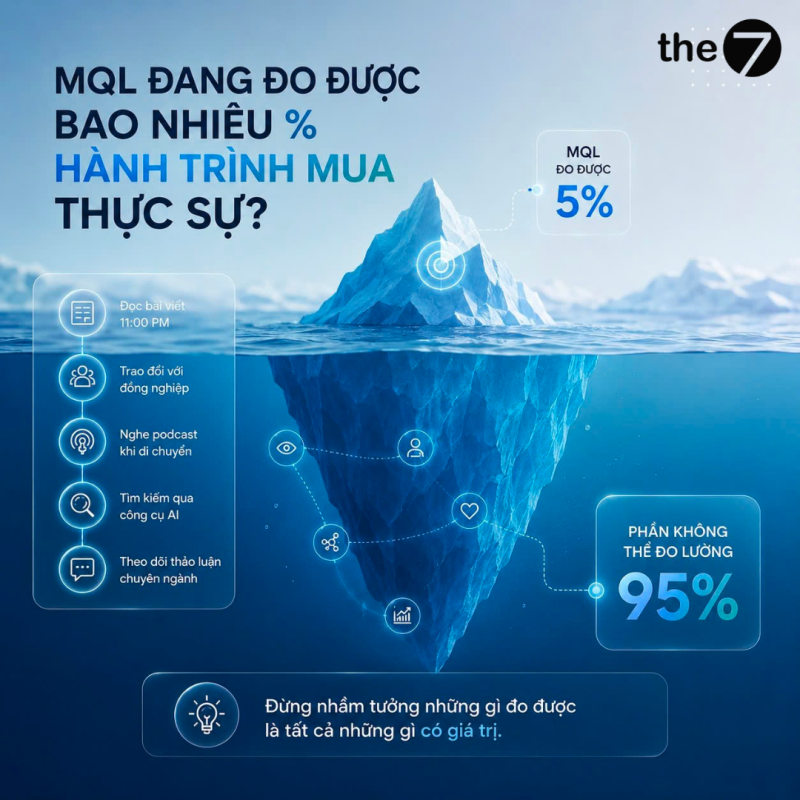
If you’re used to reporting MQL counts every month, giving it up feels like breaking a habit. You feel empty, unsure what to say in the Monday standup. But the MQL is a vanity number. It doesn’t forecast revenue, doesn’t reflect the real health of your marketing. It only tells you how many people filled out a form, most of whom aren’t buyers.
So what should you measure. First, brand metrics. Branded search volume, meaning how many people type your company name directly into Google each month, and whether that number is growing. Direct traffic. Share of voice, meaning what percentage of all online discussion about your industry mentions your name. The growth rate of the CEO’s and company’s LinkedIn following. Podcast and newsletter subscriber counts. These metrics move slowly, you won’t see them shift in a week, but over twelve months they tell you whether you’re building a position in the market’s mind.
Second, sales opportunities. Not the number of leads, but the number of real opportunities sales actually accepts, their value, how fast they move through the stages, and ultimately, revenue.
Third, and most important, ask customers directly. When they book a demo, ask how they heard about you. When a deal closes, ask what influenced their decision the most. The answers usually have nothing to do with anything on your dashboard. I heard a colleague at another company mention you. I’ve been reading your CEO’s blog for a year. I saw you mentioned in a Gartner report. This is the real signal, and it shows that the marketing metric you should be reporting is sales opportunities plus self-reported attribution, not form counts.
Conclusion: Demand Generation Is an Outcome, Not a Tactic
Back to where we started. Hundreds of companies rename Lead Gen to Demand Gen while the engine inside remains an MQL factory. Now you can see why changing the sign isn’t enough. Demand generation isn’t a tactic you bolt on. It’s the outcome that appears when the first six gears, Broadcast, Buzz, Browse, Believer, Backing, Bridge, turn long enough for the seventh gear, Buy, to start turning on its own.
That’s why you cannot capture what you never created. Buy has nothing to harvest if the other six gears never planted anything. A company that pours all its resources into Buy is like a farmer heading to the field with a harvesting basket who never sowed a single seed. The basket comes back empty, not because the basket is broken, but because there was nothing to pick.
If you want to go deeper on each gear and how to assemble them into a machine for your own industry, read Article 25 on the 7B gear model, where I dissect all seven gears. To understand the principle that 95% of the market isn’t ready to buy, read Article 20 on the 95/5 rule. To understand demand generation’s counterpart gear, read Article 5 on demand capture.

Nguyễn Đình
Bảo




As CEO of The7, I am committed to sharing practical, useful knowledge with every reader. Every article on The7 is based on my 7 years of hands-on experience in marketing — Facebook advertising, LinkedIn advertising, Google advertising, and marketing strategy. I hope you take away plenty of insight from these posts and apply it successfully in practice.
Related Articles
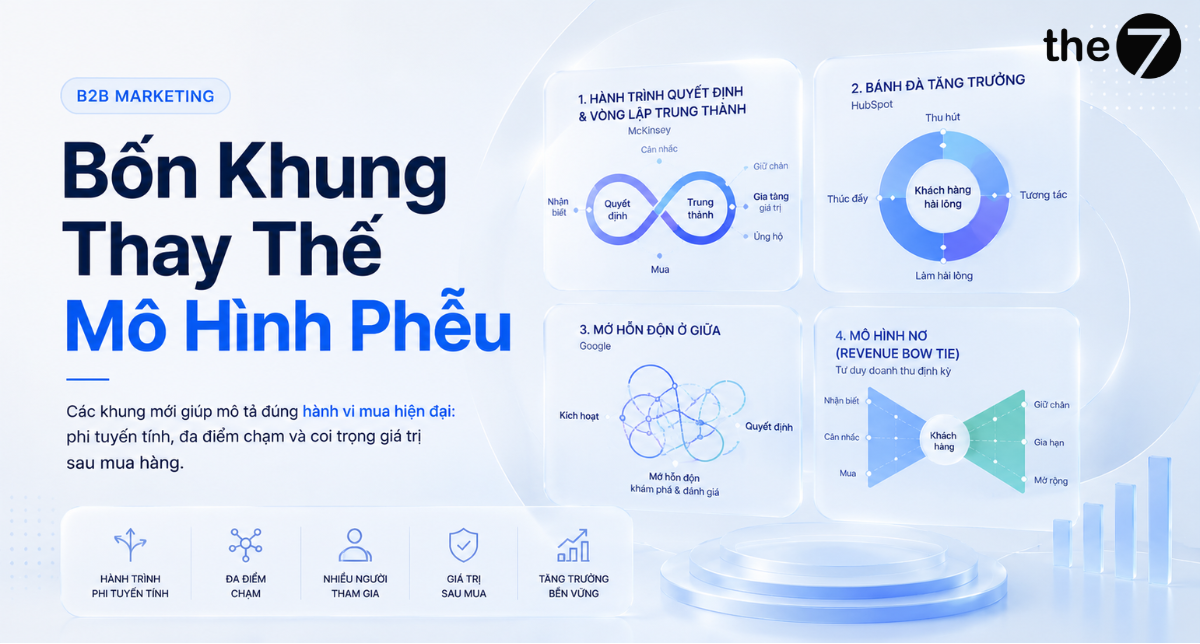
Four Frameworks That Replace the Funnel Model
Summary: As the funnel model increasingly fails to capture how modern buyers actually behave, a number of new frameworks have emerged to replace or repair it: McKinsey’s decision journey and...
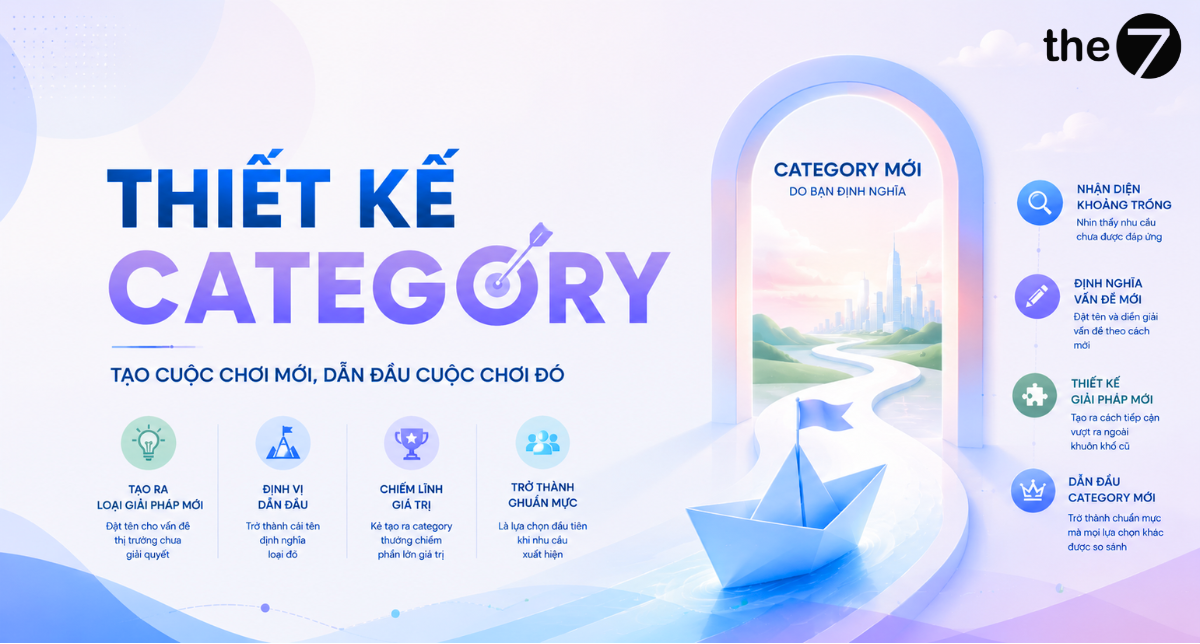
What Is Category Design?
Summary: Category design is the act of creating an entirely new type of solution in the market’s mind, instead of competing within an existing category, and then becoming the name...
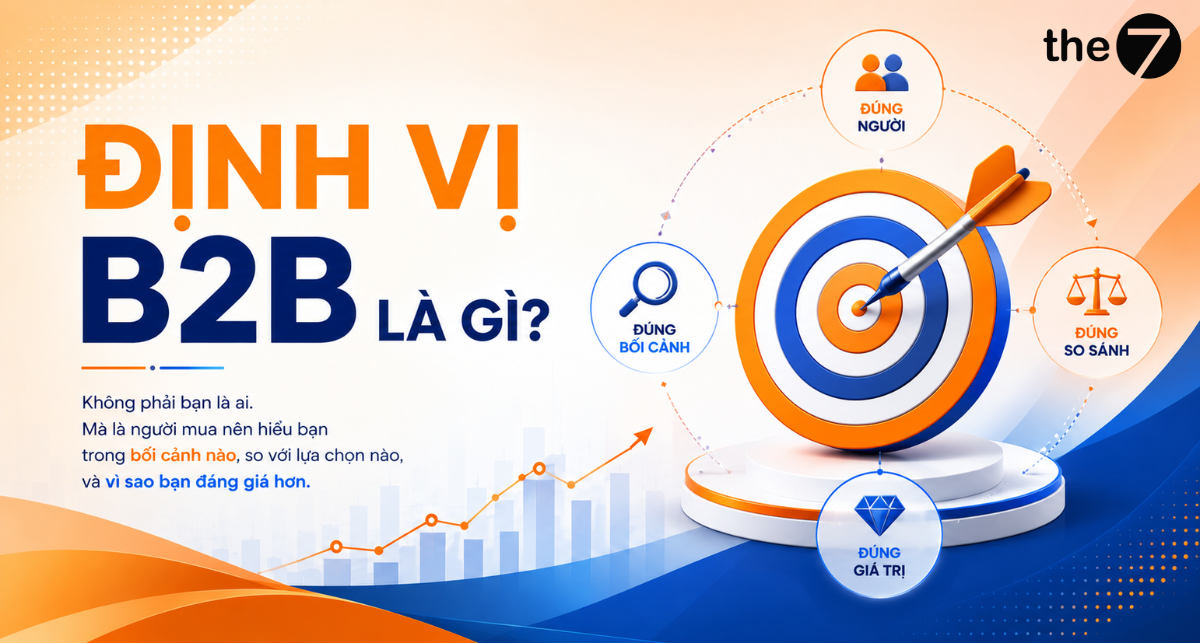
What Is B2B Positioning?
Summary: B2B positioning is the act of choosing the context you place your product into – the frame of reference that makes its value obvious to the buyer. Positioning isn’t...
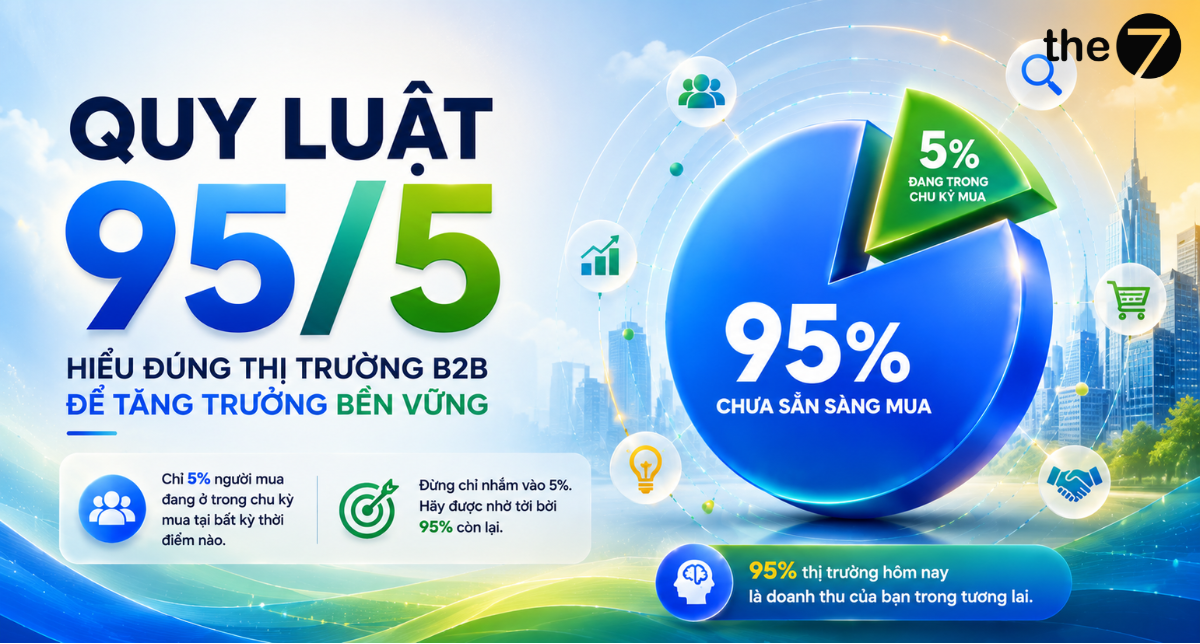
What Is the 95/5 Rule?
Summary: The 95/5 rule states that at any given moment, only about 5% of B2B buyers are actually in-market, actively in a buying cycle, while roughly 95% are not yet...
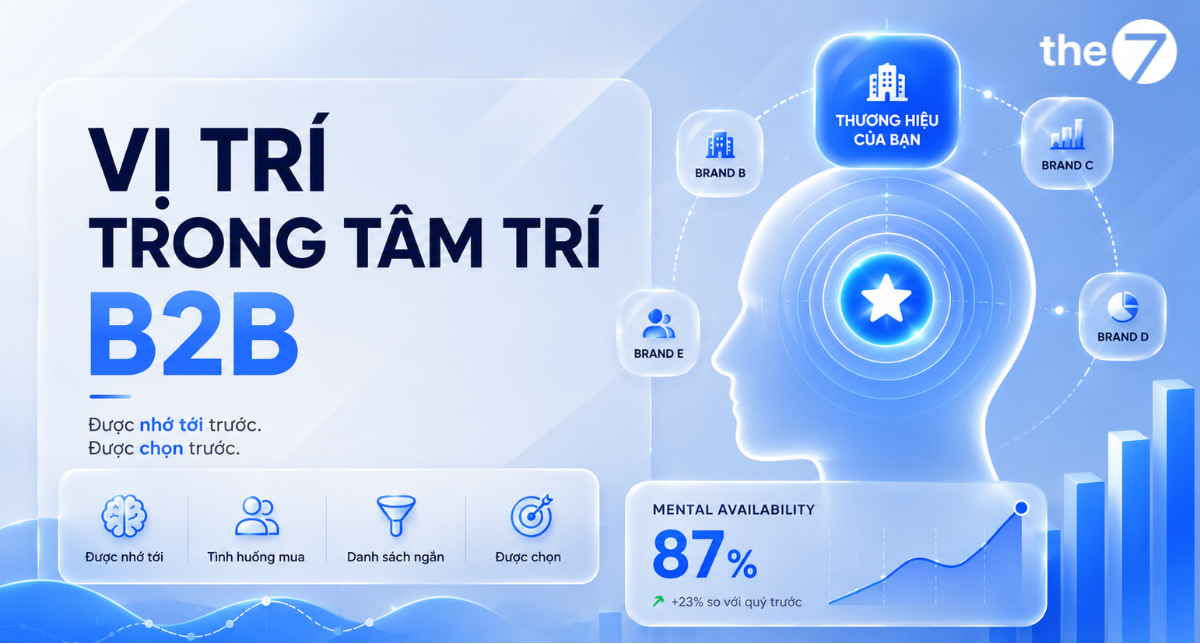
What Is Mental Availability in B2B?
Summary: Mental availability is how easily a brand comes to mind in a buying situation. It isn’t about having the sharpest argument, the slickest pitch, or the most convincing feature...
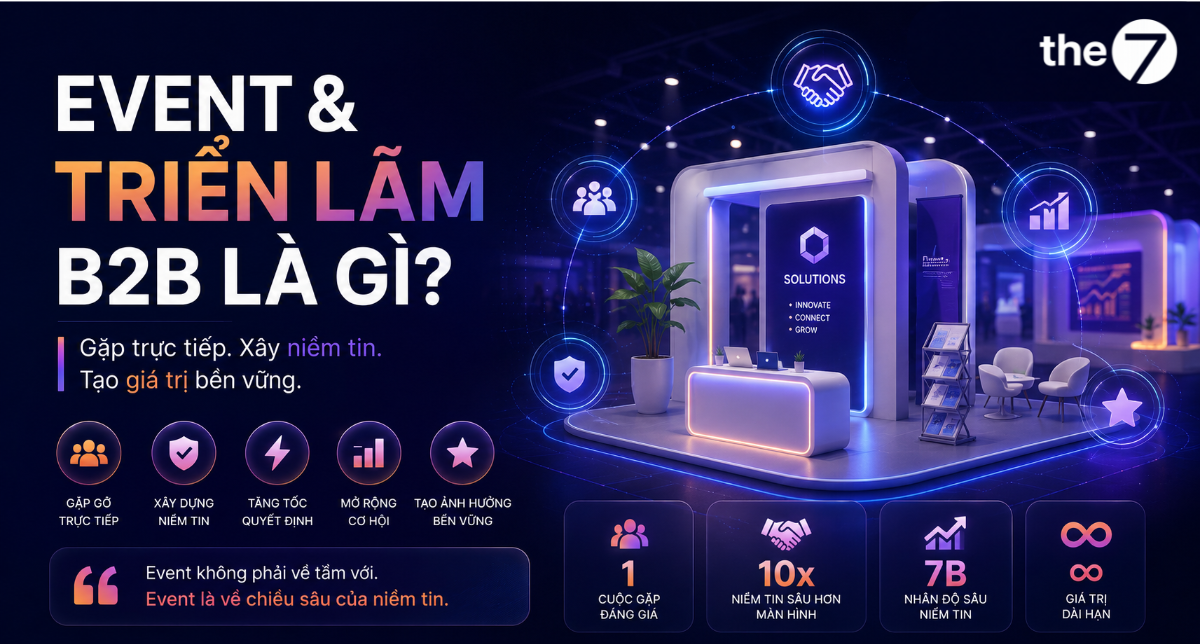
What Are B2B Events and Trade Shows?
Summary: B2B events and trade shows are in-person gatherings such as conferences, industry trade shows, workshops, and private meetings, where a business meets buyers, customers, partners, and the industry community...