


Decoy and Bargain Marketing Strategies: How Brands Sway Consumer Psychology
In today’s fiercely competitive market, brands are always looking for new ways to attract customers and grow sales. Two popular marketing strategies are creating an appealing decoy product and setting a price gap that feels reasonable. Are these “traps” that brands set to make customers “addicted”? Let’s find out!
The Decoy Product: A “Tasty Bait” That Hits the Bargain-Hunting Mindset
A Marketing Strategy to Boost Sales Through E-Commerce Platforms
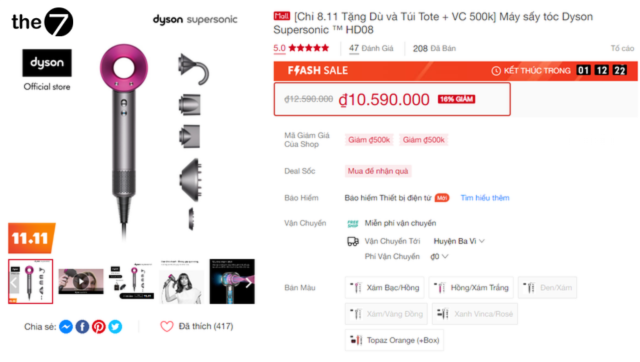
Online shopping in recent years has been livelier than ever, with countless “legendary” sale days like 9/9, 10/10, 11/11,… and a steady stream of eye-popping promotions every month, such as flash sales; vouchers for 10%, 20% or 50% off; or free shipping, all designed to attract millions of shopping enthusiasts. Is this truly a chance for consumers to “snag a bargain,” or just a marketing strategy that e-commerce platforms roll out to manipulate customer psychology?
The “optical illusion” marketing strategy: Inflating prices to offer deep discounts
A common marketing strategy among sellers is to “trick the eye” of customers by raising a product’s original price above its actual price before running a promotion.
For example, a product with an original price of 400,000 VND is pushed up to 450,000 VND and then marked down to 390,000 VND on the sale day. Seeing a discount of 60,000 VND, customers are easily drawn in and feel they have bought the product at a bargain price.
“Huge” promotions on special occasions
Harness the power of marketing and advertising to deliver compelling messages. This way, we can spark consumers’ curiosity about upcoming offers. Any message designed in a creative and distinctive way can make them eager and excited for the fresh, enjoyable experiences ahead.
When time becomes a “weapon” that triggers buying behavior
“Golden hour,” “Flash Sale,” “24-hour Shock Deal”… these phrases have become familiar to online shopping enthusiasts. E-commerce platforms keep devising sophisticated marketing strategies by setting up “special days” or “golden moments” to attract customers and increase revenue. Setting these specific time windows not only creates excitement but also makes shopping feel more urgent than ever, leaving customers no room to hesitate and forcing them to act immediately so they don’t miss out.
Triggering the fear of missing out: Using social influence to attract customers
The marketing strategies of e-commerce platforms don’t simply push people to shop; they also create competitive pressure among buyers. By asserting that many other people are shopping during special occasions, platforms trigger customers’ fear of missing out. The feeling that you have to join in so you aren’t left behind becomes powerful, making every buyer feel like they are in a nonstop race where only acting immediately can secure the best deals and opportunities.
“Movie Theater Combos”: Worth It or Not?
The movie theater is always an ideal destination for anyone who wants to relax and enjoy great films with friends and family. But behind those fun experiences lies a hidden marketing strategy that quite a few customers fail to notice: the “combo deal” dilemma.
This “combo trap” usually includes a movie ticket, popcorn and a soft drink, at a price advertised as a “promotion” compared with buying each item separately.

In reality, however, this “promotional” price is often not as attractive as advertised. Sometimes buying each item separately can save you more, and you aren’t forced to buy things you don’t want. So before you fall for the “combo trap” marketing strategy, comparing prices and thinking it through carefully can help you save money smartly.
The Attractive Product Trick at Coffee Shop Chains
In business, attracting customers and increasing revenue are always the top goals of any company. One effective marketing strategy used by many brands is to use a “decoy” to encourage customers to buy. This strategy involves using a low-value product or service to steer customers toward another, higher-value product or service.
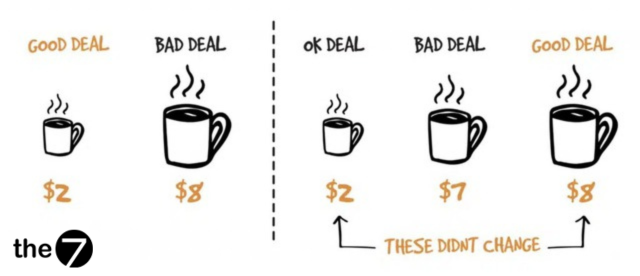
For example, coffee shop chains often use a size M drink as the “decoy” to nudge customers toward size L. Pricing size M lower than size L makes size L feel more “reasonable,” so customers easily decide to buy size L, bringing higher profits to the business.
Winning Customers With the Left-Digit Effect
Human psychology is always drawn to things that feel new and unique. Understanding this, sellers have cleverly adopted a marketing tool called the “Left-Digit Effect” in pricing, creating a kind of “magic” that attracts customers and increases revenue.
According to psychological research, consumers tend to focus on the first digits in the price of a product or service. That’s why using non-round numbers like 299K, 399K, 249K… instead of 300, 400 or 250 makes a better impression and makes customers feel the product is cheaper than its real value.
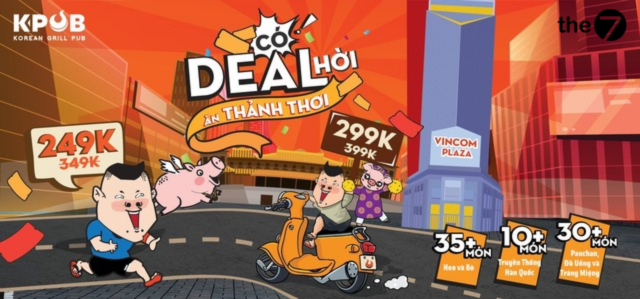
That said, not every marketing strategy delivers strong results. One popular marketing strategy used by many brands is odd pricing to attract customers. Although it doesn’t generate profit directly, it can boost revenue and build customer loyalty.
When weighing two similar products priced at 399K and 400K, consumers usually prefer the one with the smaller first digit. This strategy can support a business’s overall pricing strategy and benefit both sides, the business and the customer.
Exploring the Decoy Effect in Business Strategy
The “decoy trap,” also known as the “Decoy Effect,” is a sophisticated marketing strategy that many brands have applied successfully across every industry. This strategy builds on consumers’ shopping psychology to attract customers and increase sales.
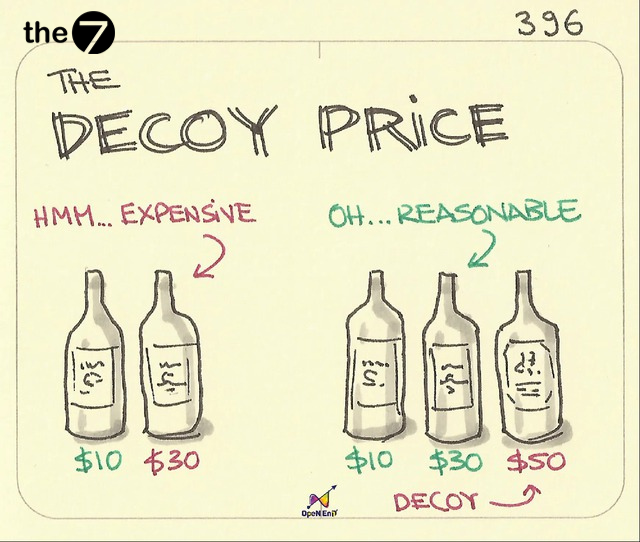
The “decoy trap” marketing strategy works like this: a low-priced product or service (the “decoy”) is used as a comparison point for a higher-priced product or service (the “target”). This comparison makes customers feel the “target” product offers more value than it really does, which encourages them to buy the “target” product at the higher price.
A Closer Look at the Downsides of the Decoy Effect
While the decoy effect benefits businesses, it also hides some dangerous “traps” if it isn’t used carefully. Applying this marketing strategy requires businesses to have a deep understanding of customer psychology and to think carefully before making decisions.

Diverse Customer Psychology
Although the decoy effect brings many benefits to businesses, it also poses challenges when it comes to winning over a diverse range of customer mindsets. Every individual has distinct psychological traits, which leads to different reactions to this marketing strategy. Businesses should therefore proactively run tests and keep adjusting their strategy to better understand their customers and how they actually respond.
Customer Dissatisfaction
In practice, overusing the decoy effect can create misunderstandings about product quality relative to the price customers paid. At the same time, being overwhelmed by too many options can leave them disoriented and confused, so they either don’t make a purchase or feel dissatisfied after buying. When using the decoy effect, businesses should therefore apply it thoughtfully to make sure they create real value for customers.
Brands That Apply Decoy Marketing Strategy With Finesse
The decoy effect (Decoy Effect) is a sophisticated marketing strategy that many brands have applied successfully across every industry. This strategy builds on consumers’ shopping psychology to attract customers and increase sales. However, to use the decoy effect effectively and avoid negative consequences, brands need to follow these principles:
Clear Goals
The decoy effect is an effective marketing strategy when a brand wants to stimulate purchasing demand and increase sales. This strategy helps attract customers and pushes them to make a buying decision. The decoy effect can also be used to raise conversion rates and encourage potential customers to become real customers. It is also an effective marketing tool for introducing a new product to customers, generating interest and sparking demand.
Reasonable Pricing
For the “decoy trap” marketing strategy to work, setting a reasonable price for the decoy product is extremely important. Avoid common mistakes such as pricing too low, which can raise doubts about product quality and lower the perceived value of the main product. Likewise, pricing too high relative to real value can make customers wary, so they skip the decoy product, which hurts the decision to buy the main product. This highlights how much careful, strategic thinking goes into pricing in order to get the most out of this marketing approach.
Smart Product Selection
In the “decoy trap” marketing strategy, choosing the main product is extremely important. The main product, or “target,” is the product the brand wants to focus on selling and earn profit from. Choosing the right main product makes it stand out, drives customers’ buying decisions and increases revenue for the business.
Structuring the “Decoy” Product
To succeed with the “decoy trap,” the structure of the decoy product is key. The decoy product needs to stand out and capture attention by offering more benefits than other products in the same price segment. Pricing the decoy close to the main product lets customers compare easily and feel they can get more value for less money. However, make sure the price and value of the decoy don’t exceed those of the main product, so that customers still prefer to choose the main product.
Use 3 Options
The three-option strategy is a smart marketing technique that attracts customers and increases sales through the “decoy trap.” Offering three product choices, from the decoy to the main product and a premium product, helps customers compare easily and decide what to buy. The decoy’s price should be close to that of the most expensive product to create a sense of value. Emphasize the value and benefits of the decoy product to persuade customers. Use marketing strategies such as advertising and promotions to capture attention and strengthen customer trust.
See more: S.A.V.E Marketing: An Upgrade to the 4P and 7P Models
Conclusion
The decoy effect, a sophisticated marketing strategy, has become a “powerful weapon” in the hands of businesses looking to attract customers and increase sales. By offering an appealing “decoy” product with a reasonable price and value, a brand can skillfully “hit” customers’ shopping psychology, getting them to decide quickly and feel satisfied with the “bargain” they have “acquired.”
However, for the “decoy trap” to work, businesses need a deep understanding of customer psychology, combined with finesse in product design and marketing strategy. Overusing the “decoy” or using it without subtlety can backfire, leaving customers dissatisfied and disappointed.
By Thanh Thanh
Source: Marketing AI

Nguyễn Đình
Bảo




As CEO of The7, I am committed to sharing practical, useful knowledge with every reader. Every article on The7 is based on my 7 years of hands-on experience in marketing — Facebook advertising, LinkedIn advertising, Google advertising, and marketing strategy. I hope you take away plenty of insight from these posts and apply it successfully in practice.
Related Articles
Building a Full-Funnel Content Marketing Strategy on LinkedIn
Table of Contents Toggle Why Build Content Marketing for the Full Marketing Funnel? (Why Full-Funnel Content Marketing?)Creating Your Strategy (Creating Your Strategy)Implementing Your Content Strategy (Rolling out your content strategy)Summary...
Designing Creative Content for LinkedIn
Table of Contents Toggle Why Is Good Creative Content So Important? (Why is Good Creative Important?)Key Components of Creative Design (the core elements of creative design)Summary (summary) Why Is Good...
Building an Organic Business Presence on LinkedIn With a LinkedIn Page
Table of Contents Toggle Why Have a LinkedIn Page?Establishing Your LinkedIn PageKeeping Your LinkedIn Page ActiveThe Measure of SuccessSummary About LinkedIn Page (Summary) Why Have a LinkedIn Page? For a...
6 Best LinkedIn Marketing Strategies for B2B in 2026
Table of Contents Toggle LinkedIn 2026: Where B2B Decisions Get MadeStrategy #1 – Why Is LinkedIn the Best B2B Marketing Channel Today?1. Decision-makers are concentrated here2. Users are in work...

7 Social Media Trends for 2026: The Era of Real Value, Real Conversion, and Real People
Table of Contents Toggle Social media is entering the biggest restructuring of the decadeTrend 1: Why is buying directly in-app becoming the new standard for 2026? (On-Platform Conversion)What should businesses...

What Is TikTok Marketing? Effective TikTok Marketing Strategies
TikTok has been topping the global rankings of the most downloaded and most visited apps. That makes it a gold mine for marketers who love creativity. In this article, The7...