


What Is SEM? An Overview of Search Engine Marketing in 2024
SEM (Search Engine Marketing, or Search Marketing) is a term every professional marketer knows well. For anyone just starting out, though, SEM can still feel unfamiliar. So what is SEM? Which techniques does it include? How is it different from SEO? Let’s explore it together with The7!
What Is SEM? What Is the Main Goal of SEM?
SEM is defined as the process of earning traffic from search engines, either for free or through paid placements (advertising). SEM has 2 main pillars: SEO (Search Engine Optimization) and PSA (Paid Search Ads).
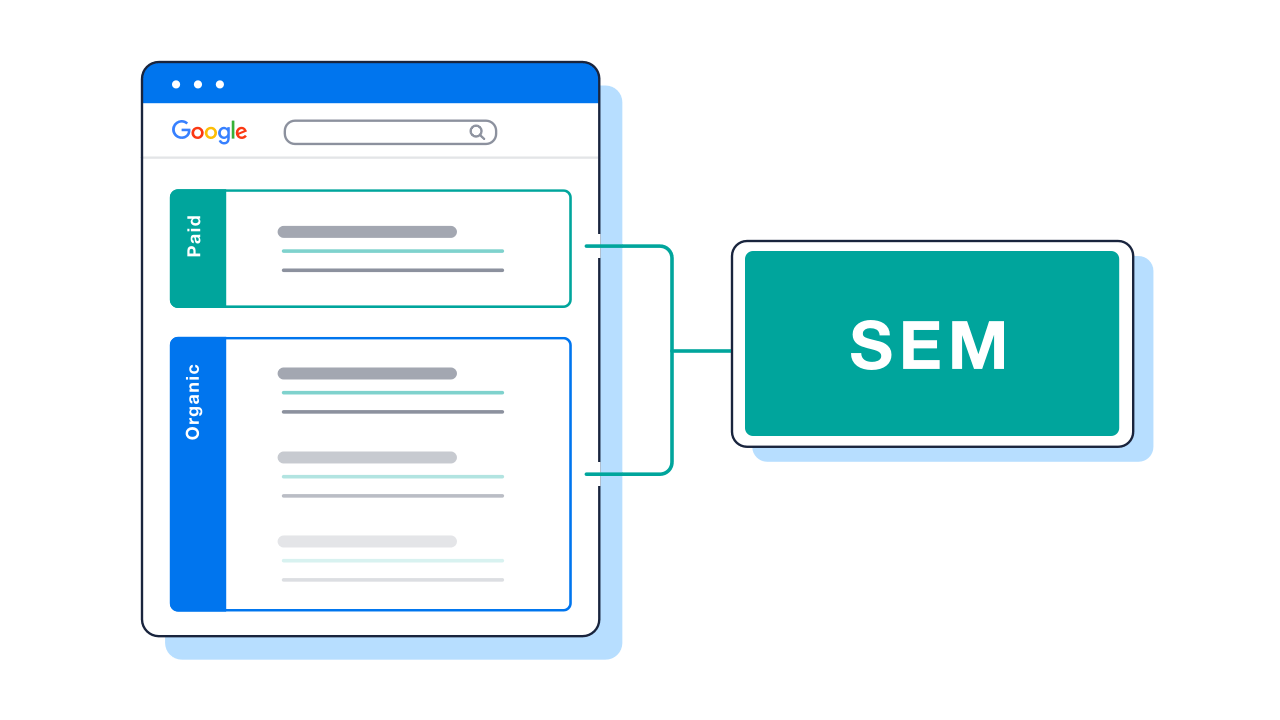
The main goal of SEM is to increase visibility on search engines by earning a higher ranking on SERPs (search engine results pages) or a top position when you place ads.
Typically, ad placements and high rankings bring in more visitors, which offers many advantages in building brand credibility and making a company’s or business’s marketing strategies more effective.
Why SEM Matters
Alongside the question of what SEM does, many people also wonder why it matters, because it largely determines the success of a website or any online business.
With the growth of technology, the Internet has become the “tool” we use to find out, learn, buy, or do just about anything. Whenever you want to look something up, you simply switch to a search engine (Google, Cốc Cốc…) and type in the keyword you need. After you hit Enter, a flood of direct answers appears within moments (including ads and informational websites).
Search engine developers are constantly working to improve the quality of the results they show, serving users websites or ads that satisfy them so they come back for more information when they need it. Of course, to do this, they have to keep developing increasingly complex algorithms that measure which website or ad deserves the top spot.
SEM is extremely important because it is the process of optimizing your company’s or business’s website or ads so they earn the right to beat competitors and take the top position. But your goal should not stop at simply appearing on search engines (Google, Cốc Cốc…). You also need to show up in one of the top 5 positions when users search for a keyword. This factor is considered vital for the company, business, or website you are building.
The Great Benefits SEM Brings to Your Business
What are the advantages and benefits of SEM within full-service marketing? Today, SEM is highly regarded for the countless benefits it brings to businesses:
Boost Brand Awareness on Search Engines
According to Google, a newly launched website that wants more traffic and a top ranking on the search results page can need up to 1 year if it relies on SEO or other free methods. Clearly, reaching the top with free tools takes a great deal of effort and time, especially in today’s fiercely competitive landscape. And your brand does not always reach the right audience.
With SEM, however, your website appears prominently on the very first page of Google search results. This lets startups capture the attention of their target customers right away. In addition, with the right supporting tools, a business can easily turn leads into revenue.
Helps Your Business Grow From the Very Start
In the early days, a business can run into many difficulties growing and positioning its brand. With SEM, however, a business can significantly cut its initial marketing investment.
SEM helps businesses achieve impressive revenue growth, sometimes even beyond expectations. After using SEM for a while, if you see revenue growing well, you can increase the number of ads displayed on Google. That in turn expands your brand’s reach.

Reach the Right Target at the Right Time Within Your Desired Timeframe
By early 2022, there were more than 4.95 billion internet users worldwide, accounting for 62.5% of the global population. Of these, over 93% start their internet experience through a search engine. Today, websites draw more traffic from search engines than from any other channel.
Most users turn to search engines to find what they care about. That is why entering the online business market is a necessary strategy for any business, especially in today’s digital age.
When your brand has broad coverage on search engines, your business’s credibility rises too. Every customer who visits your website is a “touchpoint,” a bridge that brings your business closer to your customers.
Core Customers Find Your Business Easily
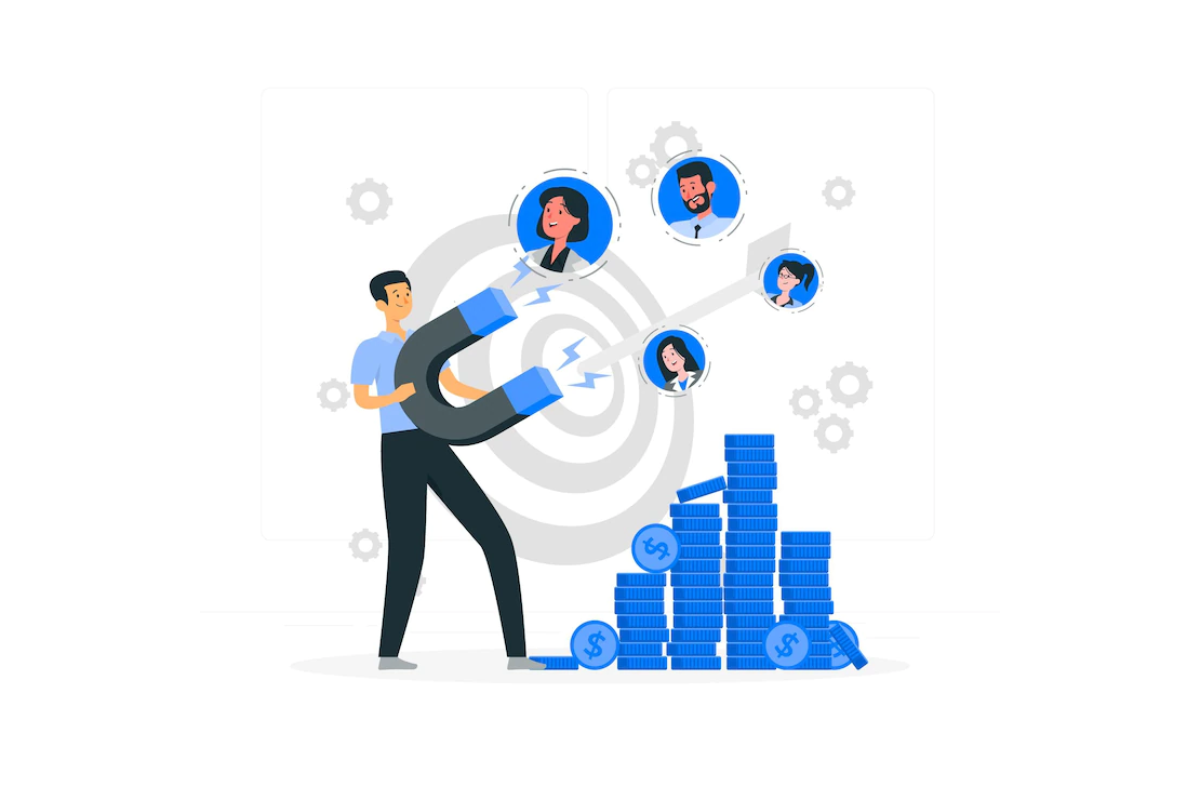
Marketing on search engine platforms lets you reach your core audience on a minimal budget. If you follow only the beaten path of traditional marketing methods, your business will have to bear marketing costs that are “unthinkably” high.
When you create banner ads on Google AdWords, you only pay when a user clicks on them. So you can publish 10 or even a hundred banners without being charged right away.
Fast Sales Growth
SEM combined with a sound communications and marketing strategy will bring your business impressive revenue. Google Ads is an excellent tool for supporting the sales-boosting strategies built on SEM. When using AdWords, however, return on investment (ROI) is an aspect you need to watch closely.
Build Your Brand at an Extremely Low Cost
Drop the idea that customers will come to you to buy. In today’s fierce competition, smart businesses proactively reach out to customers and introduce their products/services, building new audiences effectively along the way.
According to experts, it takes 7 to 13 touchpoints to convert a target audience into customers. Every time your brand appears in an email, on a website, on a search engine, or on social media, you have successfully reached your target audience once.
In practice, familiar things always attract consumers’ attention more than unfamiliar ones. When a brand appears often, customers start to feel at home with it. This is the right way for a business to build a bridge to customers and raise brand awareness.
Strengthen Your Competitive Advantage
Your competitors may hold an ideal position on Google’s search results page thanks to SEO. Don’t worry too much, though. Your business can absolutely knock them out of that spot with SEM. SEM keeps your website displayed most prominently, even overshadowing competitors in the same field.
More Affordable Than Traditional Advertising
You might ask: “Why is SEM cheaper than traditional marketing strategies?” It’s because SEM puts you in control of your strategy. If you sponsor a TV program, your business may spend billions of VND. Yet you have no way of knowing how many of the hundreds of thousands of viewers are actually the target audience your business is aiming for.
Instead of spending lots of effort advertising to a huge, scattered audience, SEM lets you easily narrow down your pool of potential customers. You can then focus your resources on campaigns that convert the target audience into customers.
If an online ad campaign’s conversion rate falls short of expectations, the business can simply take it down and adjust it. Traditional marketing channels such as TV ads, on the other hand, are arranged and scheduled with partners in advance. If you want to change anything, you must consult the partner and get their approval.

SEM Techniques
What does SEM involve? In practice, there are 2 techniques, SEO and PSA, that you can use to improve your company’s or business’s presence on search engines and win higher positions for your ads.
Search Engine Optimization (SEO)
SEO (or search engine optimization) is the process SEOers carry out to help a company’s or business’s website achieve a higher ranking on search engines for specific keywords. The principle of SEO is to build high-quality websites with good content that satisfies users’ needs.
Ten years ago, SEO was basically keyword stuffing combined with mediocre content and backlinks, but that “trick” no longer works today. SEO has become far more complex, and to do it right, SEOers must keep up with trends and algorithm updates.
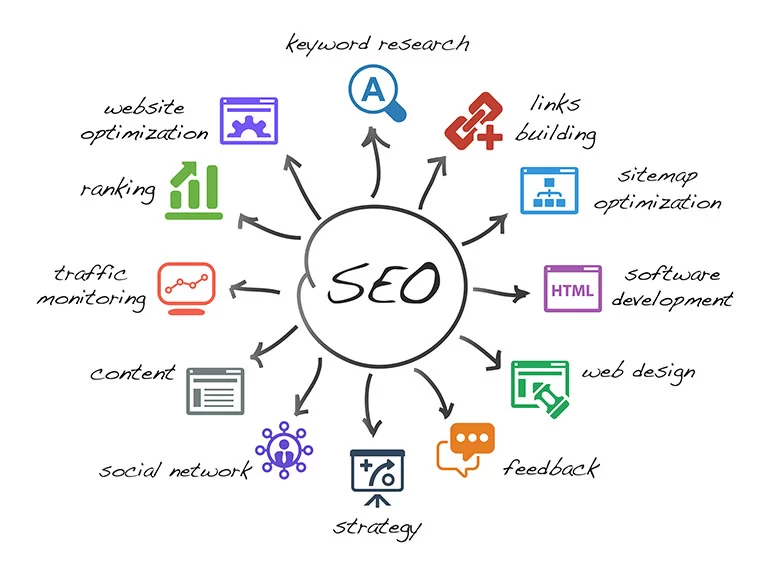
Here is the whole SEO process, laid out simply by The7:
- Technical SEO: Optimize your company’s or business’s website so it can be easily crawled and indexed, allowing search engines to read and understand it.
- On Page SEO: Optimize every web page your company or business builds and give search engines the right signals to understand both your main website and any secondary (satellite) sites.
- Content: Publish content that gives users the information they need and leaves them satisfied.
- Off-Page SEO: Promote your company’s or business’s website across the Internet, earn good-quality backlinks, and show search engine algorithms that your website deserves a top spot in the results.
- Local SEO: Optimize your website so users can search for and visit your store or company/business.
- Mobile SEO: This approach makes it easier and more convenient for users to use your website on mobile phones or tablets, even while on the move.
- Ecommerce SEO: These SEO rules generally apply only to e-commerce websites.
So why does SEO play such an important role?
Higher rankings and more traffic: If your SEM goal is to bring users to your company’s or business’s website without paying for ads, SEO is the right choice.
Statistics show that websites in the top 3 positions of the free search results receive 60% of the traffic, a figure that helps explain why SEO matters.
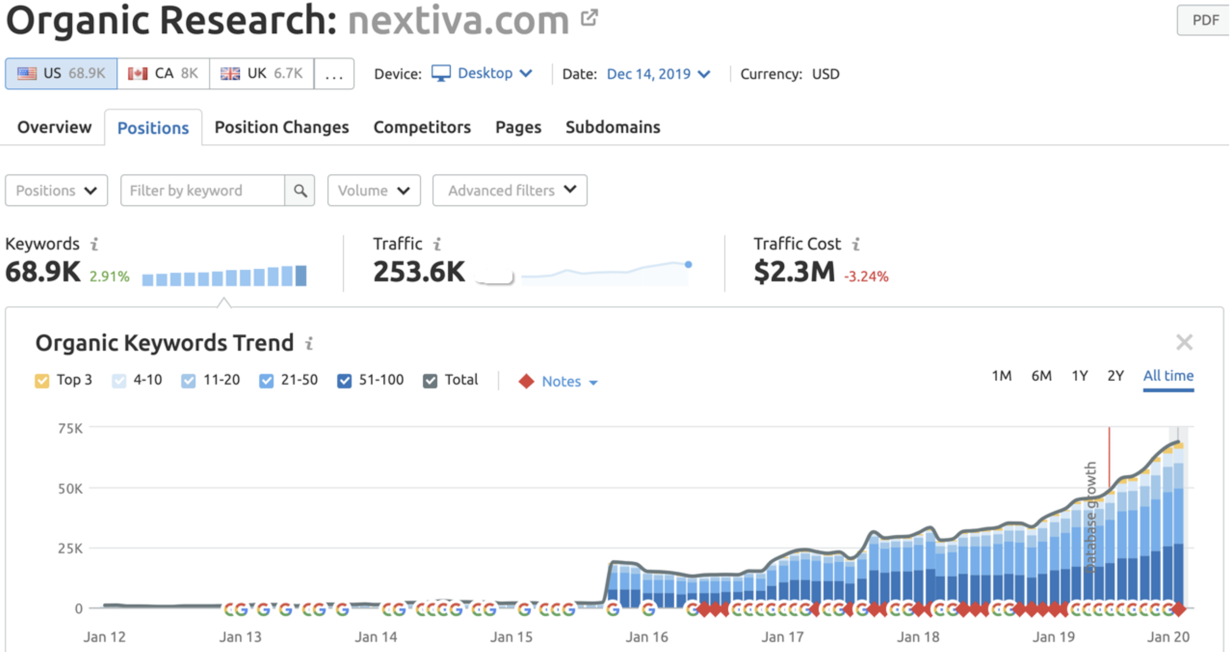
Search engine traffic: Open Google, Cốc Cốc, or any search engine you like, and the websites in the top positions receive thousands of visits every day. Depending on the keyword you want to rank for, they can earn thousands of dollars in revenue (from ads or from selling products/services), because search engine traffic is exactly what Google, Cốc Cốc, and others are aiming for.
Unlike traffic from Facebook or other social networks, organic traffic converts better because users know clearly what they want before typing a keyword into Google or Cốc Cốc, rather than browsing out of curiosity or for entertainment.
Beyond traffic, SEO also offers other advantages, such as:
- High trust: Users place more trust in search engines because they know that every website must be strictly evaluated to earn a top position in the results. That trust not only generates conversions but also raises awareness of your company’s or business’s brand.
- SEO courses help you build better websites: SEO is not just about search engines; it serves users too. For a website to be optimized for search engines, it must first be optimized for users.
Paid Search Ads (PSA)
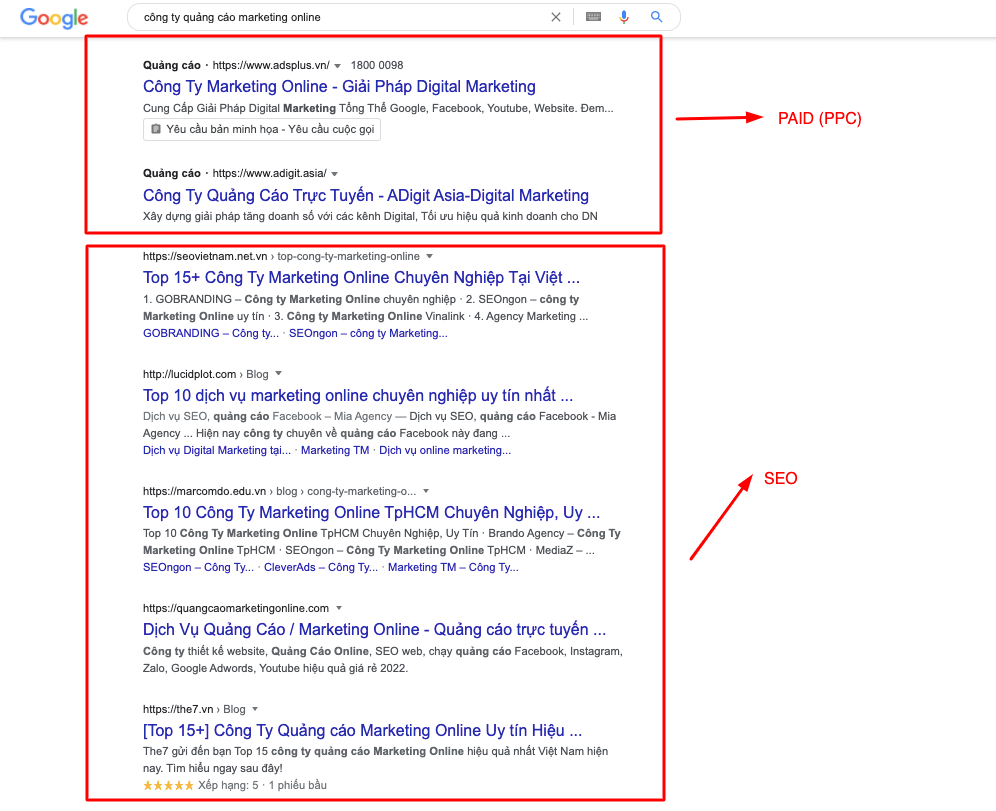
Another way to bring traffic to your company’s or business’s website is paid advertising. For example, when you run a search on Google, the results at the top and bottom are usually paid ads, as in the image below:
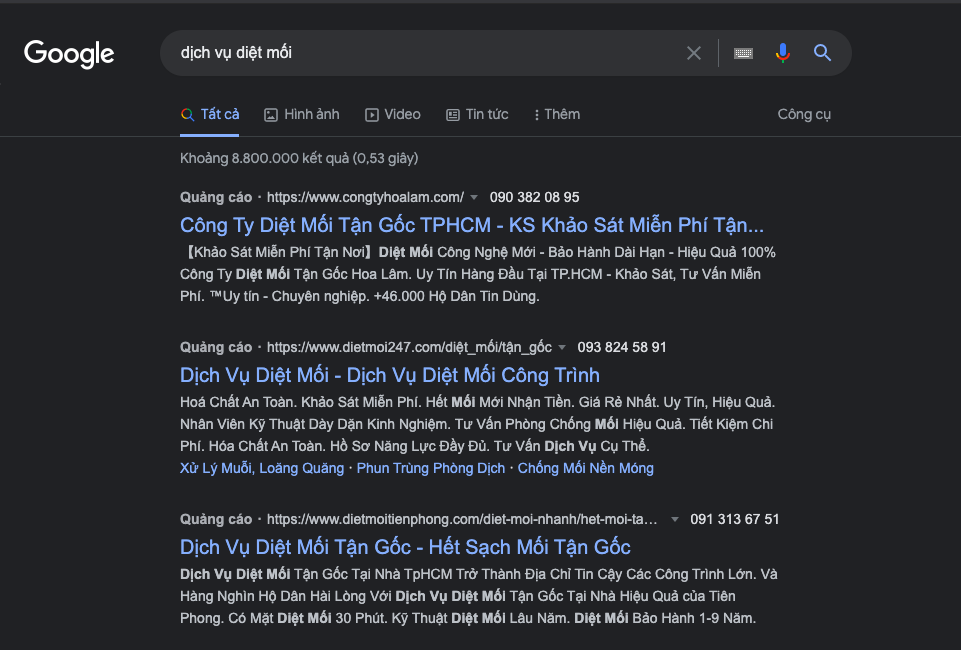
So the fastest way to earn a high ranking without SEO is paid advertising. But it is not necessarily simple, and it gets more complicated when many advertisers are competing for the top spots.
To date, the model most advertisers use is PPC (Pay Per Click), meaning you pay only when someone clicks on your company’s or business’s ad. The most widely used PSA system is Google Ads (owned by Google), a platform that displays your ads on Google or YouTube.
How Does PPC Work?
PPC is considered fairly simple to run, but it becomes difficult when you launch an ad campaign in a highly competitive market. Here is an overview of how PPC works:
- Create a free Google Ads account
- Set up the ad campaign your company/business needs (including ad groups, keywords, and ads).
- Define your target audience (the people who can see your ads)
- Run your ads and pay only when users click on them.
- Track campaign results and make changes when needed.
– Which ads appear in these 5 available positions?
Like SEO, the Google Ads system applies certain rules before deciding where advertisers appear on the search engine.
Some factors can be controlled by advertisers, such as the bid they pay per click or the quality of their ad campaign. Others are decided through the auction, and still others are known only to Google.
What you need to understand is that paid advertising is a great way to promote your website on Google, but it is not always simple and depends on many other factors.
– When should you use PPC ads?
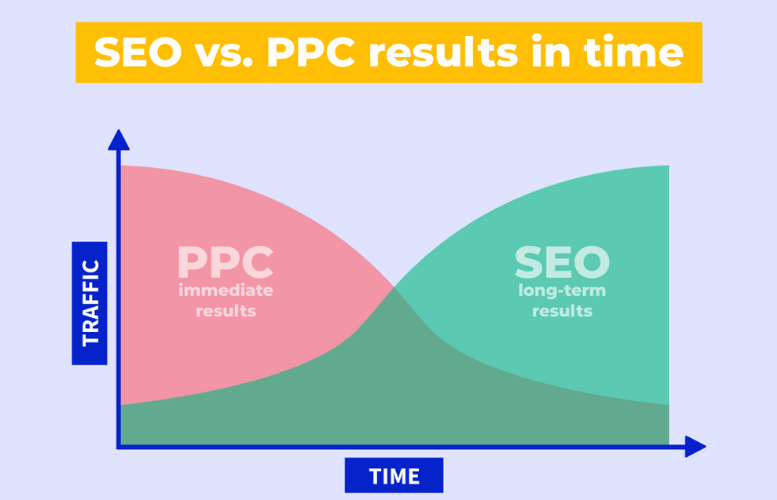
If you want your company’s or business’s website or search keywords to show up quickly in the top positions, the drawback of SEO is that it takes a long time to reach the top. So while you wait for SEO to deliver higher rankings, start a Google Ads campaign and get traffic this way.
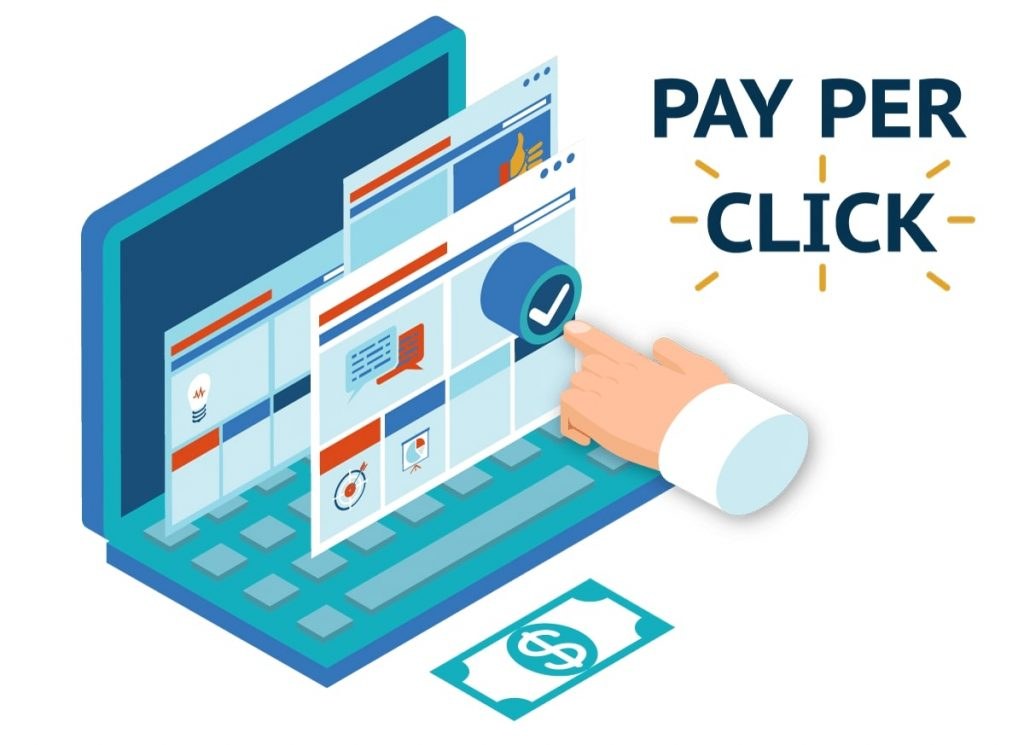
PPC and SEO can be combined in the same marketing campaign because neither can ever replace the other. If your SEO results are good, you can grow your company’s or business’s market share further by running Google Ads on the same SEO keywords to bring in relatively high traffic to your website.
SEO is generally a great way for a company or business to win customers, but you should also see PPC ads as a second route that is just as effective.
SEO and PSA in a Short-Term Online Marketing Strategy
You may wonder what the relationship between SEO and SEM is. In the short term, running paid ads may bring more benefits than SEO, because Google shows your ads at the top of search results immediately. However, this method generally suits only newly launched websites, or businesses that need to run a short-term campaign.
Even so, SEO remains vitally important at this stage. So run SEO and ads at the same time, and your campaign will be optimized effectively. SEO helps build your landing page properly and professionally, earning a higher trust score from Google and improving your ad quality.
Start SEO as soon as you begin any short-term marketing strategy. Ad campaigns will bring your business a steady flow of customers, giving you a solid foundation for long-term strategies.
SEO and PSA in a Long-Term Online Marketing Strategy
“Instant noodle” style ad campaigns help a business attract a large number of potential customers in a short time. But once the budget runs out, sales drop sharply right away.
So when you build a long-term online marketing strategy, devote more resources to SEO, supplemented by paid ads. That way, even when you no longer have the budget for ad campaigns, your website can still climb the rankings thanks to SEO, keeping your customer base growing steadily.
SEM vs. SEO: What’s the Difference?
It’s not only what SEO and SEM are that people care about; the differences between them deserve more attention too.
Over time, SEM has come to be understood as AdWords, because SEO is very hard to measure in terms of KPIs (key performance indicators) and ROI (Return on Investment). That is exactly why SEM and SEO need to be told apart more clearly.
Running PPC (AdWords) ads is relatively easy: all you need is an international credit card such as Visa or Mastercard to set up an ad campaign on Google or Yahoo. However, it takes time and experience to run, test, optimize, and select the ads that deliver the best results. SEO is relatively harder, because you need time to learn how to do it, or, if you have the budget, you can hire an SEO service company to do it for you.
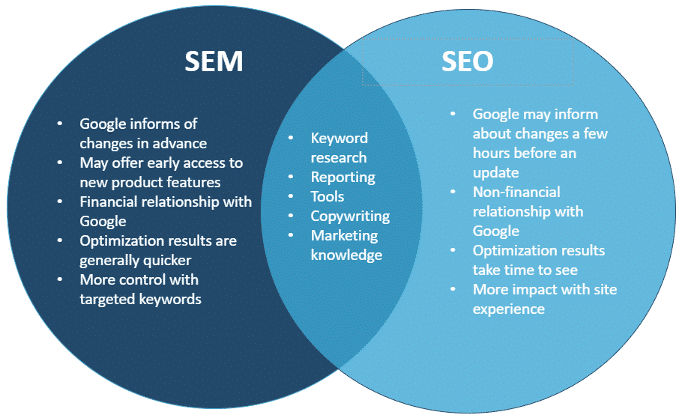
So if you already do SEM, do you still need SEO? At The7, we think this question runs completely against reality, because SEO is a part of SEM. Even if you have chosen to run PPC, you should still optimize your company’s website to SEO standards so it is friendly to Google.
Top 4 Most Widely Used SEM Tools Today
HubSpot’s Ad Tracking Software
This software helps users create and manage ads and stay updated on the latest ad news. The free version of HubSpot’s Ad Tracking Software also comes with many useful features, including syncing customer information, creating ads, and more.
SEMrush
SEMrush is a SaaS (Software as a service) platform. Marketers love it because it provides keyword metrics and online ranking data (cost per click, search volume, and more). These are important foundations for businesses to research and build a suitable marketing strategy.
Google Trends
Google Trends lets you check how often keywords are searched over a given period, and compare against Google Search results worldwide.
WordStream
WordStream gives businesses an optimized ad management solution. With this software, you can research, track metrics, and improve ad performance.
The software also offers advanced reporting features that make data analysis easy, along with a range of tools for creating ads quickly and conveniently.
In addition, WordStream includes workflow tools and sends alerts when needed so you can adjust your campaigns for the best results.
How to Build a Highly Effective SEM Strategy
SEM delivers its best results only when a business applies the right strategies. Here are some ways to build a smart SEM strategy:
Allocate Your Budget Wisely
If you don’t set a specific budget before running a campaign, it’s easy to overspend. The profit you earn then isn’t enough to cover the budget shortfall. So spell out the activities you will carry out when running SEM, then estimate the cost for each item.
There are a few basic tasks a business needs to handle when running SEM:
- Creating content
- Building landing pages
- Researching market demand
- Managing campaigns
- Analyzing data with free or paid tools
- CPC
If your website loads slowly, isn’t really user-friendly, and works poorly on mobile devices, you first need to focus on improving its performance. Otherwise, your business will spend quite a lot to redesign the website and optimize it for SEO.
Identify Your Customers’ Search Intent
Ask yourself: “What is my target audience using search engines for?” According to experts, internet users treat search engines as a daily helper. They use them for 3 main purposes:
- Researching and finding information
- Entertainment
- Shopping
Once you understand how internet users search, your business can map out the most effective SEM strategies and even win clicks away from competitors who hold a clear advantage.
Set Realistic Campaign Goals
Before running any campaign, you need to define goals that are specific, clear, and highly practical. You can express the goals as numbers that are easy to measure. Google Analytics funnels are also a powerful right-hand tool for managing campaigns. With this tool, you can see exactly when your website attracts a visit, so you can closely track campaign performance and adjust when needed.
Understand the Target Customers Your Business Is Aiming For
SEM helps businesses introduce the products/services they offer to customers. But a business needs to ask itself: “Who is my target audience?”
Beyond identifying the group of potential customers, a business also needs to understand their wants and aspirations, then create ad content tied to the data collected about your audience.
That said, don’t lean too heavily on a business owner’s own viewpoint when running ads. Keep your message and content objective so they reach customers more easily.
To understand customers, a business needs to spend time studying data on its current audience. This data can come from many sources, for example reports from Google Analytics, Google Ads, and more.
Combine Your Ads
To reach your target customers most effectively, consider the following methods:
- Set different goals and apply different strategies for the same customer group
- Deliver your ad messages to several different customer groups
- Use A/B testing to compare ad messages aimed at the same customer group
Using ad groups lets a business manage campaigns more effectively. It also lets you test and monitor different goals and strategies and find the strengths and weaknesses of your current marketing campaign, so you can pursue the strategy that is the most optimal and best suited to your customers.
User-Friendly Landing Pages That Spur Customers to Act
When you create a landing page for your website, you also need to spell out the goals you want to achieve. A landing page is not a page dedicated to offers, and certainly not your website’s homepage. In practice, it is the destination page that your banners all point to when your business runs ad campaigns.
Although landing pages are mostly used in ad campaigns, they still need to be presented consistently and convey a clear message. On a landing page, you can include some important, useful information about your business. Don’t forget to add a few CTA buttons to encourage viewers to take action. But don’t overuse CTA buttons, as they can annoy visitors.
Research Keywords Thoroughly
Keyword research is an especially important step in SEM. It helps you choose valuable words or phrases to use in your ads. Note that if the keywords you use are unrelated to your website’s content, your business may end up paying more for each user click. When choosing keywords, put yourself in your customers’ shoes and see things from their perspective, so the keywords hit the needs or the things customers are actually searching for.
Keep Your Quality Score High
Your ad Quality Score determines how much you have to spend. So to optimize this cost, keep your Quality Score as high as possible. Your Google Ads score depends on the following factors:
- CTR: The rate of clicks on your ad per impression
- Keyword relevance: If users search on Google with a keyword you use but don’t click your ad, it shows that the ad your business is running is not relevant to the keyword to some degree.
- Landing page: How users behave after reaching your website’s landing page.
- Ad content: How relevant the ad content is to the search keyword.
Conclusion
It’s fair to say that no company, business, or website can survive online by following solid SEM methods alone. SEM only provides the framework, tools, and process for achieving greater visibility on search engines, whether through a higher unpaid position in the search results or a better position when you run paid ads.
And as mentioned above, the 2 main components of SEM, SEO and PPC, can complement each other and optimize your company’s or business’s profits. You should also understand that in the world of online business, these 2 tools are powerful “weapons” for strengthening your company’s or business’s brand awareness in customers’ minds.
First, make sure your company or business has a great, easy-to-use website. Then think about publishing good content that satisfies users’ need for information. With that foundation in place, the next step is to implement SEO and get familiar with PPC campaigns to achieve a return on investment (ROI).
With these answers to the question what is SEM, The7 hopes to give you more useful knowledge for your company’s or business’s upcoming marketing strategy. If you still don’t have a deep understanding of SEM, it’s best to turn to the experts at The7. Saving your effort, money, and precious time is what The7 always aims for!
How Can The7 Help You?
At The7, we offer 2 main Online Marketing Services: dedicated consulting and quality execution. Both are delivered by a team of specialists and experts with in-depth training. We design a tailored roadmap for your business to roll out suitable, optimized Online Advertising Services, while completely eliminating activities that bring no real benefit.
With years of experience in the industry, The7 works alongside your business to map out the direction and execution of an effective online marketing strategy, reducing the risks of running digital activities on your own.
Digital Marketing Services
The7 plans and executes full-service online marketing based on advertising solutions on Facebook, Instagram, and Google, plus web design and content marketing services.
For all information about our services, connect with us today via Hotline: 082 246 7979 – 028 3899 7377 or visit https://the7digital.com/ for a consultation!
Learn more about marketing in these articles:
- Digital Marketing Advertising: What Is It? 10+ Digital Marketing Ad Formats Marketers Should Know
- Affiliate Marketing: What Is It? Concepts, Pros and Cons, and an A-Z Implementation Guide
- Inbound Marketing: What Is It? An A-Z Guide to Inbound Marketing
- Outbound Marketing: What Is It? How Does Outbound Marketing Differ From Inbound Marketing?
- 6 Ways to Advertise Online Most Effectively in 2024

Nguyễn Đình
Bảo




As CEO of The7, I am committed to sharing practical, useful knowledge with every reader. Every article on The7 is based on my 7 years of hands-on experience in marketing — Facebook advertising, LinkedIn advertising, Google advertising, and marketing strategy. I hope you take away plenty of insight from these posts and apply it successfully in practice.
Related Articles
6 Simple Yet Effective Steps to Run Google Ads in 2024
Google Ads (Google AdWords) is Google’s online advertising service that helps businesses reach the right target customers, boost brand awareness, attract customers, and drive sales as customers search for information...
How to Run Effective Gmail Ads for Your Business
One of the advertising formats attracting the attention of many business owners is Gmail advertising. So how do you run effective Gmail ads? Let The7 walk you through this fresh...
What Are Google Smart Campaigns? Tips to Drive High Traffic
Google Smart Campaigns are one of the ways advertisers can access advertising information and digital marketing techniques faster. If you have just started a small business, keeping track of your...
What Card Should You Use to Pay for Google Ads in 2024?
Which card to use to pay for Google Ads is a common question among people who are new to Google Ads campaigns. So which card is best for paying for...
How to Link Google Analytics With Google Ads in 2024
To run Google Ads effectively, you need to do more than just launch campaigns. You also have to analyze and evaluate the performance of each campaign through its metrics. So...
How to Add Sitelink Extensions in Google Ads (2024 Guide)
Sitelink extensions let your ads give customers more information. They also make each ad stand out more than your competitors’ ads. This gives your Google Ads extensions a Quality Score...