


What Is Outbound Marketing? Outbound vs. Inbound Marketing Explained
What Is Outbound Marketing? How does Outbound Marketing differ from Inbound Marketing? You have probably heard the terms Outbound Marketing and Inbound Marketing many times, but what do they actually mean? Which audiences do these strategies target, how many tactics and standout campaigns do they involve, and what is the most effective way to execute them? Read on with The7 to explore what Outbound Marketing is, what Inbound Marketing is and all the other relevant information you need to choose the best solution for your business.
What Is Outbound Marketing?
Outbound Marketing Definition
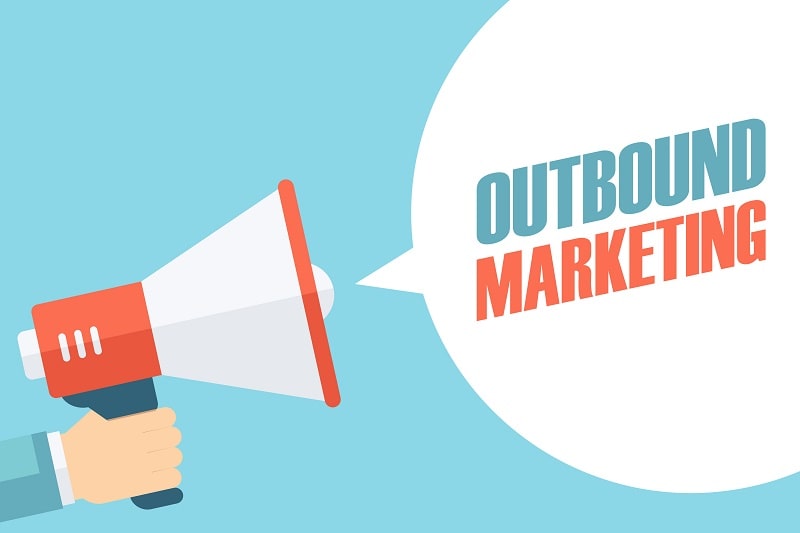
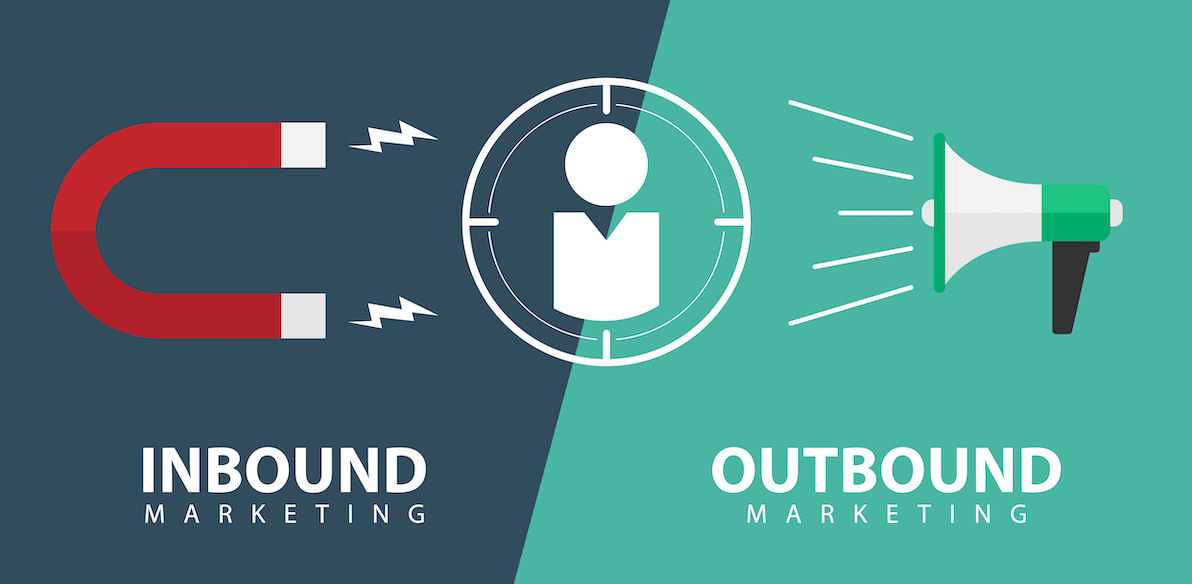
Outbound Marketing, also known as interruption marketing, is a type of marketing that interrupts the flow of what people are doing in order to grab their attention, make customers curious and get them to focus on the product being advertised. Outbound Marketing is a more complex approach: with it, businesses have to go out and find potential customers through ads.
Outbound Marketing is one of the traditional marketing methods. Businesses look for customers through marketing media and reach them in large numbers. The channels used in outbound marketing include:
- Print ads
- Billboards
- Cold calling
- Sending emails
- TV or radio ads
Outbound Marketing is also seen as a “indifferent” marketing method, because it does not really care about customers’ wants and problems and simply tries to cram in as much of a brand, its products and its services as possible.
When using Outbound Marketing, the business is the one that actively looks for customers through media and promotional channels. Depending on the size and activities of the business, this approach can be carried out through TV ads, handouts, mass emails and more.
Pros and Cons of Outbound Marketing
Advantages of Outbound Marketing:
- Targets potential customers and new customers
- Supports brand building
- Campaign results are predictable and measurable.
- Campaigns can be tightly controlled.
Disadvantages of Outbound Marketing:
- Interrupts customers with content they may not always want
- Large marketing campaigns are costly
What Is Inbound Marketing?
Inbound Marketing Definition
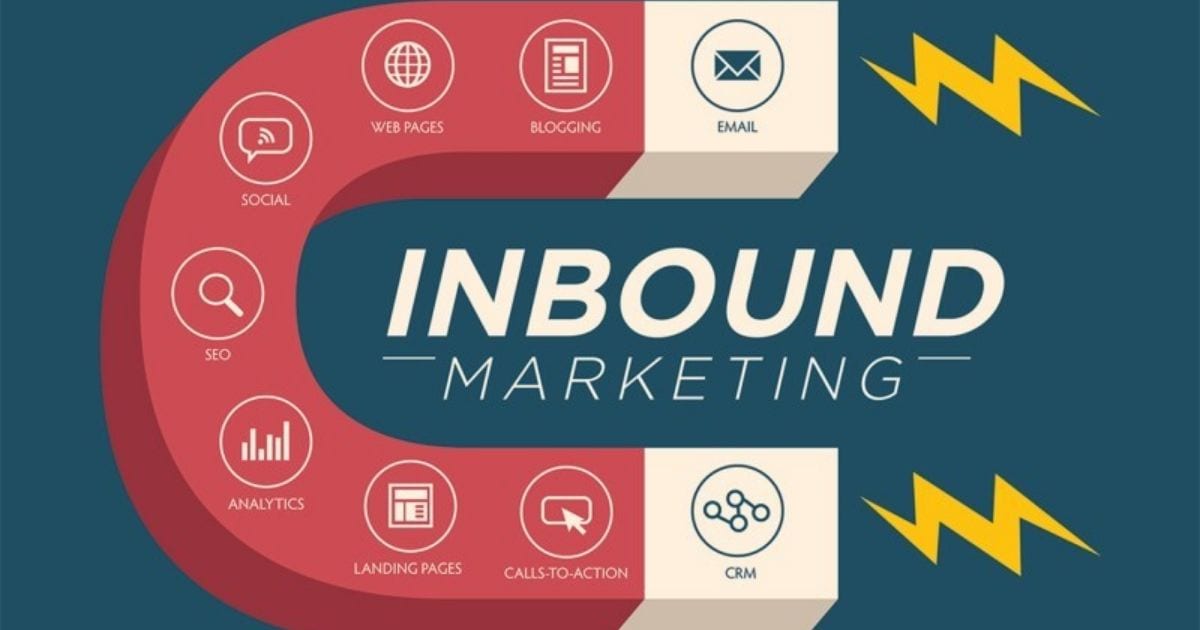
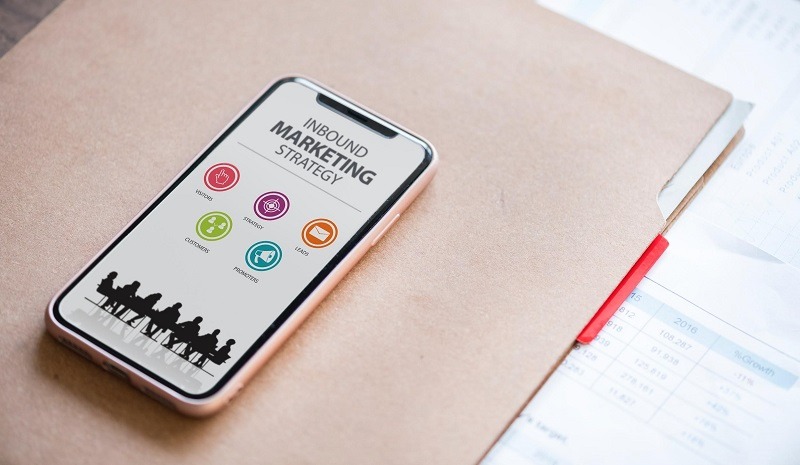
Inbound Marketing is a newer marketing concept than Outbound Marketing. Instead of pushing ads and messages at consumers, Inbound Marketing is designed to spark curiosity and engagement while drawing customers in. That is why it is called “pull marketing.” It is also often called content marketing, which is the main tactic used in Inbound Marketing. Inbound Marketing uses many different types of content to attract customers, including:
- Content marketing
- Social media marketing (LinkedIn, Twitter, Instagram, Facebook)
- Search engine optimization
- Podcasts
- RSS
- Blog marketing
- Viral marketing
- Newsletters and e-books
- Pay-per-click advertising
An Inbound Marketing strategy aims to gently nurture leads through marketing channels, giving them access to relevant content and brand experiences when they are ready, gradually building brand awareness, increasing customer engagement, and pulling them toward conversion and retaining them.
Pros and Cons of Inbound Marketing
Advantages of Inbound Marketing:
- Does not annoy customers
- Increases customers’ perceived value of, and trust in, the products/services your business offers.
- Saves marketing costs for the business and can stay effective for quite a long time.
Disadvantages of Inbound Marketing:
- Takes a lot of time to implement and goes through several different stages.
- Less control over the customer experience; they may or may not see your content.
Outbound Marketing vs. Inbound Marketing: What’s the Difference?
To better understand the two communication approaches, Inbound Marketing and Outbound Marketing, let’s dig into the differences between them and see which one is the more effective way to market.
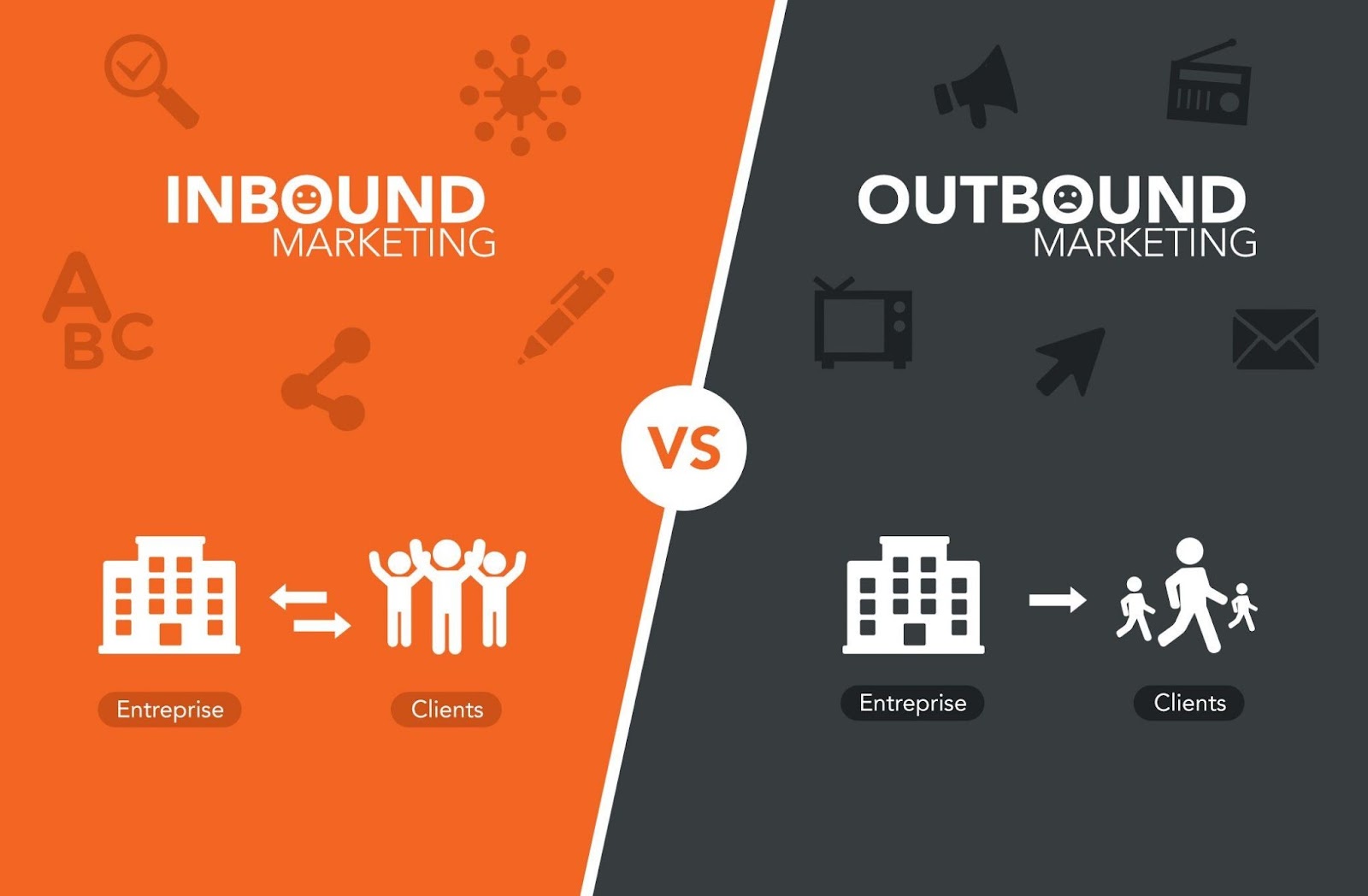
Two-Way vs. One-Way
With Outbound Marketing, also known as traditional marketing, the business takes the initiative in pushing information out to users. That information is entirely one-way, and whether you want it or not, it still reaches you and shows up right in front of you. It can arrive by text message, email, phone call and more, and users often find it uninteresting or even annoying.
By contrast, Inbound Marketing starts from the customer’s own needs. Put simply, it is a two-way interaction: when users have a need, the business meets it. Businesses need to create useful content that serves users’ information-seeking needs. That builds credibility and trust, making it easier to persuade customers to choose the products the business offers.
So we can see that Inbound Marketing keeps up with trends and quickly picks up on changes in user behavior, delivering the information customers actually need. Outbound Marketing can spam people with information, reach the wrong customers and waste resources.
Product vs. Customer
Outbound Marketing aims to describe the product: its features and benefits. The message is short and simplified. Inbound Marketing puts the customer first. It attracts them with engaging, relevant content. The ultimate goal of Inbound Marketing is to deliver value in order to build trust. And the focus is not on selling, but on building and nurturing long-term relationships.
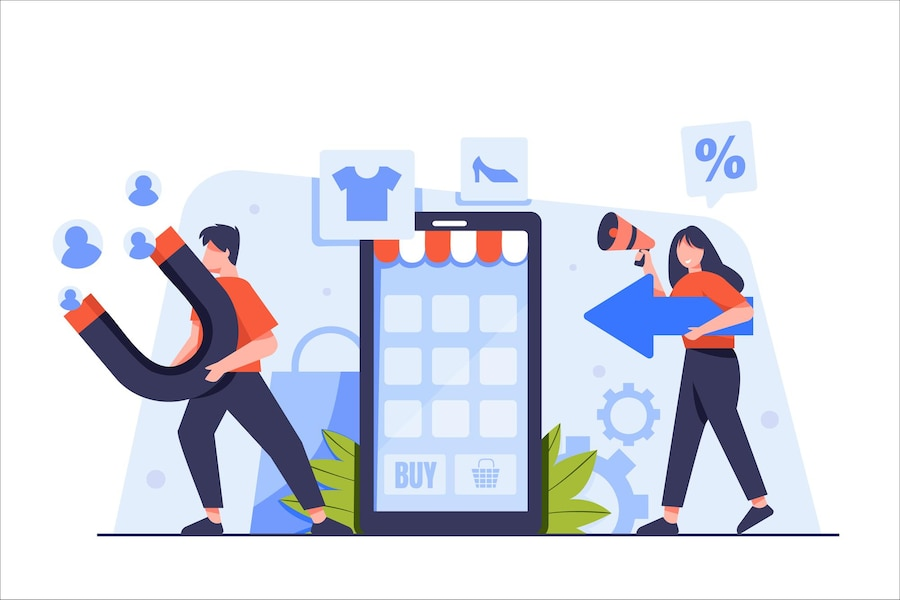
Maximizing Sales Potential vs. Building Brand Trust
Under the Outbound Marketing approach, the ultimate goal of every ad is to maximize the likelihood of a purchase, even if people have only just read your message. Inbound Marketing, by contrast, builds lasting relationships out of customers’ trust in the brand. As a result, content strategies rarely mention the product and instead offer personalized recommendations for each audience.
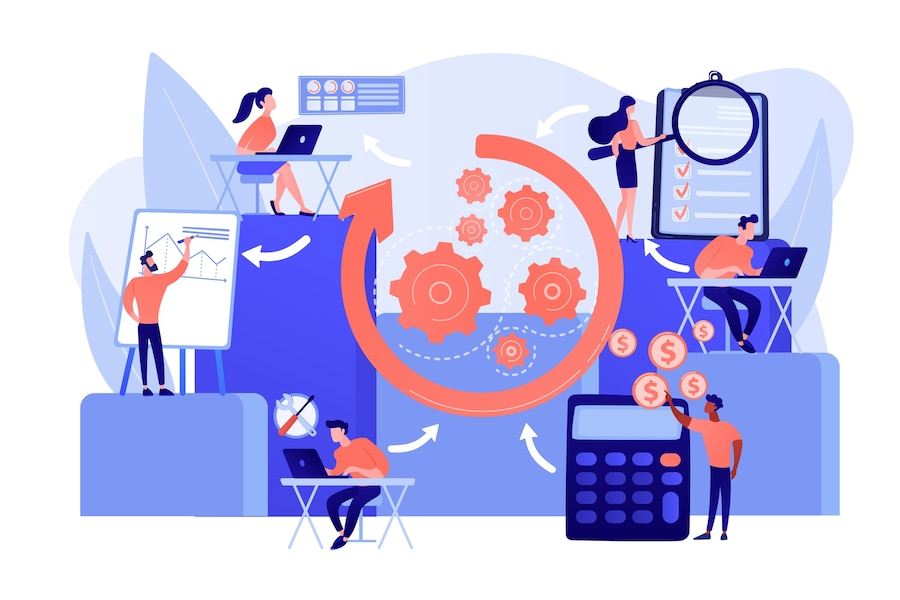
Online and Offline Combined vs. Digital-Platform Activity
Outbound Marketing makes use of traditional paid advertising. You can see it on billboards, TV or radio. Inbound Marketing, on the other hand, operates entirely on digital platforms. You find it on blogs, social media, email newsletters and more. This makes it a very flexible approach with data that is easy to measure.

Measurability
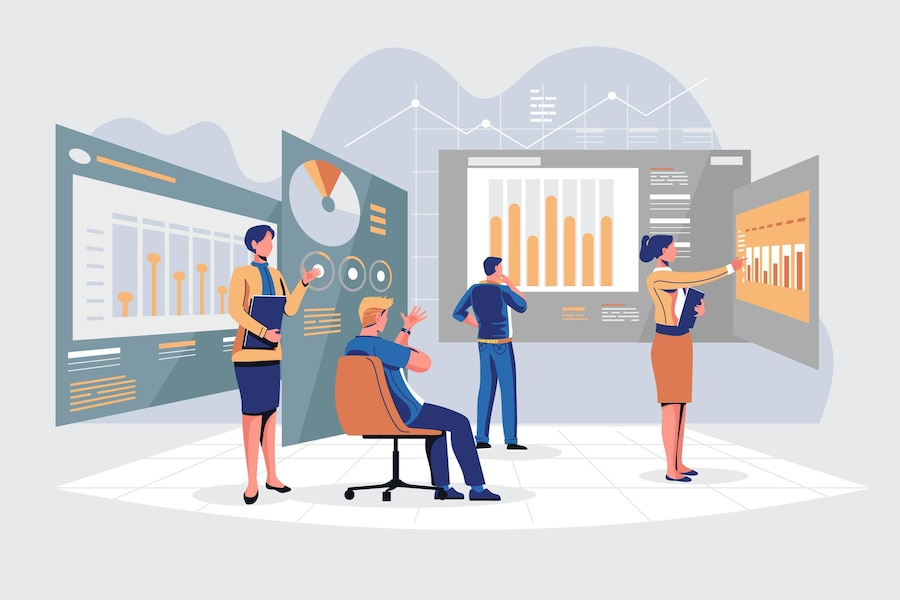
Outbound Marketing has always been hard to measure. The only exception is Google AdWords. Beyond that, you can never know whether an expensive TV ad has actually increased your sales.
Inbound Marketing is systematic and measurable. It helps you set goals and benchmarks using metrics such as website traffic, leads generated or closed sales. The success of an Inbound Marketing campaign is measured through A/B testing. And if a business is not getting results, it immediately knows where it stands and what needs to change.
Outbound Marketing vs. Inbound Marketing: Which Is the Best Solution for Your Business?
Today, many businesses are gradually shifting from Outbound Marketing to Inbound Marketing. It is not only because they need to cut marketing costs, but also because they recognize the change in how customers consume and search for information:
- Consumer behavior has moved from passive to active. Smart consumers no longer want to receive one-way information from brands; they want to search for and control information themselves. That is why Outbound Marketing is gradually losing its former standing.
- The rapid growth of the Internet and online media has made two-way interaction easier than ever. Customers now genuinely make their own choices and give priority to information that is truly useful to them.
- As consumers realize they have more choices than before, they look for products and services that fit their needs through many search tools such as blogs, social media and more. These channels are far less expensive than attending traditional seminars or exhibitions.
Outbound Marketing increasingly shows its weaknesses, and its adaptation to the changing times has not been big enough. All of this has made the model decline as an inevitable trend. In its place, Inbound Marketing is gradually becoming the most effective marketing method for online businesses, for collecting data and for minimizing the time it takes to close orders.
Changing to Keep Up With the Times
We live in the digital age, and things are no longer the way they were 20 to 30 years ago. The consumption needs of most customers have changed. When customers change, the overall marketing model has to adapt step by step. Yet Outbound Marketing’s adaptation has not been big enough.
Today’s customers are no longer as passive as they once were when receiving one-way information. They no longer just watch TV, read newspapers and take in news from a single source; instead, customers have moved from a reactive state to being fully proactive.
When customers need to know about a product, service or brand, they look for information the way they want to. Their discovery process is not influenced by any one party. This is one of the reasons Outbound is no longer as distinctive as it once was in the marketing model.
The change in customers’ buying behavior comes mainly from the strong development of technology and the Internet. This is the driving force behind users’ two-way interaction. These changes are like an irreversible current, giving users many new experiences and improving their material and spiritual lives.
Users now realize that they are at the center of every model of searching for and sharing information. They have plenty of ways to learn about the products and services they consider necessary and interesting. They do this through search engines, social networks and comment forums.
Save Costs on Marketing Campaigns With the Inbound Model
There is no denying that Outbound Marketing has always been effective at helping customers position a brand through large-scale promotional campaigns. Although early results are easy to see, the cost of carrying them out is anything but small. A complete Outbound Marketing campaign can cost tens of millions of VND. With that budget, you could easily roll out an Inbound Marketing model that delivers long-term results.
A network of websites and Facebook Pages developed in sync supports your business and attracts more target customers. At the same time, it nurtures a group of users who regularly visit for information and gradually turns them into your customers. Using tools such as sharing tools and media discovery is very effective and very cost-efficient.
According to research by leading marketing experts, finding customers with Inbound Marketing costs you only 50% of what it costs with Outbound Marketing.
Less Impact From Privacy Protection Tools
Inbound Marketing is not affected by tools and policies that block email, text messages, phone calls and more. Today, customers no longer accept commercial emails and product pitches. Many countries around the world have issued policies that prohibit sending email without the recipient’s consent in order to protect privacy.
With Inbound Marketing, customers come to the business on their own through the business’s information channels on media sites. As a result, marketers get the “green light” to reach customers easily with a higher success rate.
Thanks to these 3 outstanding advantages, Inbound Marketing is becoming more and more popular around the world. To keep up with that trend, marketers who know what Outbound Marketing is should be ready to move their businesses to Inbound for better business results.

LEARN MORE ABOUT MARKETING:
Final Thoughts
Outbound Marketing promotes brand awareness quickly and effectively, and it is not complicated to carry out. However, as the times change, this marketing model still does not fully meet customers’ needs for finding and accessing information. After everything we have shared, we hope you now understand what Outbound Marketing is, can tell Outbound Marketing and Inbound Marketing apart, and see why Outbound Marketing is gradually declining!
If you are still wondering which marketing method suits your business model, don’t hesitate to contact us to find the most suitable strategy. Our dedicated team of professional digital marketing specialists is always ready to serve you.
To run a successful full-service marketing campaign, The7 always invests plenty of time in researching and deeply understanding customers’ needs, then designs a campaign that helps your brand reach maximum results quickly, whether your KPI is more website traffic or outstanding revenue growth. Don’t hesitate to get in touch with The7 as soon as you need us. Your success is our goal, and The7 is ready to provide strategic solutions that fit your business through a range of services such as:

Nguyễn Đình
Bảo




As CEO of The7, I am committed to sharing practical, useful knowledge with every reader. Every article on The7 is based on my 7 years of hands-on experience in marketing — Facebook advertising, LinkedIn advertising, Google advertising, and marketing strategy. I hope you take away plenty of insight from these posts and apply it successfully in practice.
Related Articles
Building a Full-Funnel Content Marketing Strategy on LinkedIn
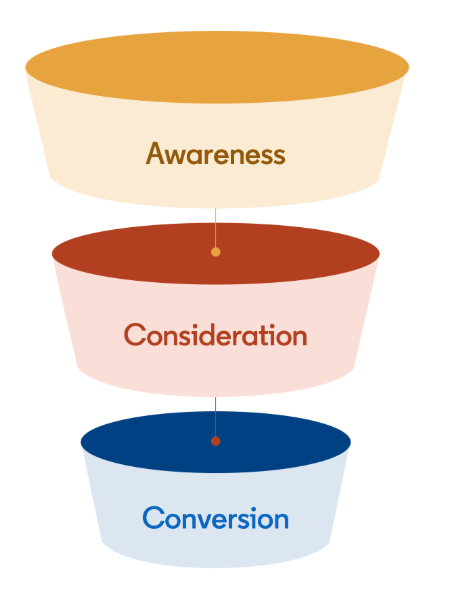
Table of Contents Toggle Why Build Content Marketing for the Full Marketing Funnel? (Why Full-Funnel Content Marketing?)Creating Your Strategy (Creating Your Strategy)Implementing Your Content Strategy (Rolling out your content strategy)Summary...
Designing Creative Content for LinkedIn
Table of Contents Toggle Why Is Good Creative Content So Important? (Why is Good Creative Important?)Key Components of Creative Design (the core elements of creative design)Summary (summary) Why Is Good...
Building an Organic Business Presence on LinkedIn With a LinkedIn Page
Table of Contents Toggle Why Have a LinkedIn Page?Establishing Your LinkedIn PageKeeping Your LinkedIn Page ActiveThe Measure of SuccessSummary About LinkedIn Page (Summary) Why Have a LinkedIn Page? For a...
6 Best LinkedIn Marketing Strategies for B2B in 2026
Table of Contents Toggle LinkedIn 2026: Where B2B Decisions Get MadeStrategy #1 – Why Is LinkedIn the Best B2B Marketing Channel Today?1. Decision-makers are concentrated here2. Users are in work...
7 Social Media Trends for 2026: The Era of Real Value, Real Conversion, and Real People
Table of Contents Toggle Social media is entering the biggest restructuring of the decadeTrend 1: Why is buying directly in-app becoming the new standard for 2026? (On-Platform Conversion)What should businesses...

What Is TikTok Marketing? Effective TikTok Marketing Strategies
TikTok has been topping the global rankings of the most downloaded and most visited apps. That makes it a gold mine for marketers who love creativity. In this article, The7...