


What Is CPM? A Detailed Guide to Cost Per Mille
What is CPM? CPM is not only easy to use but also highly effective, helping businesses save money and generate passive income. That makes CPM the best choice if your goal is to reach as many users as possible with ads. To help you better understand Google CPM in marketing, along with the pros and cons of this ad format, join The7 as we walk through everything below.
>>>>> Check out The7’s services: Google Ads Management Service
What Is CPM?
CPM (Cost per mille) is the cost you pay for every 1,000 times your ad is displayed on Google. Before the campaign starts, the advertiser sets a bid they consider appropriate for every 1,000 impressions of the ad in the placement where customers are most likely to see it.

>>>> See more:
- The most effective guide to running Google ads on your own in 2024
- What is Google Ads? Google Ads knowledge for beginners
How to Calculate CPM (Cost Per Mille): A Detailed 2024 Guide
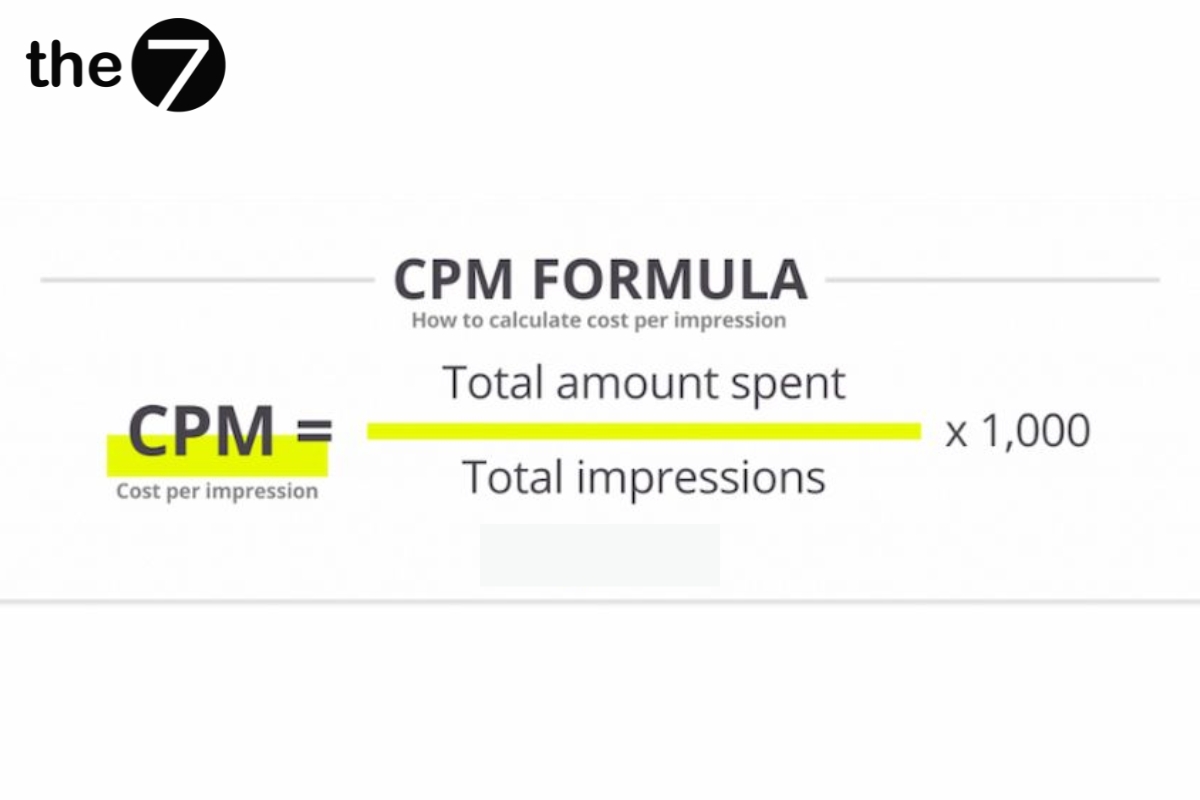
CPM = (Total cost / Total impressions) x 1,000
For CPM, Google uses an algorithm to count ad impressions the way it counts views. Each time an ad appears on a user’s screen, it counts as one impression, or one view.
To make this easier to understand, consider the following example: the total cost of the whole ad campaign is 2 million VND, and you get 20,000 ad views. The CPM is then: (2,000,000 / 20,000) x 1,000 = 100,000 VND.
Pros and Cons of CPM
This ad format offers many benefits, such as increasing brand awareness, reaching your target audience, and creating positive signals with potential customers. CPM is commonly used for display ad types such as pop-ups, banners, and video ads. To understand this ad format better, read on for a review of its pros and cons:
Pros
Some standout advantages of the Google CPM online advertising format include:
| Pros | Details |
| Easy to use, with immediate results | CPM is considered easy to use and delivers results quickly. This ad format is especially well suited to businesses that are new to the market and still building their brand in customers’ minds. |
| Saves money | For companies that already have wide brand coverage and significant website traffic, paying per impression can save a business a considerable amount compared to CPC, the model where you pay for each click on your ad. |
| Helps businesses earn passive income | If a publisher builds a website or blog that many people know, it will attract plenty of advertisers who want to place banners on the site. That in turn creates monthly passive income for the business. |
Cons
Alongside the standout advantages above, CPM still has some limitations for advertisers, as follows:
- Your investment will not bring high returns if you place ads on websites with low traffic.
- On websites and blogs with heavy traffic, competition among brands is fierce. As a result, advertisers have to spend more, with no guarantee of results.
- If an online marketing CPM ad is displayed online but fails to capture viewers’ attention, it is a waste of money.
- In addition, if a website or blog gets few visits, its CPM ad revenue will be limited.
How Do CPM and CPC Differ?
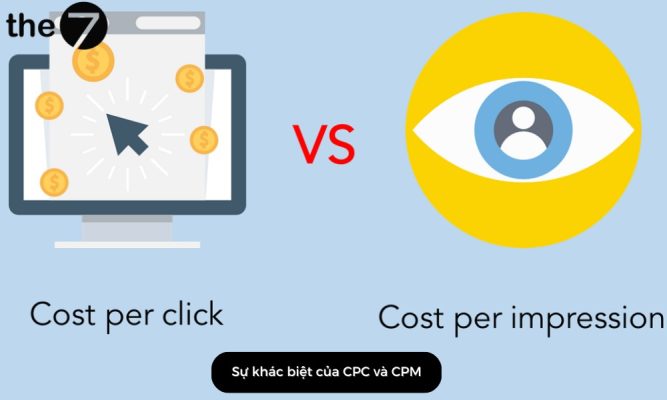
What is the difference between CPC and CPM advertising? Although both are popular online advertising formats, they differ in the following ways:
| Type | Difference |
| CPC ads | With CPC ads, you only pay for each click on a link or ad.
The value of each click is determined by the bid the advertiser sets. If your bid is 5,000 VND, the amount you pay for each click on the ad or link will not exceed 5,000 VND. |
| CPM ads | With CPM, advertisers pay for every 1,000 impressions on Google. If you pay 50,000 VND for a CPM campaign, you have the right to display your ad 1,000 times on the website.
However, results do not depend on impressions alone: campaign performance also depends on how many customers click. So out of 1,000 views, you might get anywhere from 100 to 200 clicks on your ad. |
In short, CPM is an effective way to let your ads reach many users easily on a limited budget. In addition, CPM helps raise brand awareness and strengthen a business’s reputation.
How to Optimize CPM in Your Business’s Ad Campaigns
To optimize CPM effectively in your advertising and digital marketing campaigns, keep the following factors in mind:
Define Your Goals Clearly
This applies not only to CPM and CPC: any ad format that aims to deliver results requires you to define your marketing and communication needs first.
Doing so helps advertisers better understand their business goals, the audience they want to reach, and factors such as budget, competitors, and the market.
Another important and necessary step is to research and evaluate ad formats before making a choice. Depending on your campaign goals, your budget, and the audience you want to reach, you can choose CPM, CPC, or a combination of both to get the best results.
In addition, to make sure your campaign succeeds, you need a specific plan for the timing, content, and placement of your ads. You can use ad measurement tools to evaluate results and adjust (if needed) to achieve the best final outcome.

Expand Your Advertising Platforms
When running an ad campaign, you need to weigh many factors to choose the format that fits your marketing and financial goals.
Although CPM is usually run on Google Ads, fierce competition has led many advertisers to choose other platforms such as ad networks or Google Display.
Each option has its own pros and cons and suits campaigns with different product and brand needs. That is why researching each platform in depth will help you understand its characteristics so you can use it as effectively as possible.
Overall, advertisers must keep up with new trends and explore many different platforms to make smart decisions and make their campaigns a success.
Optimize Related Factors
Besides choosing the right CPM or CPC ad format, you also need to consider many other factors to achieve the best CPM at the lowest cost. Specifically:
| Factor | Details |
Content |
High-quality, engaging ad content will attract customers and keep them reading and engaging for longer.
As a result, the ad platform will show your content to more users, which contributes positively to optimizing your CPM. |
Targeting the right audience |
When you target the right audience, your ads are shown to users who are likely to be interested in your products or services.
Conversely, aiming at the wrong audience can raise your CPM because the ad platform judges the ad as irrelevant to consumers, which in turn limits how often your ad is shown to customers. |
Choosing when ads are displayed |
CPM is also affected by the time your ads are displayed. To optimize results, schedule your ads for the times when your target audience is online most often. |
Combine Other Marketing Tools
When they first enter the industry, many people mistakenly believe that spending money on ads right away will deliver maximum results.
In reality, however, an effective marketing campaign does not depend only on the success of one specific digital marketing channel. It also requires a well-coordinated mix of different tools, such as advertising, promotions, and personal selling.
Understand How Ad Platforms Work
Identifying the right target audience and applying communication marketing tools is very important, whether you are running an ad campaign for an individual or a business.

A marketing team will spend time researching to understand the tools well. At the same time, they analyze customer and market data so they can run ads sensibly and deliver maximum value.
In short, CPM is an effective way to let your ads reach many users easily on a limited budget. In addition, CPM helps raise brand awareness and strengthen a business’s reputation.
We hope the information shared above has answered your question about what CPM is. If you still have any questions about this online advertising format, feel free to reach out to The7 for more detailed advice!
>>> Read more related articles:
- 15 Google Ads metrics you need to know to run ads effectively
- Ad Rank in Google Ads: What is it? Ad Rank formula
- How to improve your Quality Score (a super helpful guide)

Nguyễn Đình
Bảo




As CEO of The7, I am committed to sharing practical, useful knowledge with every reader. Every article on The7 is based on my 7 years of hands-on experience in marketing — Facebook advertising, LinkedIn advertising, Google advertising, and marketing strategy. I hope you take away plenty of insight from these posts and apply it successfully in practice.
Related Articles

6 Simple Yet Effective Steps to Run Google Ads in 2024
Google Ads (Google AdWords) is Google’s online advertising service that helps businesses reach the right target customers, boost brand awareness, attract customers, and drive sales as customers search for information...
How to Run Effective Gmail Ads for Your Business
One of the advertising formats attracting the attention of many business owners is Gmail advertising. So how do you run effective Gmail ads? Let The7 walk you through this fresh...
What Are Google Smart Campaigns? Tips to Drive High Traffic
Google Smart Campaigns are one of the ways advertisers can access advertising information and digital marketing techniques faster. If you have just started a small business, keeping track of your...
What Card Should You Use to Pay for Google Ads in 2024?
Which card to use to pay for Google Ads is a common question among people who are new to Google Ads campaigns. So which card is best for paying for...
How to Link Google Analytics With Google Ads in 2024
To run Google Ads effectively, you need to do more than just launch campaigns. You also have to analyze and evaluate the performance of each campaign through its metrics. So...
How to Add Sitelink Extensions in Google Ads (2024 Guide)
Sitelink extensions let your ads give customers more information. They also make each ad stand out more than your competitors’ ads. This gives your Google Ads extensions a Quality Score...