


How to Choose the Right Facebook Ads Objective

Let’s take a closer look with The7 at how to choose a Facebook ads objective in this article. When you start preparing a Facebook ad campaign, you need to define clearly what Facebook campaign objective you want to achieve. To make the ad setup process run smoothly, the most important thing is to understand which types of Facebook ad objectives match your marketing goals.
>>> Explore The7’s services:
- Facebook ad management in Ho Chi Minh City
- Facebook Advertising Services in Hanoi
- Facebook Advertising Services in Da Nang
- Online Advertising Services
The Most Common Types of Facebook Ad Objectives Today
For each Facebook ad campaign, you can choose 1 of the 3 objectives below:
Awareness Objective
This includes the top-level objectives that aim to attract customers’ interest in the products or services you offer. This is the first stage in building your customer funnel.
At this point, customers know nothing about you and haven’t yet realized the problem they are facing. This is your chance to spark their need and introduce yourself to potential customers.
Customers at the awareness stage usually aren’t the ones who will generate sales for your business right away. If you want immediate sales, this is not the right marketing objective.

Consideration Objective
This is when you should set your goal to guiding and persuading customers. By now, you have identified the audience interested in your product. Reach them with the standout strengths that your product or service offers.
Conversion Objective
This objective is used at the end of the campaign, when you want customers to sign up, join, download, buy, or visit your store. At this stage, you will go into detail about the products and services you offer.
Choosing an Awareness Objective
To choose the Facebook ad type that fits your marketing goals, you need to understand each type of objective. First up is the objective of increasing awareness.
Brand Awareness
You will use the awareness objective when you want more customers to know about your brand, without necessarily needing them to engage, participate, or buy. They only need to notice the brand name, or even just remember it, and you have already achieved an early success in your ad campaign. Potential customers in the later stages will come from the audience you attract through the awareness step.

This is an ad objective suited to large brands with generous budgets. For small businesses, this ad objective is used less often because of budget limits.
Reach
The reach objective shows your ads to as many people as possible within your potential audience, based on the budget you spend. The ad content will guide them to take an action, such as visiting your website, watching a video, or converting on your website.
You can predict the actions your target customers will take, so you can choose to show your ads to a fixed segment of this audience.

Choosing a Consideration Objective
To choose the Facebook ad type that fits your Consideration marketing goal, review the options below:
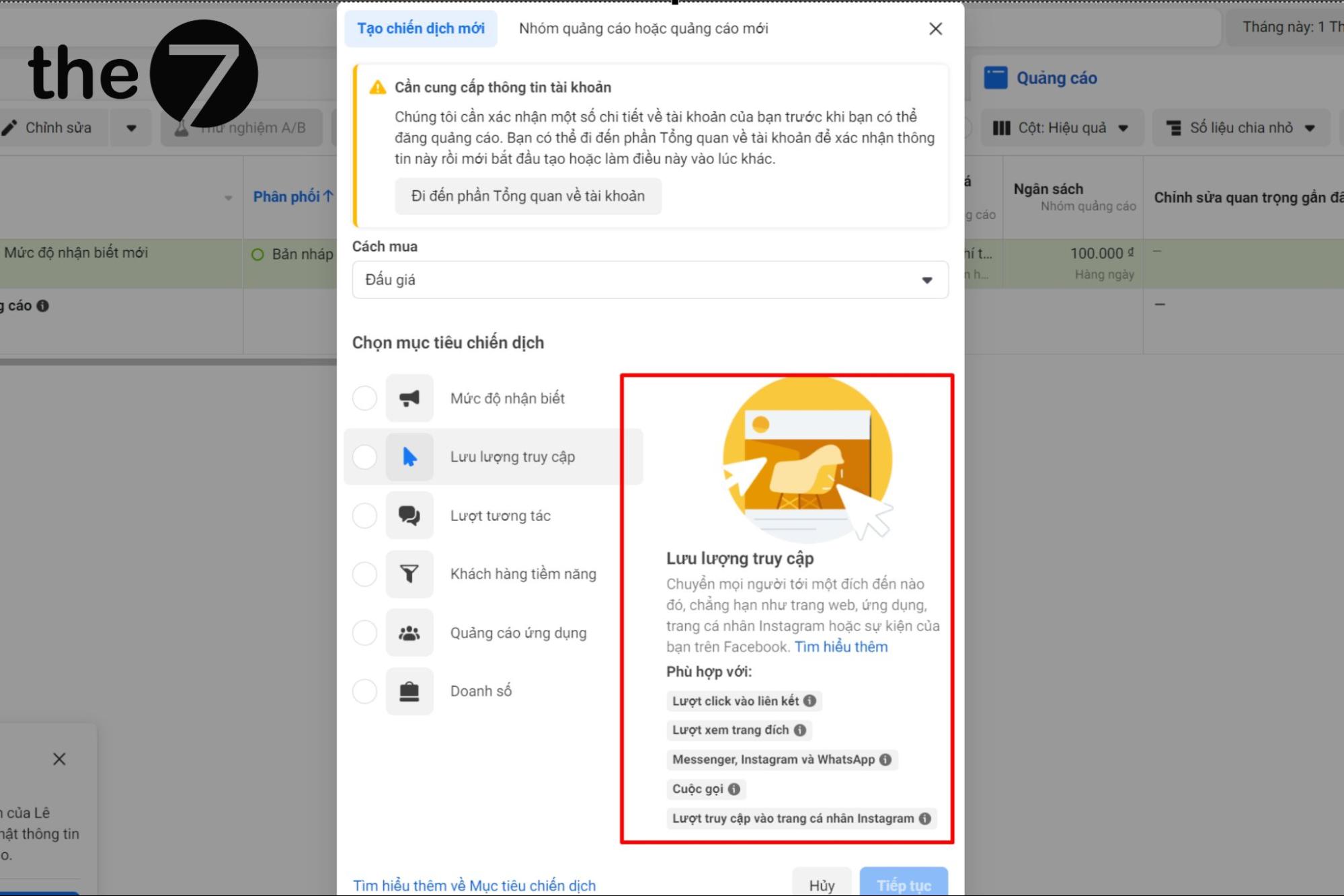
Traffic
With the traffic marketing objective, you can drive visits not only on Facebook but also to other marketing platforms, such as getting people to read a blog post, listen to a podcast, visit a landing page, or learn about your app. Facebook will deliver your ad content to potential audiences who are likely to click the link, based on their past activity.
However, if you want customers to take actions such as visiting your website to join, sign up, or buy, you should choose the Conversion objective (increasing conversions) instead of the traffic objective.
App Installs
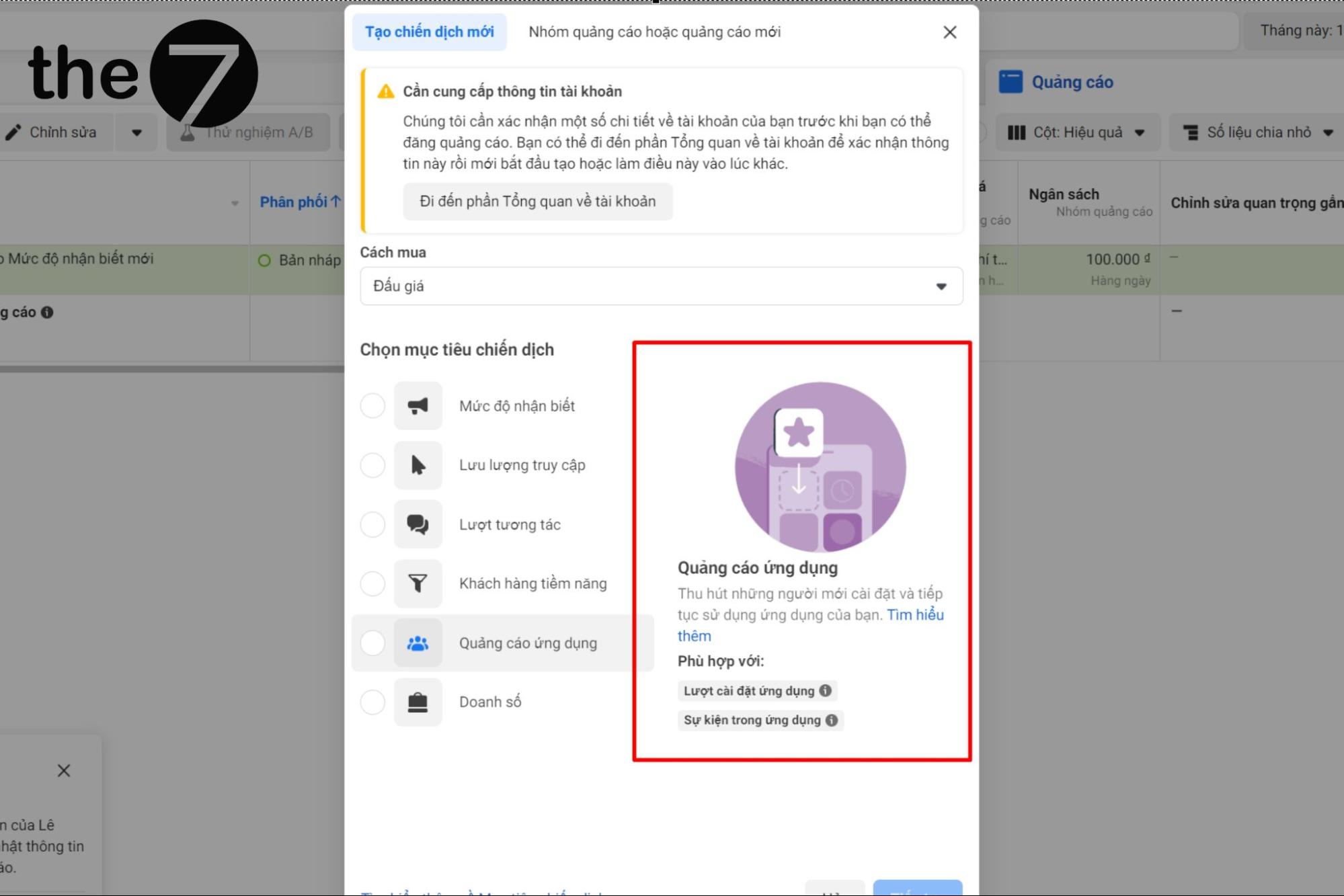
Your marketing objective is to increase app installs if you want customers to go to the store where they can download your business’s app.
Video Views
Use the video views objective when you are running video ads and what you want right now is not link clicks or conversions based on your products or services, but clicks to watch the video. This is a useful objective for future ad campaigns when you want to build an audience that engages with your videos.
However, to increase video views, you can also use the Traffic objective and choose video as the format for your content. If customers take a conversion action after watching the video, you should choose the Conversion objective (increasing conversions) and choose video as the format for your content.
Engagement
The post engagement objective, also known as Engagement, is the number of customer reactions to your ad content, such as likes, comments, and shares. This marketing objective can also be used in Facebook ad campaigns to increase Page likes, get event responses, or claim offers.

Optimizing for engagement means Facebook will deliver your ad content to the audience most likely to engage. This also expands your reach. When many people interact with your content, it can generate additional stories and new reach that you don’t pay extra for, beyond the original audience you set up for the ad. Choosing the engagement objective helps you build a base of loyal followers on Facebook that you can use for your next ad campaigns.
Lead Generation
Use Lead Generation when you want to build an audience of potential customers to drive sales conversions, rather than for other goals such as driving traffic to your website. Lead Generation lets you collect customer data such as names, email addresses, and phone numbers.
Example: Facebook will automatically fill in the customer’s name, email address, and phone number if you have chosen your business field and the customer has given their profile to Facebook, since most people use their most frequently used email address to log in to Facebook. This gives you a more accurate customer database.

Messages (Messenger)
Connect with potential customers through messages to encourage them to learn more about your business.
Choosing a Conversion Objective
When your goal is to increase specific customer actions such as joining, signing up, or buying, the conversion objective will help you achieve them.
Conversions
You need at least 15 – 25 conversions per week to optimize your marketing objective. This number of conversions gives Facebook more data about the converting audience and lets it infer which target audience is most likely to convert. It then delivers your ad content to that audience. 15 – 25 conversions is the minimum for Facebook to carry out this plan. 50 – 100 is the ideal number, giving Facebook even more data.

If data isn’t collected in sufficient volume, Facebook can’t learn the profile and behavioral characteristics of the converting customer group in detail. That means your ad content can’t be delivered precisely to the potential audience that brings valuable conversions.
Note that in this case, if you have high traffic but a very low conversion rate, you should choose the “Traffic” objective instead of “Conversions,” even if your main goal is to bring customers to your website to join, sign up, or buy.
Product Catalog Sales
If you already have an e-commerce store and want to promote your brand to interested customers, you can use the Product Catalog Sales objective. This requires you to sync your product catalog on Facebook and create a product feed before running the ad campaign.

Store Visits
The store visits objective applies if you have multiple business locations and want to promote your stores to customers who live nearby. First, though, you will need to set up business management for these stores. It’s an excellent way to make customers aware of your business and to deliver ads based on each customer’s location.

How to Match Your Facebook Ad Objective to Your Marketing Goal
Clarifying your marketing goal helps you choose the right approach for your ad objective. Conversely, based on the ad objective, you can evaluate how successful your marketing goal is. The table below details how the two objectives relate.
| Facebook Ad Objective | Marketing Goal | Metrics |
| Product/service awareness | Advertising activities that increase awareness of your business or product. In other words, this goal helps you reach the largest possible audience through your ads.
For a new business, or one that has just rebranded, it helps build brand recognition and make the brand more familiar to potential customers. |
Increase brand awareness
Increase reach Increase video views Increase store traffic |
| Traffic | – Increase traffic to your chosen online destination. Direct people to places such as your Facebook Page, Instagram shop, business website, app, and more.
– Take advantage of discount promotions to send potential customers to a web page describing your services/products. This in turn drives traffic to those destinations. |
– Increase traffic |
| Engagement | – Choose the audience most likely to engage with your business online and send messages or take actions that promote your brand.
– Start with potential customers to deliver maximum ad effectiveness. This helps people who are genuinely interested in your products or services get nurtured and move on to a purchase action. |
Engagement
Video views Messages (via Facebook Page) Conversions |
| Lead generation | – Collect leads through messages, calls, or sign-up prompts.
– When you want potential customers to subscribe to monthly updates from your Facebook Page. The goal is for leads to help you reach people who want to share their information and learn more about your business. |
– Number of leads found
– Messages (via Facebook Page) – Increase conversions |
| App promotion | – Encourage users to visit and use your app.
– Create app ad campaigns so potential customers buy through the app or try out new features in the app. |
– Increase app installs |
| Sales | – Find groups of potential customers.
– Reach customers through your website system. – Optimize for other actions: add items to cart. |
– Increase conversions
– Catalog sales |
Why Should You Match Your Facebook Ad Type to Your Marketing Goal?
Choosing a Facebook ad type that fits your marketing goal doesn’t just increase brand awareness and attract new customers on online platforms. It also boosts sales and your brand’s credibility in the marketplace. To get great results, you need to plan your execution strategy carefully. Each stage of the customer journey, and each stage of the business’s strategy, calls for different marketing goals that correspond to different ad formats.
In this article, The7 has helped you understand the types of Facebook ad objectives and how to choose a Facebook ads objective that fits your marketing goal. Facebook advertising is an effective marketing platform if you understand its true nature and plan your execution flexibly. If you need support from a team of professional technical specialists, contact The7 right away, and we will help you achieve your goals quickly at the most economical budget.
>>> You can also read more articles on the same topic:
-
The Simplest, Most Effective Way to Run Facebook Ads Yourself in 2024
- What Are Facebook Ads? Learn About Facebook Advertising in 2024
- 15+ Most Effective Ways to Target Facebook Audiences in 2024
- 9 Reasons Your Facebook Ads Aren’t Converting

Nguyễn Đình
Bảo




As CEO of The7, I am committed to sharing practical, useful knowledge with every reader. Every article on The7 is based on my 7 years of hands-on experience in marketing — Facebook advertising, LinkedIn advertising, Google advertising, and marketing strategy. I hope you take away plenty of insight from these posts and apply it successfully in practice.
Related Articles
What Is Facebook Ads? Popular Types of Facebook Advertising
What is Facebook Ads? This is surely a question many people wonder about, especially those just starting to learn about Facebook advertising. Let’s explore Facebook Ads from A to Z...

26 Predictions for Social Media Marketing Trends in 2025
It’s that familiar time of year again, when experts and analysts start revealing their predictions for the social media marketing trends worth watching, along with the shifts that promise to...

How to Run Facebook Ads: 2024 Step-by-Step Guide
How can you run Facebook ads effectively, reach the right target customers, and generate valuable conversions? This is probably a question many Digital Marketers and business owners ask when promoting...
Requirements for Running Facebook Ads Successfully and Effectively
When you start your Facebook advertising journey, mastering the basics is the key to success. So what are the requirements for running Facebook ads exactly? Let’s begin exploring and optimizing...

The Most Detailed Guide to Creating a Facebook Ad Account in 2024
To run a campaign on Facebook, the first thing you can’t do without is an ad account. Below, The7 will walk you through how to create a Facebook ad account....
Facebook Video Ad Size: The Most Accurate Guide for 2024
Running video ads is becoming the go-to choice for many businesses. In this context, the Facebook video ad size plays a key role in determining how well your post performs....