


How Do Companies Use AI in Digital Marketing?
Artificial intelligence (AI) is transforming the field of digital marketing. AI automates marketing tasks, from data analysis to campaign optimization, saving time and boosting productivity. AI tools can handle complex tasks that take people a long time or that humans simply can’t perform accurately.
With the artificial intelligence market growing rapidly, the industry is expected to generate revenue of up to $433 billion between 2020 and 2023. This shows that AI not only improves existing marketing processes but also opens up major growth opportunities for the future. In marketing in particular, AI is expected to see an explosion in revenue, passing the half-trillion-dollar mark in 2023, which reflects the strong growth trend and the great potential of AI in this field.
What Is AI in Digital Marketing?
Artificial intelligence in digital marketing is a combination of intelligent technology and human interaction. Using AI helps optimize and improve marketing processes, in line with the main purpose of AI-driven technological development. AI not only automates tasks but also delivers deep analysis and insight into data, helping marketers make more accurate and effective decisions.
Unlike ordinary digital tools, AI doesn’t just automate processes; it also mimics the way humans think in order to make decisions and carry out tasks. This makes AI a powerful support tool that helps marketing teams build more effective plans and workflows.
In digital marketing, AI runs on data. Data is the foundation AI needs to build and operate algorithm-based models. As a result, collecting and protecting data has become a critical issue in the modern business world, because it affects not only how AI performs but also privacy and information security.
In this field, the amount of data generated is enormous, and it is bought, sold, owned and needs to be protected. Faced with the challenge of managing and analyzing this Big Data, AI technology is the main solution. AI helps companies not only manage their data but also analyze it to improve the performance of their marketing activities.
How Companies Apply AI in Digital Marketing
Companies use AI in digital marketing to create new ways of reaching and communicating with their audiences. AI helps businesses collect and analyze data about customers, consumers, potential customers and target audiences. From there, companies can customize and roll out marketing campaigns accurately and effectively, addressing the specific needs and preferences of their target audience.
AI processes and analyzes data quickly and accurately. This gives marketers a comprehensive view and helps them develop effective marketing strategies. AI includes technologies such as Natural Language Processing (NLP) and Machine Learning (ML), which play an important role in many aspects of digital marketing. These include creating content tailored to each customer, sending marketing emails, delivering better customer service, supporting customers quickly, and running social media campaigns.
AI gives companies solutions that make their ads more effective while also taking up an important share of the advertising budget. With AI-powered digital advertising, companies can choose the right content to reach the right target audience, at the right time and in the right place.
AI-based marketing relies on a combination of data, thorough analysis and research. Today, combining AI with digital marketing is one of the most effective ways to attract potential customers and succeed with your marketing strategies.
Let’s look at some key ways to use AI in digital marketing:
See more: https://the7digital.com/ai-marketing/generative-ai-24302/
AI in Marketing Visual Creation
The role of AI in creating visual content is becoming more and more evident. In marketing, images play a key role in capturing the audience’s attention, and AI is helping to improve this area. Tools such as Midjourney and Leonardo.ai use AI to refine and optimize designs and to predict new trends, and the whole process happens quickly and efficiently.
One example of using AI for visual marketing is the collaboration between Heinz and the advertising agency Rethink. Together, they launched a distinctive ad campaign with images created entirely by AI, called “A.I. Ketchup.” They fed the AI creative prompts such as “ketchup in space,” and the images it generated clearly reflected Heinz’s brand identity, even without a specific label. The participation of the online community, with its own creative ideas, added to the value and appeal of the campaign.
Progress in visual marketing isn’t limited to producing content quickly. It also includes developing marketing strategies that match consumer behavior and preferences, helping create content that is more engaging and effective.
AI in Customer Relationship Management (CRM)

CRM is a business strategy focused on understanding and serving customers as well as possible. Companies use CRM to collect and analyze detailed information about their customers, such as their preferences and spending levels. When CRM is combined with AI, companies can gain a deeper understanding of customer behavior and needs, helping them design and run more effective marketing campaigns.
When CRM and AI work together, companies can understand consumer behavior, such as which products or services people are interested in and how much they are willing to pay. AI-powered CRM tools also help companies access and analyze marketing data faster, improving efficiency by about 95%.
With these tools, a company can develop an AI-based marketing strategy that attracts more potential customers and increases conversion rates. Marketers analyze consumer needs through this data and apply AI to boost sales. In this way, AI and CRM are helping to change the world of digital marketing.
Spotify is one of the companies using AI-based CRM tools. It uses Salesforce not only to strengthen its relationships with customers but also to provide multichannel service, which helps it meet customer needs quickly and effectively.
AI in Customer Service and Chatbots

As AI gets better at understanding and processing language, chatbot applications are becoming more useful for improving customer service and customer experience. Unlike traditional customer service staff, chatbots can handle many requests from many customers at the same time, with no limit on the number.
Another important benefit of AI is the ability to provide service around the clock, 24/7, so businesses stay connected with their customers at all times. This is especially important for keeping a competitive edge over businesses that don’t offer similar service. For companies operating internationally, multilingual support also helps them keep communication with customers flowing, unaffected by time zone differences.
Chatbots make it easy for users to access information about their accounts and spending and to set up personalized notifications. This has made financial management easier and more user-friendly. It is just one of the many ways chatbots and AI are advancing the financial industry and improving the customer experience.
AI in Digital Advertising
AI is changing the digital advertising industry. Major corporations such as Facebook and Google are using AI to optimize the performance of their ad campaigns. AI helps them analyze user data such as age, gender, interests and location, so they can show targeted ads to the right audiences and increase advertising profits.
Coca-Cola is also a good example of applying AI in advertising. It uses AI to automatically generate logos, copy and ideas for its ads, helping create creative and engaging ad content.
With the rapid development of AI, the number of ad campaigns that use AI keeps growing. Every day, more brands introduce new digital advertising campaigns created with AI technology.
Today, many brands are applying AI in digital advertising to improve performance and save costs. Large companies such as Unilever and Nestlé are also using AI tools, such as OpenAI’s DALL-E 2, to create unique and engaging ad content. According to the CEO of WPP, a digital agency for these companies, using AI in advertising can deliver returns of up to 20 times the amount invested.
Used correctly, AI brings countless benefits to digital advertising. AI support while running ad campaigns not only makes work more efficient but also improves conversion rates across campaigns.
That said, it’s also important to pay attention to the ethical issues around using AI. Proposals such as labeling AI-generated content are being put forward to increase transparency. To understand this issue better, you can read our blog post on the shift from traditional digital marketing to AI-based approaches.
In short, when used the right way, AI can bring major benefits to digital advertising, from increasing work efficiency to raising conversion rates.
AI in Content Marketing
AI is also having a growing impact on content marketing. One of AI’s big benefits is that it makes targeting audiences easier in digital marketing. Using these insights, marketers can reach users effectively, attract more potential customers and drive digital conversions.
Nestlé is one of the companies that has taken advantage of AI in content marketing. The brand uses Natural Language Processing (NLP) technology to create personalized content for different audience segments, improving the performance of its content marketing campaigns and increasing sales.
AI is helping strengthen content marketing by creating content that is more relevant to website visitors. Using AI to create content speeds up production and allows content marketers to produce more digital content. We encourage you to try AI-based content tools such as Jasper.ai, Writesonic and ChatGPT to see whether they fit your content marketing goals. Once you’ve figured out how to put AI to work, you can use it to create many different types of content, from blog posts and social media content to video scripts and ad copy. However, editing AI-generated content is essential to make sure it meets marketing standards, as experienced marketers such as Whitney Cornuke of TalentLaunch advise.
Alex Cattoni, a marketing expert, has also used ChatGPT to create content and shared her thoughts on the experience.
“AI is not a perfect solution for writing high-converting ads, nor is it a shortcut to building trust in business. It can’t completely replace a writer’s creativity either. However, if you use it smartly and creatively, AI can become a powerful support tool that helps you develop ideas and streamline your work.”
If you’re interested in using ChatGPT effectively for writing ad copy and want to explore how to apply it for the benefit of your company, you can watch the full video to learn more.
AI in SEO
Marketers increasingly rely on AI to adjust their SEO strategies to search engine algorithms. SEO requires attention to both technical and semantic aspects. Using AI in SEO helps improve a website’s search rankings and also makes it possible to develop more flexible content and strategies for your business.
According to research from HubSpot, most marketers say they use keyword rankings and organic traffic as the main metrics for evaluating the performance of their SEO strategies.
With the explosion of AI, many companies are focusing on applying AI to their SEO practices. For example, STACK Media used AI to identify popular keywords, analyze their positions on search engine results pages (SERPs), and conduct research to determine effective content topics.
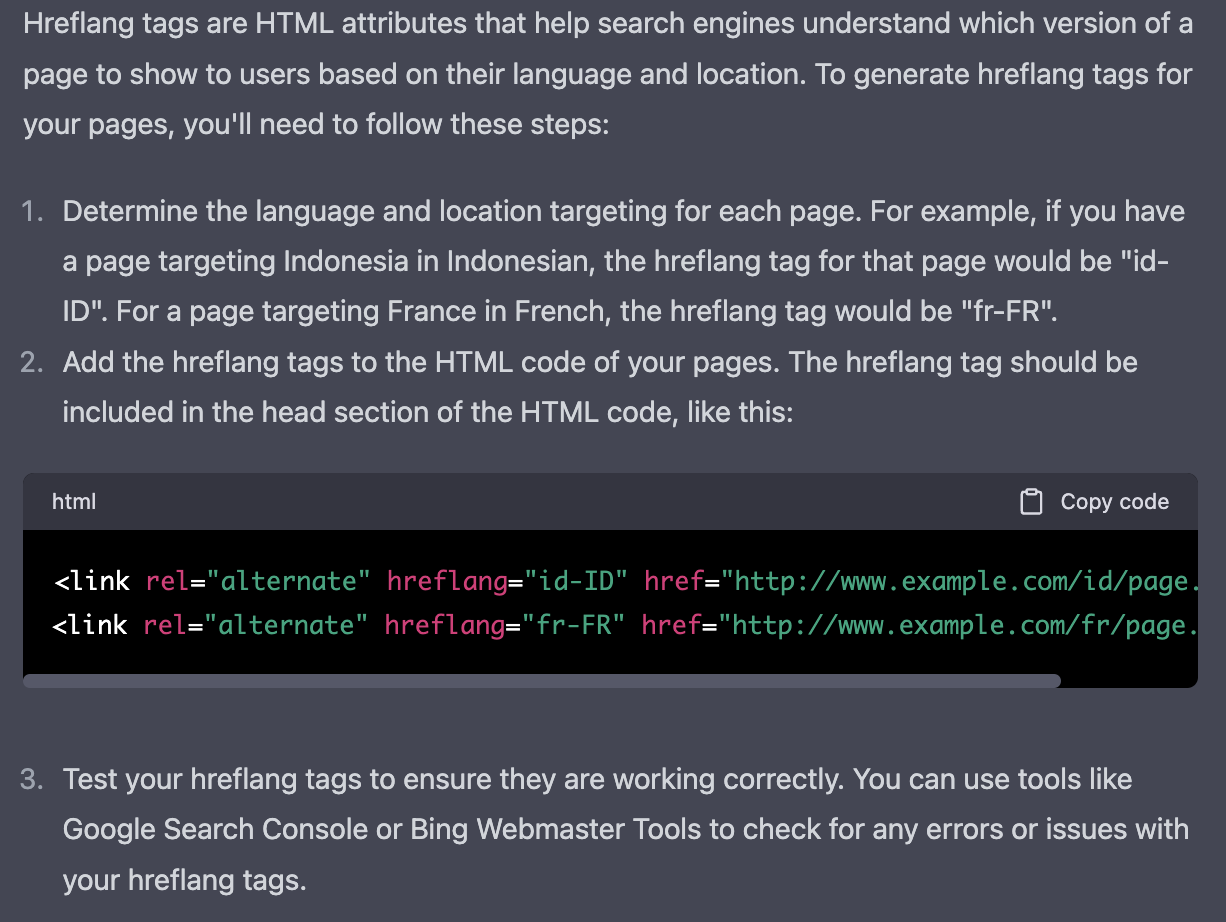
AI also helps improve the technical elements of a website. You can use AI to create Hreflang tags, add Schema markup for FAQ pages, set up robots.txt rules, and build links. Aleyda Solis, an SEO expert, shared in her article on using ChatGPT for SEO that writing short, clear prompts is enough to get these tasks done.
For an example, let’s try creating Hreflang tags with ChatGPT:

AI and User Experience (UX)
To create a good user experience (UX), human involvement is important and irreplaceable. Although AI is now helping solve optimization problems for many types of content, it can’t yet fully replace the role of humans in this field. To better understand the role of AI in UX, you can watch a video from a UX designer on YouTube, where they introduce the applications and limits of AI in UX design.
In user experience (UX) design, AI is helping combine human creativity with digital technology. AI helps generate new ideas by making technical work easier, giving marketing teams more time for creative work.
At the same time, AI tracks and learns how users interact with websites, and provides detailed insight into how they use content. It knows what we like and can guess our preferences. When customer data is combined with AI, each user gets a personalized experience, making every product unique and tailored to the individual.
For example, Netflix’s Search feature lets users find new videos by typing in keywords that reflect their entertainment interests. Based on the data collected from these searches, AI creates a personalized home page that recommends content matching each user’s tastes.
As explained in this video, Netflix uses AI to create a unique home page for every user. The goal is to keep users interested and encourage them to keep watching content on its platform.
What Is the Future of Artificial Intelligence in Marketing?
AI is becoming an increasingly important part of digital marketing, with its use and benefits growing every day. Although we have seen a lot of progress, the reality is that we are only beginning to explore what AI can do.
AI can mimic the way humans think and analyze, and it can also adapt to different situations. This means that in the future, AI could open up many new opportunities in marketing, helping companies create personalized strategies, automate the marketing process and analyze data more accurately.
Today, AI is used not only to automate simple marketing tasks but also to analyze complex data, plan strategy and communicate with customers in sophisticated ways. We have started to see its major impact, but this is only the first step.
Experts believe that AI will eventually be able to think, analyze and adapt much like human intuition and vision.
Imagine marketing systems that not only process huge amounts of data but also understand customers’ emotions and detailed preferences! These systems could soon recognize social trends, adapt to market fluctuations and anticipate new consumer needs.
As AI develops further, we will see a unique blend of AI’s precision and human creativity, transforming the whole field of marketing in ways we have never seen before.
What Are the Challenges and Concerns in AI-Based Digital Marketing?
AI brings many new opportunities to digital marketing, but using it requires careful consideration, especially when it comes to privacy. Handling data transparently and following international privacy standards is important for keeping users’ trust.
Although AI improves many processes, qualities such as empathy and intuition remain uniquely human. Keep in mind that AI can reflect the biases in the data it has been trained on, so regular audits and human oversight are necessary to make sure marketing is carried out ethically and effectively.
So how can marketers use AI while keeping their work authentic and personal? The pioneers of future marketing will have to find ways to skillfully combine technology with genuine human connection.
If you want AI to become a key element of your marketing strategy, we can help you avoid wasting time searching for the right agencies. Below is our selection of the top AI marketing companies in Vietnam, ready to use AI to improve your marketing strategy and boost your return on investment!

Nguyễn Đình
Bảo




As CEO of The7, I am committed to sharing practical, useful knowledge with every reader. Every article on The7 is based on my 7 years of hands-on experience in marketing — Facebook advertising, LinkedIn advertising, Google advertising, and marketing strategy. I hope you take away plenty of insight from these posts and apply it successfully in practice.
Related Articles

7 Social Media Trends for 2026: The Era of Real Value, Real Conversion, and Real People
Table of Contents Toggle Social media is entering the biggest restructuring of the decadeTrend 1: Why is buying directly in-app becoming the new standard for 2026? (On-Platform Conversion)What should businesses...
Artificial Intelligence (AI) Helping Solve Environmental Problems: Potential and Challenges
Artificial intelligence (AI) is driving a powerful revolution, reshaping life across many fields. With the strength of breakthrough technologies, AI is expected to be a key to solving global environmental...
How Coca-Cola Cleverly Uses AI in Flavor Development and Media Strategy
When people think of Coca-Cola, they usually picture explosive ad campaigns and a vibrant brand image. Few realize, however, that this beverage “giant” is quietly driving a marketing revolution with...
GPT-4o Officially Launches: The New Multimodal Super AI
OpenAI’s ChatGPT has just taken a major leap forward with GPT-4o (also known as Omni), a new generation of multimodal super AI. Beyond understanding language, GPT-4o handles images, video and...
5 AI-Driven Content Trends Taking Off in 2024
In the ever-changing world of marketing, innovation is the key to success. Staying ahead of trends and understanding customer needs are essential for any business that wants to claim a...
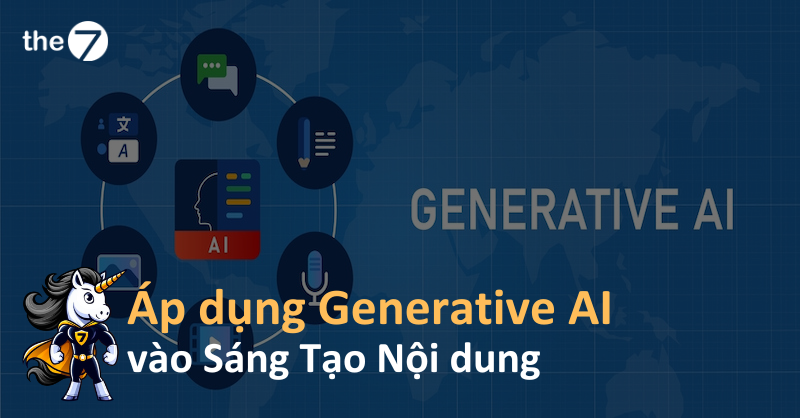
Applying Generative AI to Content Creation
Content creation has moved to center stage. Whether it’s a blog post, a marketing campaign, or a social media update, businesses and individuals are constantly competing to produce fresh content...