


What Is IMC? 6 Effective Integrated Marketing Communications Tools

IMC, or integrated marketing communications, plays a major role in getting a business’s message across. So what is IMC? Which tools can you use to carry it out? What does the IMC planning process look like?… The7 will walk you through all of these questions in the article below.
Explore The7’s marketing services:
- Full-Service Marketing
- Digital Marketing Services
- Marketing Strategy Consulting Services
- Online Advertising Services
1. What Is IMC?
IMC stands for Integrated Marketing Communications, or integrated communications for short. It is the process of unifying a brand’s message so it reaches your target audience consistently. That message appears across all of the brand’s communication channels. Today, IMC is one of the most widely used approaches among businesses.
Integrated communications (IMC) is considered a strategy that gives customers a seamless experience. Whether on your website, Facebook Page, YouTube or in the real world, customers encounter the same specific message, which stays unchanged for a set period of time.
2. The Role of IMC (Integrated Marketing Communications)
The role of integrated marketing communications can be summed up by the Vietnamese saying “Một cây làm chẳng nên non, Ba cây chụm lại nên hòn núi cao” (one tree doesn’t make a forest, but three trees together make a tall mountain). In other words, when many tools work closely together and run smoothly side by side, everything gets done faster. The result is far greater effectiveness than any single activity could deliver on its own.
IMC brings businesses a wide range of benefits, such as:
- Higher communication effectiveness than standalone communication tactics.
- An easy way to deliver a consistent message through many tools and leave a lasting impression on customers’ minds.
- A brand image that spreads wider and faster through many different tools.
- Complementary communication that speeds up how fast your message spreads by staying focused on the original goal while reaching a broader, more diverse range of audiences.
- Support for businesses in capturing customer insights, which helps build a more effective strategy for attracting users.
- A boost to a business’s appeal in customers’ eyes and to its competitiveness against others in the same industry.
- Lower costs and higher profits for the business.

3. What Are the Pros and Cons of Integrated Marketing Communications?
IMC offers many outstanding advantages. Even so, the strategy still has some limitations. The details follow below.
3.1 Advantages of IMC
Saves money and delivers strong results: Using a single message across all of a brand’s channels saves as much cost as possible. It also makes the brand easy for users to remember.
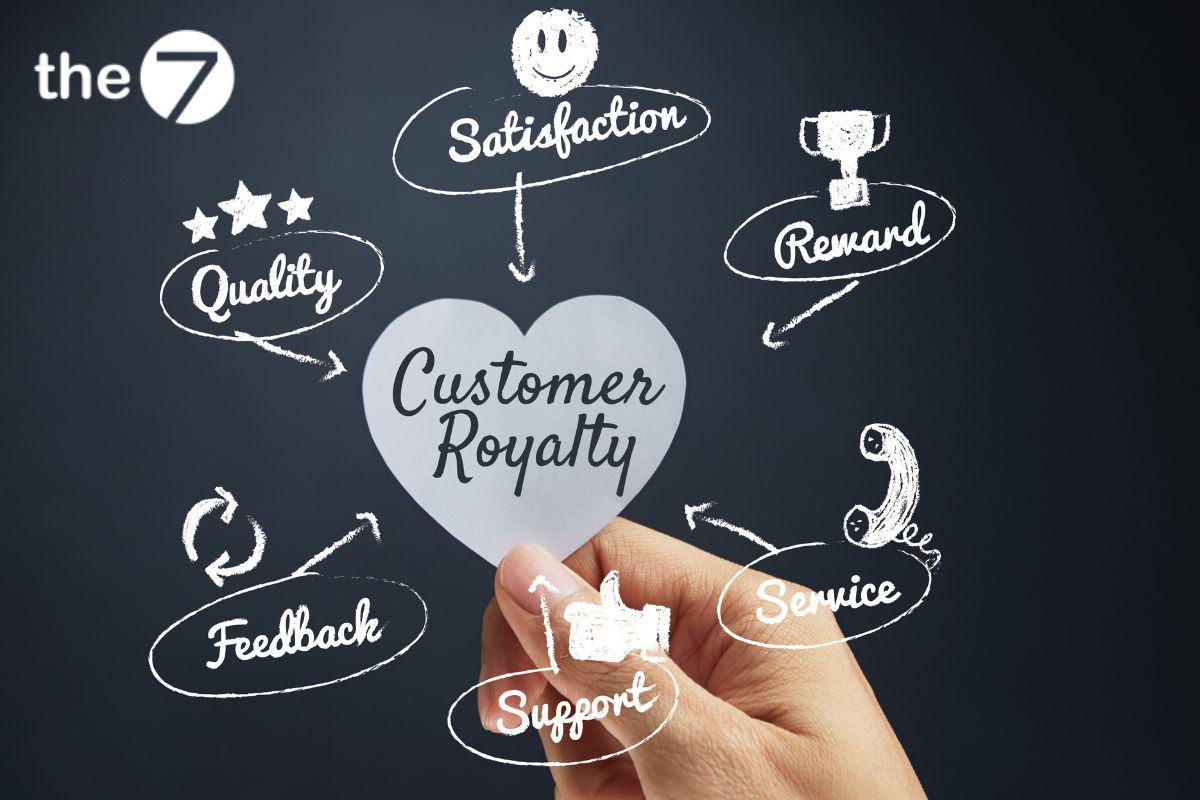
Builds trust and loyalty: When users see and remember a brand’s message regularly and often enough, trust comes easily. That, in turn, is the best way to build customer loyalty to the brand.
Multichannel presence: An IMC strategy aims to cover every communication channel the brand owns. At first, users may not be happy about this. Given enough time, though, they begin to care about, and even love, the message the brand conveys.
Improves brand awareness: Varied activities across communication channels all point to one specific message and one defined group of people. Users remember the brand because the message made an impression on them, and their awareness of the brand improves as a result.
Builds good relationships with customers: IMC campaigns are usually created from the perspective of the audience the brand is targeting. As a result, IMC helps connect the business with its customers and build a good relationship between them.
3.2 Disadvantages of IMC
Information overload: An IMC campaign involves a large volume of information from different departments, which can lead to information overload. Without a way to handle it, this can easily cause disagreements while you work.
Disagreements between departments: An integrated marketing communications campaign can only run thanks to ideas contributed by different departments. However, that is also what causes unnecessary disagreements. So, to get the best results from an IMC campaign, the departments involved should sit down and talk things through in detail. It is especially important that they understand each other’s work so everything runs more smoothly.
Difficulty measuring ROI: ROI is the net profit rate that businesses usually measure when running IMC campaigns. However, few businesses can get an accurate ROI figure while running communication campaigns in general, and IMC campaigns in particular.
Limited room for ideas: IMC activities are usually built from the customer’s and the brand’s point of view. Because of this, the creative team’s ideas get overlooked, which drains their enthusiasm for taking part in an integrated marketing communications campaign.
IMC is not for every business: IMC is a campaign that carries out communication activities on all of a brand’s channels. So, a business without enough money or people will find it hard to run an IMC campaign.
4. Who Are the Audiences in an IMC Campaign?
An IMC marketing campaign includes the following audiences:
Potential customers: These are the people a business expects will buy its products or services in the future. The potential customer group is usually outlined in advance, while the communication campaigns are being planned. This helps you save as much as possible on reach costs. The more accurately you define your potential customers, the higher the conversion rate you bring in.
Loyal customers: This is the customer group every business is after. Not only will they come back after using your product or service, they will also refer new customers to you. That helps the business keep costs as low as possible.
Former customers: These customers used the business’s services or products but have since switched to a competitor. At this point, the business needs to “pull out some tricks” to win them back and turn them into loyal customers.
Shareholders: These people own one or more shares in a particular business. They have the right to know about, or take part in, the process of running an integrated marketing communications (IMC) campaign. That gives them a basis for adding or withdrawing capital, depending on the results the campaign delivers.
Government: This applies to publicly owned businesses. In this case, the government sets regulations for the business. And if an IMC campaign is launched, the government will help the business as far as it reasonably can.

5. Top 6 IMC Tools Every Marketer Should Know
Many integrated marketing communications tools are in use at businesses today. Here are 7 popular IMC tools you can consider:
Advertising
These are activities that send out the striking message a brand wants displayed again and again across a wide area. This helps you reach a large number of customers and imprint the message on viewers’ minds.
Today, advertising comes in a growing variety of formats, both paid and free, such as:
- Print advertising: Magazines, newspapers, flyers, trade publications,…
- Outdoor advertising: Billboards, posters, signage, street advertising boards, ads on vehicles,…
- Electronic advertising: TV, radio, online ads,…
- Direct advertising: Sending emails, making phone calls,…
- Point-of-sale advertising: Trade fairs, events, exhibitions, POSM, giveaway items,…
The downside, however, is that this type of advertising is one-way and makes it hard to interact directly with customers.

Direct Marketing
This is one of the effective IMC communication tools. Direct marketing uses channels such as order phone calls, emails, product catalogs and online sales channels to communicate with customers. Its main purpose is to sell products straight to users without going through retailers. It saves time and makes customers feel more comfortable and personally served.
The downside is that customers who have no need yet may feel bothered by sales consultants.
Promotion
Everyone loves receiving gifts and enjoying special perks. Playing on this psychology, many businesses have applied IMC to attract customers, spur purchases and increase sales in a short period of time.
The downside of this approach is that more and more businesses run promotions all year round. Customers have gradually grown tired of them and no longer get very excited about promotions.

Sponsorship
One of the most widely used IMC tools is sponsorship. A brand sponsors a TV program, film, concert or event with cash or in-kind contributions. In return, the program introduces your brand and brings its image into the show so more customers get to know it.
Common forms of sponsorship include showing the brand logo in programs or events, airing ads during the program, being invited to take part in the program, giving a speech, and having the sponsor introduced,…
PR
This format is commonly used to build credibility and increase brand awareness. Through IMC, good real-world information easily leaves a positive impression of the brand in the public’s mind.
Common IMC formats for PR include press conferences, event organizing, news coverage of a product or brand, and participation in community and social activities…These all aim to improve the brand’s image.

Personal Selling
Personal selling is one of the IMC marketing tools that delivers optimal results. It is traditional, face-to-face selling, directly between a salesperson and a customer. Buying in person has the advantage that customers get to try the product firsthand, which builds trust and makes the pitch more persuasive. It is easy to interact flexibly and respond to customers’ needs or questions.
This is something other formats cannot do, and it has the highest rate of successfully closing sales. However, to sell effectively, the salesperson needs a deep understanding of the product and strong communication and persuasion skills.
6. The 6-Step IMC Planning Process
To build an effective integrated marketing communications plan, a business needs to follow a clear direction through these steps:
Step 1: Define the Goal of Each IMC Campaign
Setting a clear goal gives the business an accurate direction and a foundation for the consistent content and messages that follow. A goal might be expanding the market, attracting customers, introducing a new product, raising brand awareness,… You can use the S.M.A.R.T. model to set your goals. Specifically:
- S – Specific: The goal should be specific;
- M – Measurable: The goal can be measured;
- A – Actionable: The goal set for the IMC campaign is feasible;
- R – Relevant: The goal is relevant to the issue you are addressing;
- T – Time-Bound: There is a specific deadline for achieving the goal.
Step 2: Define Your Target Customer Profile
This is the group of people whose characteristics fit your product and who have a high need and ability to buy. Defining your target customers helps you reach the right people with the right needs, save on communication costs and increase the conversion rate.
You can define your target audience based on demographics, buying behavior, interests, habits,… You can research and analyze this data from the information you have collected. Or you may need to run a market survey to get the most accurate data.

Step 3: Identify Target Customer Insights
Analyze user psychology and uncover the “unspoken truth” that brings you closer to customers’ thinking and lets you guide their actions. That lets you create messages that “hit the mark” with their desires and spark curiosity and the wish to own your product.
Step 4: Find the Core Idea
The core idea (the big idea) is the guiding compass that helps a business picture the IMC activities needed to solve the problems that the insight has not yet solved for customers. A big idea must grow out of the insight, carry a sufficiently persuasive message, connect to the brand, and come with a memorable, striking slogan. You also need to make sure it fits the budget, that the idea is feasible, and that it clearly shows the brand’s role in the IMC campaign.

Step 5: Plan & Implement IMC
Start by choosing the consistent message the business wants to convey. Then select the communication channels that suit each audience group and each stage. It is important to calculate a suitable budget for execution and divide it among the smaller pieces of content so you get the best optimization while still delivering good results.
In addition, pay attention to the specific tasks to be carried out, the people in charge and the matching deadlines. Once the plan is made and the departments are aligned, you can start rolling out the Integrated Marketing Communications (IMC) campaign.
Step 6: Evaluate the Effectiveness of IMC Communications
Evaluating results after the campaign helps you draw many lessons and gain experience so you can adjust later activities to fit better. The evaluation covers:
- Communication impact,
- Reach from social media,
- Number of actual customers,
- Customer response rate,
- How far the message spread,
- Purchase conversion rate,…

7. Factors That Make an IMC Campaign Succeed
For an IMC campaign to succeed and deliver optimal results, pay attention to the factors below:
- Adjust flexibly to fit: While a campaign is running, unforeseen or unwanted issues are unavoidable. So you need to stay flexible and adjust the plan to suit the current situation.
- The more specific the goal, the better: This is the first thing to do when running an IMC campaign. A specific goal helps the execution team firmly grasp the issues and the content. That brings optimal results to your integrated marketing communications campaign.
- A clear workflow: This helps the business keep mistakes to a minimum. A specific workflow also helps limit unnecessary disagreements between departments.
- A wise, experienced leader: This is the person responsible for, and with the final say over, the IMC campaign. So they need strong expertise and sound decision-making, and the IMC content has to suit the business.
8. Classic IMC Case Studies From the Market
8.1 IMC Case Study 1: Apple – “Get a Mac” (2006-2009)
8.1.1 Situation and challenges
Before the campaign began, Apple’s sales in the personal computer (PC) market had been declining. Apple faced a major challenge in convincing consumers that its products were better than its competitors’.
After running a survey on American consumer satisfaction, Apple found that its Mac computers were consistently rated higher than PCs for customer satisfaction.
PC users could run into many different problems with their computers, and Apple wanted to set the Mac apart by handling those problems better. In short, Apple wanted the public to see its Mac products as superior to PCs, even though Macs might run into similar problems.
Apple also wanted to win over the audience by focusing on the weaknesses of PCs, from being prone to viruses to being unable to give users creative freedom. The aim was to affirm the quality of the Mac and build trust among users.
8.1.2 Implementation strategy
Goal
The main goal of the “Get a Mac” campaign was to grow Apple’s market share and persuade PC users to switch to Mac computers. Apple wanted to challenge the belief that the PC was consumers’ top choice and introduce the Mac as an attractive alternative.
Strategy
Apple’s strategy for the “Get a Mac” campaign focused on turning the Mac and the PC into characters in humorous, easy-to-follow situations.
The Mac character, played by actor Justin Long, represented a great, confident, trouble-free computing experience. The PC character, played by John Hodgman, symbolized a frustrating computing experience, one prone to viruses and trouble.
Execution
The campaign consisted of a series of TV ads, each focusing on a specific area where the Mac outperformed the PC. The ads used a simple, visually appealing set, with the Mac and PC characters taking part in casual conversations to highlight the strengths and weaknesses of each platform.
8.1.3 Key messages
The “Get a Mac” campaign aimed to deliver several key messages to its target audience:
- Macs are more reliable and less prone to viruses than PCs.
- Macs offer an intuitive, user-friendly interface.
- Macs are compatible with creative software and provide better tools for artistic work.
- Macs offer seamless integration with other Apple devices and services.
8.1.4 Results
After just the first few ads of the campaign, sales rose significantly, by 12% in the first quarter.
In the last quarter of 2006, after more ads were released, Apple sold a record 1,600,000 Macs, an increase of 39%. In the previous quarter, Apple had sold more than 2,300,000 Macs.
Sales continued to grow substantially throughout the 4-year campaign.

8.2 IMC Case Study 2: Coca-Cola – “Share a Coke” (2011)
8.2.1 Background and challenges
The campaign launched at a time when digital technology was booming, along with the explosion of social media platforms. Digital communication and social media were increasingly leaving people disconnected in real life. Parties and get-togethers outside the home had gradually given way to communicating and making friends on social networks such as Facebook, Twitter, Myspace…
In addition, summer is always a key selling season for Coca-Cola and other beverage brands. However, with new product launches, brand extensions and the removal of traditional products, the soft drink market was becoming ever more fiercely competitive.
Carbonated drinks once favored by young people no longer held the interest of young Australians. An earlier study even showed that 50% of young consumers had never drunk Coca-Cola.
In this context, Coca-Cola needed a big idea for its campaign, one strong enough to attract a young audience aged 18 to 24 in Australia, prove the brand’s ability to adapt, and encourage users to connect with the brand both online and offline.
In the summer of 2011, Coca-Cola teamed up with Ogilvy and Mather Australia, a partner of the advertising agency, to launch its ambitious digital communications campaign called “Share a Coke”.
8.2.2 How it was carried out
Goals:
Marketing: Increase summer revenue and make a mark with a young audience, getting them to talk about Coca-Cola more and consume more of it.
Communications: Share a Coca-Cola with your friends, whether a close friend, an old friend or even someone you just met, through the “Share a Coke” campaign.
The brand also hoped the campaign would create a positive perception of Coca-Cola in consumers’ eyes, encouraging them not only to love the brand but also to actually consume the product.
Strategy:
When communicating, young people in Vietnam usually call each other by name, and using each other’s names is the best way to start a conversation. Young people also place great value on personalization and self-expression.
⟹ A creative idea was to replace the Coca-Cola logo on bottles and cans with names that are popular in Vietnam, such as Huy, Linh or Trang, and release them.
Execution:
Release print ads about the campaign in major newspapers such as Thanh Niên, Tuổi Trẻ, VnExpress…
Place Coke bottles in refrigerators at points of sale nationwide, letting customers look for and buy bottles printed with their own names. They could take photos and post them on social media for a chance to appear in Coca-Cola’s TV commercial.
Compose 150 songs matching 150 popular names in Vietnam and broadcast them on national radio stations. Young people could download these songs and share them on Facebook.
Coca-Cola also developed an app that let users create a virtual Coke bottle printed with their own name or photo and place it in Coca-Cola’s TV commercial.
Throughout the campaign, Coca-Cola kept listening to customer feedback through Facebook and mobile drink stands. It also added 50 new names to the list, bringing the total number of personal names printed on Coke bottle labels to 200 in Vietnam alone.
In Vietnam specifically
The “Trao Coca Cola, kết nối bạn bè” (Share Coca-Cola, Connect Friends) campaign, a Vietnamese adaptation of Share a Coke, made a big splash in Vietnam when Coca-Cola bottles printed with users’ names became the most widely shared phenomenon on social media starting June 9, 2014.
Coca-Cola released two main TV commercials with two main messages: “Trao Coca Cola, cả nhà vui thả ga” (Share Coca-Cola, the whole family has fun) and “Trao Coca Cola, kết nối bạn bè”. The two commercials began airing on June 1, 2014 and June 6, 2014, respectively.
On social media, a program for creating cans and sharing them on Facebook to win prizes ran from July 11 to August 11, 2014 on Coca-Cola’s official fanpage in Vietnam.
The Coca-Cola Share Day event in Vietnam took place on June 9, 2014 to kick off the campaign. More than 1,000 Coca-Cola volunteers handed out 130,000 bottles of Coca-Cola printed with names to young people at 200 locations across Saigon and Hanoi.
In addition, Coca-Cola Vietnam also ran an activity of printing names directly on cans at more than 50 supermarkets and cinemas in 17 provinces and cities. Consumers could get a can printed with their own name when they bought Coca-Cola products worth 35,000 VND at a supermarket or a combo pack at Galaxy cinemas. The program ran from June 26 to August 10, 2014.
In Vietnam, Coca-Cola launched 95 different packaging versions, including 8 family relationships, 67 personal names and 20 unique personalities.
8.2.3 Results
The campaign far exceeded expectations, with millions of Vietnamese people taking part. It also won a Gold Lion in the Outdoor category at Cannes Lions 2012, with impressive results.
- Coca-Cola consumption rose 7%.
- The campaign earned 18 million views across social media channels.
- On Facebook, traffic grew 870%, and the number of people talking about the Coca-Cola page in Vietnam ranked first at the time and 23rd worldwide. 76,000 Coca-Cola bottle designs were created and shared on Facebook.
- 378,000 custom Coca-Cola bottle labels made by users were printed at Westfield shopping centers in Australia.
In Vietnam, the “Trao Coca Cola, kết nối bạn bè” campaign in summer 2014 achieved admirable results. Coca-Cola’s Facebook Page reached 200,000 likes and generated more than 40,000 conversations about printing names on Coke cans. The keyword “Trao Coca Cola kết nối bạn bè” returned 54,400 results on Google, and the keyword “Share a Coke Vietnam” returned as many as 548,000 results after just one month.
According to Buzz Metrics, a tool that measures discussion topics on social media, the campaign helped Coca-Cola account for the majority of topics discussed in Vietnam in June and early July. This was a very proud success for the Coca-Cola brand.

That covers the details of IMC that The7 wanted to share. Today, brands can carry out an integrated marketing communications plan on their own using basic communication tools. It will be more professional, however, if you choose The7’s professional integrated marketing communications solution, which helps you boost your marketing results at the most reasonable cost on the market. Contact The7 today for fast, detailed consultation via the hotline 0827386886 .
You can also explore more articles about marketing:
- What Is Marketing? The 13 Most Popular Types of Marketing in 2024
- Total Marketing: What It Is, Its Role and How to Plan It in 2024
- Traditional Marketing Explained: Traditional Marketing vs. Digital Marketing
- How to Run Effective Online Marketing Advertising
- 10 Popular Forms of Digital Marketing Advertising in 2024
- What Is IMC? The Tools Included in IMC
- A Step-by-Step Guide to Building a Marketing Plan From A to Z
- Direct Marketing: What It Is and Its Role for Businesses

Nguyễn Đình
Bảo




As CEO of The7, I am committed to sharing practical, useful knowledge with every reader. Every article on The7 is based on my 7 years of hands-on experience in marketing — Facebook advertising, LinkedIn advertising, Google advertising, and marketing strategy. I hope you take away plenty of insight from these posts and apply it successfully in practice.
Related Articles
Building a Full-Funnel Content Marketing Strategy on LinkedIn
Table of Contents Toggle Why Build Content Marketing for the Full Marketing Funnel? (Why Full-Funnel Content Marketing?)Creating Your Strategy (Creating Your Strategy)Implementing Your Content Strategy (Rolling out your content strategy)Summary...

Designing Creative Content for LinkedIn
Table of Contents Toggle Why Is Good Creative Content So Important? (Why is Good Creative Important?)Key Components of Creative Design (the core elements of creative design)Summary (summary) Why Is Good...
Building an Organic Business Presence on LinkedIn With a LinkedIn Page
Table of Contents Toggle Why Have a LinkedIn Page?Establishing Your LinkedIn PageKeeping Your LinkedIn Page ActiveThe Measure of SuccessSummary About LinkedIn Page (Summary) Why Have a LinkedIn Page? For a...
6 Best LinkedIn Marketing Strategies for B2B in 2026
Table of Contents Toggle LinkedIn 2026: Where B2B Decisions Get MadeStrategy #1 – Why Is LinkedIn the Best B2B Marketing Channel Today?1. Decision-makers are concentrated here2. Users are in work...

7 Social Media Trends for 2026: The Era of Real Value, Real Conversion, and Real People
Table of Contents Toggle Social media is entering the biggest restructuring of the decadeTrend 1: Why is buying directly in-app becoming the new standard for 2026? (On-Platform Conversion)What should businesses...

What Is TikTok Marketing? Effective TikTok Marketing Strategies
TikTok has been topping the global rankings of the most downloaded and most visited apps. That makes it a gold mine for marketers who love creativity. In this article, The7...