


What Is a Customer Profile? 5 Ways to Create One
Most business owners have big goals: growing their company exponentially, leading the market in customer numbers, and reaching millions of dollars in revenue.
But before your company can hit goals like these, you need a plan for building a solid customer base.
This is where a Customer Profile becomes very useful. It makes it easy to tailor your tactics to the specific situations, challenges, and needs of the customers most likely to buy your products and services.
In this article, The7 shares everything you need to know about the Customer Profile. What is a Customer Profile? How can you benefit from it, and how do you create one for your business?
What Is a Customer Profile?
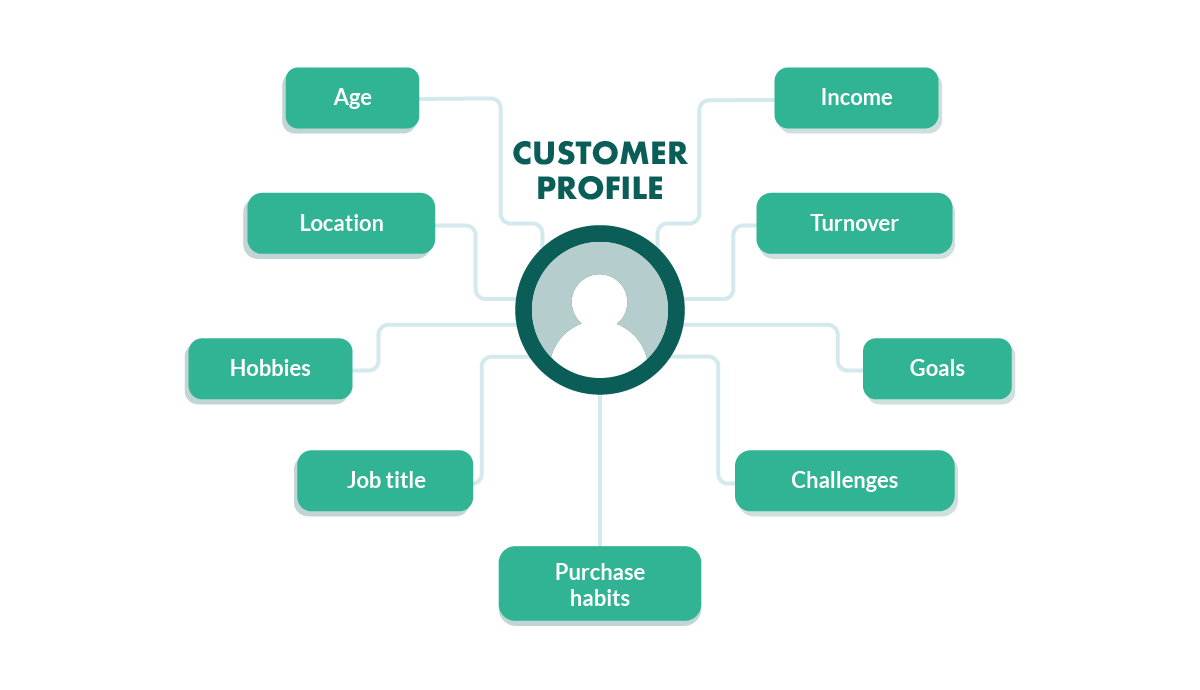
A Customer Profile (sometimes called a consumer profile) is a document that lists the pain points, preferences, buying habits, and demographics of a company’s customers.
It is usually presented like a description of a real person, with a name and a photo or avatar. Here is an example:
Building a customer profile can help you run better marketing campaigns and, in turn, increase your business’s profits. With all of that useful information, you can decide which strategies to pursue and which to skip.
Example: if the profile shows that your ideal customer likes to engage with brands on Instagram, you should probably focus on improving your Instagram marketing.
It’s worth noting that a Customer Profile for a B2C company looks different from one for a B2B company. Define your ideal customer using flexible attributes, such as:
- Company size
- Revenue
- Industry
- Location
So if you sell to other companies, you’ll need to find out how big they are, what sector they operate in, and how much they earn on average in a year.
Benefits of Creating a Customer Profile
You can create a Customer Profile to learn more about your ideal customers: who they are and what they do.
Content Reaches the Right Target Customers
Say you’re a nutritionist and you want to email your clients weekly with dietary recommendations.
If your Customer Profile shows that young gym-goers between 20 and 30 are your main customers, you can tailor your content in a way that fits their lifestyle and interests.
For example, you could feature a recipe for a low-calorie pizza or burger in your email, since millennials love these dishes.
Cheaper Advertising
Once you have an ideal Customer Profile in hand, you know exactly which characteristics your target customers share.
Details like these improve your marketing because you can use them to proactively target precise consumer segments.
For example, if your Customer Profile shows that potential buyers use iPhones to browse the web and shop online, you can include their device preferences in your audience targeting when you create Facebook ads for your business.
Simply put, running ads for less is much easier when you know a thing or two about the customers you want to reach.
Customer Loyalty
When you know what your customers like and dislike, you can engage with them on a personal level. This improves their overall experience with your company and builds loyalty to your business.
According to the Customer Experience Matrix, 79% of consumers are likely to stay long term with a business that understands them. Consider that a 7% increase in loyalty can boost a company’s profits by up to 85%.
When you uncover the desires and pain points of your target customers, you can personalize their experience and also provide better resources to keep them loyal to your brand.
Product-Market Fit
In many cases, companies serve several groups of consumers with different behaviors, tastes, and preferences. If you’re one of those companies, you need to know what each group wants and how they want it.
You can win sales by running promotions and discounts, but at some point you’ll need to segment your customers and adjust your services to fit their needs.
By creating a Customer Profile for each audience group, you’ll have useful information for adapting your product to different segments.
For an e-commerce product, you could offer different features depending on whether a senior or a young adult ordered your item.
Example: it might be a good idea to send older customers a basic guide to your upcoming products.
The Difference Between a Customer Profile and a Buyer Persona.
Marketers often use ‘Customer Profile’ and ‘Buyer Persona’ interchangeably. But they are two different terms that serve different purposes.
A Customer Profile describes the type of person who fits your product or service. It tends to include an individual’s demographics, lifestyle attributes, and behavioral attributes.
A Buyer Persona, on the other hand, is a hypothetical representation of the customer you want to reach, based on qualitative data points such as goals, motivations, purchase decision points, and so on.
So while both a Customer Profile and a Buyer Persona represent the types of customers you want to serve, a Customer Profile lets you dig deeper into their demographics and other attributes.
These details can help you find new potential customers and tailor your marketing campaigns to them.
5 Steps to Create a Customer Profile
Don’t rely on guesswork alone when deciding what to include in your Customer Profile.
Instead, take a systematic approach to collecting information and data about your ideal customers.
By understanding things like customer needs and shopping behavior, you can find the best ways to reach this target audience.
Here are 5 simple steps to create a Customer Profile:
Identify Your Best Customers
The first step is to find and analyze the people who love your product or service.
From your current customer base, list 5 to 10 customers who get the most value from your services, where value means how well you’re helping them reach their goals.
Some questions to ask yourself to find your best customers:
- Which customers have stayed with my company the longest?
- Who is recommending my business to their friends and family?
- Which customers have I featured in my case studies?
If you’re a new company without many customers to work with, think about the kind of person who would get the most out of your product or service.
Example: if you’re selling ergonomic desk stands, you might consider computer users among your best customers.
List Their Notable Characteristics
Once you’ve compiled a list of your best customers, write down all of their important attributes. Key attributes usually relate to:
Demographics
Demographic attributes reveal the age, gender, race, ethnicity, and religion of your ideal customers. With this information at your fingertips, it’s easier to build products or services they find useful.
Example: a luxury women’s clothing store should market its products only to young female audiences who like buying fashionable clothes.
Psychographics
Psychographics help you understand your customers’ beliefs and values more deeply. They include things like:
- Activities: Netflix, working out, baking, etc.
- Lifestyle: Extrovert, homebody, socializing three times a week, etc.
- Values: No alcohol, moderate screen time, etc.
- Aspirations: Work-life balance, growing their Instagram following, etc.
- Pain points and fears: Low-quality products, hidden fees, etc.
The psychographic section of your Customer Profile helps you create and market products that speak to how people think, their pain points, and their emotional triggers.
Socioeconomics
Most ideal Customer Profiles also include attributes related to education, income, neighborhood, and household size. You can even research which socioeconomic class your best customers belong to.
The main socioeconomic classes are:
- Upper class
- Middle class
- Lower middle class
- Skilled working class
- Unemployed class
Your chances of meeting customer expectations improve significantly when you have a clear picture of their socioeconomic attributes.
Geographic segmentation
Do your customers live in a tax-free area? What is the culture like in their town or city? Geographic segmentation helps you answer these and other location-specific questions about your customers.
This information can be especially valuable if you sell items that vary by tax, population, or regional climate.
For example, a car company could use geographic segmentation to decide which types of vehicles to produce in larger quantities.
If most of their best customers live in rural areas, the company would build vehicles with thick, heavy-duty tires that let customers travel over bumpy roads with ease
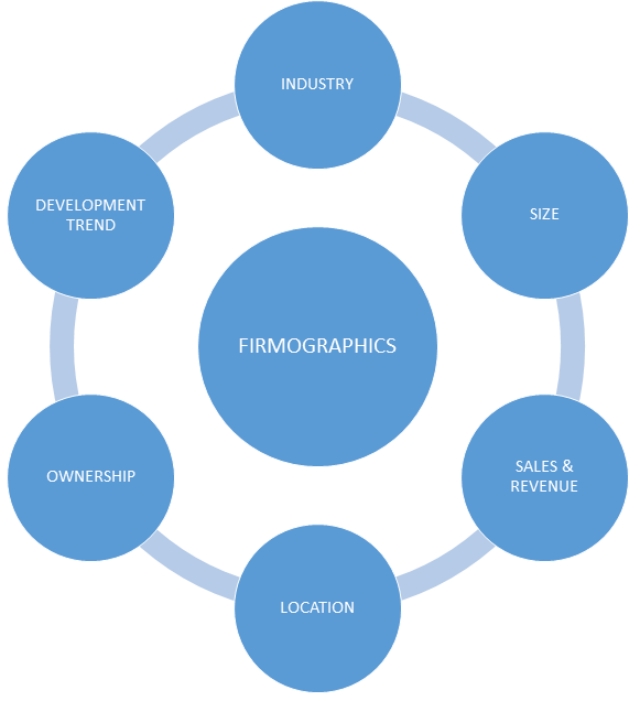
Firmographics (if it’s a B2B Customer Profile)
As we mentioned earlier, a B2B Customer Profile tends to include flexible attributes. This is where you write down your customers’ industry, size, geography, total number of employees, number of customers, and annual revenue.
If you’re using a CRM tool to track sales for your company, you’ll be able to find most of this basic information easily
Crunchbase is also a gold mine for researching company-related data. The platform offers filters such as category, number of employees, and total funding to give you insight into the business structure of a specific company.
Run Surveys
As you write down the attributes above, you’ll realize you know more about some customers than others. That’s where surveys can help fill the gaps.
You can use tools like SurveyMonkey or Google Forms to create surveys about specific customer characteristics. Here are some ideas for the types of questions to include in your survey:
Demographic questions
Keep in mind that these are very personal and sensitive questions.
That means you need to pay special attention to how you structure them. One idea is to give consumers multiple answers to choose from for some demographic questions.
Here are a few examples you can recreate:
- What is your nationality?
- What year were you born?
- 1944 to 1964
- 1965 to 1979
- 1980 to 1994
- 1995 or later
- What is your gender?
- Male
- Female
- Other (please specify)
- What is your relationship status?
Socioeconomic questions
These questions also ask for personal information, so it’s best to use multiple-choice answers here. Below are some examples of the questions to ask to get socioeconomic data:
- What is your employment status?
- Employed full-time
- Employed part-time
- Self-employed
- Retired
- Unemployed
- What is your highest level of education?
- What is your annual household income?
- $14,999 or less
- $15,000 to $34,999
- $35,000 to $49,999
- $50,000 to $74,999
- $75,000 to $99,999
- $100,000 or more
Psychographic questions
Because there are so many potential answers to these types of questions, you can ask open-ended questions like the ones below:
- Which hobbies do you enjoy?
- What do you value most in life?
- What factors influence your decision to buy a product or service?
Geographic questions
These are usually easy-to-answer questions about consumers’ geographic location, such as:
- Which area do you live in?
- How would you describe the weather in your area?
- Are you exempt from paying taxes in your area?
Firmographic questions
Again, the answers to these questions aren’t complicated or sensitive, so you can use open-ended questions like:
- How many years has your company been in business?
- How many workers does your company currently employ?
- What field does your company specialize in?
- How many branches does your company have?
Extract Data from Your Online Channels
Your online channels are a gold mine of customer data, so tap into them to learn more about your audience. Each marketing channel can reveal new insights into who your customers are, which topics they care about, and what they’re sharing on the web.
Analyze your:
- Email data – Reveals how often customers engage with your brand and which type of content (newsletters, blog links, plain-text emails, etc.) gets them to read your messages.
- Website analytics – Shows the content and products they’re interested in and gives insight into how they navigate your websites.
- Social media analytics – Identifies the platforms where they follow you and the type of content they like to share and comment on.
With that, you’ll have gathered plenty of valuable insights to inform your Customer Profile.
Fill In Your Customer Profile Template
Now that you’ve surveyed your top customers, covered all of their attributes, and gained a full picture of why they give you their business, compile your research into a single document. This document will serve as your Customer Profile.
If you’re not sure how to structure the document, list the information in this order:
- Give your customer a name
- Put a face to their profile
- Add their demographic information
- List their psychographic and socioeconomic attributes
- Include a quote from the customer
- Add their goals, pain points, and motivations
- Add the type of communication channel they prefer to use
When creating a Customer Profile, how much detail to include is entirely up to you. But we recommend keeping it simple to avoid analysis paralysis from too many insights.
Customer Profile Examples [Templates]
Although you can create a Customer Profile document from scratch, using a template is always easier.
Many different Customer Profile templates are available to help you create a strong user persona. Just fill in the fields with the details you have. You can also delete or add fields based on the data available to you and your business.
Even if you don’t like the templates, these Customer Profile examples are a good starting point to give you an idea of what real-world profiles look like and the kind of information you can include in your own document.
So here are a few Customer Profile templates:
Customer Profile template by Research & Discovery
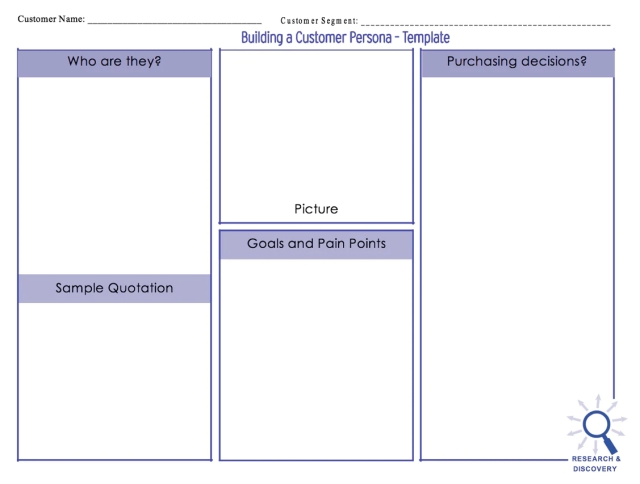
Research & Discovery offers a simple template that covers most of the attributes of your ideal customers.
Customer Profile template by Minimalist.Business
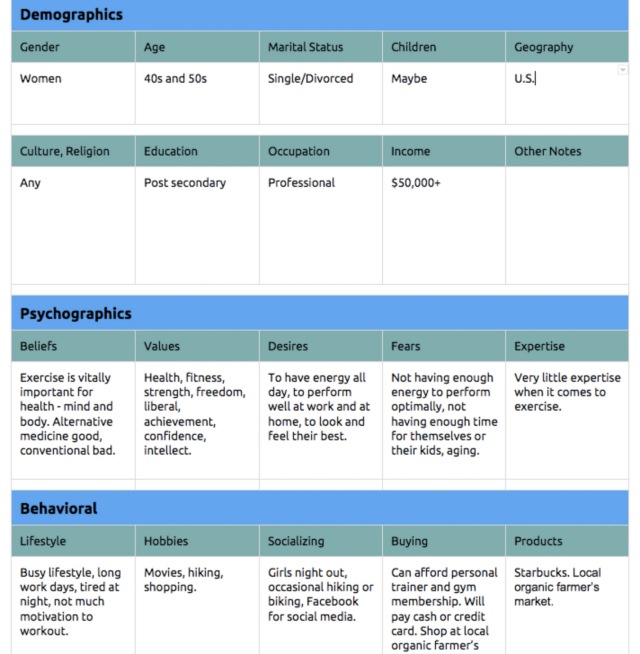
Although it’s a simple document, the Minimalist.Business Customer Profile template lists all the important attributes.
Customer Profile template by Red Caffeine
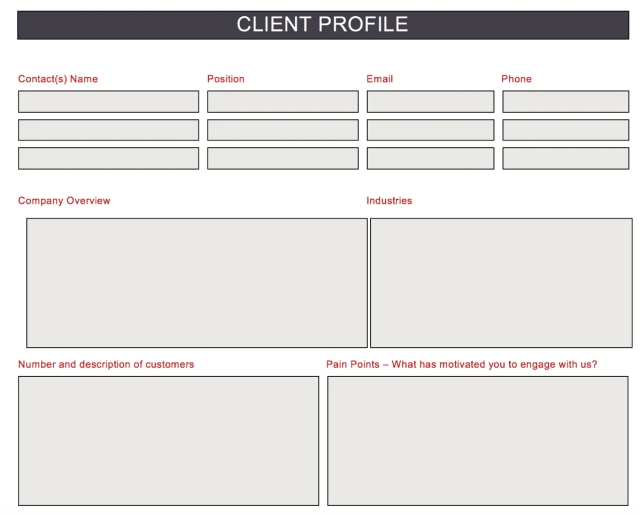
The Red Caffeine Customer Profile template is ideal for B2B companies because it includes most of the elements needed to reach and nurture customers effectively.
Customer Profile template by Creately
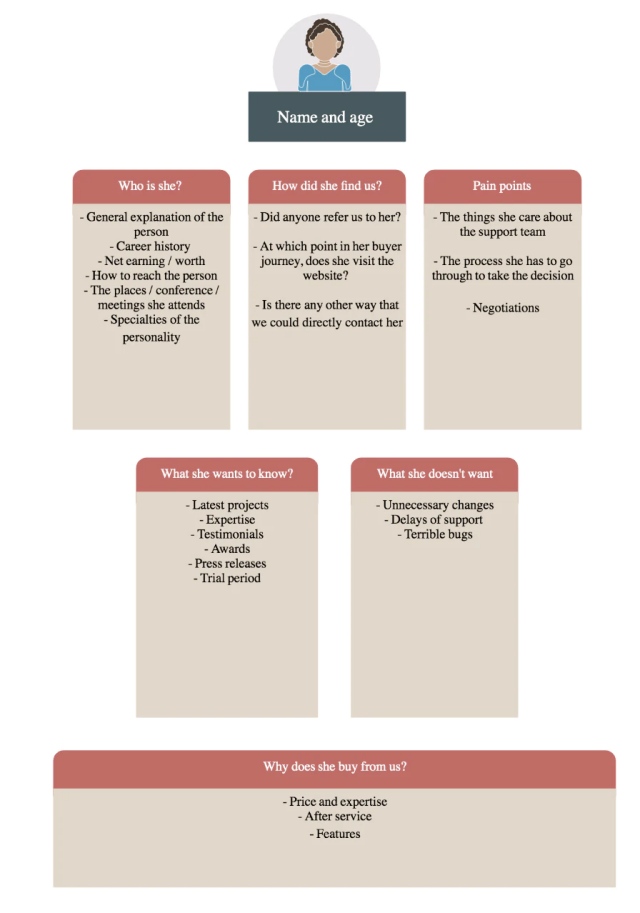
The Creately Customer Profile template is easy to fill out. You can use the first 5 boxes to list the attributes of your ideal customer and the last box to share your assessment or thoughts on the results.
Customer Profile template by “The Five Abilities”
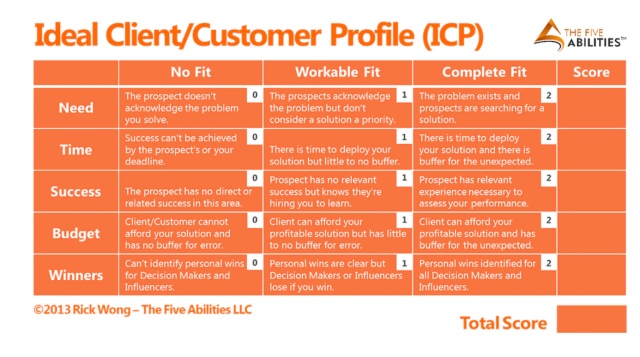
The “The Five Abilities” Customer Profile template reminds us to narrow our field of potential customers. While some businesses feel that everyone can benefit from their services, that doesn’t mean everyone is a good fit.
Conclusion
And that’s what we wanted to share with you, our readers. You’ve learned everything you need to know about creating a Customer Profile, right?
Once you’ve created one, make sure to share it with your business partners, employees, and sales and marketing teams.
Doing so gives them a better idea of which strategies to apply. They’ll also be able to use these profiles to guide their buyer personas and create even better advertising campaigns.
Source: Oberlo
How Can The7 Help You?
At The7, we offer two core full-service marketing pillars: dedicated consulting and quality execution. Both are delivered by a team of specialists and experts with in-depth training. From there, we design a tailored roadmap for your business to roll out the right, optimized online advertising services, while cutting out any activities that don’t deliver real value.
With years of industry experience, The7 works with your business to map out the direction and execution of an effective online marketing strategy, minimizing the risks of running digital activities on your own.
The7 plans and executes full-service online marketing programs built on advertising solutions across Facebook, Instagram, and Google, plus web design and content marketing services.
For more information about our services, connect with us today via Hotline: 082 246 7979 – 028 3899 7377 or visit https://the7digital.com/ for a consultation!
>>> You may also want to read:
- What Is Marketing? The 13 Most Popular Types of Marketing in 2023
- Integrated Marketing: What It Is, Its Role, and How to Plan It in 2023
- 5 Basic Emotional Factors in Marketing
- What Is a Customer Profile? 5 Ways to Create One
- Growth Hacking and Growth Marketing
- What Is Word of Mouth Marketing? Benefits of WOM
- What Is an Insight? How to Identify Customer Insights Effectively
- Applying Psychology in Marketing

Nguyễn Đình
Bảo




As CEO of The7, I am committed to sharing practical, useful knowledge with every reader. Every article on The7 is based on my 7 years of hands-on experience in marketing — Facebook advertising, LinkedIn advertising, Google advertising, and marketing strategy. I hope you take away plenty of insight from these posts and apply it successfully in practice.
Related Articles
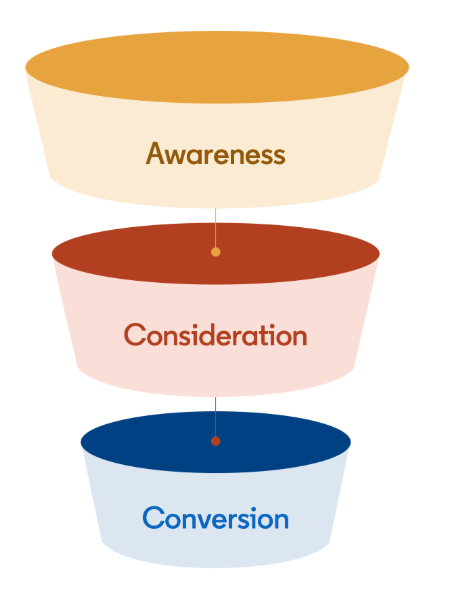
Building a Full-Funnel Content Marketing Strategy on LinkedIn
Table of Contents Toggle Why Build Content Marketing for the Full Marketing Funnel? (Why Full-Funnel Content Marketing?)Creating Your Strategy (Creating Your Strategy)Implementing Your Content Strategy (Rolling out your content strategy)Summary...
Designing Creative Content for LinkedIn
Table of Contents Toggle Why Is Good Creative Content So Important? (Why is Good Creative Important?)Key Components of Creative Design (the core elements of creative design)Summary (summary) Why Is Good...
Building an Organic Business Presence on LinkedIn With a LinkedIn Page
Table of Contents Toggle Why Have a LinkedIn Page?Establishing Your LinkedIn PageKeeping Your LinkedIn Page ActiveThe Measure of SuccessSummary About LinkedIn Page (Summary) Why Have a LinkedIn Page? For a...
6 Best LinkedIn Marketing Strategies for B2B in 2026
Table of Contents Toggle LinkedIn 2026: Where B2B Decisions Get MadeStrategy #1 – Why Is LinkedIn the Best B2B Marketing Channel Today?1. Decision-makers are concentrated here2. Users are in work...

7 Social Media Trends for 2026: The Era of Real Value, Real Conversion, and Real People
Table of Contents Toggle Social media is entering the biggest restructuring of the decadeTrend 1: Why is buying directly in-app becoming the new standard for 2026? (On-Platform Conversion)What should businesses...

What Is TikTok Marketing? Effective TikTok Marketing Strategies
TikTok has been topping the global rankings of the most downloaded and most visited apps. That makes it a gold mine for marketers who love creativity. In this article, The7...