


What Is a B2B Webinar?
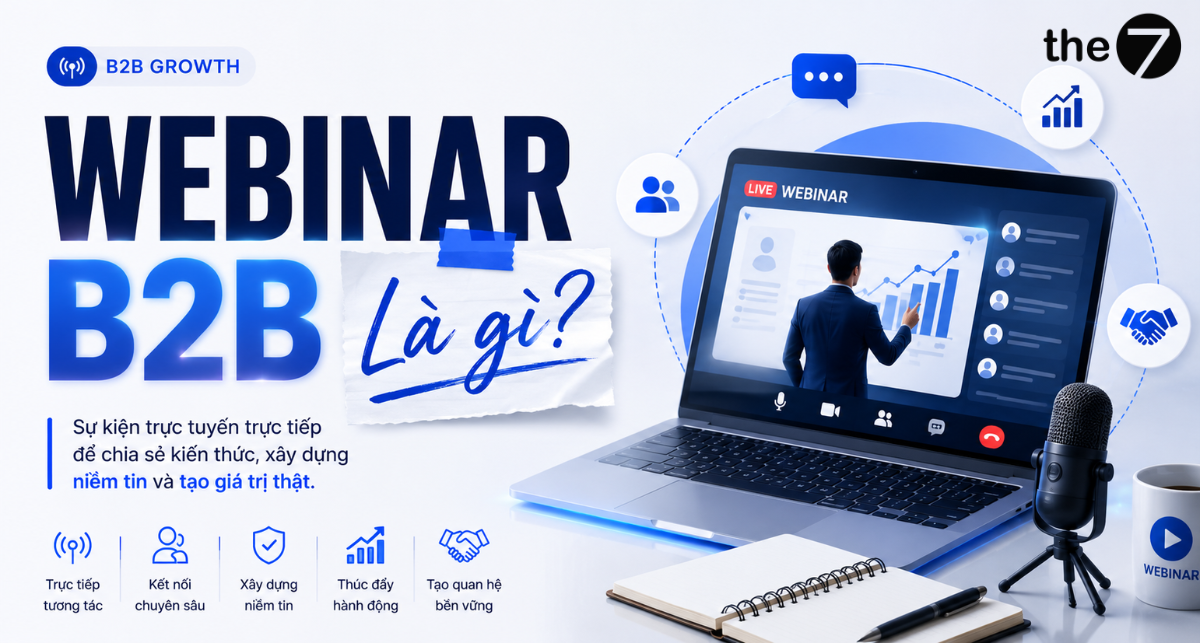
Summary: A B2B webinar is a live online event where a business uses its expertise to teach, present, exchange ideas, and build relationships with a group of people interested in a specific issue. A common mistake is treating a webinar as a mass lead-capture machine — the more sign-ups, the better. But the real value of a webinar doesn’t lie in the number of forms collected. It lies in a deeper mechanism: people trust what they participate in more than what they merely watch, and the fact that someone is willing to spend time showing up live is, in itself, a strong intent signal. In the 7B model, a webinar is a rare connector where Broadcast and Buy can happen within the same hour, while also generating Backing through live Q&A.
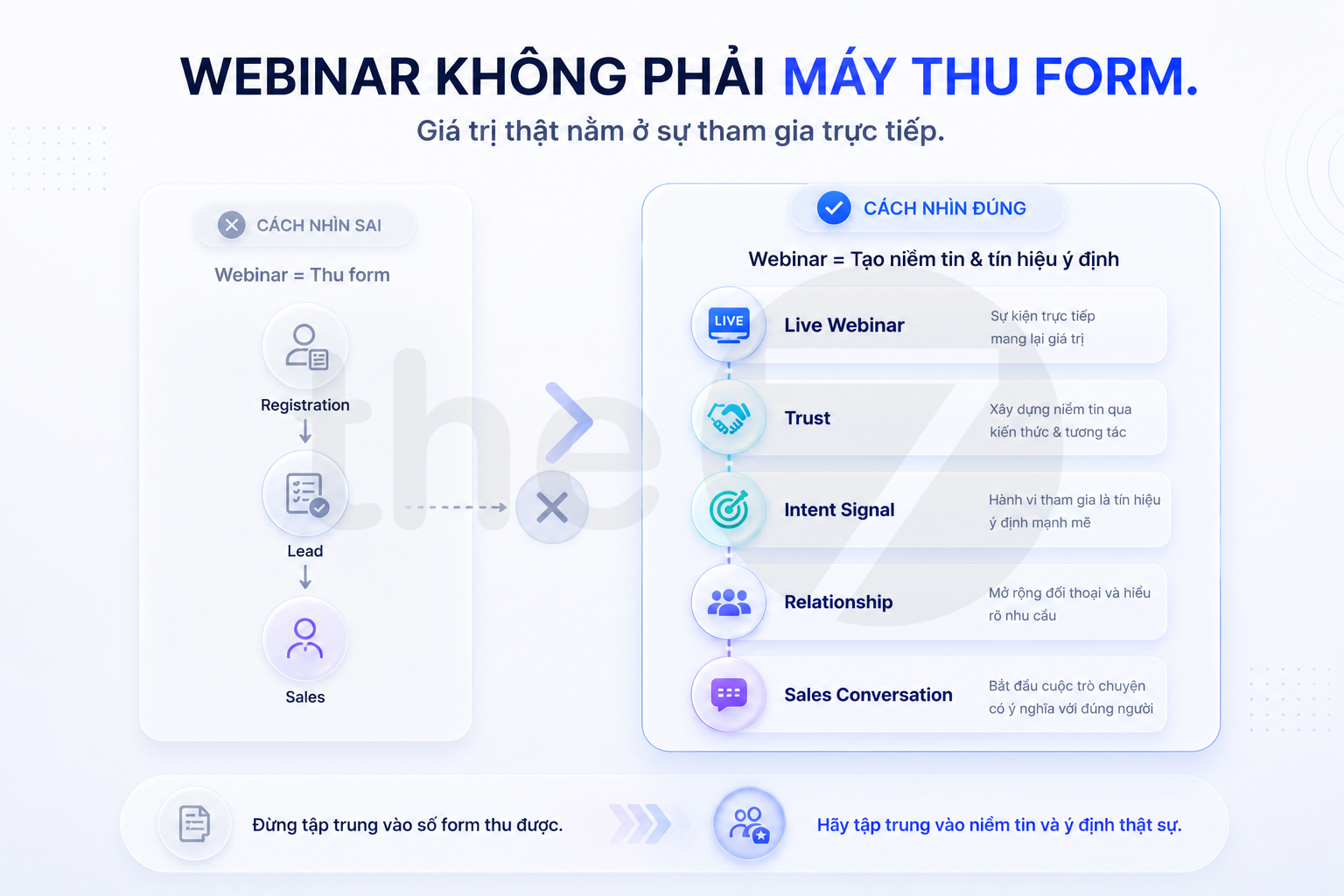
Most B2B businesses look at webinars through too narrow a lens. They host an online session, pick a topic that sounds appealing, build a landing page, make people fill out a form to register, and then count the number of sign-ups as if that were the main result. After the webinar, the list of registrants gets handed off to sales, regardless of whether the person actually attended, stayed until the end, asked a question, or showed a real problem. Run this way, the webinar turns into a disguised form-collection funnel.
The problem is that if you only use a webinar to collect forms, you’re misusing its most powerful asset. The registration form is only the surface. The deeper value of a webinar lies in the fact that it’s a live experience — happening in real time, with interaction, presence, questions, feedback, and a level of commitment far higher than passively watching content. Webinar attendees aren’t just “consuming content.” They’re present in an online room, at the same moment as you, on the same topic as everyone else — and that presence itself changes the nature of trust.
The old view says a good webinar is one with lots of sign-ups. The more accurate view is that a good webinar is one with the right attendees — people who stay long enough, engage deeply enough, and come away understanding you better than before. Registration numbers can feel like success, but they’re easy to be fooled by. Five hundred sign-ups with only thirty attendees, nobody asking questions, nobody staying until the end, may not be worth as much as fifty people who attend fully, ask very specific questions, and then actively want to keep the conversation going.
To understand webinars properly, we need to start with a different question: why does a live session carry more weight than a pre-recorded video, even when the content is essentially the same? Why do people who attend live tend to engage more deeply than those who only watch the recording afterward, even with the same presenter, the same slides, and the same message? The answer lies in three mechanisms: participation builds trust, a scheduled appointment creates mental presence, and the willingness to show up creates a screening signal.
What Is a B2B Webinar?
A B2B webinar is a live, real-time online event, typically taking the form of an expert presentation, training session, panel discussion, in-depth demo, or expert Q&A session, aimed at delivering value to a group of people interested in a specific topic within a business context. Unlike pre-recorded content, a webinar happens at a set time, has a host, has attendees, involves live interaction, and creates simultaneous presence between the organizer and the audience.
The key point in this definition is that a webinar isn’t just an “online video.” If only one person talks from start to finish, with no interaction, no Q&A, no feedback, and no sense that an event is actually happening, then it’s just a pre-recorded lecture being live-streamed. A true webinar has to create the feeling that attendees are in a room together, even if that room is online. They can ask questions, give feedback, see that others share the same concern, and sense the presenter’s competence in real time.
In B2B, this matters especially because a purchase decision rarely happens right after a single click. Buyers need to trust you, understand how you think, evaluate your competence, compare you against alternatives, and often need to persuade several other people within their organization. A webinar doesn’t solve that entire process, but it has one very powerful capability: compressing multiple layers of trust into a short window of time. In one hour, you can teach, present, handle objections, answer hard questions, observe signals of interest, and open the next step with people who have a genuine need.
So a webinar shouldn’t be understood as merely a lead-capture channel. It’s a trust-building event. It’s a screening mechanism. It’s a deep touchpoint in the B2B buying journey. And in the 7B model, it stands out because it can turn several gears at once, in the same moment: Broadcast, when you share knowledge with the whole room; Buy, when you identify the group with high intent; and Backing, when you prove your competence through live Q&A.
Why Do People Trust What They Participate In More Than What They Just Watch?
To understand why a webinar builds trust differently than a pre-recorded video, we need to look at an important principle in educational psychology: the generation effect. In 1978, Norman Slamecka and Peter Graf described this phenomenon in a study on memory. The core idea is simple but carries significant weight: people remember better and process information more deeply when they actively generate, answer, interpret, or take part in forming the information, rather than just passively receiving it.
Someone who works out an answer themselves tends to remember it longer than someone who just reads the ready-made answer. Someone who takes part in a discussion tends to retain the content more deeply than someone who just watches others discuss it. When the mind has to actively process, ask questions, relate the material to its own problems, or respond to what it’s hearing, the information stops being something that comes from outside. It starts becoming part of that person’s own experience.
A webinar is powerful because it activates this mechanism. When an attendee asks a question in the chat box, answers a poll, responds to an argument, or hears their own problem answered directly by the presenter, they stop being a passive audience member. They’ve taken part in making meaning out of the content. And once they’ve participated, their level of engagement with that content tends to be far higher than simply watching a YouTube video, reading a blog post, or downloading a PDF and setting it aside.
This is why the same content, delivered live versus watched afterward as a recording, doesn’t produce the same impact. The recording has its own value, especially for repurposing content and serving people who couldn’t attend at the scheduled time. But a recording can’t replicate the feeling of being present at an event as it unfolds. When someone watches the recording, they know everything is already over. Their questions no longer get answered in real time. Their presence no longer influences the session. They go back to being a viewer, not a participant.
This has an important consequence for how you design a webinar. If you run a webinar where attendees just sit and listen for sixty minutes, you’re weakening the format yourself. At that point, the webinar becomes nothing more than a long video with a scheduled broadcast time. The power of a webinar lies in participation, so the design has to continually pull listeners out of passive mode. You can open with a question related to the problem they’re facing, use a short poll to let them position themselves, set aside time for Q&A, respond directly to hard questions, or invite attendees to share a specific situation.
The key isn’t adding a few interactive tricks just for show. The key is turning viewers into participants. When attendees feel they have a place in the session, they remember longer, trust more deeply, and tend to see you as someone who genuinely understands their problem. In B2B, trust doesn’t just come from saying the right things. It comes from buyers feeling that you stepped into their problem, listened to their question, and handled it competently.
Why Does a Scheduled Event Have Its Own Pull?
If the generation effect explains the power of interaction, the Zeigarnik effect helps explain the power of the scheduled-appointment structure itself. In 1927, psychologist Bluma Zeigarnik found that people tend to remember unfinished tasks more clearly than completed ones. An unfinished task creates a mild form of psychological tension, like an open loop in the mind, which keeps us thinking about it until it’s closed.
A scheduled webinar operates very close to this mechanism. When someone registers for a session happening next Thursday, they’re not just leaving an email address. They’re creating an appointment in their mind. There’s something not yet done, content they’ve told themselves is relevant, a topic they’ve flagged as worth their attention. From the moment of registration to the moment the webinar happens, the topic name, the brand name, and the issue being addressed have a chance to keep living in their head.
This is something on-demand content usually can’t achieve. The convenience of pre-recorded content is that people can watch it anytime. But precisely because it’s available anytime, most people never actually watch it. With no specific point in time, no appointment, no mild tension of “I already signed up,” content is easily pushed down by hundreds of other more urgent things during the day.
A webinar may seem less convenient than a video because people have to show up on time. But in B2B marketing, not every inconvenience is a weakness. A moderate amount of inconvenience can actually create commitment. Having to choose to attend at a specific time forces a clearer decision than just saving a link to watch later. The appointment turns content into an event, and an event always carries a different psychological weight than a resource sitting idle in a content library.
This also explains why pre-webinar communication matters so much. It’s not just to remind people to attend, but to keep that open loop alive in their minds. Every reminder email, every piece of content that hints at a key idea, every thought-provoking question sent before the webinar can keep registrants thinking about the issue. Done well, a webinar’s impact doesn’t only happen during the sixty minutes it runs. It starts from the moment someone registers, continues through the waiting period, peaks during the live session, and carries on afterward through repurposed content.
So the appointment isn’t a disadvantage of webinars compared to video. It’s part of what makes webinars powerful. A pre-recorded video is optimized for convenience. A webinar is optimized for presence, commitment, and the feel of an event. In B2B, where trust needs to be built across many touchpoints, the feeling of “I took the time to attend their session” carries far more weight than “I happened to watch one of their videos.”
Presence Is a Screening Signal
The two mechanisms above explain why webinars build trust and stay present in people’s minds. But there’s a third value that matters just as much: a webinar is a very powerful intent filter. This value is often misunderstood, because many businesses look at the registration list, when the real signal lies in the list of who actually showed up and how they engaged.
Consider the cost of attending a B2B webinar. Someone has to see the topic, feel it’s relevant, fill out a registration form, remember the schedule, arrange their time, and then spend thirty to sixty minutes of their workday listening. That’s not a cheap action. It consumes time, attention, and a share of decision-making energy. In a B2B environment, where calendars are usually packed with meetings, emails, internal work, and operational pressure, the fact that someone is willing to show up is a signal worth reading.
Someone who downloads a document might just be curious. Someone who opens an email might just be skimming. Someone who clicks an ad might just have been drawn in by a catchy headline. But someone who attends an expert-led webinar, stays long enough, and asks a specific question is usually showing you that the problem is real in their world. They may not be ready to buy right away, but they’ve already screened themselves out of the passive crowd. That’s a far stronger intent signal than a document-download form.
This is why counting sign-ups is a metric that easily leads strategy astray. If the marketing team is pressured to report registration numbers, they’ll tend to choose broader topics, punchier headlines, vaguer promises, and lower barriers to pull more people into the form. But the broader the topic, the weaker the screening signal. You may end up with more sign-ups, but a large share of them will just be curious, with no real problem, the wrong role, not part of the buying group, or no influence over the decision.
By contrast, a narrow, deep webinar might attract fewer people, but generate a better signal. If you run a session on a very specific problem — say, how to reduce risk when rolling out ERP across a multi-site factory network — the number of sign-ups might not be large. But the people who show up are far more likely to be the right group actually feeling that pain. The more specific the topic, the more meaningful the act of attending becomes. This is an important point: in B2B webinars, a narrower topic doesn’t always reduce value. It can actually increase signal quality.
This perspective flips how webinars should be run. If the goal is to capture as many leads as possible, you’ll design a very broad session so as many people as possible feel it’s relevant. But if the goal is to build trust and filter intent, you’ll pick a topic sharp enough that only people who genuinely care will spend the time to attend. You’re not chasing the crowd. You’re using the webinar as a natural filter, where serious buyers walk into the room on their own, with their own time.
Where Does a Webinar Fit in the 7B Model?
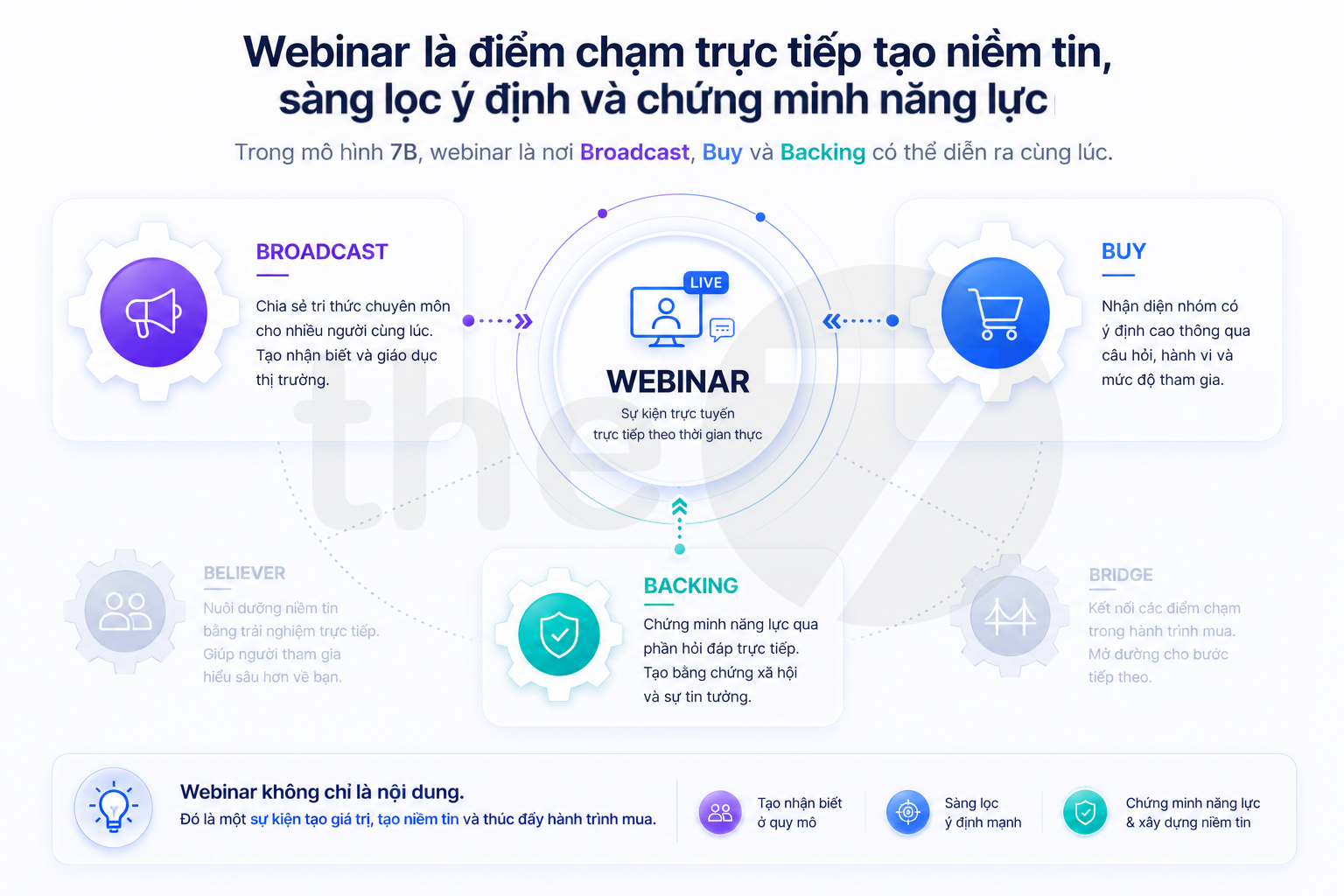
This is where the 7B model helps us see webinars more clearly. Most content formats tend to lean toward one primary gear. Expert articles usually serve Broadcast and Browse. Pricing pages, demo pages, and comparison pages usually serve Buy. Case studies and customer testimonials usually serve Backing. But webinars are unusual because they can straddle several gears at once, within the same short window of time.
When you run a webinar to teach an expert topic, you’re doing Broadcast. You appear in front of a group, share your perspective, present your methodology, explain the problem, and build familiarity with the market. Attendees may not buy right away, but after the session they understand you better. They know how you think, how deep your expertise runs, whether you grasp the problem, and whether you’re worth continuing to follow. That’s the value of Broadcast: building memory, building authority, and earning a place in the buyer’s mind.
But at the same time, a webinar also touches Buy. The people who show up are self-screening into a group with above-average intent. Among them will be people researching solutions, comparing vendors, preparing an internal proposal, or feeling pain from a problem you can solve. If you track the right signals — who attends live, who stays until the end, who asks questions, who asks about implementation, who asks about cost, who asks about risk — you can identify the group closer to a decision. So a webinar doesn’t just plant trust. It also helps you see who’s moving closer to action.
Live Q&A, in turn, generates additional Backing. With edited content, you always have time to revise, polish, cut weak parts, and present your most perfect version. But in a live webinar, when someone asks a hard question, you have to handle it on the spot. You can’t hide behind slides. You can’t hide behind marketing copy. The ability to answer a complex question in real time is very strong proof of competence, because it shows the audience whether you truly understand the problem or are just reading from a script.
That’s what sets webinars apart. A video can do Broadcast very well. A demo page can do Buy very clearly. A case study can do Backing quite strongly. But a webinar can bring all three together in the same online room. You teach the whole room to build long-term trust, observe signals to identify the high-intent group, and prove competence by handling live questions — all at once. In other words, a webinar is one of the rare formats where sowing and reaping can happen within the same hour.
This doesn’t mean a webinar can replace the other gears. It doesn’t replace long-form content, advertising, sales, case studies, or conversion pages. But it is a very strong connector between the gears. When designed well, a webinar can draw attention from Broadcast, generate signal for Buy, add proof for Backing, nurture Believer through the community of attendees, and even create Bridge if partners, experts, or customers appear alongside you.
Webinar Examples Across Different B2B Industries
Take the enterprise software industry. A company offering a data management solution might run an in-depth webinar on how multi-branch businesses standardize customer data before rolling out a CRM or ERP system. This topic isn’t too broad, so it won’t appeal to everyone. But precisely because it isn’t broad, it screens for exactly the group that’s genuinely dealing with the problem. Attendees might be operations leads, IT, sales operations, or digital transformation managers. During the session, the company both demonstrates its consulting competence and sees who’s in the research stage, while collecting questions that reflect real needs.
In B2B financial services, a company might run a webinar about an upcoming regulatory change that will affect how businesses manage cash flow, tax, accounting, or reporting. For this type of topic, attendees don’t show up for entertainment. They show up because the change could affect their work. The presentation helps the company build Broadcast, the Q&A shows its ability to handle specific situations, and attendees’ presence becomes a signal that they’re concerned about a related risk or opportunity.
In manufacturing, an equipment or automation solutions provider might run a webinar on how to reduce errors in a specific operational stage. Attendees might be engineers, plant managers, maintenance leads, or people responsible for productivity improvement. Their questions tend to be very practical: does the equipment fit an existing production line, how much downtime is involved, how is data measured, what does maintenance look like, does it integrate with current systems. These questions don’t just help attendees trust more. They also help the organizer read how serious each person is and what stage of the buying process they’re in.
In B2B consulting services, a webinar might be a case-analysis session or a short workshop on a problem the target customer is facing. For example, a B2B agency shouldn’t run a topic as generic as “how to do effective marketing.” That topic is broad, easily draws curious people, but produces a weak signal. A topic like “why B2B LinkedIn ads get plenty of impressions but few SQLs, and how to re-read the problem from the buying committee’s perspective” is narrower, but attracts the right people. Whoever attends that session is more likely to have a real problem, a real budget, or at least real responsibility within their organization.
Three different industries, but the same principle: a webinar doesn’t create value by pulling in the most people. It creates value by getting the right people to spend their time, take part in a deep exchange, and leave behind signals the business can read. The power of a webinar lies in participation and screening, not in a raw registration list.
What Should You Measure a Webinar By?
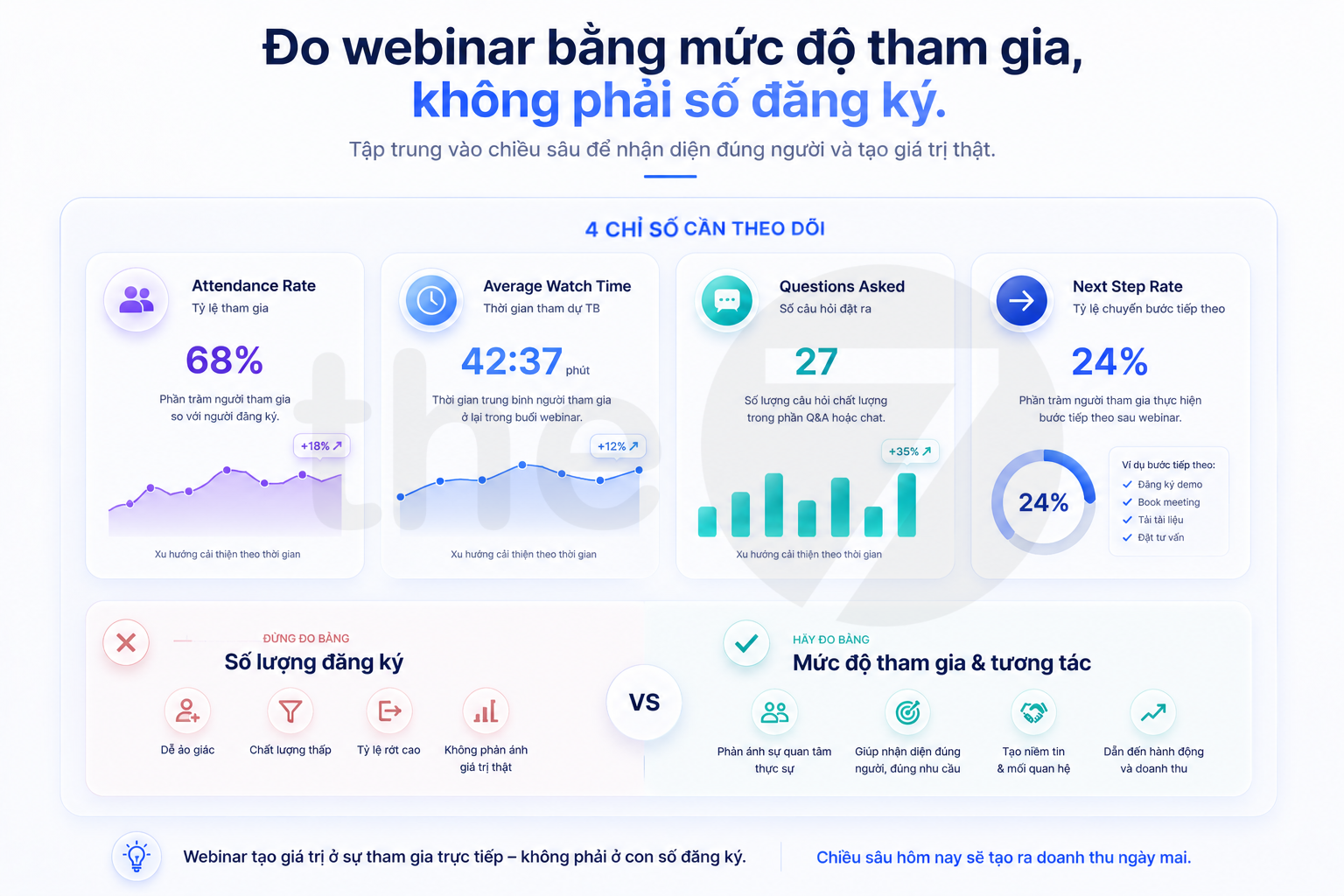
If registration count shouldn’t be the primary measure, then what should you measure? The answer is to measure by the depth of participation, not just the breadth of the list. Sign-ups still have value, but they’re only an input metric. They tell you whether the topic and promotion were strong enough to attract interested people. But there’s still a long way from there to real business value.
The first metric to look at is the live attendance rate. How many of the registrants actually showed up? If many people register but very few attend, the topic might sound appealing but not urgent enough, or the reminder sequence wasn’t good enough, or the initial promise wasn’t clear enough for people to prioritize their time. The live attendance rate reveals real commitment far better than the sign-up count does.
The second metric is time spent. Someone who joins for five minutes and leaves is not the same as someone who stays for forty-five minutes. Time spent reflects how well the content held attention. If many people leave early, the problem might be a too-long intro, an overly generic presentation, a lack of interaction, or content that doesn’t match the original promise. In B2B webinars, staying long is an important signal because attendees’ work time is expensive.
The third metric is engagement level. How many people answer polls, ask questions, comment in the chat, download materials afterward, or respond to the follow-up email? Especially, what do their questions say? A generic question like “will you send the slides” is entirely different from a question like “if my company has three factories in three different provinces, in what order should we roll this out to reduce risk?” Specific questions usually reveal specific problems, and a specific problem is a far stronger buying signal than a click.
The fourth metric is the next step. After the webinar, who signs up for a consultation, who requests in-depth materials, who wants to see a demo, who forwards the content to a colleague, who brings more people from their company into the conversation? In B2B, a webinar attendee may not be the final decision-maker, but they can be the person who opens the door to the buying committee. So don’t just ask whether they’ll buy right away. Ask whether they’ve moved one step further along the decision journey.
When measured through these layers, a webinar returns to its proper role. It stops being a contest over who collects the most forms. It becomes a deep touchpoint, where you build trust, read signals, and create the opportunity for the next conversation, all at once.
How Should You Think About the Webinar Recording?
Another mistake is treating the webinar recording as a full substitute for the live session. This sounds reasonable, since the recording is more convenient, can be watched anytime, can be sent to more people, and can be repurposed into multiple content formats. But if you treat the recording as a replacement for the live event, you’ll miss the core difference between attending live and watching passively afterward.
The webinar recording has value, but it’s secondary value. It extends the life of the live session, serves people who couldn’t attend, creates content for Browse, provides follow-up material for sales, and can be cut into short clips for Broadcast. A great Q&A answer can become a LinkedIn post. A sharp explanation can become a short video. A common question can become a blog post. A good webinar shouldn’t die once it ends. It should become raw material for many other touchpoints.
But the recording shouldn’t erase the reason for people to attend live. If you say too early, “it’s fine if you can’t make it, we’ll send the recording,” you unintentionally weaken the appointment and reduce commitment. It’s better to treat the recording as a post-event extension, while the live session still has to carry its own value: live Q&A, polls, analysis of attendees’ specific situations, or a segment that only happens during that session. People need a reason to show up on time, not just a reason to save the link for later.
In other words, the recording is a content asset. The live session is a trust asset. The two complement each other, but they aren’t the same. If you know how to use them well, a webinar can create deep real-time impact while also generating plenty of long-term content afterward. But the starting point still has to be a live session worth attending.
Common Mistakes When Running B2B Webinars
The first mistake is counting sign-ups instead of measuring participation. This is a root-level mistake because it skews the entire design. When registration count becomes the main goal, businesses choose broad topics, big promises, clickable headlines, and then settle for a long list with weak signal. The fix is to clearly separate input metrics from value metrics. Registration only tells you the initial level of interest. The real value lies in who attends, how long they stay, what questions they ask, how much they engage, and what they do next after the webinar.
The second mistake is designing a webinar as a one-way presentation. Many businesses spend almost the entire time talking through slides, letting attendees stay silent from start to finish, and leaving only the last five minutes for a few rushed questions. This approach throws away the webinar’s strongest weapon: participation. If listeners just sit and watch, you’re turning the webinar into a video that’s less convenient than a pre-recorded one. The right approach is to design interaction in from the start: open with a question, use polls, name specific problems, allow enough time for Q&A, and treat attendees’ questions as a central part of the content, not an afterthought at the end.
The third mistake is choosing too broad a topic to draw a crowd. In B2B, the broader the topic, the harder it usually is to screen attendees. A session titled “the latest B2B marketing trends” might attract a lot of people, but it’s hard to tell who among them has a real problem, who has influence, who’s preparing to buy, and who’s just there out of curiosity. A narrower topic like “how to read buying-intent signals from webinars, LinkedIn Ads, and website data across a long B2B sales cycle” might draw fewer people, but the attendees are usually the right ones. A webinar doesn’t need to win on crowd size. It needs to win on relevance and depth.
The fourth mistake is turning the webinar into a disguised sales pitch. Attendees show up expecting to learn something valuable, not to sit through a one-hour pitch. If the content shifts too early into product promotion, trust drops very quickly. The better approach is to genuinely teach, genuinely explain, genuinely solve problems, and then let the product or service appear as a logical next step for people who need to go deeper in solving their problem. In B2B, good selling usually comes after the buyer feels you’ve helped them understand their problem more clearly.
The fifth mistake is having no strategy after the webinar. Many businesses run the session, send a generic thank-you email with the recording attached, and stop there. But the period after the webinar is exactly when signals need to be read carefully. Attendees who stayed the whole time should get a different follow-up than people who registered but never showed up. Attendees who asked specific questions should get content or an invitation tailored to the issue they raised. People who watch the recording afterward should be nurtured differently than live attendees. If everyone gets the same email, you’re wasting the behavioral data the webinar generated.
Conclusion: People Trust What They Participate In
Back to where I started. Businesses that treat webinars as form-capture machines are missing exactly what makes webinars special. A webinar isn’t a landing page with a video attached. It’s a live event where attendees spend their time, show up at the same moment, interact with the content, ask questions, see your competence in real time, and through that build a deeper level of trust than passive watching ever could.
Three mechanisms create a webinar’s value. First, live participation builds deeper trust because people trust what they participate in more than what they merely watch. When they ask questions, respond, and connect the content to their own problems, the information becomes closer and more credible. Second, the scheduled appointment creates an open loop in the mind. Registrants aren’t just saving a link. They’re making an appointment with the topic, the brand, and the problem they need to solve. Third, presence is a screening signal. Someone willing to spend time attending an expert session is showing a far higher level of interest than someone who just downloads a document or skims content.
In the 7B model, a webinar is a rare connector where Broadcast and Buy can happen within the same hour. You teach the whole room to build long-term trust, identify the high-intent group, warm them up through direct interaction, and prove competence through Q&A, all at once. If customers, partners, or experts join in, a webinar can also touch Bridge and Backing, turning a single online session into a strong connector across multiple gears.
So don’t start by asking how many people registered for your webinar. Ask whether the topic is sharp enough to draw the right people. Ask how many actually showed up. Ask how long they stayed, what questions they asked, how they responded, and whether they moved a step further afterward. A good webinar isn’t the one with the most forms. A good webinar is the one that gets the right people to engage more deeply, trust you more, and move closer, on their own, to the next conversation.

Nguyễn Đình
Bảo




As CEO of The7, I am committed to sharing practical, useful knowledge with every reader. Every article on The7 is based on my 7 years of hands-on experience in marketing — Facebook advertising, LinkedIn advertising, Google advertising, and marketing strategy. I hope you take away plenty of insight from these posts and apply it successfully in practice.
Related Articles
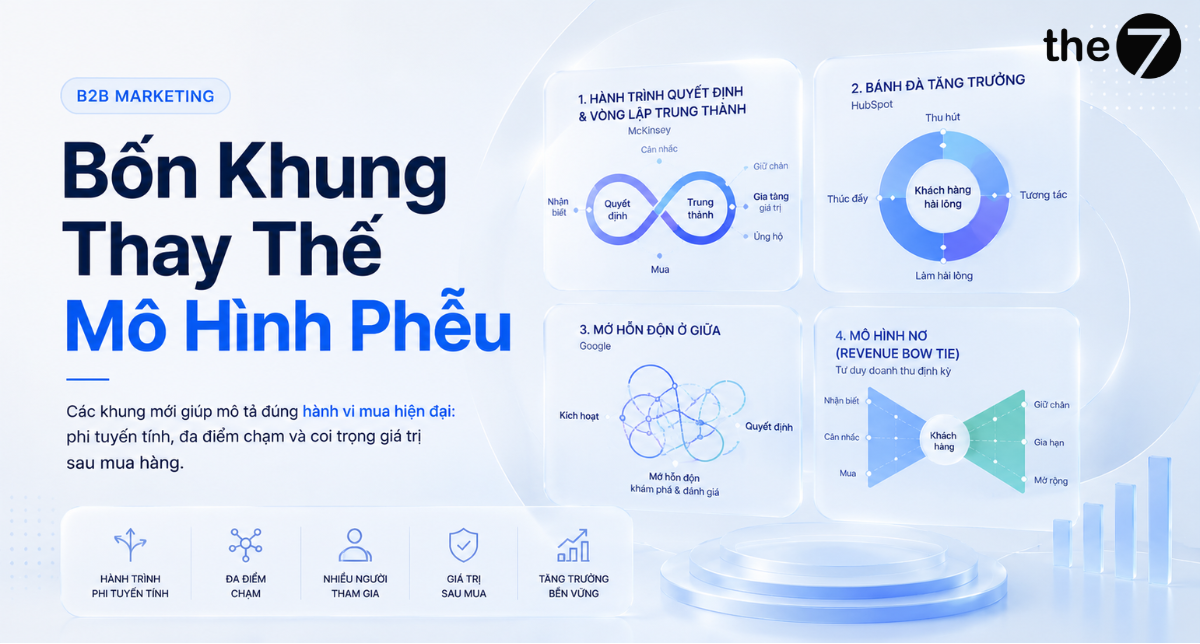
Four Frameworks That Replace the Funnel Model
Summary: As the funnel model increasingly fails to capture how modern buyers actually behave, a number of new frameworks have emerged to replace or repair it: McKinsey’s decision journey and...
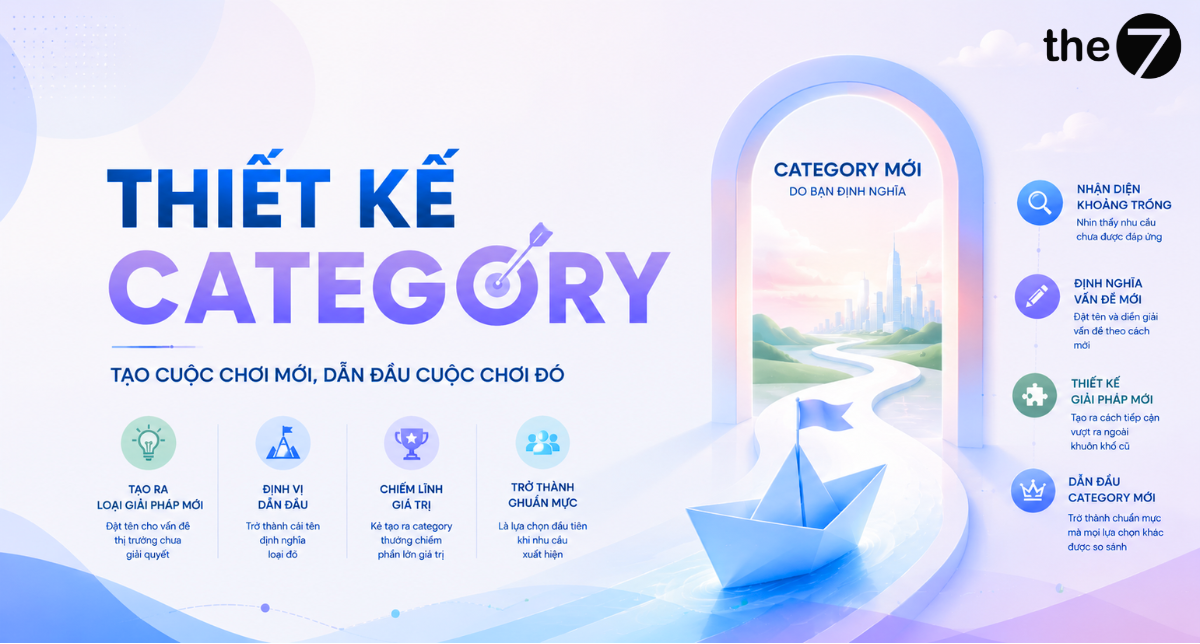
What Is Category Design?
Summary: Category design is the act of creating an entirely new type of solution in the market’s mind, instead of competing within an existing category, and then becoming the name...
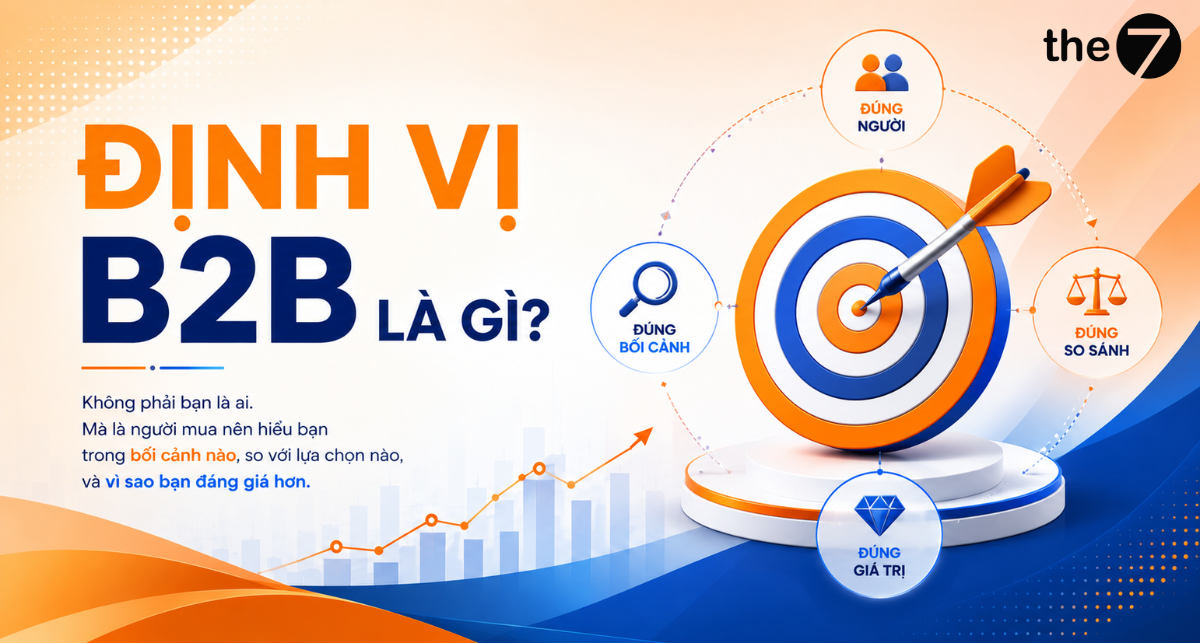
What Is B2B Positioning?
Summary: B2B positioning is the act of choosing the context you place your product into – the frame of reference that makes its value obvious to the buyer. Positioning isn’t...
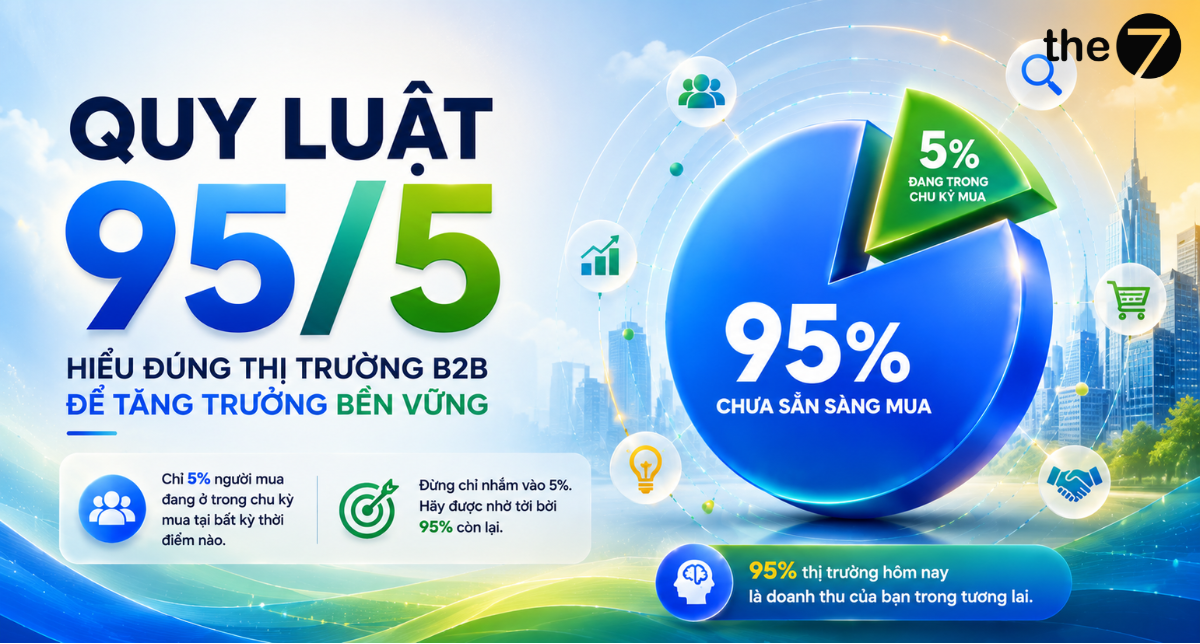
What Is the 95/5 Rule?
Summary: The 95/5 rule states that at any given moment, only about 5% of B2B buyers are actually in-market, actively in a buying cycle, while roughly 95% are not yet...
What Is Mental Availability in B2B?
Summary: Mental availability is how easily a brand comes to mind in a buying situation. It isn’t about having the sharpest argument, the slickest pitch, or the most convincing feature...
What Are B2B Events and Trade Shows?
Summary: B2B events and trade shows are in-person gatherings such as conferences, industry trade shows, workshops, and private meetings, where a business meets buyers, customers, partners, and the industry community...