


What Is LinkedIn Marketing for B2B?
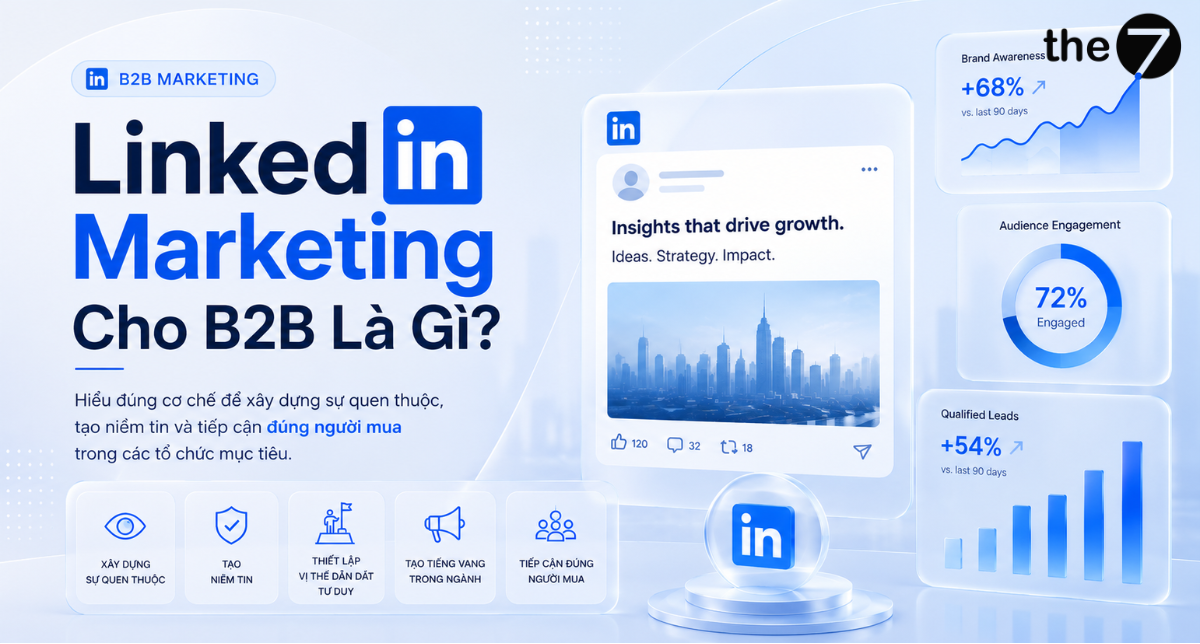
Summary: LinkedIn marketing for B2B means using LinkedIn to build familiarity, create trust, establish thought leadership, and reach the right buyers inside target organizations. LinkedIn’s real power doesn’t come from selling on the very first touch — it comes from a deeper psychological mechanism: people trust what they see often enough, and trust it more when it comes from a real person. In the 7B model, LinkedIn is special because it’s one of very few platforms where almost all seven gears can turn at once, on the same surface.
LinkedIn is the platform I spend the most time on, both in my work at The7 Digital and in building my own personal brand. I use it to observe the market, connect with B2B customers, analyze how leaders express their views, and test how content actually shapes buyer perception. The more I do this, the more clearly I see a huge gap between how LinkedIn really works and how most Vietnamese businesses are using it.
The most common misuse usually looks like this. A company sets up a LinkedIn page, posts a few product-introduction updates, shares some event photos, then runs ads pointed straight at a lead form. They then measure success by the number of leads captured that month. If the cost per lead is high, they conclude LinkedIn is expensive. If leads don’t respond, they conclude LinkedIn doesn’t work. If sales can’t close them, they conclude LinkedIn users have no buying intent.
They’re right, but only on the surface. LinkedIn really is expensive if you use it as an instant sales machine. LinkedIn really is ineffective if you only see it as a place to push strangers into filling out a form. LinkedIn really is disappointing if you expect someone who’s never heard your company’s name to see one ad, instantly trust you, instantly hand over their information, and instantly step into a major deal.
But the problem isn’t LinkedIn. The problem is how businesses misunderstand the platform’s role. LinkedIn’s real value doesn’t come from instant transactions. It comes from something slower, quieter, but far more powerful: familiarity accumulated until it turns into trust.
A B2B buyer rarely makes a decision because of a single ad. They decide after many touchpoints, many observations, many times seeing the same name show up in the right context. Today they see an analysis that nails the problem they’re facing. Next week they see a sharp comment under another expert’s post. Next month they see a case study relevant to their industry. Then, once the company develops a need, that name is no longer a stranger. It’s already in their memory. It already carries a baseline of trust. It doesn’t have to start from zero.
That’s why this article isn’t just about LinkedIn as a media channel. I want to show the real mechanism that makes LinkedIn work for B2B, why so many businesses misuse it, and why it’s such a special platform within the 7B model.
First, let’s define it clearly. LinkedIn marketing for B2B is the use of the LinkedIn platform, through both organic content and paid advertising, to build brand awareness, establish thought leadership, generate buzz within the industry, maintain presence in front of the right buyers, and reach the people who influence decisions inside target organizations.
Unlike social networks built around entertainment, LinkedIn is a place where users show up in a professional mindset. They’re not just there to watch fun content. They’re there to keep up with their industry, watch competitors, follow leaders, look for opportunities, evaluate vendors, showcase expertise, and build their own professional image. It’s exactly this mindset that makes LinkedIn a uniquely important platform for B2B marketing.
But to use LinkedIn correctly, you have to understand one thing: LinkedIn isn’t a place where buyers are always ready to buy. It’s a place where buyers gradually learn to remember, understand, and trust a name.
Why does showing up consistently work so well?
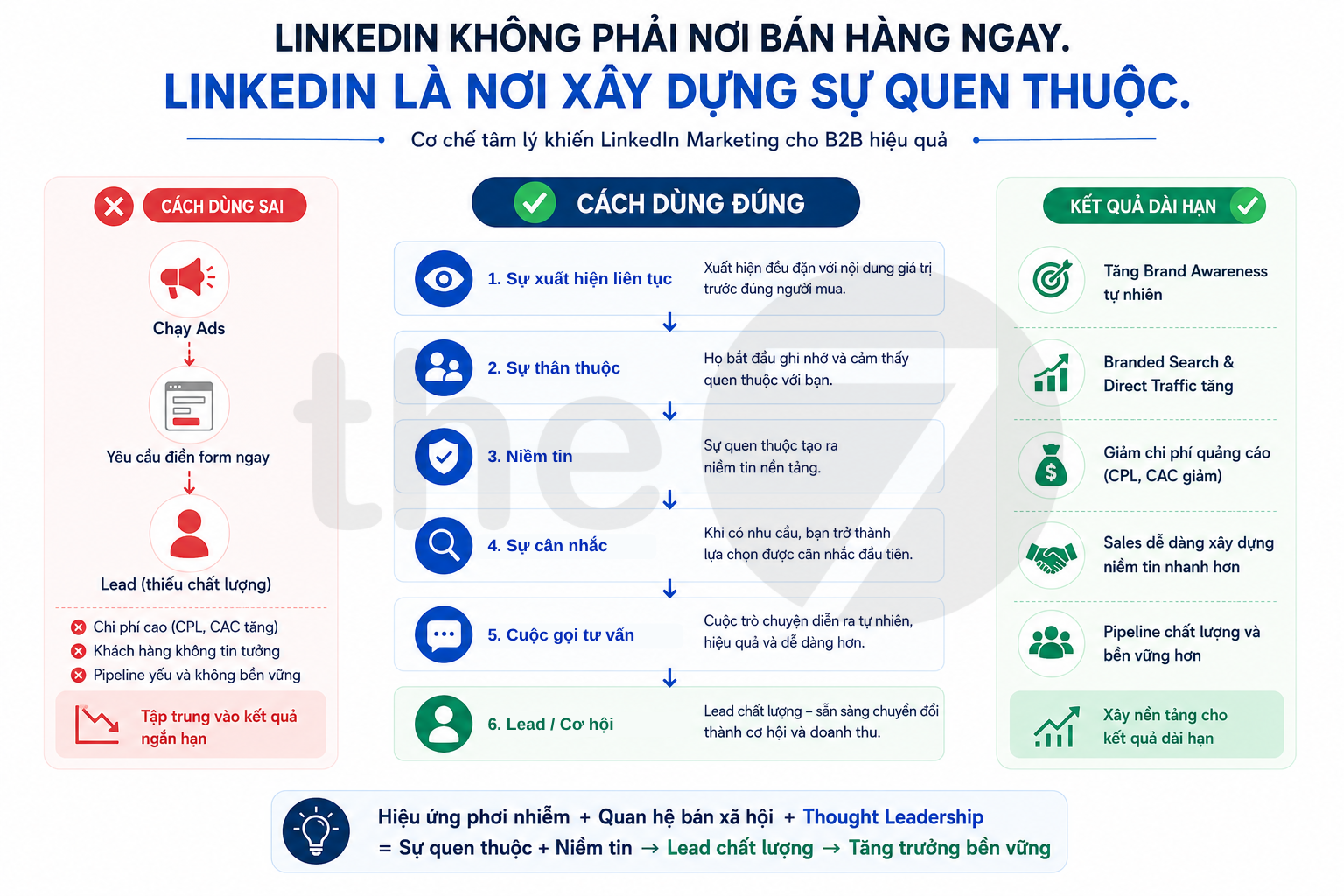
There’s a psychological principle that explains most of LinkedIn’s power. Interestingly, this principle was proven long before social media even existed.
In 1968, psychologist Robert Zajonc published a series of experiments on what he called the mere-exposure effect. The core finding is simple but hugely influential: people tend to like something more simply because they’ve been exposed to it repeatedly, even when they don’t clearly remember having seen it before.
In other words, familiarity itself creates goodwill. A face you see repeatedly gradually becomes more pleasant. A name you hear repeatedly gradually becomes less foreign. A brand that appears repeatedly in the right context gradually starts to seem more trustworthy. There doesn’t have to be a big argument. There doesn’t have to be one spectacular moment of persuasion. Sometimes all it takes is repeated, consistent appearance, in the right place, for long enough.
This is exactly the underlying mechanism of LinkedIn. When an executive sees your content once, they may not care yet. When they see it a second time, they just skim past. When they see it a third time, they start to notice your name. When they see it a tenth time, across many different contexts — a post, a comment, a share, an ad, a case study, someone else’s mention — your name starts moving from unfamiliar to familiar. And once it’s familiar, they become far less defensive.
This is the point many businesses miss. They want LinkedIn to generate leads right away, but they never let LinkedIn do what it does best: build familiarity.
An ad demanding a form fill on the very first touch usually meets a cold response. Not because the buyer has no need. Not because the message is necessarily wrong. But because you’re asking for an action that requires trust while trust hasn’t been built yet. You’re asking the buyer to step into a relationship when they don’t really know who you are yet.
Performance marketing, in the sense of ads demanding immediate action, cannot replace this mechanism. The exposure effect needs time. It needs repetition. It needs enough appearances for your name to be pulled into the buyer’s zone of familiarity. When you jump straight to a call to action too soon, you’re trying to harvest something that was never sown.
That’s why so many LinkedIn campaigns become expensive. Not because the platform lacks B2B buyers, but because businesses are buying reach while expecting it to behave like a sales close. They’re paying to show up, but measuring as if they were harvesting hot demand. Those two things are not the same.
The practical consequence is clear: on LinkedIn, cadence and consistency matter more than any single piece of content. One brilliant post followed by six months of silence doesn’t build as much familiarity as a decent content system that shows up every week, month after month. One great but standalone video isn’t as strong as a series of viewpoints repeated long enough for the market to start linking you to a specific problem. A short-term campaign can create a burst of attention, but familiarity has to be accumulated through sustained presence.
This doesn’t mean quality doesn’t matter. On the contrary, quality matters a great deal. But quality on LinkedIn shouldn’t be understood as a single creative burst. Quality is better understood as the ability to show up consistently with useful, substantive, relevant perspectives, with enough consistency for buyers to gradually understand what you stand for.
You don’t build trust with one impressive moment. You build it through many valuable appearances, until your name becomes a familiar part of the buyer’s professional world.
Why does a personal voice beat a brand voice?
There’s an observation that almost anyone who works LinkedIn long enough will notice: the same idea, the same content, the same viewpoint, when posted from a real person’s personal account, usually travels further, gets read more carefully, gets more engagement, and is trusted more than the same thing posted from a company page.
The most common explanation is that LinkedIn’s algorithm favors personal accounts over company pages. That’s partly true. But if we stop at the algorithm, we miss a deeper cause. The issue isn’t only about how the platform distributes content. The issue is about how humans form trust.
In 1956, researchers Donald Horton and Richard Wohl introduced the concept of the parasocial relationship. They observed that audiences can develop a sense of familiarity, almost like a real relationship, with people they see regularly through media, even though the relationship is entirely one-sided. Viewers feel they know the host, trust that person, understand their personality, as if there were some kind of acquaintance between them, even though they’ve never actually met.
The concept was originally used to describe radio and television. But when applied to social media, and LinkedIn in particular, it becomes even more accurate.
On LinkedIn, a founder, a CEO, an expert, a marketing director, a lead engineer, or a salesperson with a clear point of view, who shows up consistently in their own voice, will gradually build a form of parasocial relationship with their followers. Readers start to feel they know that person. They understand how that person thinks. They know what that person cares about. They remember that person’s way of arguing. They may have never met, never messaged, never bought anything, but in their minds a sense of acquaintance has already formed.
A company page has a very hard time creating that. People don’t form relationships with a logo. People don’t feel familiarity with an anonymous marketing department. People don’t easily trust a statement coming from a faceless, voiceless, personality-less brand. A company page has its role. It confirms the company exists, stores official information, signals scale, presents evidence, and serves as a brand touchpoint. But it can’t replace the voice of a human being.
This is why in B2B, the saying “people buy from people” isn’t just a nice-sounding slogan. It’s a consequence of psychology. B2B buyers may represent an organization. They may spend company budget. They may have to report to a buying committee. But they’re still human. They still trust people who feel familiar to them. They’re still influenced by a sense of trust. They still want to know who’s behind a point of view. They still want to judge whether this vendor truly understands the industry, the problem, the risks, and their context.
A brand can say “we’re experts.” But a leader who analyzes a problem deeply enough, consistently, for six months straight, will lead the buyer to conclude on their own that this company has real expertise. That’s where the difference lies.
Content from a company page usually talks about the company itself. Content from a person, done right, talks about the market’s problems. A company page tends to try to prove something. A person can share, analyze, push back, tell stories, point out mistakes, express beliefs, and show much more vivid thinking. This is why a personal voice, especially the voice of leaders and internal experts, usually carries more weight in B2B.
A business that neglects the personal voices of its leaders and staff is wasting the single strongest bonding mechanism on LinkedIn. It might still have a beautiful company page. It might still run ads. It might still post news regularly. But it’s missing what makes the market feel there’s a real person to trust. And in large deals, that feeling carries very high value.
Does thought leadership on LinkedIn really influence buying decisions?
This is a question many skeptical executives often ask. Posting analysis on LinkedIn sounds nice, but does it actually lead to deals? Or does it just generate a few likes, a few compliments, a few vanity metrics, and ultimately have no effect on revenue at all?
It’s a fair question. B2B can’t run on feelings alone. If LinkedIn only generated shallow attention, it wouldn’t be enough to be a strategic channel. Fortunately, the impact of thought leadership in B2B has been studied rigorously, and repeatedly, over many years.
Edelman, one of the world’s largest communications research firms, together with LinkedIn, produces an annual report on the impact of thought leadership in B2B. They survey real decision-makers at real companies, and the findings, year after year, point in one clear direction: thought-leadership content has a real effect on how buyers evaluate vendors.
Most B2B decision-makers regularly spend time reading thought-leadership content. This isn’t a side activity, nor a behavior limited to people who happen to like social media. For many executives, reading in-depth analysis is part of how they keep up with the market, watch trends, evaluate partners, and understand the issues reshaping their industry.
More importantly, they don’t just read to know. They read to judge.
A vendor can send a beautifully designed capability deck. A sales team can present very persuasively. A website can be written very polished. But thought-leadership content shows the buyer something different: how that company actually thinks. When a business correctly analyzes an industry problem, identifies deeper root causes, names common mistakes, and offers a clear framework, buyers start judging its competence in a way a brochure never can.
This is a huge role LinkedIn plays in B2B. It doesn’t just let you say “we can do it.” It lets you prove your capability by thinking out loud, in public.
A significant share of decision-makers say quality thought-leadership content led them to look into a product or service they had never considered before. This matters a great deal, because in B2B, many buyers don’t enter the market with a clearly named need. They have a problem, but may not know exactly what that problem is. They have pressure, but may not know which direction to solve it in. They have risk, but may not know that a suitable type of solution even exists.
Good thought-leadership content can do something sales ads struggle to do: change how the buyer understands the problem.
When how a problem is understood changes, the list of vendors under consideration changes too. A company that wasn’t previously in the buyer’s mind may get added to the list. A service that wasn’t previously a priority may become worth considering. A conversation that previously seemed unnecessary may become something worth having.
Even more importantly, a significant share of decision-makers say strong thought leadership directly led them to award business, invite a vendor into a bidding process, or consider working with an organization.
In other words, content on LinkedIn doesn’t just serve awareness. It can open the door to real sales opportunities. But the sharpest finding in these reports actually runs the other way: weak thought leadership isn’t just useless — it can actively cause harm.
A significant share of decision-makers say poor-quality content led them to eliminate a vendor from consideration, or decide not to work with an organization. This is something many businesses don’t realize. They think posting content is a one-sided bet: if it’s good, great; if it’s bad, at worst nobody cares. But in B2B, that’s not true. Bad content still sends a signal. It tells the market that you think shallowly, understand the problem superficially, sound like everyone else, or have no real point of view.
In a market where buyers use content to judge competence, mediocre content isn’t harmless. It can cost you points before sales even shows up.
This leads to a very important implication about quality. The safe strategy on LinkedIn isn’t posting a lot just to have a presence. The safe strategy is posting things good enough not to damage trust.
One sharp analysis a week is worth more than several shallow posts every day. Not only because a sharp post builds familiarity better, but because it avoids the self-inflicted trap of mediocre content. On LinkedIn, you’re not just competing on how often you show up. You’re competing on the quality of thinking you display to the market.
Where does LinkedIn sit in the 7B model?
This is where LinkedIn differs from most other marketing topics. Most marketing concepts typically map to one or a few gears in the 7B model. Inbound tends to touch Broadcast, Browse, and Buy heavily. Outbound tends to lean toward Buy, sometimes supported by Buzz. ABM is a way of converging multiple gears onto a target account group. PR tends to sit heavily in Buzz and Backing. Content marketing can touch Broadcast, Browse, or Believer, depending on how it’s executed.
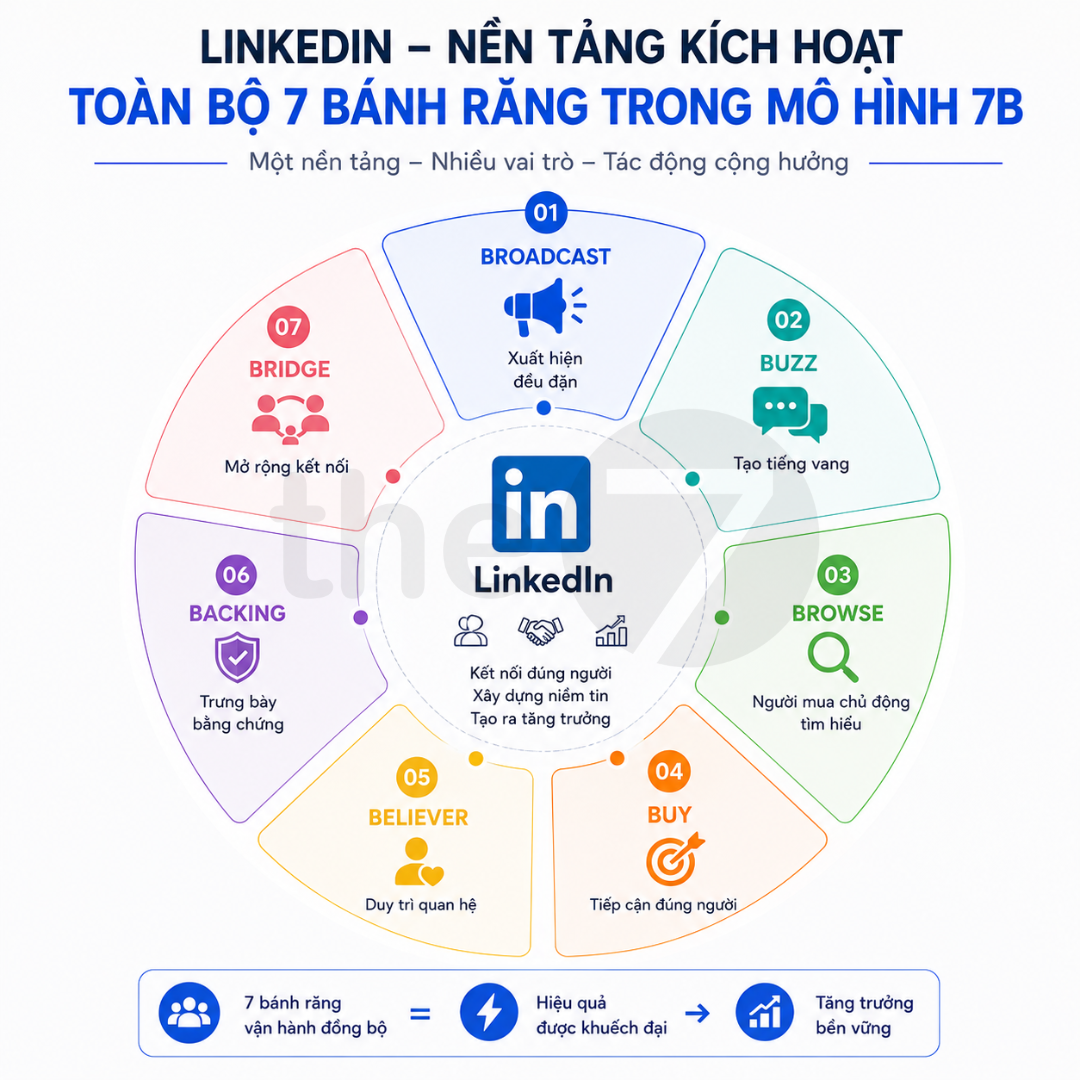
LinkedIn is different. It’s one of very few platforms where almost all seven gears can turn. This is why LinkedIn is special for B2B. It’s not just a place to post. It’s not just a place to run ads. It’s not just a place to recruit. It’s not just a place to build a personal brand. It’s not just a place for sales to find customers. It can do all of those things, but its real power lies in the fact that these things aren’t separate. They happen in the same place, in front of the same network of buyers, and they have the ability to amplify each other. Let’s look at each gear.
Broadcast is when leaders, experts, and the company post valuable content regularly to build familiarity. LinkedIn is one of the strongest Broadcast stages for B2B, because readers are in a professional mindset. An article about factory operations, an analysis of data security, a viewpoint on industrial procurement, or a take on digital transformation all have a chance to reach exactly the people working in that industry.
Buzz is when others reshare your content, comment on you, tag you, mention your name, or bring your viewpoint into a wider discussion. LinkedIn is special in that this buzz is publicly visible within a professional network. When an industry expert comments on your post, their connections can see it. When a customer shares your case study, people in their industry may take notice. When a leader mentions your name in a professional context, that recognition carries far more weight than any self-introduction.
Browse is when buyers actively search, research, and vet you. In B2B, buyers don’t only search on Google. They also go to LinkedIn to check whether the company is real, who works there, what leadership says, whether staff have real expertise, which customers are engaging, and how the market is reacting. An empty company page, a silent leadership team, a personal profile with no sign of expertise — all of these send weak signals. Conversely, a clear LinkedIn presence helps buyers feel you’re a real, active organization, with a point of view, real people, and a place in the industry.
Buy is when you use LinkedIn ads, the sales team, Sales Navigator, or account-targeted campaigns to get your message to the right people on the buying committee. This is the piece most businesses focus on most, but it’s only one gear. LinkedIn lets you target the right title, industry, company, size, and region. That’s very powerful for B2B. But if Buy runs alone, without familiarity, without proof, without a personal voice, without a foundation of content, cost will be high and effectiveness will be weak.
Believer is when you maintain relationships with existing customers through content, interaction, recognition, sharing successes, and continuing to show up after the deal is signed. Many B2B businesses only use LinkedIn to find new customers, forgetting that existing customers are there too. When they keep seeing you offer good perspective, keep developing capability, and maintain a presence in the industry, their confidence that they made the right choice gets reinforced. This is the foundation for retention, expansion, and future opportunities.
Backing is when your evidence gets put on display and spreads. Case studies, numbers, testimonials, certifications, awards, project results, strategic partners, implementation photos, customer-authored posts — all of these can become evidence on LinkedIn. The key point is that evidence on LinkedIn doesn’t sit dead in a PDF file. It can be seen, shared, commented on, and confirmed by other people. A case study on a website is a static asset. A case study a customer engages with on LinkedIn is living proof.
Bridge is when customers, partners, employees, investors, industry experts, or professional communities help you cross trust bridges you couldn’t build alone. In B2B, referrals through a network carry enormous weight. LinkedIn makes these bridges visible. A shared connection, a referral, a comment from a respected figure, a share from a partner, a former employee speaking well of the company — all of these can help a new buyer feel less risk.
Seven gears, one platform. That’s why LinkedIn is special. But this is also its biggest trap. Because LinkedIn can do so much, many businesses only use it for one thing — usually Buy. They run lead-gen ads, send sales messages, measure leads, and ignore the other six gears. They use LinkedIn as a harvesting channel, while never using it as a market-building machine.
And this is where the three principles above click together.
The exposure effect is the engine of Broadcast on LinkedIn. Repeated appearance moves your name from unfamiliar to familiar, from familiar to seemingly trustworthy. The parasocial relationship explains why Broadcast from an individual usually beats Broadcast from a company page. Buyers more easily form a sense of familiarity with a person than with a logo. Data from Edelman and LinkedIn shows that when thought leadership is done well, it doesn’t just build awareness — it influences how buyers evaluate vendors, opening the door for Buzz and Buy.
On LinkedIn, the gears don’t run in isolation. They amplify each other. A good post can be Broadcast. When shared by someone in the industry, it creates Buzz. When a buyer looks up your profile, it becomes Browse. When an ad delivers that post to the right buying committee, it supports Buy. When an existing customer reads it and sees you continuing to build capability, it reinforces Believer. When the post leads to a case study or testimonial, it creates Backing. When a partner recommends you in the comments, it opens a Bridge.
One piece of content, many gears. One platform, many roles. One mechanism, many effects. This is LinkedIn’s real power in B2B.
Three examples across three industries
Let’s look at a few examples to see how LinkedIn plays out differently by industry, while still resting on the same principle: build familiarity and relationships first, and let transactions follow as a natural consequence.
In enterprise technology, many companies build a leadership team with a strong voice on LinkedIn. The CEO shares about the industry’s future. The CTO analyzes technical shifts. The CMO talks about how the market is moving. Regional directors comment on customer challenges. Over time, followers don’t just know the company’s name. They start knowing how that company thinks.
When the sales team reaches out to a target account, the outreach is no longer completely cold. The recipient may have already seen the CEO’s name. They may have already read an article by the CTO. They may have already seen a case study shared within their own network. They may not have actively researched it, but the exposure effect has already done its work. The company name is no longer unfamiliar, and that significantly reduces the initial resistance.
In professional services — consulting, law, audit, training, marketing, finance, HR — LinkedIn is usually strongest when used for thought leadership rather than direct selling. No one hires a high-value consulting firm just because an ad said “book a consultation now.” They hire because they believe that team understands the problem better than anyone else. And that belief is usually built through content.
A consultant who regularly posts deep analysis on governance mistakes businesses make, hidden costs in operations, how buying committees are changing, or why transformation projects fail, may not have readers who need the service right away. But after reading enough times, they start forming a conclusion: this person understands the problem. When a need arises, the conversation starts from a much higher baseline of trust than with a completely unknown vendor.
In industrial manufacturing, LinkedIn plays a different role. The market can be very narrow. Buyers might be engineers, plant managers, procurement heads, operations directors, or the leadership of a specific group of businesses. Here, the goal isn’t millions of followers. The goal is to get exactly the right few thousand people in the right industry to see you often enough.
An equipment supplier doesn’t need to be famous to everyone. They need to be a familiar face to exactly the group of people who will be involved in decisions to replace equipment, expand a factory, or select a new vendor. They can post content about technical standards, common operating errors, ways to reduce maintenance costs, warning signs equipment needs replacing, or lessons from implementation projects. This content doesn’t create a transaction right away. But it moves the supplier’s name into the familiarity zone of that niche market.
When the buying cycle arrives, that familiarity carries enormous value. Three industries, three different approaches, but the same principle. LinkedIn is strongest when used to build awareness, familiarity, trust, and relationships first. Transactions don’t disappear. Transactions are still the end goal. But in B2B, transactions usually arrive after trust has been accumulated long enough.
How do organic content and paid ads work together?
LinkedIn has two main engines: organic content and paid advertising. Most businesses only use one of the two, or use both but keep them separate. One team posts organic content but never amplifies it. Another team runs ads without a strong enough content foundation. Both approaches miss the platform’s real power.
Organic content is where the exposure effect and the parasocial relationship are built slowly. Posts from leaders, analysis from experts, content from the company page, smart comments under other people’s posts, sharing viewpoints on the market — all of these gradually accumulate familiarity. This is the part money can’t buy directly. You can pay for someone to see an ad, but you can’t force them to feel familiar and trusting after a single view.
Familiarity needs a real cadence of appearance. It needs a real voice. It needs a real point of view. It needs consistency sustained long enough for buyers to feel you’re not just running a campaign, but genuinely represent a way of looking at the problem.
Paid advertising plays a different role. It helps you extend reach, increase exposure frequency, and get good content to the right people faster than organic content can do alone. If organic content is the foundation, paid advertising is the amplifier. It doesn’t replace quality, but it helps quality get seen by the right accounts, the right titles, the right buying committee.
The right way to combine them isn’t writing a few random posts, then running ads to push strangers into filling out a form. The right way is to use organic content as a laboratory to test messaging. Whichever post gets read longer by people in the industry, gets deeper comments, gets shared more, or pulls the right people into the discussion, that post is a signal. It shows which problem is resonating. It shows which viewpoint has traction. It shows what the market is reacting to.
Paid advertising is then used to amplify content that has already proven its weight. This is how you reduce waste. You’re not paying to force the market to see content of unknown effectiveness. You use the organic market to find the signal first, then use budget to increase exposure frequency to the right people afterward.
But here’s something very important: ads can only amplify what’s already good. They can’t turn weak content into strong content. They just make more people see the weak content. If the content is shallow, ads make more people see that shallowness. If the messaging is too sales-driven, ads make more people feel oversold too early. If a post has no point of view, ads only speed up the spread of blandness.
This is exactly the point the Edelman and LinkedIn report warns about so clearly. Weak thought leadership can actively cause buyers to eliminate you from consideration. So before amplifying with money, businesses have to ask themselves: does this content genuinely make buyers trust us more? Or does it just make us show up more?
In B2B, appearing more often isn’t automatically better. Appearing more accurately, more deeply, more consistently, in front of the right people, is what creates value.
Done right, organic content and paid advertising aren’t opposed. Organic content creates voice, viewpoint, and resonance signals. Paid advertising increases exposure frequency to the right group of buyers. Organic content builds a foundation of trust. Ads carry that foundation of trust further. Organic content helps you understand the market. Ads help you claim presence within the target market.
And this is where understanding how LinkedIn advertising works creates a huge difference in cost. With the same budget, if you target the wrong people, send the wrong message at the wrong time, or push overly salesy content, cost will be very high. But if you know how to use ads to amplify the right content to the right accounts, the right titles, the right stage of awareness, the cost per meaningful exposure drops significantly.
Three mistakes in LinkedIn marketing
The first mistake is posting only from the company page, neglecting the personal voice.
A company page is necessary. It’s the official presence point. It helps buyers verify information, check size, browse job openings, see activity, and see branded content. But a company page can’t replace a person. As the parasocial relationship shows, people form a sense of familiarity with a real human being, not with a logo.
A business that posts only from the company page usually creates a feeling that’s safe but cold. The content might be correct, but it lacks a voice. It might be polished, but it lacks personality. It might be thorough, but it doesn’t make the reader feel they’re getting to know a specific person. Meanwhile, a leader or internal expert posting in their own voice can create a closeness, trust, and sense of understanding that the brand alone struggles to create.
Businesses that are strong on LinkedIn usually don’t just have a good company page. They have multiple people showing up together. Leaders talk about vision. Experts talk about their specialty. Sales staff talk about customer problems. Implementation staff talk about real-world lessons. When many personal voices stay consistent around one shared point of view, the brand becomes far more alive.
Neglecting the personal voice means wasting LinkedIn’s strongest bonding mechanism.
The second mistake is demanding conversion on the very first touch.
This is a very common mistake, especially when a business is used to measuring marketing by short-term leads. They see LinkedIn as a place that can target the right title, the right company, the right industry, so they assume that getting a lead-gen ad in front of the right person is enough to get results. But the right person doesn’t mean the right moment. And the right moment doesn’t mean enough trust.
A CFO might be the right buyer. But if he’s never heard your name, never seen your viewpoint, never read your evidence, never felt you understand his problem, then an ad demanding a form fill is still too early. An operations director might be in real pain from the exact problem you solve. But if you show up as a stranger demanding personal information, their natural reaction is still to be defensive.
The exposure effect needs time to turn strangers into familiar faces, and familiar faces into trusted ones. If you skip that stage, conversion cost will rise. Not because the buyer doesn’t exist, but because you’re forcing a deep action when the relationship is still very shallow.
The right approach is to build familiarity first. Deliver valuable content to the right people. Show up consistently. Prove your capability. Show the market how you think. Use ads to increase exposure frequency, not just to force forms. Once you’ve built a baseline of trust, the call to action becomes far lighter. The buyer no longer feels dragged into a cold sales pitch, but is continuing a cognitive relationship that was already built beforehand.
The third mistake is sacrificing quality to chase quantity.
Many businesses hear that they need to post consistently on LinkedIn, and turn consistency into a numbers race. One post a day, several posts a week, a packed content calendar, but most of it is generic filler. Congratulating an event. Posting conference photos. Sharing products. Saying what everyone else says. Repeating messages with no point of view. The result is activity without influence.
Consistency matters, but consistency doesn’t mean density. LinkedIn doesn’t reward meaningless presence. B2B buyers aren’t short on content. They’re short on perspectives that genuinely help them understand a problem better. If your content doesn’t do that, posting more just makes mediocrity show up more often.
This is why the thought-leadership data is so worth paying attention to. Weak content doesn’t just fail to help. It can make buyers underestimate your competence. In B2B, every post is a signal. It shows whether you understand the market deeply or shallowly. It shows whether you have a point of view or just repeat familiar lines. It shows whether you’re trying to help buyers think better or just trying to remind them your product exists.
One insightful post a week can be better than seven mediocre ones. One in-depth analysis can be better than ten forgettable updates. One clear viewpoint can be worth more than a lot of safe but forgettable messaging.
Quality isn’t decoration. In LinkedIn marketing for B2B, quality is part of trust.
Conclusion: familiarity is where trust begins
Back to where I started. Businesses that conclude LinkedIn is expensive and ineffective are almost always businesses using it as an instant sales machine. They want to go straight to the form. Straight to the lead. Straight to the meeting. Straight to the deal. But in B2B, especially for high-value products and services, buyers rarely move that directly.
Before buying, they need to know who you are. Before trusting, they need to see you enough times. Before meeting sales, they need to feel you’re competent. Before adding you to their consideration list, they need a reason not to see you as a stranger’s name.
The real mechanism that makes LinkedIn powerful isn’t instant transactions. The real mechanism is psychology.
Repetition builds familiarity. Familiarity breeds goodwill. Goodwill opens the door to trust. And in B2B, trust is usually built faster when it comes from real people, with real viewpoints, showing up consistently in the right professional context.
These principles weren’t born with LinkedIn. The exposure effect was studied long before social media existed. The parasocial relationship was observed back in the era of radio and television. Thought leadership has been shown to influence how B2B buyers evaluate vendors. LinkedIn is simply where these principles now operate at large scale, high speed, and with unusual precision within the B2B environment.
LinkedIn is also special because it’s one of the few platforms where nearly all seven gears of the 7B model can turn in the same place. Broadcast builds familiarity. Buzz creates resonance. Browse lets buyers check and research. Buy reaches the right buying committee. Believer maintains relationships with existing customers. Backing puts evidence on display. Bridge opens paths through networks and referrals.
Using LinkedIn only for Buy is like driving a seven-speed car in first gear the whole time. It still moves, but you’re wasting almost all of the machine’s power.
The right approach is to let familiarity and trust be built first — patiently, consistently, with depth. Transactions will then arrive as the natural consequence of a name that’s already remembered, a voice that’s already trusted, and a brand that already has a place in the buyer’s mind.

Nguyễn Đình
Bảo




As CEO of The7, I am committed to sharing practical, useful knowledge with every reader. Every article on The7 is based on my 7 years of hands-on experience in marketing — Facebook advertising, LinkedIn advertising, Google advertising, and marketing strategy. I hope you take away plenty of insight from these posts and apply it successfully in practice.
Related Articles
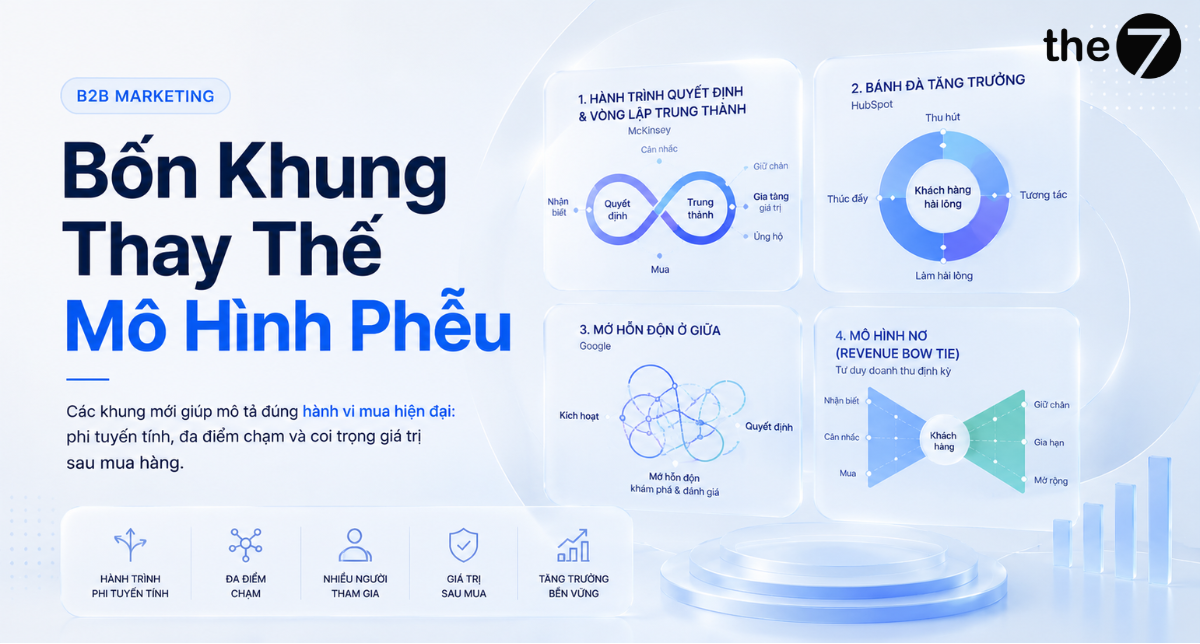
Four Frameworks That Replace the Funnel Model
Summary: As the funnel model increasingly fails to capture how modern buyers actually behave, a number of new frameworks have emerged to replace or repair it: McKinsey’s decision journey and...
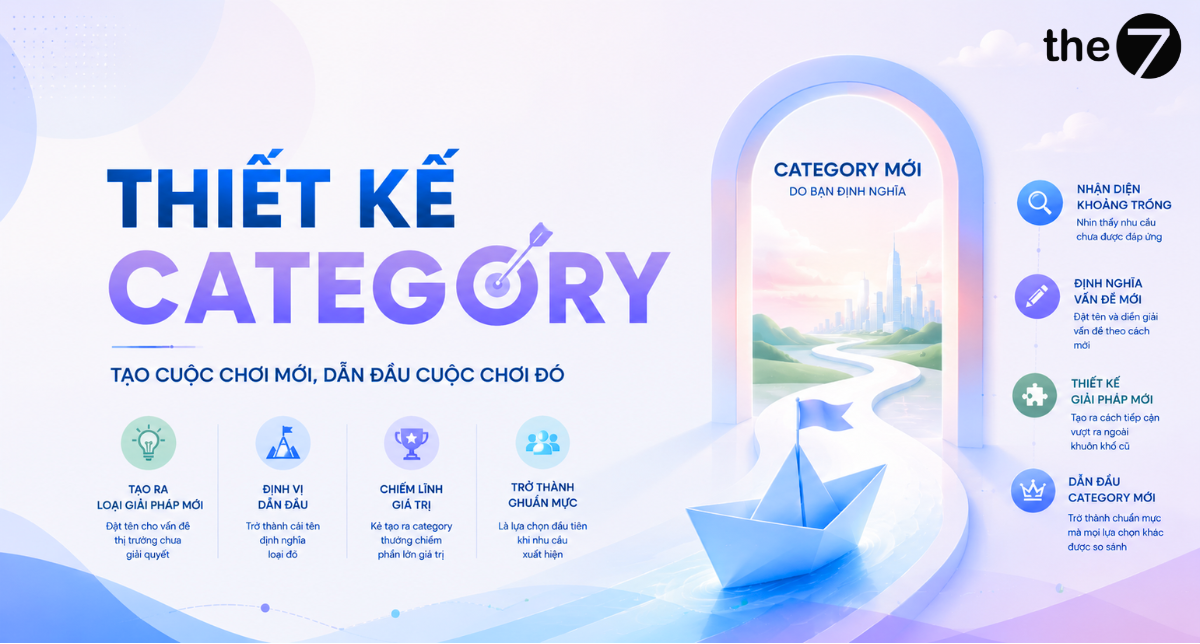
What Is Category Design?
Summary: Category design is the act of creating an entirely new type of solution in the market’s mind, instead of competing within an existing category, and then becoming the name...
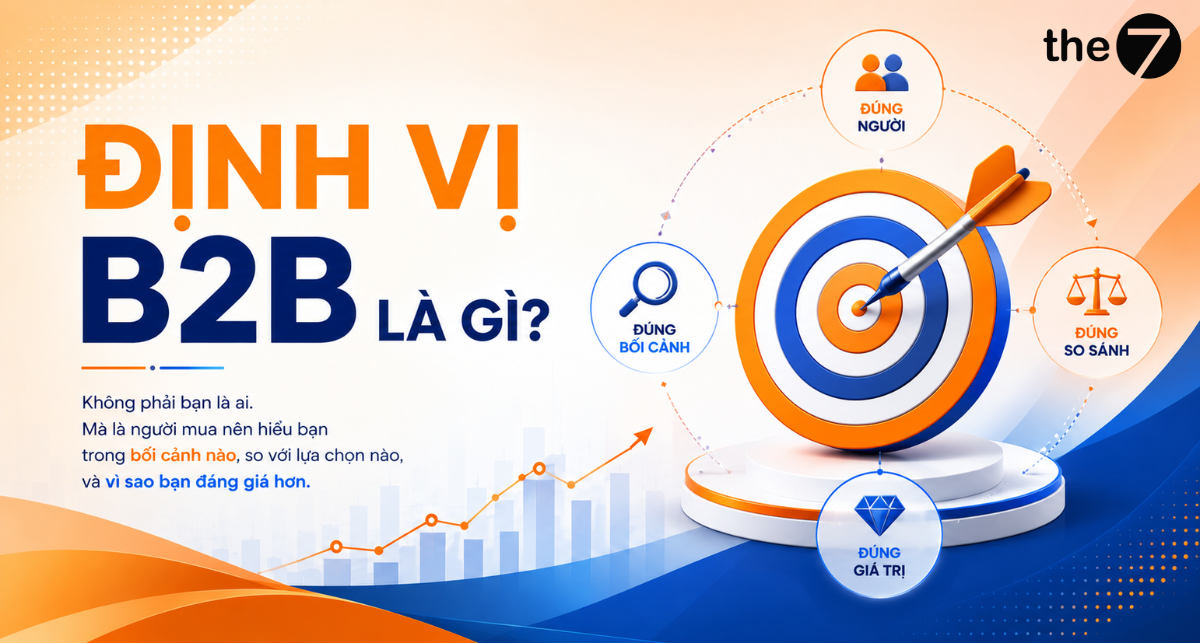
What Is B2B Positioning?
Summary: B2B positioning is the act of choosing the context you place your product into – the frame of reference that makes its value obvious to the buyer. Positioning isn’t...
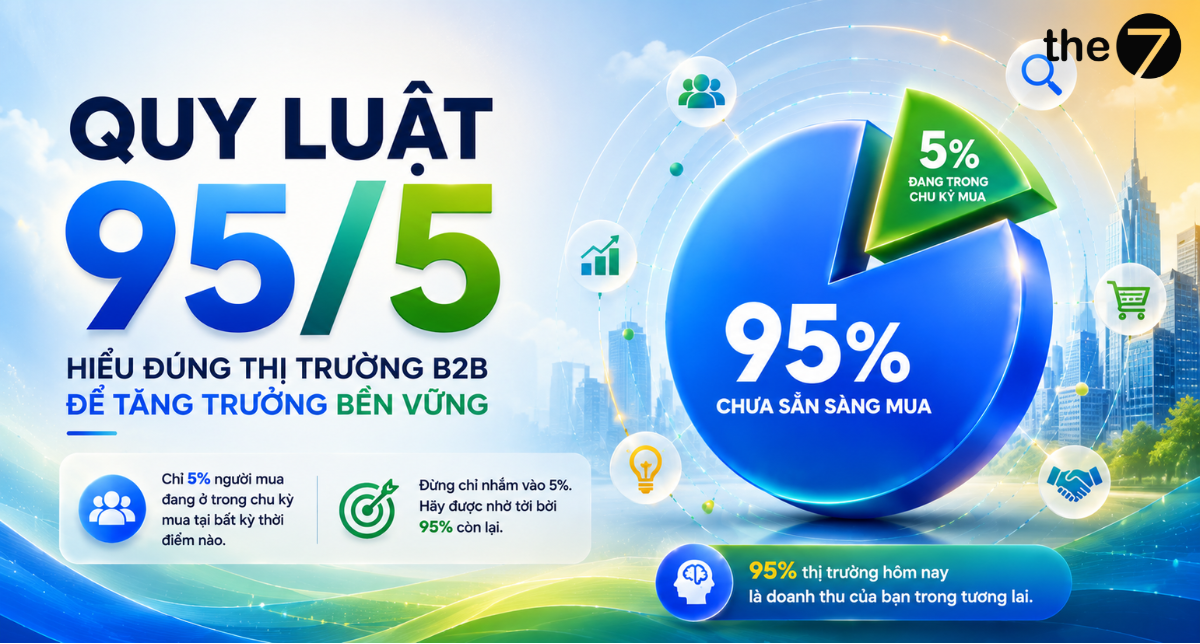
What Is the 95/5 Rule?
Summary: The 95/5 rule states that at any given moment, only about 5% of B2B buyers are actually in-market, actively in a buying cycle, while roughly 95% are not yet...
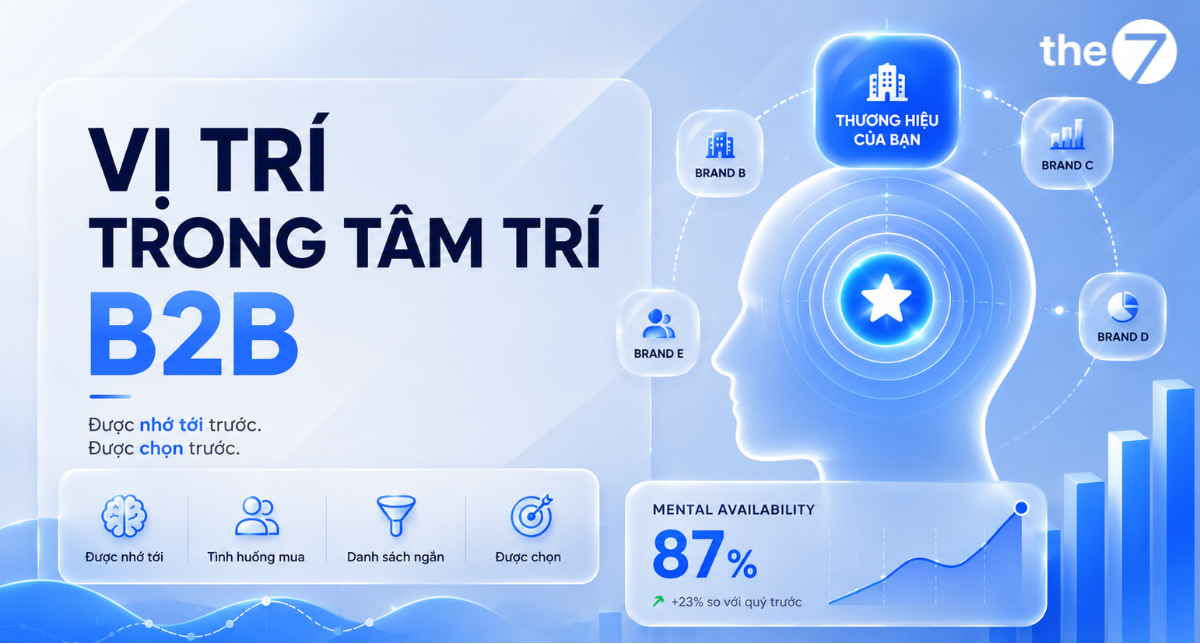
What Is Mental Availability in B2B?
Summary: Mental availability is how easily a brand comes to mind in a buying situation. It isn’t about having the sharpest argument, the slickest pitch, or the most convincing feature...
What Are B2B Events and Trade Shows?
Summary: B2B events and trade shows are in-person gatherings such as conferences, industry trade shows, workshops, and private meetings, where a business meets buyers, customers, partners, and the industry community...