


What Is B2B Email Marketing?
Summary: B2B email marketing means using email to build and nurture relationships with people who have already agreed to hear from you, not to bother strangers. Email’s real power does not lie in open rates, subject lines, or a handful of send-time tricks. It lies in something deeper: email is land you own, while most other marketing channels are land you rent from an algorithm, an ad budget, or someone else’s platform. In the 7B model, email is not a separate gear. It is the owned pipeline that lets Broadcast and Believer run more sustainably, while keeping the whole marketing machine from depending entirely on outside platforms.
Most B2B businesses see email as an old-fashioned channel. In their eyes, it is a leftover from the early internet days, less exciting than social media, quieter than advertising, less trendy than short video, and less flashy than whatever new platform shows up each year. They still send emails, but usually out of obligation, not as an investment in building an asset. They measure email by a few surface numbers: how many opened, how many clicked, how many replied, then rush to conclude whether email still works.
I think that view misses the most important thing about email. Email does not win because it is new. Email wins because it belongs to you. In a marketing world where almost every channel is mediated by platforms, algorithms, and distribution costs, email is one of the very few direct lines left between a business and its market. You can lose reach on social media the moment a platform changes its algorithm. You can lose search traffic after a major update. You can lose your ability to reach customers when ad costs double. But a properly built email list remains an asset you hold in your own hands.
When you build a following on social media, you do not actually own those people. You are only renting access to them from the platform. The platform gives you a nice storefront, gives you tools, gives you distribution capability, but ultimate control does not sit with you. Today, a post might reach ten thousand people. Tomorrow, the same type of content, the same quality, the same follower count, but the algorithm only shows it to a few hundred. You are not consulted. You just live with the consequences.
Email is different. When someone actively leaves their email address and agrees to receive information from you, you have a direct line to them. Of course, email still has technical factors that need respecting, such as domain reputation, spam filters, list quality, and engagement levels. But fundamentally, no social algorithm stands between you and deciding that only 3% of your list gets to see your message. You do not have to pay a platform every time you want to reach people who already chose to hear from you. That is a fundamental difference, and it is why email remains one of the most durable marketing assets in B2B.
This is not about claiming email is a magic channel. Email cannot save a business that has nothing worth saying. Email cannot turn a mediocre pitch into a strong strategy. Email also does not replace content, branding, advertising, events, partnerships, or sales. But email has a strategic role many businesses underrate: it maintains a direct relationship with the market on land the business owns. To understand that role, we first need to properly define B2B email marketing.
What Is B2B Email Marketing?
B2B email marketing is the use of email to build, maintain, and nurture relationships with a list of recipients who have agreed to receive information from a business, in order to deliver value, sustain engagement, build trust, and guide them through B2B’s long buying journey. The key phrase here is “agreed to receive information.” Real email marketing is not buying a random list, dumping it into your system, and blasting sales pitches at people who have never heard of you. That is spam wearing a marketing costume.
Real B2B email marketing is built on permission. The recipient once downloaded a resource, subscribed to a newsletter, attended a webinar, became a customer, left their information after an event, or actively chose to hear more from you because they saw something worth following. In doing so, they granted you an initial degree of trust. They may not be ready to buy yet. They may not be ready to talk to sales yet. But they have agreed to let you into a space more private than social media: their inbox.
That is why B2B email marketing should not be seen as a sales megaphone. It should be seen as a relationship-nurturing system. B2B differs from B2C in that the buying journey is usually longer, involves more people, carries higher stakes, and rarely resolves instantly. Someone might read your content today, buy nothing for six months, but one day, when their company’s need actually arises, you are the name already sitting in their memory. Email helps sustain that presence without relying entirely on whether that person happens to see your post on social media.
So the right question is not “does email still work.” The right question is: are you using email as a relationship asset, or just as a tool for firing off messages? If you use it to bother strangers, it will keep getting less effective. If you use it to maintain a steady line with people who have chosen to hear from you, email remains one of the strongest channels in B2B marketing.
Why Does Channel Ownership Matter Most?
To understand why email matters more than its old-fashioned appearance suggests, we need to distinguish something most businesses do not distinguish clearly enough: land you own versus land you rent.
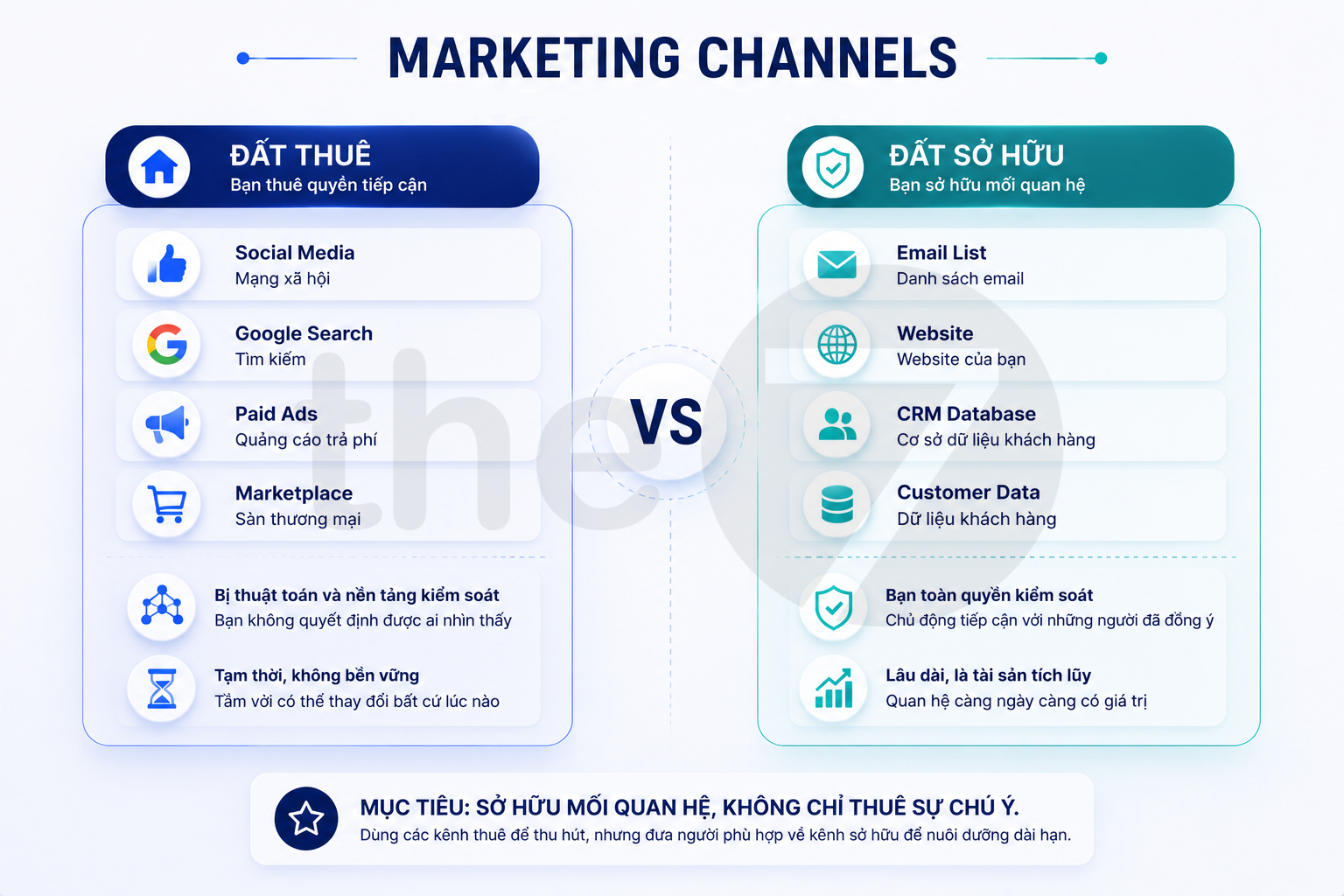
Rented land refers to channels where a third party controls access to your audience. Social media is rented land. You can build followers, post consistently, create a community, invest in visuals, and build a presence over years, but the platform still decides what percentage of your followers actually see your content. Advertising is also rented land. You reach the market for as long as you keep paying, and once you stop, most of that reach disappears. Search results carry a rented-land element too. You might invest in content for years, but one algorithm change can send your traffic plunging in ways you do not control.
Owned land refers to channels where a business has more direct control over its relationship with the audience. A website is part of owned land. A customer database is owned land. An email list is one of the clearest examples. When someone gives you their email address and agrees to receive updates, you have a private line to them. You do not need an algorithm’s permission to send a message. You do not need to pay every time you want to reach someone who already agreed to hear from you. You are not turned into a tenant on an asset you built with your own effort.
This distinction determines how risky an entire marketing strategy is. A business that builds its entire presence on rented land is building a house on someone else’s property. The house might look beautiful, get plenty of visitors, generate lots of engagement, but the right to use that land does not belong to you. The day the platform changes the rules, raises ad prices, cuts organic reach, changes how content displays, or simply loses popularity, the business can lose most of its ability to reach the market in a very short time.
Digital marketing history is full of stories like this. There are brands that once thrived on organic reach on a platform, then got squeezed when the platform shifted to prioritize paid ads. There are businesses that once depended on search, then lost traffic after a major update. There are teams that once poured all their effort into one social platform, only to realize a large following did not equal real access. The problem is not that those platforms are bad. The problem is that you do not own them.
Email is insurance against this risk. It does not replace rented land, because businesses still need social media, advertising, search, PR, events, and other distribution channels to expand reach. But email keeps you from depending entirely on them. Rented channels should be used as roads that lead people to owned assets. You use LinkedIn to build familiarity, ads to pull attention, content to prove expertise, events to create engagement, but the final destination should be a relationship you can keep nurturing without having to rent access again each time.
This is where many businesses get it backward. They pour huge effort into growing followers, but have no mechanism to convert some of those followers into an email list. They run ads to drive traffic to a landing page, but only measure the sales form, without building a list to capture content subscribers for people who are not ready to buy yet. They run webinars, conferences, and events, but afterward have no email system good enough to sustain the relationship with attendees. The result is that they keep having to buy back the market’s attention instead of accumulating it as an asset.
Followers on a platform are a borrowed relationship. People on an email list are a relationship you have the chance to own and nurture. That distinction sounds simple, but it changes how an entire B2B business should think about email.
Permission: Why Email Is Not Spam
Channel ownership explains why email is an asset. But for email to actually work, ownership alone is not enough. An email list is only valuable when it is built on something more fundamental: permission.
Spam is sending to people who never agreed to hear from you. It is uninvited outreach. It fails not just because of spam filters or increasingly strict data-protection laws, but because it lacks the foundation that makes every marketing communication effective: the recipient has to feel you have the right to be there. When someone has never permitted you into their inbox, your presence usually feels like an intrusion. And people respond to intrusion by ignoring, deleting, blocking, reporting spam, or forming resentment toward the brand.
Real email marketing operates on the opposite logic. The recipient has actively chosen to hear from you, usually because they already received some value beforehand. Maybe they read a helpful article. Maybe they downloaded an industry report. Maybe they attended a session. Maybe they are an existing customer who wants updates. Whatever the reason, the act of leaving an email address always carries an implicit meaning: I am allowing you into my inbox, as long as you keep giving me something worth it.
This is the spirit of permission marketing. Effective marketing does not start by cutting in on someone; it starts by being granted permission to continue a conversation. That permission is not a lifetime license to send whatever you want. It is a credit extended in advance. Every email you send afterward either grows that credit or drains it.
This is exactly where many businesses break trust. They ask for an email with a promise of value, then after getting it, send nothing but pitches. They promise analysis, but send promotions. They promise perspective, but send brochures. They promise to help the recipient understand a problem better, but only try to drag them into a sales call. When they do this, they turn a permission-based channel into an intrusive one. Technically, the recipient might still be on the list. Relationally, they have already left.
A dead email list does not always show up as unsubscribes. There is a quieter, more dangerous kind of death: people stay on the list but stop listening. They do not open. They do not read. They do not remember what you sent. They do not see you as relevant anymore. The list still looks big in reports, but inside it is a graveyard of addresses that no longer pay attention. This is the tragedy of many B2B email programs: the business has data, but no longer has a relationship.
Permission is an asset that must be nurtured, not exploited. If every email is just a withdrawal from the recipient’s attention account, that account empties fast. Conversely, if most of your emails keep delivering real value, recipients grow used to opening your emails in a more positive state of mind. They do not open because they were tricked by a subject line. They open because in the past, you have repeatedly proven that opening your email is worth it.
Email Runs on Relationship Rhythm, Not Campaign Rhythm
There is a thinking mistake that makes many businesses use email very poorly: they confuse email with a campaign channel.
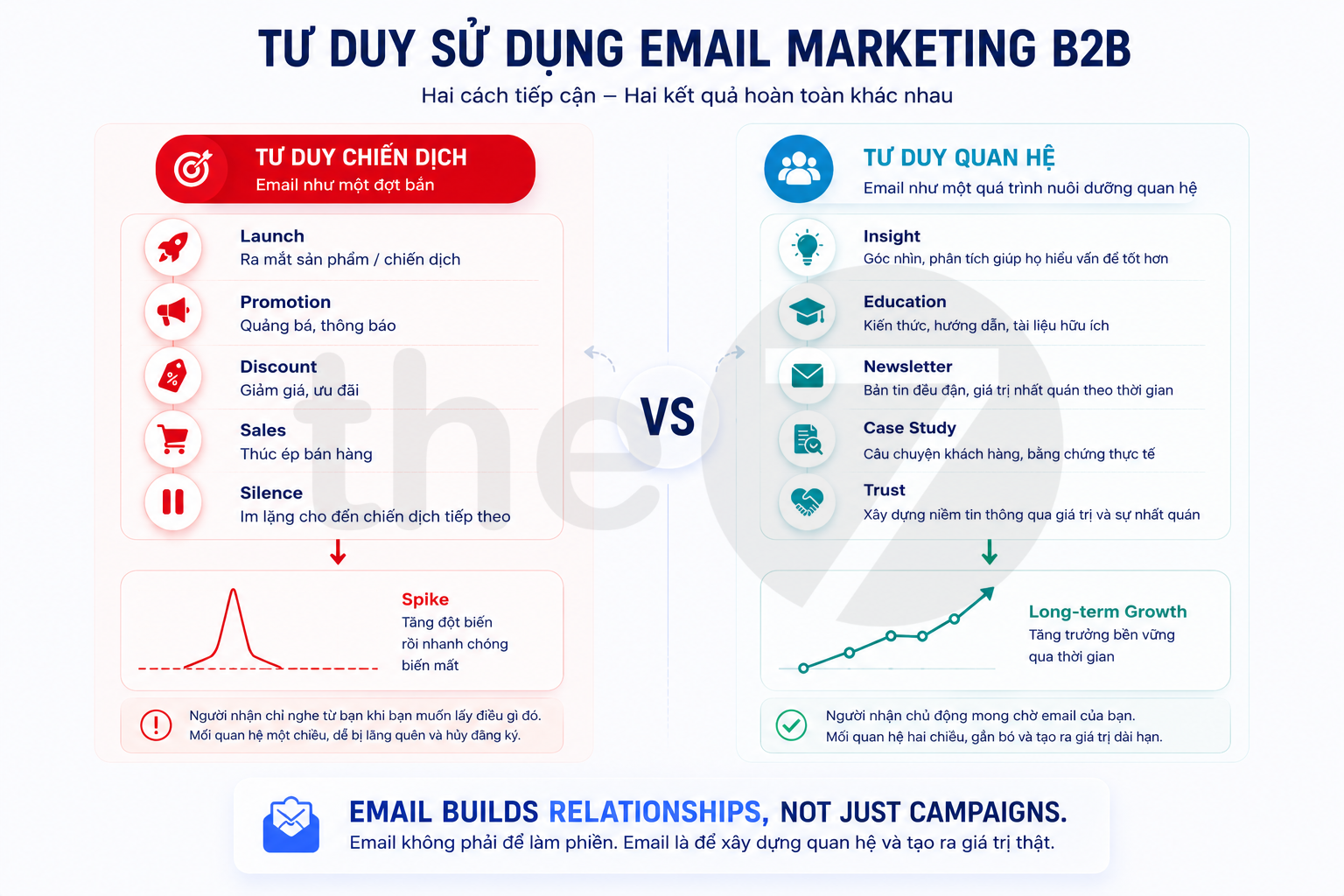
Campaign thinking sees email as a series of blasts. When there is a promotion, send a blast. When launching a product, send a blast. When you need to hit a quarterly target, send a blast. When an event is coming up, send nonstop. When there is nothing to sell, go quiet. In this model, email only shows up when the business wants to take something from the list: signups, meetings, feedback, revenue, quota.
The problem is recipients pick up on this very quickly. Someone who only hears from you when you want to sell understands that this relationship is not really a relationship. It is one-directional. You are not showing up to help them think better, work better, understand the market better, or avoid mistakes better. You only show up when you want them to do something for you. In B2B, where trust accumulates over time, using email this way damages exactly what email is best positioned to build.
Relationship thinking sees email very differently. It treats the email list as a group of people permitting you to be regularly present in their world. With that group, your job is not to constantly push them to buy, but to keep the relationship alive. A good email can help them see a problem more sharply. A good newsletter can give them a perspective they had not considered. A good nurture sequence can move them from vague awareness of a problem to a clear understanding of its causes, consequences, and solution options. None of that generates revenue instantly in any single email, but it builds something more important: memory and trust.
In B2B, most people on your list are not ready to buy today. They might be a future decision-maker. They might be an influencer on a buying committee. They might be watching you from a distance. They might not have budget yet, an urgent enough problem yet, or decision-making authority yet. If you only send sales emails, you are forcing them into a moment they have not reached. But if you use email to nurture awareness and trust, you are walking alongside them through the long stretch before their need becomes clear.
The difference between these two mindsets shows up clearly in sending rhythm. Campaign thinking sends irregularly, bursts hard when there is something to sell, then disappears. Relationship thinking sends more consistently, not necessarily very often, but steady enough that recipients remember you are still there. Campaign thinking centers the pitch. Relationship thinking centers value, with a call to action appearing only when there is genuinely a good reason for it. One treats the list like an ATM to withdraw from when needed. The other treats the list like a relationship worth investing in.
This does not mean B2B email should never sell. Of course email ultimately has to serve the business. But sequencing matters a great deal. If all you do is sell, recipients become defensive. If you give value consistently, then occasionally make a relevant offer, that offer lands within the context of an already-nurtured relationship. The same consulting invitation, the same demo invitation, the same event invitation, coming from a brand that has repeatedly helped the recipient think better, carries an entirely different weight.
A good B2B email sequence, then, should not just be a chain pushing people to buy. It might start by clarifying the problem, then analyze common mistakes, then offer a framework for evaluating solutions, then move to case studies, evidence, an invitation to talk, or a concrete action. That sequence respects how B2B buyers actually decide: they do not go straight from receiving an email to making a purchase. They need to understand, trust, compare, persuade other stakeholders, and reduce risk. Email is powerful when it supports that whole process, not when it tries to rush through it.
How to Build a Quality Email List From Rented Channels
If email is land you own, the next question is: how do you bring the right people onto that land? The answer is not buying a list. Buying a list is the fastest way to get a lot of addresses and very little relationship. You might have a large file on paper, but if the people in it do not know who you are, have not given permission, and do not expect to hear from you, that list is not an asset. It is a liability.
The better approach is to use rented channels to create attention, then convert part of that attention into an owned relationship. Social media might be where people meet you for the first time. Advertising might be how you get an important perspective in front of the right group. Podcasts, webinars, events, articles, research reports, analysis videos, diagnostic tools, checklists, or an in-depth newsletter can be the reason people want to hear more. When someone sees enough value to sign up for more, you have converted them from a borrowed relationship into one you can nurture directly.
The key is that the invitation to subscribe must be tied to real value, not just a meaningless form field. “Subscribe for updates” is a weak invitation if the reader does not understand what they will get. “Get a weekly analysis of how B2B businesses build demand before they ever sell” is a clearer invitation. “Get the newsletter for CEOs and B2B marketing teams who want to escape the cheap-lead race” is clearer still. People do not subscribe because you want their email. They subscribe because they believe giving you their email will get them something worthwhile in return.
A quality email list does not need to start with large numbers. In B2B, one thousand right people can be worth more than one hundred thousand random ones. A small list of CEOs, CMOs, marketing directors, growth operators, founders, sales leaders, or other roles that match your target market can create far more impact than a huge but diluted list. So the goal is not to collect as many emails as possible. The goal is to build a list of the right people, with the right reason to hear from you, nurtured with the right content.
This is also why email should be connected to your entire content system. A good article should have a path for readers to keep following you. A good webinar should have a post-event email sequence. A good research report should open into a deeper nurture journey. A good LinkedIn campaign should have a mechanism to pull interested people into the newsletter. If rented channels only generate views and then vanish, you are letting attention slip through your fingers. If they funnel some of the right people into your email list, you are turning attention into an asset.
Where Does Email Sit in the 7B Model?
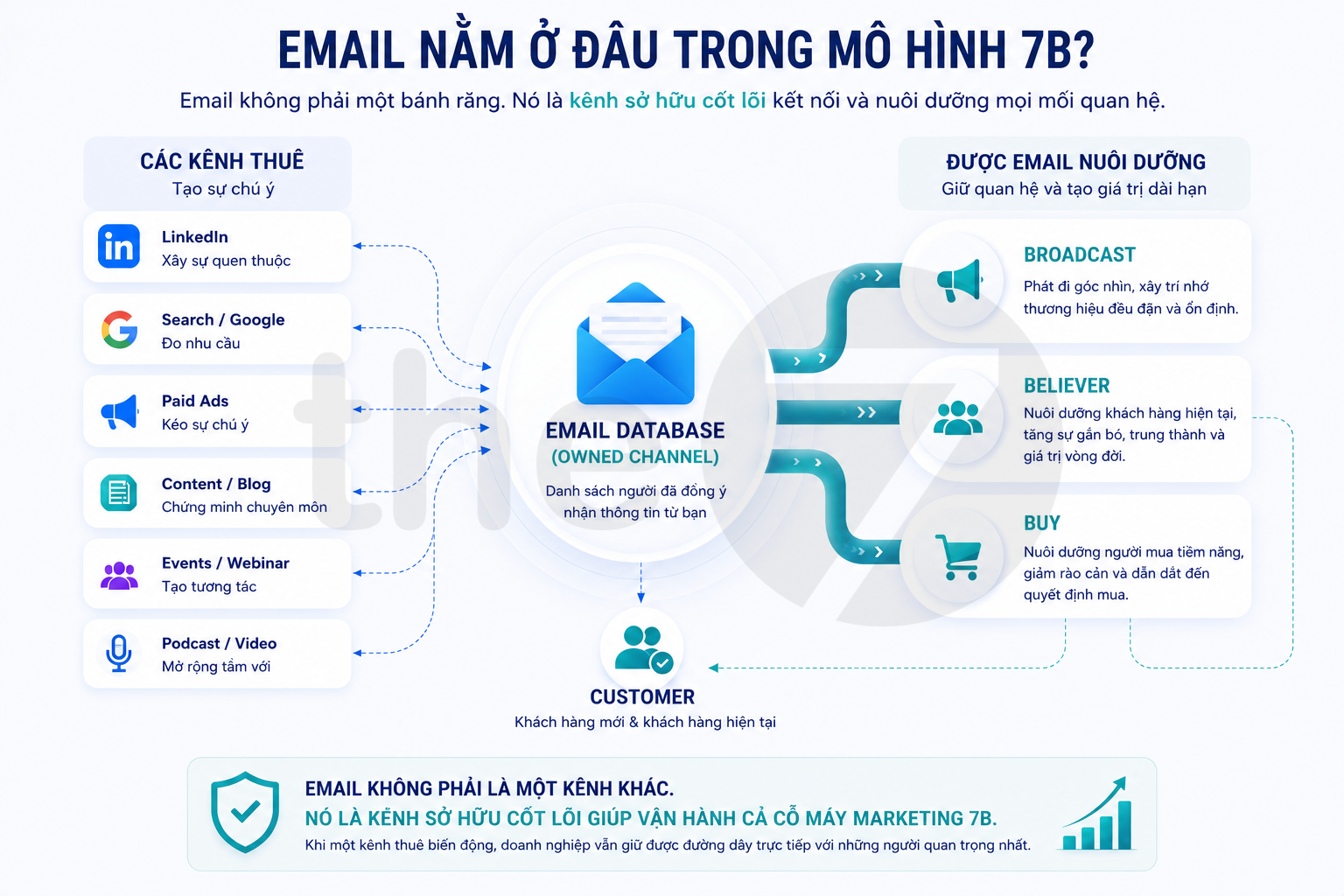
This is where email differs from many other marketing topics. Email is not a gear in the 7B model. It is a kind of pipeline. More precisely, email is the owned pipeline through which several gears can transmit motion without being overly dependent on outside platforms.
Believer is the gear email serves most powerfully. Believer is about nurturing existing customers, turning people who have already bought into people who keep believing, keep using, keep coming back, keep referring, and keep expanding their relationship with the business. Email is one of the most direct ways to do that. You can send deeper usage guides, feature updates, trend analysis, customer stories, invitations to private events, training content, or information that helps customers extract more value from what they have bought. Done well, email keeps customers from feeling abandoned after signing the contract.
Broadcast can also run through email. A regular newsletter is a form of Broadcast, because it lets the business put out its perspective, point of view, and brand memory into the market. But Broadcast via email differs from Broadcast on social media in one critical way: it runs on a channel you own. When you post on social media, distribution depends on the platform. When you send a newsletter, you are far more in control of reaching the people who have subscribed. So email turns Broadcast from an algorithm-dependent activity into a more cumulative asset.
Buy also uses email, but carefully. Email can nurture people close to the buying stage, sending case studies, comparison materials, demo invitations, answers to common objections, or content that helps them persuade other stakeholders on the buying committee. But if a business only looks at email through the Buy lens, email quickly gets reduced to a pressure tool. When that happens, the entire relationship-building power of email shrinks down to a few short-term sales campaigns.
Do you see it now? Email does not sit neatly inside one gear. It is a direct pipeline serving multiple gears. But its most distinctive role is making Broadcast and Believer less dependent on rented land. Every gear that runs on social media, advertising, or someone else’s platform carries platform risk. Email is a way to anchor part of the machine’s motion to owned land. It is the whole system’s safety net: when a platform changes its rules, when organic reach drops, when ad costs rise, when an outside channel gets disrupted, you still keep a direct line to the people who matter most.
This carries a deep strategic implication. A 7B machine built entirely on rented land is a fragile machine. It can run very fast for a while, but it is not necessarily durable. It depends on decisions the business does not control. Email does not make a business immune to risk, but it makes the system less fragile. It keeps a business from having to start from zero every time a platform changes.
A Few Examples Across Different Industries
In specialized publishing and media, many organizations understand very well that a newsletter is not just a content format. It is a relationship model. They might use social media to pull in new readers, search to capture information demand, events to deepen engagement, but the core asset remains the list of readers subscribed by email. With that list, they can reach readers directly, introduce new content, invite them to events, survey needs, develop new products, or build sponsorship packages. The platform may change, but the relationship with readers stays in their hands.
In the software industry, email can be the backbone of nurturing existing customers. A SaaS company should not only email when it wants to upsell or renew a contract. Better emails help customers use the product more deeply: feature guides, use-case scripts, common-mistake warnings, other customer stories, product update bulletins, onboarding training content, or tips on how to measure results. This is Believer running through email. It helps customers get more value from the product, which increases retention and expansion.
In professional services, email can maintain relationships with a long list of decision-makers who are not ready to buy yet. A consulting firm, agency, law firm, audit firm, executive search firm, or training company can run an in-depth analytical newsletter for exactly the right target audience. Most readers do not have an immediate need. Maybe they will need it in six months. Maybe they will not have budget for two years. But throughout that time, email keeps the firm regularly present in their minds through demonstrated thinking, not sales pitches. By the time the need arises, the firm is no longer a stranger.
In B2B manufacturing, email also plays a bigger role than many people think. A supplier of equipment, materials, components, industrial solutions, or technical services can use email to share updates on new standards, application trends, maintenance guidance, supply-chain changes, deployment cases, or total-cost-of-ownership analysis. Buyers in these industries rarely decide based on a single email. But a helpful sequence running over many months can turn a business into the familiar reference point before a deal even begins.
Four examples, four contexts, one shared principle: email is strongest when used to own and nurture long-term relationships. It weakens when it is turned into a tool for firing short-term pitches.
Three Mistakes in B2B Email Marketing
The first mistake is only sending when you want to sell. This is campaign thinking at its worst. When you only show up in someone’s inbox when you need something, you are teaching them that your email is not worth waiting for. You might get a few short-term responses, but over time you erode the relationship exactly during the stage B2B needs it nurtured most. The fix is not punchier subject lines or more call-to-action buttons. The fix is flipping the ratio: most emails should give value, only occasionally should you make an ask. When the ask comes after many rounds of giving, it carries a completely different weight.
The second mistake is abusing permission. Businesses ask for an email with a promise of value, then send nothing but sales content. They forget that the recipient granted access to their inbox with a specific expectation. When you betray that expectation, permission starts to erode. The recipient might unsubscribe, but they might do something worse for you: stay on the list while losing all interest. The fix is to treat permission as an asset to protect. Before sending any email, ask: will this make the recipient feel their decision to subscribe was the right one?
The third mistake is treating email like rented land. Some businesses fail to recognize that email’s unique value is ownership, so they neglect list-building while pouring all their effort into trendier rented channels. They are happy with the views, the followers, the engagement, but have no way to convert that attention into a direct relationship. Then when a platform changes its algorithm or ad costs rise, they realize they have no land that is truly theirs. The fix is to treat email list-building as a strategic priority, not a side task. Every rented channel should have a clear role in funneling the right people onto owned channels.
The fourth mistake is measuring email too shallowly. Open rates and click rates have value, but they are not enough to tell whether email is actually building a relationship. A newsletter might not generate many immediate meetings, but it can make the brand the name people remember when the need arises. A nurture sequence might not generate a response in the first week, but it can reduce friction when sales reaches out later. If you only measure email by immediate reaction, businesses tend to turn email into a short-term pressure channel, undercutting its own long-term power.
The fifth mistake is not segmenting recipients by relationship stage. Current customers, past customers, newsletter subscribers, people who have downloaded a resource, event attendees, people already talking to sales, and people who have never engaged deeply should not all receive the same type of email at the same rhythm. B2B is a complex relationship, so email needs to respect the different degrees of closeness across each group, not to make the system complicated, but to make the message fit the recipient’s context better. The more an email fits the existing relationship, the less it feels like spam and the more it feels like a useful conversation.
FAQ About B2B Email Marketing
What is B2B email marketing?
B2B email marketing is using email to build and nurture relationships with people who have agreed to receive information from a business. It is not about mass-emailing strangers, but about maintaining a direct line with current customers, prospects, content subscribers, and people who might be part of a future buying decision.
Why does email still matter in B2B?
Email still matters because it is a channel a business can own directly. Social media, advertising, and search all depend on outside platforms or algorithms. Email lets a business keep a more stable line of communication with people who have chosen to hear from it, especially important in B2B, where the buying cycle is long and relationships need nurturing over time.
How is email different from spam?
Real email marketing is built on permission. The recipient has actively subscribed, provided their information, or agreed to receive content from the business. Spam is the opposite: sent to people who have not given permission, have no expectations, and usually have no prior relationship with the brand. This difference is not just technical, it is a difference in trust.
How often should you send B2B emails?
There is no single right frequency for every business. What matters more is that the sending rhythm is consistent and valuable. A deep weekly newsletter can work well if the business has enough material. An email every two weeks might fit better if content needs more preparation time. The big mistake is not sending too little or too much, it is only sending when you want to sell, turning the recipient’s inbox into a place that just receives pitches.
Where does email sit in the 7B model?
Email is not a standalone gear in the 7B model. It is the owned pipeline that powers several gears, especially Believer and Broadcast. For Believer, email nurtures existing customers. For Broadcast, email lets a business put out its perspective regularly without depending entirely on social algorithms. For Buy, email can support buyers during the consideration stage, but should not be reduced to a sales-pressure tool.
Conclusion: Email Is Land You Own
Back to where I started. Email looks old and unfashionable next to newer channels. It does not have the burst of short video, the glamour of advertising, the public feel of social media, or the easy hype of the latest marketing trend. But email has something most trendier channels do not: you can own it.
In a marketing world where most of the terrain is rented, where someone else’s algorithm decides who you can reach, email is the rare piece of land that is genuinely yours. Email’s value does not mainly lie in open rates, subject lines, or a handful of click-boosting tricks. Those things help, but they are surface-level. Email’s deeper value lies in owning the relationship, in the permission to nurture it over time, and in the ability to keep a direct line to the people who matter most without having to rent access back each time.
In the 7B model, email is the owned pipeline through which Believer and Broadcast can run more sustainably, less dependent on outside platforms. It is the safety net that anchors the whole marketing machine to your own ground. If a business builds only on rented land, the machine can run fast but stays fragile. If a business knows how to use rented channels to bring the right people onto owned channels, the machine starts accumulating real assets. Every other channel can help you rent attention. Email helps you keep part of that attention as a long-term relationship.

Nguyễn Đình
Bảo




As CEO of The7, I am committed to sharing practical, useful knowledge with every reader. Every article on The7 is based on my 7 years of hands-on experience in marketing — Facebook advertising, LinkedIn advertising, Google advertising, and marketing strategy. I hope you take away plenty of insight from these posts and apply it successfully in practice.
Related Articles
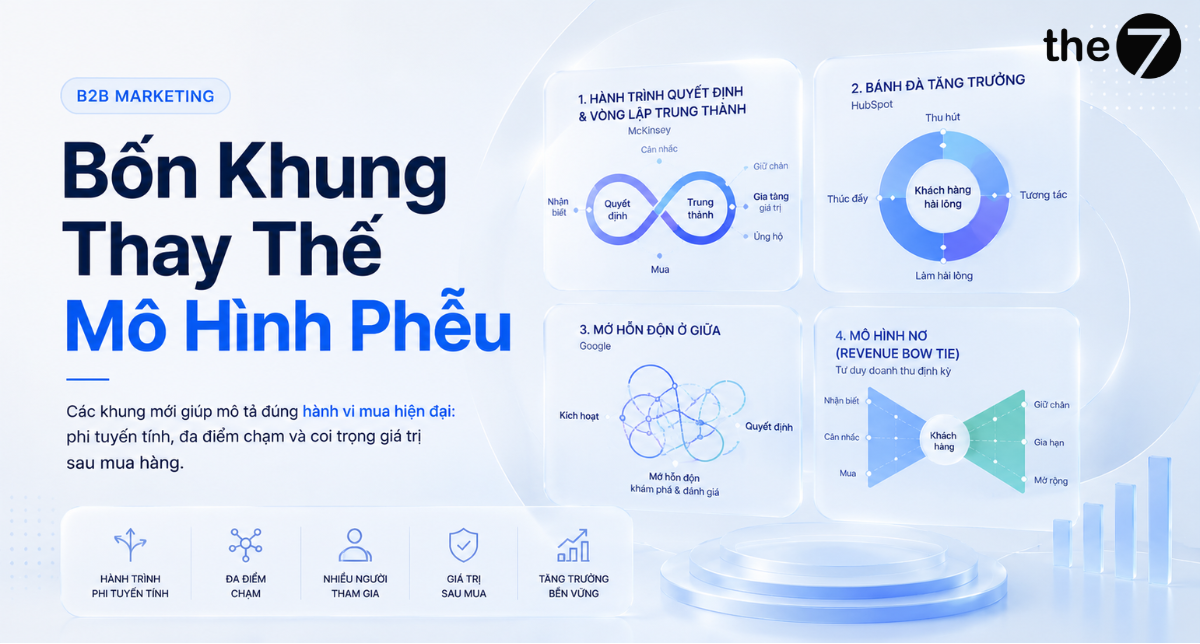
Four Frameworks That Replace the Funnel Model
Summary: As the funnel model increasingly fails to capture how modern buyers actually behave, a number of new frameworks have emerged to replace or repair it: McKinsey’s decision journey and...
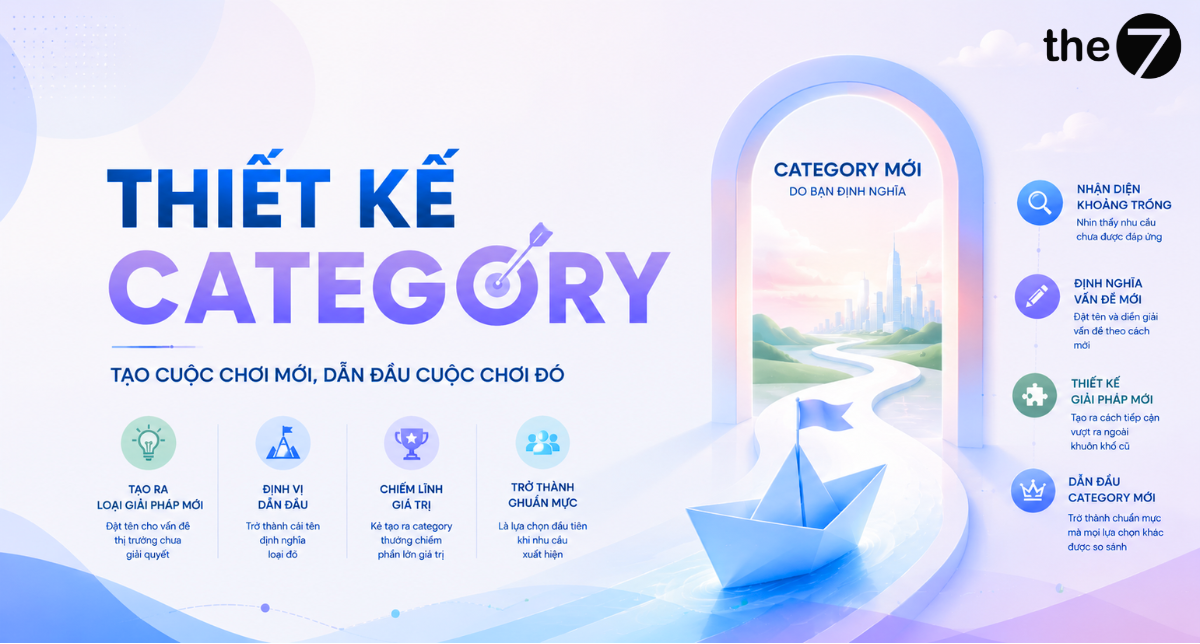
What Is Category Design?
Summary: Category design is the act of creating an entirely new type of solution in the market’s mind, instead of competing within an existing category, and then becoming the name...
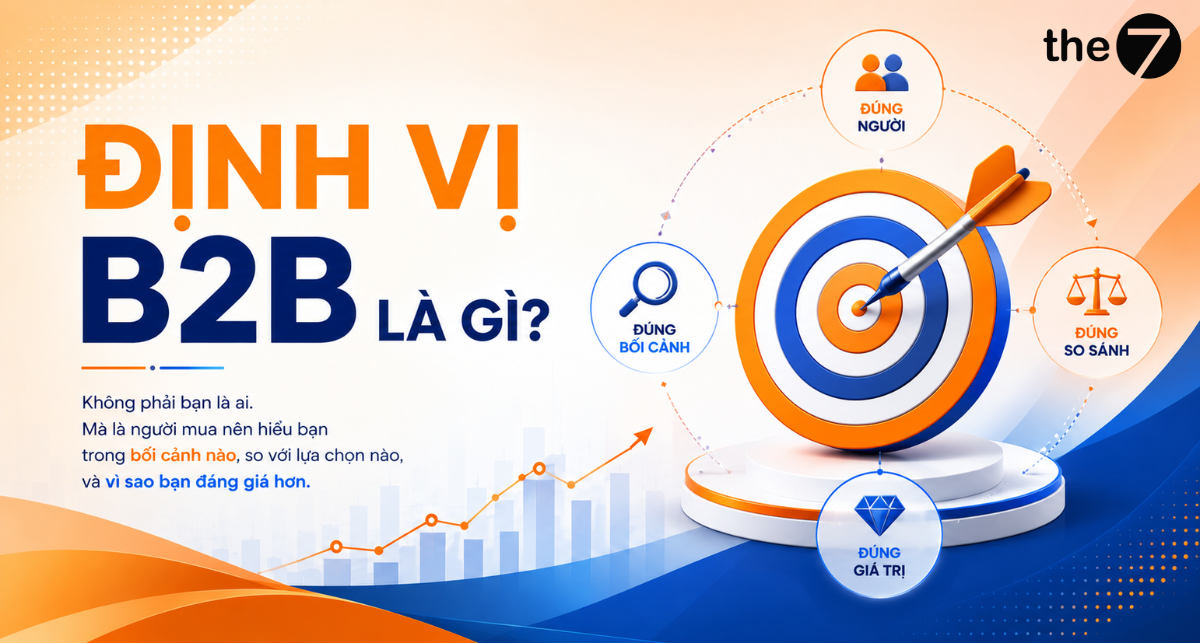
What Is B2B Positioning?
Summary: B2B positioning is the act of choosing the context you place your product into – the frame of reference that makes its value obvious to the buyer. Positioning isn’t...
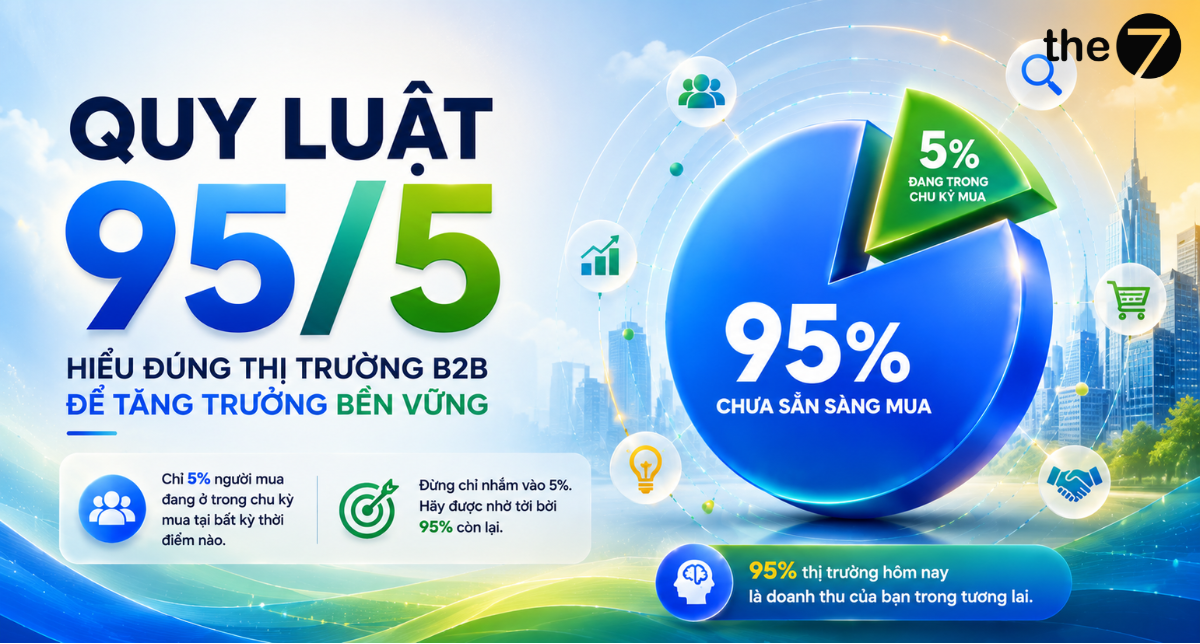
What Is the 95/5 Rule?
Summary: The 95/5 rule states that at any given moment, only about 5% of B2B buyers are actually in-market, actively in a buying cycle, while roughly 95% are not yet...
What Is Mental Availability in B2B?
Summary: Mental availability is how easily a brand comes to mind in a buying situation. It isn’t about having the sharpest argument, the slickest pitch, or the most convincing feature...
What Are B2B Events and Trade Shows?
Summary: B2B events and trade shows are in-person gatherings such as conferences, industry trade shows, workshops, and private meetings, where a business meets buyers, customers, partners, and the industry community...