


Ice Bucket Challenge: The $220 Million Fundraiser That Drew In Bill Gates, Tim Cook, and More
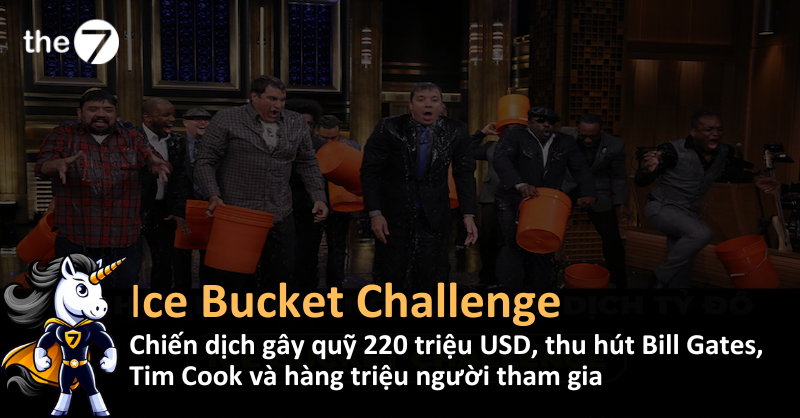
Any list of the biggest media campaigns of the past decade has to include the “Ice Bucket Challenge,” a global phenomenon that exploded in 2014. The campaign drew in famous names like Bill Gates, Tim Cook, Mark Zuckerberg, and more, creating a powerful wave of publicity and raising more than $220 million in just 2 years.
The Campaign: The Unique Challenge Behind the “Ice Bucket Challenge”
The “Ice Bucket Challenge,” also known as the ALS Ice Bucket Challenge, is a one-of-a-kind media campaign born from the passion of Pete Frates, a talented former baseball player from the Boston College team. The campaign quickly spread and went viral on social media, inviting people to pour cold water over their heads to raise money for ALS research. What made it special was how fast it spread, creating a wave of solidarity and widespread sharing while raising awareness of ALS in the global community.
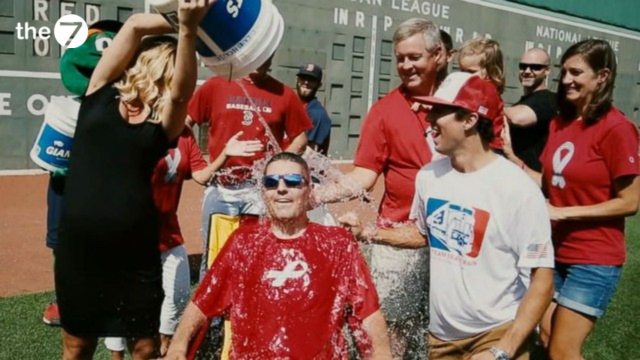
In 2014, Pete Frates, a passionate former baseball player, was diagnosed with ALS (amyotrophic lateral sclerosis). ALS is a rare neurological disease that attacks the motor nervous system and takes away a person’s ability to move. Sadly, at that time there was still no cure for ALS.
Refusing to surrender to fate, Pete Frates was determined to turn tragedy into action. He teamed up with an ALS research organization and launched the “Ice Bucket Challenge” with the goal of raising awareness of the disease, raising money for research, and giving hope to others in the same situation.
The rules of the campaign were remarkably simple: pour a bucket of ice-cold water over your head, record a video to share on social media, and nominate 3 other people to take part. Each participant could choose one of two options: complete the challenge and donate $10, or skip the challenge and donate $100 directly to the ALS fund.
Pete Frates was the first to bravely “kick off” the campaign with an inspiring video on social media. Almost immediately, the “Ice Bucket Challenge” exploded into a global craze. Millions of people around the world joined in, from celebrities like Bill Gates, Tim Cook, Mark Zuckerberg, and Cristiano Ronaldo to everyday people.
How the “Ice Bucket Challenge” Raised Millions of Dollars for ALS Research
Just 2 weeks after launch, the “Ice Bucket Challenge” had made a big splash, bringing in $1.35 million for ALS research. The campaign’s influence continued over the next 2 years, adding up to a huge total of $220 million.
The ALS research organization invested this money in research projects aimed at finding a cure for the disease. Thanks to contributions from the community, with just the first $1 million, scientists made an important breakthrough by identifying a new gene that directly causes ALS. This is an important foundation for developing effective diagnostic and treatment methods for the disease in the future.
The rest of the campaign’s funds continued to be used for research and for supporting ALS patients. The campaign not only brought huge benefits to scientific research but also helped raise awareness of ALS and spread a spirit of humanity and action for the community worldwide.
The “Ice Bucket Challenge” is proof of the extraordinary power of compassion and solidarity. The campaign inspired millions of people around the world and showed that when we come together, nothing is impossible.
The Secrets Behind the Success of the “Ice Bucket Challenge” and Valuable Marketing Lessons
Beyond its positive contribution to society, the “Ice Bucket Challenge” also offers valuable lessons for the marketing industry. Today, similar challenges are widely used in marketing campaigns to harness the power of content created by users, known as UGC (User-Generated Content). A typical example is TikTok Challenge campaigns.
The “Ice Bucket Challenge” showed that success comes not only from a meaningful message but from a combination of several factors. These include timing, the value and benefits the campaign offers participants, and a creative approach to execution.
Choosing the Right Timing and Platform
2014 was a golden moment, as social media, especially Facebook, was going through a period of strong growth, with a huge number of users and unexpectedly high engagement. At the same time, users’ demand for information and entertainment was climbing, creating ideal conditions for new trends and fads to spread quickly across social media.
To win over this social media “playground,” the Ice Bucket Challenge chose Facebook, a platform with an enormous user base and high engagement, as the starting point for its campaign. By creating “on-trend” content with short videos, eye-catching images, and a meaningful message paired with a fun challenge, the campaign grabbed attention and encouraged users to take part actively.
More importantly, the campaign’s strong viral nature created an exponential ripple effect. Each participant was not only completing the challenge but also becoming a media “ambassador,” sharing their video and nominating friends to join. As a result, the “Ice Bucket Challenge” spread beyond the United States and became a global phenomenon shortly after launch. The campaign proved the power of social media for spreading messages and connecting communities in a strong and effective way.
The Viral Power of Humanitarian Values
The key factor behind the huge success of the “Ice Bucket Challenge” was the value it gave to participants. The campaign was launched with a noble purpose: raising money for research into a cure for ALS and helping patients living with this devastating disease.
Every challenge video was more than someone pouring ice water over their head; it was proof of a community coming together. Transparency in how the funds were used helped secure participants’ trust. Every participant felt proud to contribute to such a meaningful campaign, bringing hope to people living with ALS.
A Smart Nomination Strategy
The Ice Bucket Challenge used a smart nomination strategy that highlighted the campaign’s viral element. By requiring each participant not only to take the challenge but also to nominate at least 3 other people, the campaign created a powerful chain of connections. Calling people out by name on social media not only motivated the nominees to take part but also pushed them to nominate others in turn. As a result, the number of participants grew exponentially.
In addition, the back-and-forth challenges between players made the Ice Bucket Challenge more dramatic and exciting. It was more than an ordinary challenge; it was a memorable experience that went beyond the control of any brand.
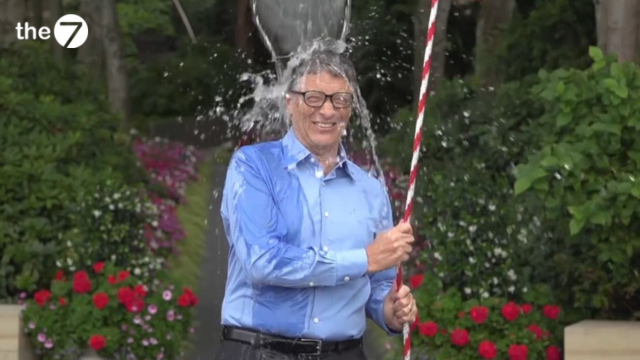
“Ice Bucket Challenge” proved that a successful media campaign needs more than a meaningful purpose; it also has to bring participants fun, entertainment, and positive energy. By applying this approach, brands can build campaigns that grab attention, create a positive brand image, and form lasting connections with customers.
The Pull of the “Influencer Effect“
The participation of famous people, from leading tech billionaires like Mark Zuckerberg, Bill Gates, and Tim Cook to politicians and artists, was a key reason the “Ice Bucket Challenge” became such a resounding success. Their presence not only boosted the campaign’s visibility and credibility but also confirmed its purpose and effectiveness in the eyes of the public.
The influencer effect isn’t limited to grabbing attention; it also creates a strong ripple effect. When famous people take part, users can easily hop on the trend, take the challenge, and share it on social media, which spreads the campaign’s message and goals.
What matters is partnering with the right influencers and creating engaging content. This way, a campaign can stimulate engagement and build trust among users, creating a powerful viral effect and drawing in large numbers of participants.
The “Ice Bucket Challenge” was not just a successful fundraising campaign but also a valuable lesson for the marketing communications industry, especially in the field of marketing. The campaign proved that a combination of meaningful purpose, good timing, entertainment value, a smart strategy, and the “Influencer Effect” can generate powerful viral reach and draw in large numbers of participants.
>>> See more Case Study: KUN Milk: Can It Break Through in the Vietnamese Milk Market?
Conclusion
The success of the “Ice Bucket Challenge” is proof of the power of marketing communications for spreading messages and connecting communities. By learning from these valuable lessons, marketers can build effective marketing campaigns that grab attention, connect with target customers, and create a positive brand image.
As we wrap up this look at the “Ice Bucket Challenge,” we hope you’ve picked up plenty of knowledge and ideas for successful marketing campaigns in the future!
By Khánh Huyền
Source: Marketing AI

Nguyễn Đình
Bảo




As CEO of The7, I am committed to sharing practical, useful knowledge with every reader. Every article on The7 is based on my 7 years of hands-on experience in marketing — Facebook advertising, LinkedIn advertising, Google advertising, and marketing strategy. I hope you take away plenty of insight from these posts and apply it successfully in practice.
Related Articles

Solo but Not Lonely: Vietnam’s Rise of Solo Dining in F&B
The solo-dining trend — “hotpot for one,” “lonely noodles,” or “self-dates” — is becoming a popular movement among young Vietnamese people, opening up major opportunities for the F&B industry. More...
How Katinat’s Charity Marketing Campaign Sparked Public Backlash
Recently, Katinat launched a campaign to support compatriots in Làng Nủ, a community hit hard by storms and floods, promising to donate 1,000 VND from every drink sold between September...
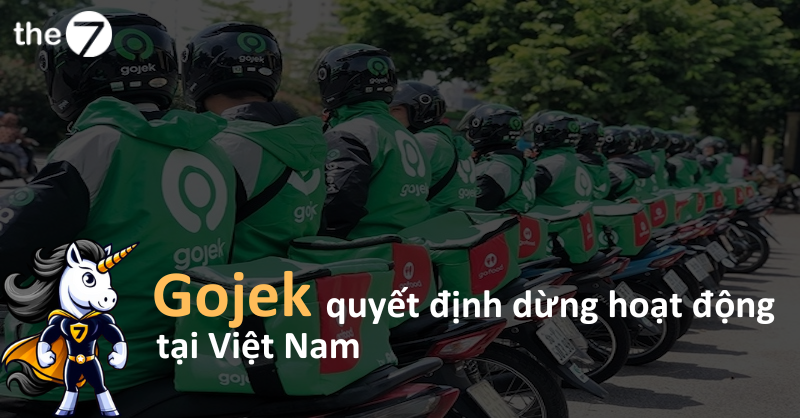
Gojek Decides to Cease Operations in Vietnam
After six years of building its business in Vietnam, the ride-hailing and food delivery platform Gojek has officially announced that it is shutting down. Starting September 16, 2024, users will...

E-Commerce Platform Shein Suspected of Using Toxic Chemicals in Its Clothing
The discovery of harmful chemicals in Shein’s products has raised concerns about the hidden risks in fast fashion, an industry where trends usually come first. The incident has not only...

The Coffee House: A Former Market Leader Struggling Against New Rivals With a Faded USP
The Coffee House was once a promising icon of Vietnam’s F&B industry, but recent months have seen the brand shrink at an alarming pace, with a wave of branch closures...
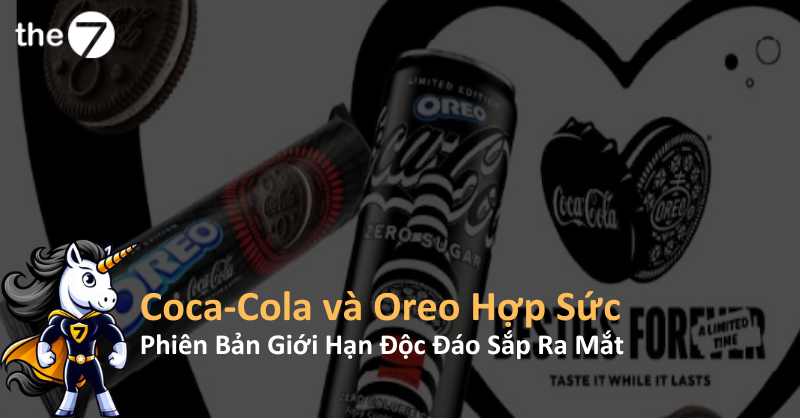
Coca-Cola and Oreo Team Up: Unique Limited Editions Coming Soon
If you’ve always dreamed of what Cola and cookies would taste like together, now’s your chance! Coca-Cola and Oreo have teamed up to bring you a one-of-a-kind combination – but...