


Google Core Web Vitals: Improve User Experience and Search Rankings

Google’s one and only goal is to match a user’s query with the most accurate and useful result possible. That process used to be easy, until Google decided to up its game. In early February 2022, Google announced that it would roll out its ranking system on desktop. To improve your website’s ranking, it is important to optimize Core Web Vitals and their three metrics: LCP, FID, and CLS.
Core Web Vitals are one of the key technical frameworks Google uses. These metrics help website owners and developers get to grips with the technical side of SEO. This specific set of factors can significantly affect the overall user experience of a website. All three Core Web Vitals metrics (LCP, FID, and CLS) deserve your attention, whether or not you work with an SEO specialist. In 2023, Google will make another change to how websites are ranked. Read on to learn more about Core Web Vitals.
What Are Core Web Vitals?
Core Web Vitals are the factors Google uses to assess a website’s overall user experience (UX). They are part of Google’s strategy to improve UX while also evaluating the overall performance of your website. As an SEO professional in Vietnam, you need to maximize every technique and factor related to SEO.
Core Web Vitals are metrics measured by the Chrome UX Report and Google Search Console to evaluate website performance and rank SEO scores. Each metric represents one aspect of the user experience, corresponding to the following ranking factors:
- Loading: Page load speed
- Interactivity: Ability to interact
- Visual stability: Stability of the display
Based on these three aspects, the three key factors that measure user interaction in Core Web Vitals are Largest Contentful Paint (LCP), Cumulative Layout Shift (CLS), and First Input Delay (FID), and all of them affect your website’s SEO ranking.
Each of these factors has its own threshold and has a significant impact on a website’s user experience. Along with mobile-friendliness, safe browsing, minimal use of pop-up windows, and HTTPS, these three metrics make up most of the overall page experience score.
To improve your website’s SEO, take a close look at the Core Web Vitals factors and how they affect your ranking.
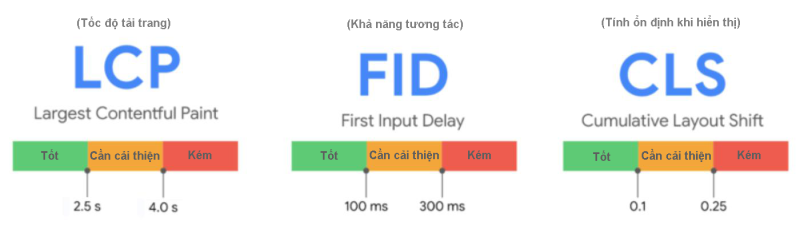
The Core Web Vitals Factors
LARGEST CONTENTFUL PAINT (LCP)
Largest Contentful Paint (LCP), also known as page load speed, is one of the three Core Web Vitals metrics. It measures how long it takes a browser to display the largest piece of content on a web page. It captures the time from when a user starts loading the page until the most important content appears on the screen.
LCP is an important metric for evaluating user experience because it is directly tied to how fast a web page loads. The faster the LCP, the sooner users see the key content and the better their experience of the site.
Today, half of all websites have problems with this factor. In 2018, the average load time was around 15.3 seconds. Now, with the spread of fiber-optic internet, 5G Wi-Fi, and other advances, website load times have changed. Ideally, page load time should fall between 0 and 2.5 seconds.
An LCP score can fall into the following ranges:
- 0-2.5 seconds: Good
- 2.5-4.0 seconds: Needs improvement/Average
- 4.0 seconds or more: Poor
To improve LCP, you can optimize the size and maximize the loading speed of the large content elements on your page, such as images and videos. You can also use techniques like lazy loading so that content loads only when users need to see it.
FIRST INPUT DELAY (FID)
First Input Delay (FID), also known as first response delay, is one of the key metrics in Core Web Vitals. It measures a website’s responsiveness by evaluating how long the site takes to respond after a user makes their first interaction, such as clicking a button or selecting a menu item.
FID focuses on the delay between a user’s action and the website’s ability to respond to it. It shows whether the site can process user input and deliver a smooth, fast interactive experience. A low FID score is desirable because it ensures users can interact with the site without annoying delays.
FID scores are classified as follows:
- Under 100 milliseconds: Good
- 100-300 milliseconds: Needs improvement
- 300 milliseconds or more: Poor
To improve FID, website owners and developers can optimize source code, minimize unnecessary JavaScript execution, and prioritize critical tasks to ensure faster responses to user input. By minimizing FID, a website can improve the overall user experience and engagement.
CUMULATIVE LAYOUT SHIFT (CLS)
Cumulative Layout Shift (CLS) is one of the key factors in Core Web Vitals. It measures how much elements on a web page shift position while the page loads. CLS is concerned with a page’s stability and the consistency of how content is displayed.
A high CLS can create a poor experience for users, especially when they are performing actions such as clicking or typing. Unexpected shifts in element positions can make it hard for users to interact with the page and cause confusion.
A CLS score can fall within the following ranges:
- 0-0.1: Good
- 0.1-0.25: Needs improvement/Average
- 0.25 or more: Poor
As a general rule, you should aim for the following Core Web Vitals scores:
- LCP: 0-2.5 seconds
- FID: Under 100 milliseconds
- CLS: Under 0.1
Why Do Core Web Vitals Matter for SEO?
The purpose of building Core Web Vitals into Google Search is to give users the best possible search experience. Technically speaking, having a website with a good experience does not necessarily put you in the top positions on the various search engines. The magic does not start there. However, according to one analysis, these three metrics and their thresholds can have a major impact on users.
Core Web Vitals matter because they can affect bounce rates. Optimizing them can reduce bounce rates by up to 22% for news sites. For shopping sites, that figure rises to a 24% reduction in bounce rate.
Google and Core Web Vitals push you to take your SEO techniques in Vietnam to a new level. By improving them properly and effectively, you can improve your website’s performance and ranking and reach your target audience.
Core Web Vitals can guide you in improving your website’s performance and page experience score. They are the clearest performance signals available. Use these metrics to raise your website’s ranking on search engines.
See more: Meta Business Suite: The Best Solution for Managing Social Media
Benefits of Optimizing Core Web Vitals
Beyond SEO and web design, optimizing your website’s Core Web Vitals brings many real benefits. Here are some you may see.

- Better user experience
Optimizing Core Web Vitals means a better user experience. A sluggish website is annoying, and nobody likes these problems. Users like websites that load fast, respond quickly to their actions, and don’t jump around while content loads. You can use your Core Web Vitals to boost engagement, reduce bounce rate, and ultimately improve business results.
- Improved search rankings
Core Web Vitals are a set of page experience signals that Google has used since 2020. The three factors LCP, CLS, and FID can affect a website’s ranking on search engines. Optimize these three factors to deliver a good user experience. That way, you can rank higher in search results and attract more organic traffic.
- Higher conversion rate
A good user experience can lead to a higher conversion rate. Whether you run an e-commerce site, a showcase site, a membership site, or any other type of website, users typically take action after a positive visit. You can expect them to make a purchase, sign up for a newsletter, book a service, or fill out a form.
- Competitive advantage
Not every website optimizes its Core Web Vitals. Some of them don’t understand web development in Vietnam. Remember that a website with a good user experience and faster loading is more likely to be visited again. Sooner or later, you can benefit from increased customer loyalty and word-of-mouth referrals.
- Lower development costs
Optimizing Core Web Vitals can also reduce development costs in the long run. Website owners and developers are less likely to need costly optimizations down the road, saving time and money in the future.
How Do You Check Your Website’s Core Web Vitals Scores?
To optimize Google’s Core Web Vitals, website owners and developers need to learn how to measure these metrics accurately. Here are the two best free tools you can use in 2023 to help measure Core Web Vitals:
Google Search Console
Google Search Console is a free tool that helps website owners monitor and maintain their site’s presence in Google search results. This is useful whether your website has been around for a long time or is just getting started. It gives you Core Web Vitals data showing how your site performs on the three metrics. Google’s Core Web Vitals report provides data for both mobile and desktop users.
Google Search Console is easy to use. You can get information easily without any hassle. It includes: 1) a list of your URLs or accounts, 2) a navigation bar, 3) report names, 4) a search or inspection toolbar, 5) a help section in case you don’t understand how to navigate the tool, 6) user settings, and 7) a notification panel to see how many unread messages you have.
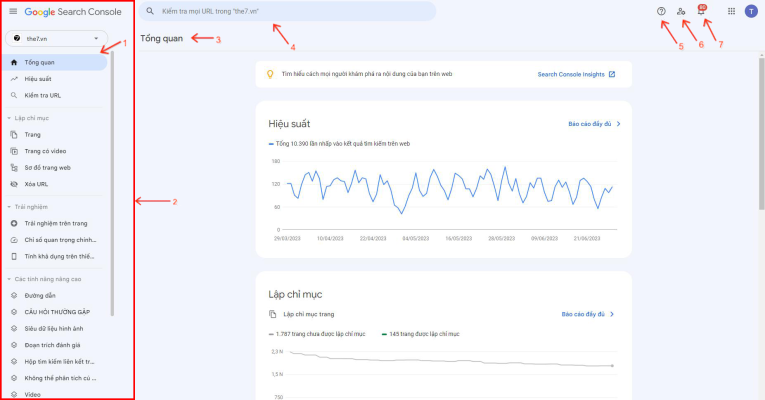
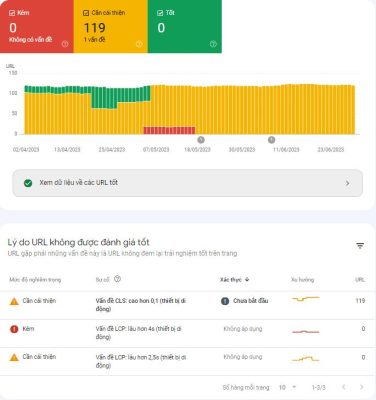
After you log in, you can view graph reports for each device. It also provides detailed data for URL groups. You can see which URLs are rated poor, need improvement, or are good.
Google PageSpeed Insights
If you run a website and know your way around SEO, PageSpeed Insights is probably already familiar to you. Google provides this tool to analyze website performance. It measures Core Web Vitals and then offers suggestions for improvement. You simply enter your website’s URL and click the “Analyze” button. The tool gives you a score from 0 to 100, along with suggestions for improvement.
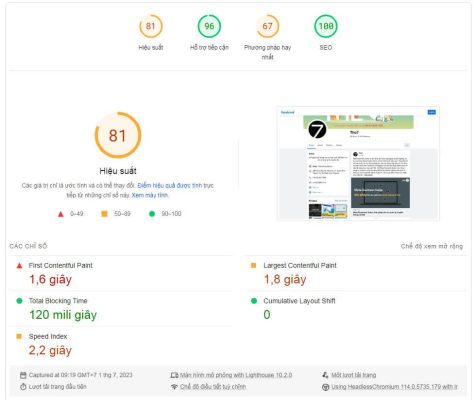
From there, you can also see your rating for each metric. In this image, for example, a user is requesting the Core Web Vitals for their website, and this is the assessment from PageSpeed Insights:

How Do You Improve Core Web Vitals?
Now that you know the different methods and tools for measuring your website’s Core Web Vitals in 2023, here is the next challenge: improving them. Don’t worry, we’ll walk you through it! Here are some ways to improve your website’s Core Web Vitals.

Partner with a Reputable SEO Agency
The best way to improve your website’s Core Web Vitals is to partner with a reputable SEO and website maintenance company.
Because of sudden changes from Google, Core Web Vitals now affect SEO as part of the page experience signals. Unfortunately, not all websites rank high or score well. Some websites receive low scores on the CWV metrics.
An SEO team can help you optimize your website’s technical checks, including page load speed, mobile responsiveness, and server response time. They can also help improve the user experience on your website. This covers navigation, how pop-up windows are displayed, ads, and the overall accessibility of your website.
Even if you have made the most of Google Search Console or PageSpeed Insights, you still need the expertise of an SEO and website maintenance company. They can run regular performance-monitoring checks to make sure your Core Web Vitals are good, not poor and not average. They can monitor your website’s performance and track its progress over time. This process helps identify any issues that could affect CWV and allows for the necessary adjustments, changes, and updates.
Integrate Lazy Loading into Your Website
Did you know that a delay of just one second in your load time is enough to cost you thousands of opportunities? It can reduce your conversion rate by up to 7%. This figure was studied and confirmed by Amazon. Slow load times seriously hurt your website’s ranking. Fortunately, you can avoid this problem by integrating lazy loading into your website.
Lazy loading is a method that lets your website load quickly by focusing on the most important elements first. It makes your website appear fully loaded and lets users navigate more conveniently.
Not every website needs lazy loading. So how do you tell whether yours should use this method? Once again, you can take advantage of the resources listed above. Use PageSpeed Insights or GTmetrix to run a detailed analysis and assessment of your website’s speed and performance.
Recommended Sizes and Image Optimization
Compressing your website’s images will improve your SEO ranking and your site’s visibility in several different ways.
For example, you can improve your website’s load time just by compressing the images on the page. Not only that, your website becomes significantly lighter, which has a positive effect on your LCP score.
A simple image compression tool can help. Try TinyPNG. Image compression tools like this let you shrink image file sizes dramatically. The good news is that you can do this without worrying about losing quality. Other plugins can also help you compress images properly without sacrificing quality, such as ShortPixel, Imagify, and Smush.

Implement a Caching Solution
Cache up. A web development technique commonly used in Vietnam is caching, a process that reduces the load on the server by storing your website’s information on the user’s device. This technique can speed up your page loads, thereby improving your Core Web Vitals, especially LCP.
If your website runs on WordPress, one of the most popular and well-known plugins is W3 Total Cache.
Optimize Your Website Fonts
An important web design tip that companies should follow is to optimize the fonts on their website. Like image and video content, your fonts can also affect Core Web Vitals, especially page load time (LCP). Try using the fonts already available on your website, because they have smaller file sizes, which helps speed up page loading.
Conclusion
Since 2020, Google’s Core Web Vitals have played an important role in SEO and e-commerce, and that hasn’t changed through 2023. If you want a solid way to rank high on SERPs, improve your website’s Core Web Vitals. Understand and meet the key metrics. If you need help, don’t hesitate to contact The7. We are happy to answer any questions you have about Core Web Vitals.

Nguyễn Đình
Bảo




As CEO of The7, I am committed to sharing practical, useful knowledge with every reader. Every article on The7 is based on my 7 years of hands-on experience in marketing — Facebook advertising, LinkedIn advertising, Google advertising, and marketing strategy. I hope you take away plenty of insight from these posts and apply it successfully in practice.
Related Articles
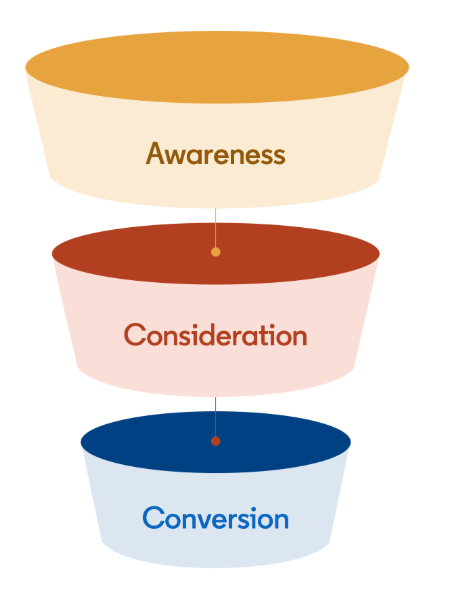
Building a Full-Funnel Content Marketing Strategy on LinkedIn
Table of Contents Toggle Why Build Content Marketing for the Full Marketing Funnel? (Why Full-Funnel Content Marketing?)Creating Your Strategy (Creating Your Strategy)Implementing Your Content Strategy (Rolling out your content strategy)Summary...

Designing Creative Content for LinkedIn
Table of Contents Toggle Why Is Good Creative Content So Important? (Why is Good Creative Important?)Key Components of Creative Design (the core elements of creative design)Summary (summary) Why Is Good...

Building an Organic Business Presence on LinkedIn With a LinkedIn Page
Table of Contents Toggle Why Have a LinkedIn Page?Establishing Your LinkedIn PageKeeping Your LinkedIn Page ActiveThe Measure of SuccessSummary About LinkedIn Page (Summary) Why Have a LinkedIn Page? For a...

6 Best LinkedIn Marketing Strategies for B2B in 2026
Table of Contents Toggle LinkedIn 2026: Where B2B Decisions Get MadeStrategy #1 – Why Is LinkedIn the Best B2B Marketing Channel Today?1. Decision-makers are concentrated here2. Users are in work...

7 Social Media Trends for 2026: The Era of Real Value, Real Conversion, and Real People
Table of Contents Toggle Social media is entering the biggest restructuring of the decadeTrend 1: Why is buying directly in-app becoming the new standard for 2026? (On-Platform Conversion)What should businesses...

What Is TikTok Marketing? Effective TikTok Marketing Strategies
TikTok has been topping the global rankings of the most downloaded and most visited apps. That makes it a gold mine for marketers who love creativity. In this article, The7...