


Digital Marketing Pricing Guide: How Much Should You Charge?

For any business owner, the top priority is making sure the business turns a profit. Like every other industry, digital marketing is fiercely competitive.
Simply put, you need competitive pricing to attract customers to your company. At the same time, profit is a prerequisite for keeping the company running.
Moreover, profit is the healthy, powerful driver that every business needs in order to grow and expand.
What Criteria Should You Use to Decide the Fee Structure for Your Digital Marketing Company?
Defining a fee structure for digital marketing services can be one of the biggest challenges for new business owners. It is an important decision that affects your ability to attract clients, generate profit, and grow your business.
In business in general, the price of a product (in this case, digital marketing services) must be high enough to cover the cost of service rendered and overhead expense.
In digital marketing, you can apply this principle by building a pricing model based on the costs of the specific services you offer.
The pricing model for your digital marketing services plays an extremely important role. It can affect many aspects of your company, from how you hire staff to how you pitch to clients. That is why it is essential to choose a pricing model that fits your long-term goals.
Choosing a Reasonable Price
Service fees at digital agencies can vary significantly, especially at those that outsource part of their work. This allows them to lower their prices without hurting profit much. The key question is how to quote a price that both meets client expectations and covers your agency’s operating costs.
Here are a few factors that will help you determine the rate you need to charge:
Your company’s operating costs
Several costs feed into this figure, including:
- Office costs: Whether you work from home or have a dedicated office, operating costs include rent, utilities, equipment, maintenance, supplies, and other expenses.
- Production costs: To run effective campaigns, digital agencies need to invest in a range of tools and software. These can include office software, project management software, a CRM, SEO tools, email marketing, social media automation software, and more.
- Personnel costs: This is the largest expense for most agencies. Beyond salaries, you also need to account for benefits, insurance, and employee bonuses.
- Professional costs: To operate the business, an agency has to pay government licensing fees, business taxes, and legal fees.
- Additional costs: Every business needs capital to grow. Digital marketing companies need to set aside budget for flexible marketing expenses such as advertising, conference fees, directory listing fees, and more. This can also include travel and accommodation. For some other agencies, additional costs may involve loan repayments.
The Pricing Model You Want Your Digital Marketing Company to Use
As a digital marketer, you can choose from many different fee structures to bill your clients. How you charge depends on you, the services you offer, and your agreement with each client. Here are some common pricing models:
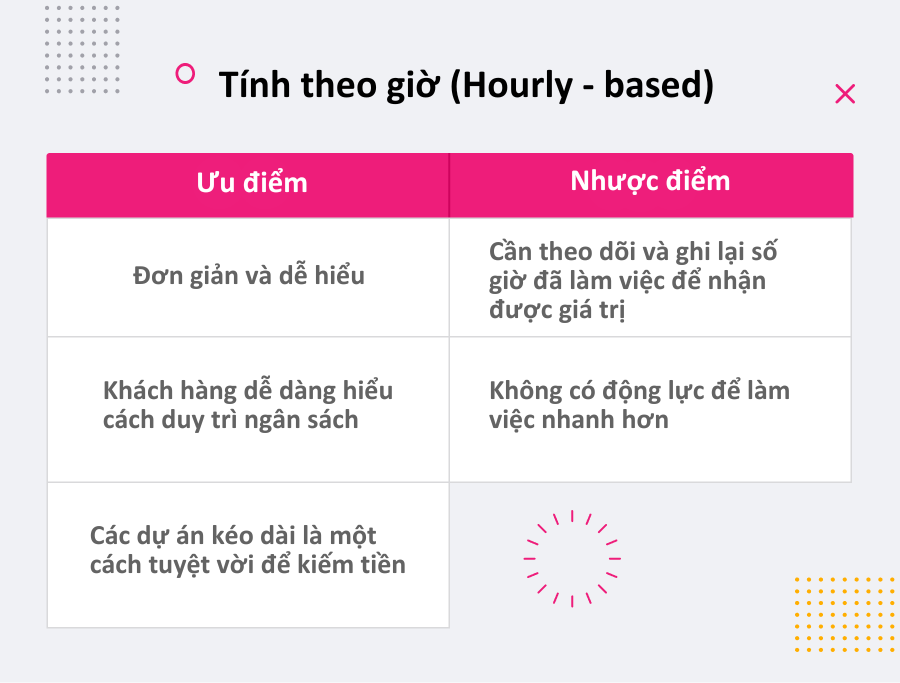
Hourly-based pricing
Hourly billing is an ideal approach for new agencies that are unsure how long a project will take to complete. It is also the simplest way to charge clients, especially those who request a lot of revisions.
It is important to remember that your hourly rate needs to keep the company running. That said, let clients know how long the project may take, with some buffer hours built in for yourself. Moreover, if you want to scale up, you may need to adjust your agency’s rates or move to a different pricing model.
Project-based pricing
Project-based pricing is a straightforward way to run a digital marketing service, especially if you have the skills and resources needed for a specific service.
Instead of charging for the hours you spend on a project, you charge based on your expertise. This means you estimate the amount of time needed to complete the project, then quote a fixed fee for the entire project.

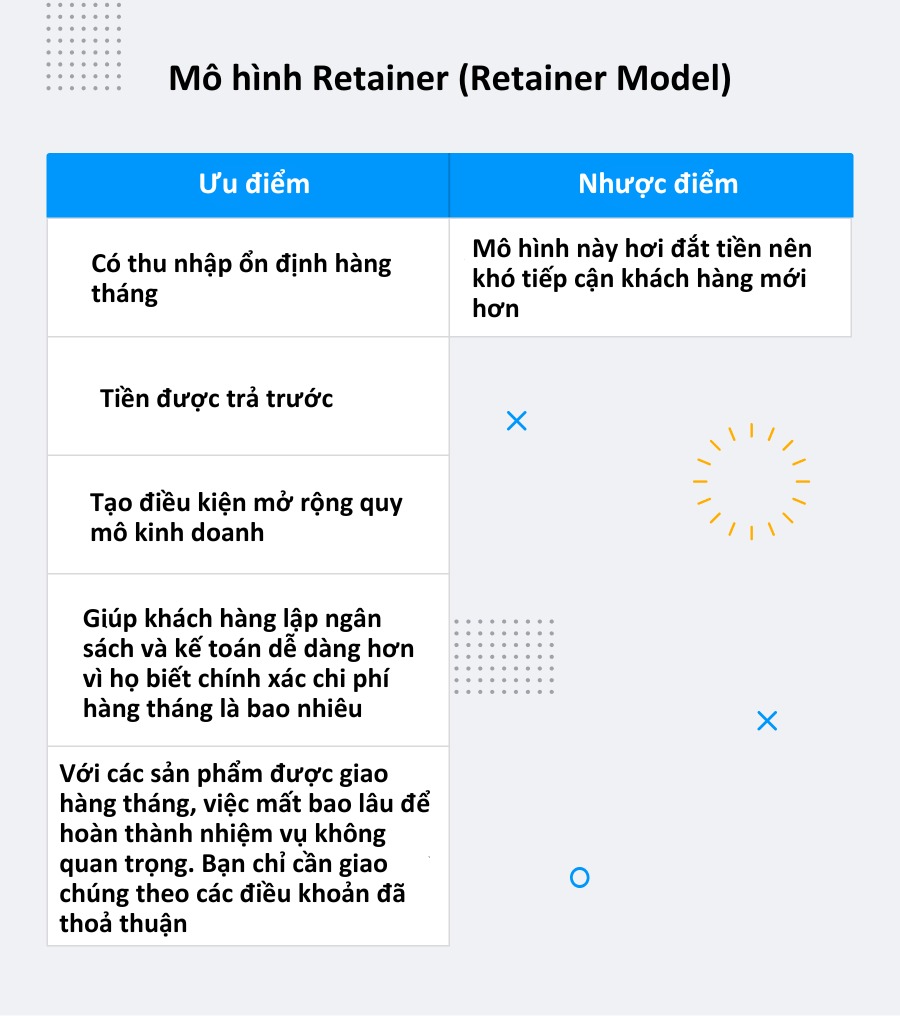
Retainer model
The retainer model is a good fit once you have built a strong relationship with a client and can deliver a large volume of work every month. In this model, the client agrees to pay a fixed fee in advance, as agreed.
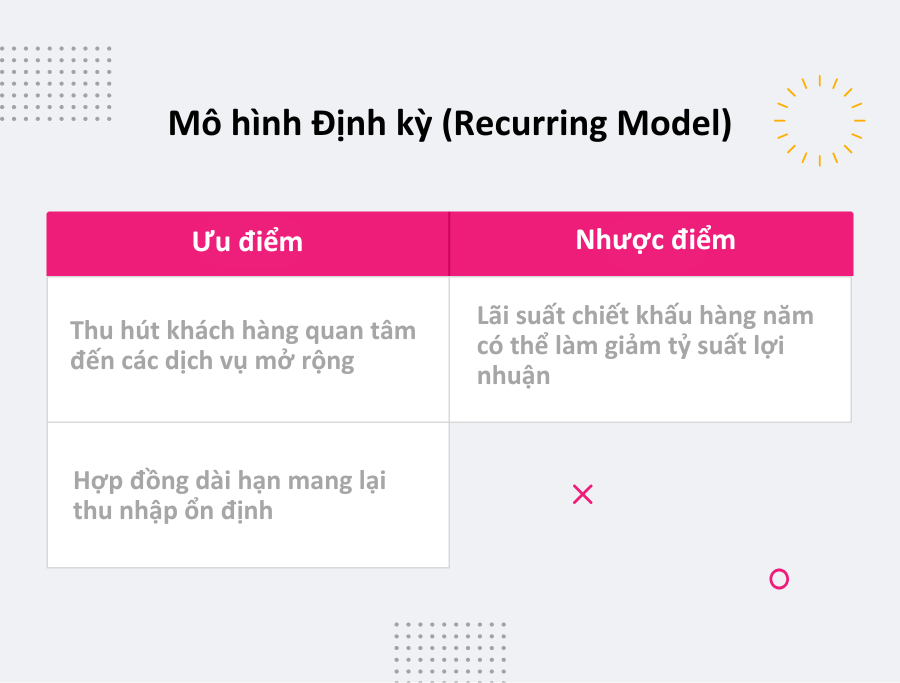
Recurring model
The recurring model suits digital marketing services that require long-term strategy and execution, such as SEO (Search Engine Optimization). By offering flexible or discounted annual pricing packages for digital marketing services, you can build a lasting relationship with your clients.
See more: Google Updates and SEO: Navigating Algorithm Changes with Confidence
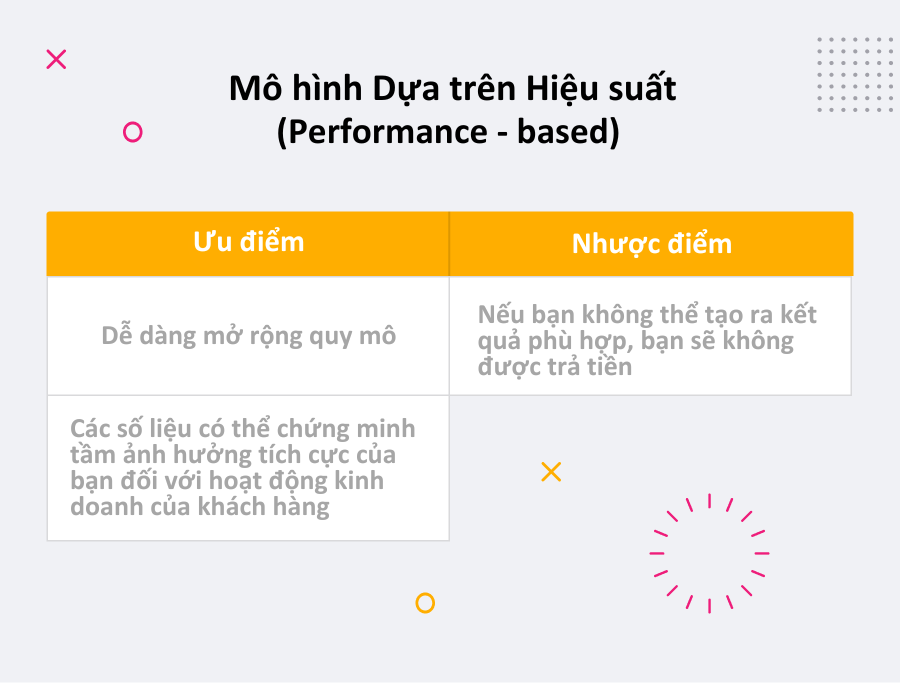
Performance-based model
The performance-based model is a good fit for agencies that have built up a solid reputation and are confident in their ability to deliver positive results for clients. In this model, the service fee depends on the results the marketing campaign achieves.
Prerequisite: To apply this model effectively, the agency must be able to measure and report the metrics tied to marketing campaign performance.
For example, you might agree on a percentage of the total sales the company generates.
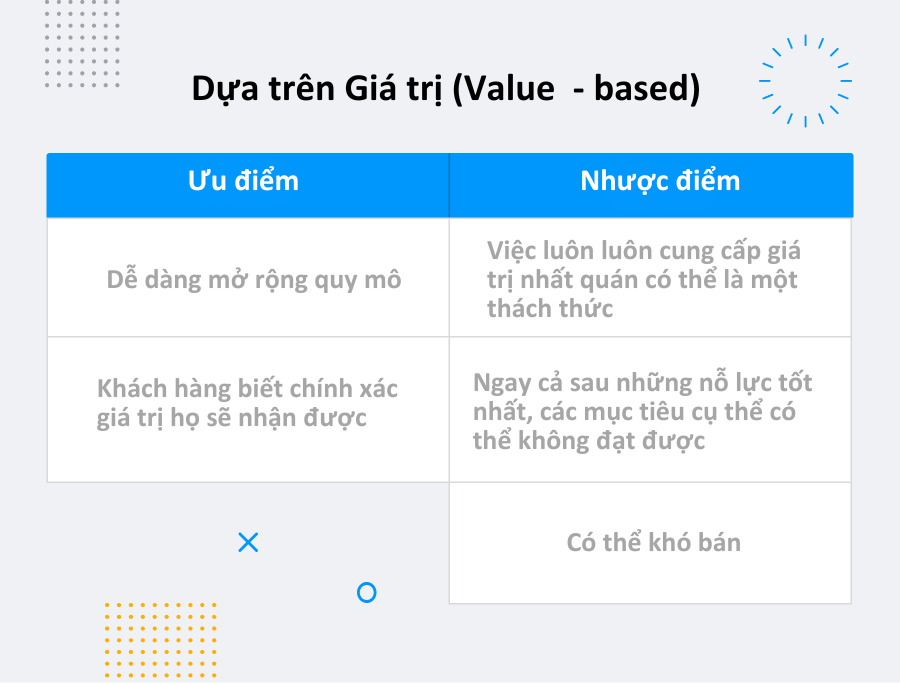
Value-based model
The value-based model is built on the value you bring to a client’s business and the solutions you provide for their current problems.
Customized pricing
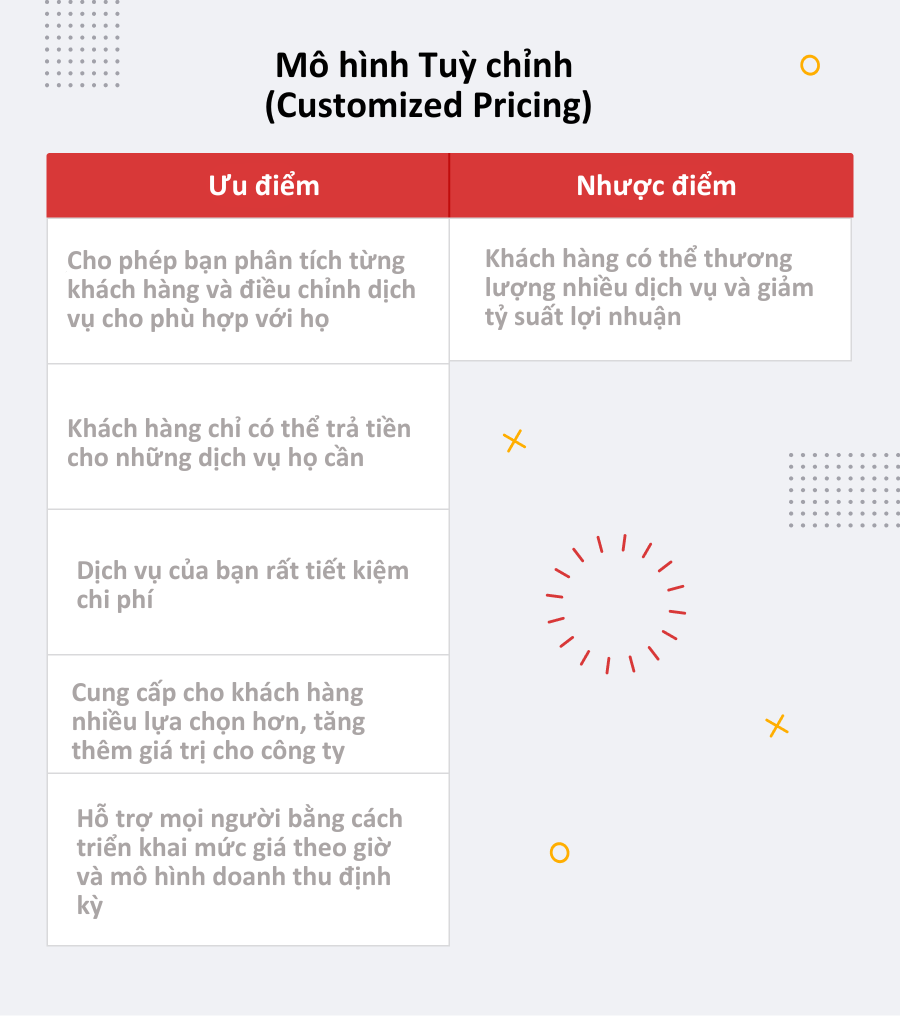
Digital marketing is a dynamic, constantly evolving field. Client needs are also highly varied. So, in addition to standard pricing models, you can flexibly build custom service packages around each client’s specific needs.
The Services You Plan to Offer
Digital marketers setting up their companies also need to look at opportunities that can help the business grow. That includes considering a range of marketing services. By building a client-focused business plan, you can tailor your services to reflect high demand.
Beyond choosing the right services, you also need to price them accurately to keep your agency profitable. The simple pricing formula is: Cost + Markup = Selling Price. Most agencies typically add a markup of 20% to 50% on top of cost.
However, to arrive at an accurate price for each specific service, such as social media management, SEO, PPC, and so on, you need to understand the factors behind the costs and role of each service. Because every service is different by nature, let’s dig deeper into this.
Pricing model for a social media marketing agency
SMM helps businesses connect with customers, build a community around the brand, raise brand awareness, improve brand loyalty, increase customer satisfaction, and boost sales.
So, with a role that spans analyzing the target audience, then developing and executing a suitable strategy, the job also involves marketing management, one of the most important SMM services.
Social media management comes with a huge number of different tasks. You need to understand the additional tools and the team members required to complete them. For example, a creative director, strategist, or video editor can raise the quality of the service you deliver.
That is why, when quoting a price, you should factor in the cost, time, and value of the services, which should include the following:
Community management
- Identify the ideal audience
- Plan campaign strategy around customer personas
- Understand business goals
- Connect with customers
- Reply to comments quickly and appropriately
Content creation
- Create content that matches customer interests
- Schedule content
- Analyze competitors
Monitoring conversations
- Follow relevant hashtags and influencers
- Expand reach by joining relevant conversations
- Keep track of the target keywords trending across different social media channels
Influencer partnerships
- Follow companies, followers, products, and topics that fit the brand image
- Filter out clickbait content
Analytics
- Track, analyze, optimize, and report the most important metrics in SMM (Social Media Marketing) campaigns.
Pricing SEO management services (Search Engine Optimization)
SEO management covers a great many tasks, from content and keywords to image metadata. But SEO can be divided into three main types:
- Local SEO: Helps local businesses show up in “near me” searches.
- On-page SEO: Ensures every aspect of a website is optimized for search engines, such as images, keywords, URLs, page speed, mobile-friendliness, link strategy, user experience (UX), and more.
- Off-page SEO: Activities carried out outside your website to improve your search engine rankings, such as links to your site from external sources, forums, influencer outreach, and more.
SEO is a long-term process that requires regular checks and maintenance. Besides content and keywords, SEO also focuses on rankings and traffic. Since it is an ongoing service, how do you price SEO? For many agencies, project-based pricing or the recurring model are the preferred options.
Pricing PPC services
Like marketing in general, PPC is a great way to get your website in front of people. That is why many see Pay-Per-Click (PPC) marketing as a paid form of SEO. Today, most PPC activity runs through Google AdWords. Your job is to plan the strategy, set up, manage, and report on marketing campaigns on this platform. Progress is tracked weekly, monthly, or quarterly, and campaigns are adjusted accordingly.
There are many pricing models for PPC services, from hourly rates and flat fees to monthly management models. Some providers charge a percentage of marketing spend, while others bundle PPC services with a client’s other digital marketing needs. What matters is choosing a pricing structure that works for both you and your clients.
Pricing website design and development
Website design and development services cover not only how a site looks but also how it works and how easy it is to use. When it comes to pricing, there are several different approaches. Project-based pricing is common for well-defined projects and makes costs transparent. Hourly pricing, on the other hand, works well for ongoing work or projects with changing requirements. For continuous web support, the retainer model ensures dedicated assistance. Value-based pricing, meanwhile, is used for complex projects that deliver significant business value. The right pricing strategy balances the expertise behind the service, the needs of the project, and the client’s expectations, protecting both the quality of the service and the viability of the business.
Pricing content management services
Think of content as a storytelling tool, one that captivates your audience. From blog posts and infographics to videos, ebooks, and in-depth whitepapers, each type of content serves a distinct purpose. The goal is to tailor each type of content to a different stage of the buyer’s journey, deliver useful information, and build a close connection with your target audience. Successful content marketing depends heavily on understanding customers, aligning with business strategy, and tightly integrating content with SEO. But how to charge for content marketing is the real question, isn’t it?
Pricing structure options range from hourly rates for small projects to project-based fees for specific campaigns. The retainer model is a great fit for long-running content management, while performance-based pricing ties the provider’s fees to the client’s success. Packaged services are also an all-in-one solution at a fixed price, aimed at clients with clearly defined content needs. That said, choosing the right model depends on the provider’s strengths and the client’s goals.
Pricing video marketing services
Video marketing services have become an indispensable part of digital marketing. They involve creating video marketing content to increase engagement and brand awareness. Prices for these services vary widely, depending on the video’s complexity, length, production quality, and additional elements such as animation or special effects. Still, common pricing structures include per-project fees for individual videos or campaigns, which makes upfront costs transparent. Hourly rates may apply to editing or post-production work. Some providers also offer package deals that combine video production with marketing strategies to deliver an all-in-one solution. For businesses, investing in video marketing often translates into higher engagement and a stronger online presence, making it a valuable component of their digital marketing strategy.
Pricing creative services
Picture your brand as a canvas waiting to be painted with creativity. Creative services cover a range of activities aimed at increasing brand visibility and appeal through creative, engaging content. These services include graphic design, branding, advertising, multimedia production, and creative strategy development.
Prices for creative services can vary quite a bit. Some providers choose project-based pricing, charging a fixed fee for a specific deliverable such as a branding package or a marketing campaign. Others prefer hourly rates, especially for ongoing work like social media design or website updates. In addition, retainer agreements are common for long-term partnerships, ensuring regular creative support. The key to pricing creative services lies in balancing the value of the artistic and strategic input against the client’s budget and the project’s complexity, ensuring a sustainable, mutually beneficial relationship.
Pricing influencer marketing services
Influencers come in many forms, from prominent social media personalities to bloggers and industry experts. The essential thing is to select influencers whose target audience matches your brand. Using micro-influencers, whose followers are concentrated in specific audience segments, helps you reach exactly the people you want to target.
There is no doubt that influencer marketing has become a pivotal element of today’s digital landscape. To market a product, service, or brand, partnering with influential social media figures is highly effective. Although it is effective and important, prices for influencer marketing services vary widely based on the influencer’s reach, platform, and engagement rate. Typically, companies may charge a flat fee for organizing and executing the campaign, including identifying suitable influencers, negotiating terms, and managing the collaboration. Alternatively, pricing can be commission-based, tied to the sales or leads generated through the influencer’s promotion.
Some providers also offer tiered packages, letting businesses choose a level of service based on their budget and campaign goals. This flexible pricing structure serves a wide range of businesses, from startups to long-established brands, turning influencer marketing into an adaptable and effective way to reach a target audience.

Which Pricing Model Should Your Digital Marketing Company Choose?
So how do you charge for marketing services? Which fee structure suits your business is a question that deserves careful thought. That said, digital marketing providers use different pricing models to serve their clients’ varied needs as well as different project requirements. The pricing model you choose depends on several factors, including the nature of the project, the client’s preferences, and the provider’s expertise.
Hourly rate: Best for agencies with a clearly defined scope of work and clients who are comfortable with hourly billing. This model offers flexibility and transparency, ensuring clients only pay for the time actually worked. It is arguably the best pricing model for small to mid-sized agencies focused on individual, highly customized projects. Hourly billing is ideal for web design, graphic design, and specialized consulting services.
Project-based pricing: This pricing model is ideal for agencies experienced in managing complex projects, and for clients who prefer a fixed price. Project-based pricing provides clear costs from the start and removes the risk of being overcharged.
Retainer agreement: This model benefits agencies that provide ongoing services and clients looking for consistent support. It ensures a steady stream of revenue for the provider and a regular commitment from the client. It suits agencies focused on long-term relationships and continuous services such as SEO, content marketing, and social media management. In our view, it is ideal for mid-sized and large agencies with a stable client base.
Performance-based pricing: Performance-based pricing suits agencies that are confident in their ability to deliver measurable results and clients who prioritize ROI (return on investment). This model ties the service fee to the success achieved for the client. It fits agencies with a strong track record and a high level of data analysis capability.

So What Exactly Should I Charge for My Services?
To be blunt, if you are expecting a specific number, I am afraid I will have to disappoint you. This article serves only as a guide to what you should consider when deciding on a price, as well as the ways you can charge clients.
Every city and country has a different level of demand for digital marketing services. And only you can decide what profit level is acceptable when running a digital marketing company.
After all, you are investing a significant amount of your time, energy, and resources to deliver valuable services to clients. Keeping your work profitable is what makes those efforts worthwhile.
So let’s take a closer look at a few reasons why the fee structures of digital services can differ:
The Experience of the Company or Consultant
This factor has the biggest influence on a digital marketing company’s pricing structure. The more experience a company has, the higher its service prices will be.
Consider this: when you hire a new employee who is just starting out, you naturally pay them less than someone with more experience. Similarly, a digital company that is new to the market will have less experience and may take longer to complete the work.
On the other hand, an established, experienced company will have employees with the expertise needed to get the work done better and faster. So the more specialized and experienced you are in the industry, the more justified you are in charging higher prices.
Internal Costs
As mentioned earlier, a digital company’s own operating costs set the minimum needed to keep the business running. Larger companies typically have slightly lower costs than smaller ones because they can take advantage of economies of scale.
That said, keep in mind that an individual consultant may charge more than a company because their time is limited. They focus on a small number of clients rather than taking on a larger workload.
Scope of Work
Digital marketing campaigns can be billed by the hour or charged as service packages. The more services a client needs, and the more time and resources you invest in getting the work done, the higher the service fee will be.
Industry-Specific Factors
Some industries are naturally more competitive than others. The more competitors there are in an industry, the more effort it takes to stand out. As a result, the budget needed to dominate that industry will also be much higher. For example, a luxury fashion brand will need a more aggressive marketing strategy than a specialty brand in organic farming.
Market Region
In bustling urban centers and areas with a high standard of living, digital marketing providers often face higher operating costs, including rent, utilities, and salaries, which pushes them to set higher prices to stay profitable. These large cities also tend to have higher demand for digital marketing services, allowing providers to charge more. However, this urban landscape also creates fierce competition, encouraging providers to specialize in niche markets or offer unique services, which can attract clients willing to pay more.
Conversely, providers in areas with a lower cost of living can offer more competitive prices, benefiting from lower overhead. This geographic flexibility matters because it directly shapes a provider’s pricing structure, balancing operating costs, market demand, competition, and client acquisition strategies.
Diversity of the Client Portfolio
The diversity of a client list is another important factor that influences a digital marketing company’s pricing strategy. Companies with many different clients from different industries benefit from rich experience, which makes them more flexible and creative. This diversity lets them sharpen their skills across many market segments, increasing the value they deliver to clients. In addition, building a diverse client base can help companies take advantage of economies of scale – as they streamline their processes across different sectors, they can offer more competitive prices. A diverse portfolio also helps reduce financial risk; if one industry faces a downturn, the company will not be overly dependent on it. As a result, companies with a diverse client base often have a strategic pricing advantage, offering tailored solutions across many industries.
Conclusion
Choosing the right pricing model for a digital marketing company can be quite difficult. So if you are not sure which model to adopt, or you already have one in place but it is not making the company any money, don’t worry. There is no rule that says you cannot change it.
Taking the time to learn the pros and cons of different pricing models can help you reach your goals faster and take your business to the next level. For further reading, you can visit our other articles or learn about web accessibility for digital marketing companies.

Nguyễn Đình
Bảo




As CEO of The7, I am committed to sharing practical, useful knowledge with every reader. Every article on The7 is based on my 7 years of hands-on experience in marketing — Facebook advertising, LinkedIn advertising, Google advertising, and marketing strategy. I hope you take away plenty of insight from these posts and apply it successfully in practice.
Related Articles
Building a Full-Funnel Content Marketing Strategy on LinkedIn
Table of Contents Toggle Why Build Content Marketing for the Full Marketing Funnel? (Why Full-Funnel Content Marketing?)Creating Your Strategy (Creating Your Strategy)Implementing Your Content Strategy (Rolling out your content strategy)Summary...

Designing Creative Content for LinkedIn
Table of Contents Toggle Why Is Good Creative Content So Important? (Why is Good Creative Important?)Key Components of Creative Design (the core elements of creative design)Summary (summary) Why Is Good...

Building an Organic Business Presence on LinkedIn With a LinkedIn Page
Table of Contents Toggle Why Have a LinkedIn Page?Establishing Your LinkedIn PageKeeping Your LinkedIn Page ActiveThe Measure of SuccessSummary About LinkedIn Page (Summary) Why Have a LinkedIn Page? For a...

6 Best LinkedIn Marketing Strategies for B2B in 2026
Table of Contents Toggle LinkedIn 2026: Where B2B Decisions Get MadeStrategy #1 – Why Is LinkedIn the Best B2B Marketing Channel Today?1. Decision-makers are concentrated here2. Users are in work...

7 Social Media Trends for 2026: The Era of Real Value, Real Conversion, and Real People
Table of Contents Toggle Social media is entering the biggest restructuring of the decadeTrend 1: Why is buying directly in-app becoming the new standard for 2026? (On-Platform Conversion)What should businesses...

What Is TikTok Marketing? Effective TikTok Marketing Strategies
TikTok has been topping the global rankings of the most downloaded and most visited apps. That makes it a gold mine for marketers who love creativity. In this article, The7...