


Discover the Power of Programmatic Advertising
In an increasingly digital environment, consumers expect more personalized and relevant experiences than ever. This is where Programmatic Advertising comes in, using advanced algorithms and data-driven insights to make sure your message reaches the audience most likely to convert. What matters is not just showing your ads to a crowd, but showing the right ad to the right person at the right time.
Whether you’re a startup looking to make a first impression or an established brand looking to grow, understanding how Programmatic Advertising works is essential. In this article, we’ll explore the world of Programmatic Advertising and how it works, giving you the knowledge and understanding you need to succeed in digital marketing.
What Is Programmatic Advertising?
Programmatic Advertising is a groundbreaking approach to buying advertising media that relies on automation and data-driven decisions. It has changed the way digital ads are bought and displayed.
At its core, Programmatic Advertising relies on automation technology and sophisticated algorithms. These tools handle the buying and selling of ad space, delivering a level of precision and efficiency that used to be difficult to achieve in marketing. Unlike the traditional model, which often involves lengthy processes such as requests for proposals, bidding, price quotes, and negotiations, Programmatic Advertising simplifies and streamlines the entire process.
Moreover, it continuously analyzes many signals from users, such as browsing behavior, demographics, and location, to make sure ads are delivered to the right target audience. This data-driven approach minimizes wasted ad spend and maximizes the impact of your campaigns.
Think of Programmatic Advertising as a comprehensive system within the advertising field. It includes several types of automated buying, each serving a specific purpose and platform. This flexibility allows businesses to choose the method that best fits their advertising goals.
How Programmatic Advertising Works
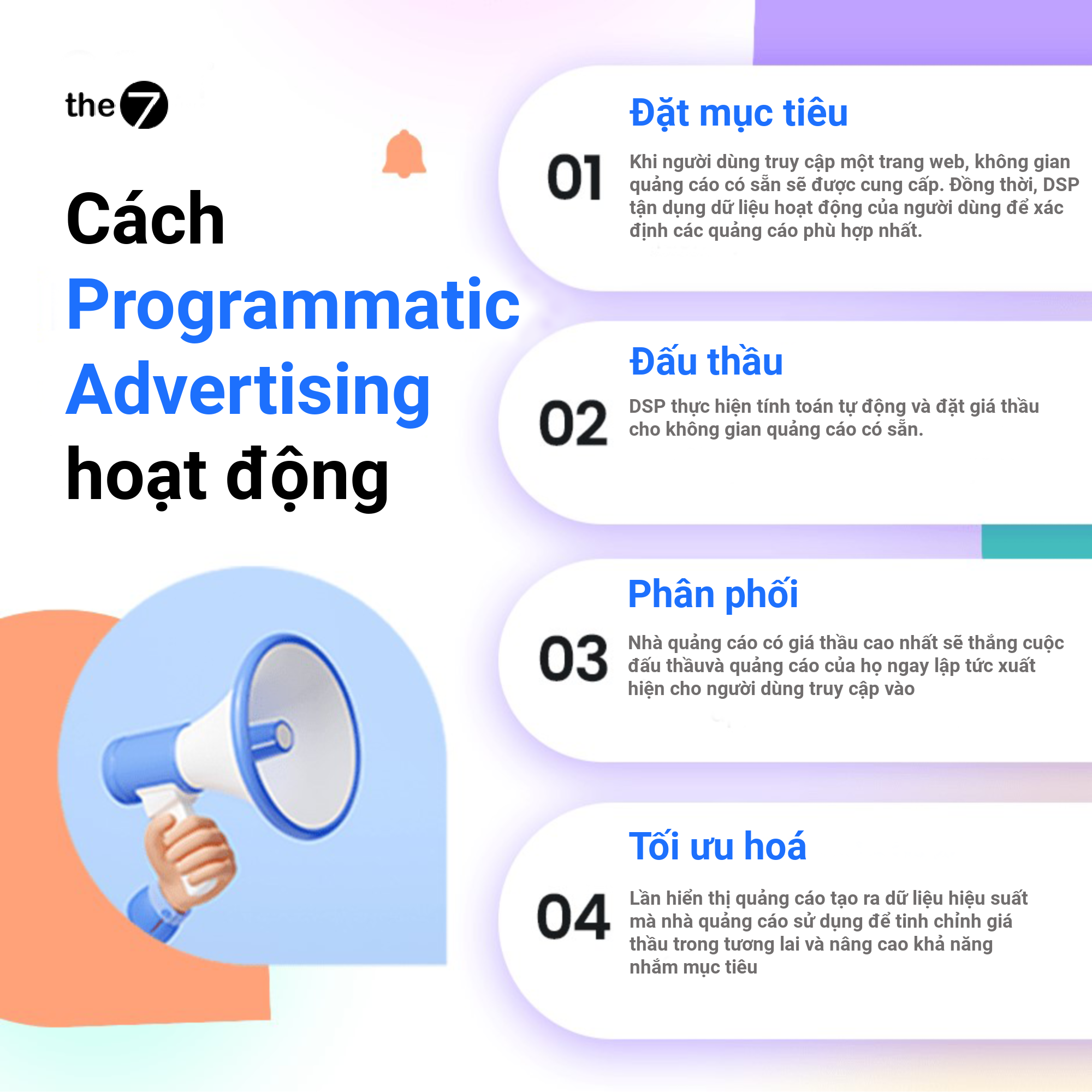
Programmatic Advertising works through a highly automated process that has changed the way digital ad space is bought and displayed.
Setting Goals
When a user visits a website, an empty ad space is displayed. At the same time, a Demand-Side Platform (DSP) uses data about the user’s activity to find the most suitable ad.
Bidding
Within milliseconds, the DSP runs automated calculations and places bids for the available ad space based on the data it has collected.
Delivery
The advertiser with the highest bid wins the auction, and their ad instantly appears in front of the user visiting the website.
Optimization
Every ad impression generates performance data, which advertisers use to improve future bids and sharpen their audience targeting. Advertisers can optimize ad placements, target audiences, bid adjustments, and many other factors. This continuous feedback loop improves the effectiveness of ad campaigns.
Types of Programmatic Buying Platforms
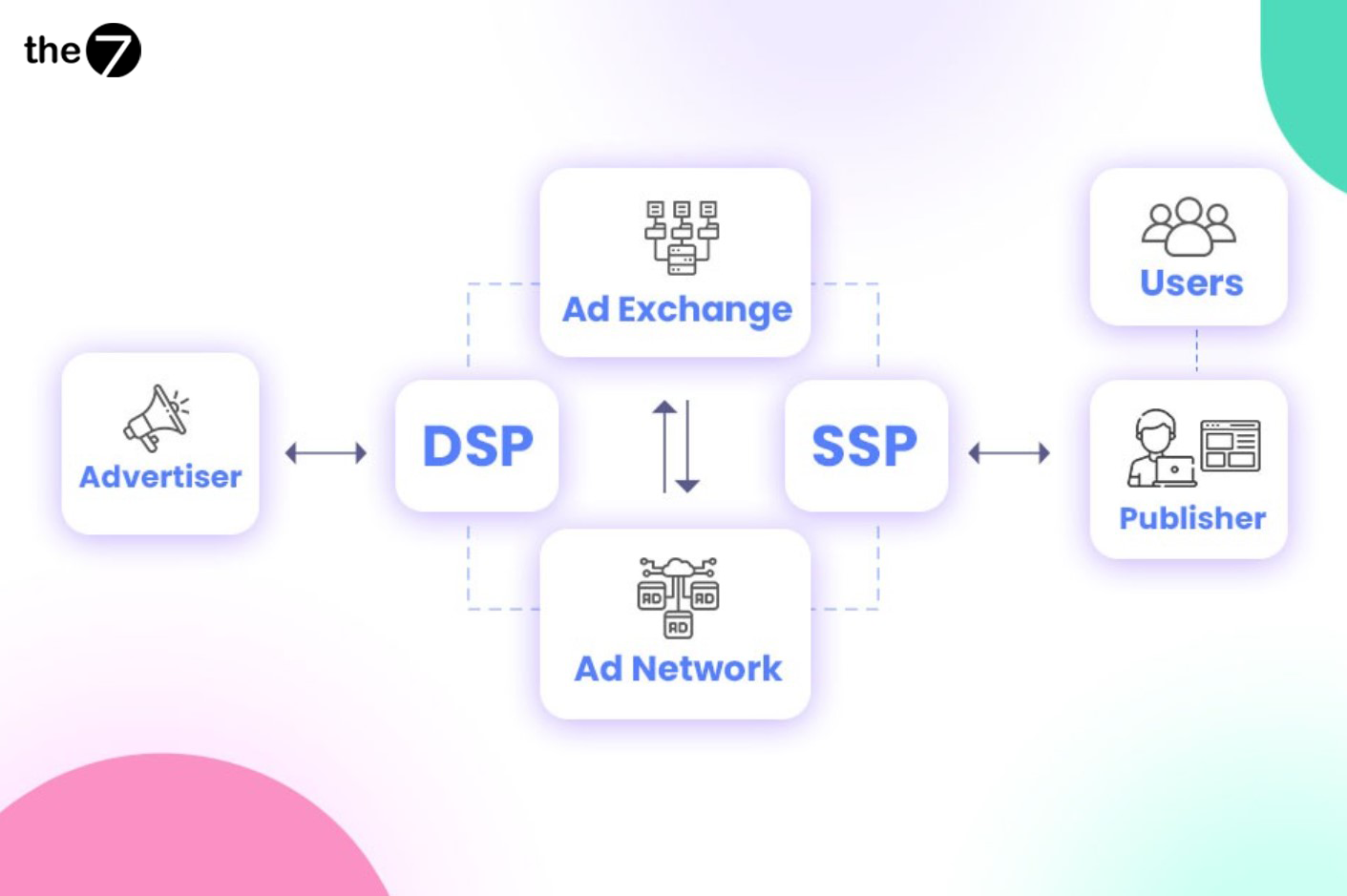
Programmatic Buying covers the different methods and platforms advertisers use to buy ad space. Each type of platform offers unique benefits and suits specific advertising goals.
Supply-Side Platforms (SSPs)
Also known as “supply-side platforms,” SSPs play a key role for publishers, allowing them to sell their ad impressions to advertisers through real-time auctions. SSPs are central to the programmatic advertising ecosystem, facilitating the management of ad space from publishers to advertisers.
Some SSP platforms include Google Ad Manager and Google AdMob.
Demand-Side Platforms (DSPs)
DSPs are the counterpart of SSPs and are favored by most advertisers because they let them buy ad space across many platforms through real-time bidding. Thanks to advanced routing options and efficient ad-buying capabilities, they play an important role in reaching specific targets effectively.
Some DSP platforms include Display & Video 360, Amazon DSP, and Adobe Advertising Cloud DSP.
Ad Exchanges
Ad Exchanges act as the link between SSPs and DSPs. This is where ad space moves from publishers to advertisers. DSPs connect to Ad Exchanges to take part in ad space auctions, where ad prices fluctuate based on competition for the ad space.
Some ad exchange platforms include Xandr, Magnite, and Smaato.
Programmatic Ads vs Display Ads
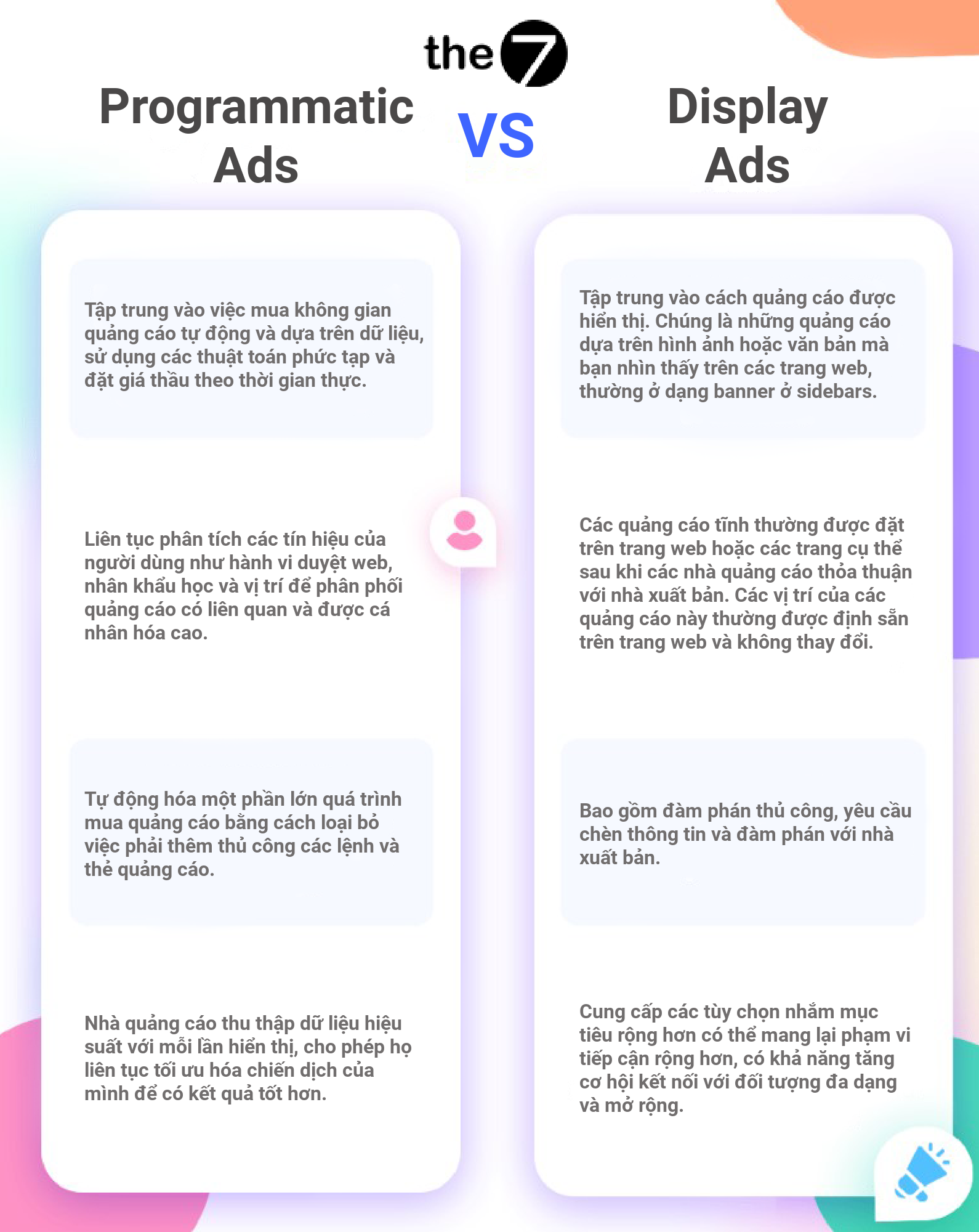
Programmatic ads and display ads may look alike at first glance, but they represent two different approaches, each with its own characteristics and benefits.
Programmatic Advertising
- Programmatic Advertising focuses on automation and data-driven ad space buying. It uses sophisticated algorithms and real-time bidding to decide which ad to show to a specific user.
- Programmatic Advertising is entirely data-driven. It continuously analyzes signals from users, such as browsing behavior, demographics, and location, to deliver personalized ads that are relevant to each individual user.
- Programmatic Advertising automates many parts of the ad-buying process, removing the need to create manual insertion orders and ad tags. This automation leads to more efficient campaigns.
- Advertisers collect performance data with every impression, allowing them to continuously optimize their campaigns for better results. This data-driven approach ensures campaigns keep improving.
Display Ads
- Display Ads are mainly about the ad format. They are image-based or text-based ads you see on websites, usually as banners in sidebars.
- Display Ads are usually placed on specific websites or web pages. Advertisers negotiate with publishers to place these static ads, and they usually appear in a predetermined position on a page.
- Buying Display Ads usually involves manual negotiation, creating insertion orders, and negotiating with publishers, which can be time-consuming.
- Display Ads offer many broad reach options that can lead to reaching a diverse and large audience.
The choice between Programmatic Advertising and Display Ads depends on your specific goals, your target audience, and the level of automation and personalization advertisers want to achieve in their digital marketing campaigns.
How to Measure the Success of Programmatic Advertising
Measuring the success of Programmatic Advertising is essential for optimizing campaigns and ensuring a strong return on investment (ROI). Here are some key performance indicators (KPIs) to analyze:
Click-Through Rate (CTR)
CTR measures the percentage of users who clicked your ad after seeing it. A high CTR shows your ad is engaging and relevant to the audience.
Conversion Rate
Conversion rate tracks the percentage of users who completed a desired action after clicking your ad, such as making a purchase or signing up for a newsletter. This KPI directly reflects the impact of your ads on your business goals.
Return on Ad Spend (ROAS)
ROAS calculates the revenue generated for every dollar spent on ads. A positive ROAS shows your ad campaign is profitable.
Brand Awareness
Survey users before and after they are exposed to your programmatic ads to measure changes in brand awareness and perception. This helps you evaluate how effective your ads are at boosting brand awareness and recall.
See more: Easy Tips for Posting Instagram Reels
Engagement Metrics
Evaluate engagement metrics such as time on site, pages viewed, and interactions (such as shares and comments) to understand how users engage with your content after clicking through. These metrics give you insight into the quality of user engagement.
Data Analysis and A/B Testing
Continuously analyze data from your Programmatic Advertising campaigns and run A/B tests to refine your ads, audiences, and bidding strategies. Data-driven insights can lead to ongoing improvements in ad performance.
Cost per Conversion (CPA)
Calculate CPA, which is the cost of acquiring a new customer through your programmatic ads. A low CPA shows your campaign is effective at acquiring new customers at a reasonable cost.
Examples of Programmatic Ads
Let’s look at some real-world examples of successful Programmatic Advertising campaigns to see how businesses have used programmatic ads to reach their target audiences effectively and achieve results.
Hot Wheels

Hot Wheels, a beloved name in the toy car world, got creative with programmatic advertising, using it in a non-intrusive way to reach its target audience. Instead of interrupting the gaming experience with annoying ads, Hot Wheels took a different approach. It blended its brand seamlessly into the game environment, making sure its ads felt like a natural part of the gaming world. This programmatic channel goes far beyond traditional banner ads and pop-up windows, delivering a more engaging and immersive experience.
Spotify

Spotify, a major name in global online music streaming, has harnessed the power of Programmatic Advertising to enrich the listening experience and give advertisers a unique way to reach their audiences. By using data on user behavior and music preferences to create highly customized ads, the platform makes users feel they are receiving information about products and services that truly match their interests.
Amanda Foundation
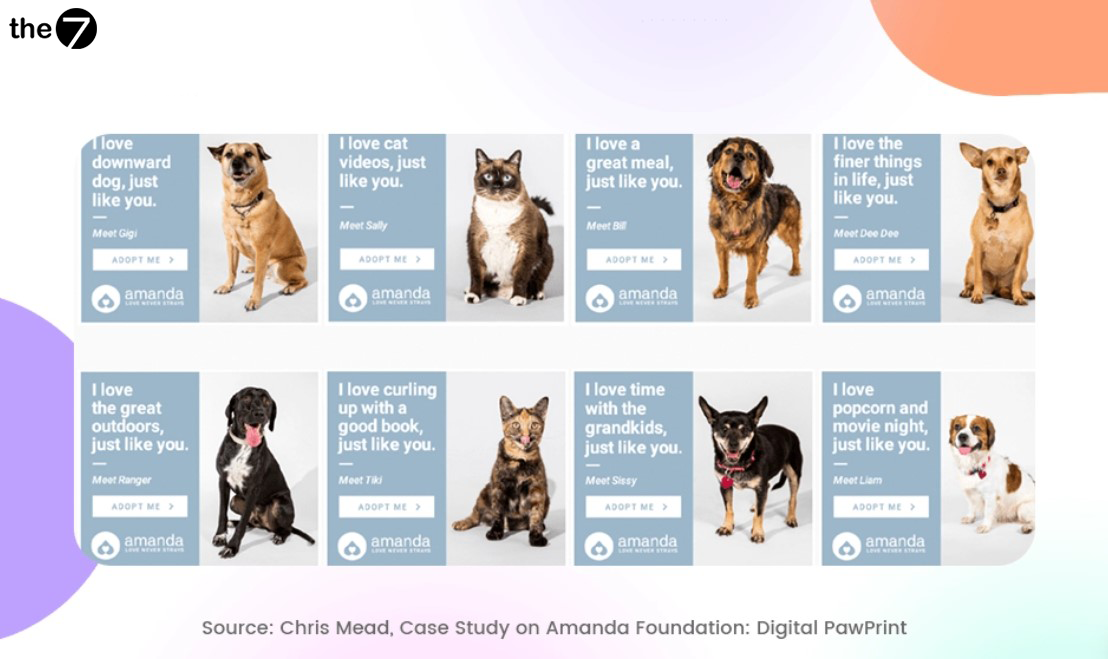
The nonprofit The Amanda Foundation, whose mission is to promote the welfare of cats and dogs, set out on a compassionate journey to put Programmatic Advertising to work. Recognizing that people’s preferences for pets are as diverse as the animals themselves, the organization decided to use behavioral data to gather insights that could help it play matchmaker between its animals and the people who might want to adopt them. Reaching its target audience through advanced Programmatic Advertising helped the organization identify people with a passion for cats or dogs, and learn more about the personalities of those who might become potential pet parents.
Conclusion
Programmatic advertising, with its data-driven precision and its ability to reach audiences beyond Google’s network, is a testament to the ever-changing nature of digital marketing. It is a tool that can help businesses in every industry unlock entirely new opportunities to engage with audiences and expand their reach.

Nguyễn Đình
Bảo




As CEO of The7, I am committed to sharing practical, useful knowledge with every reader. Every article on The7 is based on my 7 years of hands-on experience in marketing — Facebook advertising, LinkedIn advertising, Google advertising, and marketing strategy. I hope you take away plenty of insight from these posts and apply it successfully in practice.
Related Articles
Building a Full-Funnel Content Marketing Strategy on LinkedIn
Table of Contents Toggle Why Build Content Marketing for the Full Marketing Funnel? (Why Full-Funnel Content Marketing?)Creating Your Strategy (Creating Your Strategy)Implementing Your Content Strategy (Rolling out your content strategy)Summary...
Designing Creative Content for LinkedIn
Table of Contents Toggle Why Is Good Creative Content So Important? (Why is Good Creative Important?)Key Components of Creative Design (the core elements of creative design)Summary (summary) Why Is Good...
Building an Organic Business Presence on LinkedIn With a LinkedIn Page
Table of Contents Toggle Why Have a LinkedIn Page?Establishing Your LinkedIn PageKeeping Your LinkedIn Page ActiveThe Measure of SuccessSummary About LinkedIn Page (Summary) Why Have a LinkedIn Page? For a...

6 Best LinkedIn Marketing Strategies for B2B in 2026
Table of Contents Toggle LinkedIn 2026: Where B2B Decisions Get MadeStrategy #1 – Why Is LinkedIn the Best B2B Marketing Channel Today?1. Decision-makers are concentrated here2. Users are in work...

7 Social Media Trends for 2026: The Era of Real Value, Real Conversion, and Real People
Table of Contents Toggle Social media is entering the biggest restructuring of the decadeTrend 1: Why is buying directly in-app becoming the new standard for 2026? (On-Platform Conversion)What should businesses...

What Is TikTok Marketing? Effective TikTok Marketing Strategies
TikTok has been topping the global rankings of the most downloaded and most visited apps. That makes it a gold mine for marketers who love creativity. In this article, The7...