


Gen Z Insights: The Key Customer Audience of the Future

Millennials (also known as Gen Y) have long been the top priority for brands and marketers, because they are the first generation of global citizens, make up a large share of the population, and wield enormous influence. Millennials still matter today, but it is time for brands to start paying attention to the next generation: Centennials, also known as Generation Z or Gen Z.
According to United Nations (UN) statistics from 2019, Gen Y accounted for 31.5% of the global population, while Gen Z already accounted for 32%, or roughly 2.6 billion people. By 2020, Gen Z is expected to make up 40% of all consumers worldwide, with purchasing power of up to 44 billion USD. That makes it the youngest and largest generation today, and one with the potential to become brands’ target customers in the future. Read on to learn more about Gen Z youth insights in the article below!
Who Is Gen Z?
The age range classified as Gen Z differs from country to country, but most agree that this is the generation of young people born between 1997 and 2012. Today, 61% of Gen Z are still of school age, 43% study at professional training schools (college), 38% study and work at the same time, and 59% attend both professional training schools and universities.
Unlike young people from Gen X and even Gen Y, young people from Gen Z were exposed to digital technology from an early age, feel at home with the Internet and social media, and most of them were using smart devices skillfully before they could even read or write.
An Overview of the Gen Z Profile:
1. Gen Z Prefers Smartphones Over Other Devices:
Gen Z grew up with video games on their parents’ smartphones and tablets until they got their own first smartphones (at around age 10 on average). Today, 96% of this generation owns a smartphone and spends at least 3 hours a day on it, equivalent to 15.4 hours per week.
Gen Z is so used to consuming information and entertainment online whenever and wherever they want that this generation alone accounts for 80% of mobile device usage time recorded worldwide. However, constant Internet connectivity does not mean they all use mobile devices in the same way. Only slightly more than one-third of global Gen Z say they use their phones too much, on par with global Gen Y.
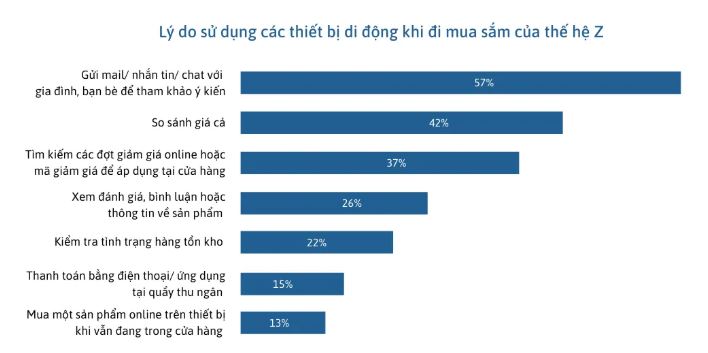
Gen Z’s awareness of how much time they spend on mobile devices, and the desire of some of them to cut that time down, show that the most important thing for brands today is to deliver real value even when they only reach Gen Z for a short time. To connect with Gen Z faster and more effectively, brands need to prioritize building mobile-first commerce platforms and content, as long as they are friendly to the devices Gen Z already has and quickly provide what they are looking for. As many as 60% of young Gen Z people say they will not use apps or websites that load too slowly.
2. Gen Z Is Demanding When Making Purchase Decisions:
This generation does not trust advertising. When an ad pops up, young Gen Z people around the world always skip it within 8 seconds at most, 3 seconds faster than older generations of consumers. 63% of them have installed an ad blocker on their mobile phone or computer, because they feel online ads interrupt whatever they are doing. Brands that rely only on paid advertising will therefore not be able to win over this savvy group of consumers. They need a longer-term strategic vision focused on convenience, personalization, and respect for privacy.
Gen Z also pays close attention to prices and promotions, and looks up online reviews. 65% of this generation search for product reviews online before buying; 90% use YouTube and 75% use Instagram to find the best purchase options and product reviews; in addition, 63% turn to shopping recommendations from friends. Gen Z’s average online spending is 58.30 USD, yet they still prefer shopping in stores to shopping online. 95% of this generation visit shopping malls once every 3 months, compared with 75% of Gen Y and 58% of Gen X. On top of that, 75% say visiting stores in person gives them a better shopping experience than shopping online, and 28% of Gen Z shoppers say they want to interact with store staff while shopping.

In addition, many families today have begun gathering product information, comparing reviews, and planning purchases based on suggestions from their youngest Gen Z members, mainly for household appliances and furniture. Nearly 10% of parents say Gen Z has 100% influence over the family’s purchase decisions, because they can keep up with what is happening in the world and their convictions drive their buying decisions. They regularly update their families on brands that fit the values the whole family is aiming for, as well as brands that will not be able to meet their expectations.
3. Gen Z Is Highly Self-Aware About Their Appearance and Finances
Gen Z is increasingly preoccupied with building their self-image. They have a strong sense of self, want to build their own personal brand over time, and feel free to experiment with individuality through their makeup, hairstyles, and fashion, then share that process with their friends, both online and in real life. On top of that, Gen Z does not want to be defined by any brand other than the personal brand they create themselves, because they always put independence and personalization first. 26% of Gen Z shoppers hope that retailers already have the technology to meet their requirements based on their shopping habits and preferences.
This generation also wants to contribute to the development of new products: in one survey, 44% of respondents said that, given the chance, they would like to send their own product design ideas straight to manufacturers; 43% said they want to take part in product reviews, and 42% want to join an online game as part of a new product campaign.
Gen Z is also a generation with an independent lifestyle and a clear awareness of their own financial situation. Having grown up during an economic downturn, financial pressure has shaped them into more pragmatic people. They are drawn to spending habits that maximize the value of every dollar they spend, and they prefer great products over “great experiences.” Only 69% of this generation are willing to pay for premium product lines, compared with 75% of Gen Y; 42% of them have started working part-time or full-time jobs; and 23% believe they must stay away from debt at all costs.
4. Gen Z Has a Positive, Open Mindset and a Practical, Proactive Lifestyle
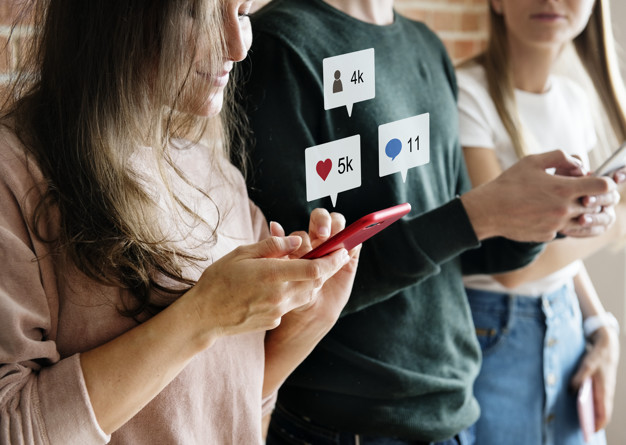
Gen Z around the world shares one trait: they refuse to leave their fate in the hands of more powerful people. Instead, they are working to take hold of their own future by developing the skills they need, which gives them a sense of stability in an unstable world. Aware that they cannot depend on resources that will become increasingly scarce in the future, Gen Z has begun to develop a “hacker mindset” as they hone their problem-solving skills and creativity. 76% of Gen Z say they constantly strive to improve themselves and their abilities in as many ways as possible, a figure even higher than the global average.
Living in a world where scientific and technological advances have become all too familiar, Gen Z is also less enthusiastic about communicating online than Gen Y, and will still keep talking face to face with the people around them in the real world when needed. This generation is also more aware of social and global issues than previous generations. Around 60% of Gen Z say they want to change the world (nearly double the 39% of Millennials before them); 78% care about how companies use their personal information; 57% would rather explore the world than own a home; 46% of them want to take part in community activities, and 25% regularly do volunteer work.
Final Thoughts
It is clear, then, that Centennials have begun to eclipse Millennials as global development trends and the push across industries keep growing. As we enter the second decade of the 21st century, they will soon become the core consumer group across a wide range of sectors. Brands therefore need to quickly catch up with their values, beliefs, and expectations to avoid being left behind.
Source: tomorrowmarketers.org
How Can The7 Help You?
At The7, we offer 2 core all-in-one Marketing services: dedicated consulting and quality implementation. Both are carried out by a team of specialists and experts with in-depth training. From there, we design a tailored roadmap for your business to roll out suitable, optimized Online Advertising Services, while completely eliminating activities that bring no real benefit.
With many years of industry experience, The7 will work with your business to define the direction and execution of an effective online marketing strategy, minimizing the risks of running digital activities on your own.
The7 plans and executes complete online marketing programs built on advertising solutions across Facebook, Instagram, and Google, plus web design and Content Marketing services.
For all information about our services, connect with us today via Hotline: 082 246 7979 – 028 3899 7377 or visit https://the7digital.com/ for a consultation!
>> See more: What is an insight? How to identify customer insights effectively

Nguyễn Đình
Bảo




As CEO of The7, I am committed to sharing practical, useful knowledge with every reader. Every article on The7 is based on my 7 years of hands-on experience in marketing — Facebook advertising, LinkedIn advertising, Google advertising, and marketing strategy. I hope you take away plenty of insight from these posts and apply it successfully in practice.
Related Articles
Building a Full-Funnel Content Marketing Strategy on LinkedIn
Table of Contents Toggle Why Build Content Marketing for the Full Marketing Funnel? (Why Full-Funnel Content Marketing?)Creating Your Strategy (Creating Your Strategy)Implementing Your Content Strategy (Rolling out your content strategy)Summary...
Designing Creative Content for LinkedIn
Table of Contents Toggle Why Is Good Creative Content So Important? (Why is Good Creative Important?)Key Components of Creative Design (the core elements of creative design)Summary (summary) Why Is Good...
Building an Organic Business Presence on LinkedIn With a LinkedIn Page
Table of Contents Toggle Why Have a LinkedIn Page?Establishing Your LinkedIn PageKeeping Your LinkedIn Page ActiveThe Measure of SuccessSummary About LinkedIn Page (Summary) Why Have a LinkedIn Page? For a...
6 Best LinkedIn Marketing Strategies for B2B in 2026
Table of Contents Toggle LinkedIn 2026: Where B2B Decisions Get MadeStrategy #1 – Why Is LinkedIn the Best B2B Marketing Channel Today?1. Decision-makers are concentrated here2. Users are in work...
What Is Facebook Ads? Popular Types of Facebook Advertising
What is Facebook Ads? This is surely a question many people wonder about, especially those just starting to learn about Facebook advertising. Let’s explore Facebook Ads from A to Z...

26 Predictions for Social Media Marketing Trends in 2025
It’s that familiar time of year again, when experts and analysts start revealing their predictions for the social media marketing trends worth watching, along with the shifts that promise to...