


Social Selling: Optimizing Business Results in the Digital Environment
In today’s fast-moving digital marketplace, businesses are realizing that success depends not only on the products they sell, but also on how they engage with their customers. As a result, traditional sales and marketing methods are giving way to a creative, innovative approach known as “social selling.”
Harnessing the potential of Social Selling can transform your business results. This article will help you explore the compelling benefits it brings and the strategies you need to succeed in this space.
What Is Social Selling?
Social Selling is more than a buzzword. It is an approach that uses social media platforms to connect, engage, and build relationships with potential customers. If your brand is present on platforms such as Facebook, LinkedIn, Twitter, or any other social channel, you have already taken the first step into Social Selling.
However, Social Selling is not simply about collecting new contact lists for your sales team; it is about creating meaningful social interactions. The goal is to position your brand as a trusted source of information and a solution provider ready to meet your customers’ needs through your products or services.
Unlike traditional sales tactics or one-off transactions, Social Selling focuses more on nurturing and maintaining relationships with potential customers through every stage of the sales process.
What Are the Benefits of Social Selling?
Businesses in Vietnam and many other places are gradually recognizing the significant benefits of adopting Social Selling as a key part of their marketing and sales strategy.
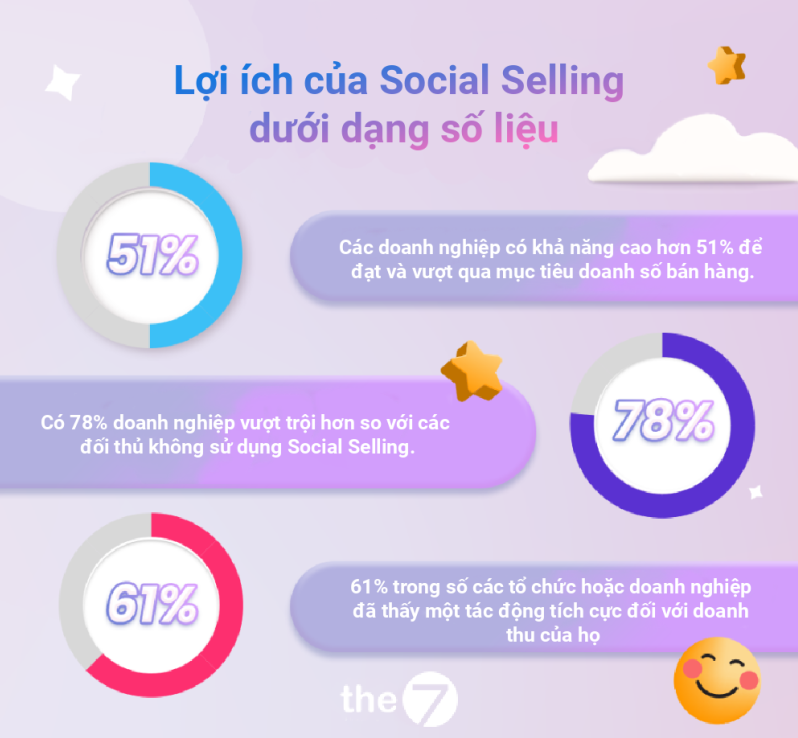
The Benefits of Social Selling in Numbers
- Businesses are 51% more likely to reach and exceed their sales targets.
- 78% of businesses outperform competitors that do not use Social Selling.
- 61% of organizations or businesses have seen a positive impact on their revenue.
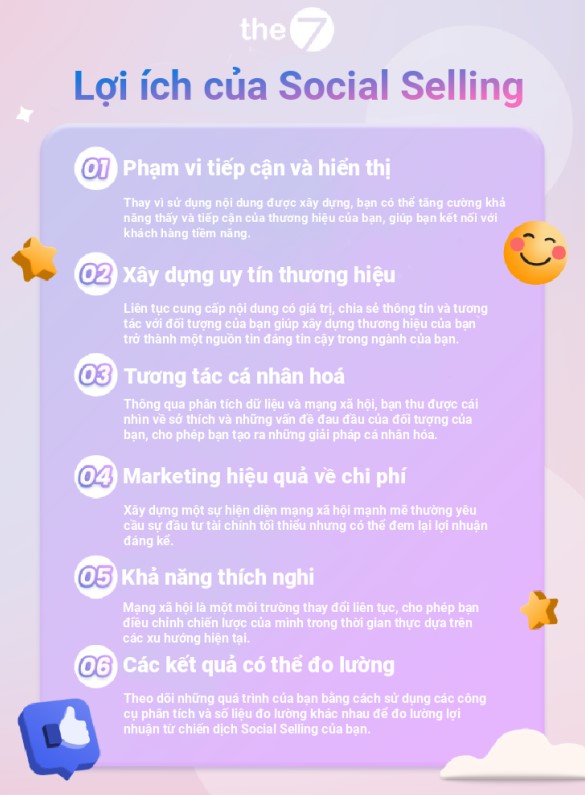
Reach and Visibility
Social media platforms have billions of active users worldwide, and Social Selling lets businesses tap into this vast audience. By creating quality content and engaging strategically, you can significantly expand your brand’s awareness and reach, helping you connect with potential customers who might never have discovered your products or services through traditional channels.
Building Brand Credibility
Trust is a cornerstone of sales success, and Social Selling excels at building it. By consistently delivering valuable content, sharing knowledge, and joining meaningful conversations with your customers, you can build your brand into an authoritative and reliable source of information in your field.
Personalized Engagement
Social Selling helps you tailor your interactions to each customer’s individual needs. Through data analysis and social listening, you gather detailed insights into the interests and specific problems your customers care about. This lets you craft personalized solutions and make your interactions more relevant and far more impactful.
Cost-Effective Marketing
Compared with traditional advertising methods, Social Selling offers a cost-effective way to promote your brand. Building a strong social media presence and engaging with customers typically requires only minimal financial investment, yet it can deliver substantial gains in brand awareness and sales.
See more: Google Ads Basics Guide
Adaptability
Social media is a dynamic environment that lets you adapt your strategy in real time based on current trends and feedback. This flexibility helps you stay timely and responsive to changing market conditions, making your brand stand out from competitors.
Measurable Results
You can evaluate your campaigns through analytics tools and other metrics, which helps you measure the return on investment (ROI) of your Social Selling campaigns. This data-driven approach lets you adjust your strategy to achieve optimal results.
Social Selling is not just an empty promise; it is backed by strong evidence. According to LinkedIn, businesses that practice Social Selling are 51% more likely to exceed their sales targets, while 78% of businesses outperform competitors that do not use social media. In addition, according to Sales for Life, 61% of organizations that actively engage in Social Selling report a positive impact on their revenue growth. These figures are not just theory; they are based on real data, demonstrating the power of a Social Selling strategy in the market.
Building a Strategy for Your Social Selling Campaign
Planning a successful Social Selling campaign in Vietnam, or anywhere else, takes a carefully built strategy, not just a presence on social media platforms. To tap the full potential of Social Selling, follow this path, which combines engagement, authenticity, and data-driven decision-making.
Clearly Define Your Target Audience
Start by understanding your target customers better. Who are they? What challenges do they face? What solutions can your products or services offer? Create detailed customer profiles to guide your engagement and content creation.
Choose the Right Platforms
Not all social media platforms are created equal. Identify where your target audience spends their time. For B2B audiences, LinkedIn may be the main focus, while B2C businesses may find success on Facebook or Instagram. If your target audience is mostly Gen Z, TikTok may be the best choice. Keep in mind that the digital landscape offers many other platforms that may also be a good fit, but these examples are a starting point.
Deliver Value Through Quality Content
Create and curate content that impresses your audience by sharing valuable insights, industry news, and solutions to common problems. Your content should be informative, engaging, and, most importantly, relevant to the needs of your target audience.
Position Yourself as an Expert
Establish yourself or your brand as an expert in your industry. Share knowledge, offer advice, and take a thought leadership role. Building trust and credibility is a cornerstone of Social Selling.
Build Relationships, Not Transactions
Focus on genuine relationships rather than immediate sales. Start by using social listening tools such as Hootsuite and Meltwater to monitor conversations about your brand, your company, your industry, and your competitors. Then engage actively with your audience by replying to comments, answering questions, and starting conversations. This helps you nurture relationships over time, which leads to conversions and customer loyalty.
Adapt and Grow
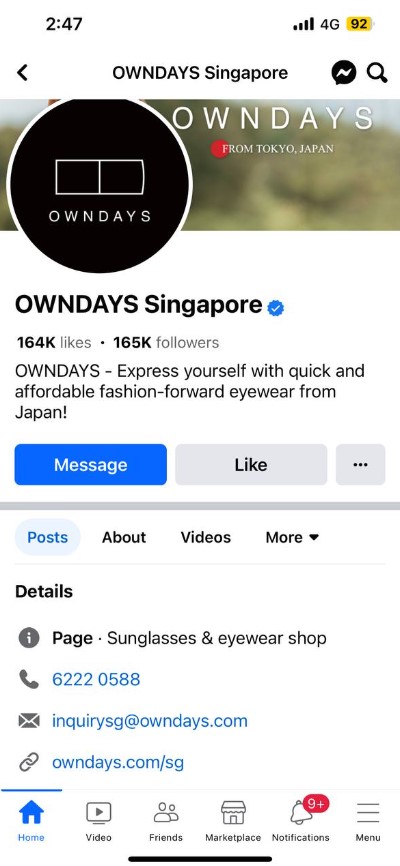
Social media is always changing, so keeping up with new trends and algorithms is essential. Be ready to adjust your strategy to match shifting customer behavior and platform updates. Keeping your information current also helps you strengthen your social media profiles to build greater credibility. This includes making sure your profile picture and cover image are high-resolution and consistent with your brand, completing all key information in your profile bio, including a link to your official website, and strategically incorporating relevant search keywords and hashtags.
Track and Analyze
Regularly monitor your Social Selling efforts by analyzing key metrics such as engagement rate, conversion rate, and follower growth. Data-driven insights tell you what is working and what needs to be adjusted in your strategy to optimize results.
Measuring the Success of Your Social Selling Campaign
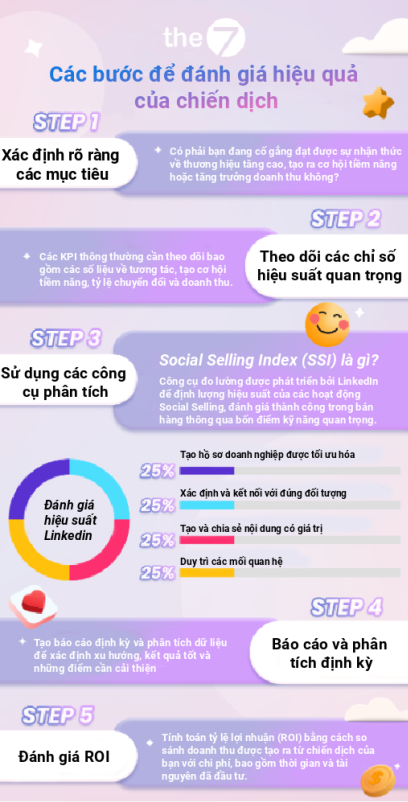
In Social Selling, success can be measured concretely. To make sure your efforts are delivering results and to keep refining your strategy, measuring the success of your Social Selling campaign is essential. Here is how you can take a data-driven approach to evaluating your campaign’s performance.
Set Clear Goals
Before you start looking at metrics, clearly define the goals for your Social Selling campaign. What do you want to achieve? Increase brand awareness, generate leads, or grow revenue? Defining these goals clearly gives you a framework for choosing the relevant metrics.
Track Key Performance Indicators (KPIs)
Common KPIs for Social Selling include:
- Engagement Metrics: Likes, comments, shares, and click-through rate on your content.
- Lead Generation: The number of new leads generated through social media.
- Conversion Rate: The percentage of leads that convert into customers.
- Sales: Sales generated directly from your Social Selling efforts.
Use Analytics Tools
Social media platforms such as LinkedIn, Facebook, and Instagram have built-in analytics tools that provide insights into post performance, audience characteristics, and engagement metrics. External analytics tools can also provide more detailed data. Another useful tool you can use is the Social Selling Index (SSI), a measurement tool developed by LinkedIn to quantify the effectiveness of your Social Selling efforts. SSI evaluates sales success across four key skill areas:
- Building a professional brand with an optimized profile.
- Identifying and connecting with the right potential customers.
- Sharing valuable content.
- Nurturing and strengthening relationships.
The sum of these four elements produces an overall SSI score ranging from 0 to 100.
Regular Reporting and Analysis
Create regular reports that show your campaign’s performance against your predefined goals. Analyze the data to identify trends, successes, and areas for improvement. Regular check-ins help ensure you can adapt your strategy in real time.
Evaluate ROI
Finally, your Social Selling campaign should deliver a positive ROI. Calculate ROI by comparing the sales generated by your campaign against its costs, including the time and resources invested.
Engage, Connect, Convert: How Social Selling Works
By leveraging social media platforms, sharing relevant content, engaging with your audience authentically, and applying a data-driven strategy, businesses can thrive in today’s competitive digital landscape. Social Selling encourages brands to adapt, connect, and succeed in a world where relationships and authenticity matter more than ever.

Nguyễn Đình
Bảo




As CEO of The7, I am committed to sharing practical, useful knowledge with every reader. Every article on The7 is based on my 7 years of hands-on experience in marketing — Facebook advertising, LinkedIn advertising, Google advertising, and marketing strategy. I hope you take away plenty of insight from these posts and apply it successfully in practice.
Related Articles
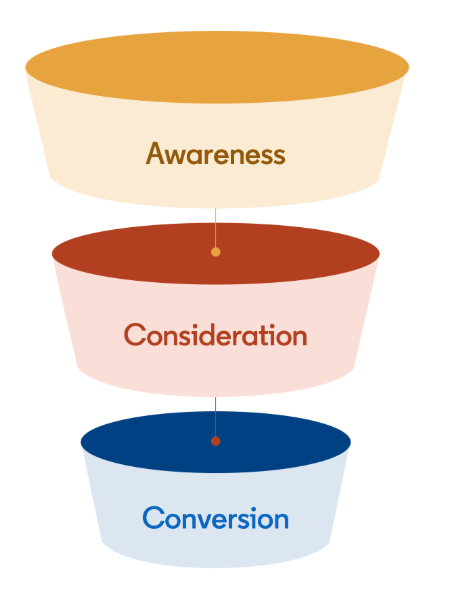
Building a Full-Funnel Content Marketing Strategy on LinkedIn
Table of Contents Toggle Why Build Content Marketing for the Full Marketing Funnel? (Why Full-Funnel Content Marketing?)Creating Your Strategy (Creating Your Strategy)Implementing Your Content Strategy (Rolling out your content strategy)Summary...
Designing Creative Content for LinkedIn
Table of Contents Toggle Why Is Good Creative Content So Important? (Why is Good Creative Important?)Key Components of Creative Design (the core elements of creative design)Summary (summary) Why Is Good...
Building an Organic Business Presence on LinkedIn With a LinkedIn Page
Table of Contents Toggle Why Have a LinkedIn Page?Establishing Your LinkedIn PageKeeping Your LinkedIn Page ActiveThe Measure of SuccessSummary About LinkedIn Page (Summary) Why Have a LinkedIn Page? For a...
6 Best LinkedIn Marketing Strategies for B2B in 2026
Table of Contents Toggle LinkedIn 2026: Where B2B Decisions Get MadeStrategy #1 – Why Is LinkedIn the Best B2B Marketing Channel Today?1. Decision-makers are concentrated here2. Users are in work...

7 Social Media Trends for 2026: The Era of Real Value, Real Conversion, and Real People
Table of Contents Toggle Social media is entering the biggest restructuring of the decadeTrend 1: Why is buying directly in-app becoming the new standard for 2026? (On-Platform Conversion)What should businesses...

What Is TikTok Marketing? Effective TikTok Marketing Strategies
TikTok has been topping the global rankings of the most downloaded and most visited apps. That makes it a gold mine for marketers who love creativity. In this article, The7...