


What Is Brand Repositioning? 7 Strategies to Elevate Your Brand
Brand repositioning is a topic drawing growing interest from individuals and businesses alike as the market keeps shifting. Even though the subject is “hot” right now, not every repositioning succeeds, and not every brand is able to “transform” itself effectively. This article takes a closer look at what brand repositioning is, offers a view of the successes and failures along the way, and draws out valuable lessons from them.
1. What Is Brand Repositioning? How Is It Different from Rebranding?
Brand repositioning is the practice of refreshing a brand by changing how users perceive its products/services and changing its position in the market (from low-end to high-end, or from premium to mass-market).
Brand repositioning is usually tied to changes in a company’s products/services. However, these changes don’t mean expanding into a new industry. Instead, they mean adding to or adjusting products to target a new audience.
>>>> See more of The7’s services: Marketing Strategy Consulting
Brand repositioning and rebranding are two concepts that are often confused with each other. However, they are two different activities with different goals and different ways of being carried out.
Brand repositioning means changing the brand’s position in the market. Its goal is to fit the needs of the market and the target customers, or to compete with rivals. Brand repositioning can include changes to:
- The brand’s core values
- The brand’s products or services
- The brand’s target audience
- The brand’s marketing strategy
Rebranding means changing all of the brand’s identity elements. Its goal is to create a new image for the brand, helping it become more distinctive and stand out. Rebranding can include changes to:
- Brand name
- Logo
- Slogan
- Brand identity system
Comparing brand repositioning and rebranding
| Characteristic | Brand Repositioning | Rebranding |
|---|---|---|
| Goal | Change the brand’s position | Change all of the brand’s identity elements |
| What changes | Core values, products/services, target audience, marketing strategy | Brand name, logo, slogan, brand identity system |
| Type of change | Change in substance | Change in form |
| Nature | Strategic | Tactical |
| Cost | Medium | High |
| Time to implement | Medium | Short |
2. When a Business Needs to Reposition Its Brand
If you notice any of the signs below, you should put a brand repositioning plan in place right away to keep your business’s direction and growth pace on track.
2.1 Your Brand Image Is Outdated
Every brand needs its own identity to stand out and be easily recognized among competing brands. Brand identity is the foundation for building an effective marketing strategy.
By analyzing your competitors through elements such as names, logos, marketing campaigns, and so on, you will come up with ideas that make your brand easier to recognize in consumers’ minds.
For example, Google was originally called “BackRub”. After analyzing its competitors, Google decided to change its name to “Google”. The new name is short, memorable, and reflects the product’s main function: searching for information.

2.2 Your Brand Is No Longer Breaking Through
To achieve a breakthrough shift in brand repositioning, a business doesn’t necessarily have to throw away all the brand imagery it built in the past. Instead, it only needs to fix past weaknesses and keep developing its strengths.
For example, Pabst Blue Ribbon is an affordable beer produced in the US. In the past, the brand mainly targeted the mass market. After repositioning, however, Pabst Blue Ribbon expanded into the Chinese market and repositioned itself as a premium beer.
To make this breakthrough shift, Pabst Blue Ribbon focused on improving product quality and elevating the customer experience. The brand used higher-quality ingredients and refined its production process to create a more flavorful beer. It also invested in new packaging design and a premium marketing campaign to attract high-end customers in China.
As a result, Pabst Blue Ribbon succeeded in making the shift and earned significant revenue in China.

2.3 Your Brand Doesn’t Fit the Market
Brand repositioning isn’t simply about refreshing your image or upgrading your products and services. It is also about adjusting your brand positioning strategy to fit your target market.
For example, the Australian coffee brand Gloria Jean’s Coffees failed in the Vietnamese market because it positioned itself for the wrong market. The brand positioned itself as a premium brand for business people and high earners. However, Vietnam’s coffee market is mostly a mass market, with demand for reasonable prices and bold flavor.

Before repositioning your brand, you need to research your target customers’ needs, wants, and behavior thoroughly, then build the repositioning strategy that fits them best. You also need time to test and adjust the repositioning strategy so that it fits.
2.4 Controlling Your Brand Image
Reputation is the sum of the perceptions and feelings the public holds toward your brand. After operating for a while, your brand builds a specific position in the market. Naturally, this leads to both loyal customers and people who are unhappy with the brand. Mixed opinions can affect the brand’s image and, indirectly, the company’s business performance and profits.
In this situation, a repositioning campaign may be the best option for rebuilding your brand image.
2.5 Your Business Targets a Different Audience
When targeting a different audience, a business needs to reposition its brand for the following reasons:
- To fit the new audience’s needs and wants: Every customer group has different needs and wants. The brand therefore needs to be repositioned to match those of the new audience.
- To make a good impression on the new audience: The new audience has no impression of your brand yet. The brand therefore needs to be repositioned in an impressive and engaging way to capture their attention.
- To avoid direct competition with other brands: When targeting a new audience, a business may have to compete with other brands that already have a foothold in the market. The brand therefore needs to be repositioned in a distinctive way to avoid head-on competition.
For example, the fashion brand GAP used to target young, energetic customers. In recent years, however, GAP has shifted its strategy and now targets an older customer group. To fit the new audience, GAP changed its logo, store design, and communication strategy.

3. 7 Types of Brand Repositioning Strategies
A brand repositioning strategy is a detailed plan for how you carry out the process of repositioning your brand. To succeed, this process requires setting specific goals and establishing a strategy that guides you toward them.
There are 7 common types of repositioning strategies you can apply to your business.
3.1 Brand Relaunch
A brand relaunch is a strategy that brings a brand back onto the market. It suits brands that existed in the past but have gone through a period of reduced activity or no longer hold the strength they once did.
A relaunch strategy doesn’t require many changes to the brand’s products. A brand relaunch helps a business:
- Refresh an outdated brand image, creating conditions for growth in potential customers.
- Revive a “dead” brand, bringing new opportunities and attention from the market.
In 2018, Burberry carried out a brand repositioning. The brand changed its logo, slogan, and design style to become more modern and youthful.

3.2 Brand Rejuvenation
Brand rejuvenation is the process in which a business quickly adds a new feature to its products or services to keep up with competitors or adapt to market changes. This strategy centers on the concept of “Point of Parity,” which helps a brand build trust and credibility with customers.
When carrying out a brand rejuvenation strategy, a business can:
- Attract a new segment of target customers.
- Bring the brand back to its “youth,” generating fresh excitement and attention from customers and the market.
3.3 Brand Extension
Brand extension is the right choice if your business wants to add a new product or service related to what it currently offers. For example, Dyson entered the market with vacuum cleaners, then expanded into hair dryers, fans, air purifiers, and more.
With a brand extension strategy, especially when offering new products or services, a business can:
- Expand its audience and strengthen its power and influence in the market.
- Diversify its products and services, making the brand name more memorable in customers’ minds.
- Create a good stepping stone for introducing new products or services in the future.

3.4 Intangible Brand Repositioning
Intangible brand repositioning is a strategy that takes the products a business already sells into a new target market. However, the business needs enough data on how much demand customers in that market have for the product before rolling out this strategy.
For example, if you run a business offering interior design services for small households, you could expand into interior design services for apartment buildings.
The benefits Intangible Brand Repositioning brings to a business are:
- Growing your audience, attracting new customers, and expanding business opportunities.
- Expanding the business market, bringing in more revenue from new audiences and diversifying income sources.
3.5 Brand Acquisition
Brand acquisition is the process in which a company buys all or part of another brand’s intellectual property, including its brand name, logo, copyrights, trade secrets, and reputation, in order to achieve strategic goals.
This way, instead of building a brand from scratch, the company takes the faster route of buying an existing brand that customers already know and trust.
Brand acquisition can bring many benefits, such as:
- Saving time and money: Instead of spending time building a new brand, the company can quickly reach a new market or expand into a new customer segment.
- Strengthening brand awareness: Acquiring a reputable brand raises the company’s standing and credibility in the market.
- Expanding the product portfolio: Acquiring a new brand diversifies the product portfolio and attracts more customers.
- Synergy: Combining the technology and resources of two companies can create a greater combined effect.
A classic example of brand acquisition is Disney’s purchase of Marvel Comics in 2009 for 4 billion US dollars. The deal gave Disney ownership of many famous superheroes and let it expand into superhero films.

3.6 Brand Essence
Brand essence is the core values, beliefs, and philosophy a brand stands for. It is the foundation of the brand, guiding all of its activities and helping it stand apart from competitors.
If your business is gradually drifting away from its original values after some time in operation, you may want to consider repositioning your brand essence.
By applying this strategy, a business can gain the following benefits:
- Maintain consistency in the brand’s message and image.
- Reshape the core values while re-emphasizing the strengths and unique traits the brand offers.
- Remove negative elements or elements that don’t fit the brand image.
3.7 Partnership Marketing
Partnership marketing is a strategic collaboration between two businesses, or between a business and a public figure. Its goal is to achieve shared objectives that neither side could reach alone.
Partnership marketing takes many forms, such as:
- Product partnerships: Two businesses create a new product together.
- Marketing partnerships: Two businesses run marketing activities together, such as advertising and promotions.
- Distribution partnerships: Two businesses distribute products or services together.
- Sponsorship partnerships: One business sponsors the activities of another.
To succeed with a partnership marketing strategy, a business needs to choose the right partner. The partner should share similarities with the business in core values, business goals, and target customers. A business also needs a specific collaboration plan and must execute it effectively.
Partnership marketing brings many benefits to both sides:
- Stronger brand awareness: Partnership marketing helps businesses reach new customers and increase brand awareness.
- Higher sales: Partnership marketing helps businesses increase sales by sharing customers, distribution channels, and resources.
- Lower costs: Partnership marketing helps businesses reduce marketing and advertising costs.
Nike and Apple partnered to create the Apple Watch Nike+ product line in 2016. The collaboration aimed to leverage the strengths of two leading brands in technology and sports to create a new product that meets consumer needs.
The partnership between Nike and Apple brought many benefits to both sides. For Nike, it helped the brand reach a new group of customers who love technology and sports. For Apple, it helped the brand expand its market share into the sports space.

4. 5 Steps to Successful Brand Repositioning
Repositioning a brand within a business takes careful preparation. To succeed, it must be built on three pillars: listening, delivering, and persuading. These three elements are closely interrelated and inseparable.
This means you can reposition your brand effectively by listening to your customers, meeting their expectations, and persuading them with your message.
4.1 Position Your Brand in the Market
The first step to successful brand repositioning is a thorough analysis of the brand’s current situation. This step includes identifying the brand’s position in the market, its strengths and weaknesses, the opportunities and challenges it faces, and the quality of its products or services.
The information gathered from this analysis will help the business determine what needs to change to improve the brand’s image and standing. The business will understand why it has fallen behind its competitors, so it can set a new direction and take specific measures to solve those problems.
However, a business shouldn’t change too much at once, because that can confuse customers and make them lose trust in the brand. Instead, you need to set priorities and plan your adjustments accordingly.
Here are some questions a business can consider when analyzing the brand’s current situation:
- What is the brand’s position in the market?
- What are the brand’s strengths and weaknesses?
- What opportunities and challenges does the brand face?
- What is the quality of the brand’s products or services?
- Who are the brand’s main competitors?
- Who does the brand aim to serve?
- Who is the brand’s target audience?
Answering all of these questions will give the business a comprehensive view of the brand’s current situation and clarify what needs to change to reach its repositioning goals.

4.2 Define Your Goals
A business needs to redefine the company’s core values and the goals it wants to reach after repositioning its brand.
Create a list of the factors that set your business apart from others in the market. This list should include acknowledging that competitors may outperform you in some area of the business.
In addition, the business needs to define the unique value proposition (UVP) it wants customers to receive when using its products or services. This builds a stronger connection with the target market and makes the repositioning process clearer.
To redefine your UVP, the business needs to answer the following questions:
- What solution does the business offer customers?
- How is the business’s solution different from competitors’ solutions?
- Why should customers choose the business’s products or services?

4.3 Build Your Brand Repositioning Strategy
When deciding to reposition a brand, a business can choose one of four main strategies:
- Image repositioning: This strategy focuses on changing the brand’s image and how customers perceive it (logo, slogan, messaging, and so on) without changing the products or services.
- Product repositioning: This strategy focuses on changing the brand’s products or services while keeping the same target market. It may be driven by changes in customer needs or by technological innovation.
- Intangible repositioning: This strategy focuses on expanding the brand’s target market while keeping the same products or services. It happens when the brand realizes its products or services can appeal to a wider range of customers.
- Tangible repositioning: This strategy focuses on changing both the brand’s target market and its products or services. It is the riskiest strategy, but it can also bring the greatest rewards.
Every repositioning strategy requires careful, systematic management of time, budget, and task assignments to deliver the best results. A business needs to define the goals of the repositioning clearly, research the market thoroughly, and build a detailed implementation plan.

4.4 Implement and Monitor Customer Feedback
Once your brand repositioning plan is complete, it’s time to start putting those changes into action. However, a business isn’t just making changes. It also has to monitor how customers react.
Listening to customer feedback is an important part of the repositioning process. It helps you make sure you’re making the right changes and that they fit your customers’ needs. Find out what they think about the changes the business has made and how they feel when the new campaign rolls out.
Monitor the public conversations that mention your brand or products. The business will understand what people are saying about the brand and whether the changes are being well received.
Several tools can help you with social listening, such as Determ. These tools can automate the task and give you a real-time overview of what’s happening around your brand.
Here are some tips for effective social listening:
- Identify the key keywords and phrases you want to track.
- Use filtering tools to narrow down your results.
- Create an online or social media survey to ask your customers what they think about the changes you’ve made.
- Follow social media posts and online forums to see what people are saying about your brand.
- Talk directly with your customers. Ask what they think about the changes and whether they have any suggestions.

4.5 Analyze and Evaluate the Results
Once the brand repositioning process is complete, it’s time to evaluate how well it worked. To do this, you need to track key performance indicators (KPIs) to see whether the changes you made have reached your goals.
Here are some KPIs you can track:
- Sales
Compare sales before and after the repositioning.
Track sales growth trends to evaluate strategy performance.
- Customer base growth
Check the number of new customers after the repositioning campaign.
Analyze changes in how often existing customers make purchases.
- Brand ratings
Use surveys and research to assess how people perceive the brand after repositioning.
Track brand rating metrics and customer perception.
- Online engagement
Evaluate growth in online views, social media engagement, and website visits.
Analyze opinions, comments, and shares from the online community.
- Market ranking
Track your market ranking compared with your competitors.
If possible, compare against industry market benchmarks to measure the brand’s standing.
- Media reach and engagement metrics
Evaluate how well campaigns reach and engage through media channels.
Use metrics such as CTR (Click-Through Rate) and Engagement Rate.
- Feedback from customers and partners
Evaluate positive and negative feedback from customers and partners.
Run surveys or interviews to gather detailed opinions.
You should track these KPIs over a set period to get the full picture of how effective your brand repositioning has been. If you find that your changes aren’t reaching the goals you set, the business may need to review and adjust accordingly.

5. Tips for Successful Brand Repositioning
5.1 Analyze Your Audience Thoroughly
Brand repositioning should start with market and customer analysis. A business needs to identify and thoroughly research the needs and behavior of customers in its market by answering the following questions:
- Who are their customers?
- What do their customers need and want?
- How are their customers responding?
A business also needs to follow market trends and changes to determine whether its brand has to change to meet new needs.
5.2 Know Your Brand Mission and Values
Before getting started with brand repositioning, a business needs to clearly define the brand’s mission, core values, and competitive advantages. You also need to focus on identifying which elements make your brand unique.
A business should also review the factors that assess the brand’s current situation to decide whether repositioning is needed, using the following questions:
- Is the brand’s goal still relevant to the market?
- Has the brand’s target audience changed?
- Is the brand’s competitive strategy still effective?

5.3 Choose a Repositioning Strategy That Fits Your Brand
To succeed with a brand repositioning strategy, you need to make full use of your existing brand assets to optimize costs. Also make sure your strategy is feasible, with clear goals, a timeline, and an adequate budget. It is important that your repositioning strategy stays consistent so the brand can grow and increase revenue. Here are some specific goals you should consider:
- Brand Sales (Sales Goals)
Volume Sales: The number of products sold.
Value Sales: Sales measured by value.
- Brand Share (Market Share Goals)
The brand’s share of sales relative to the total market, in both volume and value.
- Brand Growth (Growth Goals)
The brand’s growth rate compared with the growth rate of the overall market.
5.4 Study Your Competitors Closely
The questions a business needs to answer when analyzing competitors include:
- Identify the top 5 competitors taking share from the brand.
- Compare the value competitors offer with the brand’s.
- Identify competitors’ standout products/services over the past year.
- Compare the brand’s sales, growth rate, and expansion with those of competitors.
From there, the brand needs to build a repositioning strategy that helps it stand out and differ from its competitors. The repositioning strategy should meet the following criteria:
- New: The repositioning strategy should bring new values that differ from competitors’.
- Relevant: The repositioning strategy should fit the brand’s mission, core values, and competitive advantages.
- Not outdated: The repositioning strategy should be built on current and future trends.
For example, the fashion brand Zara repositioned itself as a fast-fashion brand meeting the fashion needs of young people. This repositioning strategy helped Zara attract many young customers and grow its sales significantly.

5.5 Build Internal Support
Unite the departments in your organization so that every member understands and supports the brand repositioning process. Alignment from within the organization can help the repositioning go smoothly and effectively.
5.6 Focus on Innovation and Creativity
Innovation is the key to successful brand repositioning. A business needs to encourage its team to come up with new, creative ideas to build a distinctive and appealing brand.

5.7 Change the Product’s Value, Not the Brand
Whether to change the product during brand repositioning depends on the strategic goals of each specific program. If the strategy focuses on creating new emotions through new messaging and imagery, the business can keep its current product.
However, if the product is struggling and not meeting consumer needs, changing only the brand image may not be enough. When a new product delivers major value or is the only main product, brand repositioning may be a necessary choice. Conversely, when the new product adds only minor value, there is no need to reposition the brand again.
6. Risks of Brand Repositioning
Brand repositioning is a double-edged sword, bringing both benefits and risks
6.1 Impact on Customers Who Trusted the Old Brand
For a business, losing customer trust can be a heavy consequence of a repositioning strategy. If the process isn’t carried out clearly, customers may not understand or accept the change, and they may switch to other brands. This not only reduces customer loyalty to the brand but also threatens the long-term relationship, leaving the business with very large losses.

6.2 High Marketing Costs
Brand repositioning requires significant investment in communications and marketing to promote the brand’s new image. Without careful planning and effective financial management, this can drain the business’s financial resources, effort, and time.
6.3 The New Brand Doesn’t Inherit From the Old One
Brand repositioning is a risky game. Without a clear strategy and careful execution, a business can lose everything it has built over many years.
6.4 Sales Take a Hit
In the early stage of brand repositioning, sales may decline because customers aren’t yet familiar with the new brand or may not view it favorably. This can put pressure on the business’s revenue and requires patience in moving customers over to the new brand.
7. Does Brand Repositioning Require Changing the Product?
Product repositioning is an important part of the brand repositioning process. Whether to change the product depends on many factors, including:
- The business’s strategic goals
If the business’s goal is simply to create a fresh feeling through communication messages, it may not need to change the product. However, if the goal is to improve product quality, expand the market, or meet customers’ new needs, the business should consider changing the product.
- Current product quality
If the business’s current product isn’t good, changing the brand image will hardly make a meaningful difference. The business needs to improve the product to better meet customer needs.
- How new the new product is
If the business has an entirely new product, product repositioning is necessary. A new product can change how customers perceive the brand. However, if the business only adds one new product to its existing product line, product repositioning isn’t necessarily required.
8. Brand Repositioning Case Studies
8.1 Viettel
Viettel’s “Tiên phong kiến tạo xã hội số” (Pioneering the creation of a digital society) strategy is a successful example of brand repositioning. Moving away from its dated image as a “telecom operator”, Viettel made an impressive “transformation”. Its identity system switched to a bold red, expressing a drive to conquer digital technology and deliver modern digital services to customers.

The logo and slogan were simplified to “Viettel – Theo cách của bạn” (Your way), replacing “Hãy nói theo cách của bạn” (Say it your way). The brand is shifting toward a “youthful technology” brand to suit a modern, younger market, in contrast to its outdated image as a “trusted telecom operator”.
8.2 Biti’s Việt Nam
Biti’s brand repositioning strategy drew major attention by introducing a new brand identity and launching products designed for energetic young people. The change was warmly received by its target audience, the younger generation.
Notably, with a major contribution from Brand Ambassador Sơn Tùng M-TP, Biti’s is not only known as a footwear brand “bought by parents” but has also become something “I want to own” in the minds of young people.

8.3 VASCARA
With more than 10 years in women’s footwear and handbag fashion, Vascara decided to renew itself with a trendy look. The new logo was designed with a sans-serif typeface and rounded lines, creating a soft, elegant image that suits women’s fashion. The change received many positive responses from customers and fashion experts. Vascara’s store system was also redecorated in pastel tones, creating consistency with the new identity.

8.4 Sabeco – Saigon Beer
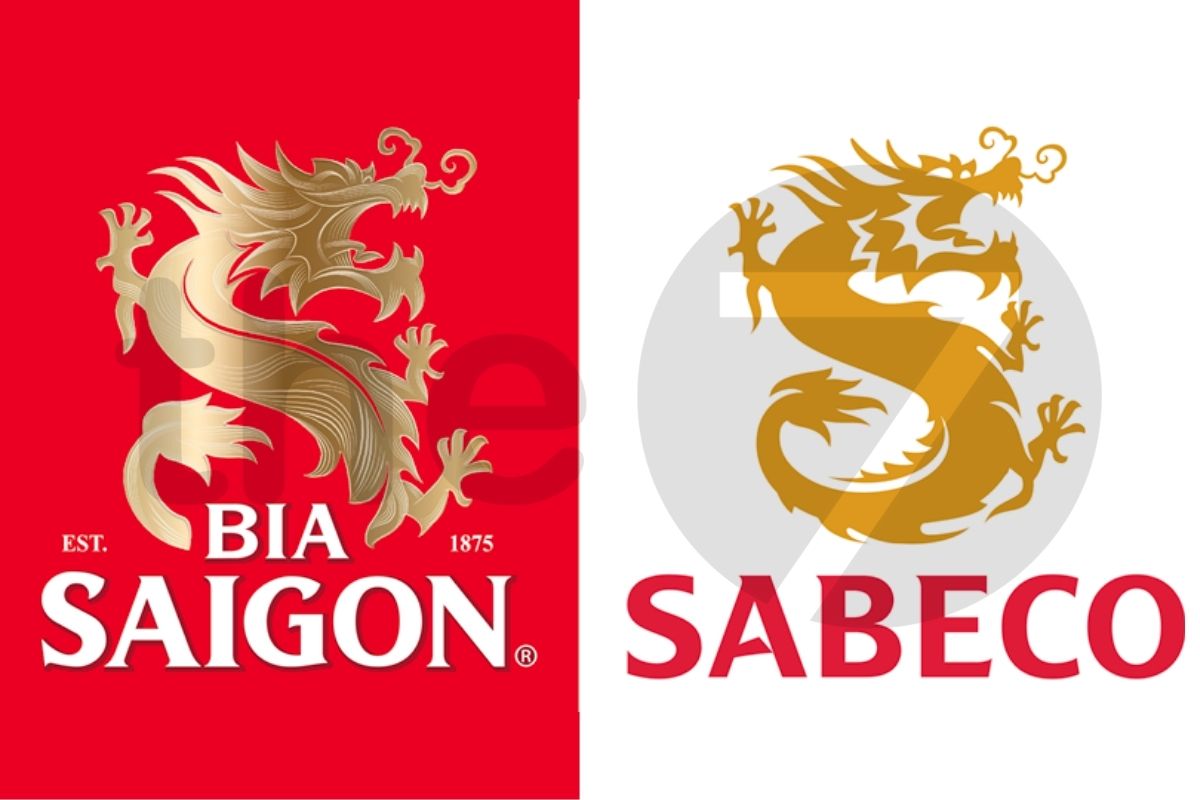
Saigon Beer’s old logo was refreshed with the original dragon image, its raised ridges rendered in a bronze-gold color against a powerful red background, creating an appealing new look.
The campaign promoting the brand’s new identity carried the message “Lên như rồng, hào khí như rồng” (Rise like a dragon, with the spirit of a dragon) and was rolled out across the market, affirming Vietnamese national pride. SABECO’s success shows not only in positive consumer reactions but also in its business performance, overcoming earlier challenges.
8.5 MB Bank
MB Bank’s brand repositioning campaign is a notable example of success in brand repositioning. MB Bank shifted from a “Steady and Trustworthy” brand to a “Comprehensive, Modern Digital Bank” aimed at young people, the owners of the future. The MB brand name also went through a change, with a bold new typeface and eye-catching colors, creating a fresh impression. MB Bank’s new logo builds a close connection with customers while preserving enduring values from the past.

Brand repositioning is a complex process that requires careful preparation. A business needs to define its repositioning goals clearly, research the market and customers, build a suitable repositioning strategy, and carry it out consistently so that the process delivers the best results. We hope this article from The7 is useful to you.
>>> See more related articles:
- 4 Popular Models of Brand Architecture Today
- A Roundup of 16 Great Brand Naming Tips

Nguyễn Đình
Bảo




As CEO of The7, I am committed to sharing practical, useful knowledge with every reader. Every article on The7 is based on my 7 years of hands-on experience in marketing — Facebook advertising, LinkedIn advertising, Google advertising, and marketing strategy. I hope you take away plenty of insight from these posts and apply it successfully in practice.
Related Articles
Building a Full-Funnel Content Marketing Strategy on LinkedIn
Table of Contents Toggle Why Build Content Marketing for the Full Marketing Funnel? (Why Full-Funnel Content Marketing?)Creating Your Strategy (Creating Your Strategy)Implementing Your Content Strategy (Rolling out your content strategy)Summary...

Designing Creative Content for LinkedIn
Table of Contents Toggle Why Is Good Creative Content So Important? (Why is Good Creative Important?)Key Components of Creative Design (the core elements of creative design)Summary (summary) Why Is Good...
Building an Organic Business Presence on LinkedIn With a LinkedIn Page
Table of Contents Toggle Why Have a LinkedIn Page?Establishing Your LinkedIn PageKeeping Your LinkedIn Page ActiveThe Measure of SuccessSummary About LinkedIn Page (Summary) Why Have a LinkedIn Page? For a...
6 Best LinkedIn Marketing Strategies for B2B in 2026
Table of Contents Toggle LinkedIn 2026: Where B2B Decisions Get MadeStrategy #1 – Why Is LinkedIn the Best B2B Marketing Channel Today?1. Decision-makers are concentrated here2. Users are in work...

7 Social Media Trends for 2026: The Era of Real Value, Real Conversion, and Real People
Table of Contents Toggle Social media is entering the biggest restructuring of the decadeTrend 1: Why is buying directly in-app becoming the new standard for 2026? (On-Platform Conversion)What should businesses...

What Is TikTok Marketing? Effective TikTok Marketing Strategies
TikTok has been topping the global rankings of the most downloaded and most visited apps. That makes it a gold mine for marketers who love creativity. In this article, The7...