


Top 16 Best Brand Naming Methods in 2024

In business, one of the most important factors in success is the ability to build and grow a sustainable brand positioning. And the most important step of all is naming your brand, making sure the name not only attracts attention but also leaves a strong impression.
Still, coming up with a brand name that is both appealing and memorable isn’t easy for many people. So how do you create a striking brand name that sticks? The7 has put together 16 great brand naming methods to make your brand stand out and be remembered more than ever.
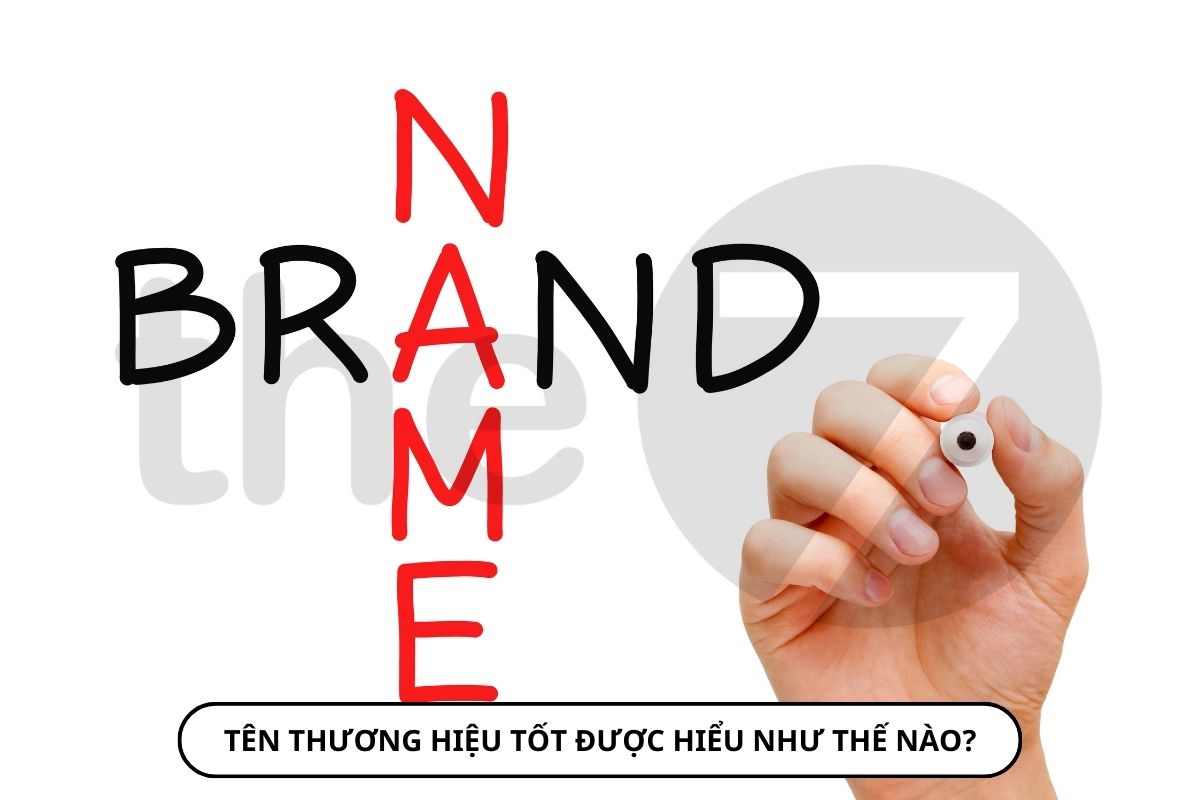
1. What Makes a Good Brand Name?
A good brand name is one that meets the following criteria:
- Meaningful: A brand name should convey the essence of your brand, create imagery, and spark a positive emotional connection.
- Distinctive: A brand name needs to be unique, memorable, and stand out from competitors, making it easier to build brand awareness.
- Easy to understand and communicate: A brand name shouldn’t be too complicated or confusing. Consumers need to be able to pronounce it, spell it correctly, and search for information about the brand on the Internet with ease. This helps the brand increase its chances of reaching customers and engaging with them.
- Legally protectable: An ideal brand name can be registered as a trademark and as a domain name, ensuring protection from both a legal and a public-perception standpoint.
- Future-proof: A brand name needs room to expand and grow over time. It must be flexible enough to reflect the range of products or services the brand may offer in the future.
- Visually expressive: Where possible, a brand name should work well with visual elements such as symbols, logos, colors, and overall design. These elements help build brand awareness quickly and effectively.
>>>>> See more of The7’s services: Marketing consulting services
2. How Do You Come Up With a Great Brand Name?
When you decide to name your brand, it pays to follow a specific process to raise the quality of your naming and minimize the chance of mistakes. Here are the 5 steps The7 usually follows when naming a brand:
2.1 Step 1: Define Your Brand Core
Before you start looking for brand naming ideas, clearly define your brand core. Specifically, you need to be clear on:
Brand purpose
- Ask why your brand exists. What is the deeper meaning behind it?
- Define the brand’s main goal: why was it created, and what purpose does it serve?
Vision
- Picture the future of your brand. What will happen as your brand grows and expands?
- Define the future direction your brand wants to achieve.
Mission
- Ask what reason your brand has to exist. What was your brand created to do?
- Define how your brand shapes the world around it and speaks to its values.
Core values
- Identify the core values your brand wants to stand for. What matters most to your brand?
- List the values your brand commits to protecting and expressing in every business activity.
This way, naming your brand becomes clearer, and the name will reflect the essence, goals, and values of your brand more deeply.

2.2 Step 2: Find What Sets You Apart From Competitors
Next, look at existing brand names and ask yourself detailed questions about what makes your brand different. Specifically:
Market and segment classification
- Clearly define the market you plan to enter and who your target segments are.
- Research your competitors in the market and identify their strengths and weaknesses.
Unique strengths
- Ask what you can do differently from your competitors. What makes you stand out and feel special?
- Identify the competitive advantages you can leverage to attract customers.
Differentiating in promotion
- Decide how you can show what makes you different through your promotional strategy.
- Choose a communications strategy that highlights and develops your distinctive strengths.
Differentiating message
- Choose one core message you want to convey about what makes your brand different.
- Make sure this message comes across clearly and consistently in all your communications and marketing activities.
Building a communications strategy
- Ask yourself how you can select and communicate these points of difference to your customers.
- Build a strong communications strategy to deliver the message of your brand’s uniqueness and value.
Remember, differentiation doesn’t come from the product alone, but also from how you communicate and showcase your unique traits in a competitive market.

2.3 Step 3: Brainstorm Creative, Promising Brand Names
Apply all the brand naming methods you’ve learned and explore every idea to build a full list of great brand names. At this stage, don’t worry about the quality or originality of each name. Let your mind think and create freely. The goal is a list long enough to give you plenty of options when it’s time to choose.
Aim for 15 to 20 memorable brand names, or even more if you can. Most importantly, don’t hold back any idea at this stage, because sometimes the most original and quirky ideas become a key source of inspiration in the final selection.
2.4 Step 4: Test and Evaluate
Once you’ve built a full list of good, meaningful brand names, the next key step is to test and evaluate them to see which one best fits the direction you’re building for your brand.
First, compare each name on the list against your brand’s main purpose, vision, mission, and core values. This ensures the name you choose accurately reflects the vision and values you want to convey.
Next, test for differentiation using methods such as SWOT analysis to weigh the pros and cons of each name. This helps you determine whether a name can stand out and set itself apart from competitors.

On top of that, check whether each finalist can be registered as a trademark and a domain name. Make sure the name is legally protected and available on online platforms. The result of this check is a shortlist of just 3 promising brand names, focused on the best options and the most favorable ones for your brand strategy.
2.5 Step 5: Run Tests to Pick the Best Brand Name
Once you’ve identified your top 3 brand names, the next step is to test them in more detail. There are several ways to do this:
- Create a logo or quick sketch: Try creating a great logo name or a quick sketch for each brand name to see which one is more appealing, more memorable, and makes a positive impression.
- Ask a group of potential customers for feedback: Collect opinions and ratings from a group of potential customers or a group with similar demographics. This shows how effective each name is in the eyes of your target audience.
- Create sub-brand and sub-product names: Use each name to develop sub-brand or sub-product names. Assess how well it supports an intuitive brand architecture and how well the components of the brand connect.
- Use the name in print materials, your website, and social media: Put each name in a real-world context by using it in print materials, on your website, and on social media platforms to test how well it adapts and attracts attention.
- Run a small-scale test: Hold a small-scale test, such as with a small group from your target audience, to gauge how effective each brand name is.

3. 16 Great, Meaningful Brand Naming Methods
3.1 Naming With the Descriptive Method
Descriptive naming uses vivid words to communicate what the product or service you’re promoting is about. To make this clearer, take 7-Eleven, whose name tells you the store’s hours, 7 a.m. to 11 p.m. Another classic example is “Pizza Express,” where the restaurant’s name uses the word “express” to create an impression of speed and convenience in serving pizza.

This strategy makes it easier to find a fitting brand name that conveys the meaning and nature of the product to consumers. However, keep in mind that registering these descriptive brand names can be difficult because similar names already exist. The registration process therefore needs careful review to avoid conflicts and brand name disputes.
3.2 Naming With Wordplay
By using linguistic techniques such as compound words, reduplicated words, onomatopoeia, and foreign words, you can create unique and memorable brand names. This naming method often sparks customers’ imagination and has almost no significant drawbacks.
One example of this method is the famous Japanese fashion brand UNIQLO. The name is a combination of “UNIQUE” and “CLOTHES.”

The well-known car brand “Toyota” is also a good example of using foreign-word techniques to create a distinctive brand name. “Toyota” combines two Japanese words: “Toyoda,” the founder’s name, and “Jidosha,” which means “car.” This blend not only reflects the brand’s origins but also creates a sound that is memorable and distinctive.
Some other brands use onomatopoeia to link directly to what they do, such as TikTok or Cốc Cốc. This adds flexibility and creativity to naming and sparks curiosity and recall among customers.
3.3 Naming With the Evocative Method
Much like the naming approaches above, this method focuses on creating brand names that can stir emotions, convey positioning, or tell deeper stories about the brand.
A prime example of this method is Nike, one of the leading names in sports. In Greek mythology, Nike is the name of the goddess who symbolizes victory. In this way, Nike evoked emotions tied to strength, effort, and winning, the core values of the sports world. This is clear in its decision to change its name from Blue Ribbon Sports to Nike in 1971.

The advantage of the evocative method is that it creates a deep association, helping customers easily connect the name with the brand’s characteristics and core values. However, like the descriptive method, brand names created this way can run into trouble if they overlap with other brands, which needs to be considered carefully.
3.4 Naming After the Source
Naming based on a product’s origin, commonly known as naming after the founder, is a popular and straightforward strategy. Typically, the brand carries the founder’s name, creating a close link between the brand and that person.
Some typical examples are Honda, named after its Japanese founder Soichiro Honda, and Walt Disney, famous for “the happiest place on earth,” which carries the name of its owner, Walter Elias Disney.
Another example is “Johnson & Johnson,” a major pharmaceutical and healthcare group. The brand takes its name from the brothers Robert Wood Johnson, James Wood Johnson, and Edward Mead Johnson, who co-founded the company. Including the founders’ names in the brand name not only creates a family connection but also signals stability and credibility in the healthcare industry.

The standout advantage of this method is uniqueness, which lets you own and protect your brand name easily while cutting the time and effort needed to come up with a name. The drawback, however, is that the brand becomes strongly tied to the founder personally, which makes it hard to transfer the brand when needed.
3.5 Naming With the Invented-Word Method
If you want something truly unique and a smoother trademark registration process, inventing a new word is the right choice. This approach uses creativity to combine words, or add or drop letters, to create a brand-new word.
A good example is Kleenex, the tissue brand from Kimberly-Clark, which specializes in paper products such as tissues and facial tissues. The word “Kleenex” comes from the root word “clean.” Another is Pinterest, which is “interest” with a “p” added to the front.
Another example of inventive brand naming is “Netflix.” The name was created by combining “internet” and “flicks” (slang for movies), producing a new and distinctive word. It not only accurately describes Netflix’s online content service but also gives off a modern, creative feel.

An important note when using this method: be careful that the brand name doesn’t end up meaningless or odd. Make sure the name still holds value and meaning in customers’ minds.
3.6 Naming on Impulse
You can absolutely choose a name spontaneously and abstractly, without any direct link to the product or the market.
An interesting example of this method is the story of Hans Wilsdorf, founder of the luxury watch company Rolex. He recounted that one day, while out for a walk, he heard a whisper: “rolex rolex.” That led him to adopt the phrase as the brand name, and he described it as “a whisper from the gods.”

This method makes trademark registration easier, but it also demands a high level of creativity. One important point to note: the brand name may be completely new to consumers, which means building the brand will take a lot of effort and time.
3.7 Naming After a Personal Name
Using your own name for a brand is nothing new. But because personal names are so familiar, they can easily be confused with others and lose their distinctiveness in consumers’ minds.
When you decide to use a personal name for your brand, especially if the name isn’t particularly unusual, it’s important to put a twist on it to create a fresh, memorable, easy-to-grasp reputation in customers’ minds.
Besides using your real name, you can also mix in nicknames or everyday forms of address such as “Cô Ba” (Miss Three) or “Chị Bảy” (Sister Seven) to give the brand a distinctive look.
3.8 Naming After Product Features
Naming a brand by describing the product or service, such as “Vieclam24h” or “timviecnhanh,” not only helps customers instantly understand what you offer but is also widely considered a classic strategy.
Another example is the food brand “Pizza Hut.” The name “Pizza Hut” clearly describes its main product right away, which is pizza. Pairing “Pizza” with “Hut” creates an image of a place where pizza is made and served, giving people a quick sense of the type of service the brand provides.

This method is especially well suited to emerging industries with little competition in the market, helping to grab customers’ attention. One of the big advantages of this naming style is that when consumers hear the brand name, they immediately understand what field you operate in.
The downside, however, is that this approach doesn’t hold up well over the long term. As your business grows and changes, the original brand name can become limiting and fail to reflect the full scale and diversity of the company. Running a new brand awareness campaign then makes the change expensive in both cost and effort.
3.9 Naming After an Address or Place
With some products, just reading the name instantly brings famous places to mind, such as “Lụa Hà Đông” (Ha Dong silk), “Gốm Bát Tràng” (Bat Trang ceramics), or “Bánh đậu xanh Hải Dương” (Hai Duong mung bean cake), and so on. This is one of the classic brand naming methods, and it has strong recognition.
With this naming style, people often simply use the place where they live as the brand name, usually the name of a city or a village. However, names like this often run into difficulty with trademark protection, or can be only partially registered, because they lack uniqueness and distinctiveness.

3.10 Naming by Scale
Naming a brand by scale is a good fit for brands that sell many different kinds of goods. By using words like “World” or “Supermarket” (in Vietnamese, “Thế giới” and “Siêu thị”), you can create the impression that the place offers everything customers need.

This method usually suits large stores. Small stores can use it too, but they need to be careful. Used the wrong way, it can make customers feel deceived, and they won’t want to come back and buy from your store. That calls for a high standard of sincerity and consistency in the products and services you deliver.
3.11 Naming Through Association
Association here means that when your brand name is mentioned, consumers immediately picture the product you offer and understand what it does.
To do this, you need a deep understanding of the product’s features and the benefits it brings customers. For example, if you sell heaters, a name like “Heat” can help consumers instantly connect it with the heating function. Likewise, if you sell fans, a name like “Windy” can create a link to the feeling of wind and cooling.
Another example is the beverage brand “Powerade.” The name combines “power” (energy) and “ade” (drink), creating a strong link to a sports drink that can supply energy, backed by sports science.
3.12 Naming to Spark Curiosity
When you look at this type of brand name, you may not immediately grasp its meaning, but it sparks curiosity and makes you want to find out more.
In fact, if you dig deeper, names like these often carry a deeper meaning, and may be abbreviations of meaningful words combined.
Example: “BaDuNo” could be the name of a shop selling Bánh Đúc (a Vietnamese steamed rice cake), where “BaDu” is a shortened form of “Bánh Đúc”.
The sound seems unfamiliar, doesn’t it? But this is also a way to draw customers’ attention to your brand and leave a deep impression in their minds.
3.13 Naming With Abbreviations
Most abbreviation-based naming methods draw inspiration from the first letters, or an acronym, of the brand’s full English name.
In Vietnam, this method is widely used, as seen in well-known brands like Vinaphone, Vinamilk, Vinaconex, Vingroup, Vinhomes, and others, where “Vina” or “Vin” usually stands for “Vietnam,” combined with a second part that is the company’s product or service name.
Another approach is to use an acronym made from the first letters of the English name, such as ACB (Asia Commercial Bank), ICP (International Consumer Product), and so on.

3.14 Naming With Adjectives
In business, choosing a brand name with a positive meaning is an important part of a strategy for building a company’s image. Names such as Thịnh Vượng (Prosperity), Tài Lộc (Fortune), and Thịnh Phát (Prosper) are often favored because they bring a sense of luck, prosperity, and success to the business.
In Vietnam, many well-known companies have applied this strategy when naming their brands. Examples such as Hòa Phát, Hiệp Phát, Hòa Bình, Tiền Phong, and Tiên Phong are all brands whose names evoke harmony, growth, and pioneering in their industries.

These brand names not only create a positive impression but also build an emotional bond between the business and its customers, helping them feel trust and closeness toward the brand.
3.15 Naming With Foreign Words
Using foreign words in a brand name gives a professional impression and makes your product or service feel premium and upscale, doesn’t it?
This is indeed one of the reasons this naming method is so popular, even for brands owned by Vietnamese founders. Foreign words not only make your brand feel distinctive and fresh but also create an upscale impression, draw consumer interest, and carry layers of meaning.
Well-known brands using this method include Owen, Torano, Fashion Factory, Adam Store, Vintage Boutique, and more. The names are short and meaningful, and they cleverly spark curiosity in customers’ minds.

3.16 Naming With Phonetic Sounds
Using phonetic sounds to name a brand is a very refined strategy. Drawing on everyday, familiar sounds not only makes the brand more memorable but also creates a strong connection with consumers.
Some typical brands that use this naming method include TikTok, Cốc Cốc, Cuccu, Tacke, and others.

4. Key Principles for Naming a Brand
Setting aside specific naming standards, here are some important points to keep in mind when choosing a brand name:
- Unique: A brand name needs to be one of a kind to avoid confusing customers. Duplicate names can cause confusion, so make sure your name is unique and doesn’t overlap with other brands.
- Memorable and easy to recall: A brand name needs to be easy to read, easy to remember, and pronounced similarly in every country. A name that is long, hard to read, and hard to remember can cost you the chance to attract customers.
- Fits your line of business: Choose a name that reflects your industry and suits your target customers. If you’re in a young, creative field, English may be the better choice, whereas if you want a traditional feel aimed at an older audience, Vietnamese may be the right fit.
- Tied to brand values: A brand name should reflect the brand’s values and mission. This helps create a positive impression and encourages engagement between customers and the brand.
5. Simple, Fast Tips for Checking a Brand Name Online
Alongside choosing a unique, striking brand name, checking and researching it online matters even more for making sure the name is one of a kind. Here are 5 ways The7 recommends to run this check effectively:
Method 1: Search on search engines
Type the brand name into Google Search or other search engines such as Cốc Cốc or Bing. Be sure to reorder the words to search for every variation and confirm the name is unique.
Method 2: Check the domain name
Write out variations of the domain name based on the brand name and check them with domain registrars, both in Vietnam and abroad. This is especially important because the domain name is a key element of your identity online. Check on Google Search as well, and prioritize .vn, .com, and .com.vn domains.
Method 3: Search on social media
Use variations of the brand name to check on social networks such as Facebook, YouTube, and TikTok. This helps make sure the brand name isn’t duplicated or already used by someone else on the key online platforms.
Method 4: Check on e-commerce platforms
Check the brand name on e-commerce platforms such as Shopee, Tiki, Lazada, and Sendo to make sure no online store is already using a similar brand name.
Method 5: Search the National Office of Intellectual Property database
Search the database of the National Office of Intellectual Property by product category to check whether you can register the trademark.
Naming a brand is no easy challenge. The7 hopes that, with the 17 brand naming methods we’ve shared above, you’ll have a chance to create a brand name that is distinctive and meaningful. If you have any questions, contact The7 right away for support
>>>> See more related articles: What Is Brand Repositioning? 7 Strategies to Elevate Your Brand

Nguyễn Đình
Bảo




As CEO of The7, I am committed to sharing practical, useful knowledge with every reader. Every article on The7 is based on my 7 years of hands-on experience in marketing — Facebook advertising, LinkedIn advertising, Google advertising, and marketing strategy. I hope you take away plenty of insight from these posts and apply it successfully in practice.
Related Articles
Building a Full-Funnel Content Marketing Strategy on LinkedIn
Table of Contents Toggle Why Build Content Marketing for the Full Marketing Funnel? (Why Full-Funnel Content Marketing?)Creating Your Strategy (Creating Your Strategy)Implementing Your Content Strategy (Rolling out your content strategy)Summary...

Designing Creative Content for LinkedIn
Table of Contents Toggle Why Is Good Creative Content So Important? (Why is Good Creative Important?)Key Components of Creative Design (the core elements of creative design)Summary (summary) Why Is Good...

Building an Organic Business Presence on LinkedIn With a LinkedIn Page
Table of Contents Toggle Why Have a LinkedIn Page?Establishing Your LinkedIn PageKeeping Your LinkedIn Page ActiveThe Measure of SuccessSummary About LinkedIn Page (Summary) Why Have a LinkedIn Page? For a...

6 Best LinkedIn Marketing Strategies for B2B in 2026
Table of Contents Toggle LinkedIn 2026: Where B2B Decisions Get MadeStrategy #1 – Why Is LinkedIn the Best B2B Marketing Channel Today?1. Decision-makers are concentrated here2. Users are in work...

7 Social Media Trends for 2026: The Era of Real Value, Real Conversion, and Real People
Table of Contents Toggle Social media is entering the biggest restructuring of the decadeTrend 1: Why is buying directly in-app becoming the new standard for 2026? (On-Platform Conversion)What should businesses...

What Is TikTok Marketing? Effective TikTok Marketing Strategies
TikTok has been topping the global rankings of the most downloaded and most visited apps. That makes it a gold mine for marketers who love creativity. In this article, The7...