


What Is Brand Architecture? 4 Brand Architecture Models

Not every business can build an accurate brand architecture model. It demands a great deal of time, resources and effort from the company.
A business without a systematic brand building strategy easily ends up wasting countless resources. In this article, The7 will walk you through the steps to build a solid brand architecture that delivers real results for your business.
1. Understanding Brand Architecture the Right Way
Articles on Google often describe brand architecture as a strategy, while others call it a plan, and so on.
In reality, brand architecture is a structural model for organizing a brand portfolio. It consists of one parent brand and several sub-brands, creating a unified ecosystem for all of a company’s products and services.
Brand architecture is part of the overall business plan of large corporations, of groups that are growing at breakneck speed and want to expand their parent brand, and of companies aiming to diversify into multiple industries in the future.
Brand architecture defines both the depth and the breadth of a brand. It can also help a business build strong, lasting relationships with customers. When customers trust the parent brand, they tend to trust and use that brand’s sub-brands as well.
For example, Apple is known for high product quality, beautiful design and an outstanding user experience. These values carry over to Apple’s sub-brands, such as iPhone, iPad and MacBook, which makes it easy for customers to accept and trust them.

Brand architecture is an integrated system of key elements such as the name, logo, colors and visual language. These elements are the key to shaping how customers perceive a business, and the easiest way for them to understand the brands the company owns and the products and services it provides.
For customers and outside partners, brand architecture helps them better understand the business, including:
- The products and services the business offers
- The business’s core values and positioning
- The business’s culture and style
Internally, brand architecture works as a tool that helps a business optimize its marketing processes and performance. A unified, consistent brand system lets the company communicate its messages clearly and makes its marketing activities more effective.
>>>>> See more of The7’s services: Marketing strategy consulting services
2. 4 Popular Brand Architecture Models With Specific Examples
2.1 Branded House (Brand Family)
The Branded House brand architecture is a model in which one main brand is combined with sub-brands.
Branded House leverages customer loyalty to grow its sub-brands, especially when the main brand has already built significant strength. If the main brand has a strong reputation, customers are likely to trust and use its sub-brands.
The naming formula for sub-brands is: main brand name + product or service description.
Example: Anova Corp is the parent company of Novaland, Thành Nhơn JSC, Anova BioTech, Anova Pharma, Anova JV, Anova Tech, Anova Feed, Anova Farm, Anova Agri Bình Dương, Sugar Corporation II, and more.

The advantage of the Branded House model in brand architecture is that it helps a business optimize its marketing and communications campaigns through the close connection between its sub-brands.
The cost of designing logos for sub-brands is also reduced significantly. However, negative issues affecting one sub-brand can spread quickly and damage the entire brand system.
Another risk of the Branded House architecture is dilution. When too many sub-brands operate across many different fields, the clear impact of the main brand is lost.
2.2 House of Brands (Brand Cluster)
House of Brands is a brand architecture model that brings together separate sub-brands, and users usually do not know the parent brand. The parent brand matters only to investors.
The packaging of the products under the sub-brands may carry the parent brand’s identifying features, but they are usually not prominent or noticeable.
Companies that use this brand architecture model usually do not promote the relationship between the parent brand and its sub-brands, to avoid conflicts in pricing strategy, quality or target audience.
The main benefit of the House of Brands architecture is the ability to reach a diverse audience and market through a range of different products, each tailored to cover the whole market.
However, the biggest problem with the House of Brands architecture is budget. Each sub-brand needs its own marketing plan, and the opportunities for cross-promotion between brands are very limited.
Complex legal issues also add to the cost of this model. In a House of Brands, the parent brand effectively acts as a holding company for each sub-brand, managing each one as an independent company.
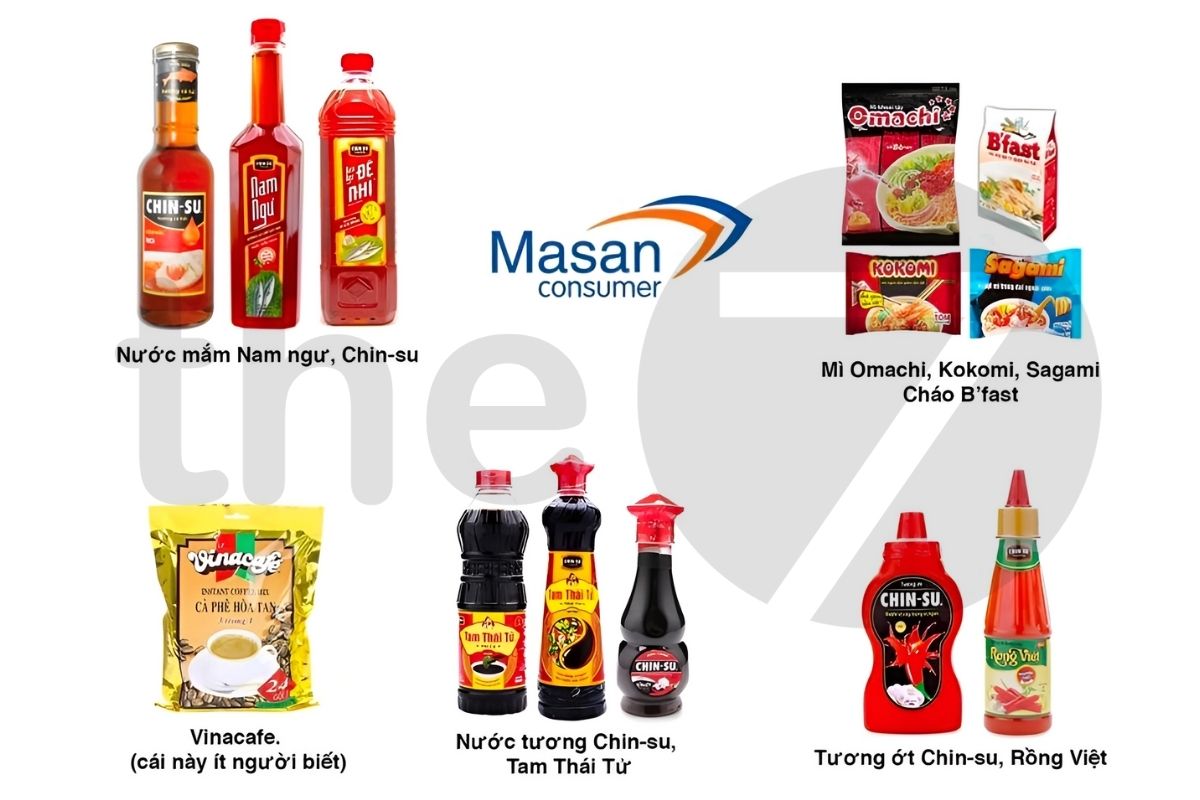
Example: Masan Group in Vietnam has many sub-brands (Omachi instant noodles, Tiến Vua, Chinsu fish sauce, Tam Thái Tử soy sauce, Nam Ngư fish sauce). In this model, the sub-brands operate almost independently from the parent brand, and there is almost no connection in brand awareness or benefits between the “parent” and the “children.”
2.3 Endorsed (Endorsed Brands)
The Endorsed brand architecture (endorsed brands) model consists of a parent brand and sibling sub-brands that all share a single market. The sub-brands in this system benefit from their association with, or endorsement by, the parent brand.
Unlike the Branded House brand architecture model, sub-brand names in an Endorsed model do not begin with the parent brand’s name. Instead, they stand on their own, as if they came from partners that are not part of the same company.
However, the parent brand’s name or logo appears at a small size on the packaging or in ads, to vouch for the sub-brand.
Phrases such as “made by…”, “a product of…”, and “a brand from…” are often used to link a sub-brand to its parent brand.
The relationships between brands in an Endorsed architecture benefit both sides, and each always draws on the other’s strength.
Example: Honda offers many different vehicle lines, such as manual motorbikes, scooters and manual-clutch bikes, for different customer segments, but they all serve the same market: two-wheeled transportation.

2.4 Hybrid (Combined Brands)
Hybrid brand architecture is a combination of several different types of brand architecture.
The Hybrid brand architecture model usually comes out of acquisitions and mergers rather than an intentional brand strategy from the start.
The Hybrid model is very flexible, allowing brands to be layered and several types of architecture to be combined. Its downside, however, is that it is fairly complex.
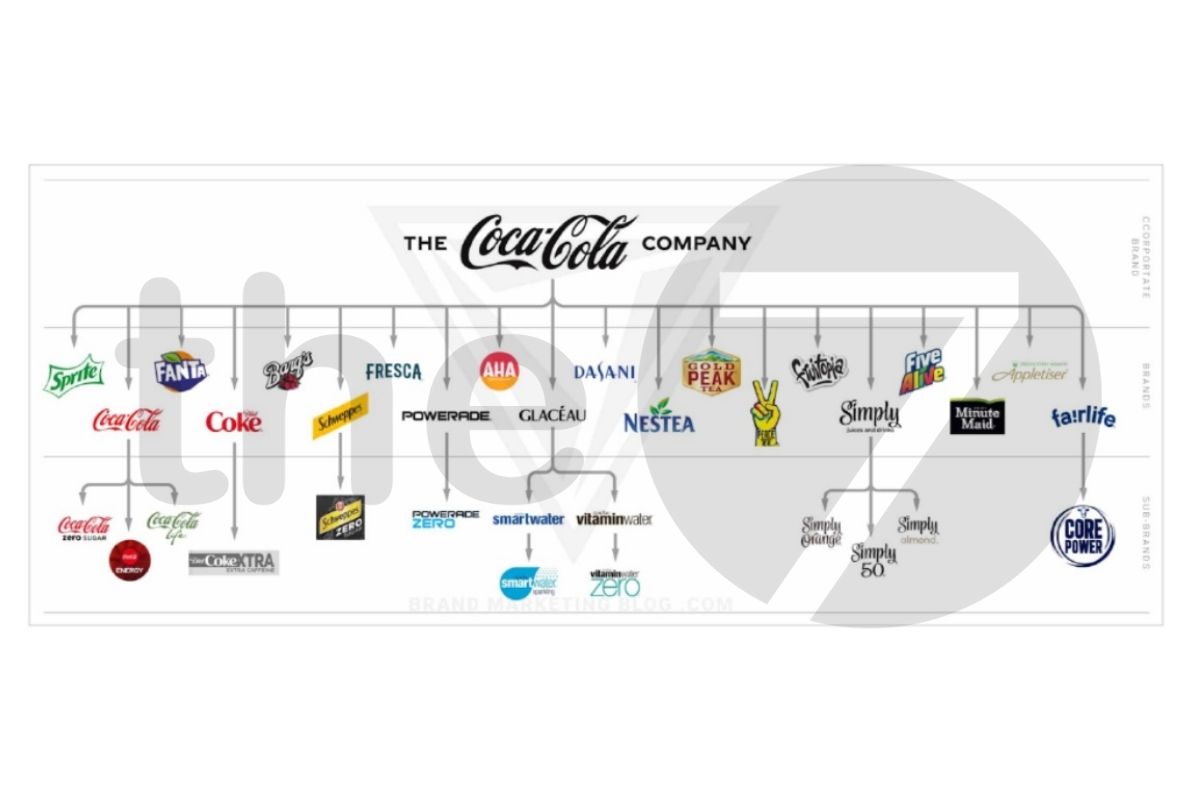
Coca Cola’s brand architecture is a classic example of the Hybrid model. The parent brand is Coca Cola, and sub-brands such as Diet Coca, Coca-Cola Zero and Coca-Cola Light each have their own distinct name and design style. In addition, Coca Cola expands its scale by offering a wide range of products through independent brands such as Fanta, Sprite, Vitamin Water, Fresca, Fuze, Burn, Honest Tea and Dasani.
3. 6 Benefits of Brand Architecture
3.1 More Effective Customer Targeting
A clear brand architecture lets you segment your messages and aim them at specific targets. That means your target customers receive information that matches their wants and needs.
3.2 Lower Marketing Costs
Your marketing strategy becomes exponentially more effective when your brands are structured logically and intuitively. Cross-promotion opportunities between brands that support each other strengthen your communications and lower marketing costs.

3.3 Clear Brand Positioning
Clear brand positioning and communication messages help define your place in the market. Communication goals become easier to reach when you have a consistent brand system.
3.4 Stronger Stakeholder Confidence
A clear brand architecture makes it easier for a business to expand its brands and grow. A company that manages its brands tightly and effectively earns the confidence of both investors and employees, which builds a solid foundation for the future.

3.5 Greater Customer Awareness
A clear brand architecture strengthens customers’ awareness of a business’s products and services. A well-connected network of sub-brands helps the parent brand grow stronger and highlights each brand’s standout strengths.
3.6 Building and Protecting Brand Value
All of the benefits above lead to one end result: building and protecting brand value. A good brand architecture drives strong growth in business and communications performance, which raises brand value and brings in a double return.

4. 3 Steps to Build a Brand Architecture
4.1 Research Customer Brand Awareness
Brand architecture starts with thorough customer research, covering the level of brand awareness, loyalty and the strength of brand associations.
Only by digging deep into the research can you understand how customers perceive and understand your business’s products and services. If there are any misperceptions, the research will help you pinpoint their causes.
The data from this research helps you decide which type of brand architecture will best support your business strategy. It also provides key information that you can present clearly to your customers.
The research process includes:
- Qualitative research: Direct interviews with stakeholders (both internal and external).
- Quantitative research: Testing the hypotheses from the qualitative phase through a large-scale survey, helping the business better understand how customers make decisions.
In addition, you should focus on researching the brand value your business delivers.
A detailed research campaign will provide information about your business’s strengths and weaknesses, as well as those of your competitors.
4.2 Develop a Brand Architecture Strategy
In the strategy-building step, the business needs to determine which type of brand architecture suits it best.
Each type of brand architecture has its own strengths and weaknesses, and brings its own opportunities and challenges.
The key questions to ask include: How closely should the parent brand and sub-brands be linked? Should the different brands promote each other, and to what degree should they cross-link? Or should they stay independent, and to what degree?
To answer these questions, the business needs to sketch out its brand architecture on paper, based on sample architecture models. Evaluate each option against the criteria you defined earlier to keep the decision objective.
The business should keep in mind that:
- The brand architecture must be easy to understand and communicate its message clearly.
- Cross-promotion between brands must be organized and must not confuse customers.
- The more elements the brands share, the greater the synergy.
- The strategy must be flexible and reflect your available budget and resources. Make sure you are building a flexible system that can be rolled out based on the budget and resources you have

4.3 Formally Implement the Brand Architecture
The final step is to formally implement the brand architecture across the system once you have researched and outlined it.
This process includes a naming structure and a clear brand identity system across the sub-brands, or a clear definition of how the architecture extends, so that it reflects your overall strategy.
A brand architecture blueprint covers more than graphic elements. It also includes:
- The strategic role of each brand
- The scope of each brand
- The identity relationships
- The different approaches
Finally, make sure that every decision you make keeps your brand tightly managed, clear and easy to understand as it grows in the future.

5. 6 Factors to Understand Before Building a Brand Architecture
5.1 Brand Value
A business needs to assess its current brand value to identify the risks and opportunities that follow a restructuring. A key question is whether you can reasonably leverage the value of one existing brand to boost another. Losing value after a restructuring can be a major problem for every brand involved.

5.2 Cultural Factors
Internal cultural factors such as company values and culture are just as important as external ones. Whether to merge or separate the different cultures of brands after an acquisition also calls for careful consideration. Incompatible cultures can influence the decision to merge brands or keep them independent.

5.3 Growth Strategy
A business’s growth strategy also needs to be considered when choosing the right type of brand architecture. The brand architecture must support and drive the growth strategy, including any future expansion of product or service lines.

5.4 Market
Understanding the market your business operates in helps you determine which brand architecture will deliver the best performance and achieve your business goals.
If your business mainly targets a single market, a Branded House architecture may be the right choice. This type of architecture can raise brand awareness, optimize marketing spend and strengthen reputation, especially when all of your products or services can be strongly tied to the main brand.
However, if you offer products or services to different markets with different characteristics and requirements, use architecture types that involve multiple separate brands.

5.5 Risk Factors
Another important factor to consider is how much risk you are willing to accept when restructuring your brand, especially for businesses with a long operating history.
Every brand restructuring project carries a certain level of risk. A business needs to weigh and assess this risk carefully against the long-term benefits the project can create. For a new business, redesigning lesser-known products does not pose much risk.
If you are replacing a reputable brand with a new one, you may risk causing confusion or losing loyal customers. That is why you need to think carefully about the level of risk and the long-term benefits you expect from restructuring your brands.

5.6 Costs
Cost has a major influence on how a business chooses its brand architecture. Maintaining a range of brands costs more than having a single brand. When calculating costs, include not only tangible costs but also intangible ones such as brand value.

6. Example of a Sub-Brand Overshadowing Its Parent Brand
The relationship between Mì Gấu Đỏ and Asia Foods is a classic example of the House of Brands (Brand Cluster) model. Mì Gấu Đỏ was successfully built starting in the 1980s and became one of the best-known instant noodle brands in Vietnam. The brand is known for its message “Gắn kết yêu thương” (Connecting Love), which has created a bond and positive emotions among consumers.
However, Mì Gấu Đỏ’s success can also be a challenge for Asia Foods. Some argue that this sub-brand is so famous that it has overshadowed its parent brand. This shows in the fact that many consumers know only Mì Gấu Đỏ and have no idea who Asia Foods is.
Despite these challenges, Mì Gấu Đỏ remains an important brand for Asia Foods. It has contributed greatly to helping Asia Foods capture and expand its market. According to Euromonitor International statistics based on 2010 retail sales, Asia Foods ranked second with a 14.4% market share, behind only Acecook Vietnam.

To address the challenges of the House of Brands model, Asia Foods needs effective marketing strategies to distinguish its sub-brands from one another and create a distinct identity for each.
Depending on the relationship structure of the brand architecture model, a sub-brand overshadowing its parent brand will affect a business in different ways.
No brand architecture guarantees direct success or absolute effectiveness; there is only the architecture that fits the brand’s model and the speed at which it expands. To build a high-quality brand architecture for your business, contact The7 for fast consultation and support.
See more related articles:
- 7 Popular Brand Repositioning Strategies Today
- 16 Great Brand Naming Methods Compiled

Nguyễn Đình
Bảo




As CEO of The7, I am committed to sharing practical, useful knowledge with every reader. Every article on The7 is based on my 7 years of hands-on experience in marketing — Facebook advertising, LinkedIn advertising, Google advertising, and marketing strategy. I hope you take away plenty of insight from these posts and apply it successfully in practice.
Related Articles
Building a Full-Funnel Content Marketing Strategy on LinkedIn
Table of Contents Toggle Why Build Content Marketing for the Full Marketing Funnel? (Why Full-Funnel Content Marketing?)Creating Your Strategy (Creating Your Strategy)Implementing Your Content Strategy (Rolling out your content strategy)Summary...

Designing Creative Content for LinkedIn
Table of Contents Toggle Why Is Good Creative Content So Important? (Why is Good Creative Important?)Key Components of Creative Design (the core elements of creative design)Summary (summary) Why Is Good...

Building an Organic Business Presence on LinkedIn With a LinkedIn Page
Table of Contents Toggle Why Have a LinkedIn Page?Establishing Your LinkedIn PageKeeping Your LinkedIn Page ActiveThe Measure of SuccessSummary About LinkedIn Page (Summary) Why Have a LinkedIn Page? For a...

6 Best LinkedIn Marketing Strategies for B2B in 2026
Table of Contents Toggle LinkedIn 2026: Where B2B Decisions Get MadeStrategy #1 – Why Is LinkedIn the Best B2B Marketing Channel Today?1. Decision-makers are concentrated here2. Users are in work...

7 Social Media Trends for 2026: The Era of Real Value, Real Conversion, and Real People
Table of Contents Toggle Social media is entering the biggest restructuring of the decadeTrend 1: Why is buying directly in-app becoming the new standard for 2026? (On-Platform Conversion)What should businesses...

What Is TikTok Marketing? Effective TikTok Marketing Strategies
TikTok has been topping the global rankings of the most downloaded and most visited apps. That makes it a gold mine for marketers who love creativity. In this article, The7...