


What Is Marketing Automation? What You Need to Know About Marketing Automation
Just what is Marketing Automation, and why does it have such an impact on a business’s marketing activities and campaign results? How can you get the most out of Marketing Automation while keeping costs under control? Let The7 answer those questions in the article below.
1. What Is Marketing Automation?
Marketing Automation can be understood as automation in Marketing: using software to automatically handle marketing activities without human intervention. It replaces manual tasks and simplifies workflows across the marketing team.
Marketing Automation shows up in many activities, in forms such as:
– Email marketing: Automatically create and send marketing emails on a schedule, based on your existing customer list. Easily send emails to different customer segments based on users’ activity, interests, demographics, and more.
– Landing pages and forms: Build and measure microsites for each specific campaign.
– Campaign management: Manage all the information needed to develop and reuse content.
– Resource management: Make optimal use of your available resources.
– Customer profiling: Analyze data and filter customer information into segments based on their level of potential. You can use advertising software, SEM, social media marketing, word-of-mouth marketing, and more.
– Marketing programs: Automate marketing content to support sales.
– Customer care: Filter and prioritize potential customers by how well they match, based on their information, and keep sending reminder messages so customers remember you.
– CRM software: Automates customer care management and optimizes the customer care process from A to Z.
– Marketing performance analysis: Measure performance to identify the “hot spots” that generate profit across the components of your system.
– Social marketing platform integration: Easily track and evaluate performance.
What is the main role of Marketing Automation? Its goal is to increase revenue while cutting a business’s spending as much as possible. Used correctly, Marketing Automation also saves time and money and lets you measure the effectiveness of your marketing activities.
2. What Is the Marketing Automation Process?
Before you apply Marketing Automation to your business, keep in mind that you need to build a suitable Marketing Automation process so that automation delivers maximum results. This process consists of 4 specific steps:
Step 1: Define Your Goals and Set the Right Tasks
Based on your business goals, determine which tasks should be automated, meaning the work that can take full advantage of what the software can do. Then plan how you will use it for your current marketing tasks, and choose the tasks that are the most compatible and suitable for automation.
Example: Using automated emails to respond to customers saves as much cost as possible, lightens the load on your team admins, and makes it easy to manage the group of customers who engage with you.
Step 2: Choose the Right Marketing Automation Software
Today, almost every marketing task has software that can automate it. Still, finding software that is good, easy to use, and suited to your needs is something a business needs to weigh carefully. Choose software that supports multiple languages, adapts easily to your industry, is easy to use, and offers a free trial so you can test and evaluate it before committing long term.
Step 3: Train Your Staff to Use the Software
Automation brings many benefits, one of which is easing the workload on your staff. However, any machine still needs people to manage and operate it to ensure performance and quality. That is why training your staff to use the software is a very important step. Employees’ skill with Marketing Automation software will also become one of the factors used to assess their capabilities in the future.
Step 4: Put the Software Into Operation and Evaluate the Results
This step lets you check whether the software suits the task, whether it works well, and what its strengths and weaknesses are in use… From there, your business gets the big picture: you can decide whether or not to keep using it, what can be improved, and how automation affects your business goals.
3. The Major Benefits of Marketing Automation for Businesses
The benefits of Marketing Automation fall into the following categories:
3.1 Increase Conversion Rates and Improve ROI
When a business chooses to invest in Marketing Automation, it expects results it can measure. In every campaign, Marketing Automation acts as a tool that increases conversion rates, lowers marketing costs, and manages potential customers more effectively.
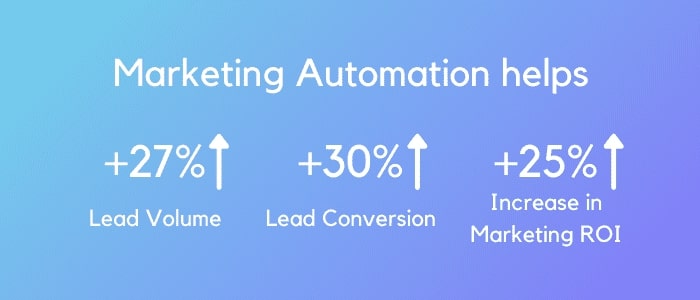
The numbers speak for themselves. Applying Marketing Automation has helped improve metrics such as:
– Lead conversion rate up 30%; leads up 27%.
– Marketing ROI improved by 25%.
– Sales opportunities up 20%.
– 85% of customer relationships managed without any human involvement.
– Marketing costs down 12.2%.
In addition, automating with Marketing Automation software helps you build a process for following up with and caring for customers at every touchpoint, so no customer issue slips through the cracks. It automatically identifies and handles customers’ needs and passes them on to the sales team.
Because it raises conversion rates, Marketing Automation helps businesses optimize both sales and marketing performance. Accurately calculated reports make it easy to measure results at each point in time and for each sales channel in every campaign. Based on those reports, a business can work out its costs, fix shortcomings, and improve its Marketing ROI.
3.2 Help Businesses Reach and Support Leads Automatically
Finding and reaching new potential customers is the single most important benefit Marketing Automation delivers. Instead of staff searching for customers by hand, Marketing Automation does it for them, produces a list of leads automatically, and nurtures those potential customers in preparation for later sales activities.
For this task, Marketing Automation uses tools that automatically collect customer data through email, actions on your website, apps, Facebook Pages, social media, and more. This lets you capture customer behavior, understand and sketch out customer insights, find their needs and wants, and see which stage of the buying journey they are in.
About 20% of your potential customers are ready to spend money on your product, while the other 80% need nurturing to move from not knowing your product -> liking it -> wanting it -> buying it. Nurturing that 80% carefully is easier to plan with an automated system. Marketing Automation takes over each manual task for you, from consulting, taking notes, and making calls to sending emails and advertising on sales channels…
3.3 Help Optimize Marketing Campaigns
Once you know the benefits of Marketing Automation, you can optimize the campaigns you are running and reach your target customers at multiple touchpoints with messages that arrive at the right time and match their needs, without spending a lot of money or time. Sending emails, SMS messages, birthday cards, promotional information, and more through automation reduces duplicate recipients, duplicate content, wrong customer names, wrong products, and other errors that can happen when the work is done manually.
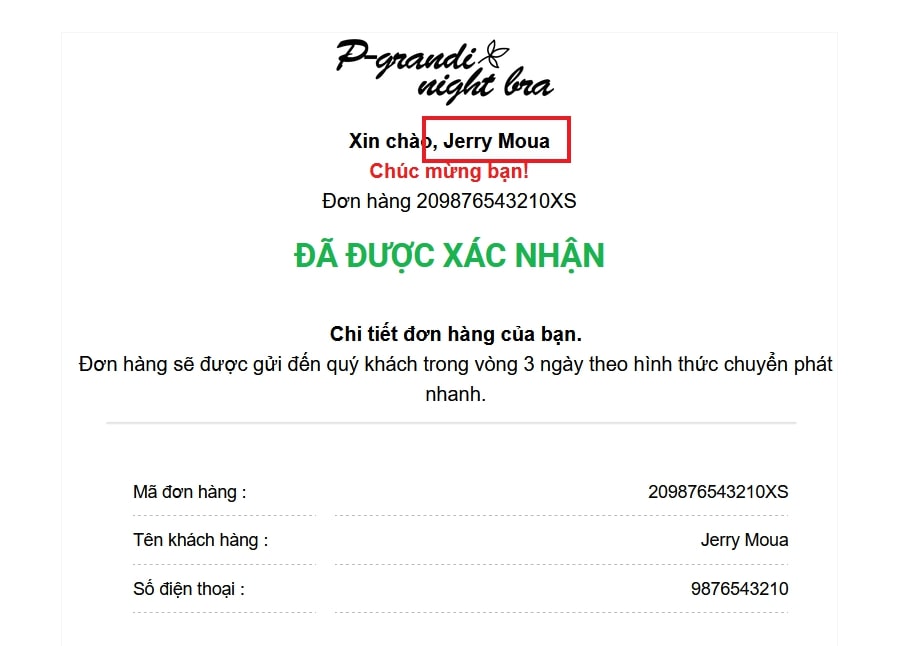
In addition, the customer insights you collect give you a fairly good understanding of customers’ needs and mindset. As a result, a business can easily roll out content with messages suited to each stage and each audience group. Marketing Automation then automatically carries out tasks such as posting on a schedule, splitting customers into groups, and running ads to the audience groups you selected…
Using Marketing Automation helps every department in a business work more effectively, especially the marketing department, while also reducing personnel costs and saving time.
3.4 Coordinate Multichannel Marketing Campaigns
Today, persuading a customer to buy takes many more stages and many more sales channels, so that you are present and engaging at every touchpoint. That is why businesses need to diversify across channels such as Facebook, YouTube, TikTok, Instagram, email, SMS, landing pages, Google Ads, KOLs, and more.
With Marketing Automation, a business can easily update content on each channel automatically, coordinate multichannel campaigns, and then track the results measured across those channels.
Beyond reaching the right people at the right time, Marketing Automation also delivers 1:1 personalized care for customers across all channels, automatically. This is known as automated personalized marketing: it turns customers into targets and nurtures them into potential customers on every multichannel platform.
Another benefit of Marketing Automation is that it produces accurate, concise automated reports that simplify your workflow. They help managers spot outstanding problems and fix them in time, for example, reports on a drop in the number of customers for a product or on the number of customers who have no need for the product.
4. Applications of Marketing Automation
Marketing Automation has quite a few effective applications, such as customer surveys, identifying best-selling products, delivering the messages you want customers to receive, cart abandonment reminders, recommending products by target audience…
Want to know where you can apply Marketing Automation? In fact, there are two main fields where it can be used:
4.1 Marketing Automation in B2B
Unlike B2C, B2B has a relatively long conversion cycle, so Marketing Automation is used for long-term goals and often requires commitment. To build trust among many people, B2B messaging has to be credible, rich in expertise, and backed by expert opinions. The message content focuses on product and brand details with full information, which is why email marketing is quite popular.
4.2 Marketing Automation in B2C
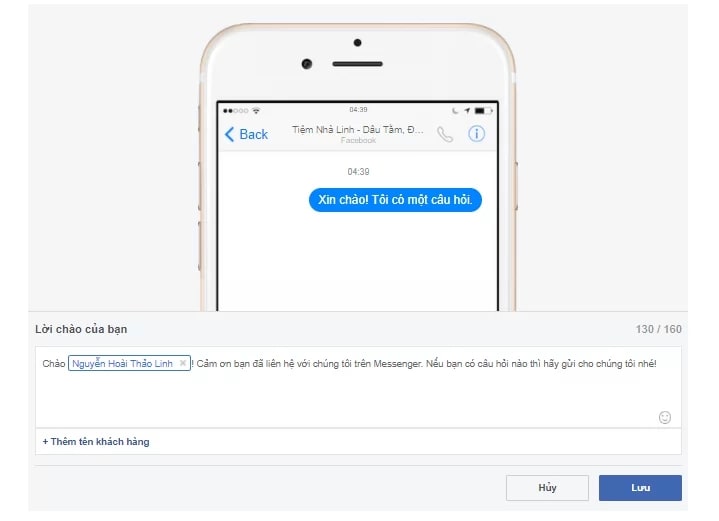
B2C customers are usually drawn in easily by messages that are simple, short, and speak directly to their psychology. So automated marketing in this field aims at generating sales quickly and building a brand that customers come back to. Here, Marketing Automation is typically used on personalized channels such as websites, Messenger, Instagram, email, SMS, and e-commerce platforms, and it mainly focuses on content such as welcome messages, cart abandonment reminders, promotional vouchers, personalized product recommendations…
5. Measurement Methods Used in Marketing Automation
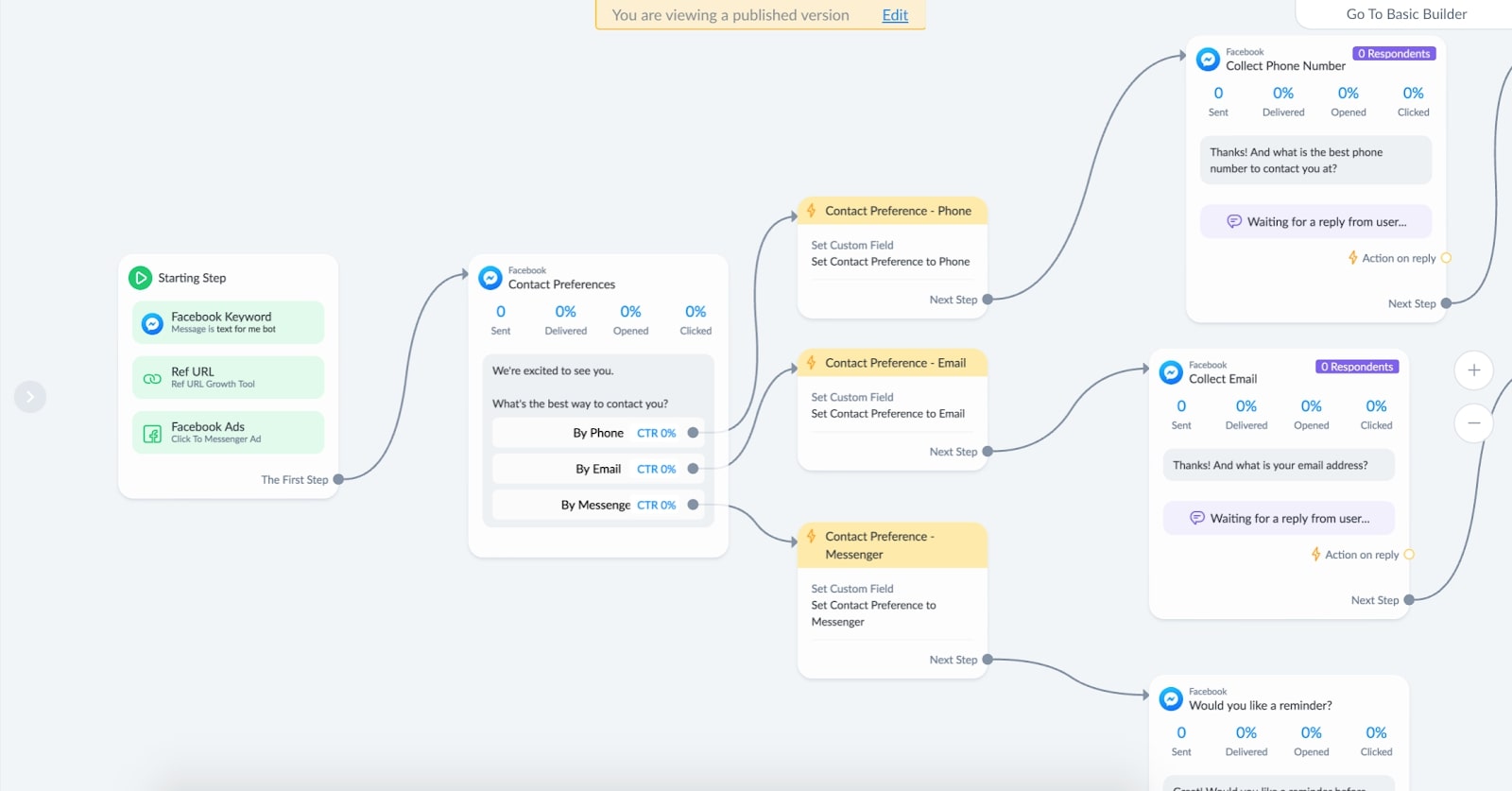
To get the most out of automation and, in particular, retain customers better, Marketing Automation relies on the following special measurement methods:
5.1 Feedback Loop and Metrics/Measurement Method
This method helps you evaluate how effectively you reach customers through automated channels. In customer feedback reports, even a lack of interest, ignored emails, or reported emails are signals worth collecting. They let a business learn how customers feel about its messages so it can change direction accordingly, or suggest promising customer groups to focus on nurturing.
5.2 User Movement Measurement Method
This approach maps users’ movements to learn which buying stage they are in and what they want when they visit your website. From there, you can steer users to the places you want them to go so they take a conversion action (buying, filling in their details, signing up…). To do this, actions should not involve too many steps, and the message must be clear and urgent without making customers feel pushed into buying.
5.3 Workflow Method
Marketing Automation delivers maximum results only when it is used in line with your workflow. Marketing Automation aims at an automated workflow that is scheduled and clearly designed, with individual tasks assigned to specific roles. As a result, the departments in a business stay closely connected and know what is happening, what comes next, and how to handle it.
6. Six Steps for Business Owners to Build a Marketing Automation Strategy
To build a solid Marketing Automation strategy with a high success rate, you need to prepare for and follow these 6 steps:
Step 1: Define Your Goals
These are what your business is aiming for, and they serve as the guiding compass for everything it does. Knowing exactly what you want (increasing revenue, expanding into new markets, raising brand awareness…) will help you set a direction and build the most feasible, fitting strategy.
Step 2: Identify Your Target Audience
Your target customers are the people you want to sell to, who also need the product and are highly likely to buy from you. That is why you need to understand users’ needs and psychology, then analyze which audience groups fit as your typical customer profiles so you can focus on them.
Step 3: Create a User Behavior Map
You can’t sell to people if you don’t know who they are, so start by sketching a “customer portrait,” using Marketing Automation to collect customer information. Dig into data such as demographics, interests, desires, income, occupation, and unmet needs to understand customer behavior. From the insights you gather, build messages that reach the right person at the right time.
Step 4: Segment and Evaluate Potential Customers
After sketching your audience, you need a list of potential customers sorted into groups, so each group gets its own suitable message. Some criteria for sorting your customer groups:
- Level of potential
- Topics they care about a lot or that are trending
- Where they live
Automation helps you segment your database so you can send personalized messages to customers. It also lets you nurture promising customers more closely, using software that scores them and triggers engagement actions, then automatically passes the potential customer data to the Sales team.
Step 5: Design a Multichannel Strategy and Aim to Automate the Entire Process
Don’t stop at a single automated channel. A business needs a multichannel development strategy to cover every customer touchpoint. Each channel has its own strengths and weaknesses, and plays a different role at different times. Combining channels based on journey analysis and customer insights will help you get the most out of automation. For each channel, a business should also set specific goals and tasks and define how the channels will work together smoothly.
In addition, don’t automate individual tasks only. Aim to automate whole processes for longer-term goals. Process automation simplifies many complex work steps, saves time, reduces the risks of handling things by hand, and cuts the cost of many activities so you can focus resources on scaling up.
Step 6: Maintain Contact Data and Evaluate Marketing Automation Results
To turn your audience into loyal customers who buy again and again, every business needs to keep a good, long-lasting relationship, with regular engagement and no gaps. Ways to stay in touch include birthday cards, surprise gifts, offers for returning customers, special perks…
The last job once your strategy is up and running is to track and evaluate the results of your marketing automation strategy. Monitor customer feedback and measure the reported data to assess performance and decide how to respond, so your advertising and marketing strategies fit as well as possible.
7. The Funnel Model: The Conversion Process Used in Marketing Automation
This is a very common principle applied across many marketing activities and other sales support activities. So what makes the funnel model special when it is applied in Marketing Automation?
7.1 What Is the Funnel Model?
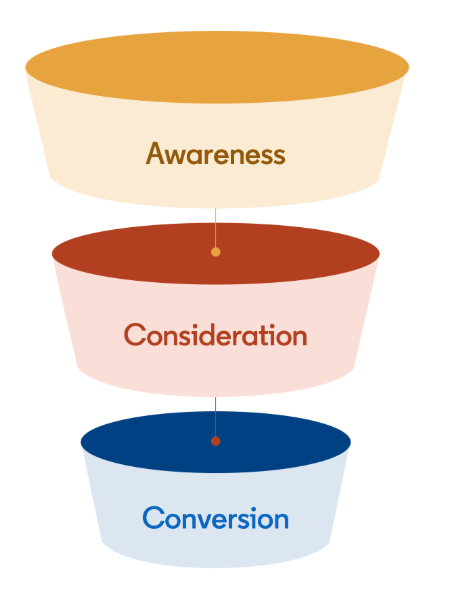
The funnel model, also called the customer buying journey, is the process of turning a stranger into a paying customer. The funnel model is usually applied following the AIDA principle, which has 4 stages:
- Attention – Capture attention
- Interest – Build interest
- Desire – Consideration
- Action – Take action
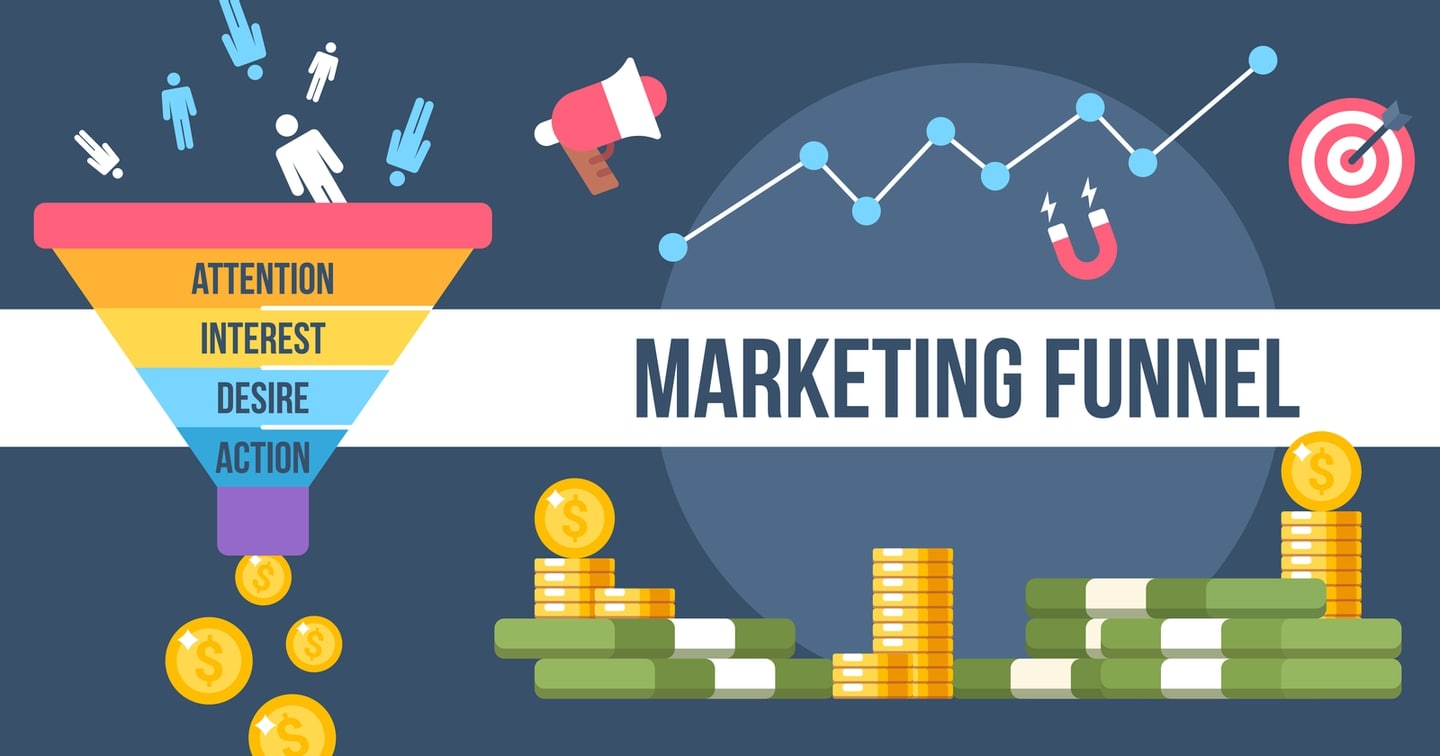
Based on human behavior, people tend to be drawn to something impressive that shows up just when they need it. They then take more interest in the product and learn more about it, weigh their options, and only finally take the action of buying. In reality, though, it is much harder, because a customer may be interested and then forget about you, or weigh their options and never act. And what is the role of Marketing Automation in the funnel model? It automatically sends reminders and keeps customers engaged effectively.
7.2 The Four Stages of the Funnel Conversion Process
– Attention – Capture attention: Starting with a new customer who is still a stranger and knows nothing about your product or brand, your first task is to reach them, make an impression, and win their attention. Messages that attract customers easily are usually impressive and eye-catching, and hit their needs and psychology, so that they start to pay attention.
– Interest – Build interest: Interest means the customer keeps learning about the product. They will like the product if it truly fits and meets their needs, for example when they:
- Want to know the product price or get a consultation.
- Sign up to try the product and judge its quality.
- Take interest actions on social media, such as liking, following, and commenting…
- Search for product information and reviews of your business on websites and the internet.
– Desire – Consideration: At this stage, customers like the product and want to own it but haven’t made a decision yet. They may still be weighing it and comparing it with many competitors, but at least your product still has a potential chance of being bought.
– Action – Take action: After weighing their options, they decide to take a conversion action (buying, signing up for a trial, becoming a member, filling in their details…). This is a sign that the customer trusts you and that your marketing process has succeeded.
Typically, the conversion rate at this final step falls at around 1-5% of the customers you attracted. Of course, this is unavoidable, but you can still keep customers coming back to buy and turn them into regular customers.
8. A Real-World Example of Applying Marketing Automation
Below is an example of applying an automated Email Marketing process using software:
- Step 1: A welcome email series when a customer visits your website and signs up as a member.
- Step 2: A welcome email series for new customers, with an introduction and guidance to help them get familiar with the system.
- Step 3: Activate the customer’s account, and optionally send a bonus offer along with it.
- Step 4: Abandoned cart reminder emails or related invitations to keep the customer engaged.
- Step 5: When the customer agrees to convert in step 4, the system immediately sends a notification to the sales team so they can continue nurturing this potential customer.
Automated emails make it easy to build a list of potential customers, sort customers into groups, and automatically send messages to a large number of customers at a very low cost. In addition, automated emails show professionalism and respect for customers, and make it easier to earn their trust, which encourages future purchases.
9. Common Misconceptions About Marketing Automation
Marketing automation is becoming more and more popular around the world, especially among large businesses and B2B companies. Still, many misconceptions about Marketing Automation persist, such as:
9.1 Marketing Automation Lacks a “Personalized” Feel
You might think a machine can’t be as “thoughtful” as a person doing the work by hand. That isn’t true, because an automated system can still easily analyze your behavior, segment different audiences, and send them the most suitable messages. That said, to get that “personalized” feel right, you need suitable, engaging content with a message that captures the right customer insight.
9.2 Marketing Automation Is Spam
You may be confusing automatically sent messages with spam because they go out frequently and continuously without being welcomed. Marketing Automation is different. Beyond its advertising and marketing purpose, Marketing Automation targets exactly the right audience with specific goals. In particular, Marketing Automation shows personal attention and delivers real value to each target customer rather than going out to the masses.
9.3 Marketing Automation Is Just Email Marketing
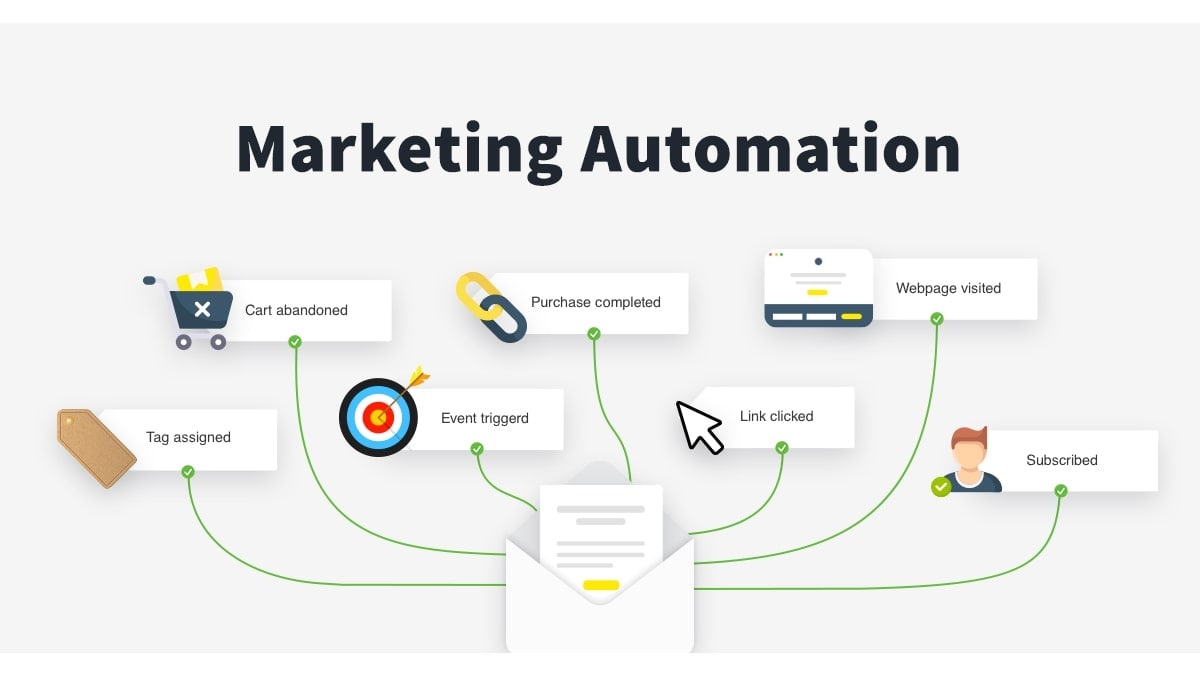
Don’t be mistaken. Marketing Automation has many other versatile elements with broad potential, not just Email Marketing. Each component has its own strengths and weaknesses, but if you know how to use them, they deliver optimal results. Other elements of Marketing Automation include SMS, landing pages, Google Ads, customer information management software, internal management software,…
9.4 Not Doing Further Research After Setting Up Marketing Automation
Although it is an automated tool that runs by itself, it still needs human hands behind it to manage and steer it, to avoid errors and make sure the automated process runs effectively and for the right purpose.
To do that, once your Marketing Automation campaign has started, you need to monitor and study the data it reports back, keep updating new information, and filter it… This observation helps a business see the strengths it can push further, spot the problems it faces and respond in time, and adjust its strategy accordingly.
>>> You can learn more about:
Conclusion
With its boundless potential, Marketing Automation promises to be a powerful assistant and a tool well worth investing in and applying to your business. Today, however, the number of businesses that know about and successfully use Marketing Automation is still very small. Most use it only for personalized Email Marketing Automation, which doesn’t bring in much profit.
Businesses can also automate on their own with Marketing Automation using basic software. It is more professional, however, to choose the full-service marketing solutions from The7. The7 has leading marketing experts, a highly experienced team of specialists, and professional support tools. We will help you apply Marketing Automation to promotion, marketing, and sales strategies that perform, and we are committed to delivering the revenue you expect.
Don’t hesitate to contact us when you need marketing services:

Nguyễn Đình
Bảo




As CEO of The7, I am committed to sharing practical, useful knowledge with every reader. Every article on The7 is based on my 7 years of hands-on experience in marketing — Facebook advertising, LinkedIn advertising, Google advertising, and marketing strategy. I hope you take away plenty of insight from these posts and apply it successfully in practice.
Related Articles
Building a Full-Funnel Content Marketing Strategy on LinkedIn
Table of Contents Toggle Why Build Content Marketing for the Full Marketing Funnel? (Why Full-Funnel Content Marketing?)Creating Your Strategy (Creating Your Strategy)Implementing Your Content Strategy (Rolling out your content strategy)Summary...
Designing Creative Content for LinkedIn
Table of Contents Toggle Why Is Good Creative Content So Important? (Why is Good Creative Important?)Key Components of Creative Design (the core elements of creative design)Summary (summary) Why Is Good...
Building an Organic Business Presence on LinkedIn With a LinkedIn Page
Table of Contents Toggle Why Have a LinkedIn Page?Establishing Your LinkedIn PageKeeping Your LinkedIn Page ActiveThe Measure of SuccessSummary About LinkedIn Page (Summary) Why Have a LinkedIn Page? For a...
6 Best LinkedIn Marketing Strategies for B2B in 2026
Table of Contents Toggle LinkedIn 2026: Where B2B Decisions Get MadeStrategy #1 – Why Is LinkedIn the Best B2B Marketing Channel Today?1. Decision-makers are concentrated here2. Users are in work...

7 Social Media Trends for 2026: The Era of Real Value, Real Conversion, and Real People
Table of Contents Toggle Social media is entering the biggest restructuring of the decadeTrend 1: Why is buying directly in-app becoming the new standard for 2026? (On-Platform Conversion)What should businesses...

What Is TikTok Marketing? Effective TikTok Marketing Strategies
TikTok has been topping the global rankings of the most downloaded and most visited apps. That makes it a gold mine for marketers who love creativity. In this article, The7...