


What Is Inbound Marketing? A Complete A-Z Guide
The term “Inbound Marketing” was coined by HubSpot, and it has become a new marketing trend in the modern economy. The mission of inbound marketing is to create value that draws users to your business and then turn them into customers. So what exactly is inbound marketing, and how is an inbound marketing strategy carried out to achieve that? The7 answers all of these questions in this article.
What Is Inbound Marketing?
Inbound marketing is a strategy that combines a variety of marketing activities across deliberately chosen, selective channels. Through an approach of attracting and guiding people toward conversion, it aims to grow revenue and build a lasting brand for your business on the internet. Whether you are a large enterprise or just a small business, inbound marketing can help you achieve 10x growth in the following areas:
- Website traffic (visits)
- Conversion of traffic into potential customers
- Higher sales
- Greater brand interest and trust.
Best of all, the low marketing investment required may surprise you. In short, inbound marketing is the process of creating high-quality, useful content (website content, blog content, document content, …) that meets users’ needs. You then combine a range of other marketing tools to turn those users into customers. In other words, the key component of this process is Content Marketing.
The journey from a user with a need to a customer happens voluntarily, without being bothered by spam. Inbound marketing reaches customers at every stage of their buying journey.
- Users with a need or a problem to solve search for information about the products and services they require.
- They start comparing brands before making a purchase.
- Businesses provide useful information and create value to nurture users and persuade them to choose their products.
What Are the 5 Main Stages of Inbound Marketing?
Running an inbound marketing strategy that carries customers all the way from attraction to a successful conversion is not easy. At each stage, you need to know which tools to use and how to combine them to achieve the best results.
Attract Website Visits
At this introductory stage, attract people’s attention rather than forcing it. This is the time to draw visitors in with plenty of high-quality, useful content, and to remove the barriers that stand in the way when customers are trying to learn about your business, so they can find your brand more easily.
This happens by creating quality, engaging content for the right people. The key metric to track at this stage is the monthly growth in website traffic. To attract visits, there are several activities worth investing in, such as:
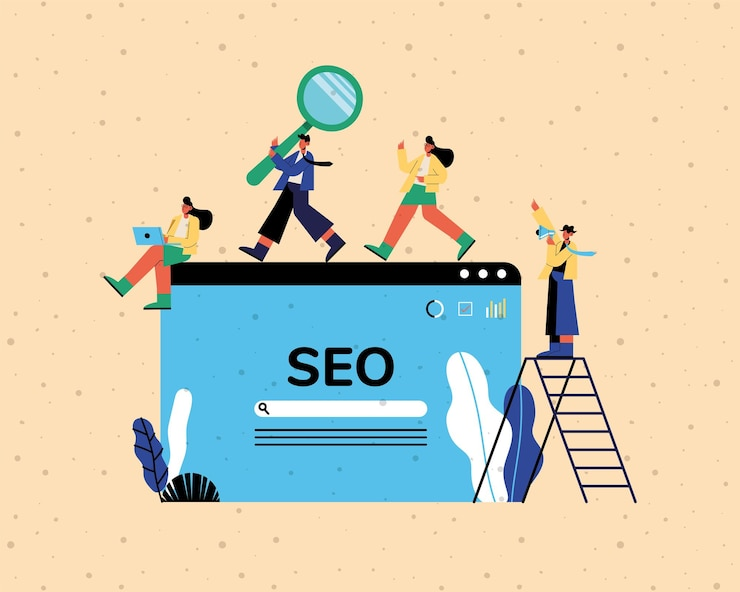
Search engine optimization (SEO)
Start by carefully researching which sets of keywords your potential customers are searching for. Then optimize for them using the standard SEO process applied in keyword SEO service projects. That way, customers can easily find your website on Google among countless other sites.
Invest heavily in useful content
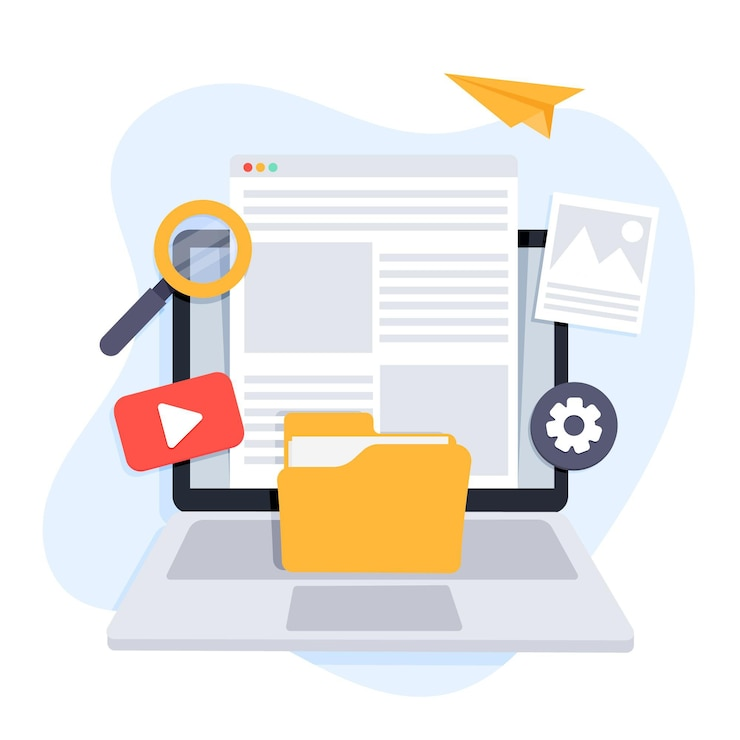
Creating useful content for users for free through blogging is also a core online marketing solution for driving traffic to a website. So it is no exaggeration to say that Content Marketing is considered the heart of inbound.
Expand campaign reach across media channels
Promote your campaigns on social media channels such as Facebook marketing, YouTube, or other social channels where your customers are present, so you can quickly deliver the most useful content to them.
The result of the Attract stage is that your customers form a good impression of your brand. From there, they willingly “get involved” with you and move on to the Engage stage: deeper connection and interaction.
Transformation – Customer Conversion
However, attracting visitors to your website is not enough. Encourage people to take action with calls to action such as subscribing to a newsletter, filling out a registration form, or an offer of a free trial… so they engage with your business more. That way, you can increase the chances of converting visitors into potential customers and, ultimately, into actual customers.
Marketing Automation
The goal of this stage is to rely on automated systems to communicate with leads until they become real customers. Some marketing automation techniques you can use include:
- Lead Scoring: the process of assigning a value to each lead so the sales team can reach out first to the leads who need attention soonest, while filtering out the lowest-scoring leads so no time is wasted on prospects with little potential.
- Lead nurturing: Based on the score a lead has earned and their characteristics, you design a series of automated flows that send information relevant to their needs.
Build Brand Loyalty
Converting leads into actual customers is still not the final step. The next step is to keep those customers with you for as long as possible through customer loyalty strategies, such as website newsletters, special offers, and after-sales service… This is highly beneficial for a company, because retaining a customer costs far less than winning a new one from scratch.
Measure Results and Track Progress
No inbound marketing strategy is complete and effective without a plan for measuring and analyzing results. For every stage, track your progress. Measure customer expectations, leads, and actual customers on each channel over time, along with the conversion rate… That way, you can identify which programs are working and should continue, and which should be dropped to save time and money.
How Much Does Inbound Marketing Cost?
How much does inbound marketing cost? It depends on how much budget your business has to invest. Here are 7 inbound marketing costs businesses can consider:
- Time
- Strategic planning and its costs
- Spending on marketing software such as Infusionsoft, HubSpot, etc.
- Website design costs, with several options to choose from: A business can buy a premium theme for about $200 and do the work itself. If you crowdsource the web design through platforms such as 99Designs, prices range from $599 to $2,499.
- Content creation costs
- SEO optimization
- Social media
- Cost per click
Those are all the costs of inbound marketing. It is worth considering your financial resources so you can put together an inbound strategy that fits and delivers strong results!
What Is the Difference Between Outbound Marketing and Inbound Marketing?
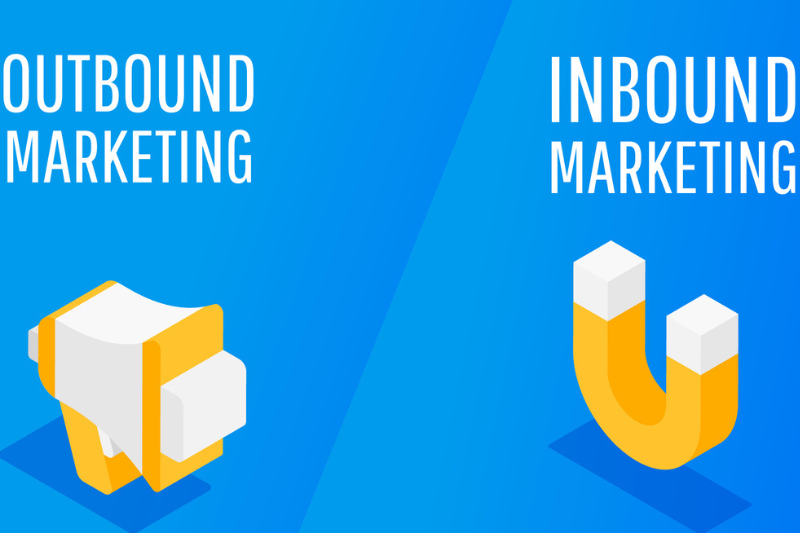
To understand how outbound marketing and inbound marketing differ, let’s first take a quick look at what outbound marketing is.
Outbound marketing is a traditional marketing method that proactively pushes attention-grabbing messages to potential customers. Outbound marketing includes activities such as:
- Organizing trade shows
- Running a series of seminars
- Placing billboards
- Sending mass sales emails to email lists of data purchased on the internet
- Printing and distributing catalogs
- Advertising on radio and television.
- Making sales and telemarketing calls
Outbound marketing has fallen out of favor over the past 10 years. Internet saturation has led users to start ignoring display ads and using ad blockers.
Compared with inbound marketing, outbound marketing is still a common approach for many businesses, especially in e-commerce. However, the two strategies differ in many ways, and The7 points out a few of the basic factors below.
How You Interact With Users
- Outbound marketing: Businesses proactively send one-way messages to users. As a result, users are forced to receive the information even if they are not interested in it.
- Inbound marketing: In contrast to outbound, inbound marketing starts from the user’s needs. This creates a two-way interaction.

How Content Is Delivered
- Outbound marketing: This type of marketing typically focuses on delivering information directly related to the product or service (80%), with the remaining 20% being useful content.
- Inbound marketing: By contrast, inbound marketing is centered mainly on the user. Only 10 – 20% of the content is basic product or service information; the rest goes mainly into developing useful content and nurturing leads.

Purpose
- Outbound marketing: The main purpose of outbound marketing is to find customers. It focuses only on getting attention by messaging customers directly, without knowing whether they have a need. Businesses then filter and search for potential customers.
- Inbound marketing: The purpose of inbound marketing is to attract customers who need a service or product and who proactively come to the business.
Inbound marketing and outbound marketing are two different approaches, each optimal for particular goals and industries:
- Outbound marketing: fast conversions and easy to execute, but the moment you stop advertising, the leads dry up
- Inbound marketing: takes time to set up and to nurture relationships with customers before they convert
It may sound like you would love to do outbound, but for premium or high-impact products such as real estate or study abroad programs, is outbound marketing enough to persuade buyers? On the other hand, for goods where the purchase decision depends on taste, with a short life cycle and low value, such as fashion, is inbound marketing really the right method?
No single method is perfect for every problem. You can combine both outbound marketing and inbound marketing in your business strategy, or you can use just one of the two. The only thing that matters is fit!

>>> You can also learn more about:
- Affiliate marketing
- Social media marketing
-
SEM (Search Engine Marketing)
What Is the Most Effective Way to Apply Inbound Marketing?
Although inbound marketing has more advantages than outbound marketing, you should not drop outbound entirely. Instead, combine the two. Each approach has its own strengths: outbound marketing reaches customers on a wide scale and increases brand awareness, while inbound marketing is selective and reaches the right potential customers. Combining inbound and outbound marketing therefore creates the greatest possible synergy.
Distribute Content With Outbound and Inbound Marketing
The content you create on your website may be compelling and engaging, but if no one reads it, it has no value. That is why you need an appropriate content distribution strategy to promote it to potential customers.
SEO (a form of inbound marketing) is the way to deliver your content to exactly the customers you most want to reach. However, if your website is not strong enough to push your content to the top, or your articles are engaging but do not contain keywords for SEO, you need to add outbound marketing to get more content out and reach more people:
- Ask your sales staff to introduce articles on your website.
- Run ads for a piece of useful content on social media to spark customers’ needs.
- Advertise on Google to increase traffic to your website.
With the outbound marketing methods above, more and more people will come to know your website. And when traffic or brand interest grows, that is when you can roll out effective inbound marketing activities.
Have a Friendly Website and a Professional Sales Team
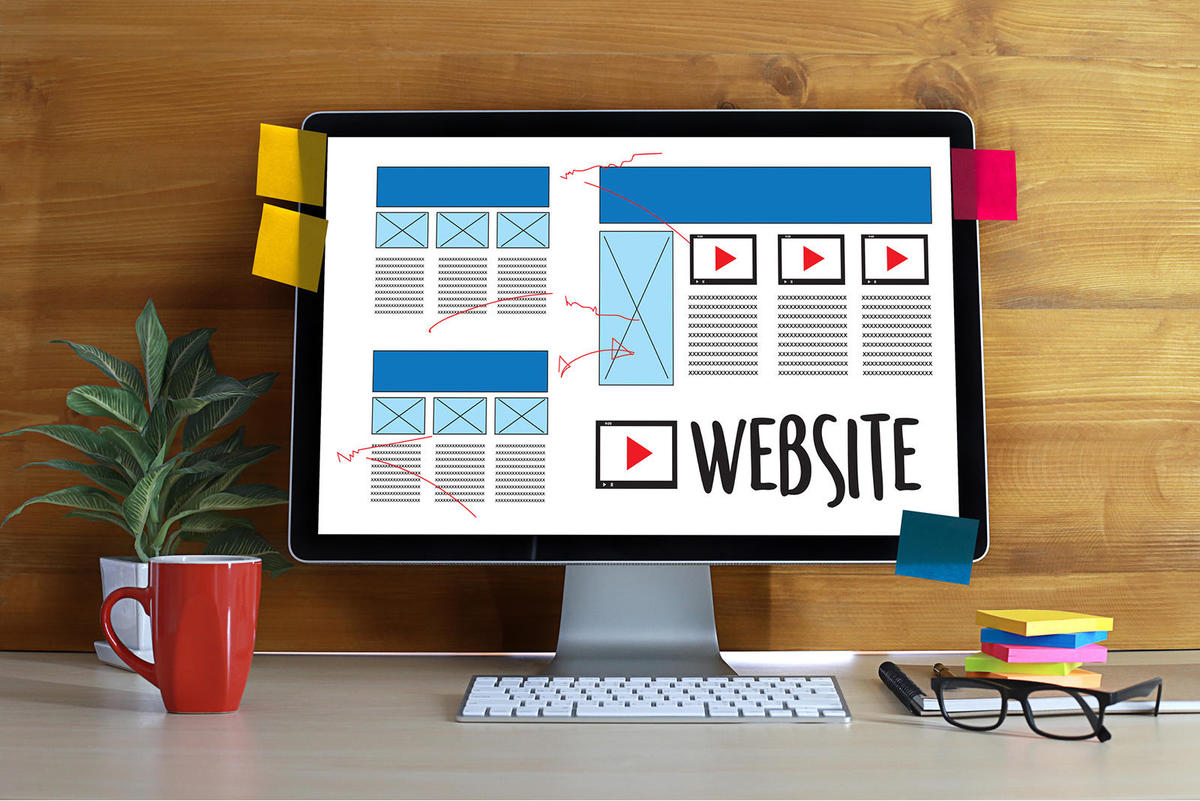
Building a user-friendly website keeps your business visible whenever customers look for information. Part of the website nurtures customers, but it also generates leads quickly. When users genuinely need a product, they will browse your website and leave their contact information. However, in some urgent cases where the inbound marketing system cannot generate an order or capture leads, telesales is the team ready to step in and help in time.
So in addition to building and optimizing your website to Google’s standards, you should also strengthen your salespeople’s ability to proactively look for customers, so they can respond in time when no orders come in from inbound marketing.
Don’t Forget Website SEO and Advertising
Forms of advertising such as outdoor banners, Google Display, Facebook Ads, etc. are harder than inbound marketing at reaching customers with the right needs, but they are quite effective at increasing brand awareness. That is why you need to combine advertising with website SEO, the most accurate and sustainable way to reach potential customers and bring them in as leads.
Outdoor advertising, television advertising, and other online advertising formats help customers remember and get a feel for your brand. However, a purchase decision is hard to make right at this moment, when customers are only starting to remember your product. When a need arises, customers find it hard to track those ads down, so they start searching for information on Google. Now it is time for SEO to start doing its job:
- SEO brings your website to the top of Google search results.
- It quickly reaches the right target customers, and combined with customers who have already seen your brand, it is easier to get them to click on your content.
- With engaging, compelling, and valuable content, customers will stay and convert on your website.
Coordinating inbound and outbound marketing makes a business’s marketing campaign more complete. It helps build a strong brand while bringing in more high-quality leads.

Build and Nurture Strong Customer Relationships
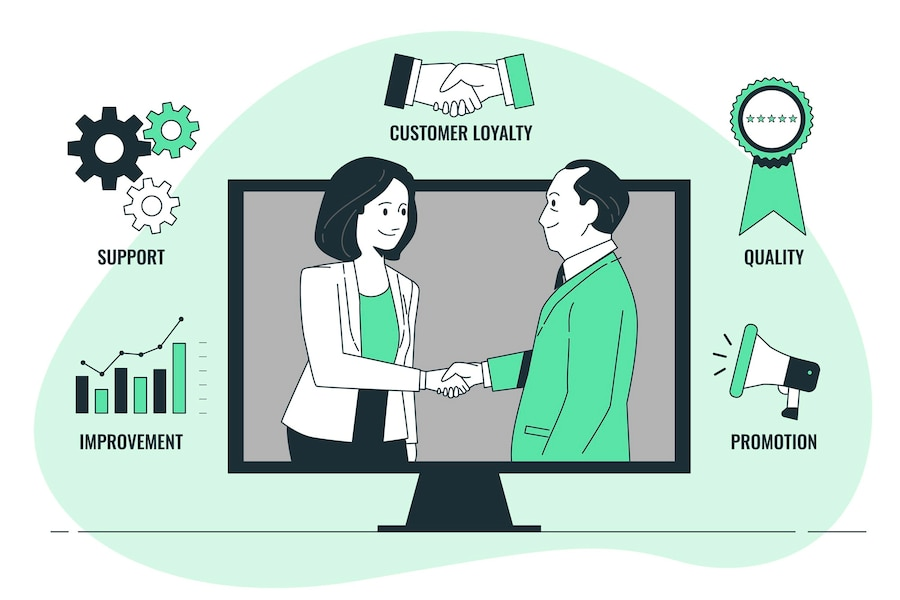
One of the fundamentals of inbound marketing is building trust and nurturing customer loyalty, rather than focusing only on promoting products and the brand. In particular, making customers feel respected is essential in inbound marketing. This drives and strengthens close relationships with customers. That is why an inbound strategy needs to deliver real value: Why should consumers buy from you? What makes you different from other brands? Where are your strengths?
Prioritize Quality and Relevance, Not Trends
Many businesses, eager to grow revenue and brand reach, try to approach many different customer groups. The truth, however, is that only a very small share of customers actually need the products and services you sell.
That is why, before launching an inbound marketing campaign, you must understand your business and the audience you are targeting: Where are your potential customers? What do your existing customers have in common? What do you learn from researching their needs, interests, and challenges, as well as their demographics? This will help you optimize time and cost, and align campaign content and goals with your target audience.

Create Diverse Content
What sets inbound marketing apart is content that is genuinely useful to users and meets their needs, rather than promotional content focused only on the product or brand. That is why businesses need to invest in a truly professional way to create high-quality content that engages viewers, such as videos, blogs, ebooks, and feedback from past customers.
You should also personalize your content to reach and attract your target customers to your brand. Research and choose the channels that best ensure you reach your target audience. Post on social media, post on bookmarking sites, and be present in relevant forum communities to help your business build a reputation and earn trust across many markets.
Conclusion
In practice, inbound marketing and outbound marketing each have their own strengths and weaknesses. No method is perfect enough to be a universal “formula for success” for every brand. Whether you apply them independently or combine both, the most important thing is for your brand to stay close to consumer behavior and let it guide every marketing activity.
We hope that after reading this article, you have a clearer understanding of what inbound marketing is. If your business plans to build a content system around inbound marketing, contact The7 for more specific guidance! The7 also offers a range of full-service marketing solutions and is always ready to accompany your business in growing your brand and breaking through on revenue:

Nguyễn Đình
Bảo




As CEO of The7, I am committed to sharing practical, useful knowledge with every reader. Every article on The7 is based on my 7 years of hands-on experience in marketing — Facebook advertising, LinkedIn advertising, Google advertising, and marketing strategy. I hope you take away plenty of insight from these posts and apply it successfully in practice.
Related Articles
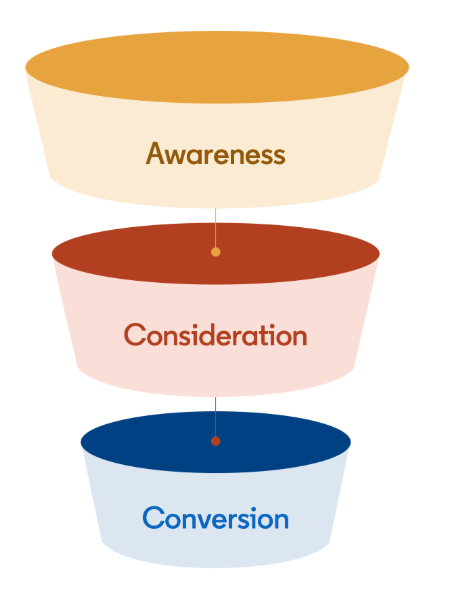
Building a Full-Funnel Content Marketing Strategy on LinkedIn
Table of Contents Toggle Why Build Content Marketing for the Full Marketing Funnel? (Why Full-Funnel Content Marketing?)Creating Your Strategy (Creating Your Strategy)Implementing Your Content Strategy (Rolling out your content strategy)Summary...
Designing Creative Content for LinkedIn
Table of Contents Toggle Why Is Good Creative Content So Important? (Why is Good Creative Important?)Key Components of Creative Design (the core elements of creative design)Summary (summary) Why Is Good...
Building an Organic Business Presence on LinkedIn With a LinkedIn Page
Table of Contents Toggle Why Have a LinkedIn Page?Establishing Your LinkedIn PageKeeping Your LinkedIn Page ActiveThe Measure of SuccessSummary About LinkedIn Page (Summary) Why Have a LinkedIn Page? For a...
6 Best LinkedIn Marketing Strategies for B2B in 2026
Table of Contents Toggle LinkedIn 2026: Where B2B Decisions Get MadeStrategy #1 – Why Is LinkedIn the Best B2B Marketing Channel Today?1. Decision-makers are concentrated here2. Users are in work...
7 Social Media Trends for 2026: The Era of Real Value, Real Conversion, and Real People
Table of Contents Toggle Social media is entering the biggest restructuring of the decadeTrend 1: Why is buying directly in-app becoming the new standard for 2026? (On-Platform Conversion)What should businesses...
What Is TikTok Marketing? Effective TikTok Marketing Strategies
TikTok has been topping the global rankings of the most downloaded and most visited apps. That makes it a gold mine for marketers who love creativity. In this article, The7...