


What Is the 7Ps Marketing Mix? How to Apply the 7P Model Step by Step
In today’s fiercely competitive market, applying a sound, comprehensive marketing strategy is the key to every business’s success. In particular, the 7Ps of Marketing model, which covers Product, Price, Place, Promotion, People, Process, and Physical Evidence, has become an indispensable tool that helps businesses seize opportunities and meet challenges head-on.
This article takes a close look at each element so you can apply the 7P model effectively and build a lasting competitive advantage for your business.
Explore the services of The7, a marketing services company
What Is the 7P Model in Marketing?
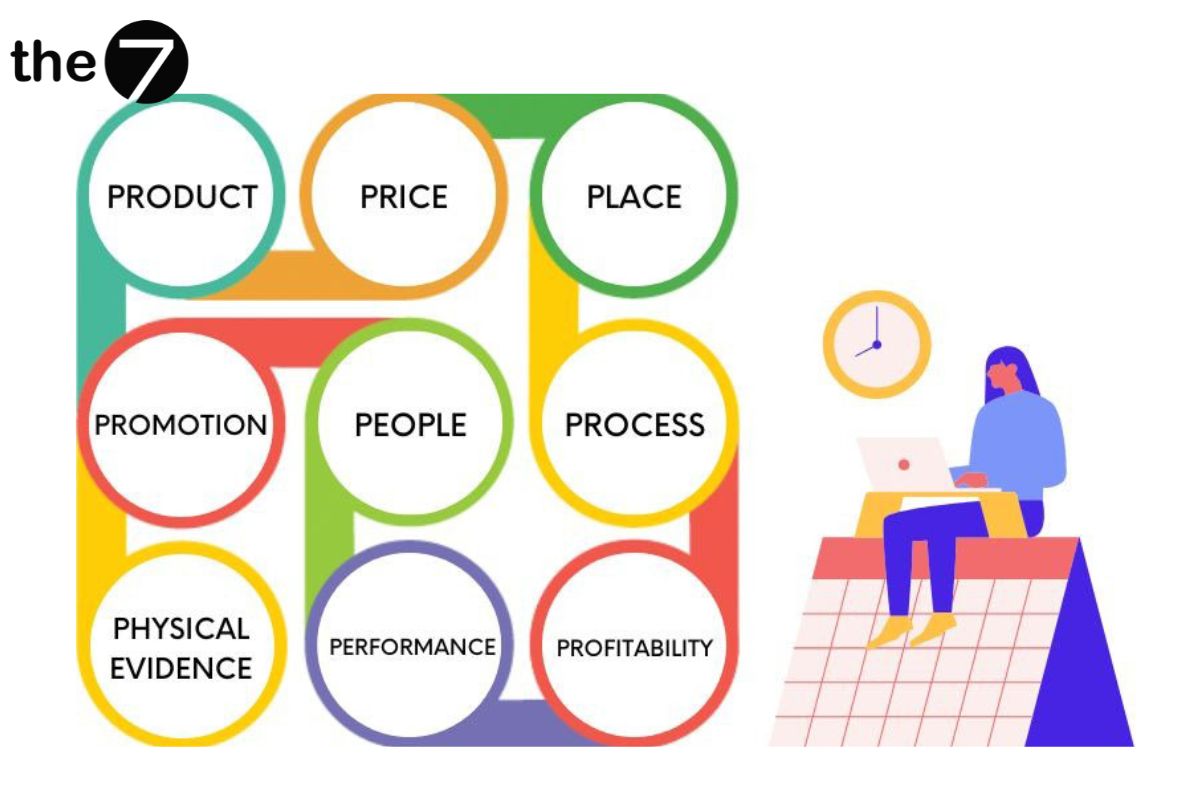
The 7Ps are an important part of the marketing mix strategy that businesses use to promote their products or services to a potential market. The 7P marketing model includes these elements: Product, Price, Place (distribution channels), Promotion, People, Process, and Physical Evidence.
The 7Ps marketing model was originally proposed by E. Jerome McCarthy in 1960 in his book “Basic Marketing.” It is an upgraded version of the traditional 4Ps model (Product, Price, Place, Promotion), which was widely used in marketing physical goods.
The difference between the 4Ps and the 7Ps:
- 4Ps: Focus on the product and the marketing activities for that product.
- 7Ps: Extend the scope to service-related elements, including people, processes, and physical evidence.
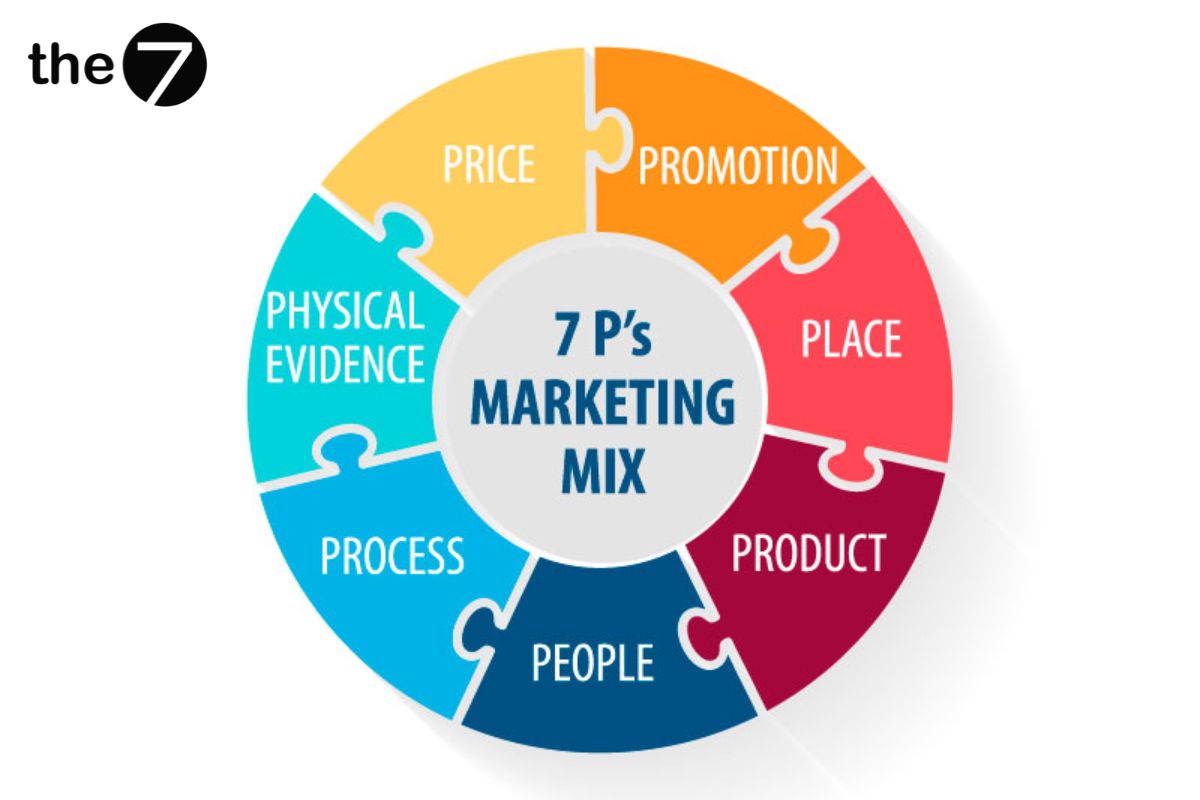
To help you understand the 7P marketing mix better, The7 will walk through each of these elements in depth:
Product
The “Product” element of the 7P marketing model is considered one of the most important. It covers every aspect of the products and services a business offers. It focuses mainly on meeting customers’ needs and wants while setting the business apart from its competitors.
The aspects of the “Product” element include:
- Core product: The basic product or service the business offers.
- Features and benefits: The characteristics and benefits the product or service brings to customers.
- Product line: The different products and services the business offers.
- Brand: The image of the product or service and how customers perceive it.
- Warranty and customer service: The support services the business provides to customers.
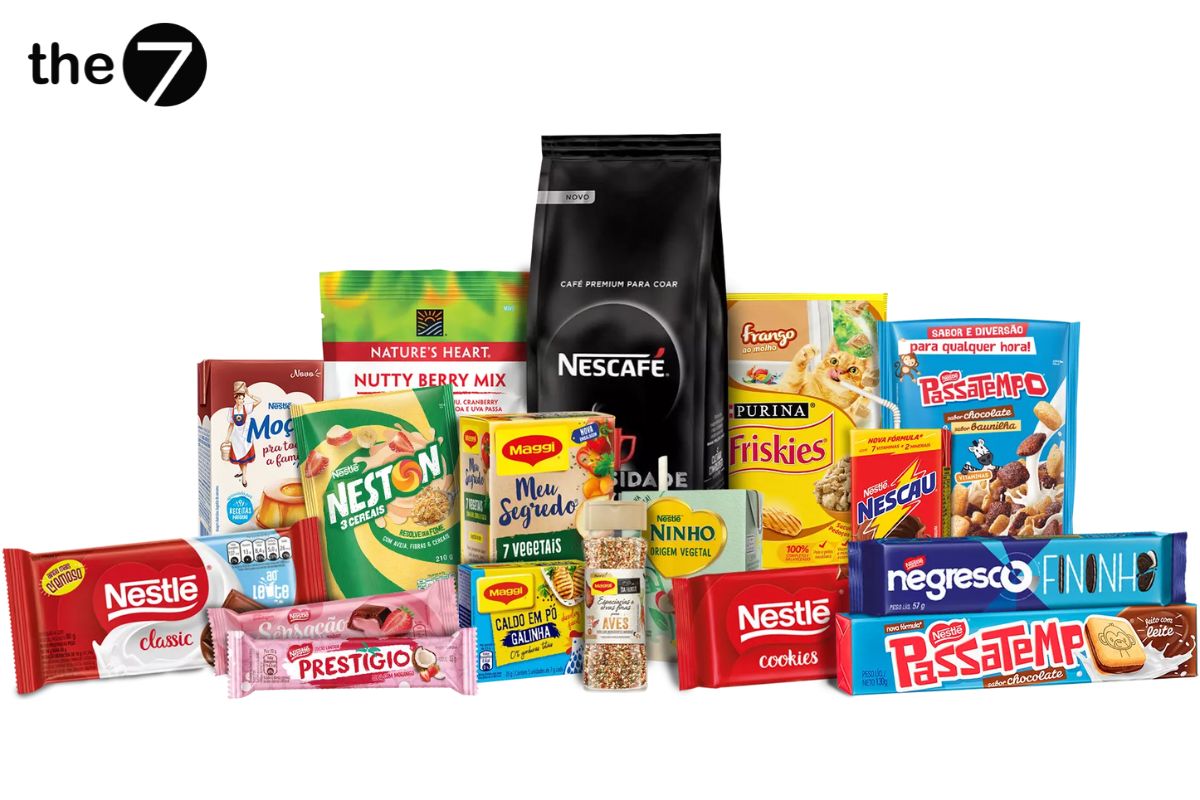
Product strategy is an important part of the overall marketing plan. It should be built on market research to make sure the product or service meets the needs of your target customers.
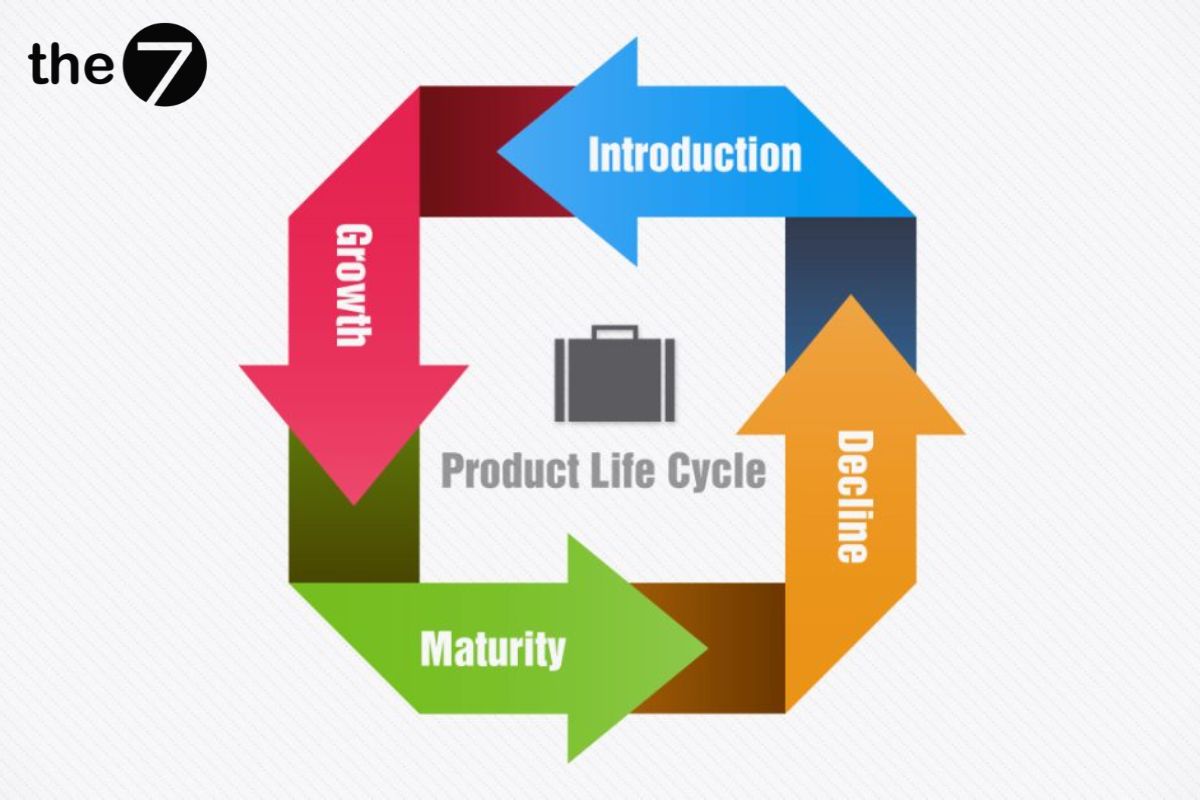
Every product goes through a life cycle of four stages:
- Introduction stage
- Growth stage
- Maturity stage
- Decline stage
In business, it is important to find ways to improve your product and stimulate customer demand once it reaches the decline stage. At the same time, create bundled products, diversify, or expand your product line to stay appealing and to meet the market’s varied needs.
Companies need to find out what buyers want from a product. To meet these requirements well and grow revenue at the same time, you need to raise the quality of your product. Make sure what you produce meets demand and keeps pace with the consumer trends the market is moving toward.
In short, marketers should ask themselves what it takes to deliver a quality product that is better than the competition’s.
Price
The “Price” element of the 7P marketing model is the amount of money customers have to pay to own a product or service from a business. Price plays a vital role in the marketing mix and directly affects a business’s revenue and profit. It can also work as a marketing tool that sets you apart from competitors, drives your marketing strategy, and boosts sales.

Pricing decisions should be based on several factors, including:
- The value of the product or service to customers: This means assessing how much customers will pay to get the best value from the product or service.
- Production and distribution costs: Calculating production and distribution costs is essential for determining the price a business can offer.
- The level of competition in the market: Understanding the competitive landscape helps a business set a price that is competitive and fits the market.
- The business’s marketing goals: Your pricing strategy must also be closely tied to the company’s overall marketing goals.
Common pricing strategies in marketing include:
- Market penetration pricing
- Price skimming
- Product line pricing
- Psychological pricing
- Combo (bundle) pricing
- Competitive pricing
- Promotional pricing
- Segmented pricing
- Geographic pricing
- Dynamic pricing
Each of these strategies has its own advantages, and each should be applied flexibly to suit the specific characteristics of your product and target market.
Place
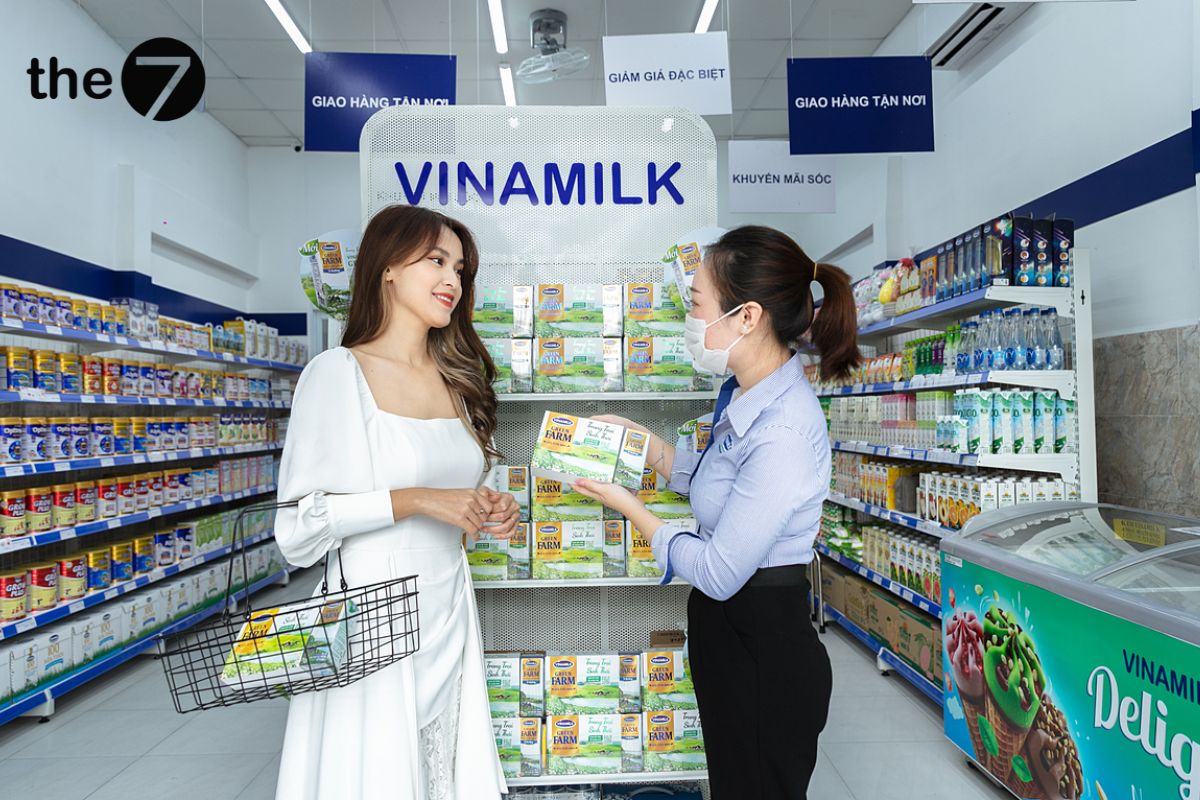
This is the “where” of the buying process. It can be a physical store, or it can happen through an app, a website, or social media. Some businesses own a physical space or an online presence to offer products and services directly to customers, while others may need to partner with intermediaries that have locations, warehouses, and/or sales specialists to support distribution.
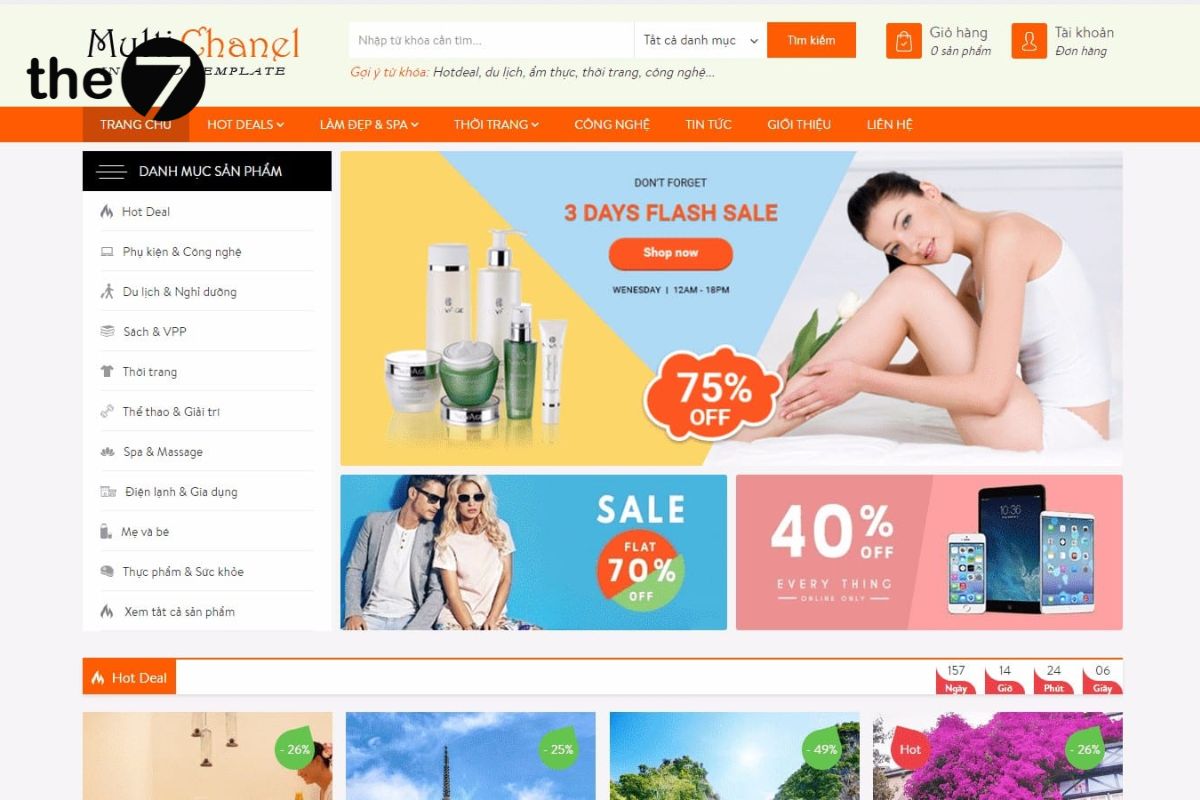
Decisions in this element of the marketing mix involve choosing which intermediaries (if any) will take part in the distribution chain, as well as logistics steps such as warehousing and shipping that get the product or service into the hands of the end customer.
- Distribution channels: Through which channels will the business deliver its products or services? These can include retail stores, agents, distributors, or online sales, and more.
- Location: Where will the business set up its retail points? Choose locations that are convenient for customers to reach.
- Logistics system: A business needs a logistics system to store products and services and deliver them to customers.
The “Place” element plays an important role in making sure your products or services can reach your target customers. A business needs to choose distribution channels that suit the characteristics of its product or service, and pick retail locations that are convenient for customers.
Today, there are five popular distribution strategies:
- Intensive distribution
- Exclusive distribution
- Deep (specialized) distribution
- Selective distribution
- Franchising
Each of these strategies brings its own benefits and should be applied flexibly to suit the specific characteristics of your product and target market.
Promotion
In the 7P marketing model, the “Promotion” element refers to the specific activities used to promote and market a product or service to the target customer. It is not limited to advertising. It also includes communication and public relations strategies that build awareness, create motivation, and increase customers’ interest in the product or service.
Promotion activities can be broken down further:
- Advertising: Using a range of mass media to deliver messages about the business’s products and services to customers. This can include advertising on TV, radio, newspapers, social media, and websites.
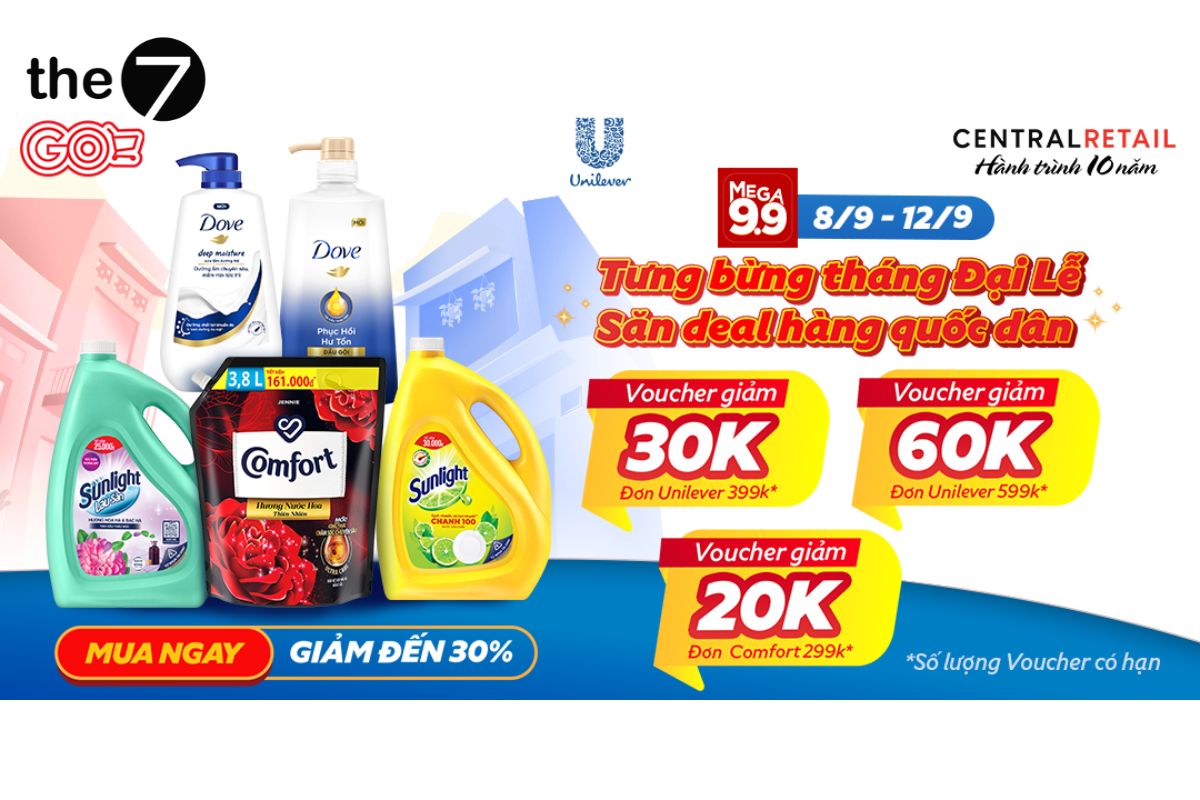
- Promotions: Running promotional programs such as discounts, gifts, or special offers to attract attention and encourage customers to buy.
- Public Relations: Building and maintaining positive relationships with stakeholders such as customers, partners, and investors to promote and protect the brand image.
- Sales Promotion: Running activities directly at the point of sale, such as discount programs, free gifts with purchase, or special offers, to encourage customers to buy right away.
The “Promotion” element not only plays an important role in raising awareness of a business’s brand, products, and services, but also contributes greatly to driving sales and generating positive engagement from customers.
Promotion in the 7P marketing strategy consists of four components:
- Sales organization.
- Advertising, incentives, and promotions.
- Public relations.
- Sales promotion.
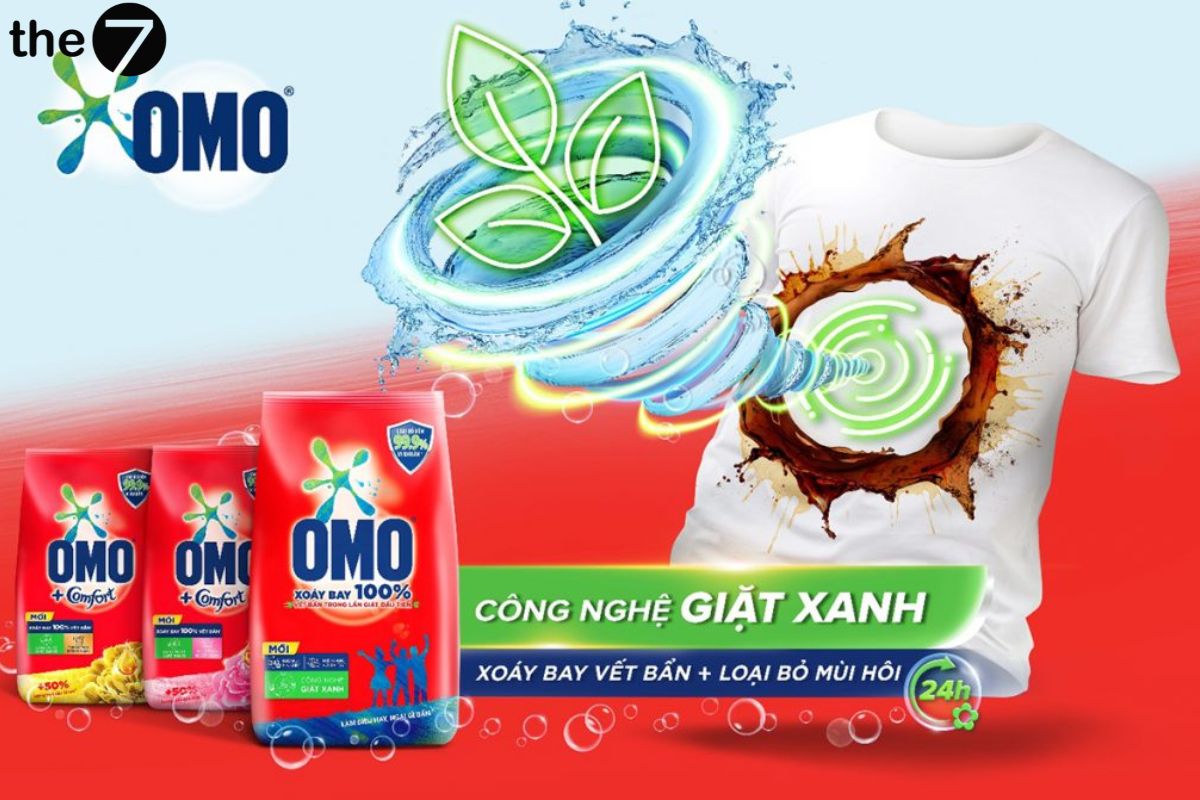
Advertising covers paid communication channels such as radio, TV, print media, and the internet. Its goal is to bring a business a large number of customers in a short time.
Today, however, most marketing resources go into online advertising. The right mix of promotion strategy and advertising approach depends mainly on the company’s budget, its target market, and the brand message it wants to convey.
People
The “People” element of the 7P marketing model refers to the individuals who take part, directly or indirectly, in a business’s operations, including:
- Sales staff: These are the people who deal with customers directly and present the business’s products and services. Their attitude, skills, and knowledge have a major impact on the customer experience.
- Customer service staff: They answer questions and support customers while they use the product or service.
- Managers: They are responsible for running and managing the business’s operations.
- Marketing staff: They are responsible for developing and carrying out the business’s marketing strategies.
- Customers: These are the people who use the business’s products and services. A business needs to understand its customers’ needs, wants, and behavior in order to offer the right product or service.
- Partners: Partners are the people who supply the business with materials, services, and more. Building strong partnerships is important for ensuring the quality and effectiveness of the product or service.

The “People” element plays an important role in creating a positive experience for customers while also helping drive a business’s sales and profit. The attitude, skills, and commitment of these individuals all make a significant contribution to the overall success of your marketing strategy.
Process (Service and Product Delivery)
Every business wants to build a customer journey that is smooth, efficient, and friendly. To achieve that, processes must be designed in detail and without gaps so that employees can carry them out more seamlessly.
Specifically, these processes can include:
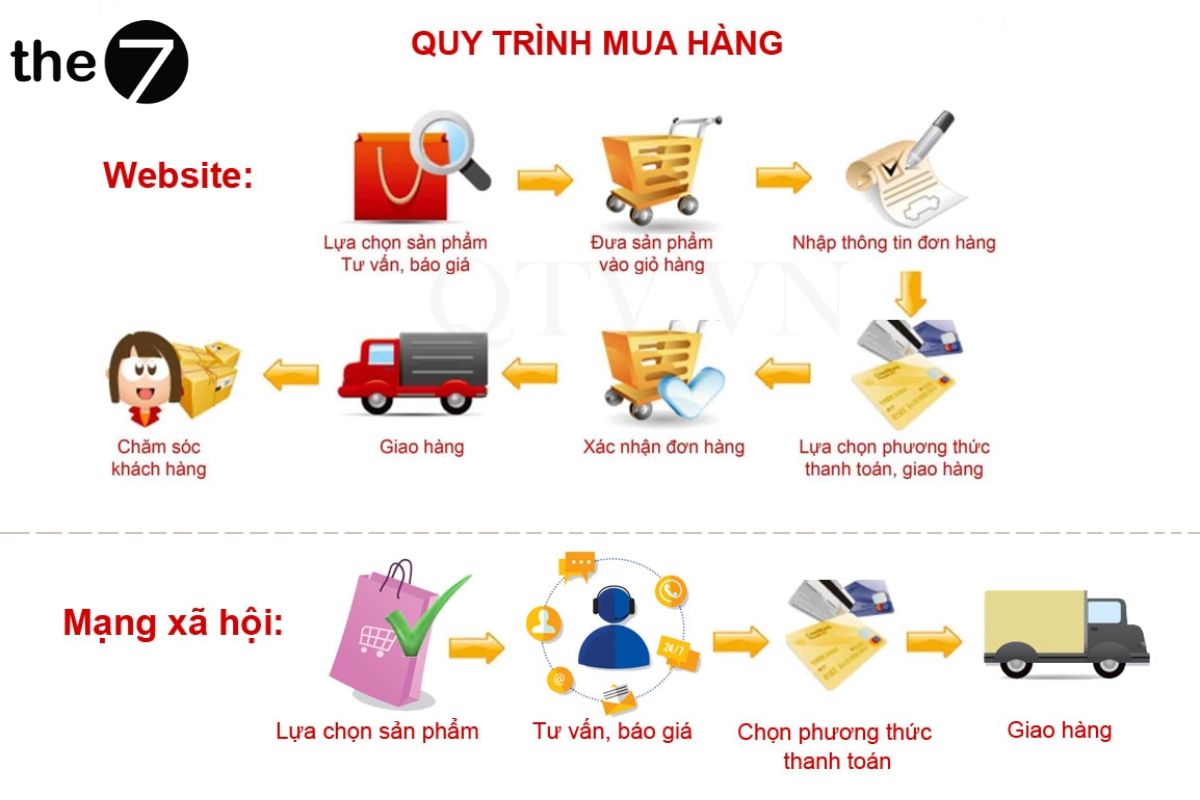
- Ordering and payment process: From choosing a product to paying for it, every step should be optimized to keep things convenient and fast for customers.
- Delivery and installation process: Shipping and installing products should be well organized, minimizing wait times and keeping the product safe.
- Warranty and maintenance process: Make sure complaints, warranty claims, and maintenance are handled quickly and professionally to maintain customers’ trust.
- Customer care process: Provide contact and support channels that customers can reach easily, and make sure every question or request is resolved quickly and with quality.
The level of detail in these processes and how well they fit together are the key to building a strong operating system and improving the customer experience. That gives you a competitive advantage while also boosting customer satisfaction and loyalty.
Physical Evidence (Physical Assets and Infrastructure Supporting Marketing)
Physical evidence provides concrete, tangible signs of the quality of the experience a company delivers. This is especially useful when customers have never interacted with the business before and need tangible proof, or when they plan to pay for a service before receiving it.
Physical Evidence describes the tangible elements customers can see, feel, hear, taste, or smell when they interact with a business’s products or services. Physical Evidence can include:
- Store or office decor and design: The look and layout of the space can make a strong impression of the brand.
- Brand image and logo: Brand imagery and symbols play an important role in building awareness and connection with customers.
- Product or service quality: By focusing on quality, a business can show its commitment to excellence.
- Staff uniforms and behavior: The impression left by employees’ professionalism and attitude is also part of the physical evidence.
- Promotional materials: Brochures, print ads, and other promotional materials are all part of Physical Evidence.
- Convenience, safety, and eco-friendliness: These factors can also create positive physical evidence.
Physical Evidence plays an important role in creating a first impression and shaping customers’ buying decisions. Strong physical evidence can help build trust, confidence, and satisfaction among customers.
This is the tool that gets a business’s services and products into consumers’ hands as quickly as possible. The 7P model plays a vitally important role in helping businesses succeed, and many agencies use it.
Learn more about marketing in these articles:
- Integrated Marketing Explained: Role and How to Plan It Properly in 2024
- What Is Marketing? The 13 Most Popular Types of Marketing in 2024
- Event Marketing Explained: A Complete Guide to Event Marketing in 2024
- Trend: Green Marketing – A Breath of Fresh Air in the Vietnamese Market
Why Applying the 7P Marketing Strategy Matters
The 7P model in marketing is very important for businesses. It takes part directly in business activities, from the first idea for production to the moment a service reaches the customer.
Specifically, the 7Ps help your company attract customers, build a competitive advantage, and more. The model also supports the activities that let a company last for the long term. The 7Ps give a business the ability to adapt to market changes and respond quickly to outside influences.
On the other hand, through market research, finding and communicating messages, developing new services and products, and so on, this marketing strategy also helps you understand market demand and meet buyers’ wants.
For customers, the 7P marketing strategy helps them quickly find the services and products that satisfy their needs. Buyers can even reach foreign services through the 7Ps, and it helps Vietnamese companies bring their products to international markets.

A Guide to Applying the 7P Strategy in Services Marketing
Before you apply the 7P model, define the following:
- Marketing goals: Make them specific, realistic, and time-bound. Example: Increase new customers by 20% over the next 3 months.
- Market research: Who are your customers and competitors? What are their characteristics, needs, and strengths?
- Target customers: Create an ideal customer profile (buyer persona) to understand their needs and behavior.
- KPIs (key performance indicators): Measure the success of your marketing strategy, for example, the conversion rate of potential customers.
- Your marketing team: Team members need to understand the 7Ps model and work together smoothly.
- A sensible budget: Control costs and resources effectively.
Then apply each of the 7 Ps as follows:
- Product/Service:
- Develop products and services that meet the needs of your target customers.
- Improve product features, quality, and packaging.
- Build a strong brand that is consistent in every respect.
- Price:
- Set competitive prices that match the value of your product or service and your customer segment.
- Offer a variety of service packages and promotional programs.
- Place:
- Choose distribution channels that suit your product or service and your target customers (online, offline, partners).
- Make sure your product or service is easy for customers to access.
- Promotion:
- Use a variety of marketing channels (advertising, PR, social media, content marketing, and more).
- Create engaging content that attracts potential customers and converts them.
- Build good relationships with customers and the community.
- People:
- Recruit and train staff with the right expertise, skills, and attitude.
- Ensure the quality of customer service and resolve questions promptly.
- Process:
- Set up clear, efficient service delivery and sales processes.
- Optimize your processes to deliver the best possible customer experience.
- Physical Evidence:
- Design a professional, impressive website, store, and packaging.
- Use high-quality images and videos to showcase your products and services.
- Maintain professionalism and credibility across every activity.
By applying the 7Ps effectively, you can build an overall marketing strategy, attract customers, and reach your business goals.
Classic Case Studies of the 7P Marketing Mix in Action
Apple’s 7P Marketing
Apple, the famous “bitten apple” brand, has won over users worldwide with groundbreaking technology products and smart marketing strategy. To understand Apple’s success better, let’s look at how the company applies the 7Ps marketing mix:
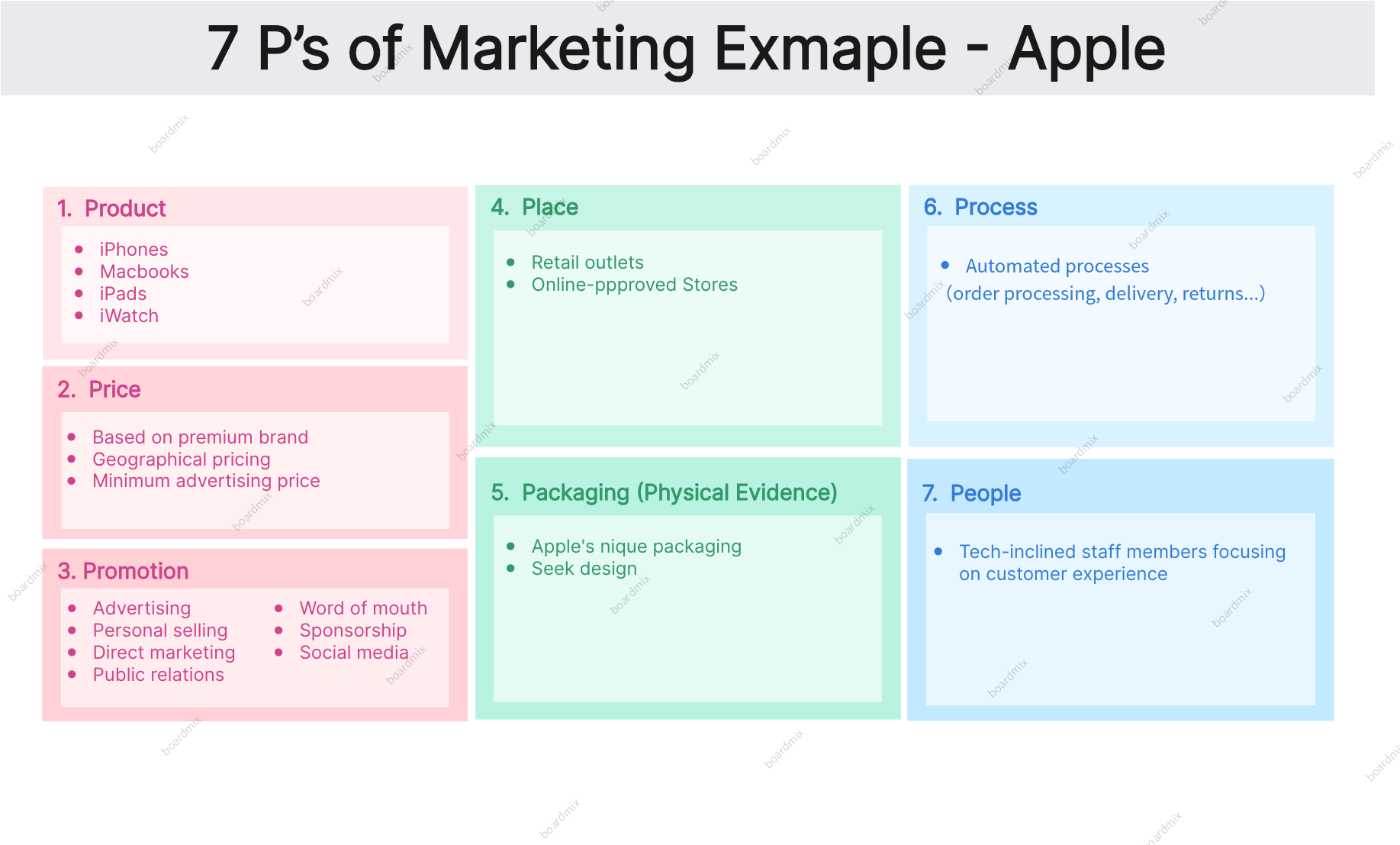
1. Product:
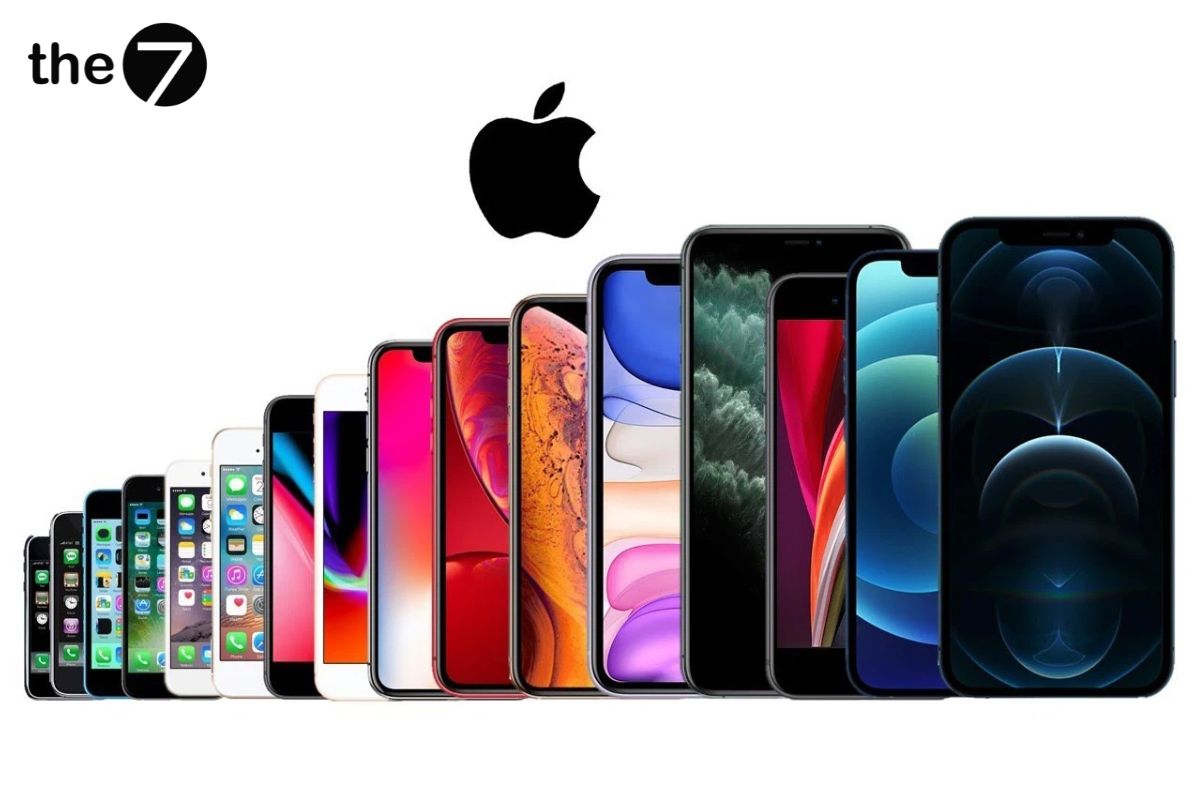
- Strengths: Apple’s flagship products are the iPhone, MacBook, iPad, Apple Watch, and more, known for their creativity, refined design, distinctive operating system, and seamless user experience.
- Strategy: Innovate constantly, improve features, and adopt the latest technology to stand out and maintain a premium brand image.
2. Price
Strategy: Premium pricing based on quality, brand, and the value customers perceive. Example: An iPhone usually costs much more than an Android phone with the same specs.
3. Place:
- Main channel: A network of upscale, modern Apple Stores around the world.
- Other channels: Selling products through authorized retailers and the official online store.
- Strategy: Tightly control the quality of the buying experience in every distribution channel.
4. Promotion:
- Diverse marketing: TV and social media advertising, spectacular launch events, and partnerships with celebrities.
- Word of mouth: Satisfied customers are Apple’s most effective marketing channel.
- Community building: Apple User Groups and online forums that connect users.
5. Physical Evidence:
- Packaging: Minimalist, luxurious packaging design with a focus on the unboxing experience.
- Stores: Modern, friendly store design with enthusiastic staff who know the products well.
- Product interface: A user-friendly, easy-to-use interface with refined design.
6. Process:
- Ordering: A fast, convenient online ordering system.
- Delivery: A reliable home delivery service that protects the product.
- Customer service: Support across multiple channels, with problems resolved quickly.
7. People:
- Employees: Recruiting and training staff with deep expertise, a passion for technology, and a great service attitude.
- Community: Building a loyal user community that is attached to the brand.
Netflix’s 7P Marketing
By combining the elements of the 7Ps in harmony, Netflix has built a comprehensive marketing strategy that meets user needs and delivers an engaging, convenient online viewing experience.
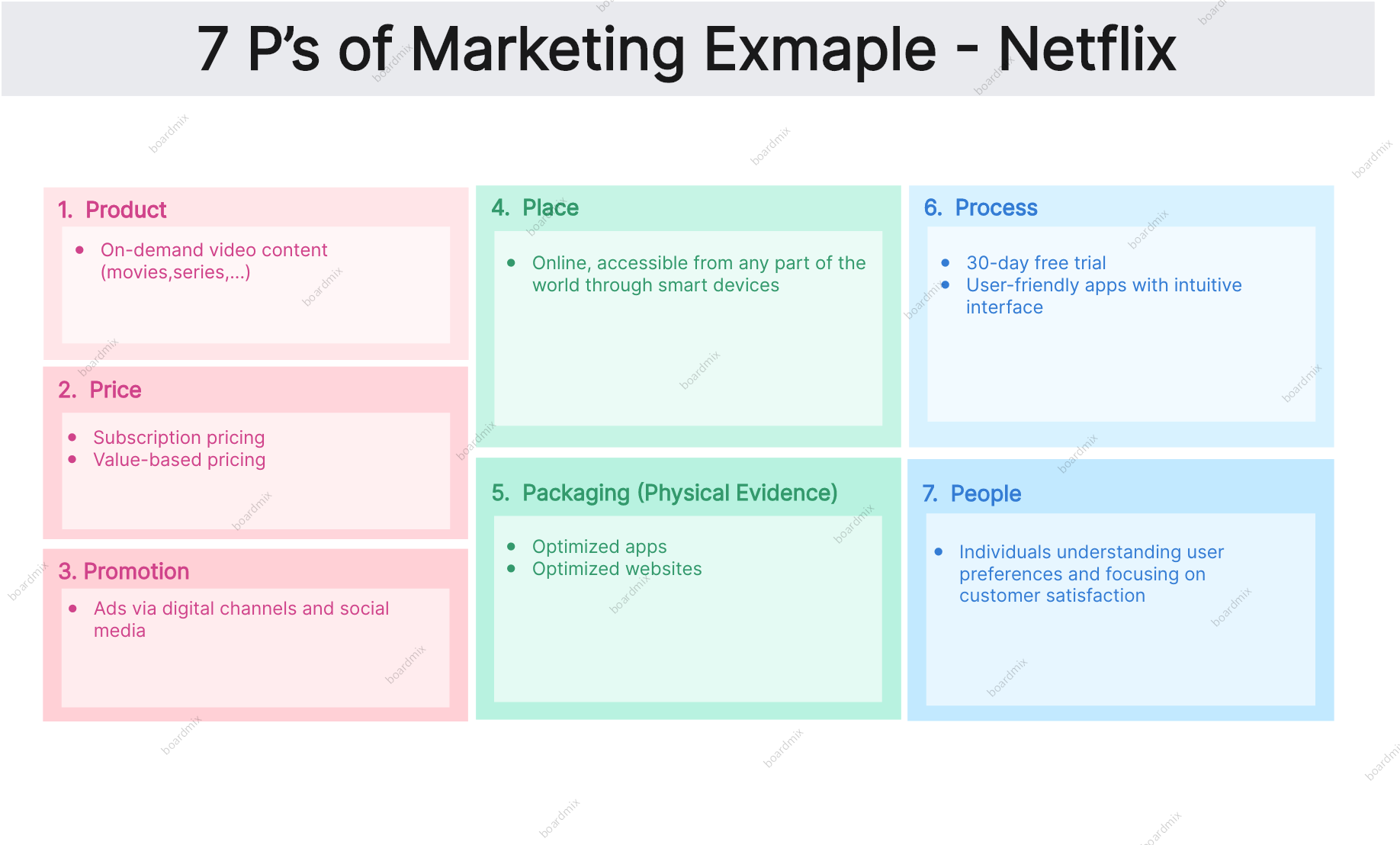
1. Product:
- A huge content library: Movies, series, and documentaries in many genres to suit a wide range of tastes.
- Exclusive content: Investing in original productions to attract and retain users.
- Constant updates: Adding new content regularly to keep up with trends and viewer demand.
2. Price:
- Subscription-based: Monthly or yearly fees instead of per-movie charges, delivering long-term value.
- Competitive pricing: Comparing against competitors and adjusting prices to fit the target customer segment.
- A range of plans: Multiple plans at different price points to fit each person’s needs and budget.
3. Place:
- Fully online: Easy access anytime, anywhere on smart devices with an internet connection.
- Multi-platform apps: Available on phones, tablets, and smart TVs for user convenience.
4. Promotion:
- Digital advertising: Using social media platforms and search engines to reach the right audience.
- Content marketing: Creating articles and videos that introduce titles, and building a community of viewers.
- Brand partnerships: Teaming up with strategic partners to expand reach.
5. Physical Evidence:
- App and website interface: Modern, easy to use, and user-friendly design.
- Content quality: Sharp images, vivid sound, and subtitles in many languages.
- Smooth viewing experience: No lag, with support for many video formats.
6. Process:
- Easy sign-up: A simple, fast procedure with secure payment.
- Effective content search: A smart search tool with categories by genre, actor, and more.
- Convenient account management: Review your viewing history, create favorites lists, and personalize your experience.
7. People:
- Customer support team: Friendly, enthusiastic, and quick to answer questions.
- Community building: Forums and discussion groups where users interact and share their thoughts.
- Collecting feedback: Listening to users and continually improving the service.
Coca-Cola’s 7P Marketing
Coca-Cola is one of the most famous beverage brands in the world. With more than 135 years of experience, Coca-Cola has built a strong and successful brand worldwide. Its success comes from a comprehensive marketing strategy in which the 7P strategy plays an important role.
1. Product:
Coca-Cola is a globally famous soft drink brand. Its flagship product is Coca-Cola, but the range also includes other lines such as Diet Coke, Coca-Cola Zero Sugar, and other soft drinks. Coca-Cola does not focus only on supplying soft drinks. It also builds a sense of community and connection through advertising campaigns and social interaction.
2. Price:
Coca-Cola’s pricing strategy is built to ensure popularity and wide accessibility. Its products are usually mid-priced, with frequent discount campaigns and offers to attract and retain customers.
3. Place:
Coca-Cola is present in more than 200 countries and is distributed through a vast network that runs from small shops to large supermarkets, restaurants, and bars. The strategy is to position products where they are convenient and easy to reach.
4. Promotion
Coca-Cola is one of the brands that invests heavily in promotion. It has run many successful promotional campaigns that made a big splash around the world. Some of Coca-Cola’s famous campaigns include:
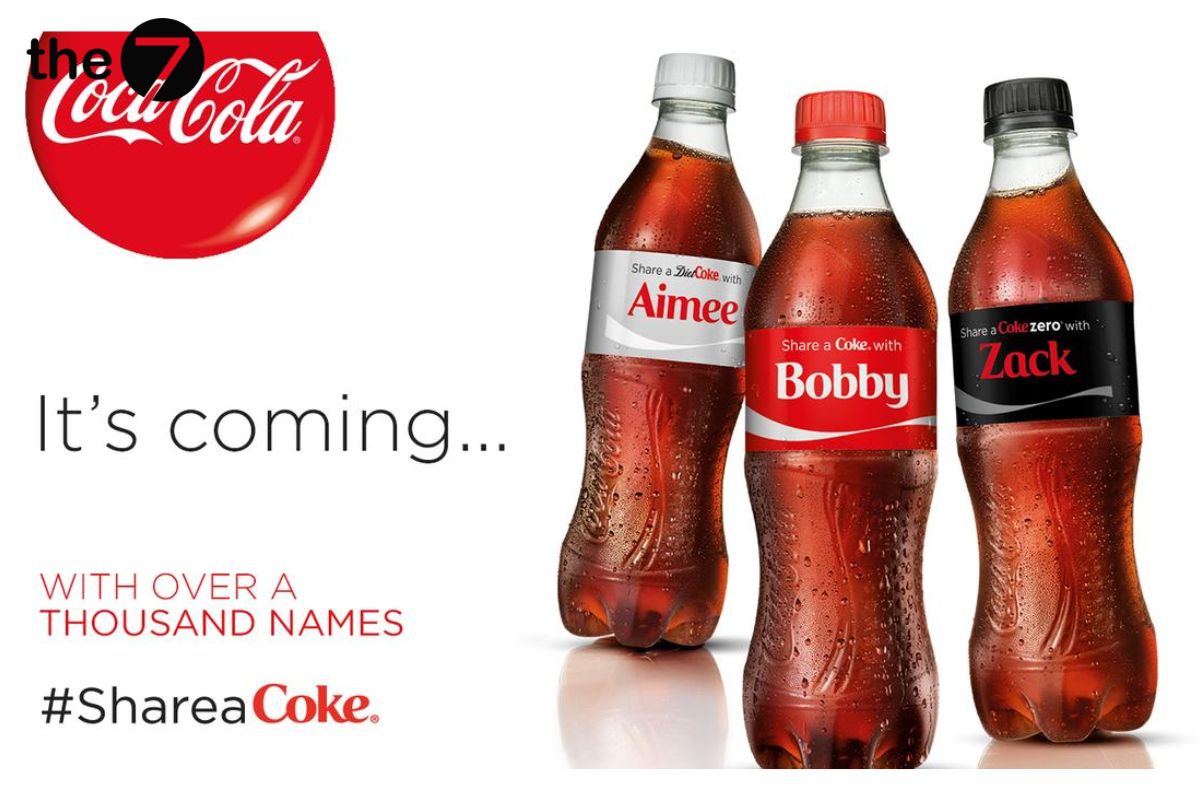
- The “Share a Coke” campaign, with the message “Share a Coke with…”, which let consumers put their own name or the name of a loved one on the label of a Coca-Cola bottle.
- The “Happiness Machine” campaign, built on the idea of creating surprising, happy moments for consumers who used Coca-Cola’s vending machines.
- The “Open Happiness” campaign, with the message “What is happiness?”, which conveyed joy and happiness in life.
5. People:
Coca-Cola’s employees are not just salespeople but also brand ambassadors. They are trained to create a positive experience for customers, from serving in cafes to large events.
6. Process:
Coca-Cola’s production process is one of the largest and most advanced soft drink production processes in the world. It is optimized to ensure quality and maintain a distinctive flavor. The distribution process is also designed to get products to customers quickly and safely.
7. Physical Evidence:
Coca-Cola’s physical evidence includes its distinctive packaging, famous logo, and brand awareness. You can spot Coca-Cola’s signature packaging from a distance, and it changes constantly to fit events and holidays.
The 9P Model: An Extension of the 7P Marketing Strategy
The 7P marketing strategy has been extended into a 9P model to widen the reach to customers. The 9Ps marketing model, initiated by Larry Londre, has helped many businesses improve the effectiveness of their marketing activities. Specifically, this model includes the following elements:
- Building a clear marketing plan and process
- People: Including potential customers and buyers
- Product
- Pricing (Price)
- Distribution/Location (Place)
- Promotion
- Strategic alliance partners
- The entire presentation
As you can see, the 9P model inherits from and builds on the 7P marketing strategy model. This helps businesses plan and run their marketing campaigns as effectively as possible.
Conclusion
In short, using the 7Ps helps a business plan a more comprehensive strategy that generates profit. The7 hopes this article has given your company more knowledge about the 7P marketing strategy. However, if you are struggling to plan a strategy that fits your product, your company’s size, and other factors:
You can contact The7 for consultation on a professional, in-depth full-service marketing strategy. With years of experience in marketing and hands-on results across many industries, the expert team at The7 is dedicated to understanding your business and working with you to design the most practical solution.
Authoritative sources on the 7Ps Marketing Mix you can read:
Bitner, M. J. and Booms, H. (1981). Marketing Strategies and Organization: Structure for Service Firms. In Donnelly, J. H. and George, W. R. (Eds). Marketing of Services, Conference Proceedings. Chicago, IL. American Marketing Association. p. 47- 52.
McCarthy, E. J. (1964). Basic Marketing. Richard D. Irwin. Homewood, IL.

Nguyễn Đình
Bảo




As CEO of The7, I am committed to sharing practical, useful knowledge with every reader. Every article on The7 is based on my 7 years of hands-on experience in marketing — Facebook advertising, LinkedIn advertising, Google advertising, and marketing strategy. I hope you take away plenty of insight from these posts and apply it successfully in practice.
Related Articles
Building a Full-Funnel Content Marketing Strategy on LinkedIn
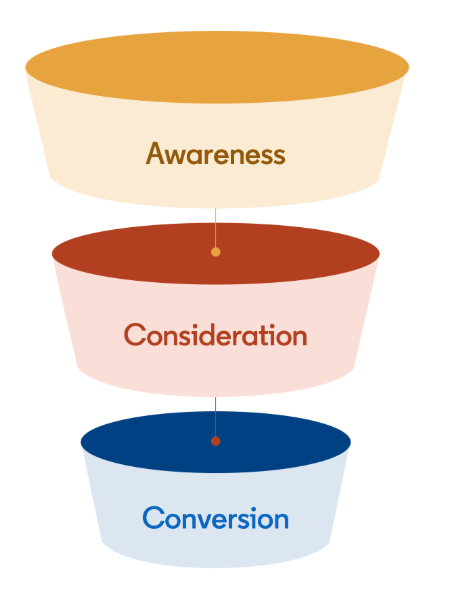
Table of Contents Toggle Why Build Content Marketing for the Full Marketing Funnel? (Why Full-Funnel Content Marketing?)Creating Your Strategy (Creating Your Strategy)Implementing Your Content Strategy (Rolling out your content strategy)Summary...
Designing Creative Content for LinkedIn
Table of Contents Toggle Why Is Good Creative Content So Important? (Why is Good Creative Important?)Key Components of Creative Design (the core elements of creative design)Summary (summary) Why Is Good...
Building an Organic Business Presence on LinkedIn With a LinkedIn Page
Table of Contents Toggle Why Have a LinkedIn Page?Establishing Your LinkedIn PageKeeping Your LinkedIn Page ActiveThe Measure of SuccessSummary About LinkedIn Page (Summary) Why Have a LinkedIn Page? For a...
6 Best LinkedIn Marketing Strategies for B2B in 2026
Table of Contents Toggle LinkedIn 2026: Where B2B Decisions Get MadeStrategy #1 – Why Is LinkedIn the Best B2B Marketing Channel Today?1. Decision-makers are concentrated here2. Users are in work...

7 Social Media Trends for 2026: The Era of Real Value, Real Conversion, and Real People
Table of Contents Toggle Social media is entering the biggest restructuring of the decadeTrend 1: Why is buying directly in-app becoming the new standard for 2026? (On-Platform Conversion)What should businesses...

What Is TikTok Marketing? Effective TikTok Marketing Strategies
TikTok has been topping the global rankings of the most downloaded and most visited apps. That makes it a gold mine for marketers who love creativity. In this article, The7...