


Facebook Policy-Violating Words You Should Avoid

Getting ads approved on Facebook is becoming harder with new policies. In this article, The7 will share the words and errors that violate Facebook’s policies so you can avoid “annoying Meta, the strict landlord.”
1. A roundup of words that violate Facebook’s policies
Let’s go over these words that violate Facebook’s advertising policies with The7 to make sure your ad campaign runs effectively.
1.1 Facebook-banned words in the healthcare field
Facebook’s ad review policy for the medical, health, and healthcare field places certain restrictions on wording and ad content. Understanding these restrictions can help you avoid review issues and optimize your ad campaign more effectively. Below are some specific words you need to avoid when advertising in this field:
- Diseases and body parts: Facebook may reject ads that directly mention specific medical conditions such as cancer, diabetes, or other sensitive health issues.
- Patients and afflicted objects: You need to avoid mentioning the names of medical facilities, hospitals, or clinics in your ad copy, as these terms are often banned by Facebook. Words like “patient” and “dietary supplement” also need to be used carefully.
- Negative-leaning words: Words like “treatment” and “cure” may be flagged for review if not used correctly and without supporting evidence. Content about sensitive topics such as mental illness, suicide, or mental health issues, and words like “pain,” “fatal,” and “despair” are banned to avoid negatively affecting the community.
- Medical claims: Ads should not contain medical claims that lack scientific evidence, or claims about quick cures with no supporting basis.
Example: You run a business selling medical products, and even though these products are legal in many places, Facebook’s policy strictly prohibits advertising anything related to medications. If you try to run ads promoting your product, your account could be blocked.

>>> You can check out The7’s services:
- Facebook Ads Service in Ho Chi Minh City
- Online Advertising Service
1.2 Words that violate Facebook’s policies in the financial field
Advertising in the finance and currency field on Facebook also comes with many restrictions on wording and content. Below are some specific words you should avoid when running ad campaigns in this field:
- Lending
- Loan capital
- Borrow capital
- Currency/finance
- Unsecured loan
- Credit loan
- Tax
- Interest rate
- Disbursement.

1.3 Words that violate Facebook’s policy related to chemistry
Words you need to avoid when running Facebook ads related to describing chemical composition tables or compounds include:
- Vitamin
- Fiber
- Omega
- Acid…

1.4 Facebook-banned words related to racial and gender discrimination
In fact, using specific words related to gender, race, or nationality is banned when running Facebook ads. To ensure your ad campaign gets approved quickly, avoid using the following words:
- Words about gender and family relationships such as grandfather/grandmother, uncle/aunt, brother/sister, male/female
- Words about countries such as Russia, the US, France, China…
- Words that show racial discrimination such as Ethnicity, Skin color, Religion…

1.5 Banned words related to vocational training/employment
In the fields of vocational training/employment or office/housing rental, Facebook also applies banned words when running ads, such as:
- Admissions
- Jobs
- Trainee training
- Training…

1.6 Banned words related to surveillance/monitoring cameras
Facebook’s current advertising policy states that companies/businesses may not promote the sale of surveillance cameras, tracking software, or other monitoring devices. Typically, such content will be hidden or have its visibility to Facebook users restricted.

1.7 Banned words related to a few other fields
- Acne/scars
- Cigarettes
- Weight loss/gain, dieting
- Sexual dysfunction
- Bone/joint issues, sinusitis, etc.
- Passport, household registration book, land title, etc.
In addition to banned words when running Facebook ads, all ad campaigns must avoid the 7 errors below to ensure Facebook approval:
2. Ad content making absolute claims
Many stores/companies/businesses looking to build credibility for their brand have used Facebook ad content with strong claims or commitments. For example, promising to completely eliminate dandruff, guaranteeing a 100% cure, or claiming to be the most reputable in the industry…

Facebook ads of this kind are usually not approved, because according to Facebook, nothing is ever absolutely certain. In addition, the information in such ads also doesn’t guarantee accuracy when conveyed to Facebook users.
3. Using sensitive 18+ images and language
Using sensitive images and language is a common mistake among lingerie stores or businesses related to beauty, spas, cosmetics, etc.
Facebook will typically reject or limit the reach of these ads for not meeting ethical standards and cultural norms, and for being offensive to viewers.

4. Before-and-after image comparisons
Facebook bans ads with images comparing bodies, objects, products, or human rights issues. Even using before-and-after comparison images to build customer trust is not allowed to be shown by Facebook.

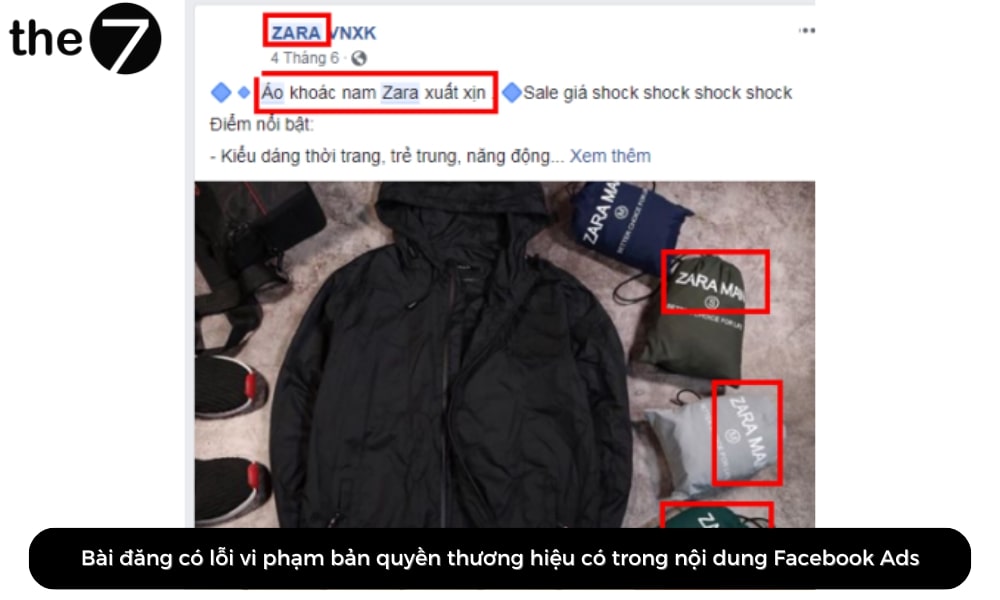
5. Brand copyright violations
Using the name or logo of well-known brands such as Gucci, H&M, Pull and Bear, Nike, Zara, etc. when running Facebook ads is completely banned. Facebook does not accept the use of the name or logo of major brands for advertising, as this violates the platform’s policies. This is commonly seen with stores selling counterfeit goods, parallel-imported items, or “export-surplus” (VNXK) goods.
6. The 20% text-in-image rule violation
Facebook applies a rule limiting the amount of text in ad images to 20%, and this text-control rule has been enforced by Facebook since mid-2016. In practice, this feature doesn’t hinder advertisers — it actually helps them run ads on the platform more professionally.
Text included in an ad can be assessed as follows:
- Logos containing text, watermarks, and other forms of text on the visual.
- Text appearing in videos.
- Text on the profile picture or cover photo of the advertised page.
The 20% text rule is applied by dividing the image into a 5×5 grid, for a total of 25 cells. Of these, text is allowed to occupy a maximum of 5 cells (equivalent to 20%), not counting the product logo. Within these 5 cells, advertisers are free to insert as much text as they want.
To check this rule, users can visit the link: https://www.facebook.com/ads/tools/text_overla. You can then upload an image to check whether its text content exceeds 20%.

7. Violent, bloody imagery
If you sell self-defense tools such as batons, nunchucks, and related products, note that Facebook has a strict policy banning ads for products related to violence. This is part of Facebook’s safety and positive-advertising policy, applied to protect users and maintain a positive social media environment.
8. Ads for products containing stimulants
Facebook has very strict regulations for ads promoting products that contain stimulants and affect health, such as alcohol, tobacco, and e-cigarettes. All ad content on this platform must always comply with health and safety guidelines. Although there are ways to get around this rule, advertising products related to stimulants remains an area that requires special caution to avoid violating Facebook’s advertising policy.
How to fix a Facebook advertising policy violation
Follow Facebook’s guided process
If your ad isn’t approved due to a policy violation, you can take the following steps:
- Step 1: Check the email linked to the Facebook account you use to run ads. If there’s a policy violation, Facebook will notify you via this email address.
- Step 2: In the notification email, Facebook will guide you on how to fix the violation. Follow the instructions exactly and save your changes.
- Step 3: After editing your ad, wait for Facebook to review it again. Facebook will notify you of the review result via email.
Submit an appeal about the ad violation to Facebook
You can also appeal ad violations directly to Facebook by following these steps:
- Step 1: Log in to the Facebook account you use to run ads and go to the ad account manager.
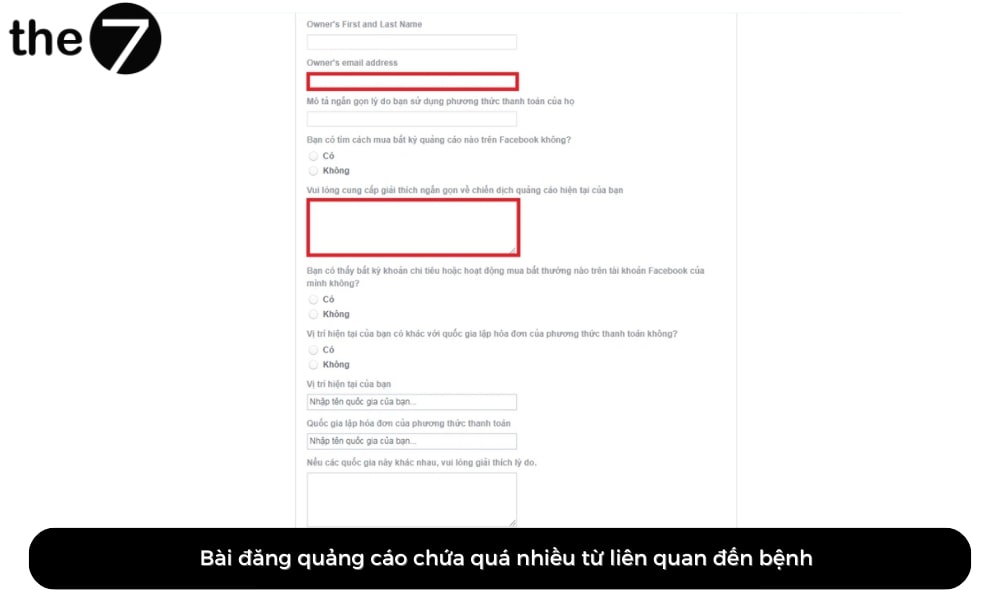
- Step 2: Select “Request Review.”
- Step 3: In the “Please provide additional information to help us review your request” section, describe the overview and details of the ad campaign your business is running.
- You can provide detailed information about the content, goals, and anything else that could help Facebook better understand your ad. Facebook’s review team will use this description to evaluate the status of your ad account.
- Step 4: Wait for a response from Facebook, which usually arrives within about 1 day.
Some other ways to fix it
Some other ways to fix issues when your ad account runs into problems:
- Read the policies carefully: Facebook currently maintains 3 mandatory policies (Advertising Policy, Community Standards, Terms of Service). Read these 3 sets of terms carefully to avoid violations.
- Use a backup account: You can use a backup Facebook account to run ads, reducing the impact if your main account runs into issues.
- Rent a different ad account: There are services that provide verified ad accounts for rent. However, make sure you choose a reputable provider to avoid risk.
- Hire an ad-running agency: If you’d rather not manage it directly, you can hire a professional agency to run ads for your business.
- Use an international Facebook account: Some people choose to use international Facebook accounts in countries like India, the UK, or the US, where review policies may be more flexible.
Frequently asked questions
Q1: Why does Facebook have a policy banning these words?
Facebook ads are shown to potential customers, and to ensure quality and safety for users, Facebook needs to block words related to unsafe fields. Here are some reasons:
- Limiting financial fraud: Banning words related to finance and currency aims to prevent fraudulent financial services and ensure user safety.
- Ensuring human health matters: Since Facebook cannot guarantee accurate information about the ingredients and effects of medications, words related to the healthcare field are restricted to avoid incomplete or unsafe information.
Q2: How can you advertise content or images that include well-known brands on Facebook?
- For images: Edit the image by blurring or masking the logo and name of the well-known brand.
- For content: Use creative writing, for example: instead of writing “Adidas T-shirt,” you could use “T-shirt #Adi_das” or convert the text into special characters using a tool like Yaytext.
Q3: How can you advertise in the cosmetics or medication field without using banned words?
To advertise products like medication and cosmetics without violating the policy, you can:
- For medication products: Direct the ad toward the pharmacy or distributor’s address instead of selling the product directly.
- For beauty and healthcare products: Build suitable ad content, using understated language when describing product characteristics or people. Direct users to the website to learn more about the product instead of describing it in detail directly in the ad.
We hope the information on the 7 errors and words that violate Facebook’s policies that The7 has provided will help you set up an effective ad campaign for your company/business. If you have any questions, contact us right away for consulting.
>>> You can learn more about Facebook advertising through the following articles:
- How to solve a flagged Facebook ad
- A detailed guide on how to run Facebook ads

Nguyễn Đình
Bảo




As CEO of The7, I am committed to sharing practical, useful knowledge with every reader. Every article on The7 is based on my 7 years of hands-on experience in marketing — Facebook advertising, LinkedIn advertising, Google advertising, and marketing strategy. I hope you take away plenty of insight from these posts and apply it successfully in practice.
Related Articles
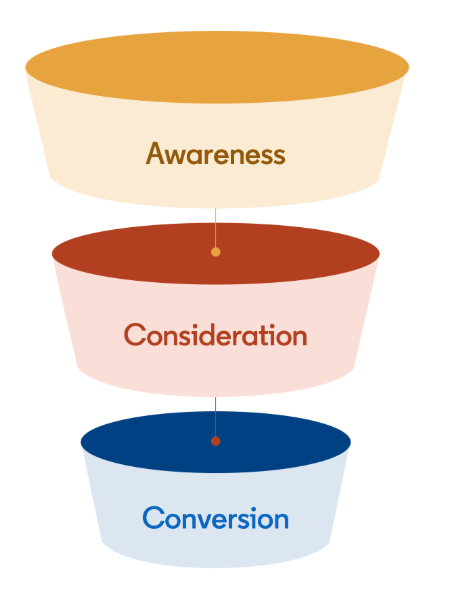
Building a Full-Funnel Content Marketing Strategy on LinkedIn
Table of Contents Toggle Why Build Content Marketing for the Full Marketing Funnel? (Why Full-Funnel Content Marketing?)Creating Your Strategy (Creating Your Strategy)Implementing Your Content Strategy (Rolling out your content strategy)Summary...
Designing Creative Content for LinkedIn
Table of Contents Toggle Why Is Good Creative Content So Important? (Why is Good Creative Important?)Key Components of Creative Design (the core elements of creative design)Summary (summary) Why Is Good...
Building an Organic Business Presence on LinkedIn With a LinkedIn Page
Table of Contents Toggle Why Have a LinkedIn Page?Establishing Your LinkedIn PageKeeping Your LinkedIn Page ActiveThe Measure of SuccessSummary About LinkedIn Page (Summary) Why Have a LinkedIn Page? For a...

6 Best LinkedIn Marketing Strategies for B2B in 2026
Table of Contents Toggle LinkedIn 2026: Where B2B Decisions Get MadeStrategy #1 – Why Is LinkedIn the Best B2B Marketing Channel Today?1. Decision-makers are concentrated here2. Users are in work...

7 Social Media Trends for 2026: The Era of Real Value, Real Conversion, and Real People
Table of Contents Toggle Social media is entering the biggest restructuring of the decadeTrend 1: Why is buying directly in-app becoming the new standard for 2026? (On-Platform Conversion)What should businesses...

What Is TikTok Marketing? Effective TikTok Marketing Strategies
TikTok has been topping the global rankings of the most downloaded and most visited apps. That makes it a gold mine for marketers who love creativity. In this article, The7...